Soft Cooler Manufacturer in China: Complete OEM Guide

2026-08-31 0 Leave me a message
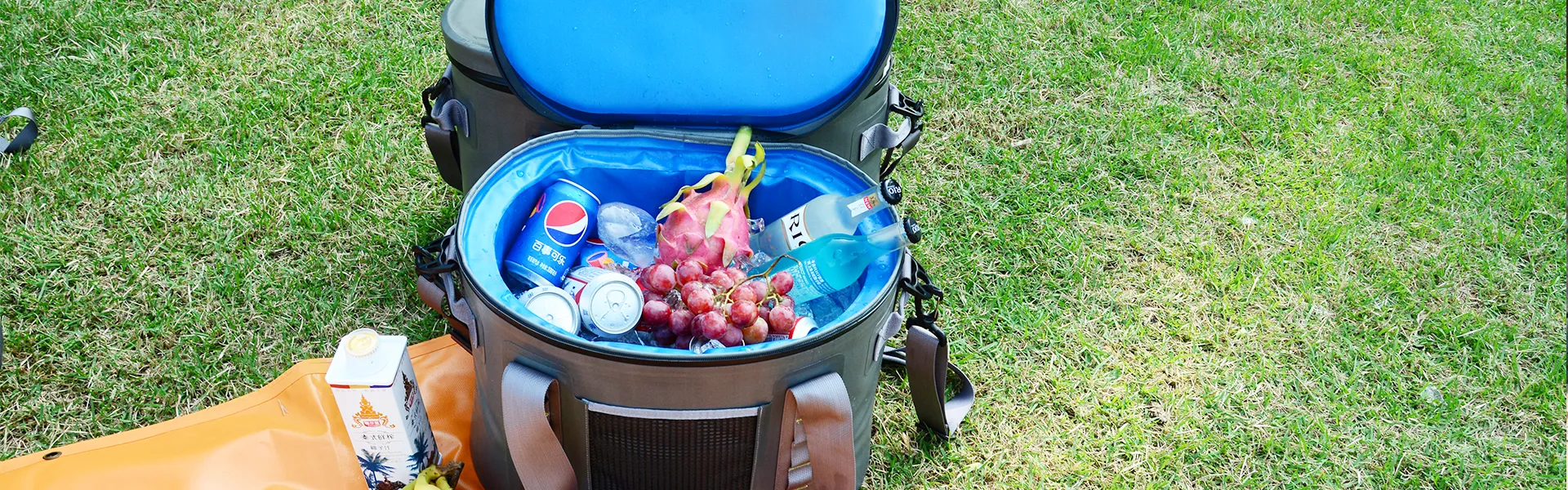
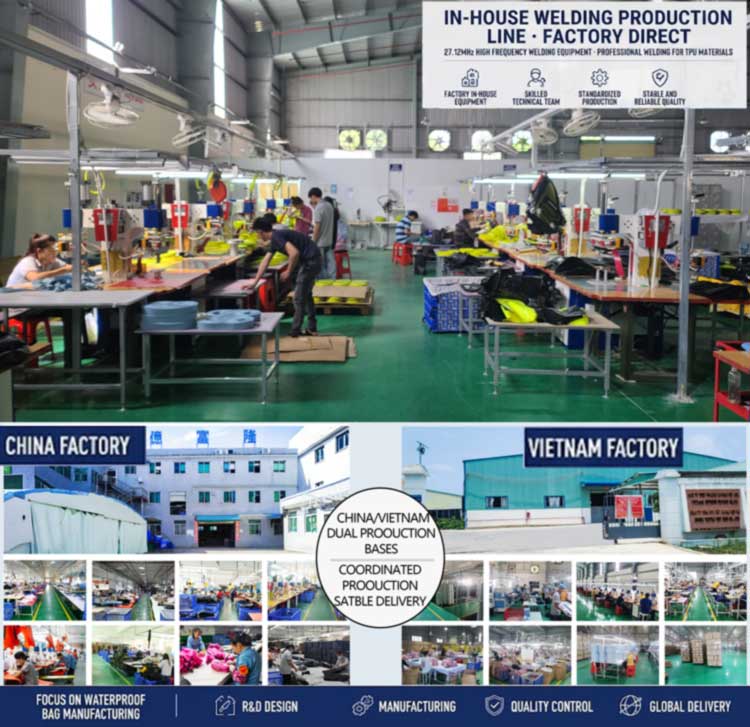
China remains the default answer for welded soft cooler manufacturing, and the reasons are specific rather than generic. The high-frequency welding capability that a sealed cooler requires, the roll goods that feed it, the hardware supply base, and the accumulated process knowledge sit in a small number of industrial clusters. But sourcing from China well means understanding more than a factory's capabilities — it means knowing its calendar, its structure, and the questions that separate a real welding plant from a trading office. This guide covers all of it, from why the capability is concentrated where it is, to a production calendar most first-time buyers get wrong. Sealock (YiFuLong Outdoor Gear Co., Ltd.) has manufactured welded insulated bags in Guangdong since 2003.


Why Welded Cooler Manufacturing Concentrates in Guangdong

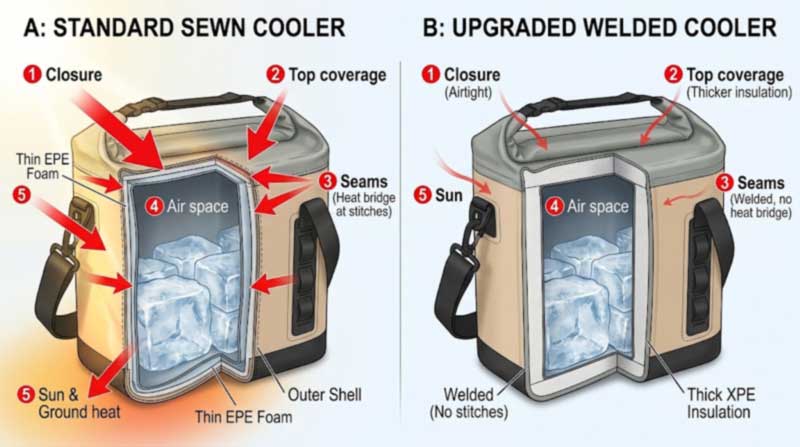
A welded soft cooler is not a sewing product. It requires high-frequency welding machinery, tooling made to fine tolerances, weldable TPU- or PVC-coated roll goods, closed-cell foam, food-grade liner films, airtight zippers and marine-grade hardware — and, critically, people who have run those processes for years. That ecosystem does not exist everywhere.

Guangdong is where it is densest for cooler bags. The province is the centre of China's soft-goods export manufacturing, with the material supply chain, tooling shops, hardware suppliers and trained welding operators within short distance of each other. For a buyer, that proximity translates into practical things: shorter material lead times, easier substitution when a component is delayed, and a deeper pool of factories that genuinely own their welding lines rather than subcontracting the step.

It also explains the honest limitation of alternatives. Vietnam has become an excellent option for tariff-sensitive production — Sealock runs a Ho Chi Minh City line for exactly that reason — but the deepest raw-material and component base for TPU-coated welded bags still sits in Guangdong, which is why complex or material-intensive builds often suit the China line better. See Vietnam Cooler Bag Manufacturer: Duty-Friendly Sourcing for Importers and Vietnam Soft Cooler Factory: Sealock's Ho Chi Minh City Production Line.

The China Production Calendar Buyers Get Wrong

This is the single most valuable operational knowledge for anyone sourcing from China, and it costs brands a season every year. The official Spring Festival holiday is about a week. The actual manufacturing disruption is nothing like a week.

One logistics analysis frames the scale bluntly: the "Golden Week" officially lasts 7 days, however, for the supply chain, the disruption is a 40-day phenomenon. The mechanism is labour, not laziness — most Chinese factory workers are migrants from inland provinces working in coastal manufacturing regions, and they travel home for Chinese New Year in the world's largest annual human migration.

The four phases

The realistic operational arc, as described across sourcing sources:

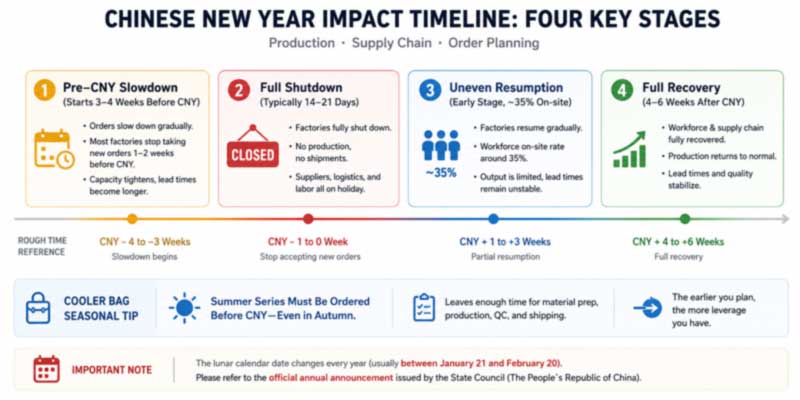
  • Pre-holiday slowdown — begins weeks before the holiday itself. The pre-holiday slowdown begins 3–4 weeks before Chinese New Year, and many factories stop accepting new orders 1–2 weeks before the holiday, with production lines slowing significantly before the official break.
  • Full shutdownfactory closures typically span 14 to 21 days, longer at some plants.
  • Uneven restart — factories reopen but not at capacity. Following the holiday, the gradual resumption phase takes place over the first weeks, with factories reopening at only about 35% workforce capacity as workers gradually return.
  • Full recoverytypically 4–6 weeks after the holiday begins.

There is a quality dimension too that buyers rarely anticipate: up to 25% of factory workers may not return to their previous employers after CNY — they negotiate new positions, relocate, or exit manufacturing entirely — and this workforce churn means even resumed factories face quality risk. For a welded cooler, where weld consistency depends on trained operators, that is a real argument for scheduling critical production away from the immediate post-holiday window.

Check the dates every year — do not assume. Chinese New Year follows the lunar calendar and shifts between approximately January 21 and February 20, so the date moves substantially year to year and last year's plan does not transfer. China's State Council announces the following year's holiday schedule in November–December, which is the authoritative source. Published guides frequently disagree with each other on specific dates — confirm with your supplier and the official schedule rather than an article.


What this means for cooler bags specifically: coolers are a summer-season product, which puts the ordering window directly across the Spring Festival disruption. A brand planning summer stock must place orders well before the pre-holiday slowdown, not during it. Sourcing advisers point out that autumn is one of the best sourcing seasons — the largest trade fairs run September to November, and buyers sourcing then have more time to arrange production before Chinese New Year factory shutdowns begin. For a summer cooler range, autumn ordering is not early. It is on time.


four-phase Chinese New Year manufacturing disruption timeline and its impact on summer cooler bag ordering

The OEM Process With a Chinese Cooler Factory

End to end, an OEM programme runs through the following stages. Each links to a fuller treatment if you need the detail.

Stage What happens Detail
1. Define the model Private label, ODM or full OEM — decided by how much differentiation and IP ownership you need OEM vs ODM
2. Vet the supplier Registry verification, factory-versus-trader test, audits, deal-breakers Buyer's checklist
3. Write the specification Insulation tier and wall thickness, seal level, shell, liner, closure, capacity, hardware, branding What you can customise
4. Sample and approve 7–15 days; physical golden sample, never a photograph; test it yourself Design-led development
5. Confirm terms MOQ, price breaks, payment structure, FOB, carton and CBM data MOQ, lead times & FOB
6. Production 30–45 days; in-line weld inspection through the run How they're made
7. Inspect before shipping AQL sampling, gold-sample comparison, immersion testing; third-party inspection optional Weld QC and testing
8. Ship and clear Ocean freight on CBM, duty on the correct HTS classification Bulk pricing & FOB terms

The Questions That Identify a Real Cooler Factory

China has both world-class welding factories and trading companies presenting themselves as factories. For this product category the discriminating questions are technical, and a genuine manufacturer answers them without hesitation:

  1. Is the high-frequency welding done in-house, and at what frequency? (27.12 MHz is the standard.) A trader cannot discuss weld parameters because it does not control the step.
  2. How do you inspect welds? A weld defect becomes invisible once the bag is lined and assembled, so in-line inspection is the only way to catch it.
  3. Is the finished bag immersion-tested, or only visually inspected?
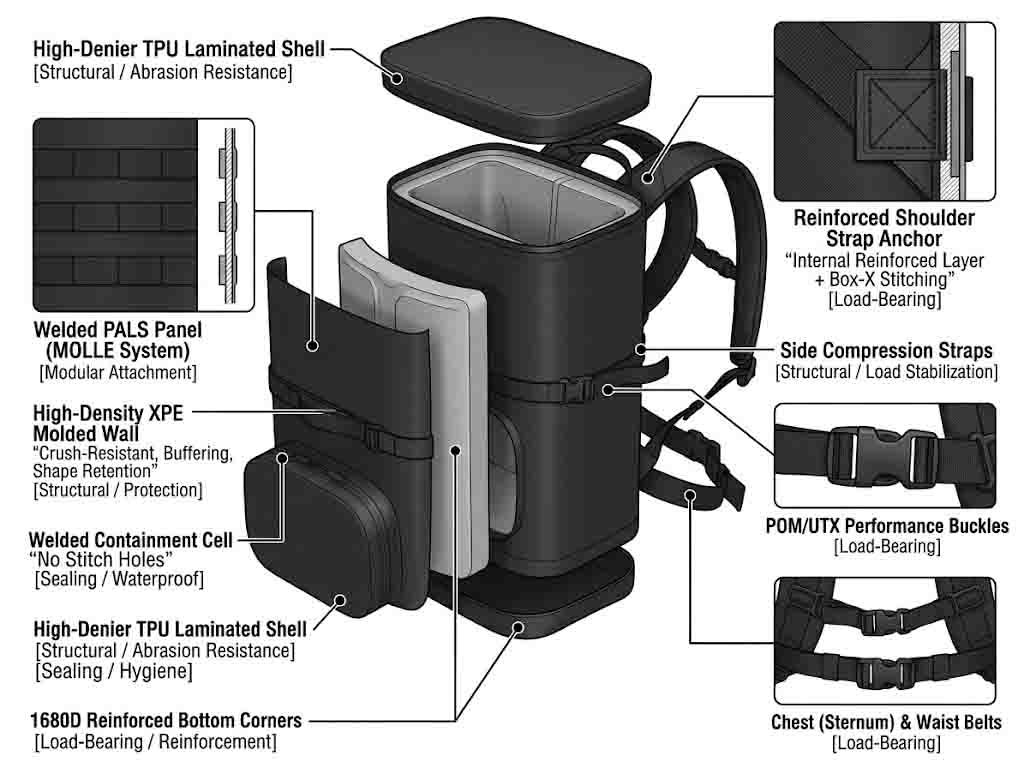
  4. How do you attach straps and webbing without piercing the sealed chamber? A welded-cooler factory has an engineered answer; a sewing shop does not understand the question.
  5. What insulation tiers can you actually build? Closed-cell EPE and XPE are common; PU, VIP vacuum panels, EPP and aerogel indicate deeper capability.
  6. Can you provide food-contact migration test data for my market?

Beyond the technical, verify the legal entity: the 18-character unified social credit code checked against the official registry, a business scope containing manufacturing rather than only trading, and audits confirmed with the issuing bodies rather than accepted as screenshots.

China vs Vietnam for Cooler Bags

China (Guangdong) Vietnam
Material & component base Deepest for TPU-coated welded bags Growing; some materials still sourced regionally
Welding expertise Most concentrated Available at established factories
Complex builds Best suited Capable; deeper development usually seated in China
US tariff exposure Higher — China-specific measures apply Lower on that specific layer
Best for Technical products, ground-up development, material variety Tariff-sensitive and labour-intensive production

The strongest position for a buyer is access to both on the same specification, which removes the need to redesign a product to change its origin. Note also that Vietnam observes Tết at the same time as Chinese New Year, so a dual-origin supplier does not eliminate the seasonal shutdown — it hedges tariffs and disruption, not the lunar calendar.

Sealock as a China-Based Manufacturer

Legal entity YiFuLong Outdoor Gear Co., Ltd. (cooler brand: Sealock)
Since 2003 — over 20 years welding insulated bags
China base Dongguan, Guangdong — three high-frequency welding factories
Second origin Ho Chi Minh City, Vietnam (second line added 2024) — same specification
Welding 27.12 MHz HF welding, in-house
Quality system IQC / IPQC / OQC, AQL sampling, gold-sample sign-off, full water-immersion batch testing; SGS or QIMA inspection available
Lab suite Load cycling, tensile, adhesion, salt spray, abrasion, colour fastness, colour difference, water immersion
Liners Food-grade inner liners across the entire range
Certifications ISO9001, BSCI, SMETA P4, GRS, HIGG, SCAN
Terms MOQ 300 pcs per design; samples 7–15 days; production 30–45 days; FOB Guangdong
Development Private label, ODM or full ground-up OEM — demanding briefs welcome

On capability, the range runs beyond colour and logo: complex welded structures, premium insulation tiers up to PU, VIP vacuum panels, EPP and aerogel, IPX6–IPX8 welded seal levels, airtight-zipper integration, bespoke hardware and strict performance or compliance targets — each proven by immersion and cold-hold testing before production. Ground-up development runs longer at the sampling stage, so book against a launch date and, in this market, against the Spring Festival calendar as well.

The Range Built in China

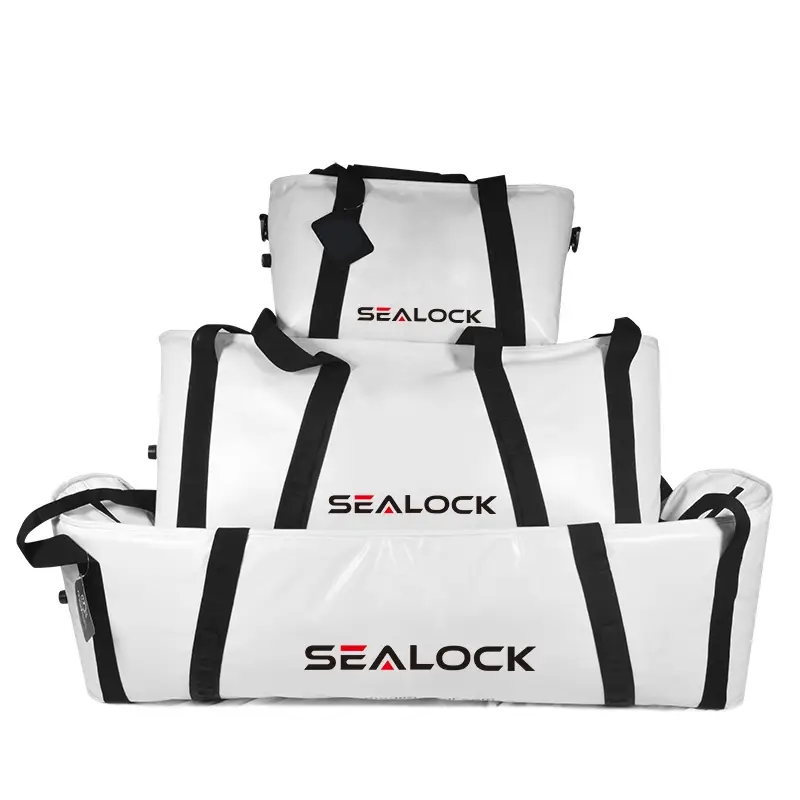
Real Sealock products across form factors, chosen by fit rather than rank:

Image Model Form & build Link
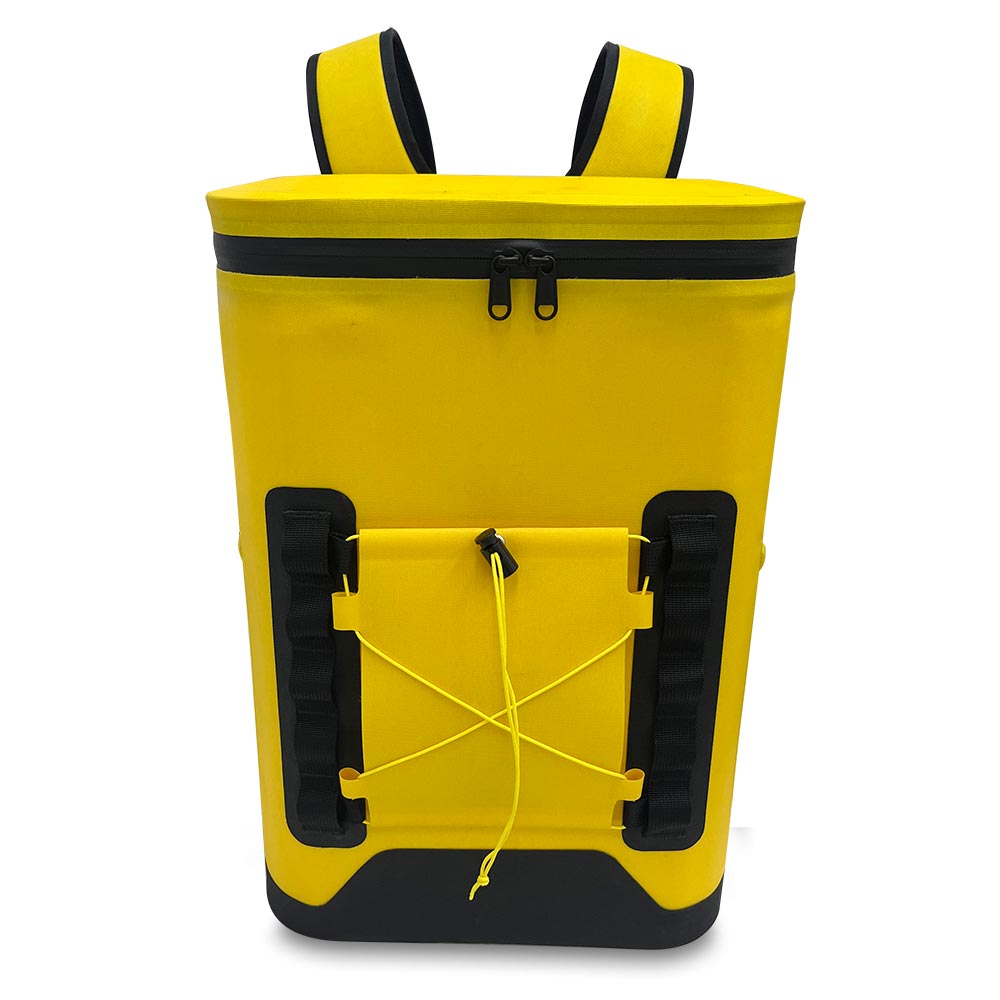
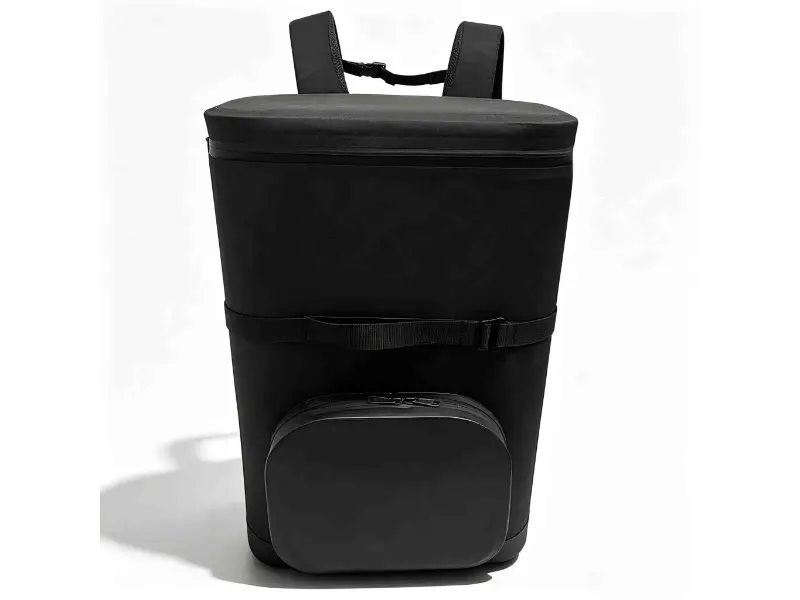
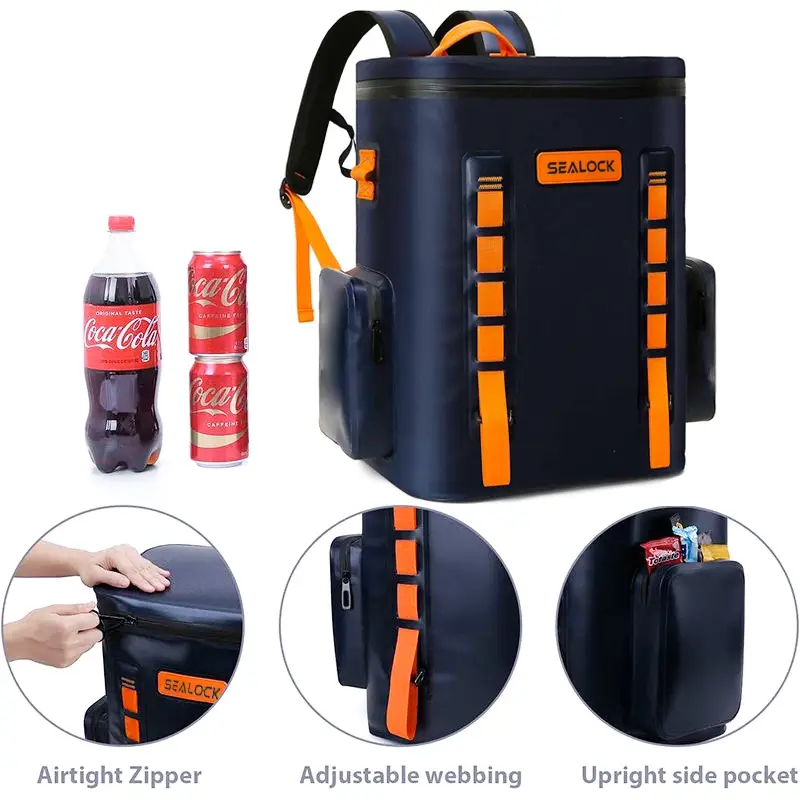
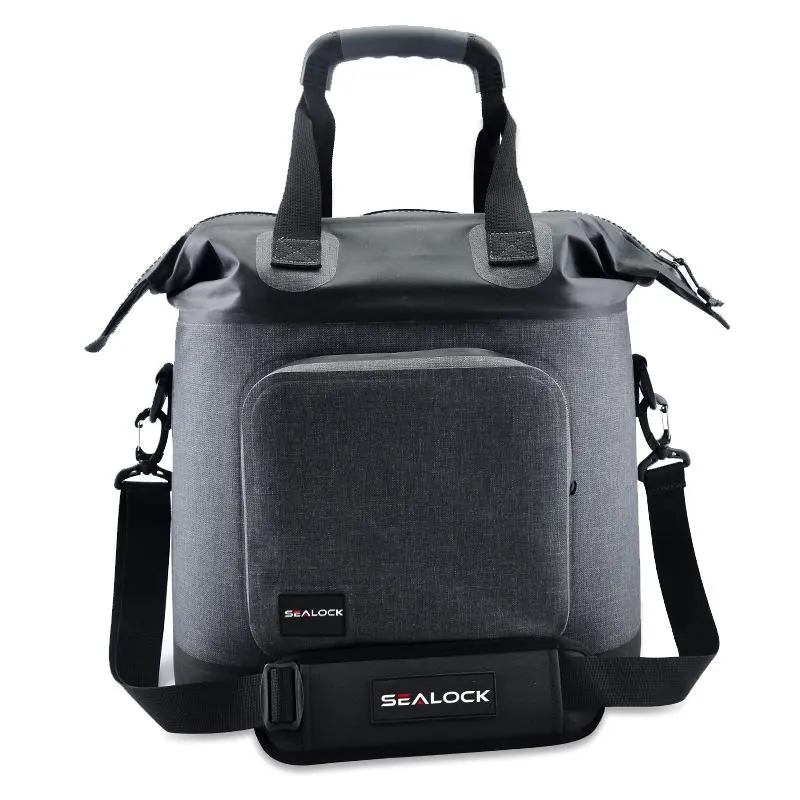
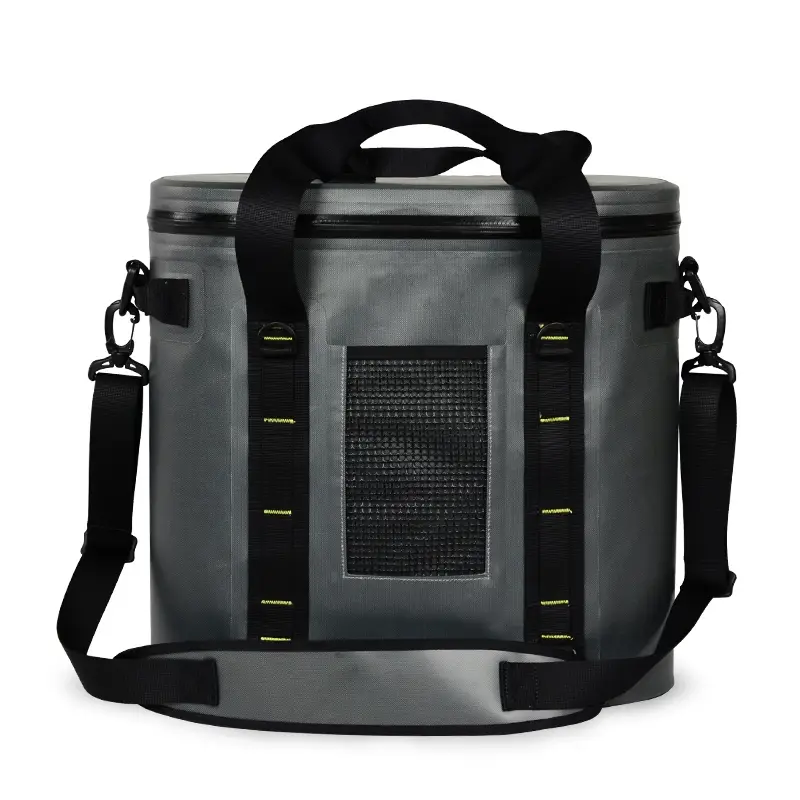
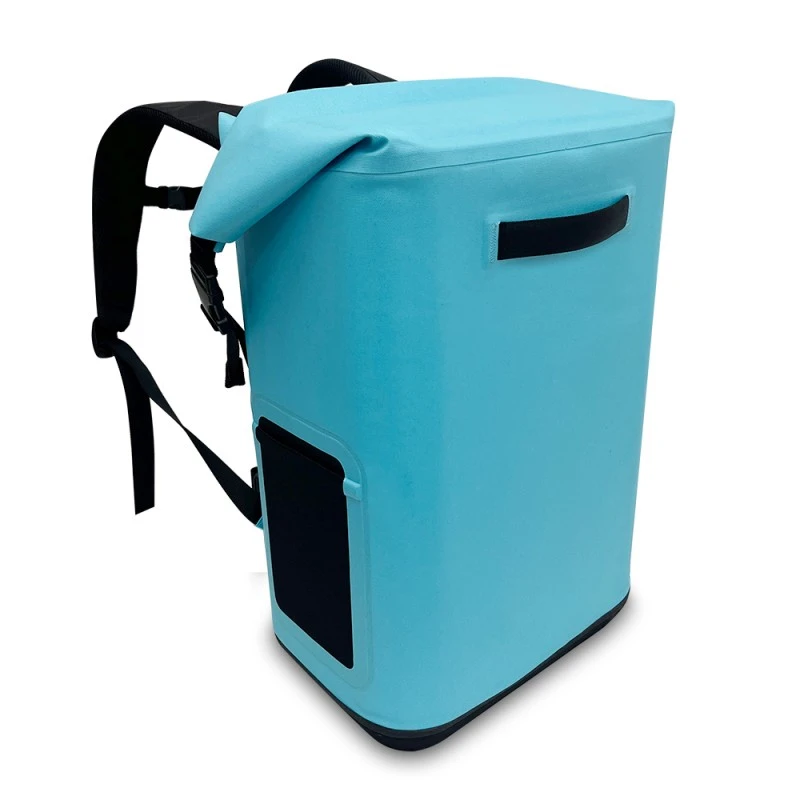
28L airtight-zipper insulated backpack cooler SL-I274 28L Airtight-Zipper Backpack Cooler (SL-I274) Backpack — 840D TPU, 3 cm EVA core, airtight zipper, HF welded, up to 48 hr View
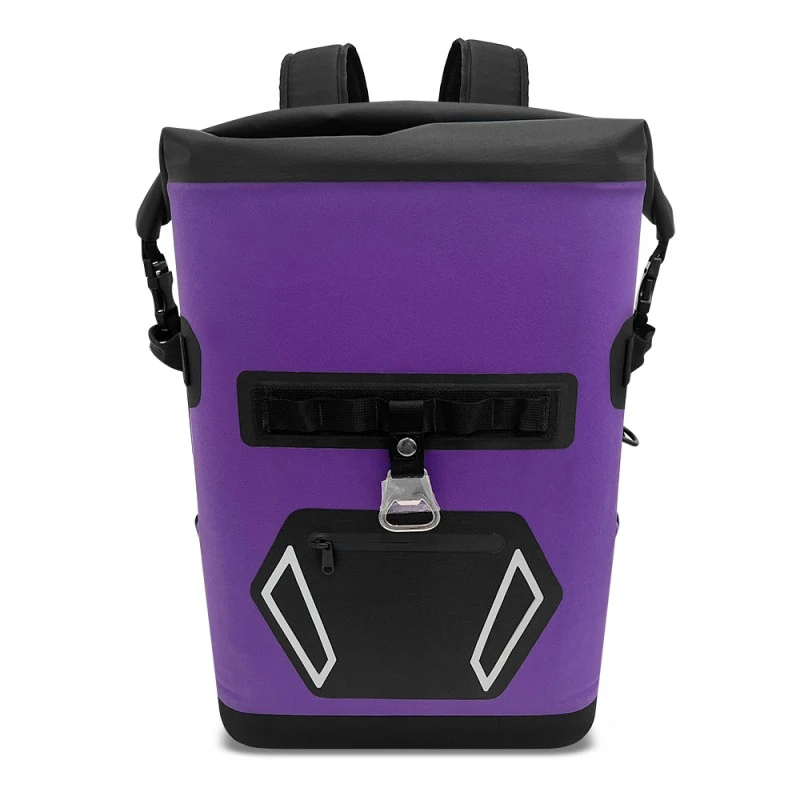
45L roll-top backpack cooler SL-I270 45L Roll-Top Backpack Cooler (SL-I270) Backpack — 600D TPU, welded roll-top, UTX buckles, up to 36 hr View
22L IPX7 cooler backpack SL-I280 22L IPX7 Cooler Backpack (SL-I280) Backpack — 50 mm XPE, IPX7, airtight zipper, 48 hr+ View
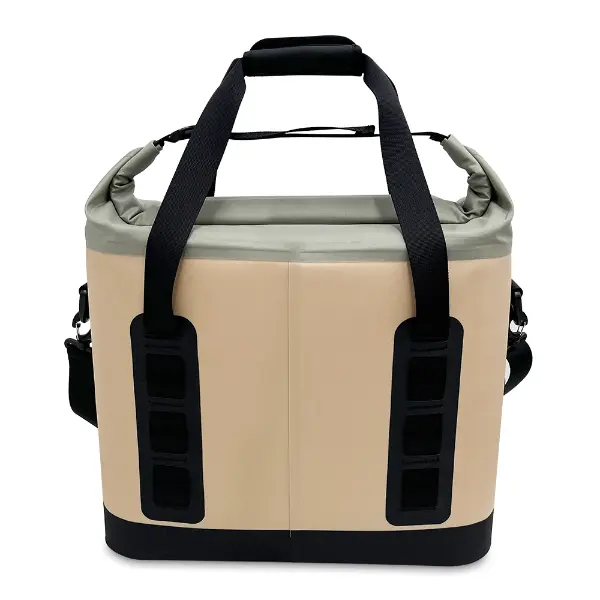
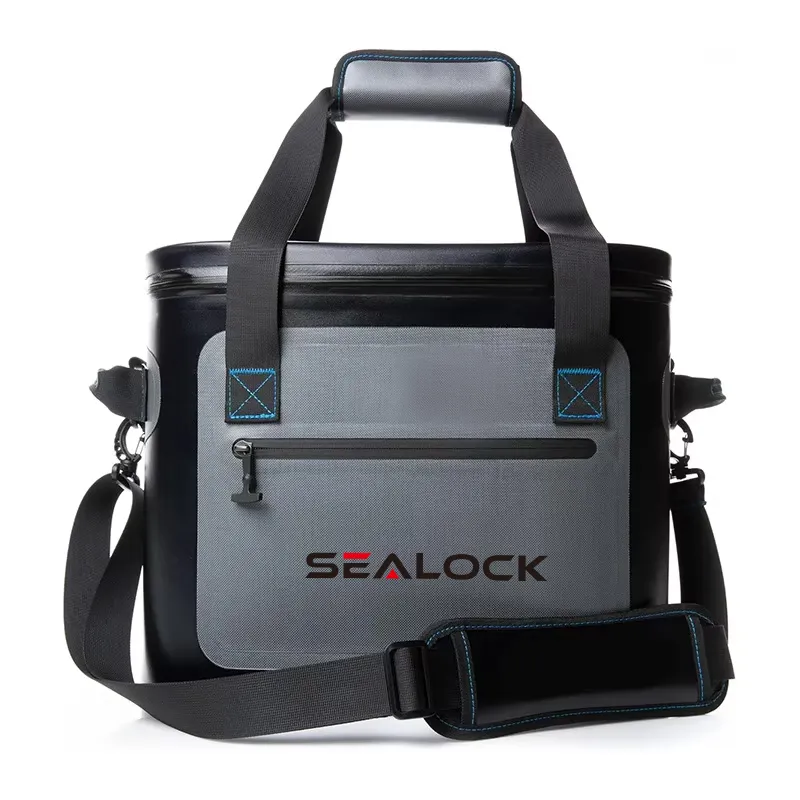
Roll-top leakproof soft cooler SL-I288 Roll-Top Leakproof Soft Cooler (SL-I288) Tote / shoulder — 20L, 840D TPU, welded roll-top, MOLLE webbing, 48 hr View
24L soft cooler tote SL-I230 24L Soft Cooler Tote (SL-I230) Tote — 840D TPU, 20 mm XPE, IPX7, HF welded View
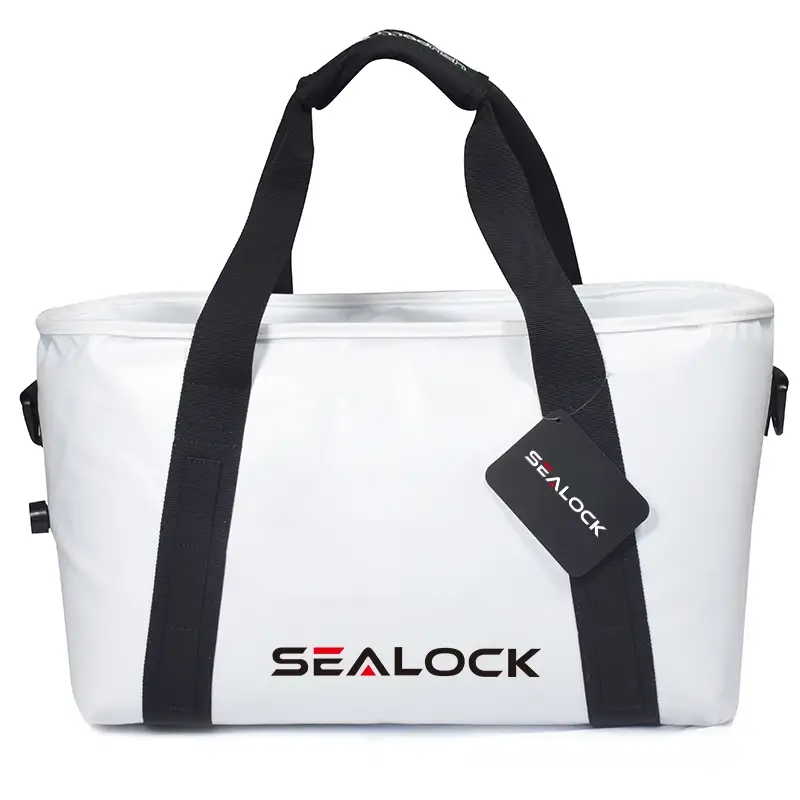
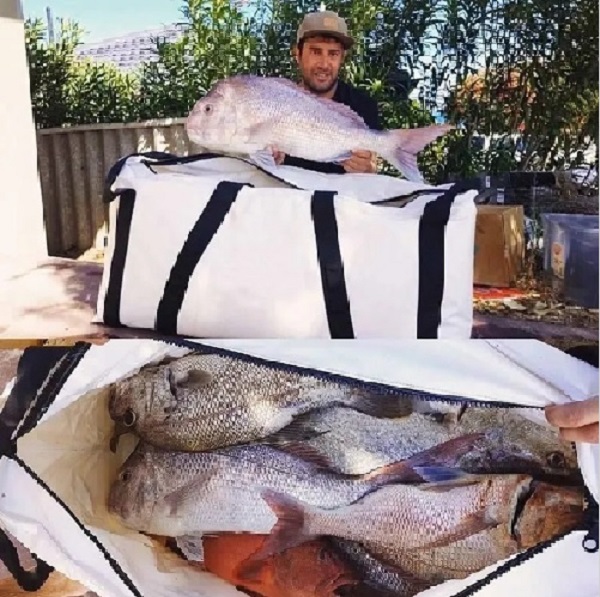
Insulated fish kill bag SL-C377 Insulated Fish Kill Bag (SL-C377) Fishing — 50 × 30 × 30 cm, PVC mesh fabric, insulated, adjustable strap View
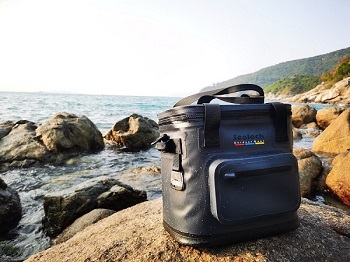
Guangdong cooler bag manufacturing cluster and Sealock high-frequency welding factory in Dongguan

Practical Advice for Sourcing From China

  • Plan around the lunar calendar, not the Gregorian one. Confirm the year's dates from the official schedule, then work backwards from your on-shelf date through clearance, freight, production and sampling.
  • Order seasonal ranges in autumn. It gives you production time before the slowdown and coincides with the main trade-fair season.
  • Avoid critical first production immediately after the holiday if you can, given workforce churn and ramp-up.
  • Verify the entity and the welding capability before paying anything.
  • Pay to a corporate account matching the licence, and treat any emailed request to change bank details as suspect until confirmed by phone.
  • Tie the balance to a passed pre-shipment inspection, and keep the approved gold sample as the reference.
  • Model landed cost, not unit price — freight on CBM plus duty on the correct classification.

FAQ: Sourcing Soft Coolers From China

Q: Why is welded cooler manufacturing concentrated in Guangdong?

A: Because the whole ecosystem is there — high-frequency welding machinery and tooling shops, weldable TPU and PVC roll goods, closed-cell foam, food-grade liner films, airtight zippers, hardware suppliers and experienced welding operators, all within short distance of each other. That proximity shortens material lead times and makes it easier to find factories that genuinely own their welding lines.

Q: How long do Chinese factories really close for Chinese New Year?

A: Far longer than the official week. Closures typically span 14 to 21 days, the slowdown starts three to four weeks before, many factories stop accepting new orders one to two weeks ahead, and after reopening capacity can be around a third until workers return — with full recovery usually four to six weeks after the holiday begins. Treat it as a multi-week disruption, not a public holiday.

Q: When should I place an order for a summer cooler range?

A: In autumn. It gives production time before the Spring Festival slowdown and coincides with the main trade-fair season, and it leaves room for sampling revisions, 30–45 days of production, ocean freight and customs clearance before the summer selling window. Ordering in spring for a summer launch usually means missing the season.

Q: Does quality drop after Chinese New Year?

A: It can, and the reason is staffing rather than intent — a significant share of workers do not return to the same employer after the holiday, so factories restart with new people and reduced capacity. For welded coolers, where consistency depends on trained operators, it is worth scheduling critical production away from the immediate post-holiday ramp-up, or adding inspection at that point.

Q: Should I source coolers from China or Vietnam?

A: China has the deepest material and welding base, which suits technical products and ground-up development; Vietnam reduces exposure to China-specific tariff measures and suits tariff-sensitive production. The best position is a supplier that can build the same specification at either origin, so you can choose without redesigning the product. Note both observe the lunar new year, so origin choice does not avoid that shutdown.

Q: How do I tell a real Chinese cooler factory from a trading company?

A: Ask technical questions only a factory can answer: is welding done in-house and at what frequency, how are welds inspected during production, is the finished bag immersion-tested, and how is load-bearing hardware attached without piercing the sealed chamber. Then verify the entity through the official business registry and confirm audits with the issuing bodies.

Sourcing from China? Sealock (YiFuLong Outdoor Gear Co., Ltd.) has welded insulated bags in Dongguan, Guangdong since 2003, across three high-frequency welding factories, with a Vietnam line offering the same specification at a second origin. Send your specification, market and launch date — the team will quote build, terms and origin, and flag the calendar constraints honestly.

Email: info@sealock.com.hk  |  Phone: +86-13632981825  |  Browse the soft cooler range

Holiday timing, shutdown durations and sourcing practices cited here reflect publicly available industry sources as of mid-2026 and vary by factory, province and year. Chinese New Year follows the lunar calendar and its dates change annually — published guides frequently disagree, so confirm the current year's official schedule and your supplier's specific plan directly rather than relying on any article, including this one.

Related News
Leave me a message
X
We use cookies to offer you a better browsing experience, analyze site traffic and personalize content. By using this site, you agree to our use of cookies.Privacy Policy