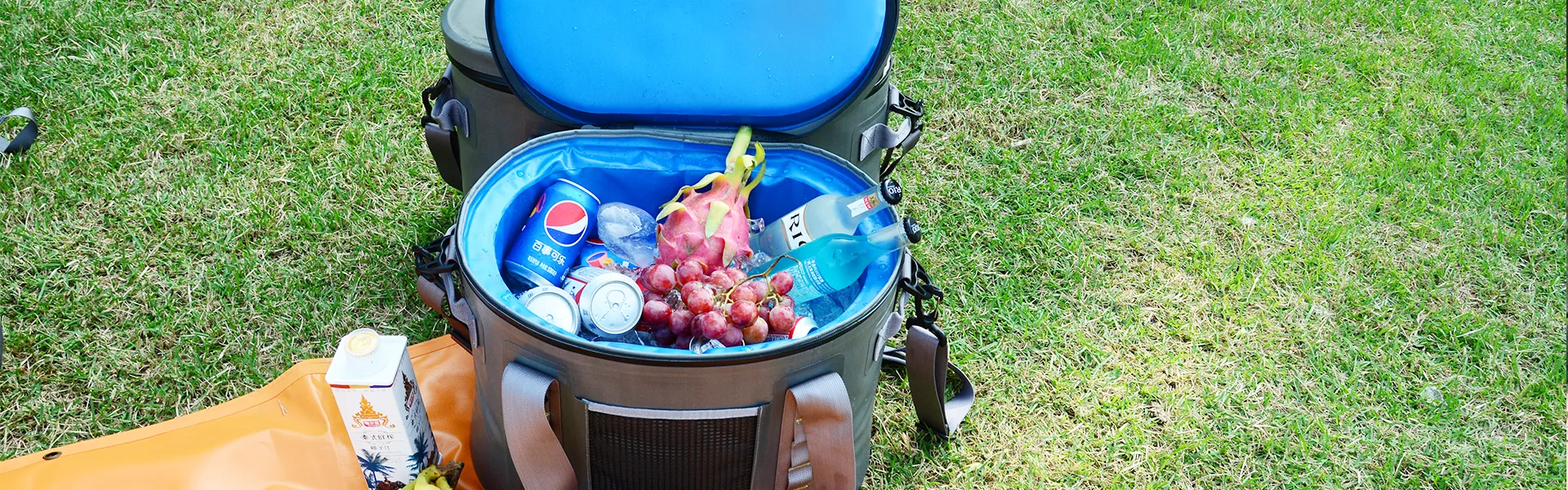
Every soft cooler on the market claims a number: 24 hours, 48 hours, "up to three days." Independent tests show how loosely those numbers relate to one another. In an indoor test published by Outdoor Life, each soft cooler was loaded with 7 pounds of ice at 68–72°F and timed until the ice was gone; results ran from about 35 hours to about 62 hours. In a test by Treeline Review, coolers left in direct sun above 90°F lost most of their ice in 10 to 24 hours. Same category of product, a spread of several times, and most of the difference comes from the conditions, not the cooler. This guide explains what actually decides a soft cooler's ice retention, how to read a retention claim, and which construction holds ice longest. It is written by Sealock (YiFuLong Outdoor Gear Co., Ltd.), which has manufactured insulated and waterproof bags in China and Vietnam for over 20 years and verifies cold-hold on its own coolers with multi-probe temperature logging.
Why Retention Claims Are Not Comparable
There is no single industry test that every soft cooler brand uses to state ice retention. Each figure is the result of a particular set of choices, and changing any one of them moves the result by hours. The ambient temperature and whether the cooler sits in sun or shade matter most; ice lasts substantially longer in shade, and YETI's own guidance suggests up to twice as long. The amount of ice relative to the cooler's capacity matters next: a bag filled two-thirds with ice will outlast the same bag holding a few ice packs and a dozen warm cans. Whether the cooler and contents were pre-chilled, how often it was opened, and whether the ice was block or cubes all shift the outcome.
The endpoint matters just as much. Many tests time the cooler until the last of the ice has melted. That is not the same as keeping food safe. US food-safety guidance treats 40°F (4°C) as the upper limit for cold storage of perishable food, and the water around the last few cubes of ice can already be above that. A cooler that "still had ice at 48 hours" may have stopped keeping meat safely cold well before then.
| What to ask about a retention claim | Why it changes the number |
|---|---|
| Ambient temperature, sun or shade | A test at 70°F indoors and one at 90°F in direct sun can differ by a factor of three or more. |
| Ice weight versus capacity | More ice relative to contents lasts longer; a full-ice test flatters a cooler that will be used with a few ice packs. |
| Pre-chilled or not | A warm cooler and warm contents spend the first hours melting ice just to cool themselves down. |
| Opened during the test? | Each opening swaps cold air for warm; real use involves dozens of openings a day. |
| Endpoint | "Ice fully melted" and "contents above 40°F / 4°C" are different moments, sometimes many hours apart. |
What Decides Ice Retention, From the Factory Side
1. The closure seal
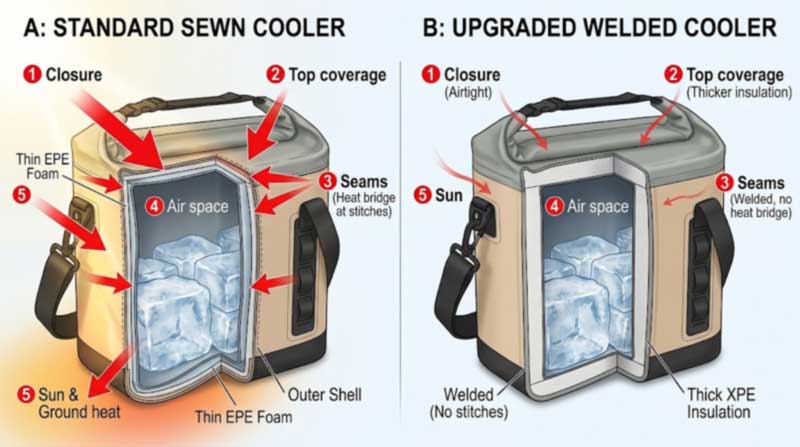
The closure is where most soft coolers lose the most cold. A wall of good foam is undermined by an opening that leaks air. Independent testers repeatedly link poor results to closures: zippers that let water through along their length, leakage between the two sliders of a double zipper, and magnetic or roll-top closures that only seal well when they are shut carefully. An airtight, waterproof zipper or a properly rolled and buckled welded roll-top keeps cold air in the way a gasketed lid does on a hard cooler. Our guide to waterproof and airtight zippers explains the difference between airtight, waterproof and water-resistant zippers and why the closure usually caps a cooler's performance.
2. Insulation thickness and coverage
Heat comes through the walls at a rate roughly inversely proportional to their thickness, so doubling the foam roughly halves the heat coming in through it. Coverage matters as much as thickness. Testers have noted roll-top coolers losing ice fastest at the top, where the rolled closure carries less insulation than the walls. In a well-built soft cooler the lid or top, the base and the corners are insulated as seriously as the side walls, and the base usually gets the thickest foam because it carries the ice. The foam must also keep its thickness: non-crosslinked foam that has been crushed flat at the base no longer insulates the way it did when new. Our article on XPE foam versus EPE covers why crosslinked foam holds its thickness.
3. Seams and the liner
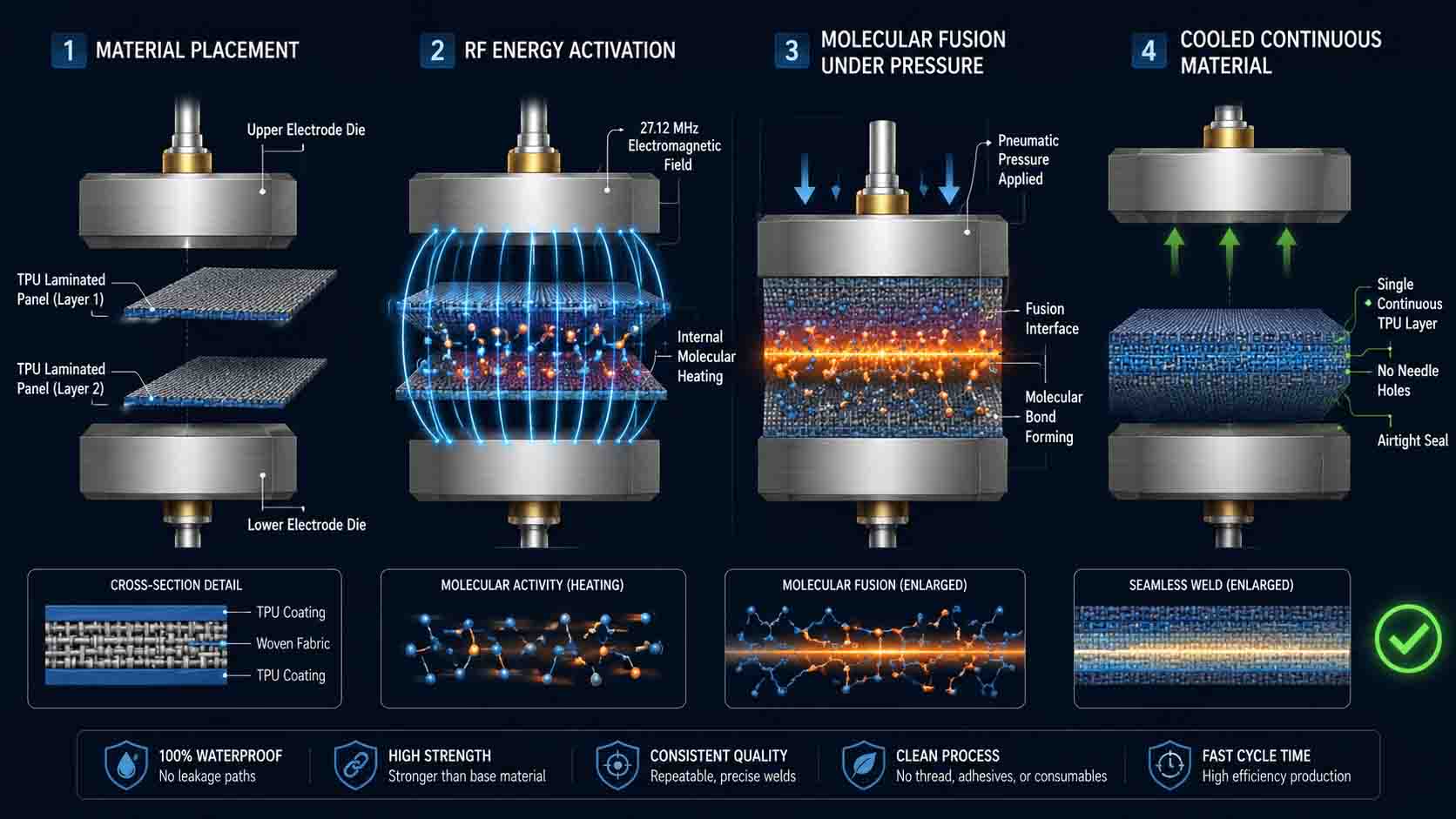
A seam stitched through the insulation creates a line where shell, foam and liner are pressed together, and heat crosses there more easily. Sewn liners also tend to leak meltwater into the walls over time. A liner sealed with high-frequency welded seams into a closed chamber keeps the insulation continuous and dry, which protects retention for the life of the bag, not just on day one.
4. Air space and fill
Empty space inside a cooler is warm air that has to be cooled, and it is replaced every time the bag opens. The best soft cooler for a given trip is one sized to the load rather than the largest one available. Roll-top designs have an advantage here: rolling the top down squeezes out air and shrinks the volume to fit the contents.
5. The shell in the sun
A soft cooler's shell absorbs solar heat. Dark colours absorb more, and a shell sitting on hot sand or a boat deck takes heat from below as well. Shade and a light-coloured shell help, and a cover such as a towel over the cooler can make a measurable difference on a hot day.
So Which Soft Cooler Holds Ice Longest?
Put together, the soft coolers that hold ice longest share one construction: a waterproof shell and liner joined by welded seams, thick closed-cell foam that keeps its thickness, including on the top and base, and an airtight zipper or a well-designed welded roll-top closure. In the independent tests above, the soft coolers that went past two days indoors were built this way, and the ones that leaked through the closure or lost cold through the top fell to the bottom of the results.
That construction is also the dividing line in our own range. Coolers with thinner EPE walls and standard closures are 24-hour-class products, suited to a day at the beach or a work shift. Welded coolers with thick XPE or EVA walls and airtight zippers or welded roll-tops are 48-hour-class products, the right choice for overnight trips, fishing and hot weather. If you need to go beyond that, the step is either a hard cooler or premium insulation such as vacuum panels, at a much higher cost; our comparison of soft and hard coolers covers when each makes sense.
How We Measure Cold-Hold
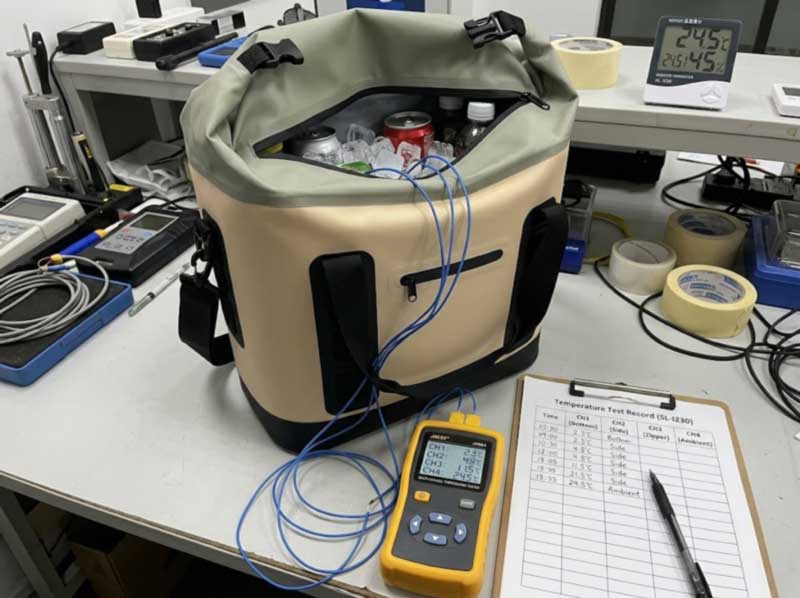
We verify retention with a multi-channel thermocouple temperature tester rather than by watching ice. Probes are placed at the base, at mid-wall and near the closure of a loaded cooler, and the temperatures are logged over time, so the result shows where the cooler is losing cold as well as how long it lasts. The same load and room conditions are used for the approved sample and for bulk production units, so a buyer can see that the production run performs like the sample, not just that the sample performed once. This sits alongside the rest of our quality programme: IQC on incoming materials, IPQC during welding and sewing, OQC before packing, full water-immersion testing for 2+ hours on IPX7 models, and SGS or QIMA third-party inspection on request.
For brands, this matters when writing a retention claim for packaging or a product listing. Stating the hours together with the test conditions, such as ambient temperature, ice load and endpoint, protects the claim and sets honest expectations, which also reduces returns from customers who used the cooler in full sun and got half the advertised time.
Getting the Most Ice Retention From Any Soft Cooler
Whatever cooler you use, the way it is packed decides a large part of the result. Pre-chill the cooler for a few hours, ideally with a bag of ice you will throw away, and put contents in cold rather than at room temperature. YETI recommends roughly two parts ice to one part contents by volume. Block ice melts more slowly than cubes, so a mix of both gives fast cooling and long life, and ice taken straight from a freezer, colder than its melting point, lasts longer than wet ice from a bag that has been sitting out. Fill empty space with more ice or a towel, keep the cooler in shade, and open it as rarely as you can. Keeping the cold meltwater rather than draining it helps keep the remaining ice cold, as long as unwrapped food is kept out of it.
Soft Coolers in Our Range by Retention Class
| Image | Model | Build | Link |
|---|---|---|---|
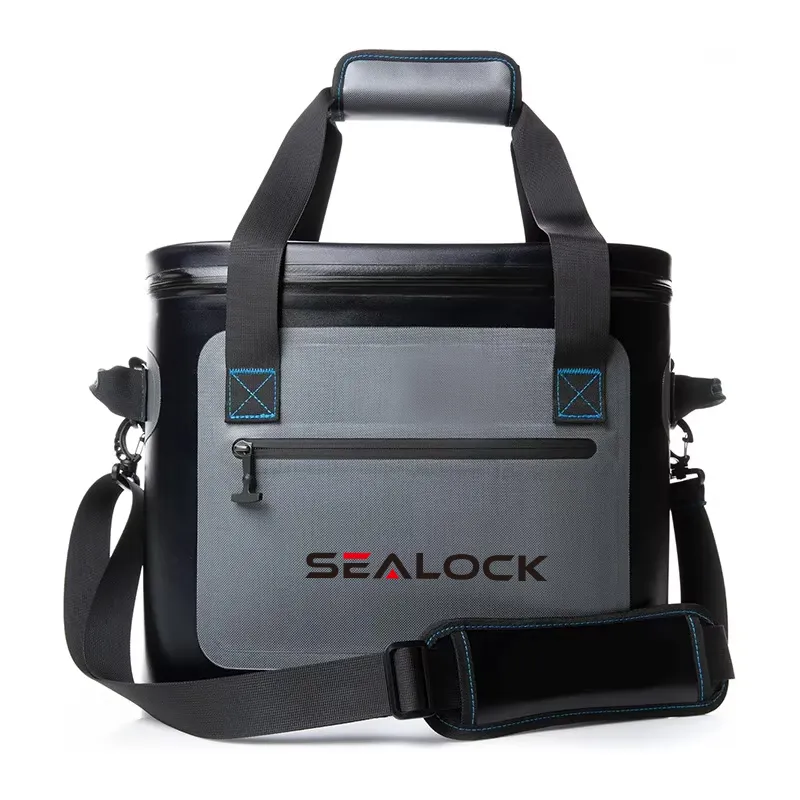
|
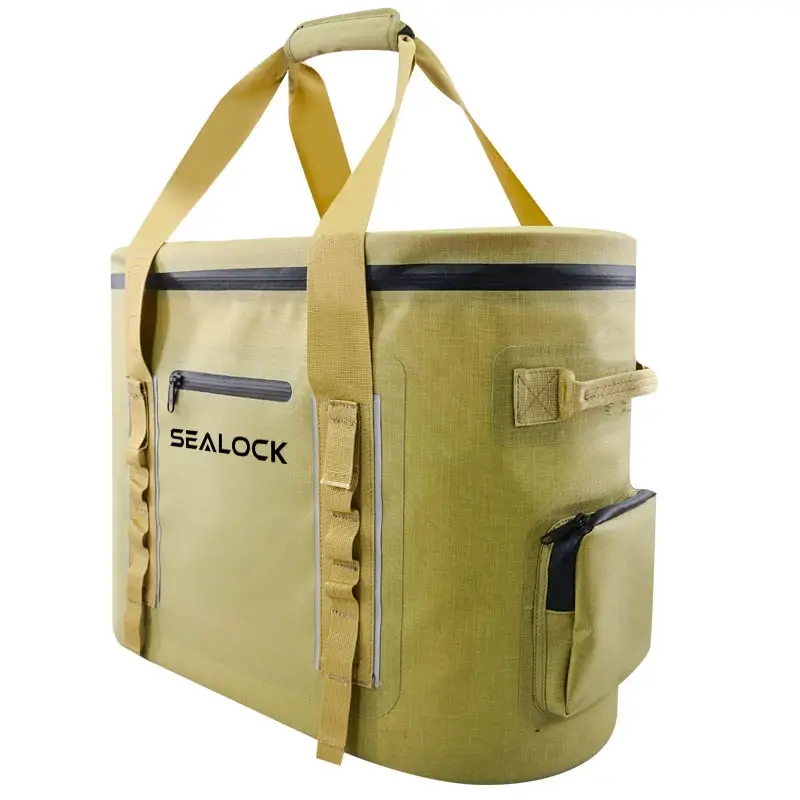
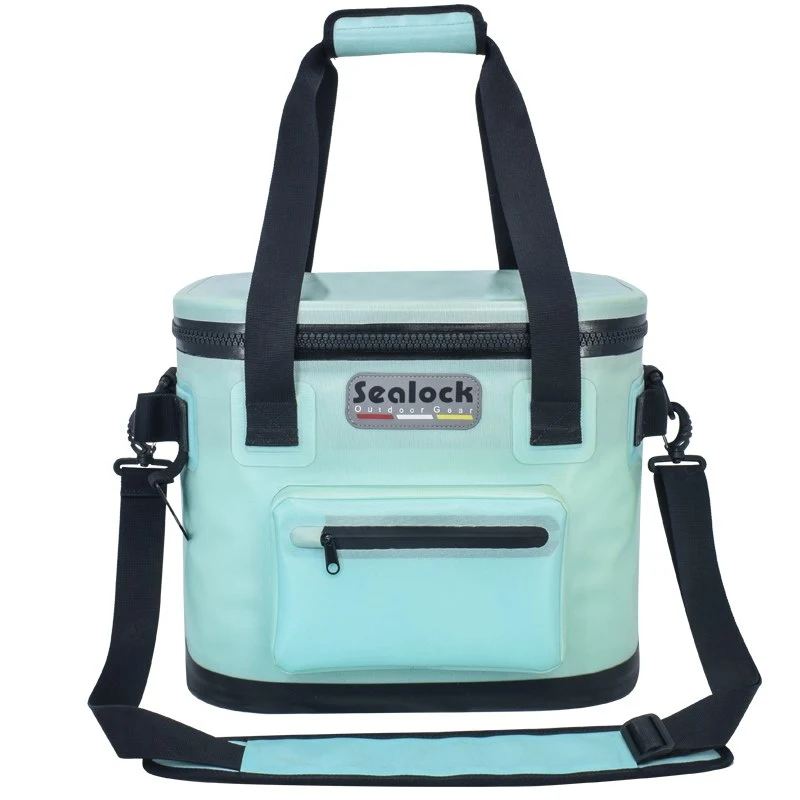
24L Soft Cooler Tote (SL-I230) | 48-hour class: 20 mm XPE, 840D TPU, airtight zipper, IPX7, high-frequency welded | View |
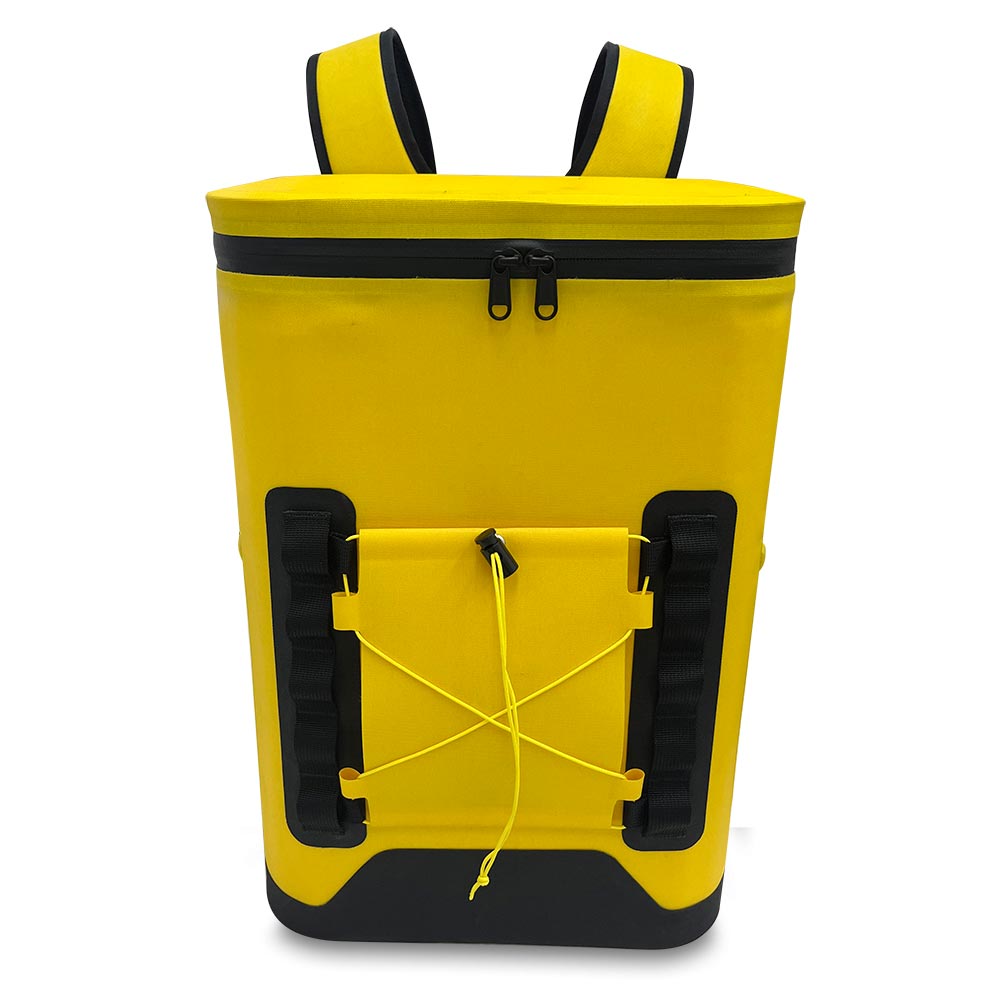
|
28L Airtight-Zipper Cooler Backpack (SL-I274) | 48-hour class: 3 cm EVA core, 840D TPU, food-grade TPU membrane, airtight zipper | View |
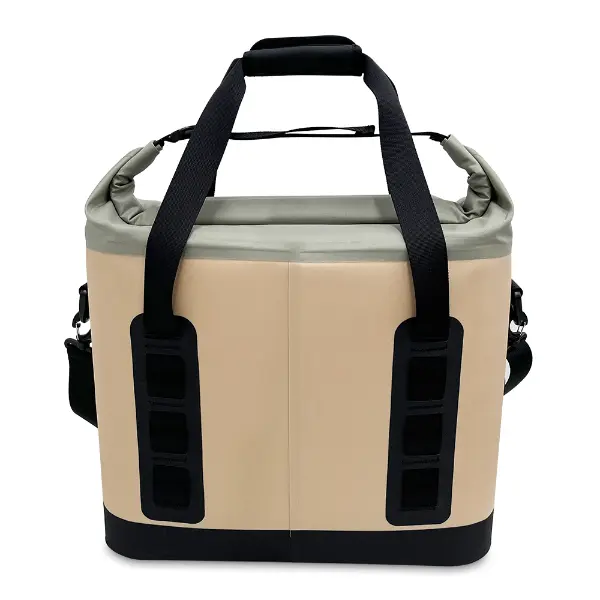
|
20L Roll-Top Leakproof Cooler (SL-I288) | Up to 48 hours: welded roll-top, closed-cell EPE, 840D TPU, food-grade liner | View |
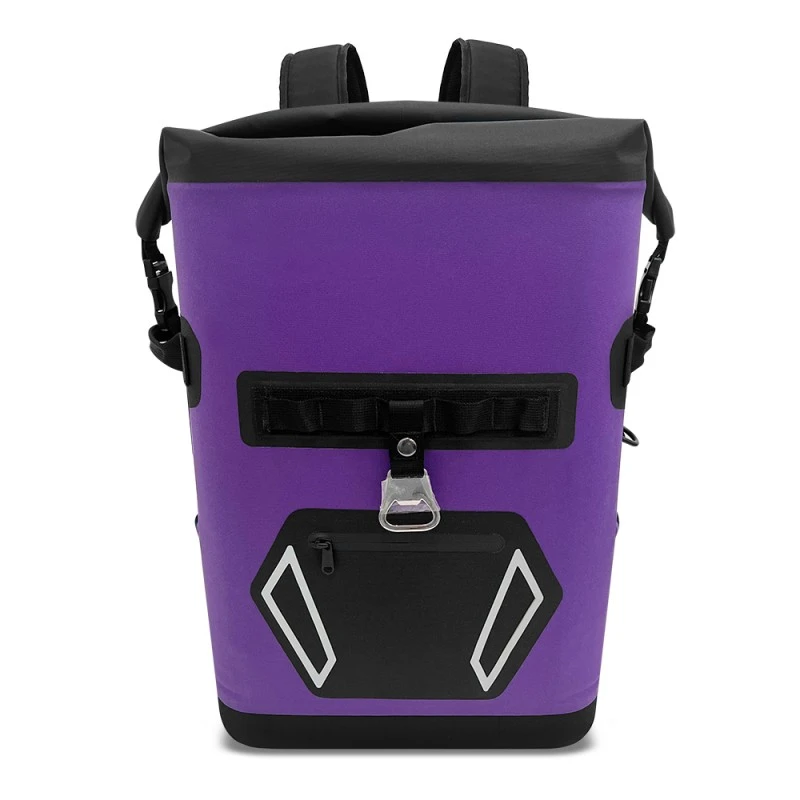
|
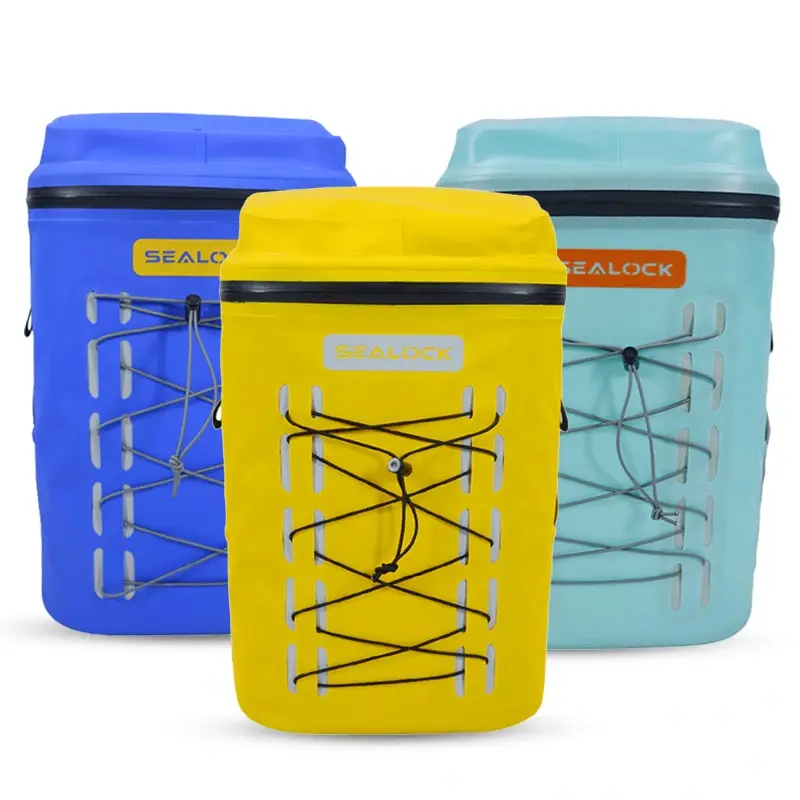
45L Roll-Top Cooler Backpack (SL-I270) | Up to 36 hours: 3 cm EVA foam, 600D TPU, food-grade TPU liner, welded roll-top | View |
All are available for OEM and ODM with your logo, colours and insulation specification. MOQ starts at 300 pieces, samples take 7–15 days and bulk production 30–45 days.
FAQ
Q: Which soft cooler has the best ice retention?
A: The ones built with welded seams, thick closed-cell foam on all sides including the top and base, and an airtight zipper or a well-sealed welded roll-top. In independent indoor tests such coolers held ice for two days or more, while coolers with leaky zippers or thin tops lost their ice much sooner.
Q: How long should a soft cooler keep ice?
A: A basic soft cooler typically keeps ice for about a day in mild conditions. A well-built welded cooler with an airtight closure can reach about two days. In direct sun above 90°F, expect a fraction of those figures, whatever the label says.
Q: Why did my cooler not last as long as advertised?
A: Usually because the conditions differed from the test: hotter weather, sun, less ice, warm contents, a cooler that was not pre-chilled, or frequent opening. A closure that was not fully sealed is the next most common cause.
Q: Should I drain the meltwater from a soft cooler?
A: Generally no. Cold meltwater helps keep the remaining ice cold. Keep unwrapped food out of it, and drain it if it starts to warm.
Q: Can I use dry ice in a soft cooler?
A: Only in a cooler designed for it and never fully sealed. Dry ice releases carbon dioxide gas, which can build up pressure in an airtight bag.
Q: Is a soft cooler as good as a hard cooler for ice retention?
A: Not over several days. A good soft cooler matches a hard cooler for day trips and overnight use while being lighter and easier to carry, but thick-walled hard coolers hold ice longer on multi-day trips.
Q: Can you build a soft cooler to a specific retention target for our brand?
A: Yes. Give us the target hours, capacity and conditions you want to claim, and we will specify foam, thickness, closure and construction to match, then verify the sample with multi-probe temperature logging before bulk production.
Developing a cooler with a retention claim? Tell us the hours you want to state and the conditions behind them. We will recommend the construction, build the sample and log its cold-hold before you commit to bulk.
Email: info@sealock.com.hk · Phone: +86-13632981825 · MOQ 300 pcs · samples 7–15 days
Independent test figures quoted here are from published reviews by Outdoor Life and Treeline Review; packing guidance follows YETI's published ice retention advice. Retention depends on ice load, ambient temperature, sun exposure and how often a cooler is opened. Brand customers are named as manufacturing clients only; no endorsement is implied.