Soft Cooler Production Lead Time Explained

2026-09-04 0 Leave me a message
"Production is 30 to 45 days" is the answer most buyers get, and it is true — but it describes only the middle of the timeline. The order-to-warehouse reality includes sampling, revision rounds, material inbound, inspection, ocean freight and customs clearance, and the delays that wreck launch dates almost never happen on the production line. They happen before it, in approvals and materials. This guide breaks the whole timeline into its real components, shows where time is actually lost, and explains how to compress a schedule without pretending physics does not apply. Sealock (YiFuLong Outdoor Gear Co., Ltd.) quotes 7–15 days sampling and 30–45 days production, and this explains what sits around those numbers.


What "Lead Time" Should Mean

Define it properly or you will plan against the wrong number. In the strict sense, (cite index="147-1">lead time refers to the total duration from purchase-order approval to finished garments leaving the factory gate. But the number a brand actually needs is broader: (cite index="149-1">the total elapsed time from placing a production order to receiving finished goods ready to sell, spanning (cite index="149-1">sampling, fitting and final approval; fabric and trim sourcing and inbound to the factory; bulk cutting, sewing and finishing; quality control and packing; freight, customs clearance and inbound to the warehouse.

Factory lead time and your lead time are different numbers. Plan on the second one.

The Finding That Should Change How You Plan

This is the most useful thing in the research, and it contradicts where most buyers focus their pressure: (cite index="149-1">most brands lose time before sewing starts — material availability and approvals are the usual bottleneck, and fabric delays are the hardest to recover from because nothing downstream can begin without yardage on the cutting table. A late colour approval or an out-of-stock fabric early on cascades through every later stage.

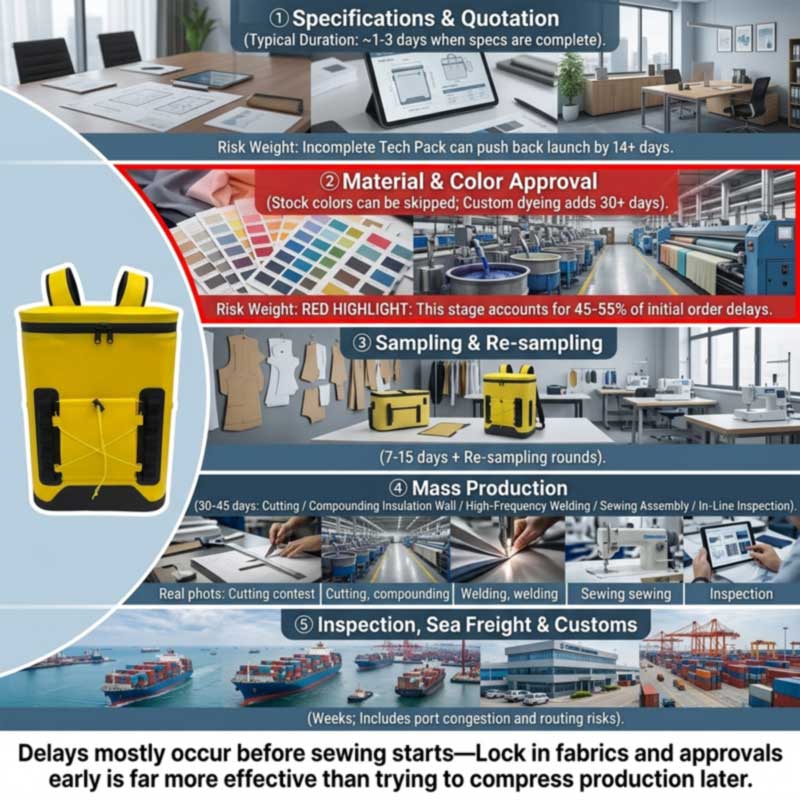
One manufacturer quantifies it: (cite index="148-1">fabric sourcing and dyeing account for 45% to 55% of delays in first orders. Roughly half the delay risk on a first order sits in a stage most buyers treat as administrative.

The conclusion follows directly: (cite index="149-1">the reliable way to protect a launch date is to lock fabric and approvals early, not to compress production later. Chasing the factory in week six does not recover time lost in week one.

full soft cooler lead time breakdown from specification and material approval through production, inspection and freight

Stage by Stage

1. Specification and quotation

Fast when the brief is complete: benchmarks put (cite index="146-1">tech-pack review and quotation at around 1–3 days when specifications are complete. Slow when it is not — (cite index="150-1">incomplete tech packs are a primary cause of friction, often adding 14 or more days to a project's start date, because a factory cannot quote accurately or cut fabric without precise measurements, seam specifications and a bill of materials.

For a cooler, "complete" means naming: shell material and denier, insulation type and wall thickness, liner material and market compliance, closure type and seal level, capacity and internal dimensions with tolerances, hardware, harness, branding method and packaging.

2. Materials and colour approval — the real bottleneck

Benchmarks suggest (cite index="146-1">3–7 days for fabric and swatch selection in some programmes, but custom colours, dyeing or special materials can take longer — and "longer" can be substantial: (cite index="150-1">if a brand requests custom-dyed fabrics or specialised trims, the timeline can extend by 30 days or more.

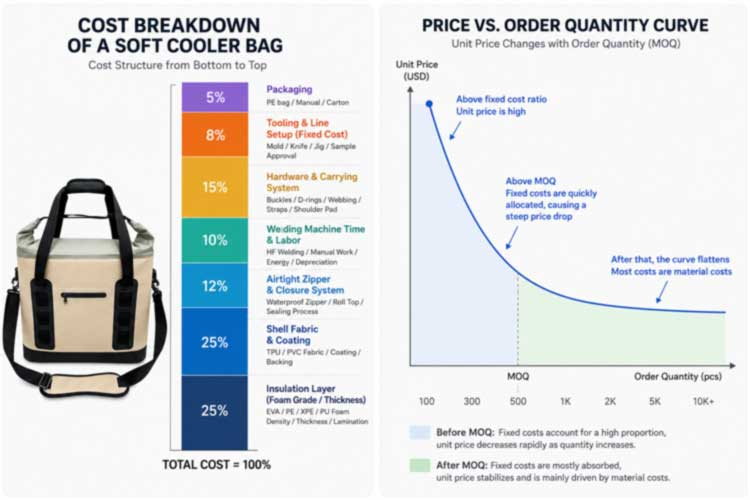
A soft cooler has more material streams than a garment: shell fabric, closed-cell foam, food-grade liner film, airtight or waterproof zippers, buckles, webbing and labels. Each has its own inbound lead time, and the slowest one sets the start date. Hardware and trims deserve particular attention, because they are small, cheap and routinely forgotten — yet (cite index="145-1">even when fabric and labour are ready, one missing functional or branded component can prevent production from starting.

3. Sampling and revisions

Sealock quotes 7–15 days for samples, longer for ground-up development where patterns and welding tooling must be engineered first. The variable is not the making; it is the number of rounds — and rounds are driven by brief quality and feedback speed. (cite index="147-1">Delays in feedback from buyers or unclear specifications extend the sample approval timeline, and one recommended discipline is (cite index="150-1">a 48-hour rule for sample revisions to ensure momentum isn't lost.

4. Bulk production — 30 to 45 days

What actually happens inside that window, for a welded cooler: cutting shell, foam and liner; laminating the insulated wall; high-frequency welding the body, base and closure; sewing the harness, pockets, webbing and trim; assembly and hardware; in-line inspection throughout; finishing and packing.

Worth noting for scheduling: many cooler builds pass through two different production lines — the high-frequency welding line and the sewing line. At Sealock these sit in separate rooms on the same floor, and sewn construction is a core in-house capability rather than an outsourced step. A build that uses both is a slightly longer internal route than a welded-only or sewn-only product, which is one reason complexity affects the production window. The full sequence is in How Soft Cooler Backpacks Are Manufactured.

5. Inspection

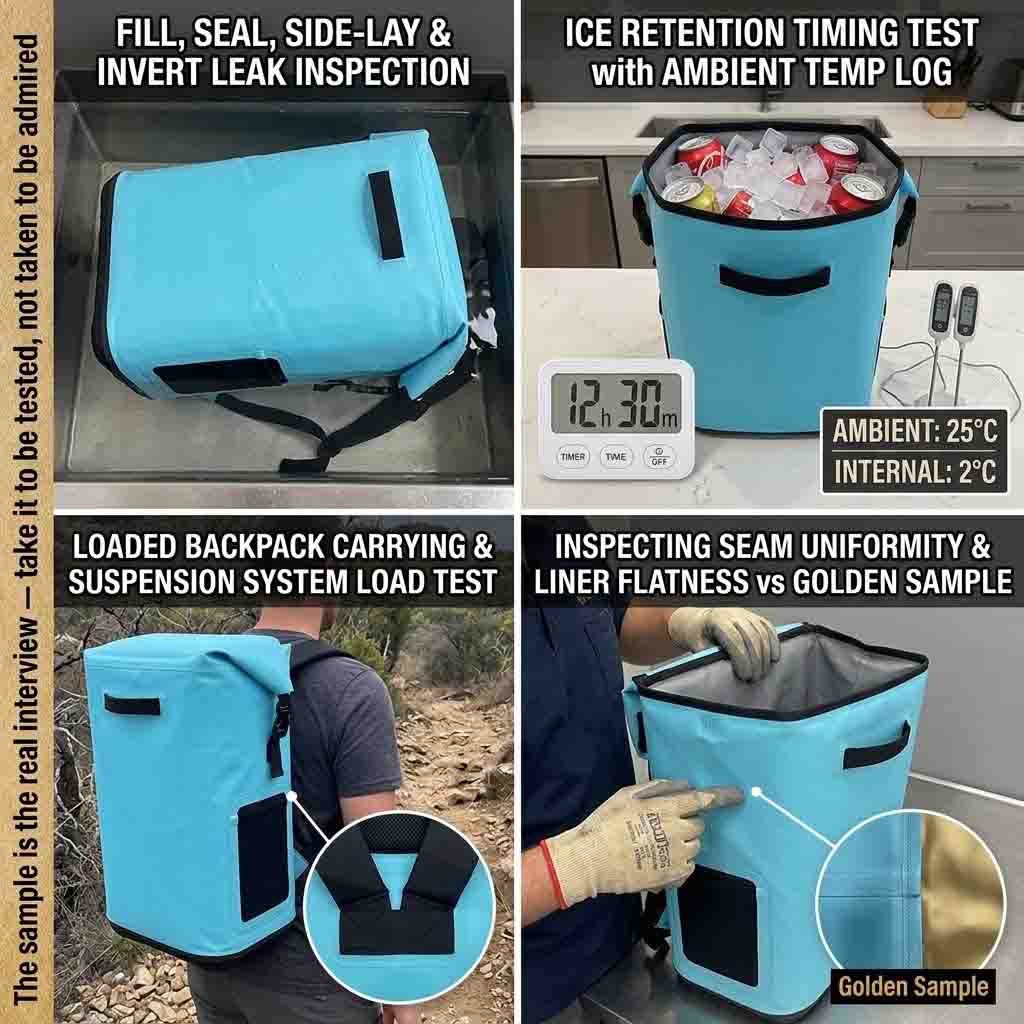
Book it at around 80% completion so there is time to rework. On a cooler, allow time for water testing specifically, and remember the balance payment is normally tied to a passed inspection. See Soft Cooler Quality Inspection Before Shipment.

6. Freight and clearance

The stage buyers most often omit entirely. Ocean transit plus destination clearance adds weeks, and it is exposed to disruption outside anyone's control: (cite index="146-1">port congestion, route disruptions, customs or geopolitical events can extend these windows further, so a delivery buffer is essential. Recent routing conditions illustrate the scale — one manufacturer notes carriers rerouting around the Cape of Good Hope creating (cite index="148-1">an automatic 10 to 14 day delay for shipments to Europe. Coolers are also bulky and charged by volume, which matters for cost more than time; see Wholesale Cooler Backpack Manufacturer: Bulk Pricing & FOB Terms.

The Common Causes of Delay

Cause Typical impact Prevention
Incomplete tech pack 14+ days added before start Specify materials, dimensions, tolerances, closure and compliance up front
Custom colour / custom material 30+ days; ~half of first-order delay risk sits here Use stock colours for a first order, or start lab dips immediately
Slow buyer feedback Extends every sampling round Single decision-maker; 48-hour response rule
Mid-process design changes Days to weeks; can invalidate dyed fabric Lock design and material base early; treat changes as new items
Missing trims or hardware Blocks line loading entirely Order trims early; confirm inbound dates before line loading
National holidays Weeks — Spring Festival is a multi-week disruption Order ahead of the slowdown; see the China guide
Failed inspection / rework Days to weeks Clear defect definitions and gold sample agreed pre-production
Freight and customs Weeks, variable Build a buffer; do not plan to the minimum transit

Two of these deserve emphasis. Mid-process changes are expensive in time as well as money: (cite index="152-1">re-skewing colours, re-knitting panels or redesigning after fabric is already dyed adds days or weeks — lock key design elements and fabric bases early, and treat major changes as new item codes with their own lead-time expectations. And holidays are not a footnote: (cite index="151-1">national holidays in production countries require either advanced ordering or extra built-in buffer time. For cooler bags, whose ordering window sits across the Spring Festival period, this is a first-order planning constraint — see Soft Cooler Manufacturer in China: Complete OEM Guide.

How to Actually Compress a Timeline

Levers that work, roughly in order of effectiveness:

  1. Choose stock materials and stock colours. This removes the single largest delay source on a first order — no lab dip cycle, no dye lot wait.
  2. Submit a complete specification. A production-ready brief turns a 14-day discovery loop into a 1–3 day quotation.
  3. Pre-approve core materials for repeat programmes. The standard advice is (cite index="151-1">pre-approving core fabrics to skip repeat lab dips — a second order on an approved material is materially faster than the first.
  4. Consolidate feedback and decide fast. One decision-maker, one consolidated response, a fixed turnaround commitment. (cite index="151-1">Consolidating sample iterations by supplying clear, complete specifications is a documented lever.
  5. Start from an existing platform. Branding and specification changes on a proven welded build skip pattern engineering and welding tooling development entirely.
  6. Order into the off-season. Factory loading is a real constraint; the same order placed in a quieter window schedules sooner.
  7. Air freight, as an emergency only. The honest framing: (cite index="149-1">air freight can claw back two to four weeks at the end but at several times the cost of sea, so it works as an emergency lever rather than a plan.
What cannot be compressed. Welding, wall lamination and curing take the time they take; rushing them produces the defects that fail inspection and cost more time than they saved. Water testing needs duration to reveal slow seepage. Ocean freight is fixed by geography. A supplier who agrees to any deadline without discussing materials, colour approval and factory loading is not planning — and a schedule agreed on optimism is the most common route to a missed season.


Planning Backwards: A Worked Schedule

Work from the on-shelf date, not the purchase order. Subtract, in this order:

Step back from on-shelf date Allow
Warehouse receiving, QC and listing Days to a week
Inland delivery from port Days
Customs clearance Days, variable
Ocean transit Weeks, route-dependent — add buffer
Pre-shipment inspection and any rework Up to a week
Bulk production 30–45 days
Material inbound (longest lead item) Days to weeks; 30+ if custom-dyed
Sampling and approval rounds 7–15 days plus revisions
Specification and quotation 1–3 days if complete
Holiday buffer Weeks if the schedule crosses Spring Festival

For a summer cooler range this arithmetic usually lands the commitment date in autumn or early winter. A brand starting in spring for a June launch has already lost the season — and coolers are seasonal, so goods that arrive late wait a year rather than a month. The commercial consequences are covered in How to Start Your Own Cooler Backpack Brand.

Do not forget the reorder. If the first run sells out, the replacement takes the same 30–45 days plus freight — so a mid-season sell-out means the restock arrives after the season, unless the reorder was planned into the original schedule. Decide your reorder trigger point before the first shipment lands.


Sealock Lead Times

Quotation Fast on a complete specification
Sampling 7–15 days; longer for ground-up development while patterns and welding tooling are engineered
Production 30–45 days after sample and deposit confirmation
Terms MOQ 300 pcs per design; FOB Guangdong
Capability In-house high-frequency welding lines and sewing lines — separate rooms, same floor; many builds use both
Quality IQC / IPQC / OQC, AQL sampling, gold-sample sign-off, full water-immersion batch testing; SGS or QIMA welcomed
Origin China or Vietnam on the same specification
Certifications ISO9001, BSCI, SMETA P4, GRS, HIGG, SCAN

Platforms that shorten a first schedule — existing welded builds in stock colourways, so no pattern development and no dye lot:

Image Model Why it shortens the schedule Link
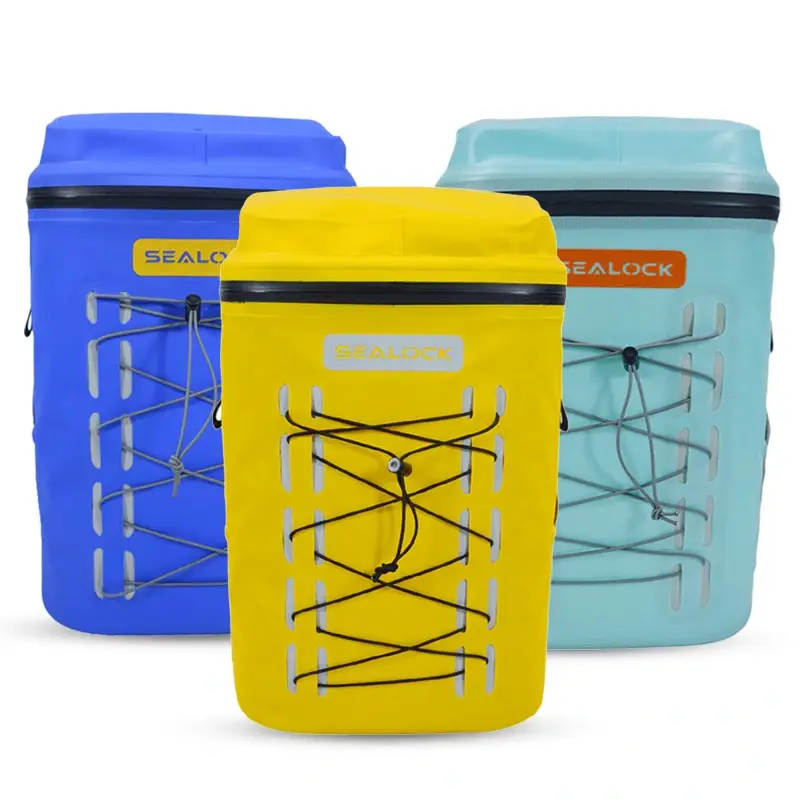
28L airtight-zipper insulated backpack cooler SL-I274 28L Airtight-Zipper Backpack Cooler (SL-I274) Proven 48-hour sealed build, four stock colours View
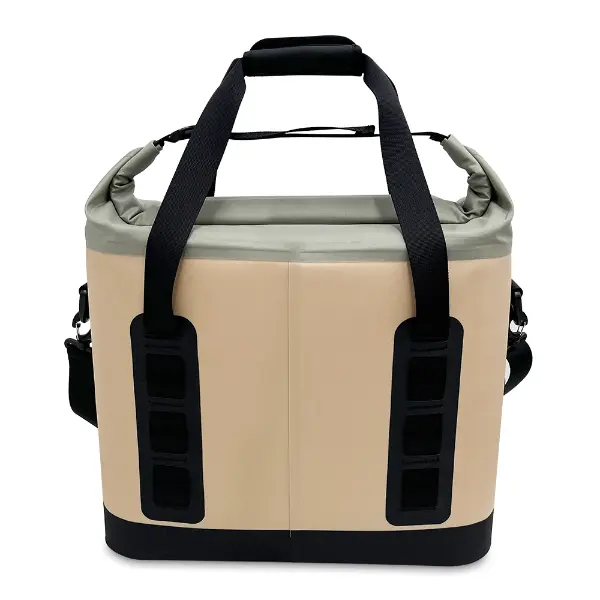
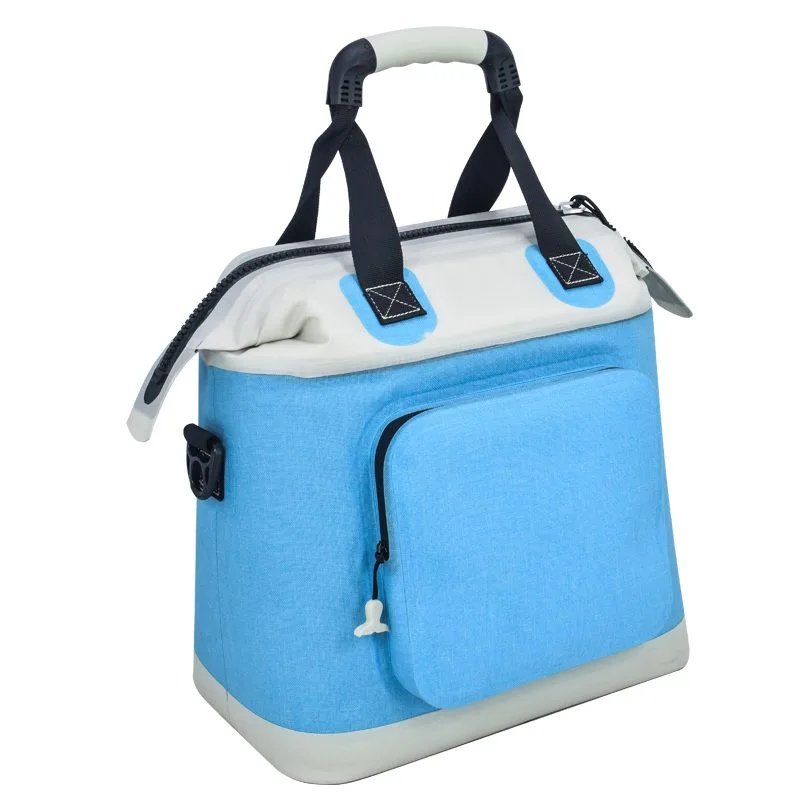
Insulated soft cooler backpack with molded lid SL-E050B Insulated Cooler Backpack, molded lid (SL-E050B) Two sizes already developed — range extension without new tooling View
Roll-top leakproof soft cooler SL-I288 Roll-Top Leakproof Soft Cooler (SL-I288) Existing tan/grey colourways; distinctive without a custom dye lot View
Insulated leakproof cooler backpack SL-I075A Insulated Leakproof Cooler Backpack (SL-I075A) Value platform in three stock colours View

FAQ: Soft Cooler Lead Times

Q: How long does soft cooler production take?

A: Bulk production is typically 30–45 days after sample and deposit confirmation, with samples at 7–15 days beforehand. But order-to-warehouse is longer — add specification and quotation, material inbound, sample revisions, inspection, ocean freight and customs clearance. Two to three months from approval is a realistic planning figure.

Q: Where do delays actually come from?

A: Mostly before production starts. Material availability and approvals are the usual bottleneck, and fabric delays are the hardest to recover from because nothing downstream can begin without material on the cutting table — one manufacturer attributes 45–55% of first-order delays to fabric sourcing and dyeing. Late colour approval cascades through every later stage.

Q: How much does a custom colour add?

A: Potentially 30 days or more, because custom dyeing brings its own lab dip approval cycle and dye lot lead time. For a first order under time pressure, choosing a stock colourway is the single most effective way to protect the schedule.

Q: Can I speed up production if I am late?

A: Only within limits. Air freight can recover two to four weeks at the end at several times the cost of sea, which makes it an emergency lever rather than a plan. Welding, wall lamination and water testing take the time they take, and rushing them produces defects that fail inspection and cost more time than they save. Protect the date by locking materials and approvals early, not by compressing production later.

Q: How far ahead should I order a summer range?

A: Work backwards from your on-shelf date through warehouse receiving, inland delivery, customs, ocean transit, inspection, 30–45 days production, material inbound, sampling and approvals — then add a holiday buffer if the schedule crosses Spring Festival. For most summer cooler ranges that puts the commitment in autumn or early winter.

Q: What makes the biggest difference to my lead time?

A: A complete specification and a stock colourway. A production-ready brief turns a two-week discovery loop into a one-to-three day quotation, and a stock colour removes the dye lot from the critical path. After that: fast, consolidated feedback during sampling, and starting from an existing platform rather than developing a new pattern.

Planning a schedule? Sealock (YiFuLong Outdoor Gear Co., Ltd.) manufactures welded and sewn soft coolers in China and Vietnam, quoting 7–15 days sampling and 30–45 days production. Send your on-shelf date and the team will work the calendar backwards with you — and say plainly if it does not fit.

Email: info@sealock.com.hk  |  Phone: +86-13632981825  |  Browse the soft cooler range

Benchmarks and delay statistics cited here reflect publicly available apparel and soft-goods manufacturing sources as of mid-2026 and vary by factory, product, materials and season. Freight timings in particular change with routing conditions. Confirm current lead times and capacity with your supplier before committing to a launch date.

Related News
Leave me a message
X
We use cookies to offer you a better browsing experience, analyze site traffic and personalize content. By using this site, you agree to our use of cookies.Privacy Policy