News

How to Put Your Logo on a Cooler Bag: 5 Branding Methods Compared

2026-06-08 0 Leave me a message

When you need to put your logo on a cooler bag, the outer shell material — not the artwork — decides which methods will actually survive. Cooler bags are different from plain cotton totes: they sweat with condensation, get wiped down constantly, and many have a coated or laminated film surface that rejects ink and resists penetration. Choose a method that doesn't bond to that surface, and your logo will be peeling or cracking after the first cold-and-wet cycle.

So the question is not simply "which method looks best." It is: "which method stays bonded to a sweating, frequently-cleaned cooler surface?" That single criterion reorders the usual ranking of branding methods. Below are the five methods buyers actually use, compared on durability, cost, detail capability, and — most importantly — the shell surface each one belongs on.

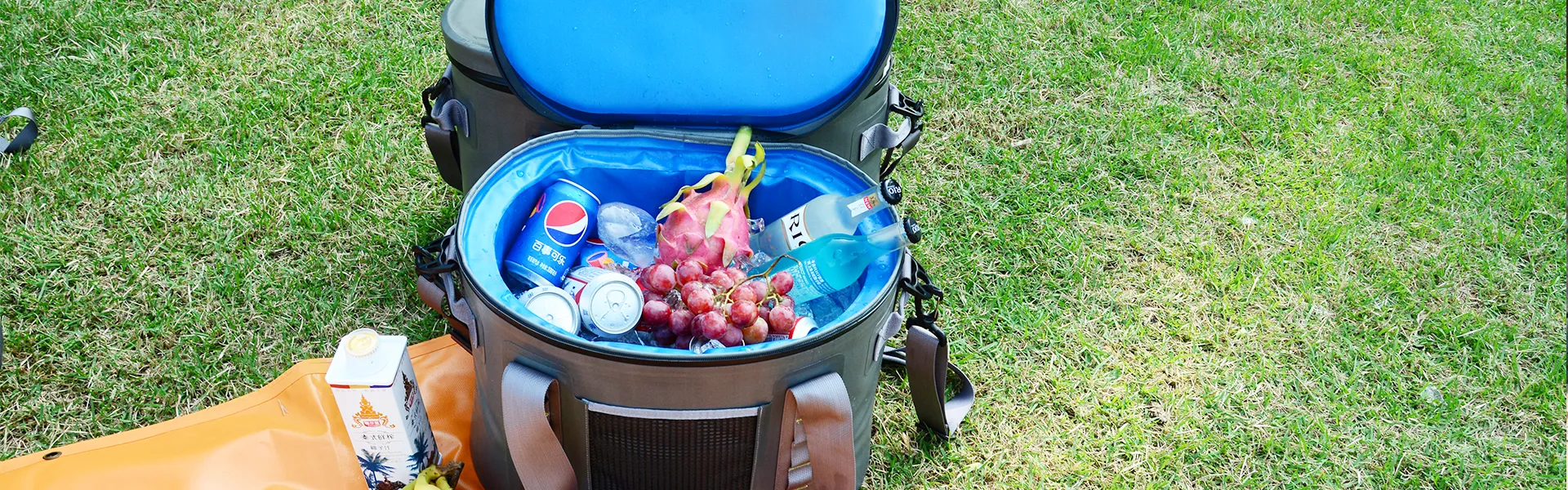
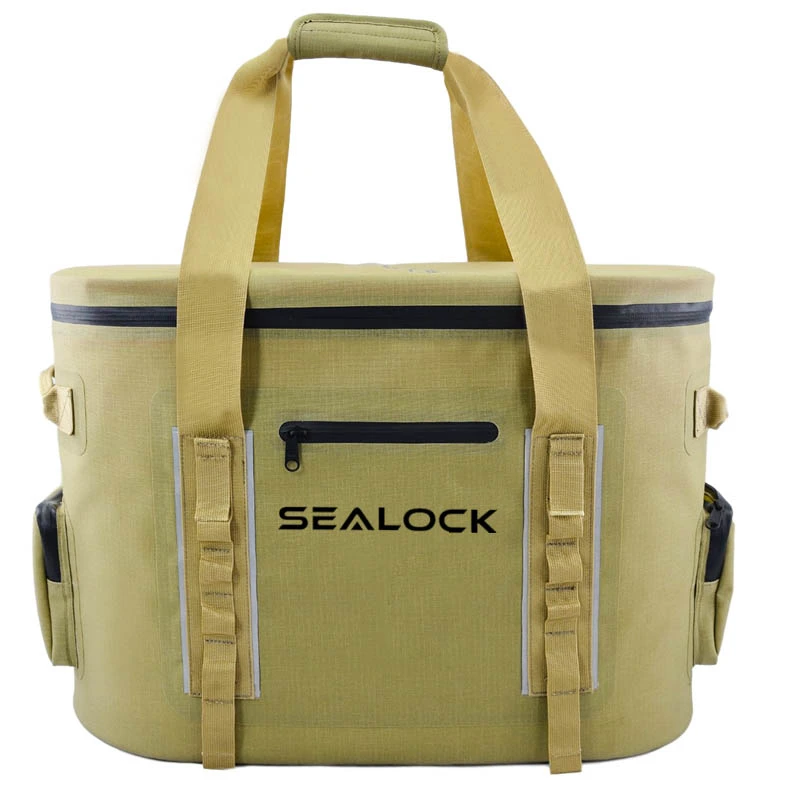
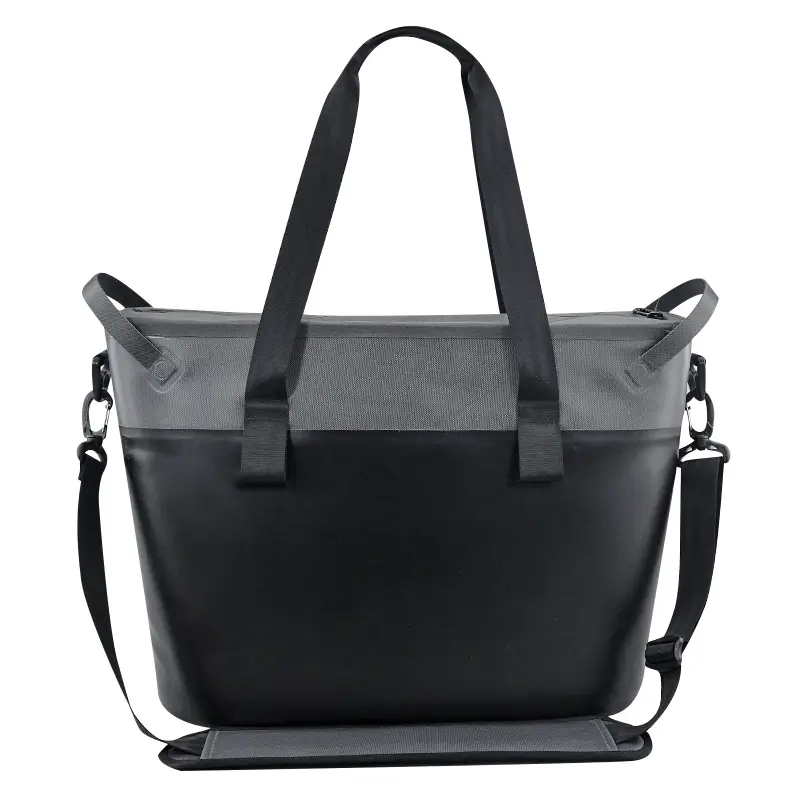
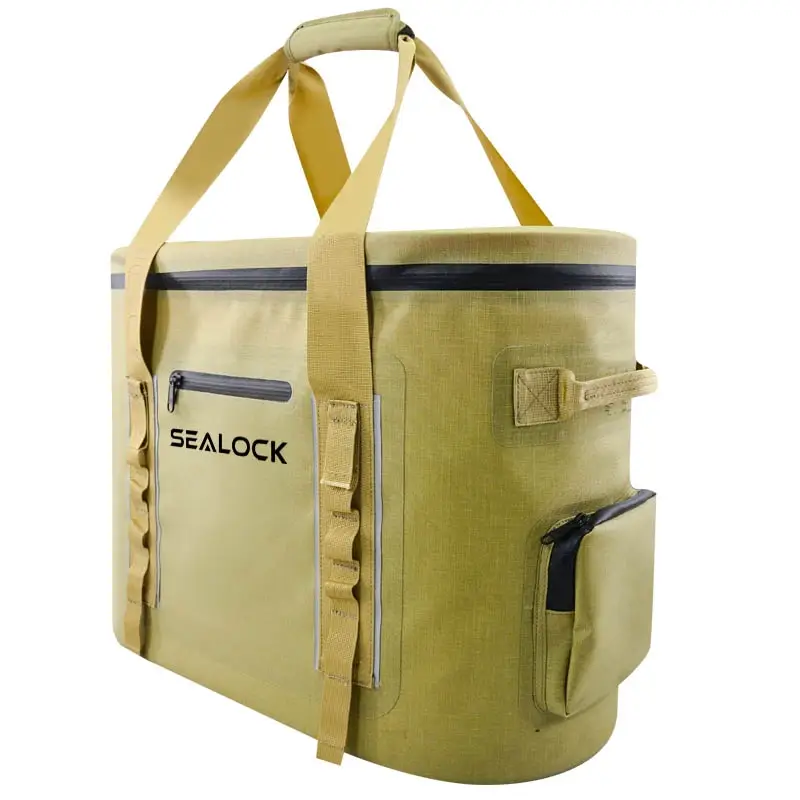
Insulated Tote Cooler Bag

First, identify your shell — it dictates everything that follows

Before comparing methods, settle one variable, because every recommendation below depends on it: is your cooler's outer shell a woven fabric or a coated / laminated film?

A woven fabric shell — polyester, ripstop nylon, canvas — has a textured, absorbent surface that accepts ink and thread well, so it tolerates all five methods. A coated or laminated film shell — the type used on most waterproof and leakproof coolers, where a TPU or PVC layer makes the surface wipeable and water-resistant — is smooth, flexible, and non-absorbent. That film rejects methods that rely on soaking into the surface and rewards methods that bond to or fuse with it. If your model is a waterproof cooler, assume a film shell and read the comparison accordingly.

The five methods, side by side

Read the right-hand column first. "Best surface" is the gatekeeper — if a method does not match your shell, the other columns are irrelevant.

Method Durability on a Cooler Detail / Colour Relative Cost Best Surface
Heat transfer High — fuses to film Excellent; full-colour, gradients, photo detail Low–Mid Coated / laminated film
Screen print High on fabric; can crack on flexible film Good for 1–3 solid colours; not for fine gradients Lowest at volume Woven fabric
Embroidery Very high as thread, but pierces shell Limited fine detail; premium tactile look Mid–High Woven fabric (not waterproof shells)
Woven label High; attached at seam, no shell piercing Good for logos & text; fixed thread colours Mid Any (sewn into seam / panel)
Welded patch Highest on film; RF-welded, waterproof-safe Good; raised, 3D branded effect Highest Coated / laminated film

Why each method behaves the way it does

Heat transfer — the default for film-shell coolers

Heat transfer applies a printed film to the shell under heat and pressure, fusing it to the surface. On a coated or laminated cooler shell that fusion is exactly what you want: the logo becomes part of the film rather than a layer sitting on top, so it resists the peeling that condensation and wiping cause. It also carries full-colour artwork and photographic detail that no thread-based method can match. This is why it is the most common choice for waterproof coolers carrying complex brand logos.

Screen print — economical, but surface-dependent

Screen print pushes ink through a stencil, one screen per colour. On a woven fabric shell the ink keys into the weave and lasts well, and at volume it is the lowest unit cost for a simple one or two-colour mark. The limitation follows directly from the surface rule above: on a flexible laminated film, a rigid ink layer flexes every time the bag is loaded and wiped, and can eventually crack. Use it on fabric shells; be cautious specifying it on waterproof film models.

Embroidery — durable thread, but it pierces the shell

Embroidery stitches the logo directly into the shell. The thread itself is extremely durable, which is why it reads as premium. But the same needle that creates that durability puts holes through the shell — and on a waterproof or leakproof cooler, holes in the shell are holes in the water barrier. That makes raw embroidery a poor fit for film-shell coolers. The workaround, covered next, is to move the embroidery onto a separate patch.

Woven label — branding without touching the shell

A woven label is produced separately and sewn into a seam or onto a panel, so it never pierces the main shell surface. This sidesteps the surface-compatibility problem entirely and gives a clean, textile-quality logo. It suits brand names and text marks better than fine illustration, and the colours are fixed at the weaving stage. It is a reliable middle option when you want a fabric-look brand mark on a waterproof model without compromising the shell.

Welded patch — the premium answer for waterproof shells

A welded patch carries the logo on a separate piece that is high-frequency RF-welded onto the shell — the same welding process used to seal a leakproof liner. Because it bonds to the film without piercing it, it is both the most durable option on a coated shell and safe for waterproof construction. It also delivers a raised, three-dimensional branded effect that signals a premium product. The trade-off is cost: it is the most expensive of the five, which is why it is usually reserved for flagship or high-margin lines.


Which to choose — a decision shortcut

Everything above collapses into a few clear rules once you know your shell and your priority:

- Waterproof / film shell + full-colour logo → Heat transfer.
- Waterproof / film shell + premium feel, budget allows → Welded patch.
- Waterproof shell + want a fabric look, can't pierce it → Woven label.
- Fabric shell + lowest cost, simple logo, high volume → Screen print.
- Fabric shell + premium tactile branding → Embroidery.

One last practical note: every method has a one-time setup cost (screens, transfer films, embroidery digitising, patch moulds), so the per-unit branding cost falls as your order quantity rises. At a 300-piece baseline order, a single-method, single-position logo keeps setup amortised and unit cost predictable.

Private-Label & OEM Branding Division: This guide is published by the engineering center of SEALOCK COOLER (Dongguan Yifulong Outdoor Products Co., Ltd.). We run in-house heat transfer, screen print, embroidery, woven label, and RF-welded patch branding on soft cooler construction, manufacturing for global retail and outdoor brands for over 20 years.

Through our Dongguan, China R&D headquarters and Phase II facility in Ben Cat, Binh Duong, Vietnam, we provide a tariff-hedged dual-track supply chain audited across SMETA 4-Pillar, BSCI, ISO 9001, GRS, and HIGG Index. Welded-seam and patch air-tightness is verified by a 0.05 Bar (0.7 PSI) low-pressure inflation-and-submersion test. For custom-branded cooler bags at our 300-piece baseline MOQ, send your artwork and target model to our international trade desk: request a Sealock branding recommendation & quote.

Related News
Leave me a message
X
We use cookies to offer you a better browsing experience, analyze site traffic and personalize content. By using this site, you agree to our use of cookies.Privacy Policy
RejectAccept