News

Soft Cooler Backpack Supplier: MOQ, Lead Times & FOB Sourcing Explained

2026-07-17 0 Leave me a message

Choosing a soft cooler backpack supplier is not really a search for the lowest unit price — it is a search for the fewest expensive surprises between the purchase order and the warehouse. The numbers that decide whether an order is profitable are rarely the ones on the quote: the HTS duty rate that hinges on what the shell is made of, the deposit-to-balance structure that decides who holds the risk, the inspection that costs a few hundred dollars and saves a container, and the lead time that has to clear an ocean before a season starts. This guide walks through those real mechanics of sourcing soft cooler backpacks factory-direct on FOB terms, with the actual figures a buyer should know, and shows where a supplier like Sealock (YiFuLong Outdoor Gear Co., Ltd.) fits the picture.

MOQ: Where "300 Pieces" Actually Comes From

Most soft-cooler factories quote a minimum order quantity around 300 pieces per design, and it helps to understand why, because the number is not arbitrary. A cooler backpack is cut, high-frequency welded and assembled from rolls of TPU, foam and liner material that are ordered and set up per design and per color. Below a few hundred units, the fabric minimums, the welding-mold setup and the line changeover cost more per bag than the bag is worth, so the factory either refuses the run or prices it so high that the buyer walks away. The 300-piece floor is the point where those fixed setup costs spread thin enough for a sane unit price.

Two practical consequences follow. First, MOQ is usually per design and per colorway, not per order — asking for 300 total split across six colors often means six sub-runs, each below the efficient minimum, which a factory will either decline or surcharge. Second, MOQ is negotiable in predictable directions: a simpler stock body with only a logo change moves more easily than a ground-up custom, and a buyer willing to accept the factory's standard colors will get a lower minimum than one demanding a bespoke Pantone. At Sealock the standard MOQ is 300 pieces per design, negotiable on custom programs, with the same logic behind it as the rest of the industry.

Buyer tip: When a supplier quotes a suspiciously low MOQ on a "custom" cooler, ask whether it is genuinely welded to your spec or a catalog body with your logo heat-pressed on. A real per-design custom run cannot escape the setup math; a rebadge can, because someone else already paid for the setup.

Lead Times: The Calendar That Actually Governs an Order

Two lead times matter, and buyers routinely underestimate the second one.

Production Lead Time

Sampling a soft cooler backpack typically runs 7–15 days, and bulk production 30–45 days after the sample and deposit are confirmed. Ground-up development stretches the sampling stage, because patterns, welding tooling and hardware have to be engineered before the first sample exists — a logo-and-color job does not. Sealock quotes the same 7–15 day sampling and 30–45 day production window, with ground-up builds running longer at the sampling end.

The Ocean Freight Nobody Budgets For

The lead time that wrecks season launches is the one after the factory gate. On FOB terms the goods are handed over at the Chinese port, and the sea transit, port dwell and destination customs are still ahead. China-to-US-West-Coast ocean transit commonly runs several weeks door-to-port, and China-to-Europe longer, before customs clearance is even attempted. Added to a 30–45 day production window, a realistic order-to-warehouse timeline is often two to three months, not the production number alone. A buyer who books a summer cooler range in April has very likely already missed the season.

Buyer tip: Build the calendar backward from the on-shelf date: subtract destination clearance, subtract ocean transit, subtract production, subtract sampling and approval. The deposit usually needs to be paid one to two weeks before production even starts. For a seasonal outdoor range, that math routinely pushes the order date months earlier than buyers expect.

FOB, CIF, EXW: The Incoterm Decides Who Holds the Risk

The three quotes a buyer sees most are not just different prices — they draw the line of responsibility in different places, and scammers exploit the confusion. FOB (Free on Board) means the seller delivers the goods to the port and the buyer handles shipping from there; CIF (Cost, Insurance, Freight) means the seller arranges the main shipping and the buyer takes delivery at destination; EXW (Ex Works) means the buyer does everything, including collection from the factory. A common trap is a supplier quoting the cheapest EXW price without making clear it excludes all shipping and customs cost, so an EXW number that looks lower than a rival's FOB can be more expensive once freight is added.

FOB is the usual middle ground and the one most soft-cooler factories, Sealock included, quote by default (FOB Guangdong). It gives the buyer control of the ocean leg — and crucially, the choice of freight forwarder. That choice matters for a reason that has nothing to do with price: control of the shipping documents is control of the cargo.

Buyer tip: On FOB, use a customs broker and forwarder you appoint directly, not one nominated by the supplier or a middleman. Buyers who let the supplier's agent control the freight can find themselves facing fabricated "customs delay" or "fuel surcharge" fees, with the cargo held until they pay. An independent forwarder removes that leverage.

The Duty Rate Hides in the Shell Material

This is the single most overlooked number in soft-cooler sourcing, and it can swing landed cost by several percent of the entire order value. A soft cooler bag classifies under US HTS heading 4202.92 (insulated food or beverage bags), but the exact subheading — and the base duty — depends on what the outer surface is made of:

HTS subheading Outer surface Base (MFN) duty
4202.92.10 Sheeting of plastic (TPU / PVC laminated) 3.4%
4202.92.08 Textile materials, man-made fibers ~7% (higher than the plastic-surface line)
4202.92.31.20 Travel/backpack, man-made fiber textile 17.6%

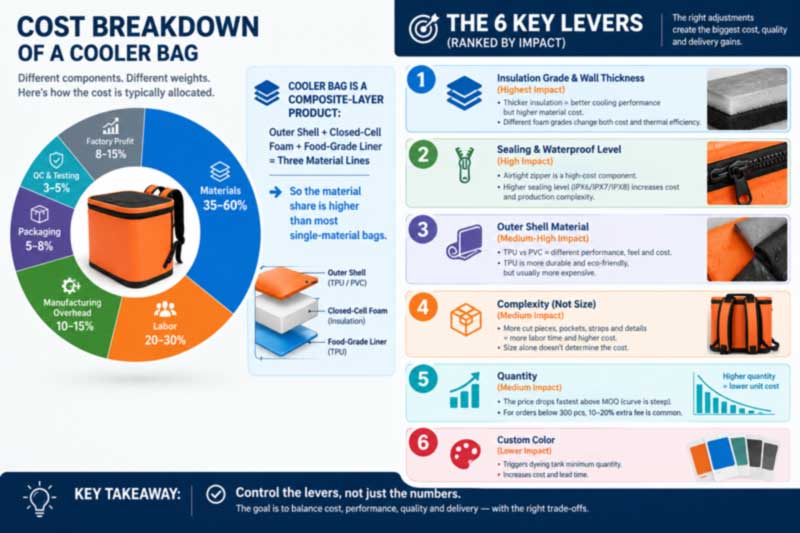
The lesson is concrete: a TPU-laminated (plastic-surface) cooler classifies at a markedly lower base duty than a textile-surface one, and both sit well below the general travel-bag line. A welded TPU soft cooler is not only more waterproof than a fabric-shell bag — it can also land at a lower base tariff. That is a sourcing advantage a buyer can bank, and a reason the shell material is a cost decision, not only a performance one.

Two caveats a serious buyer must respect. First, the final classification is the customs authority's call, driven by the 10-digit code and the specific construction — the table above is guidance, and a binding ruling or a licensed broker is the only authority. Second, base duty is not the whole bill. For China-origin goods the base rate stacks with additional measures: Section 301 surcharges of 7.5% or 25% on many China-origin goods, plus other program duties, on top of the MFN base. The 2026 tariff landscape has been unusually volatile, with programs added, litigated and stayed through the year, so the live rate must be confirmed at the time of import, not assumed from last year's number.

Buyer tip: Ask the supplier for the exact material composition of the outer shell in writing, get the intended HTS code confirmed by your own broker, and model landed cost with the current stacked rate (base + 301 + any active program duty) rather than the base alone. Producing in Vietnam instead of China is one lever some buyers use to change the tariff exposure; Sealock's dual China/Vietnam production exists partly for that reason.

Payment Terms: Structure Is Your Protection

Payment structure is where a buyer either keeps leverage or gives it away. The industry-standard, and the safest default, is well documented: a 30% deposit with the 70% balance paid before shipment is standard practice, and the balance should be tied to a passed inspection, not merely to a date. Paying the entire order upfront, or accepting an unusually high deposit, is a well-known risk, and pressure to do so is itself a warning sign — scammers push 100% upfront or 50–70% deposits citing "special material costs" or "urgent production slots."

Method matters as much as split. Untraceable methods like Western Union, MoneyGram or transfers to personal accounts leave little recourse if something goes wrong. Payment should go to a corporate account in the supplier's legal name, and bank details should be confirmed by a voice call to a known number before any transfer. For larger orders, a Letter of Credit releases payment only after the supplier submits compliant shipping and compliance documents, reducing exposure on high-value transactions at the cost of more complex, higher-fee bank procedures.

Buyer tip — the payment-diversion scam: One of the most damaging modern frauds is not about the product at all. In a Business Email Compromise attack, criminals hijack the supplier's email or spoof a lookalike domain, wait until production is finished, then send an urgent message just before the 70% balance asking you to route funds to a "new" bank account, often citing a tax audit or bank issue. Never accept a bank-account change by email without an offline phone verification, and confirm the beneficiary name matches the factory's registered business name exactly.

Sealock works on standard structured terms — FOB Guangdong, with the usual deposit-and-balance arrangement and payment to the registered corporate entity — and, like any legitimate factory, treats structured, milestone-based payment as normal rather than something to resist. A supplier that objects to staged payments tied to progress is itself a red flag.

Inspection: The Cheapest Insurance in Sourcing

The gap between an approved sample and a bulk run is where most money is lost, through two named failure patterns every experienced importer watches for. Bait-and-switch starts with an excellent sample and ends with a bulk run that quietly swaps materials, components or tolerances; quality fade emerges over repeat orders as a supplier trims quality bit by bit, assuming the buyer will not notice the drift until switching is painful. Both thrive when the buyer skips a signed spec, a golden sample, and third-party inspection with statistical sampling before shipment.

The defenses are cheap relative to what they protect. A pre-shipment inspection by an independent QC firm is inexpensive: a pre-shipment inspection costs roughly $250–350 and catches bait-and-switch before the container ships — trivial against the value of a full order of coolers. The mechanics that make it work:

  • A signed specification and a golden sample: an approved reference sample becomes the standard every production unit is matched against, so "different from the sample" becomes a provable claim rather than an argument.
  • Payment tied to inspection, not time: standard first-order terms tie the 70% balance to a passed pre-shipment inspection and clean documents, linking money to verified performance rather than to a date.
  • Objective AQL criteria: a contract that defines objective AQL standards for workmanship and critical defects turns "acceptable quality" into a measurable pass/fail instead of a judgment call.
  • Staged checks for bigger orders: inspecting at pre-production, mid-production and pre-shipment loading catches a drift early, before the whole run is built wrong.

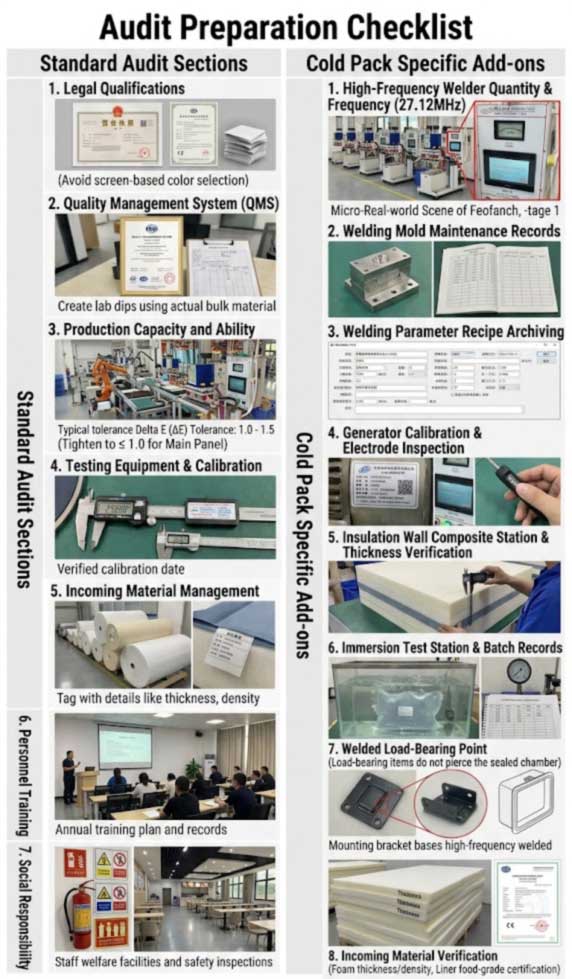
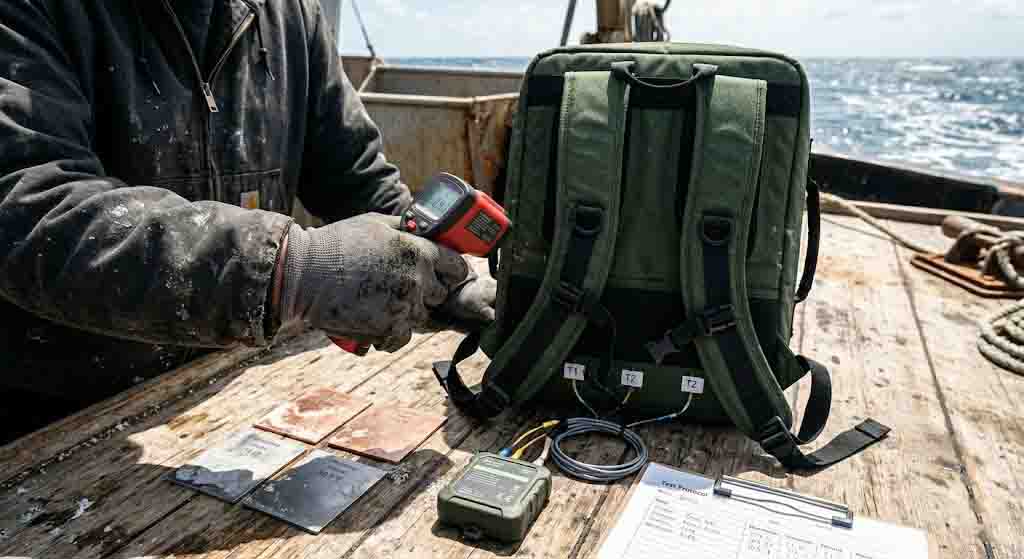
This is exactly where a factory's own quality system should meet the buyer's inspection. Sealock runs in-house IQC, IPQC and OQC, immersion-tests sealed builds to verify the IPX rating a buyer will advertise, and signs off against a gold sample at OQC — and it can accommodate SGS or QIMA third-party inspection on request. A factory that welcomes an independent inspector standing on its OQC line is behaving the way the guides above tell buyers to demand.

soft cooler backpack sourcing timeline from sampling to warehouse with payment, inspection and tariff milestones

Factory or Trading Company: Why It Changes the Price and the Risk

"Factory-direct" is claimed far more often than it is true, and the difference is money. Many trading companies claim to be factories when they are not, so a buyer expecting factory-direct pricing is actually paying a middleman's 15–30% markup on top of factory cost. Sometimes a trading company adds real value in coordination; the problem is paying factory prices for middleman service without knowing it.

The tells are consistent. A supplier that lists dozens of unrelated product categories is probably a trader — a real factory specializes — and traders tend to be slow to answer technical questions about the actual manufacturing. For a soft cooler backpack specifically, the sharpest technical test is the waterproofing: a genuine cooler factory owns its high-frequency welding line and can talk in detail about weld frequency, seam construction and immersion testing, while a trader or sewing shop will deflect, because the welding is the step it does not actually control.

How to verify a real factory: Check the supplier's unified social credit code through China's National Enterprise Credit Information Publicity System, confirm the business-license details match across every document, request a real-time video tour of the production line, and verify certifications through the issuing bodies. A supplier claiming to be a major manufacturer while using a free email domain is a red flag worth resolving before paying.

Sealock is the cooler brand of YiFuLong Outdoor Gear Co., Ltd., a specialized insulated-bag manufacturer operating its own high-frequency welding lines since 2003, in Dongguan, China and Ho Chi Minh City, Vietnam. It holds ISO9001, BSCI, SMETA P4, GRS, HIGG and SCAN certifications, which are the audits serious retail buyers require and which a shell trading company cannot pass. For a fuller breakdown of vetting a maker, see Soft Cooler Backpack Manufacturer — Factory-Direct OEM Since 2003.

What the Supplier Should Be Able to Build

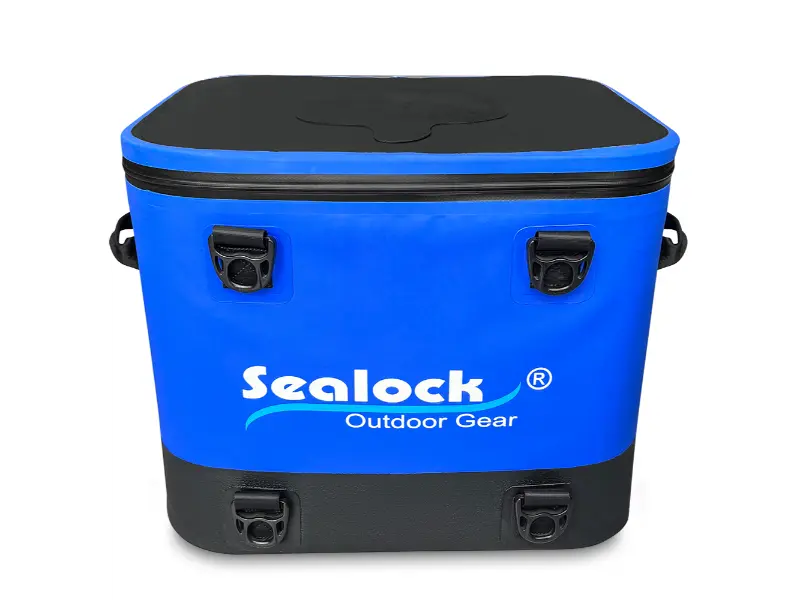
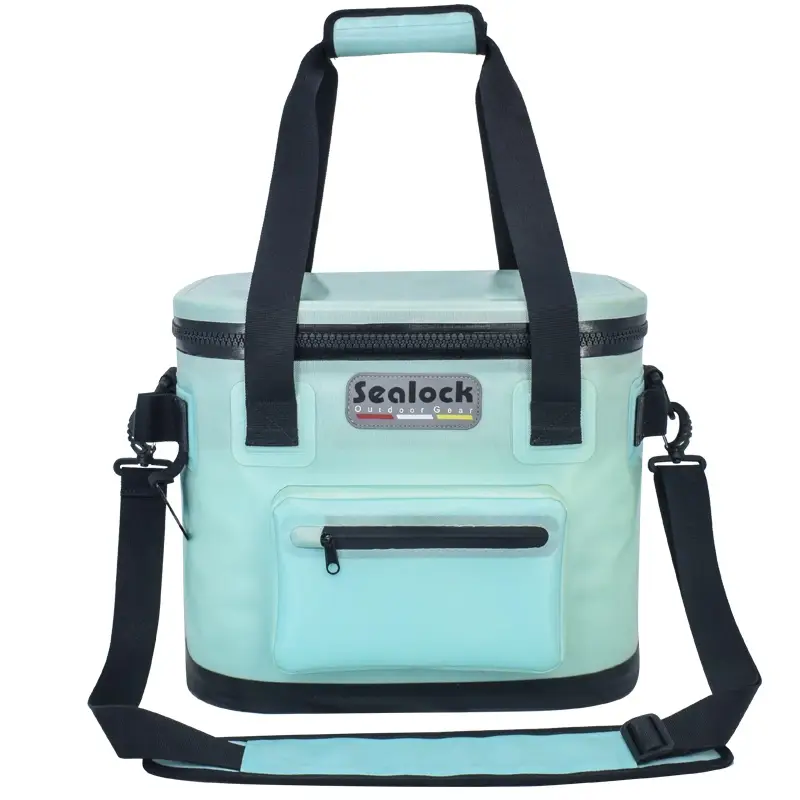
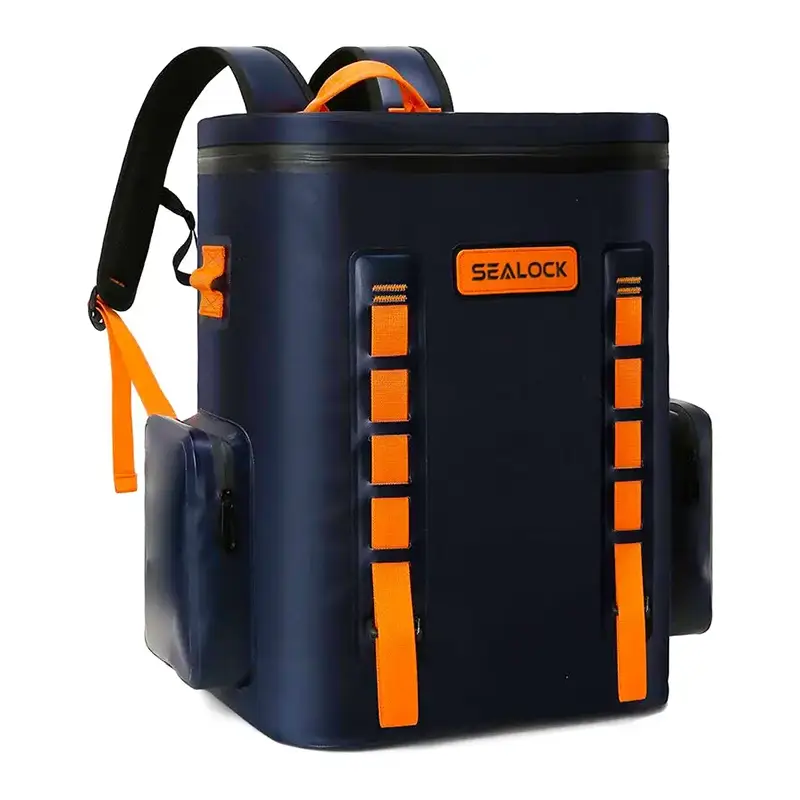
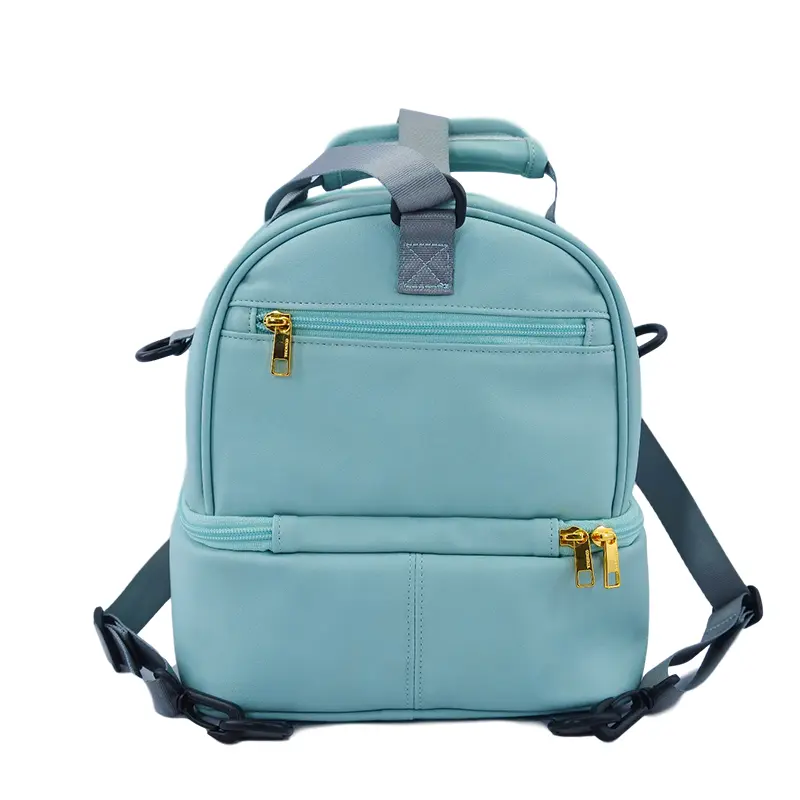
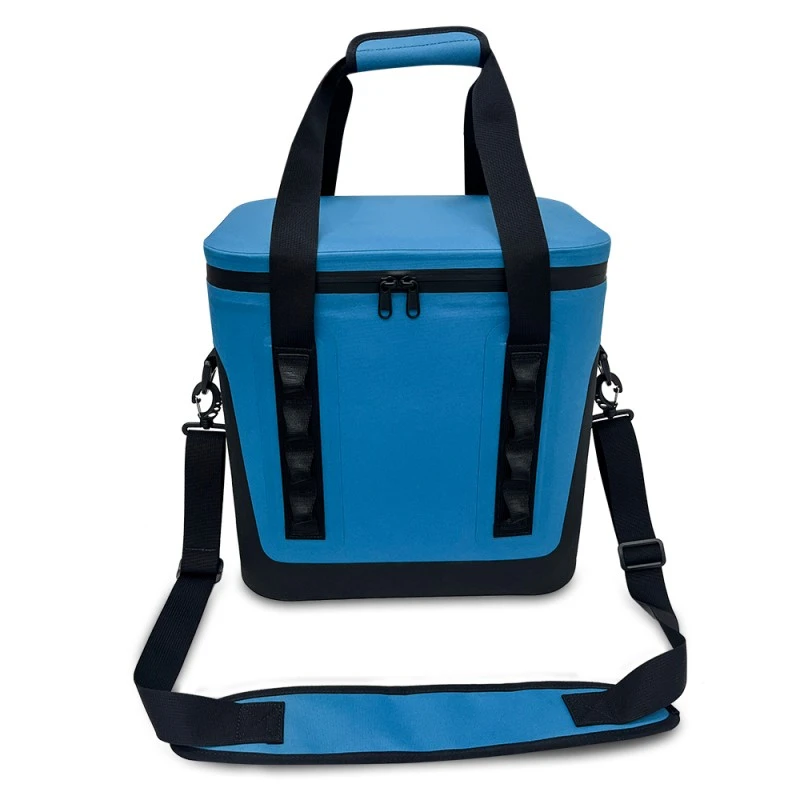
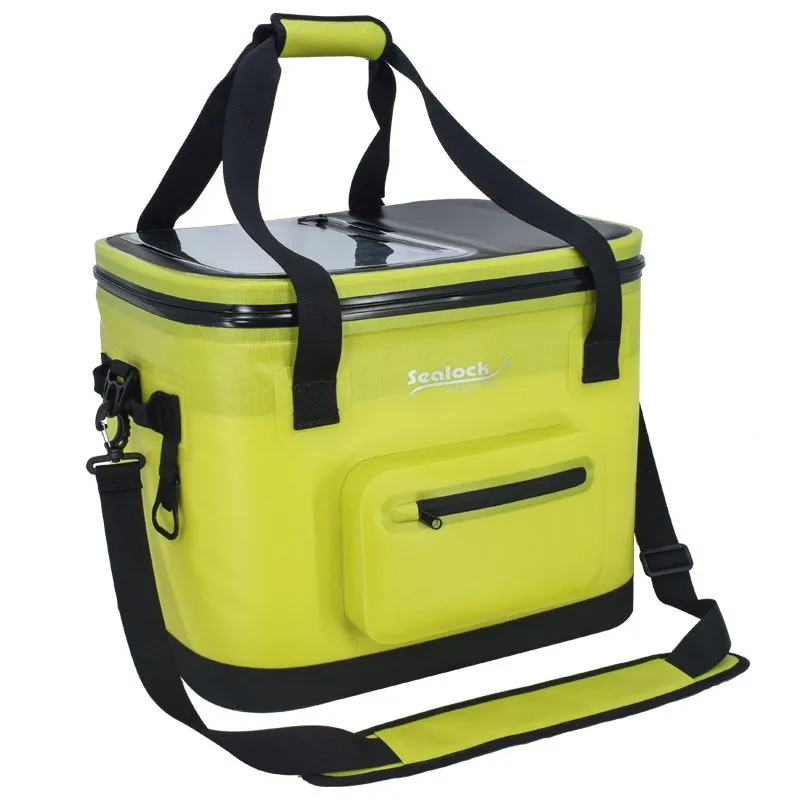
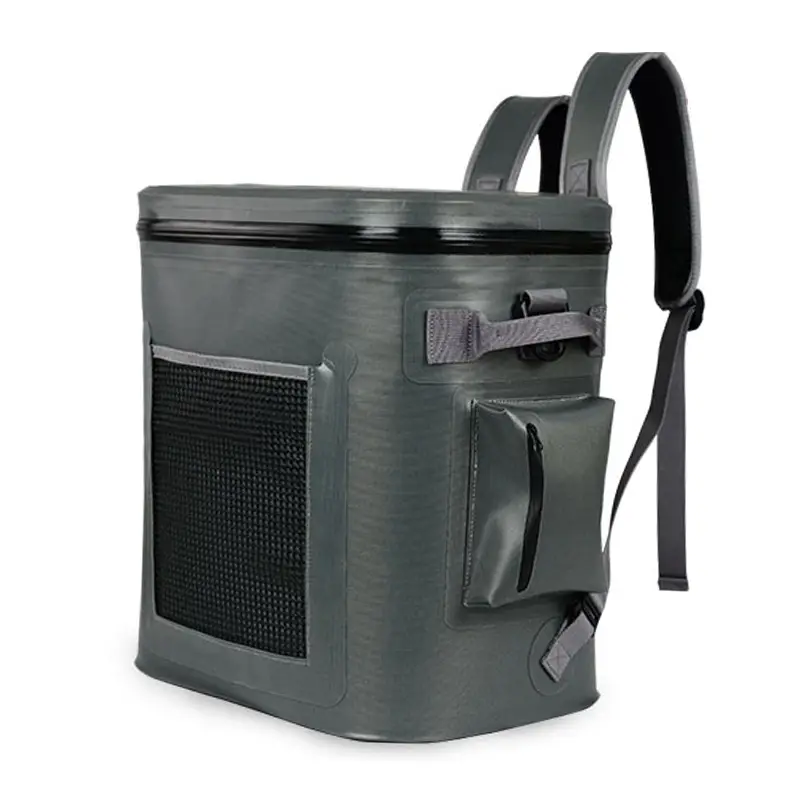
A supplier worth structured terms should show real products, not just a catalog of stock photos. Sealock's welded soft cooler range spans several forms, chosen here by fit rather than tier — a buyer picks by end use:

Image Model Form Notes for buyers Link
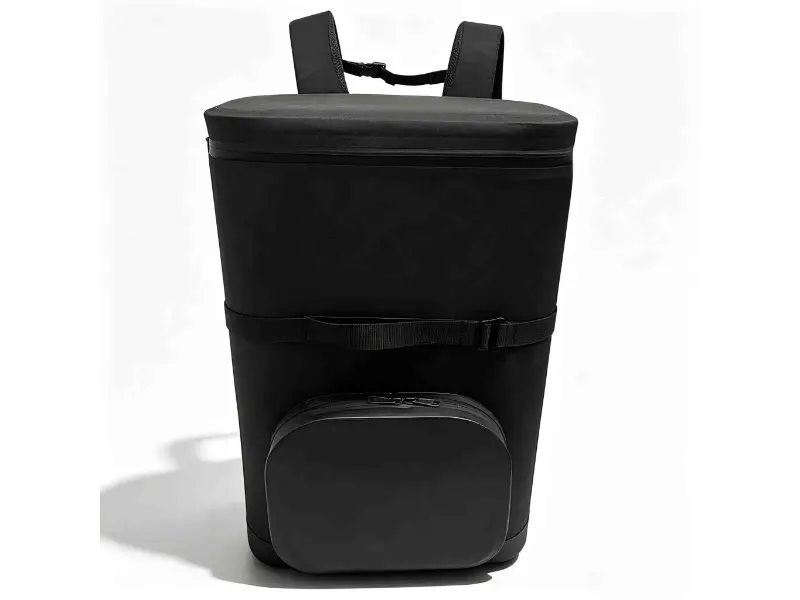
22L IPX7 cooler backpack SL-I280 22L IPX7 Cooler Backpack (SL-I280) Backpack TPU-surface (lower base-duty line), welded, IPX7 View
Waterproof Soft Cooler Backpack Waterproof Soft Cooler Backpack Backpack Fully welded TPU, waterproof View
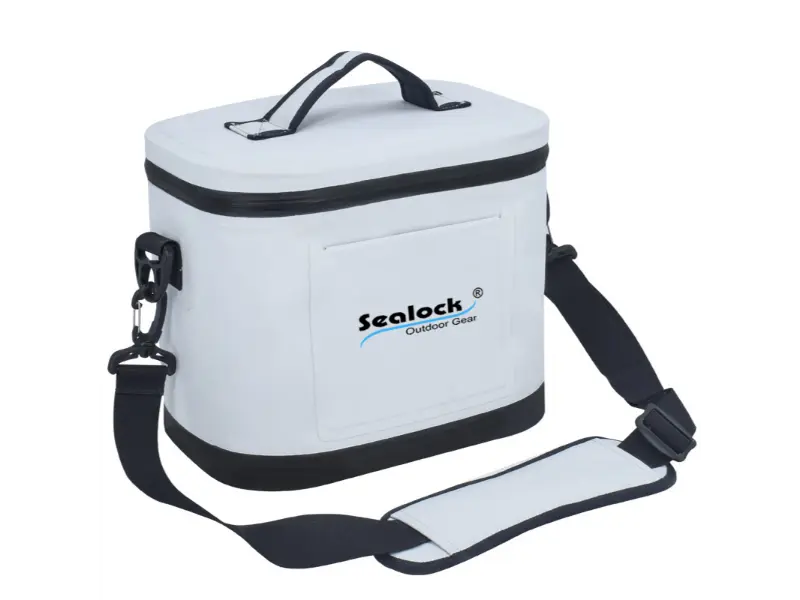
12-20L TPU waterproof soft cooler SL-I032 Waterproof Soft Cooler 12/15/20L (SL-I032) Sling / compact Three sizes in one design family View
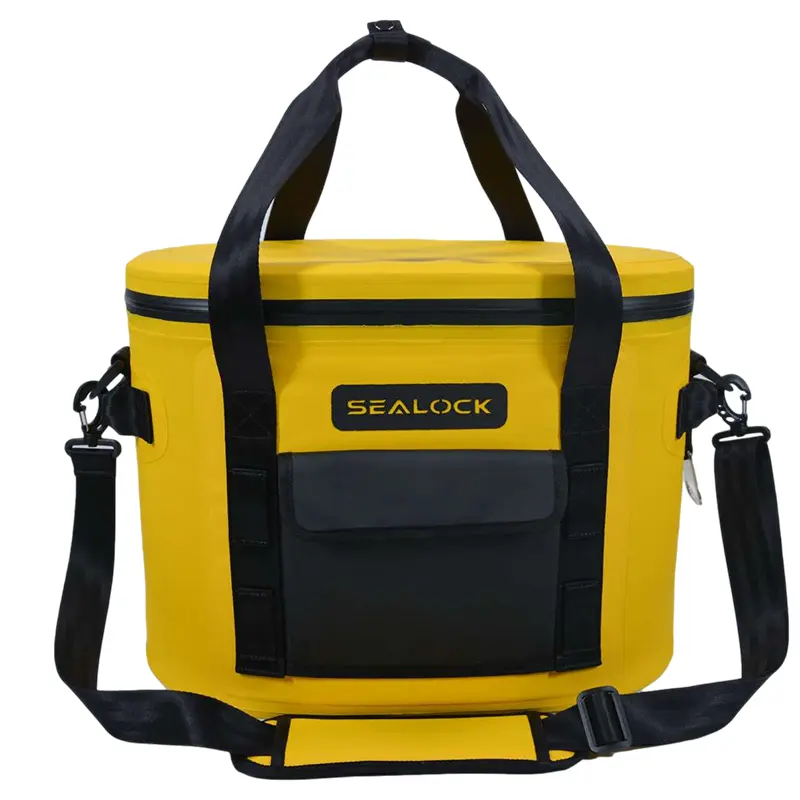
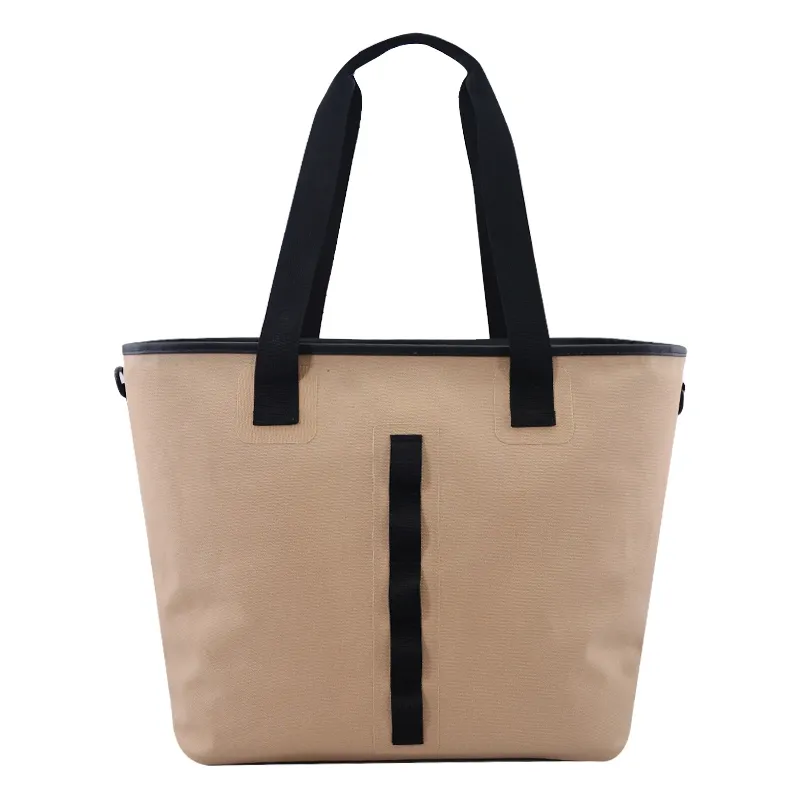
24L leakproof soft cooler SL-I094 24L Leakproof Soft Cooler (SL-I094) Tote Insulation upgradeable (EPE up to VIP / aerogel) View

On customization, a real factory develops past a logo. Beyond color and branding, Sealock builds ground-up from a sketch, sample or spec — useful when a buyer wants a shell material chosen partly for its duty line as well as its performance. For how brands set those specs, see Custom Cooler Backpacks for Outdoor Brands.

A Practical Sourcing Checklist

Pulling the real mechanics together, a buyer sourcing soft cooler backpacks should:

  1. Confirm the maker is a factory — social credit code, matching license, video tour of the welding line, verified certifications.
  2. Pin the shell material and HTS code — TPU/plastic-surface for the lower base-duty line; confirm the code with your own broker.
  3. Model the full stacked landed cost — base duty + Section 301 + any active 2026 program duty, at the live rate.
  4. Structure payment — 30/70, balance tied to a passed inspection, corporate account verified by phone, bank-change requests treated as fraud until proven otherwise.
  5. Sign a spec and a golden sample, with objective AQL criteria written into the contract.
  6. Book a pre-shipment inspection ($250–350) and release the balance only on a pass.
  7. Appoint your own forwarder and broker on FOB, and build the calendar backward from the on-shelf date including ocean transit and clearance.
soft cooler backpack factory welding line

FAQ: Sourcing a Soft Cooler Backpack Supplier

Q: What is a typical MOQ for custom soft cooler backpacks, and is it negotiable?

A: Around 300 pieces per design is standard, driven by fabric minimums and welding-line setup that only spread thin above a few hundred units. It is usually per design and per colorway, and it moves more easily on a logo-and-color job than on a ground-up custom. Sealock's standard MOQ is 300 pieces per design, negotiable on custom.

Q: How long does an order really take from PO to warehouse?

A: Production is typically 7–15 days sampling plus 30–45 days manufacturing, but the ocean freight and destination customs after an FOB handover commonly add several weeks more, pushing a realistic order-to-warehouse timeline to two to three months. Seasonal ranges have to be booked months ahead of the on-shelf date.

Q: Does the shell material affect the import duty on a cooler bag?

A: Yes, significantly. Under US HTS 4202.92, a plastic/TPU-surface insulated bag (4202.92.10) carries a 3.4% base duty, while a textile-surface one (4202.92.08) is around 7%, and general travel/backpack textile bags run 17.6%. China-origin goods then stack Section 301 and other program duties on top, and 2026 rates are volatile, so confirm the live stacked rate and the exact code with a licensed broker.

Q: What payment terms are safe with a new supplier?

A: A 30% deposit and 70% balance before shipment, with the balance tied to a passed pre-shipment inspection, is the standard safe structure. Pay a corporate account in the supplier's registered name, verify bank details by phone, never pay 100% upfront or via untraceable methods, and treat any emailed request to change bank accounts as potential fraud until confirmed offline.

Q: How do I make sure the bulk order matches the sample?

A: Sign a specification and approve a golden sample, write objective AQL criteria into the contract, and book an independent pre-shipment inspection (about $250–350) with the balance payable only on a pass. That combination is the standard defense against bait-and-switch and quality fade.

Sourcing factory-direct? Sealock (YiFuLong Outdoor Gear Co., Ltd.) manufactures soft cooler backpacks OEM on FOB Guangdong terms from its own welding lines in China and Vietnam, with structured payment, in-house and third-party inspection, and dual-origin production for tariff flexibility. Send a target spec and market, and the team will quote build, terms and origin.

Email: info@sealock.com.hk  |  Phone: +86-13632981825  |  See a welded cooler backpack example

Tariff classifications, duty rates and trade-program measures cited here reflect publicly available US HTS/CBP and industry sourcing information as of mid-2026 and can change; they are general guidance, not customs or legal advice. Confirm the current HTS code, stacked duty rate and terms with a licensed customs broker before importing.

Related News
Leave me a message
X
We use cookies to offer you a better browsing experience, analyze site traffic and personalize content. By using this site, you agree to our use of cookies.Privacy Policy
RejectAccept