If you sell to a large retailer or an outdoor brand with sustainability targets, sooner or later someone will ask whether your factory "does Higg." The Higg Index is not one audit or one certificate. It is a set of measurement tools, and only two of them are completed by factories. This guide explains what the Higg Index is, what the Facility Environmental Module (FEM) and Facility Social & Labor Module (FSLM) actually measure, how self-assessed and verified results differ, and how a buyer should request and read a supplier's Higg data. It is written by a manufacturer, Sealock (YiFuLong Outdoor Gear Co., Ltd.), which has made insulated and waterproof bags in China and Vietnam since 2003 and participates in the Higg Index as a manufacturing facility.
What the Higg Index Is
The Higg Index is a suite of sustainability measurement tools for the apparel, footwear and consumer goods industries. It is owned and governed by Cascale, the industry alliance known until 2024 as the Sustainable Apparel Coalition. The coalition was founded by brands including Walmart and Patagonia and launched the Index in 2012. The tools are operated on the Worldly platform (formerly Higg Co), which is where facilities complete their assessments and share them with customers.
The Index has five tools. Two are completed by manufacturing sites; the other three are completed by brands and product teams.
| Tool | What it measures | Who completes it |
|---|---|---|
| Higg FEM — Facility Environmental Module | Environmental management at one site: energy, water, wastewater, air emissions, waste, chemicals | The factory |
| Higg FSLM — Facility Social & Labor Module | Working conditions at one site: wages, hours, recruitment, worker treatment, health and safety, management systems | The factory |
| Higg BRM — Brand & Retail Module | A brand or retailer's own sustainability strategy and performance | Brand or retailer headquarters |
| Higg MSI — Materials Sustainability Index | Cradle-to-gate environmental impact of materials | Material and design teams |
| Higg PM — Product Module | Impact of a finished product built from its materials | Product teams |
So when a buyer asks a supplier for "Higg," the practical meaning is almost always the FEM, sometimes together with the FSLM. Those are the two this article focuses on.
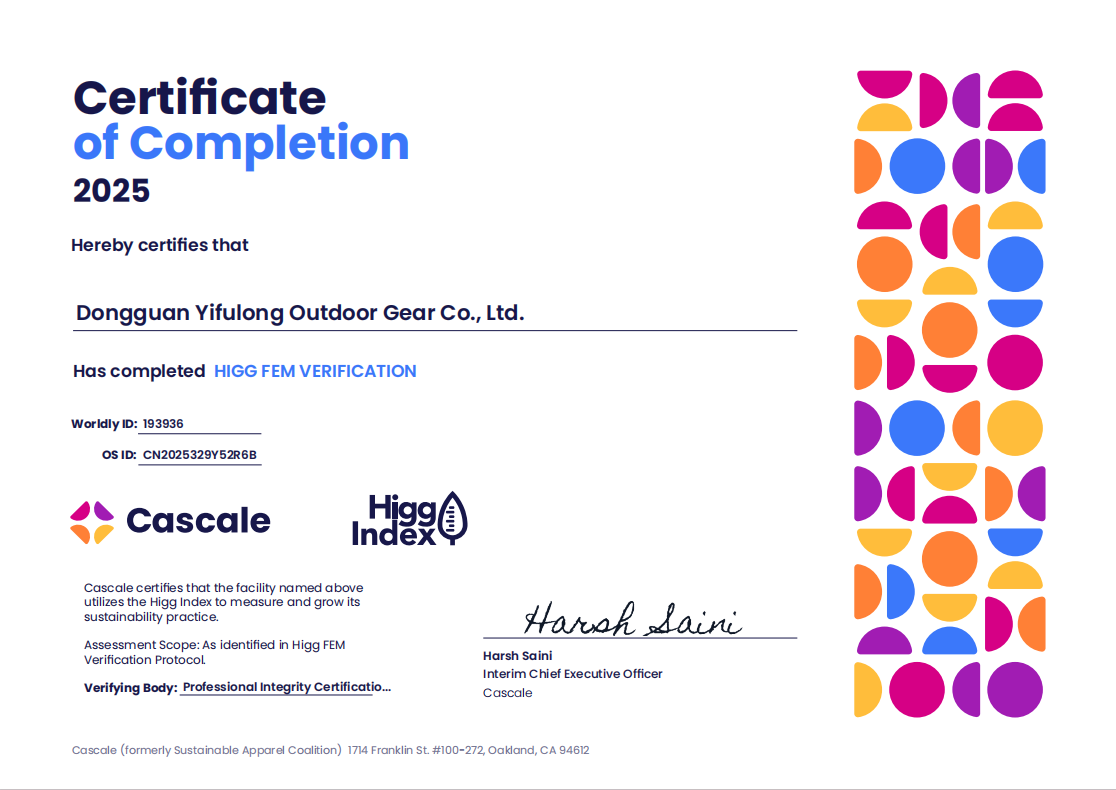
Higg FEM: The Environmental Module
The seven impact areas
The FEM is a questionnaire about how a site manages its environmental impact. It is organised into seven sections:
| FEM section | What a bag factory reports, for example |
|---|---|
| Environmental Management System (EMS) | Who is responsible for environmental performance, permits, legal compliance, staff training |
| Energy & greenhouse gas emissions | Electricity for sewing, cutting and RF/HF welding lines; any fuel use; emission sources and tracking |
| Water use | Water sources and consumption — modest in a cut-and-sew and welding operation compared with a dye house |
| Wastewater | Domestic and any process wastewater, discharge permits, testing |
| Air emissions | Emission sources such as adhesive work, printing and boilers, and how they are controlled |
| Waste | Fabric and foam offcuts, TPU and PVC scrap, packaging, hazardous waste handling and disposal routes |
| Chemicals management | Chemical inventory, safety data sheets, storage, restricted substance list (RSL/MRSL) compliance for coatings, inks and adhesives |
Levels 1, 2 and 3
Within each section, questions are grouped into three levels of maturity:
- Level 1 — know your impacts: the site tracks its data, identifies its sources and holds the right permits.
- Level 2 — manage them: the site sets targets, monitors against them and has improvement plans.
- Level 3 — lead: the site demonstrates measurable reductions and advanced practices.
A section cannot earn credit at a higher level until the Level 1 basics are in place. Each facility receives section scores and an overall score out of 100. Like SMETA, the FEM has no pass or fail: it is a measurement that shows where a site stands and where it can improve. Note also what the score is not: it rates management practice and data quality, not a site's absolute carbon footprint. A large factory with good systems can outscore a small one with none.
The annual cycle
The FEM is completed once a year and reports on the previous calendar year. A 2026 FEM, for example, describes 2025 performance. The industry-recommended date for posting the self-assessment on Worldly is 30 April, so that results can be benchmarked together. Verification follows later in the year; retailers set their own deadlines, and Kohl's, for instance, asks its in-scope facilities to complete verification by 31 October. A factory typically needs three to six weeks to gather the data and complete the module properly.
Self-Assessed vs Verified: The Distinction That Matters
Every FEM starts as a self-assessment — the factory answers the questions and uploads evidence. A self-assessment can be completed without anyone visiting the site, which is exactly why buyers increasingly ask for the verified version.
In a verified FEM (often written vFEM), a Cascale-approved verifier, hired by the facility, reviews the answers against documents and a site visit and corrects what is not supported. Cascale reports over 13,500 completed FEM verifications in 2025, in more than 70 countries, carried out by over 500 approved verifiers. Two points are easy to miss:
- Verification covers Level 1 questions. Cascale paused plans to extend verification to Level 2 and Level 3 questions in order to focus on quality. A verified score is therefore partly verified: the foundational data has been checked, while the higher-level answers remain the facility's own.
- Verified scores are usually lower. Verifiers remove credit for claims the facility cannot evidence. A modest verified score is more informative than a high self-assessed one.
Higg FSLM: The Social and Labour Module
The FSLM covers working conditions at the site. It is the Worldly platform version of the Converged Assessment Framework (CAF) maintained by the Social & Labor Convergence Program (SLCP), an industry initiative created to replace many overlapping brand social audits with one shared assessment. Since CAF version 1.6, Worldly is the only accredited host for SLCP data.
The process mirrors the FEM: the facility completes a self-assessment, an approved verifier checks it on site, and the facility finalises and shares the verified data. The assessment is built in steps, from the basic facility profile, recruitment, hours, wages, treatment and termination, through management systems, to optional "above and beyond" practices. Like the FEM, the result is data, not a pass or fail; recent CAF versions removed the single total score entirely.
Not every buyer asks for the FSLM. Many already require a SMETA or amfori BSCI social audit from their direct suppliers and use FSLM data mainly further down the chain. The two approaches overlap in subject but differ in format. For how the most common social audit works, see our guide to the SMETA audit.
How Higg Compares with Other Audits Buyers Request
| Standard | Covers | Output | Typical requester |
|---|---|---|---|
| Higg FEM | Site environmental management | Score out of 100 plus section levels; self-assessed or verified | Apparel, footwear and outdoor brands and retailers with environmental targets |
| Higg FSLM | Site social and labour conditions | Verified assessment data, no pass/fail | Brands participating in SLCP |
| SMETA | Labour, health and safety; four-pillar adds environment and business ethics | Audit report and corrective action plan | UK and international retailers, Sedex members |
| amfori BSCI | Social performance | Audit rated A to E | Mainly European importers and brands |
| GRS | Recycled content and chain of custody | Certificate plus transaction certificates | Brands making recycled-material claims |
These do not replace each other. A typical outdoor brand onboarding a bag supplier asks for a social audit (SMETA or BSCI), the annual Higg FEM, and GRS if any recycled claim will appear on the product. Our cooler bag certifications guide explains each one in more detail.
What Higg Does Not Prove
The FEM and FSLM describe a facility, not a product. A strong FEM does not mean a particular cooler bag is "sustainable," and it does not certify recycled content — that is what GRS and its transaction certificates are for.
Product-level claims built on Higg data have a history worth knowing. In June 2022, the Norwegian Consumer Authority warned that consumer-facing labels based on Higg MSI material data could mislead shoppers, and the coalition paused consumer-facing Higg labels the same month. Facility scores, likewise, are shared privately with customers through Worldly rather than printed on swing tags. If you plan an environmental claim on packaging or a product page, base it on product evidence such as a GRS transaction certificate or a material test report, and check it against the green-claims rules of your market.
What It Costs and Who Pays
The facility pays. It needs an active Worldly subscription to complete and share the modules. For verification, there is an access fee charged on Cascale's behalf — Kohl's supplier guidance lists it as USD 300 — plus the verifier's own fee for the on-site work, which depends on the verifier, the site's size and location. A verified FSLM is priced in a similar way by the verifier. For a buyer, Higg data costs nothing beyond a Worldly account to receive it; the cost sits with suppliers, which is one reason the data is not available from very small workshops.
How to Request and Read a Supplier's Higg Data
- Ask for a share on Worldly, not a PDF. The platform shows the module year, status and section results directly from source. A screenshot or a score in an email can be out of date or simply wrong.
- Check the year. The module year should be current — the latest completed cycle, reporting on the previous calendar year.
- Check verification status. Self-assessed, verification in progress, or verified. If verified, note who verified it.
- Read the sections, not just the total. For a bag factory, chemicals management and waste are the sections closest to your product risk: coatings, adhesives, inks, and how PVC and TPU scrap are handled.
- Look at the trend. Two or three consecutive years show whether a site is building systems or simply filling in a form once.
- Confirm the site. Higg modules are per facility. A supplier with several sites, or one that subcontracts, should show you the module for the site that will actually make your order.
Where Sealock Stands
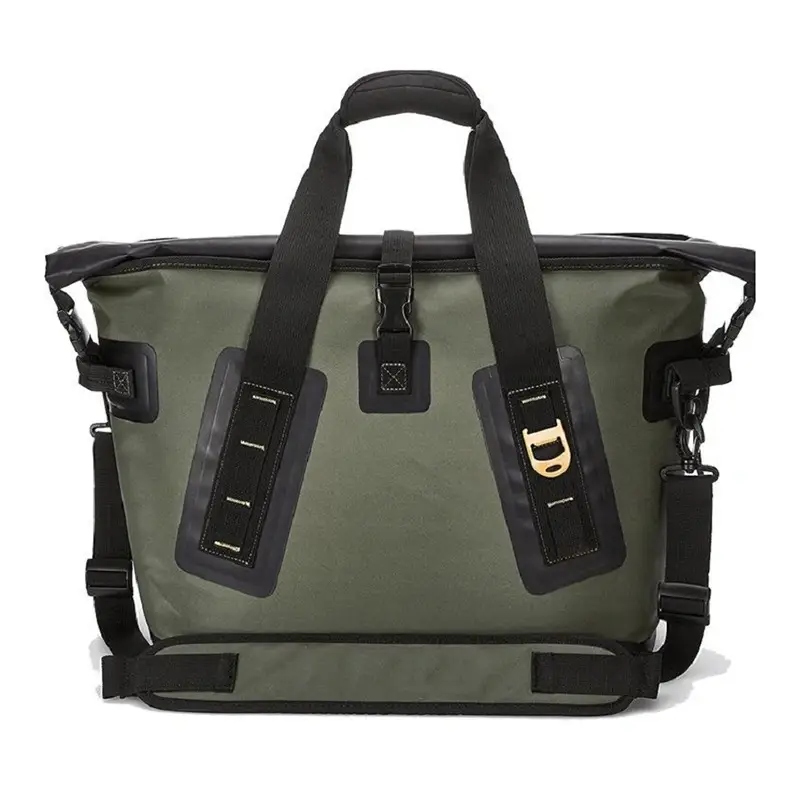
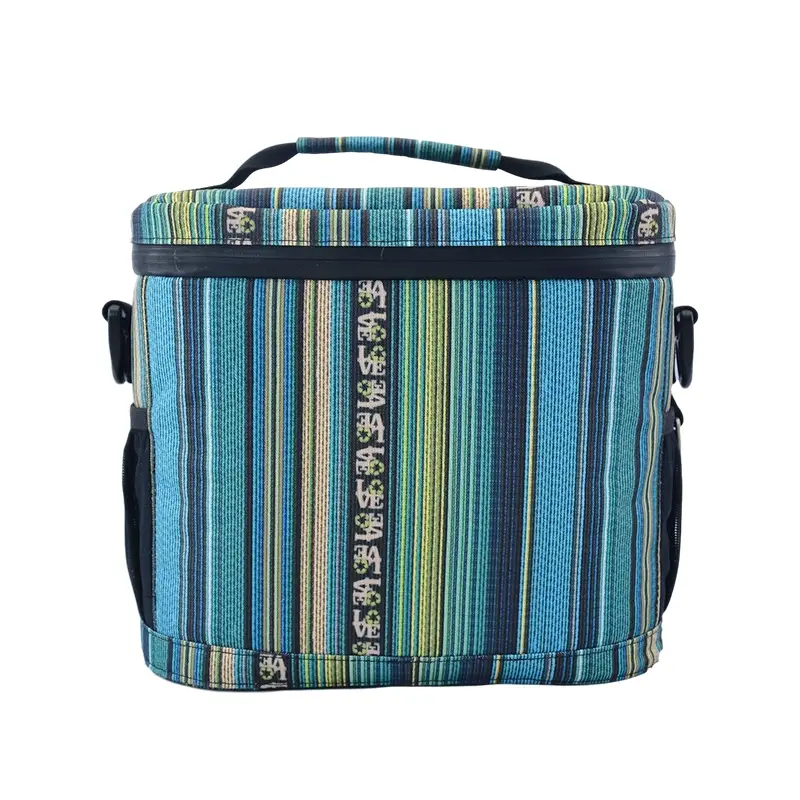
Sealock takes part in the Higg facility assessments and holds ISO9001, amfori BSCI, a four-pillar SMETA audit, GRS and SCAN. We manufacture insulated and waterproof bags with RF/HF welding in our China and Vietnam factories for brands including Stanley, YETI, Hydro Flask, Osprey, Musto and Simms, whose supplier programmes look for ongoing environmental and social data, not a one-off certificate.
We do not publish our scores on this page. Higg results are shared with customers through Worldly, and we would rather you see the module year, verification status and section detail for yourself. Ask us and we will set up a share for the facility that would make your order.
Onboarding a supplier into a sustainability programme? Tell us which modules your customer requires — FEM, FSLM, or both — and we will arrange the Worldly share and the rest of the compliance documentation, together with a quotation for the product.
Email: info@sealock.com.hk · Phone: +86-13632981825
What We Manufacture
| Image | Model | Build | Link |
|---|---|---|---|
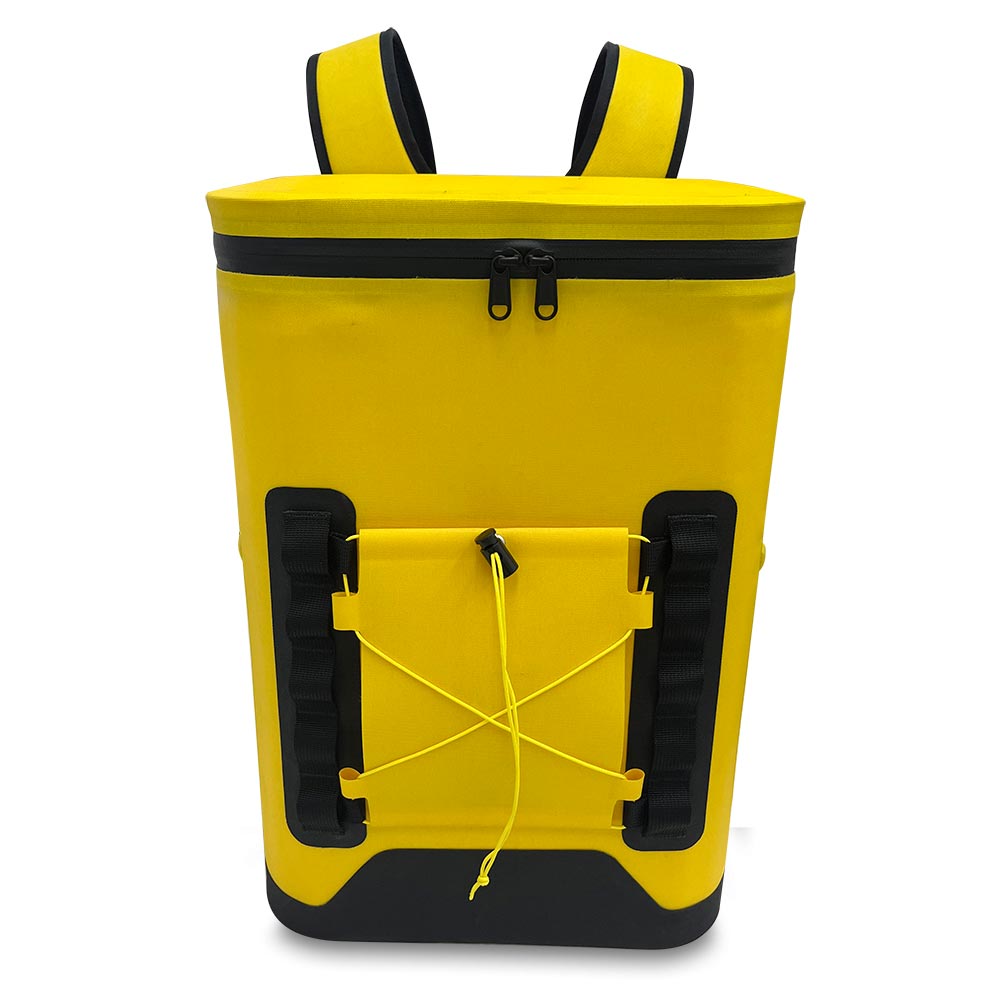
|
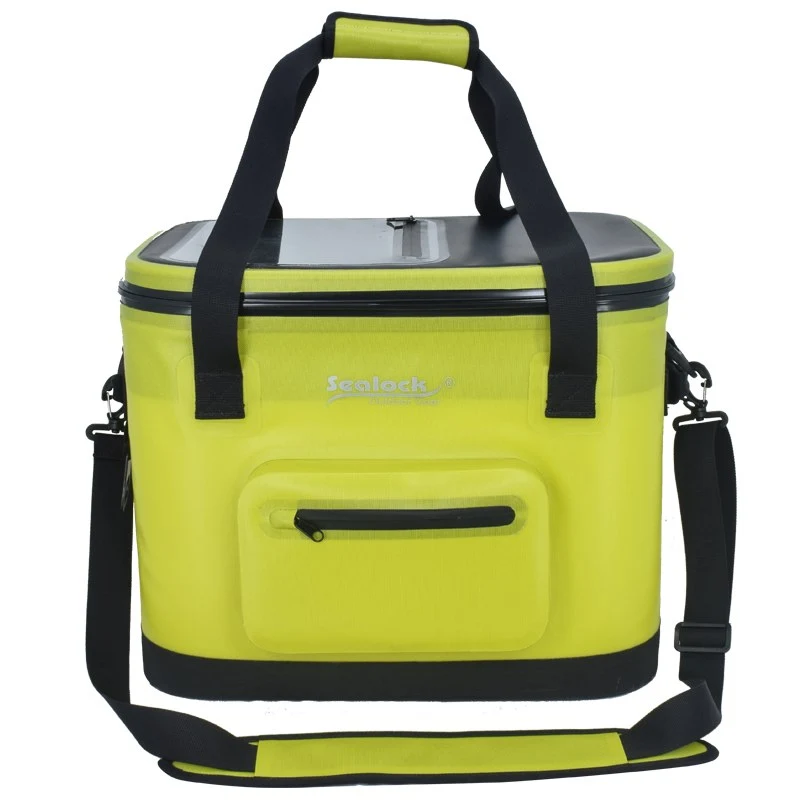
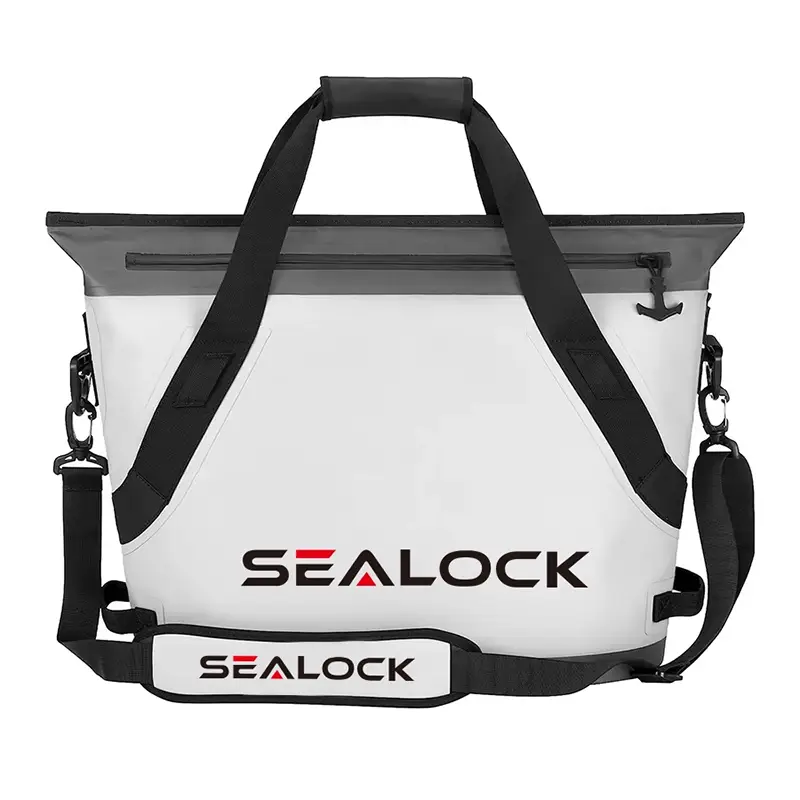
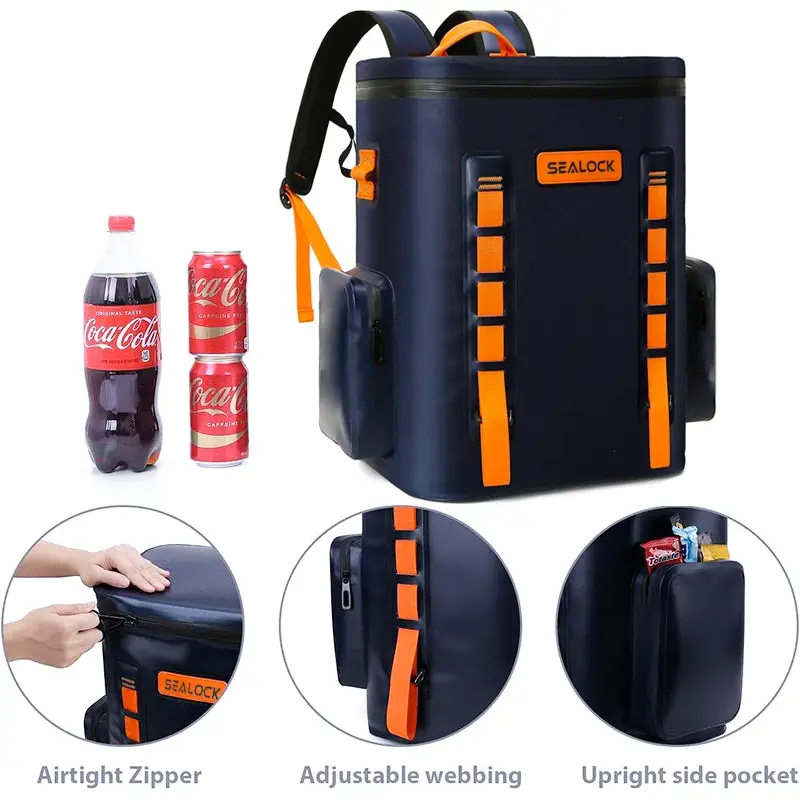
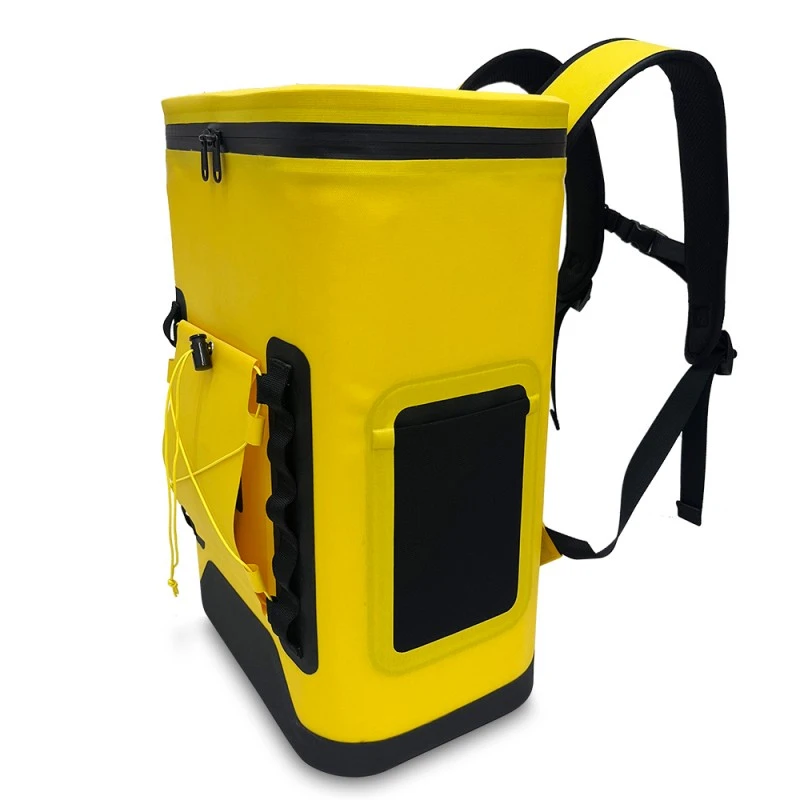
28L Airtight-Zipper Cooler Backpack (SL-I274) | 840D TPU, EVA core, food-grade TPU membrane, airtight welded zipper, up to 48 hr | View |
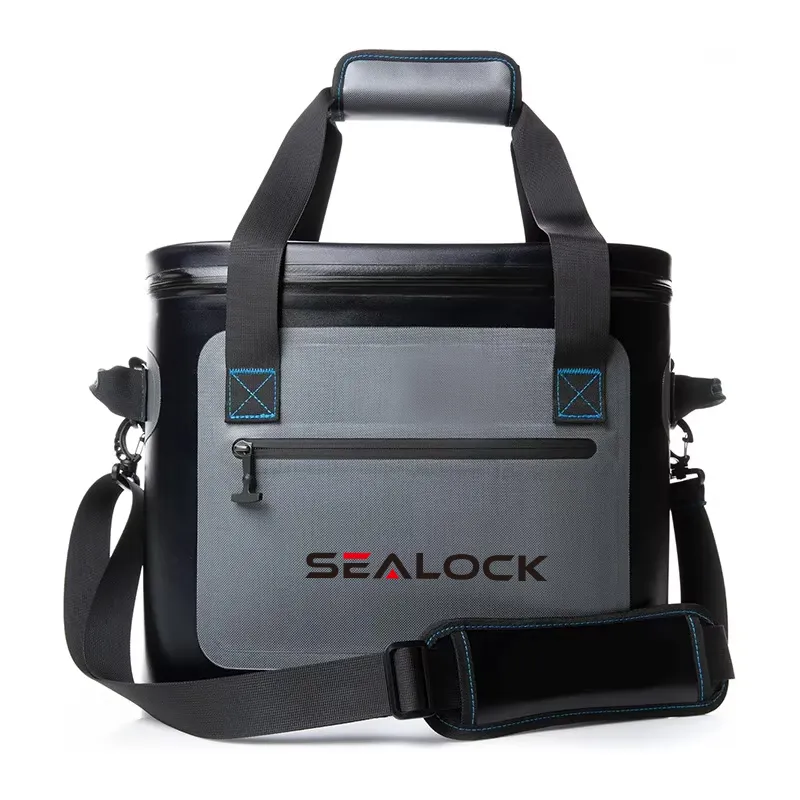
|
24L Soft Cooler Tote (SL-I230) | 840D TPU, 20 mm XPE, IPX7, HF welded, up to 48 hr | View |
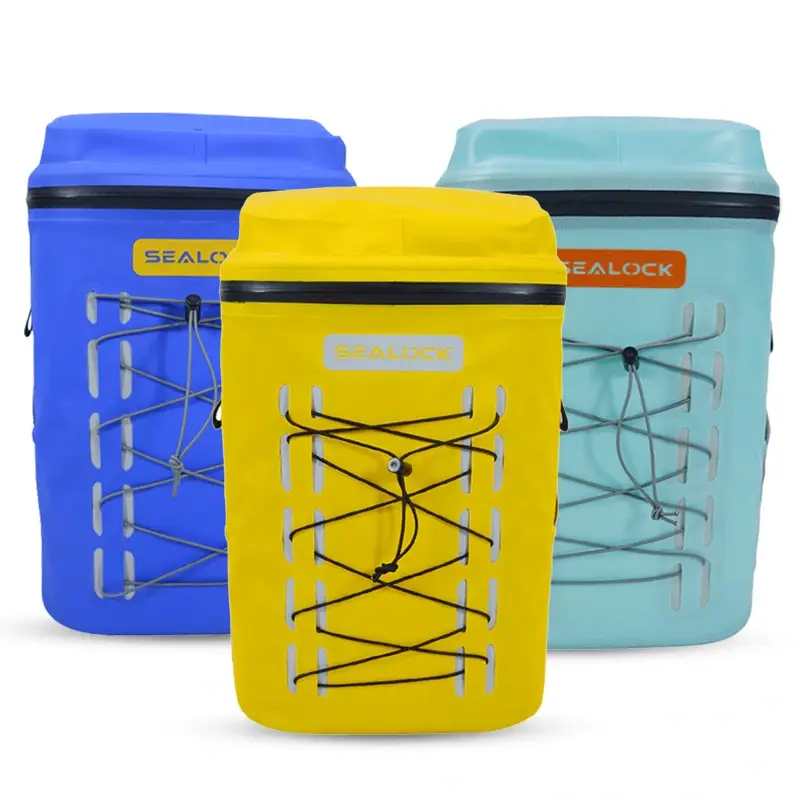
|
Insulated Cooler Backpack (SL-I075A) | 36-can, 840D PVC tarpaulin, EPE foam, PEVA liner | View |
FAQ
Q: What is the Higg Index?
A: A suite of five sustainability measurement tools owned by Cascale, formerly the Sustainable Apparel Coalition. Factories complete two of them: the Facility Environmental Module (FEM) and the Facility Social & Labor Module (FSLM). Brands complete the Brand & Retail Module, and product teams use the Materials Sustainability Index and Product Module.
Q: Is the Higg Index a certification?
A: No. There is no Higg certificate and no pass or fail. The FEM produces a score out of 100 with section levels, and the FSLM produces verified assessment data. Both describe a facility's performance and management practice for a given year.
Q: What is the difference between a self-assessed and a verified Higg FEM?
A: A self-assessment is completed by the factory alone. A verified FEM has been checked on site by a Cascale-approved verifier, who removes credit for anything the facility cannot evidence. Verification currently covers the Level 1 questions, so verified scores are partly verified and are usually lower, and more reliable, than self-assessed ones.
Q: How often is the Higg FEM completed?
A: Once a year, reporting on the previous calendar year. The recommended posting date for the self-assessment is 30 April; verification follows later in the year according to each customer's deadline.
Q: What is a good Higg FEM score?
A: There is no fixed threshold. Brands benchmark suppliers against peers, regional and global averages on Worldly, and many look more at verification status, section detail and year-on-year improvement than at a single number. A verified score and a rising trend matter more than a high self-assessed figure.
Q: Can I use a supplier's Higg score in my product marketing?
A: Facility scores are shared privately and describe a site, not a product, so they are not a sound basis for consumer claims. Consumer-facing Higg labels were paused in 2022 after a Norwegian regulator raised concerns. Use product-level evidence, such as GRS transaction certificates, for any environmental claim.
Q: Can I see Sealock's Higg data?
A: Yes. Ask us and we will share the facility modules through Worldly, together with our SMETA, amfori BSCI, ISO9001, GRS and SCAN documentation.
Sealock — YiFuLong Outdoor Gear Co., Ltd.
Insulated and waterproof bags, manufactured in China and Vietnam since 2003. HIGG · SMETA 4-pillar · amfori BSCI · ISO9001 · GRS · SCAN.
Email: info@sealock.com.hk · Phone: +86-13632981825 · MOQ 300 pcs · samples 7–15 days
The description of the Higg Index here reflects publicly available Cascale, Worldly, SLCP and retailer supplier guidance as of 2026. Module versions, verification scope and deadlines change each cycle; confirm current requirements with Cascale, Worldly or your customer. Brand customers are named as manufacturing clients only; no endorsement is implied.