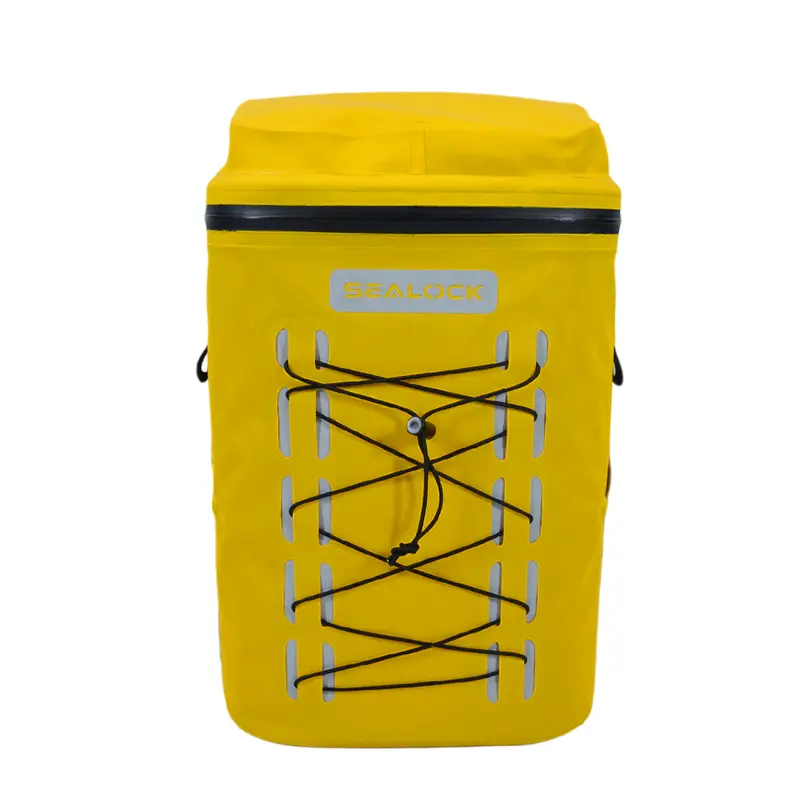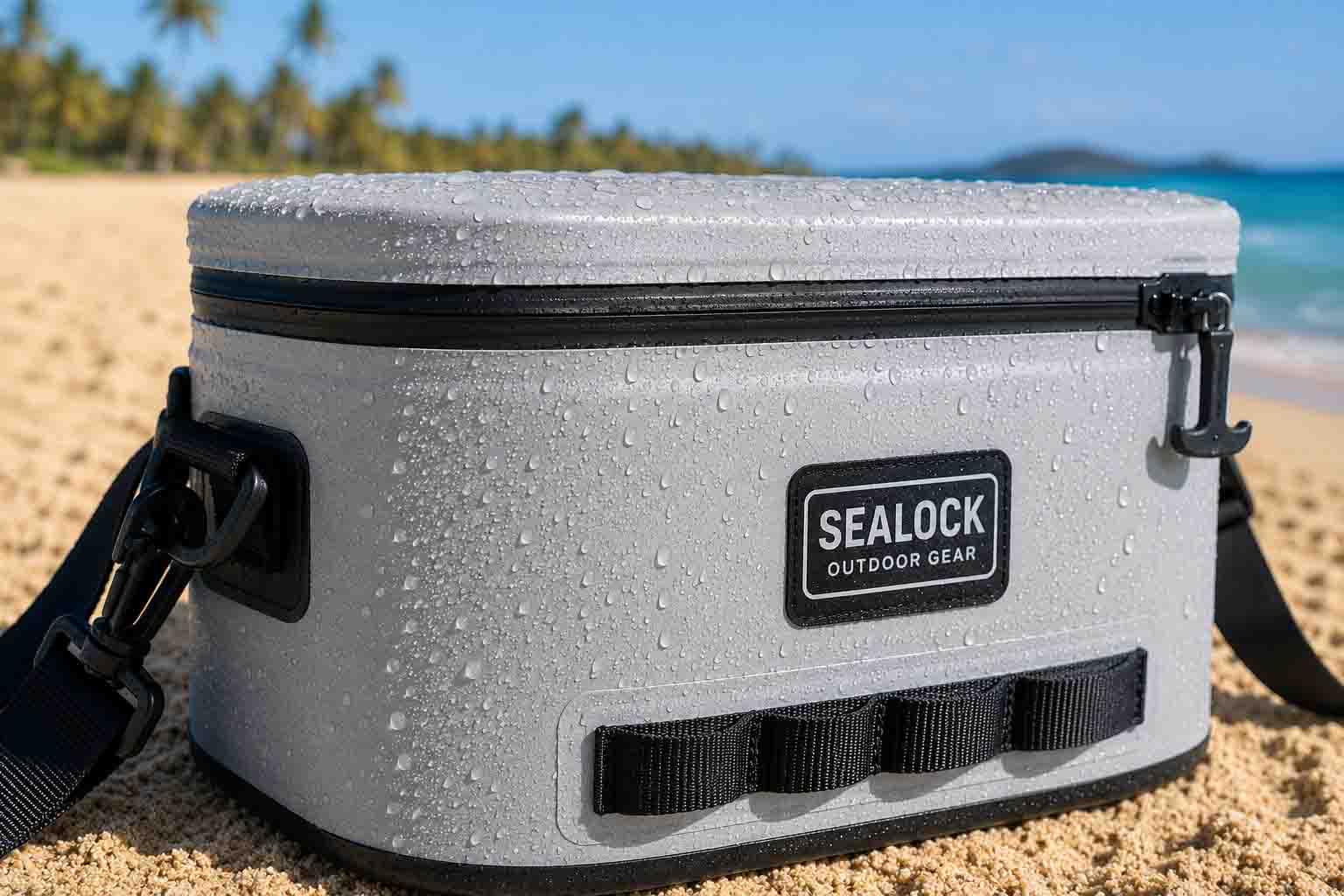
Custom Cooler Backpack MOQ Explained

2026-08-27 0 Leave me a message
MOQ stops more first-time buyers than any other term in sourcing. You find a supplier, the price looks workable, you ask for 150 pieces — and the reply is "MOQ 300." It reads like a negotiating position. It is not. A minimum order quantity is an output of how production is physically structured, and once you understand what actually sets it, you stop arguing with the number and start changing the variables that control it. This guide explains where a cooler backpack MOQ comes from, the hidden minimums most buyers never see, and the tactics that genuinely move it. Sealock (YiFuLong Outdoor Gear Co., Ltd.) works to a 300-piece MOQ per design, and this explains why.


What MOQ Actually Is

The definition is simple: the smallest number of units, or the lowest dollar amount, that a supplier will accept for a single order. The reason it exists is arithmetic, not attitude. As one manufacturer's guide frames it: MOQ is not a negotiating position — it is an output of how garment production is physically structured, and understanding what goes into that number changes how brands approach their first bulk order.

The clearest analogy in the research: if you ask a baker to mix dough, heat the massive industrial oven and clean the equipment just to bake one single cookie, the cost of that cookie would be astronomical — the same logic applies, and minimum order quantities exist to ensure the time, energy and resources spent setting up the production line are worth the effort. Factories are not trying to be difficult; they are trying to remain profitable.

The Three MOQs You Are Actually Dealing With

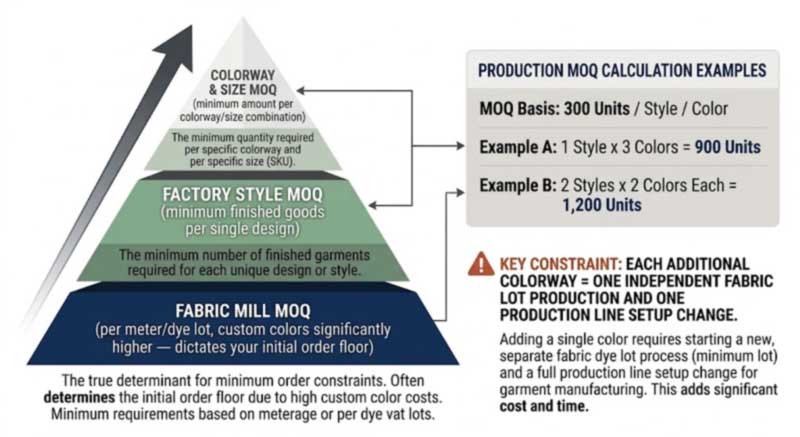
This is the part that causes most confusion, because buyers think there is one number when there are three stacked on top of each other. Industry sources describe the tiers clearly: the fabric mill MOQ (the minimum length of custom-woven or custom-dyed fabric a mill will produce), the factory style MOQ (the minimum completed units a factory will assemble for a specific design), and the colourway and size-ratio MOQ (the sub-minimum required to split production across colours and sizes).

The upstream one is the one nobody warns you about — a fabric mill carries its own MOQ too, often by metre or by dye lot, which sits upstream of the factory's and quietly sets the real floor on your first order. The consequence is direct: if a factory must buy a roll of fabric that yields 500 units but you only want 50, the factory is left with wasted material it paid for.

The hidden MOQ that catches everyone: custom colour. This is the single most common reason a quote comes back higher or a minimum jumps. Dye vats have their own minimums regardless of how few bags you want. One sourcing manager's example is exact: a client wanted a custom Pantone red — we could easily sew 50 units, but the factory dye vat required a strict 300-yard material MOQ. Others put custom dye lots far higher still. The technical reason matters: a new colour requires a full dyeing vat setup, cleaning and calibration — costly steps no matter the quantity — and mills require a minimum to make the dye cost-effective and avoid colour inconsistency for small lots. As one guide summarises: when a quote feels high for a small order, the fabric minimum is usually the reason.


MOQ Is Per Design, Per Colour — Not Per Order

This misunderstanding wrecks more first orders than any other. As one manufacturer puts it: an MOQ of 50 does not mean 50 pieces spread across a whole collection — it means 50 pieces of one specific style in one specific colour, and ordering in black and white is treated as two separate MOQs, not one combined order.

Applied to cooler backpacks: a 300-piece MOQ means 300 of one design in one colourway. Launching one model in three colours is three minimums — 900 pieces. Launching two models in two colours each is four. The arithmetic compounds quickly, and it is the most common way new brands accidentally commit three times the capital they planned.

Colour is not a cosmetic variable on the production floor either: within a style, each colour means its own fabric batch and a line changeover — a 1,000-piece order in two colours is two 500-piece problems; in five colours it may be refused, or priced like five small orders.


What Drives a Cooler Backpack's MOQ Specifically

Beyond the general drivers — pattern making, machine setup and labour spread across more units — a welded cooler backpack has its own cost structure:

  • Roll minimums on three materials, not one. Shell fabric, closed-cell foam and food-grade liner each come in rolls with their own minimums. A cooler is a laminate product, so the upstream minimums stack.
  • Welding tooling and line setup. Each design needs its dies and its process window established. That setup is a fixed cost amortised across the run — which is why the price curve is steepest just above MOQ and flattens later.
  • Pattern engineering. A welded cooler pattern must account for weld lap allowance and thick-foam compensation. That development work is spread across the units produced.
  • Hardware and trim minimums. Custom buckles, zipper pulls, woven labels and printed packaging all carry their own supplier minimums.
  • No mould tooling, though. Soft bags need no injection tooling — which is exactly why cooler backpack MOQs sit in the hundreds rather than the thousands typical of moulded products.

Context for the 300 figure: apparel and soft-goods MOQs in the region typically range from 300 to 3,000 pieces per style and colour, with large manufacturers supplying global brands usually starting at 3,000 to 10,000 pieces. A 300-piece minimum sits at the accessible end of that spread.

How to Actually Lower Your MOQ

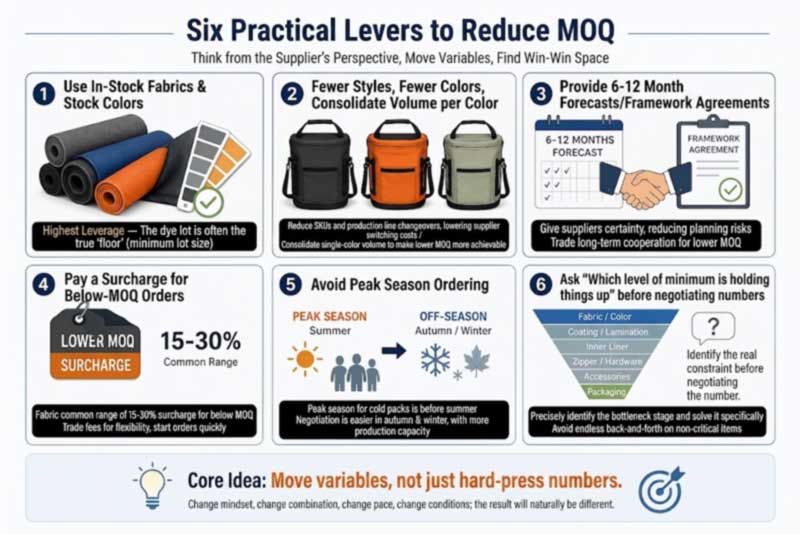
Here is the counterintuitive part, and it is the most useful advice in the research: reducing the number of styles or colours in a launch, or choosing stock fabric over custom-dyed material, is usually more effective than asking for a lower number directly. You move the variables, not the number.

1. Use stock colours and stock materials

The highest-leverage change available. Use stock fabrics — to avoid upstream mill minimums — and accept the factory's standard colourways for a first order. This alone frequently removes the binding constraint, because the dye lot was the real floor, not the factory.

2. Fewer colours, more units per colour

Concentrate the same budget: fewer styles, more colours — to hit style-level MOQ is one framing; for a first launch the stronger version is fewer of both. One design in one colour at 300 pieces is a real order. Three designs in two colours each is six minimums and a cash problem.

3. Share a forecast, not just an order

Factories price risk, and a credible pipeline reduces it: share a 6–12 month forecast so the vendor sees repeatability. Framing matters too — negotiating MOQs should be framed as a partnership rather than a one-off concession; sharing multi-season plans or framework agreements gives factories confidence to invest in your styles and sometimes accept lower MOQs on initial runs.

4. Offer to pay for the gap

A below-minimum surcharge is a legitimate, commonly accepted mechanism: strategies include offering to pay a surcharge (below-minimum fee), committing to a longer-term contract, booking greige goods in advance, or piggybacking on larger existing orders running in the factory. Expect the surcharge to be real — for fabric below MOQ, expect 15–30% surcharges.

5. Time it to the off-season

During peak seasons factories push MOQs higher because demand is strong; off-season gives buyers more flexibility. For coolers, peak production runs ahead of the summer season — so a buyer approaching in autumn or early winter has more room than one asking in spring, when the lines are already full.

6. Negotiate the terms, not only the number

Do not open at the floor: don't open with the minimum. And be aware of the trade-off you are buying — aggressive MOQ cuts may delay timelines; confirm lead times before signing contracts, because low MOQs may delay if piggybacked on larger jobs.

Diagnose before you negotiate: ask the factory which minimum is binding. If it is the dye lot, switching to a stock colour solves it instantly and no negotiation is needed. If it is the factory's line setup, a forecast or a surcharge is the lever. If it is a custom zipper or buckle, dropping that one component may unlock the whole order. Asking "what is driving the minimum?" gets you further than "can you do 150?"


Where the Real Problem Usually Sits

One consultancy identifies the pattern behind most rejected small orders, and it is worth reading carefully: the problem is not that the factory refuses small orders in general — the problem is that the buyer wants a small order with too many variables, and that combination creates material leftovers, setup inefficiency and more chance of quality inconsistency. The same source notes that a factory may say it can accept 300 pieces, but only if that means one fabric, one colour and a standard size ratio.

So the practical rule for a first cooler backpack order: keep the variables down and the quantity per variant up. One design, one shell material, one colourway, one size. Prove it sells. Then widen.

MOQ vs What You Should Actually Order

The supplier's minimum and your ideal order size are two different numbers, and confusing them is expensive. One guide draws the distinction usefully: the supplier sets the MOQ (their minimum acceptable order); the buyer calculates the Economic Order Quantity (their most profitable order size), and recommends you forecast realistic sell-through demand, identify your target launch quantity by size and colour, estimate carrying cost for excess inventory, and compare the supplier minimum against your internal EOQ.

The trade-offs are structural: a larger order buys lower unit cost, broader material options and easier factory priority at the cost of higher cash outlay and higher inventory risk; a smaller order gives lower cash outlay, lower inventory risk, mostly stock materials and harder factory priority. Neither is right in the abstract. For a first cooler range where demand is unproven, selling out is a far cheaper mistake than warehousing unsold stock through a winter — and coolers are seasonal, so unsold inventory waits a full year.

Order at MOQ Order well above MOQ
Unit cost Highest of the tiers Lower — setup spreads further
Cash committed Lowest Highest
Inventory risk Low High, and seasonal for coolers
Material choice Mostly stock Custom colours and materials open up
Factory priority Lower Higher
Best for First orders, unproven demand Proven sellers, repeat programmes

Sealock's MOQ in Practice

Standard MOQ 300 pcs per design, per size and per colourway
Negotiability Negotiable on custom programmes — discuss which constraint is binding
Tooling None required for standard soft-bag customisation; only for bespoke moulded hardware
Sampling 7–15 days; ground-up development longer
Production 30–45 days; FOB Guangdong
Origin China or Vietnam on the same specification
Certifications ISO9001, BSCI, SMETA P4, GRS, HIGG, SCAN

The practical read: a first order of 300 pieces in one design and one stock colourway is a genuinely workable entry point for a new brand, and it is well below the 3,000–10,000 piece minimums typical of factories serving only global brands. For the wider commercial mechanics see Soft Cooler Backpack Supplier: MOQ, Lead Times & FOB Sourcing Explained and Wholesale Cooler Backpack Manufacturer: Bulk Pricing & FOB Terms.

Platforms That Keep a First Order Small

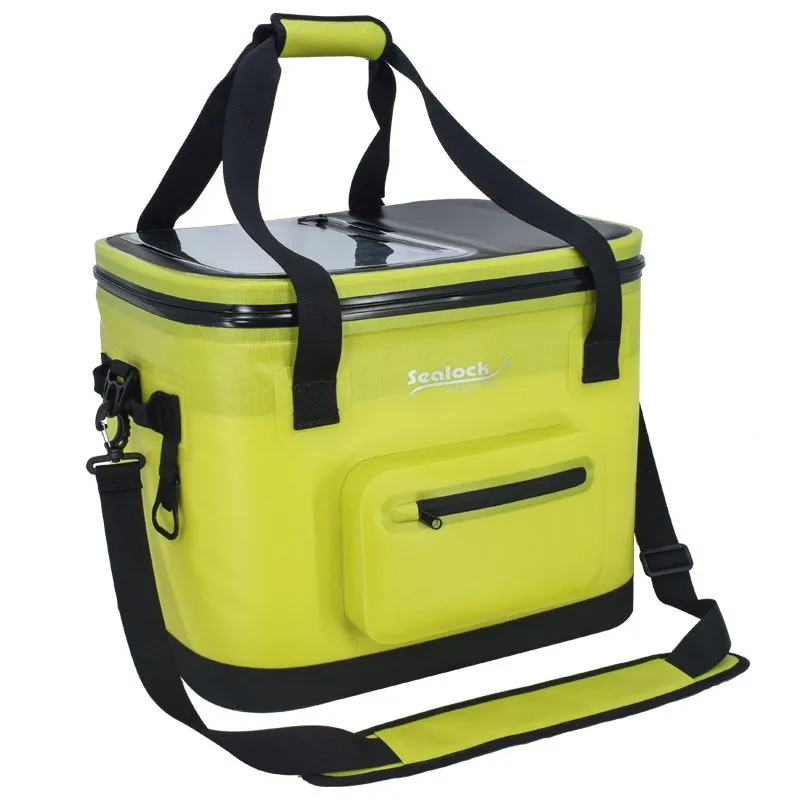
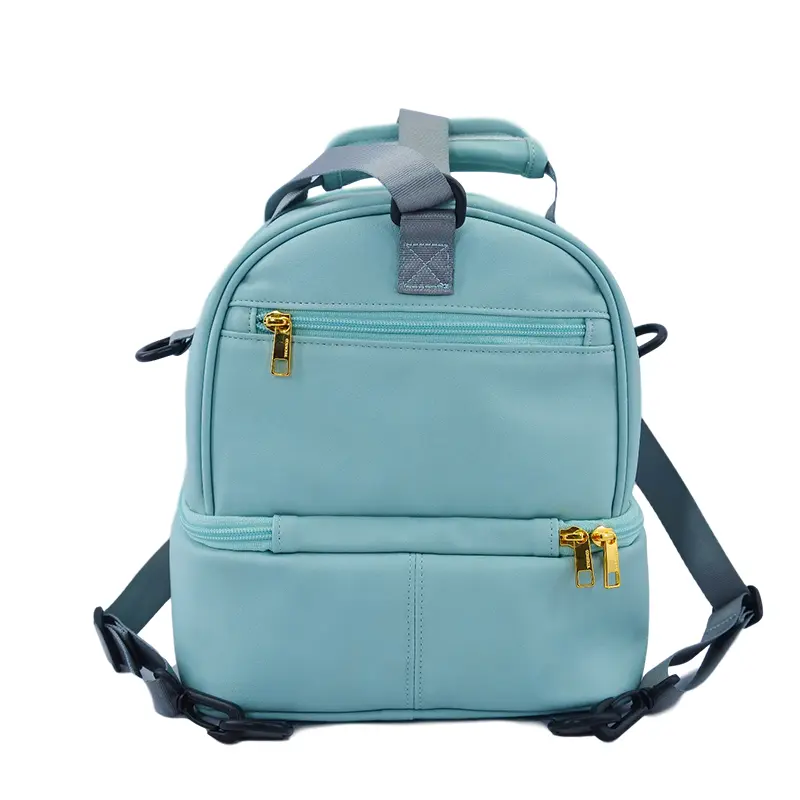
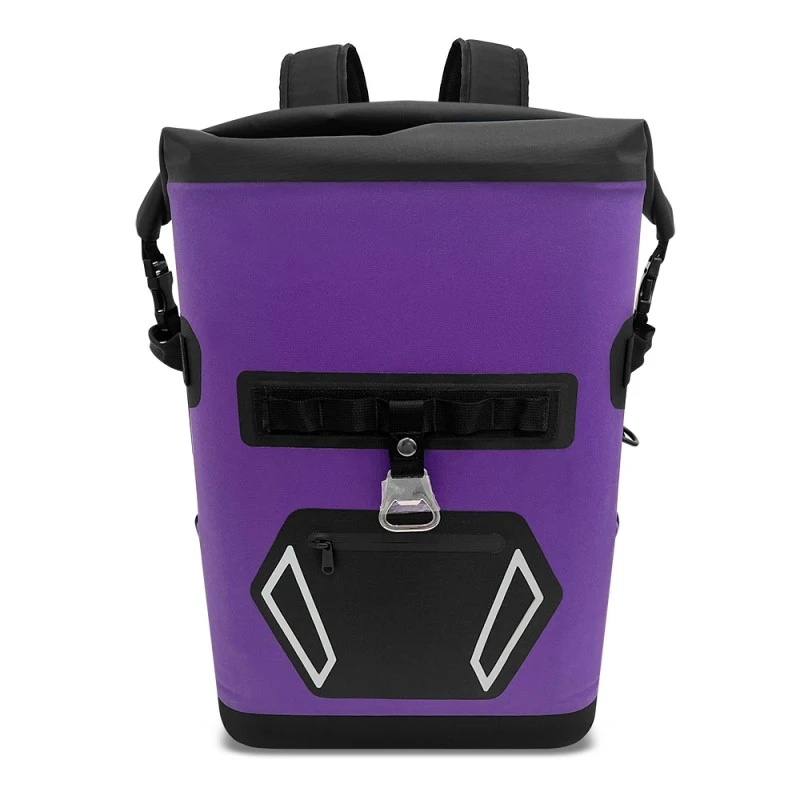
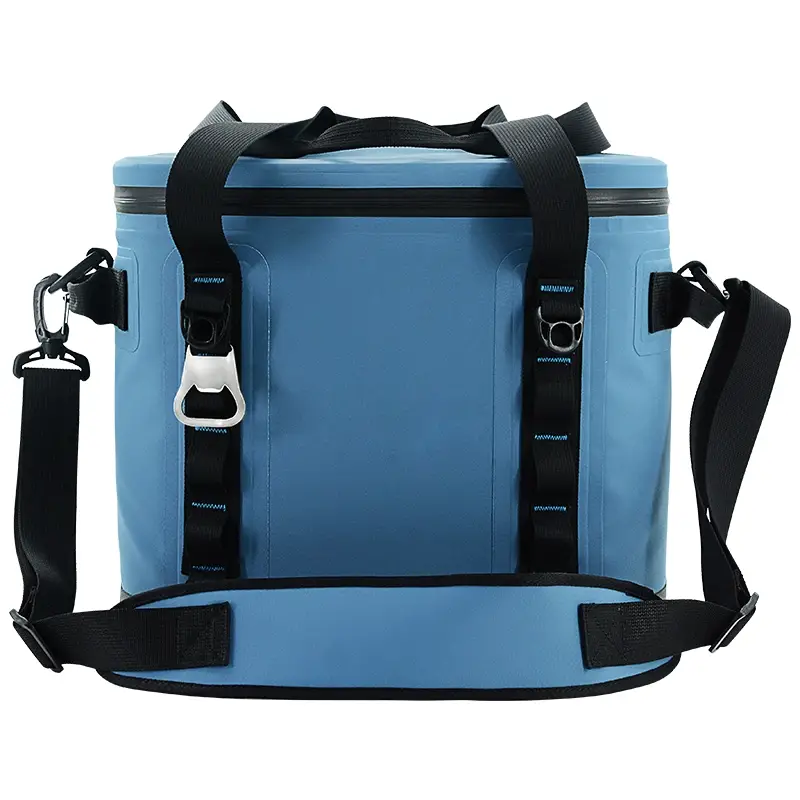
Starting from an existing welded platform with stock colourways is the cheapest route through the MOQ problem, because the materials are already specified and no custom dye lot is involved. Real Sealock cooler backpacks, chosen by fit rather than rank:

Image Model Why it works for a first order Link
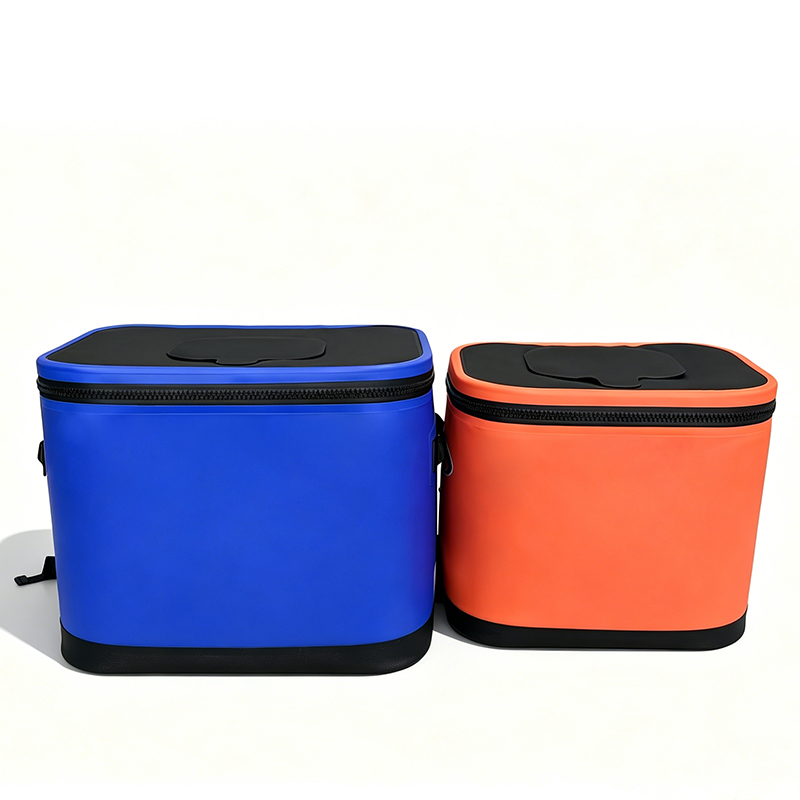
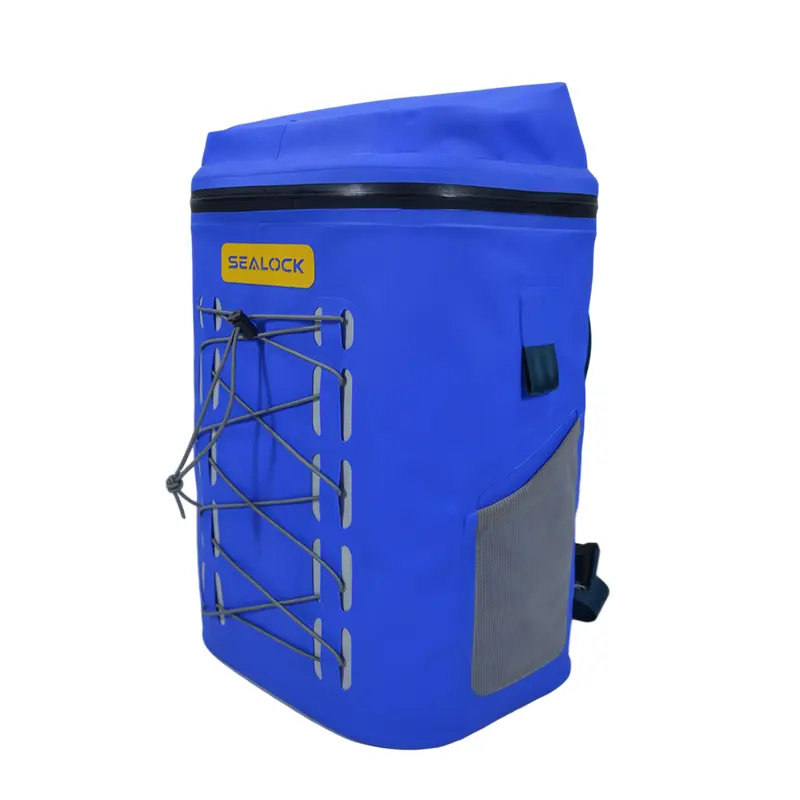
Insulated soft cooler backpack with molded lid SL-E050B Insulated Cooler Backpack, molded lid (SL-E050B) Distinctive moulded lid, offered in two sizes — range extension later without new development View
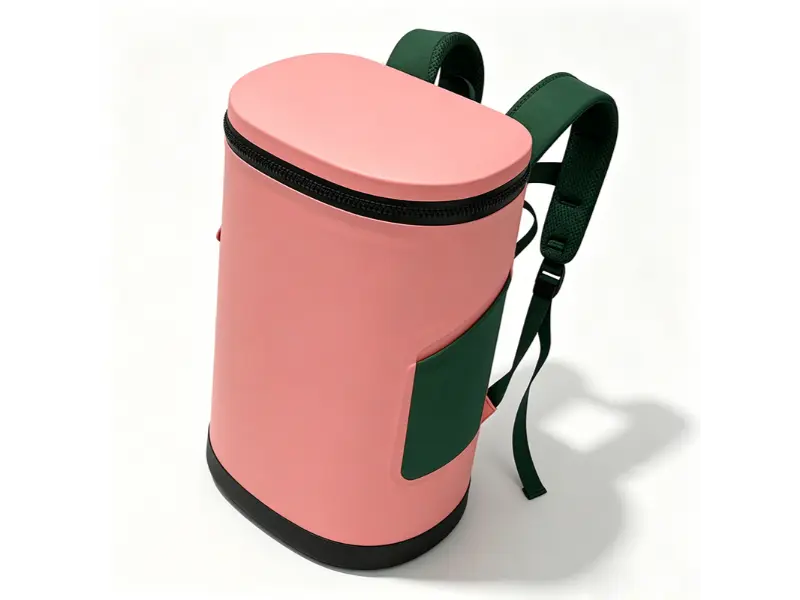
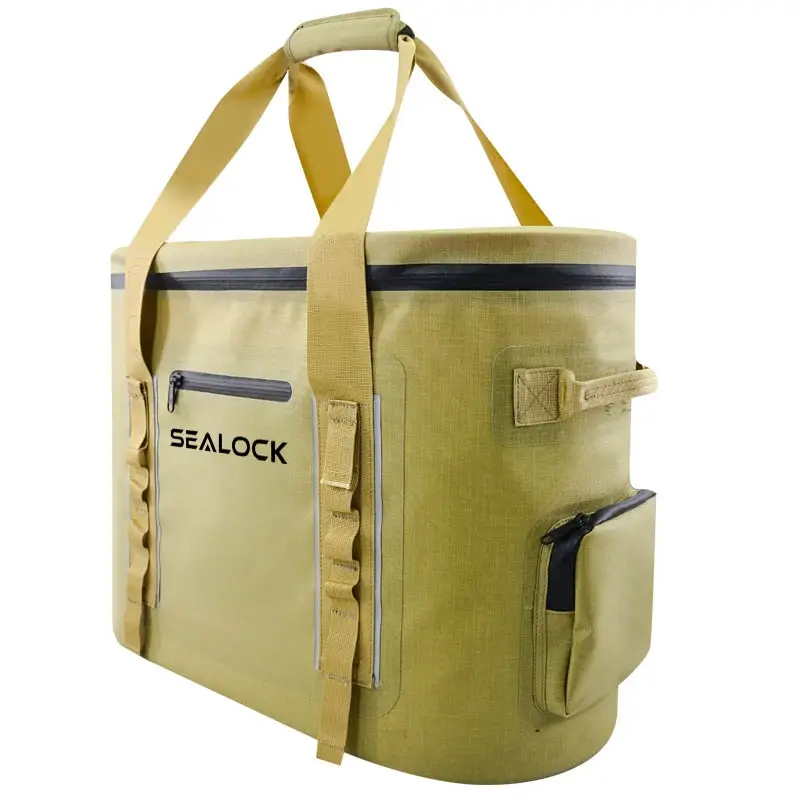
Barrel insulated cooler backpack SL-I309 Barrel Cooler Backpack (SL-I309) Visually distinct silhouette in existing colourways — differentiation without a custom dye lot View
28L airtight-zipper insulated backpack cooler SL-I274 28L Airtight-Zipper Backpack Cooler (SL-I274) Premium sealed spec already available in four stock colours View
Insulated leakproof cooler backpack SL-I075A Insulated Leakproof Cooler Backpack (SL-I075A) Value 36-can platform in three stock colours — lowest-risk price-led entry View
six levers to lower a custom cooler backpack MOQ including stock colours, fewer variants, forecasts and surcharges

Beware the Supplier With No MOQ

A supplier offering to make 20 custom welded cooler backpacks is telling you something about itself. Either it is a trading company reselling someone else's stock with your logo applied, or it is quoting a price that reflects the true cost of a tiny run. Neither is necessarily wrong — but know which you are buying. Guidance across the industry notes that some suppliers specialise in high-volume production for large brands, while others cater to smaller brands, offering lower MOQs but potentially at a higher unit price. If the MOQ is unusually low and the price is unusually low and the product is described as fully custom, at least one of those three claims is not holding. Verification procedure is in Choosing an OEM Soft Cooler Backpack Manufacturer: A Buyer's Checklist.

FAQ: Cooler Backpack MOQ

Q: What is the MOQ for custom cooler backpacks?

A: Sealock's standard is 300 pieces per design, applied per size and per colourway, and negotiable on custom programmes. Regionally, soft-goods MOQs typically run 300 to 3,000 pieces per style and colour, with factories serving only global brands often starting at 3,000 to 10,000 — so 300 sits at the accessible end.

Q: Does MOQ apply to my whole order or to each colour?

A: Each design in each colour. A 300-piece minimum means 300 of one design in one colourway, so one model in three colours is 900 pieces, not 300. Each colour means its own material batch and a line changeover, which is why colours multiply the minimum rather than sharing it.

Q: Why did my MOQ jump when I asked for a custom colour?

A: Because the dye lot has its own minimum upstream of the factory. A new colour requires a full dye vat setup, cleaning and calibration regardless of quantity, and mills set minimums to make dyeing cost-effective and keep colour consistent. In many cases the fabric minimum, not the factory, is the real floor on your order — and switching to a stock colour removes it entirely.

Q: Can I negotiate a lower MOQ?

A: Often, but not by asking for a smaller number. Reducing styles and colours, or choosing stock materials over custom-dyed, is usually more effective than a direct request. Other accepted levers are a below-minimum surcharge, a 6–12 month forecast or framework agreement, booking in the off-season, and piggybacking on an existing run — though piggybacking can extend lead times.

Q: Should I order exactly at MOQ?

A: For a first order with unproven demand, usually yes. Larger orders lower unit cost and open up custom materials but commit more cash and carry inventory risk — and coolers are seasonal, so unsold stock waits a year. Calculate your own economic order quantity from realistic sell-through and carrying cost, then compare it against the supplier's minimum.

Q: Why do cooler backpacks have lower MOQs than some other custom products?

A: Because soft bags need no injection moulds. Moulded products carry tooling investment that factories recoup through high first-order minimums, whereas a custom cooler backpack's setup is pattern engineering, welding tooling and line changeover — real costs, but spread over hundreds rather than thousands of units.

Working out your first order? Sealock (YiFuLong Outdoor Gear Co., Ltd.) manufactures welded cooler backpacks at 300 pcs per design from its own lines in China and Vietnam. Tell the team your target quantity, colours and launch date, and they will say plainly which constraint is binding and how to work around it.

Email: info@sealock.com.hk  |  Phone: +86-13632981825  |  Browse the soft cooler range

MOQ ranges, surcharge levels and negotiation practices cited here reflect publicly available sourcing and textile-industry sources as of mid-2026 and vary by factory, material, season and product. Confirm minimums, surcharges and lead times with your supplier before committing.

Related News
Leave me a message
X
We use cookies to offer you a better browsing experience, analyze site traffic and personalize content. By using this site, you agree to our use of cookies.Privacy Policy