News

How Soft Cooler Backpacks Are Manufactured

2026-08-24 0 Leave me a message
Buyers who understand how a product is actually made ask better questions, spot weaker suppliers faster, and write specifications that a factory can hit. A soft cooler backpack is a useful thing to understand, because it is not simply a bag with foam in it — it goes through several stages that an ordinary cut-and-sew backpack never sees, and those stages are where quality is won or lost. This guide walks the production floor from incoming rolls of material to the sealed export carton. Sealock (YiFuLong Outdoor Gear Co., Ltd.) manufactures welded cooler backpacks at three high-frequency welding factories in Dongguan, China and Ho Chi Minh City, Vietnam.


Before Anything Is Cut: Planning and Material Inspection

Production does not start at the cutting table. It starts with confirmation, and a factory that skips this stage creates problems it cannot fix later. As one manufacturing guide puts it: a reliable factory should not rush into cutting without confirming materials, approved sample details and the production schedule — good preparation helps prevent waste, delays and inconsistent bulk quality. Planning is product-specific too: a simple tote may move quickly through cutting and sewing, while a backpack requires more components, padding, zipper panels, shoulder straps and reinforcement steps. A cooler backpack sits at the complex end of that scale.

Incoming quality control (IQC) then verifies what has arrived: shell fabric denier, coating type and coating weight; closed-cell foam thickness and density; the food-grade liner material; zippers, buckles, webbing and hardware. On a cooler this matters more than on most bags, because two of the three main materials are invisible in the finished product — nobody can see the foam or judge the liner grade once the bag is welded shut. If it is not verified on arrival, it is never verified.

Step 1: Pattern and Marker Preparation

The approved sample is converted into production patterns. As a cut-and-sew guide describes it: your tech pack or sample is converted into patterns, and these patterns are used to mark and cut the fabric. For a welded cooler the pattern work carries two requirements a sewn bag does not have: it must include the weld lap allowance at every joint — the overlap that makes a welded seam watertight and strong — and it must compensate for the bulk of a thick closed-cell foam wall, which behaves nothing like a single layer of fabric when it wraps a corner.

Marker making — nesting the pattern pieces on the roll — then determines material yield, which is a real cost line on a bag using wide-format TPU or PVC laminate. The design-development side of this is covered in ODM Soft Cooler Backpack Supplier: Design-Led, Ground-Up Development.

Step 2: Cutting

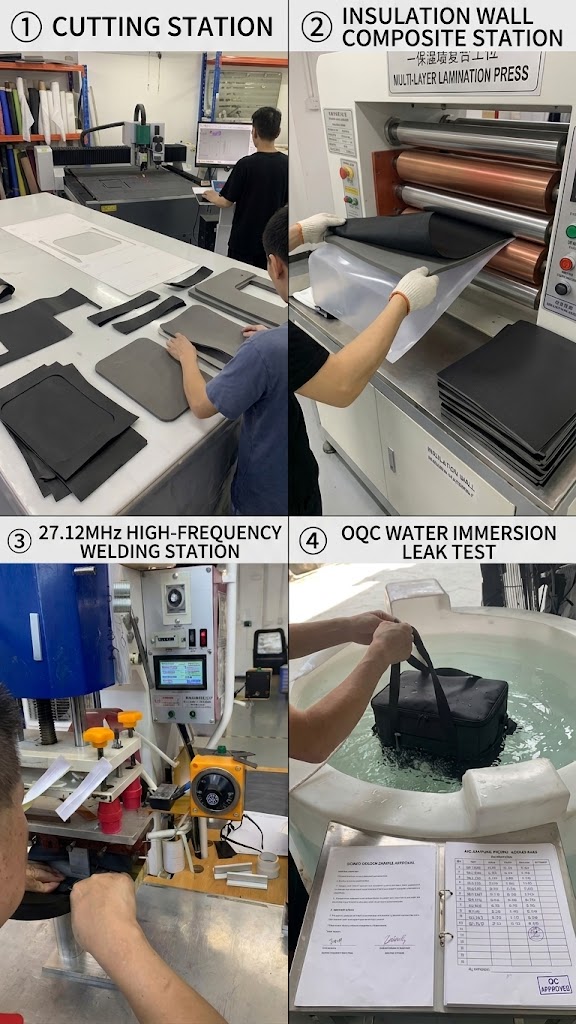
Panels are cut from the roll, and the method depends on volume and complexity: die-cutting employs metal dies to cut materials accurately, suitable for larger production runs, while CNC cutting machines offer precision and efficiency, perfect for complex designs and high-volume production. Accuracy here propagates — cutting affects product appearance and material usage, and on a welded product a mis-cut panel cannot be eased into place the way a sewn one sometimes can. The weld either lands on the lap or it does not.

Alongside the shell, this stage prepares everything else: lining cutting, reinforcement preparation, hardware preparation, zipper cutting, strap cutting and component sorting. On a cooler that also means cutting the foam wall panels and the liner.

Step 3: Building the Insulated Wall

This is the first stage unique to a cooler. The closed-cell foam — EPE, XPE or EVA depending on the cold-hold target — is prepared and combined with the shell and the food-grade liner to form the insulated wall. Wall thickness is set here, and it is the specification that determines the advertised cold-hold: thin walls for 24-hour day packs, thick high-density walls for 48-hour builds, premium panels where a brand wants more insulation per millimetre.

Getting this stage right is also what stops the wall degrading later. Closed-cell foam barely absorbs water, so the wall keeps its rated performance even when the bag is soaked — but only if the layers are built so that water cannot reach it in the first place, which is the job of the next step. The material engineering is covered in Insulated Cooler Backpack Manufacturer: EPE Foam & Cold-Retention Design.

Step 4: High-Frequency Welding the Body

This is the stage that defines the product. Instead of stitching panels together, the TPU- or PVC-coated panels are fused using a high-frequency electromagnetic field — typically 27.12 MHz — which heats the material internally so the two layers bond at the interface into one continuous skin with no needle holes.

Welding is a controlled process, not a single machine setting: power, clamping pressure, weld time and cooling time have to sit in the correct window for the specific material and thickness, and the tooling that shapes each weld has to be maintained. Sealock welds body, base and closure integration at 27.12 MHz on its own lines across three factories. The process detail is in Waterproof Cooler Backpack Manufacturer: HF-Welded, Seam-Free Builds and the process control in RF-Welded Cooler Backpack Manufacturer: Seamless Waterproof Construction.

Why the welding stage is where inspection has to happen: once the liner is in and the bag is assembled, a weld defect is invisible. You cannot see it, and the buyer cannot see it — it appears months later as a leak. That is why in-line inspection of every weld as it is made is not optional on a cooler, and why the finished-product test at the end (immersion) is the only meaningful proof. Ask any supplier how it catches a bad weld; if the answer is "final visual inspection," the answer is that it does not.


Step 5: Integrating the Closure

The closure is welded into the body rather than attached to it — an airtight or waterproof zipper bonded into the welded skin, or a roll-top formed as part of the body. This is a distinct and demanding operation, because the closure is the highest-risk part of the seal: zipper ends and corners are the classic leak points on a cooler, and they are made or lost here.

Step 6: Assembly — Hardware, Harness and Reinforcement

Now the bag becomes a backpack. Assembly is where different components are combined into a finished product, and assembly quality plays an important role in product usability and long-term durability — shoulder straps, sternum and waist straps, buckles, D-rings, webbing, external pockets and any MOLLE or attachment panels.

Here a welded cooler diverges sharply from an ordinary backpack, and it is the detail buyers most often miss. Load-bearing attachments are stitched — that is how straps and webbing are properly anchored, with bar-tacks and box-X reinforcement onto internal reinforcement layers — but none of that stitching may pass through the sealed chamber. So harness anchors, webbing panels and pockets are attached to welded-on external zones, keeping the load path and the water barrier physically separate. This is engineered at the design stage; it cannot be improvised on the line. Practical inspection advice reflects how important this area is: when evaluating samples, buyers should check strap attachment points and stitching density, as these areas reveal whether the bag is built for durability. See Heavy-Duty Cooler Backpack Supplier: Built for Abrasion & Overload.

Step 7: In-Line Quality Control (IPQC)

Good factories inspect while production is running, not after it. The principle is stated plainly across the industry: a good factory should control in-line quality during sewing and assembly, not wait until the end — if defects are found early, they are easier to correct, and in-line checks may include material surface, cutting accuracy, stitching density, seam alignment, edge finishing, logo placement, zipper installation, hardware colour and lining fit. On a cooler, weld integrity joins that list as the highest-priority item.

The full inspection chain a structured factory runs looks like this: material inspection → cutting inspection → sewing inspection → assembly inspection → final inspection → packing inspection, and factories that perform systematic testing procedures usually maintain higher product consistency and lower defect rates.

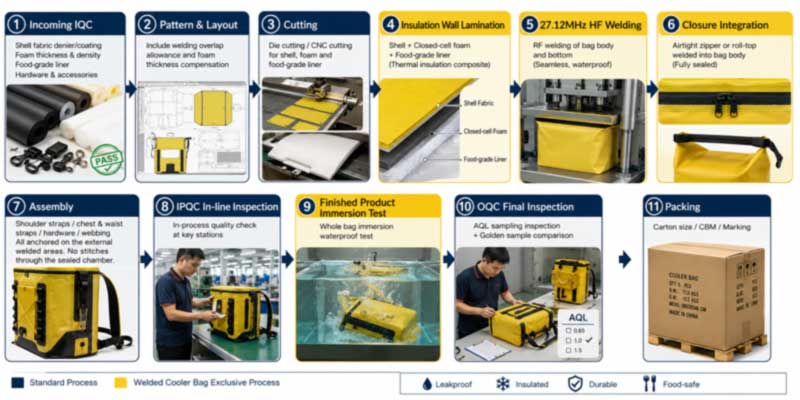
step by step production flow of a welded soft cooler backpack from material inspection to packing

Step 8: Finishing and Final Testing

Finishing covers the details that decide how the product feels in a customer's hands: trimming loose threads, cleaning glue marks, shaping the bag, adjusting hardware, smoothing lining, checking zipper movement and confirming final appearance.

Then comes the test that a cooler needs and an ordinary backpack does not: full water immersion of the finished bag. This is the only test that verifies the body welds, the closure integration and the liner attachment as a single sealed envelope, in the state the customer will use it. Sealock runs immersion batch testing at the outgoing gate, alongside a laboratory suite covering load cycling, tensile strength, adhesion, salt spray, abrasion and colour fastness.

Step 9: Outgoing Inspection (OQC)

The final gate compares production against the standard that was agreed, not against an opinion. That means AQL sampling to defined acceptance criteria and comparison against the approved gold sample retained from development — the reference every production unit is matched to. Third-party inspection (SGS, QIMA) can be added at this point, and a factory that welcomes an independent inspector on its outgoing line is behaving the way a buyer should expect. See Choosing an OEM Soft Cooler Backpack Manufacturer: A Buyer's Checklist.

Step 10: Packing

Packing is not an afterthought on a cooler, for two reasons. First, protection: after passing final inspection, bags are packaged to protect them during international transportation, and strong export cartons help ensure products arrive without damage. Second, and specific to this product, coolers are light and bulky — ocean freight charges by volume — so how many units fit a carton and the total CBM of the order directly change the landed cost per unit. This is why carton dimensions, units per carton and total CBM belong in the quotation, not just the unit price. See Wholesale Cooler Backpack Manufacturer: Bulk Pricing & FOB Terms.

What the Timeline Looks Like

Stage Typical duration What drives it
Sampling 7–15 days Brief clarity; ground-up development runs longer while patterns and welding tooling are engineered
Sample revisions Variable Gaps in the tech pack — a complete brief typically cuts revision rounds sharply
Bulk production 30–45 days Order size, material lead times, factory loading
Ocean freight + clearance Several weeks Route, port, customs — the stage buyers most often forget

Working backward from an on-shelf date rather than forward from a purchase order is what keeps a seasonal range on time. The commercial mechanics are covered in Soft Cooler Backpack Supplier: MOQ, Lead Times & FOB Sourcing Explained.

Where a Cooler Backpack Differs From an Ordinary Backpack

Stage Ordinary backpack Welded cooler backpack
Pattern Seam allowance Seam allowance plus weld lap and thick-foam compensation
Wall build Optional padding Insulated wall: shell + closed-cell foam + food-grade liner
Joining Sewn seams 27.12 MHz HF-welded, seam-free containment
Closure Zip attached Airtight zipper or roll-top welded into the body
Attachments Stitched anywhere Stitched only onto welded external zones — never through the chamber
Final test Visual, functional Full water immersion of the finished bag
Hidden risk Visible stitching faults Weld defects invisible after assembly
The buyer takeaway from all of this: the two stages that decide whether a cooler backpack is good — the insulated wall build and the welding — are both invisible in the finished product. You cannot inspect them by looking at the bag. That is exactly why documented in-line weld inspection, verified foam specification at IQC, and finished-bag immersion testing matter more than a glossy product photo. Ask for all three by name.


Built to This Process

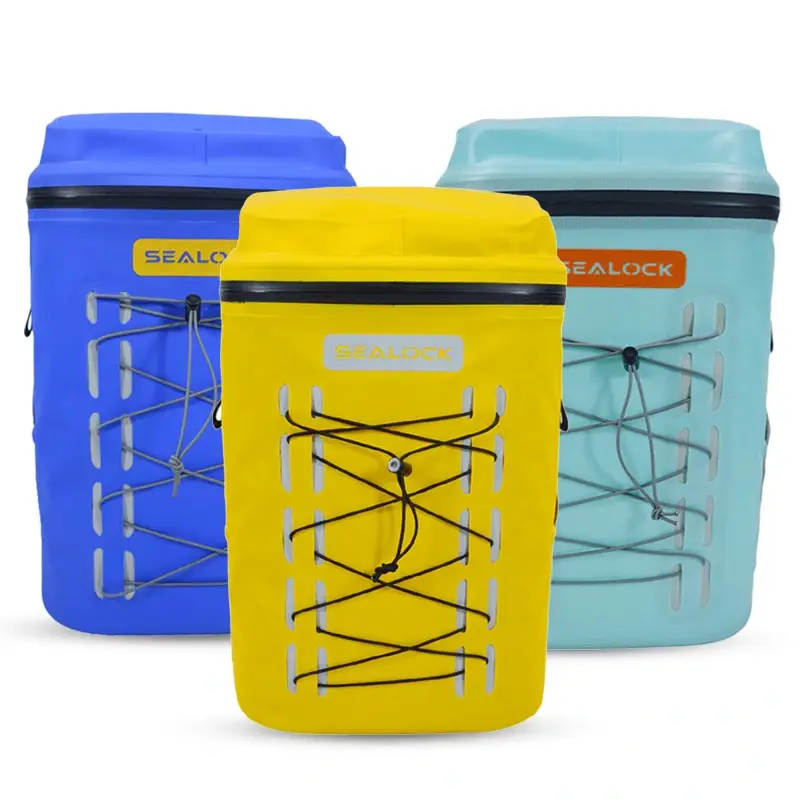
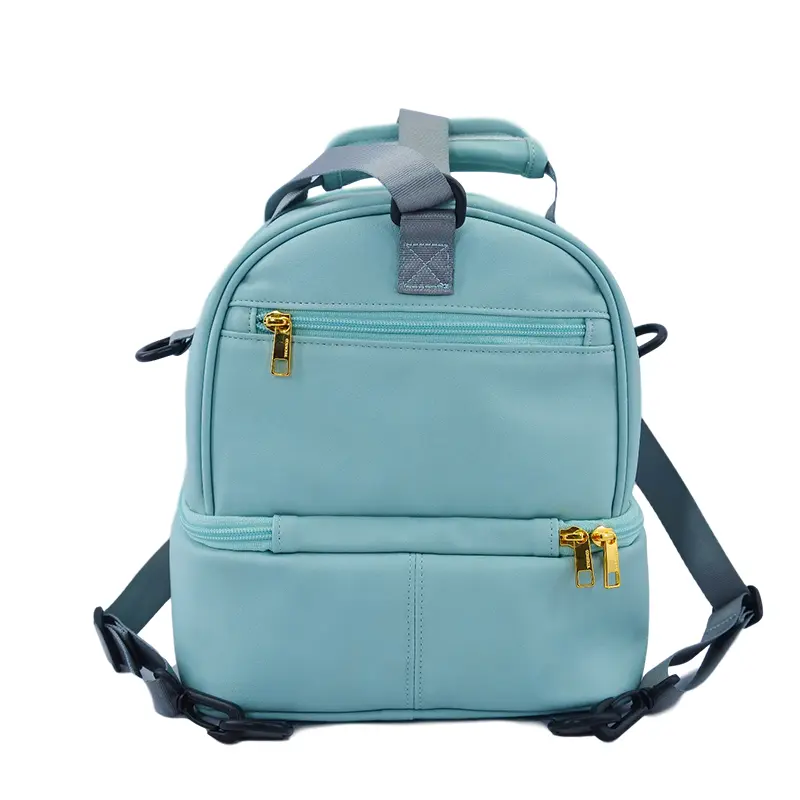
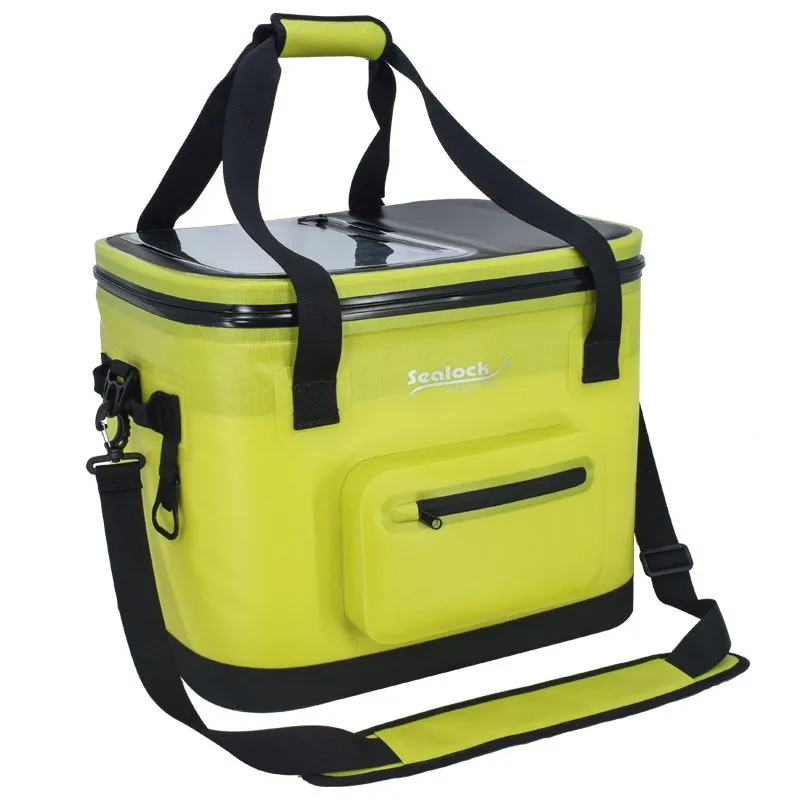
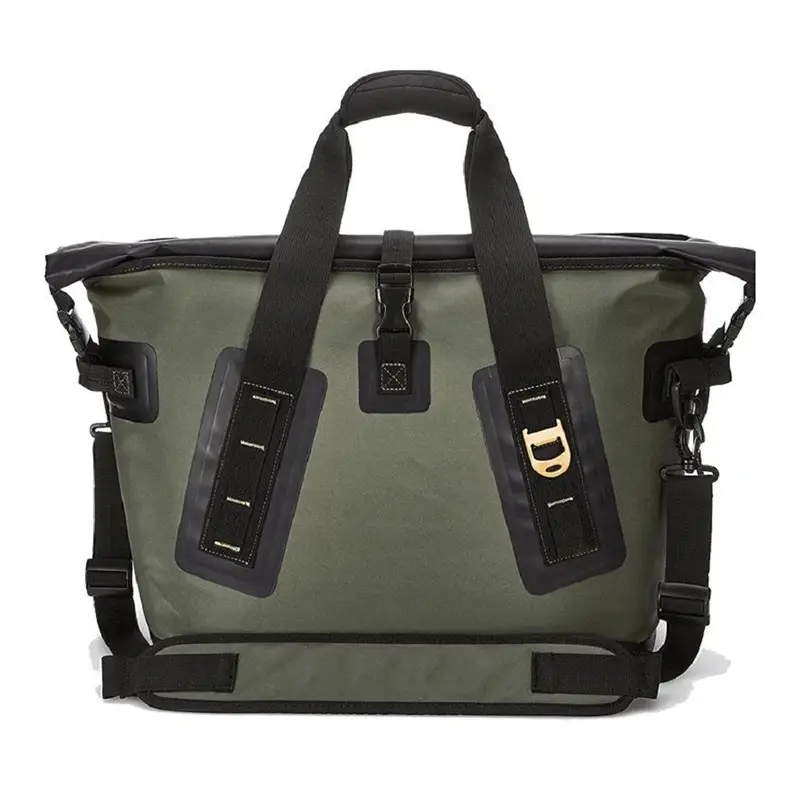
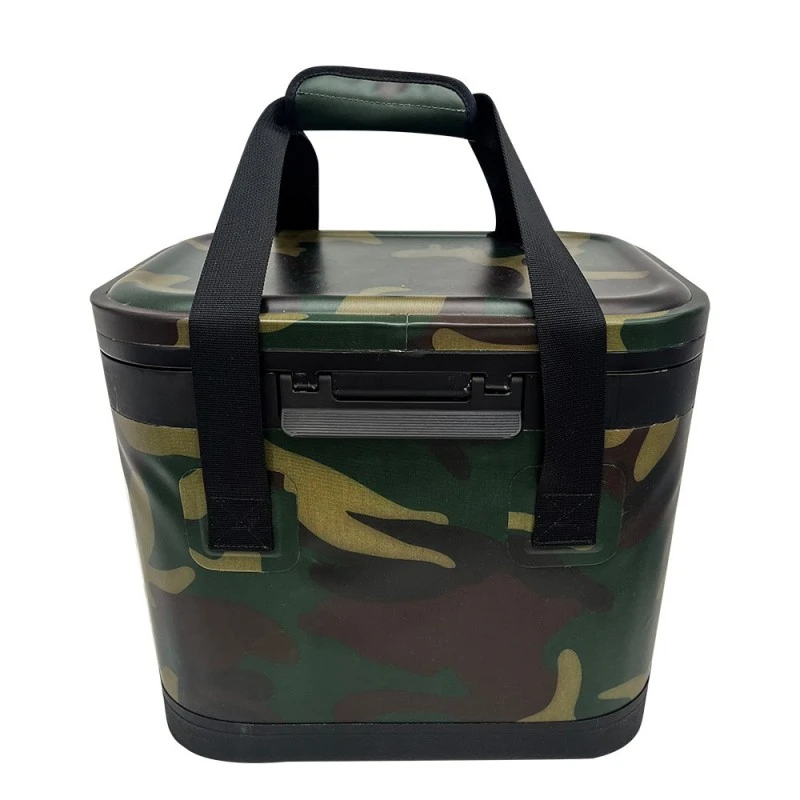
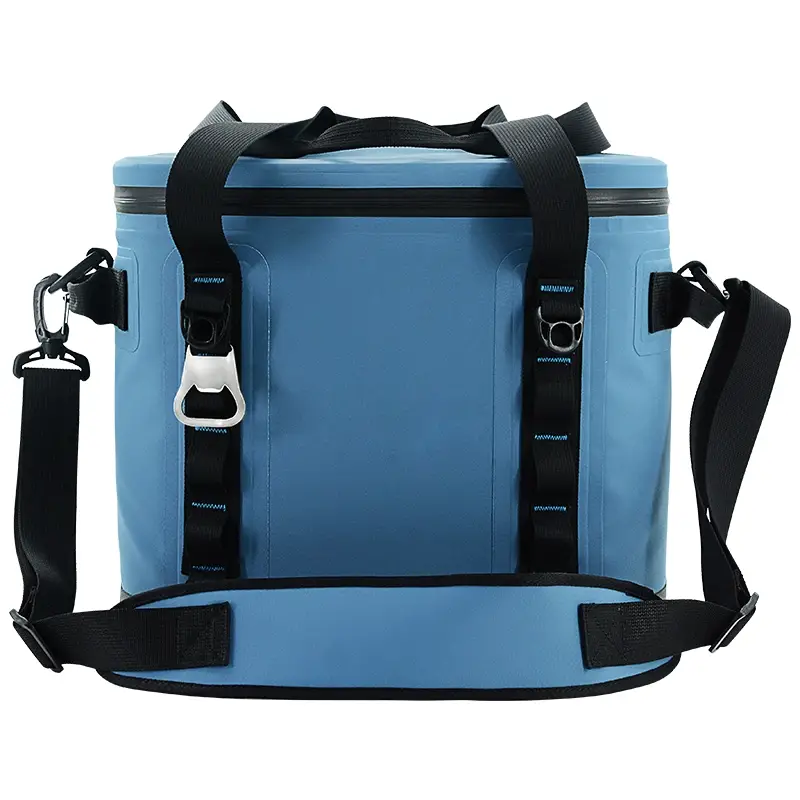
Real Sealock cooler backpacks, all produced through the flow above, chosen by fit rather than rank:

Image Model Build Link
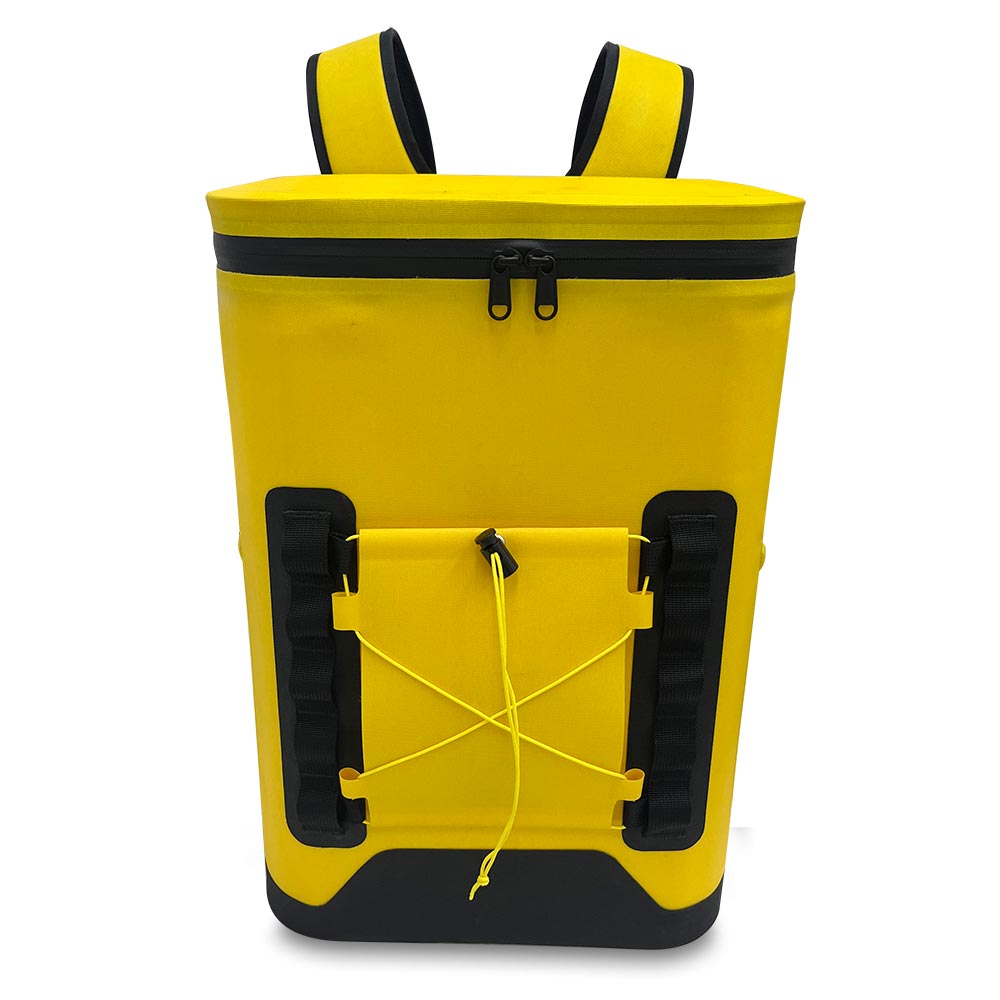
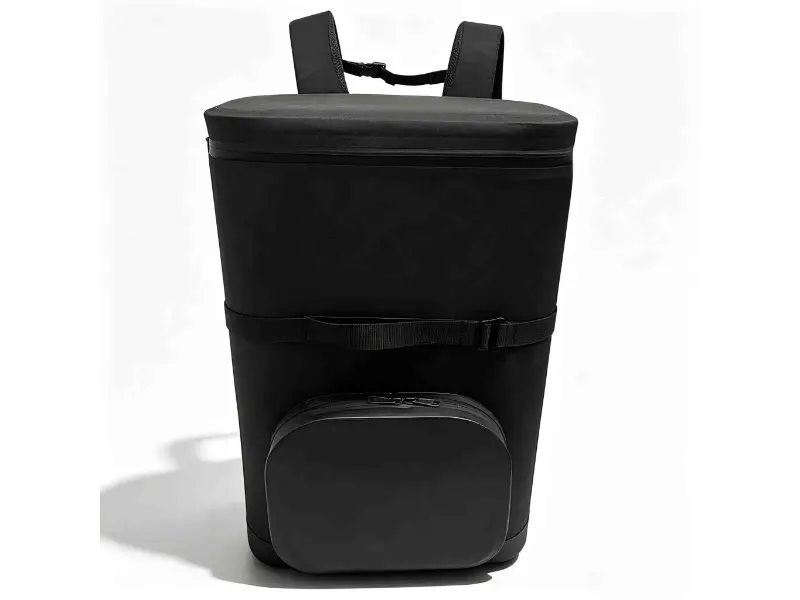
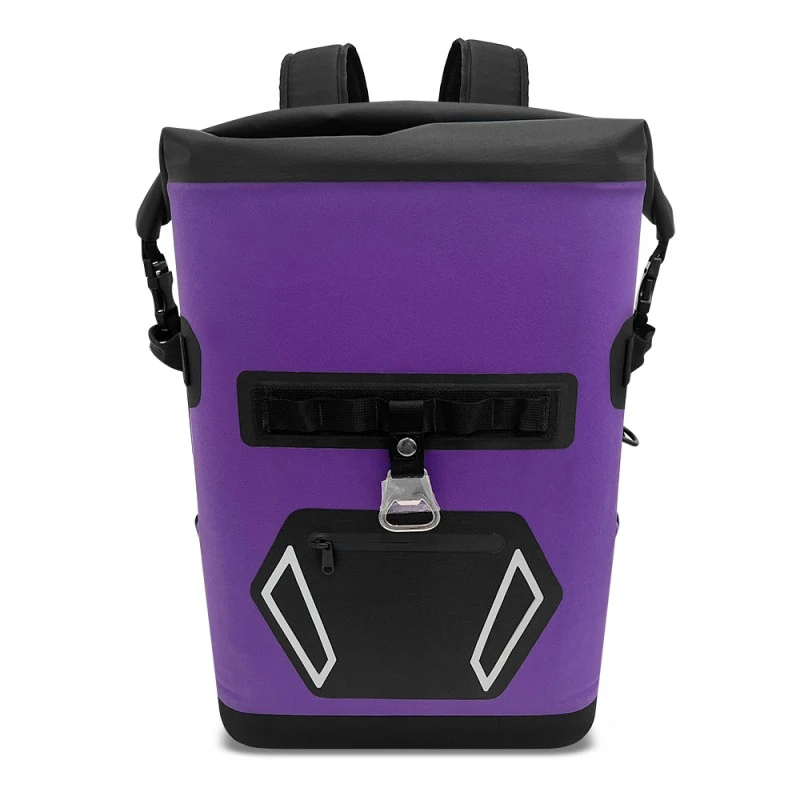
28L airtight-zipper insulated backpack cooler SL-I274 28L Airtight-Zipper Backpack Cooler (SL-I274) 840D TPU laminated, 3 cm EVA core, food-grade TPU membrane, HF-welded, airtight zipper, UTX buckles, up to 48 hr View
22L IPX7 cooler backpack SL-I280 22L IPX7 Cooler Backpack (SL-I280) 50 mm high-density XPE wall, welded seamless body, IPX7 airtight zipper, reinforced base, full harness View
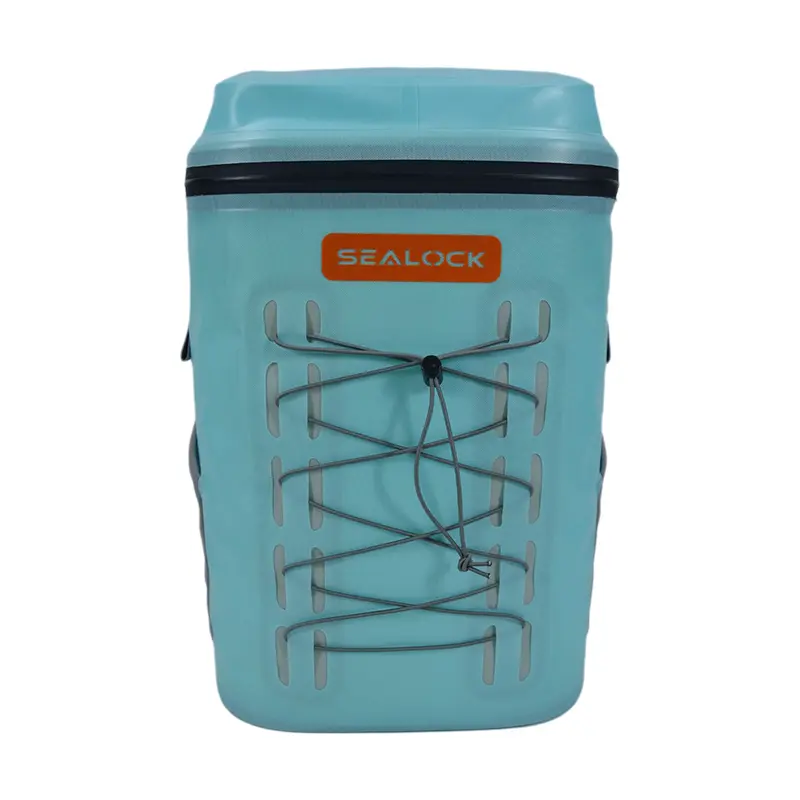
45L roll-top backpack cooler SL-I270 45L Roll-Top Backpack Cooler (SL-I270) 600D TPU, 3 cm EVA foam, food-grade TPU liner, roll-top formed in the welded body, UTX buckles View
Insulated leakproof cooler backpack SL-I075A Insulated Leakproof Cooler Backpack (SL-I075A) 840D PVC tarpaulin, EPE foam, PEVA film liner, 36-can View
cooler backpack factory floor: cutting, insulated wall lamination, 27.12 MHz welding and finished-bag immersion testing

For Brands: Where Your Specification Enters the Process

Every stage above has a decision attached to it, and a brand can set all of them. Beyond colour and logo, Sealock develops ground-up from a sketch, sample or performance target: shell material, denier and coating at IQC; pattern engineering including weld lap and foam compensation; the insulation tier and wall thickness that set the cold-hold; the food-grade liner and its market compliance testing; the closure type and IPX seal level; welded attachment zones for harness, webbing and MOLLE; hardware grade; and the test protocol the finished bag must pass. Demanding briefs are welcome — complex welded structures, premium insulation up to VIP vacuum panels and aerogel, and IPX6–IPX8 seal levels are all in scope. Ground-up work runs longer at sampling, so book against a launch. See OEM Soft Cooler Backpacks: What You Can Customize Beyond Logo & Color.

Welding 27.12 MHz high-frequency, in-house across three factories
Quality system IQC / IPQC / OQC; AQL sampling; gold-sample sign-off; full water-immersion batch testing; SGS or QIMA available
Lab suite Load cycling, tensile, adhesion, salt spray, abrasion, colour fastness, colour difference, water immersion
MOQ / lead time 300 pcs per design; samples 7–15 days; production 30–45 days; FOB Guangdong
Origin China or Vietnam on the same specification
Certifications ISO9001, BSCI, SMETA P4, GRS, HIGG, SCAN

FAQ: How Soft Cooler Backpacks Are Made

Q: What are the main stages of cooler backpack manufacturing?

A: Material inspection, pattern and marker preparation, cutting, insulated wall build, high-frequency welding of the body, closure integration, assembly of harness and hardware, in-line inspection, finishing and immersion testing, outgoing AQL inspection against the gold sample, and packing. The wall build, welding and immersion test are the stages an ordinary backpack never goes through.

Q: How is a cooler backpack different from a normal backpack on the production line?

A: Three ways. It has an insulated wall built from shell, closed-cell foam and a food-grade liner. Its containment body is welded rather than sewn, so the pattern must include weld lap allowance and foam compensation. And load-bearing stitching must attach only to welded external zones, never through the sealed chamber — otherwise the needle holes leak.

Q: Why is in-line weld inspection so important?

A: Because a weld defect becomes invisible once the liner is fitted and the bag assembled. It cannot be spotted at final visual inspection and typically surfaces months later as a leak in the field. Every weld should be inspected as it is made, and the finished bag should be immersion-tested as proof.

Q: What does immersion testing actually prove?

A: That the body welds, the closure integration and the liner attachment hold as one sealed envelope in the finished product. Testing a weld sample alone does not prove the assembled bag is sealed, which is why finished-bag immersion is the meaningful test for a cooler.

Q: How long does the whole process take?

A: Typically 7–15 days for samples and 30–45 days for bulk production, plus revision rounds if the brief has gaps, plus several weeks of ocean freight and customs clearance. Plan backward from your on-shelf date rather than forward from the purchase order.

Q: Which stage most affects the price of a cooler backpack?

A: The insulated wall and the welding. Foam type and thickness drive material cost directly, and welding is machine time that scales with the number and complexity of seams. Shell material and closure type follow. Setup costs also spread across the run, which is why price per unit falls fastest just above minimum order quantity.

Want to see the process? Sealock (YiFuLong Outdoor Gear Co., Ltd.) welds insulated cooler backpacks at 27.12 MHz across three factories in China and Vietnam, with documented IQC, IPQC and OQC and finished-bag immersion testing. Ask the team for a video walkthrough of the welding line, or send a specification for sampling.

Email: info@sealock.com.hk  |  Phone: +86-13632981825  |  Browse the soft cooler range

Process descriptions and industry practice cited here reflect publicly available bag-manufacturing sources as of mid-2026; specific workflows, durations and inspection protocols vary by factory, product and order. Confirm process, testing and timelines with your supplier before production.

Related News
Leave me a message
X
We use cookies to offer you a better browsing experience, analyze site traffic and personalize content. By using this site, you agree to our use of cookies.Privacy Policy
RejectAccept