XPE foam is crosslinked, closed-cell polyethylene foam. In a soft cooler it sits between the outer shell and the food-grade liner and does the actual work of keeping the contents cold. It looks almost identical to EPE, the cheaper non-crosslinked polyethylene foam used in most promotional cooler bags, and on a spec sheet the two are often written simply as "PE foam." The difference shows up months later, when one cooler's base and back panel have flattened to half their original thickness and the other's have not. This guide explains what XPE is, how it differs from EPE, IXPE and EVA, what that means for cold-hold and durability, and how to specify foam so the sample you approve is the cooler your customers actually receive. It is written by Sealock (YiFuLong Outdoor Gear Co., Ltd.), which has built insulated bags with both high-frequency welded and sewn construction at its factories in Dongguan, China and Ho Chi Minh City, Vietnam for over 20 years.
What XPE Foam Is
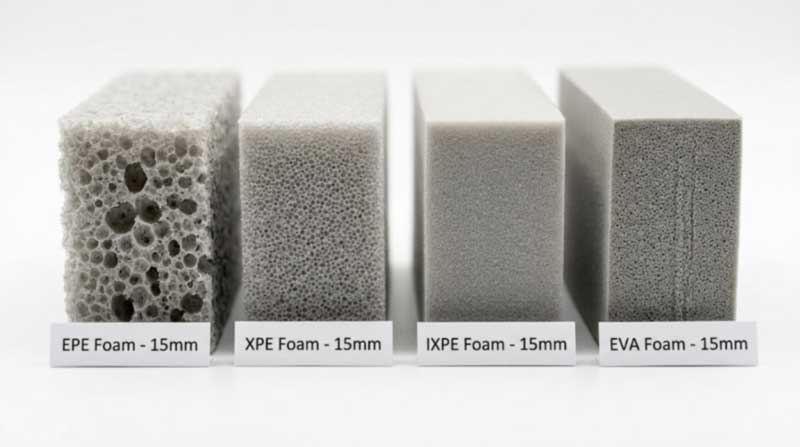
All polyethylene foams start from the same resin. What separates them is whether the polymer chains are linked to one another before the material is foamed. In XPE, a chemical crosslinking agent (typically a peroxide such as DCP) is mixed into the polyethylene together with a blowing agent, the sheet is extruded, and heat in a foaming oven triggers both reactions. The chains bond into a three-dimensional network, and the foam expands into fine, uniform closed cells. IXPE is the same idea with a different trigger: instead of a chemical agent, the sheet is crosslinked by electron-beam irradiation before it is foamed, which leaves no crosslinker residue and produces an even finer cell and smoother surface. EPE, sold in China as "pearl cotton," is never crosslinked. It is extruded and expanded directly with a physical blowing gas, giving a lighter, softer foam with larger cells.
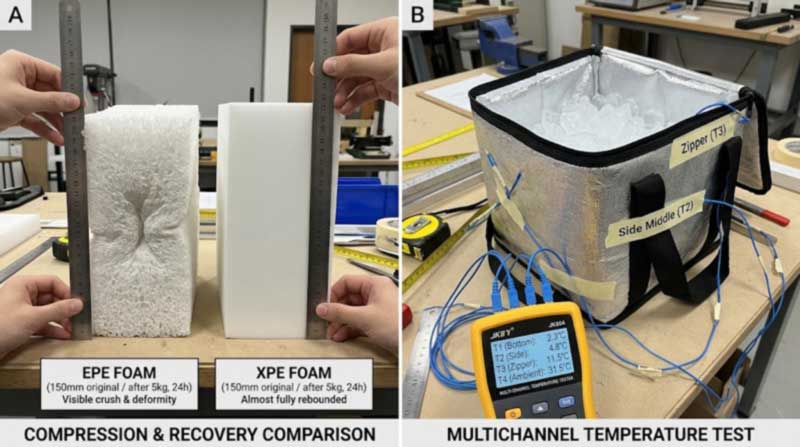
The crosslinked network is the reason XPE behaves differently. When a cell wall in EPE is squashed, the chains can slide past one another and stay where they were pushed. In XPE the bonds pull the structure back. That one property, resistance to permanent compression, drives almost every practical difference a cooler buyer will notice.
| Foam | How it is made | Cell structure | Recovery after compression | Relative cost | Typical cooler use |
|---|---|---|---|---|---|
| EPE | Extruded, not crosslinked | Closed, larger cells, soft | Takes a permanent set under sustained load | Lowest | Promotional, grocery and lunch coolers; 24-hour-class bags |
| XPE | Chemically crosslinked, then foamed | Closed, fine and uniform, firmer | Recovers well | Medium | Outdoor and fishing coolers; 48-hour-class welded bags |
| IXPE | Electron-beam crosslinked, then foamed | Closed, finest cell, smooth skin | Recovers well | Higher | Thin precision layers, laminated panels |
| EVA foam | Ethylene-vinyl acetate, usually crosslinked | Closed, fine, softer and more rubbery | Recovers well | Medium to higher | Thick insulated cores and moulded parts in premium backpacks |
The Failure Crosslinking Prevents: Compression Set
Engineers call it compression set: the share of its thickness a foam fails to recover after being held compressed. It is the quiet reason a cheap cooler "stopped keeping things cold" after one season, a complaint that turns up again and again in cooler reviews. Insulation value depends on thickness. If a 10 mm wall has been permanently crushed to 6 mm, the cooler has lost a large part of its insulation where it matters most, and nothing about the bag looks broken.
A soft cooler is compressed more often than most buyers imagine. The base carries the full weight of ice and drinks every time it is used. The back panel of a cooler backpack is pressed against the wearer for hours. Users fold the bag flat to store it or squeeze it into a car boot. And before a customer ever touches it, the bag has usually spent weeks folded and compressed in an export carton, under other cartons, through 30 to 45 days of production and ocean freight. EPE that has been folded hard for a month can carry a permanent crease out of the carton, and that crease is a thin line of weaker insulation.
Manufacturer datasheets for chemically crosslinked PE foam typically quote compression set in the range of about 2% to 11% after 22 hours under load at room temperature, depending on the expansion ratio, with lower-expansion, denser grades recovering best. That stability is the main reason XPE is specified for coolers that are expected to hold their performance for several seasons rather than a summer.
What Actually Sets Cold-Hold: Thickness, Not Density Alone
Heat passes through a cooler wall at a rate that is proportional to the foam's thermal conductivity and inversely proportional to its thickness. In practice, that means doubling the wall thickness roughly halves the heat coming through the walls, which is why thickness is the first number to fix in any cooler spec.
Density is often misunderstood here. A common assumption is that "high-density" foam insulates better. The datasheets say otherwise: one Chinese manufacturer's specification for crosslinked PE foam lists thermal conductivity of 0.040 W/m·K or lower at an expansion ratio of 30 to 35 times (about 29 kg/m³), rising to as much as 0.095 W/m·K at five times expansion (about 200 kg/m³). More solid polymer means more paths for heat. What a higher density buys is structure: better compression resistance, better puncture and abrasion resistance, and a wall that keeps its shape when the bag is half-empty. The right choice for a cooler is a density high enough to keep the wall from crushing and a thickness large enough to reach the target hold time.
Foam is only one part of the heat budget. The zipper or closure, the seams and the number of times the bag is opened usually decide whether a cooler with good foam actually performs well. A thick XPE wall is wasted behind a sewn seam line with no insulation in it, or under a lid that leaks cold air through a standard coil zipper. Our guide to waterproof and airtight zippers covers the closure side, and how soft cooler backpacks are manufactured shows where the foam goes in the build.
Water, Odour and the Foam You Never See
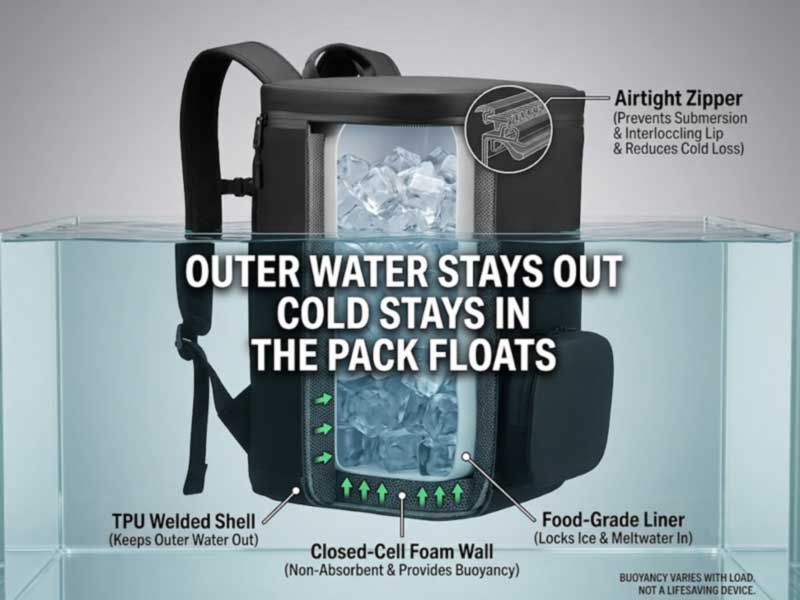
Every foam in the table above is closed-cell, so the foam itself absorbs very little water; datasheets for crosslinked PE quote water absorption of around 0.02 to 0.05 g/cm² after 24 hours of immersion. Yet "the cooler smells" and "there was water in the walls" are among the most common complaints about soft coolers. The cause is almost never the foam. It is a liner seam that has opened, or a liner that was sewn rather than sealed, letting meltwater into the gap between the liner and the shell. Closed-cell foam will not soak it up, but the trapped water cannot drain or dry, and it turns sour. The fix is in the liner construction: a liner welded with high-frequency seams into a sealed chamber keeps the foam dry for the life of the bag. Our article on food-grade soft cooler manufacturing standards covers liner materials and sealing in detail.
The same logic answers the most frequent compliance question about foam. The foam does not touch food; the liner does. Across our insulated range every cooler uses a food-grade inner liner (TPU membrane, PEVA film or a food-grade waterproof liner, depending on the model), and food-contact testing for a destination market is carried out on that liner. The foam is specified for insulation, compression stability and chemical compliance such as REACH, not for food contact.
The Sustainability Trade-Off
Crosslinking has one cost that brands with recycled-content or end-of-life targets should know about. The same bonds that make XPE spring back also stop it from melting and re-forming like an ordinary thermoplastic, so crosslinked PE foam cannot be mechanically recycled in the way EPE can. EPE offcuts and scrap can be reground and re-extruded. If a product's sustainability story depends on recyclability of the insulation, that favours EPE. If it depends on the product lasting longer and being replaced less often, that favours XPE. Recycled content claims for the shell fabric are a separate matter, covered in our guide to recycled and sustainable cooler bags.
Which Foam for Which Cooler
For a promotional or grocery cooler used for a few hours at a time, EPE is the sensible choice. It is light, inexpensive and flexible, and its weaknesses rarely matter in a bag that carries a few drinks for an afternoon. Bags in this class are typically 24-hour-class products.
For an outdoor, fishing or marine cooler that will be loaded with ice, carried for hours, dropped on a deck and expected to work next season, XPE is the better wall. It keeps its thickness at the base and back panel, it gives the bag a firmer structure, and it tolerates the heat and pressure of welding the shell and liner around it. Thick XPE walls are what move a welded cooler into the 48-hour class; our heaviest builds use up to 50 mm of XPE.
EVA foam sits alongside XPE at the premium end, especially where a softer, more cushioned core or a moulded shape is wanted, as in several of our airtight-zipper backpacks. Beyond foam altogether, PU foam, vacuum insulation panels, EPP and aerogel are options for brands chasing maximum hold time at a higher cost. For a broader view of how insulation tiers map to product types, see insulated cooler backpack manufacturing and TPU vs PVC shells.
How to Specify Foam in a Tech Pack
Most foam problems in production come from a spec that simply says "PE foam, 10 mm." A specification that protects the buyer names five things. The first is the foam type in full: EPE, XPE (chemically crosslinked) or IXPE. The second is density or expansion ratio, since a 30-times XPE and a 15-times XPE are different materials at the same thickness. The third is thickness per panel, because the base and lid usually deserve more foam than the side walls. The fourth is the construction: whether the foam is laminated to a facing film or fabric, and whether it is a single sheet or bonded layers. The fifth is the verification method for cold-hold, agreed before the sample is approved.
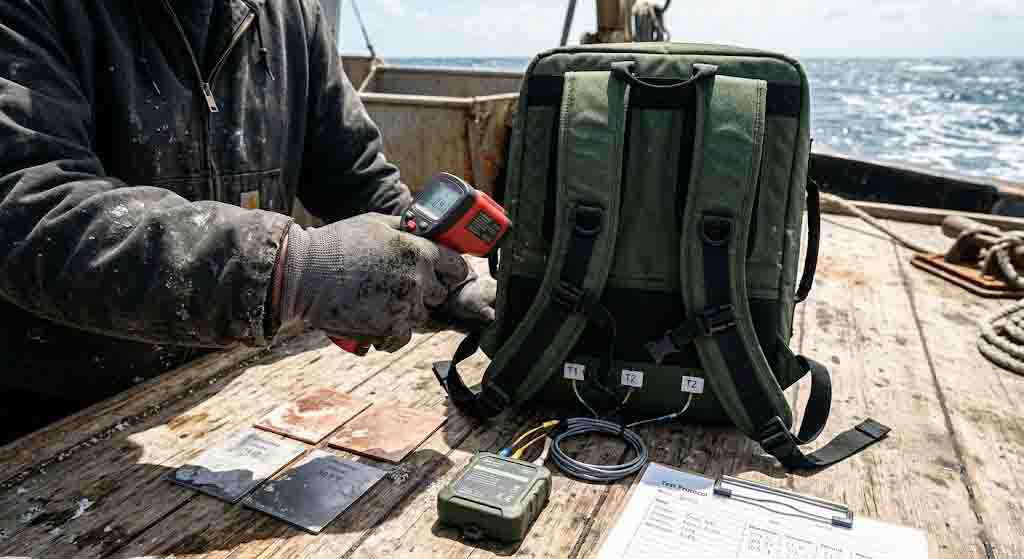
That last point matters because a sample is easy to build with the right foam and a bulk order is easy to build with the wrong one. At our factories, cold-hold is verified non-destructively with a multi-channel thermocouple temperature tester: several probes are placed at the base, mid-wall and near the closure of a loaded bag and logged over time, so the result reflects the whole wall rather than a single point. Combined with incoming foam checks at IQC, in-process checks during welding and sewing at IPQC, and final checks at OQC, with SGS or QIMA third-party inspection available on request, this lets a buyer compare the bulk result against the approved sample instead of taking the foam on trust.
Coolers in Our Range by Insulation
| Image | Model | Insulation and build | Link |
|---|---|---|---|
|
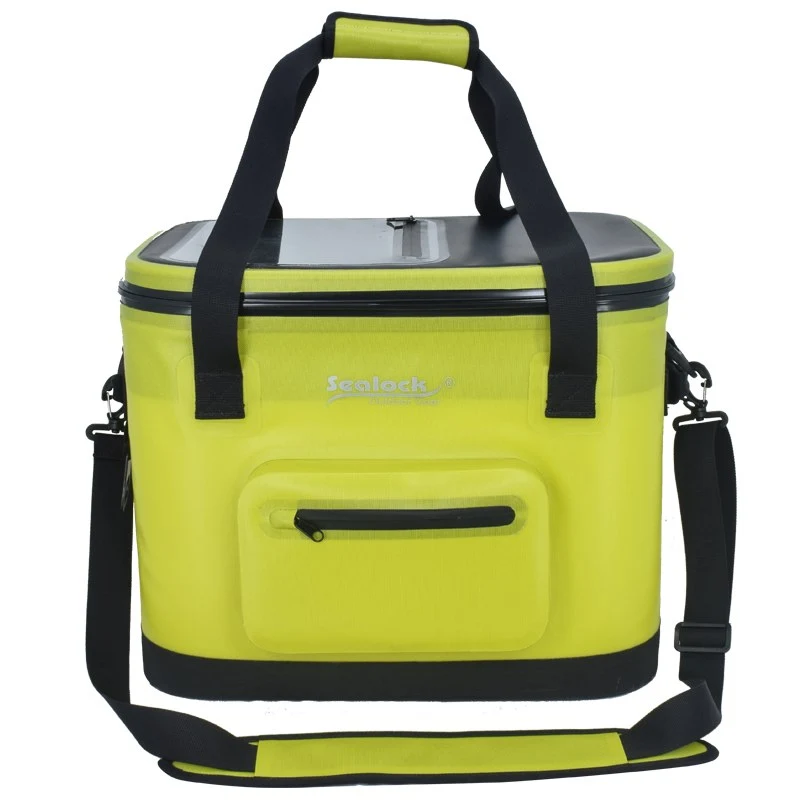
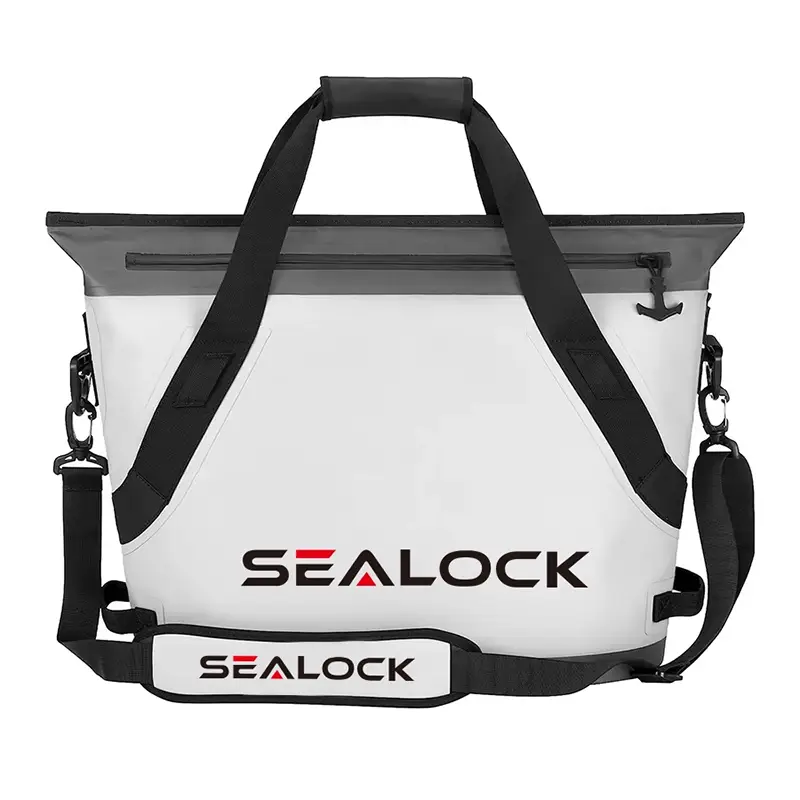
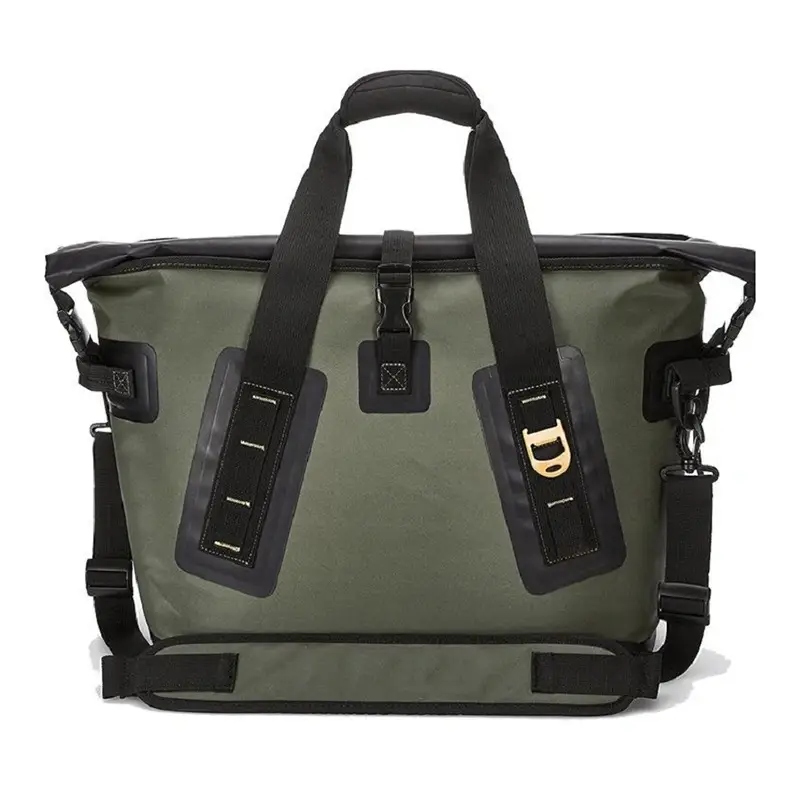
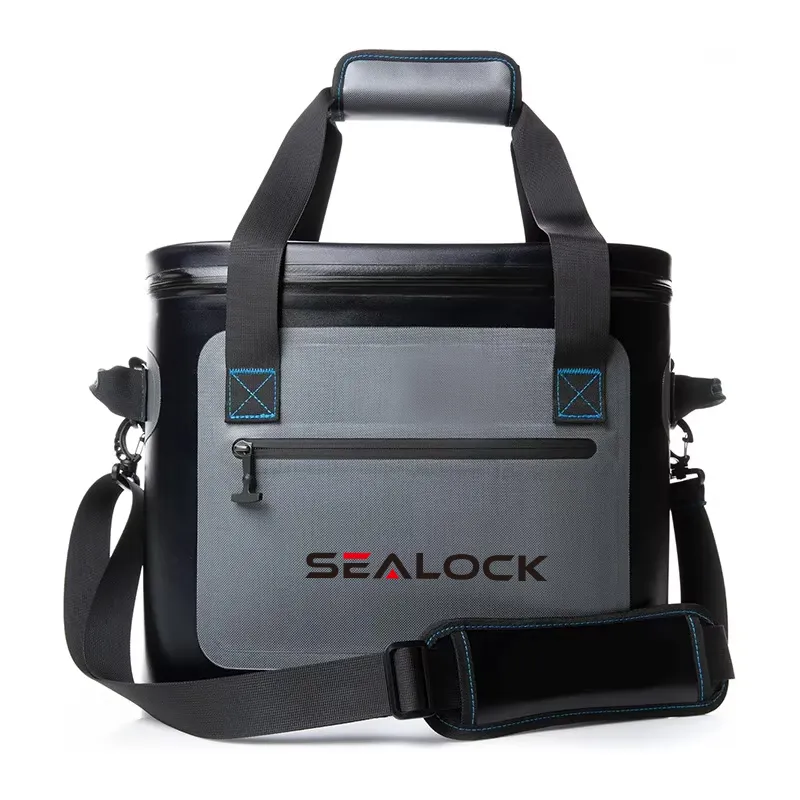
24L Soft Cooler Tote (SL-I230) | 20 mm XPE, 840D TPU, airtight zipper, IPX7, high-frequency welded, up to 48 hr | View |
|
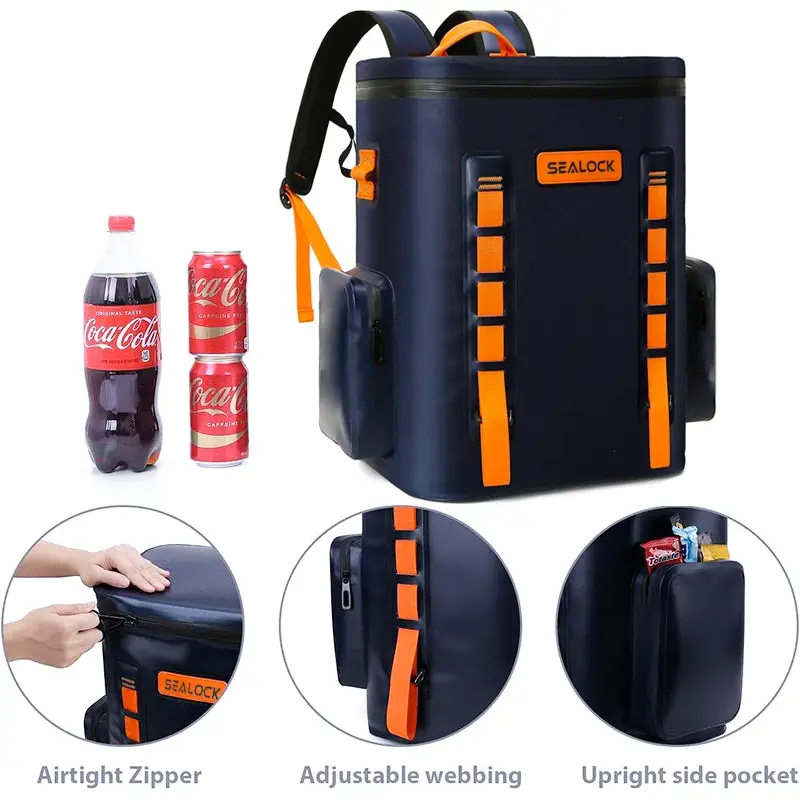
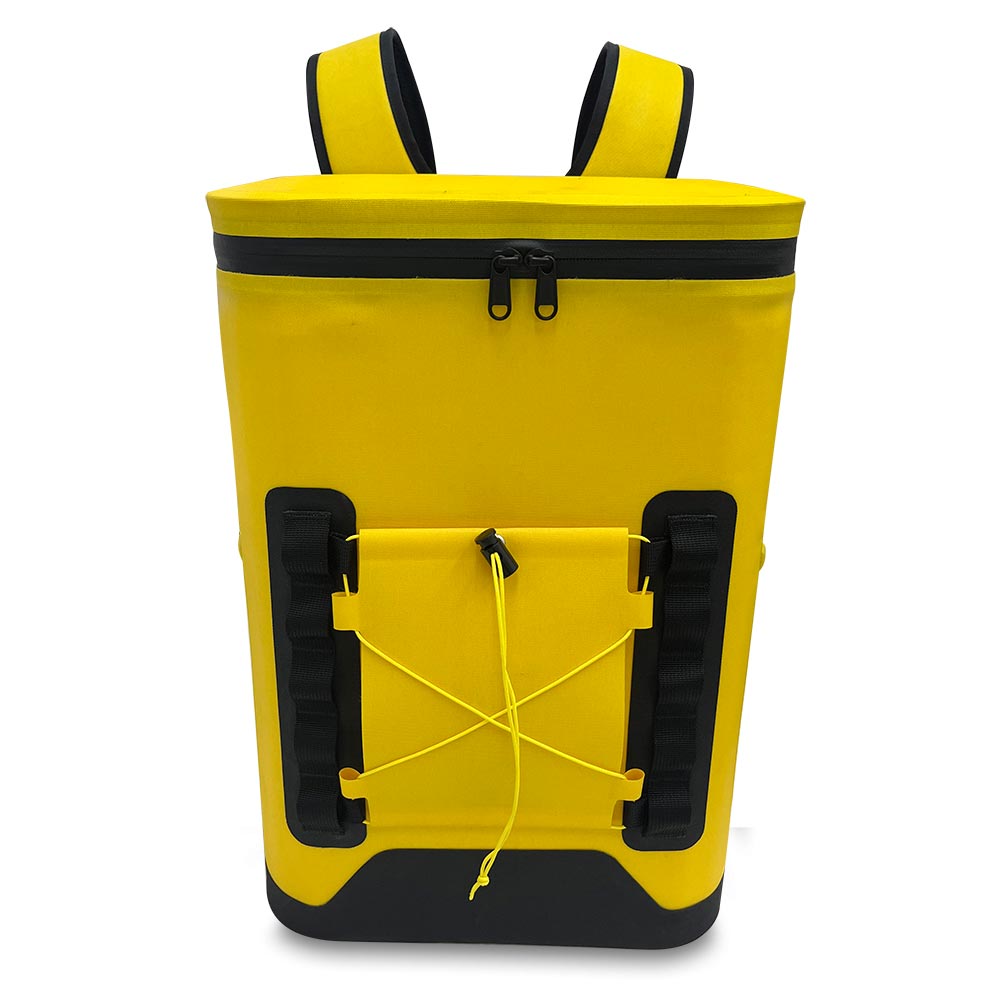
28L Airtight-Zipper Cooler Backpack (SL-I274) | 3 cm EVA core, 840D TPU, food-grade TPU membrane, airtight zipper, up to 48 hr | View |
|
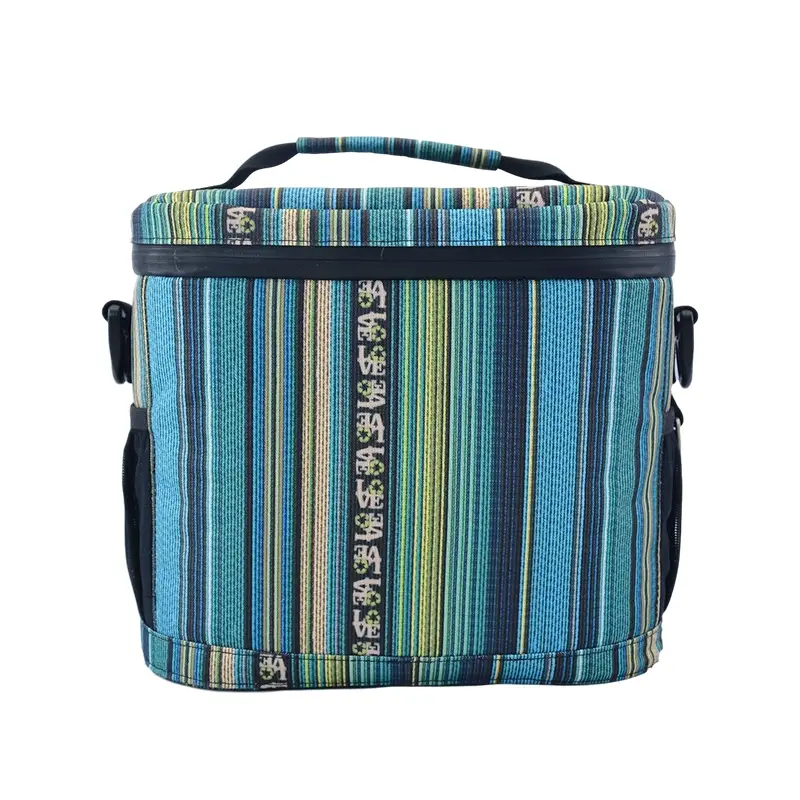
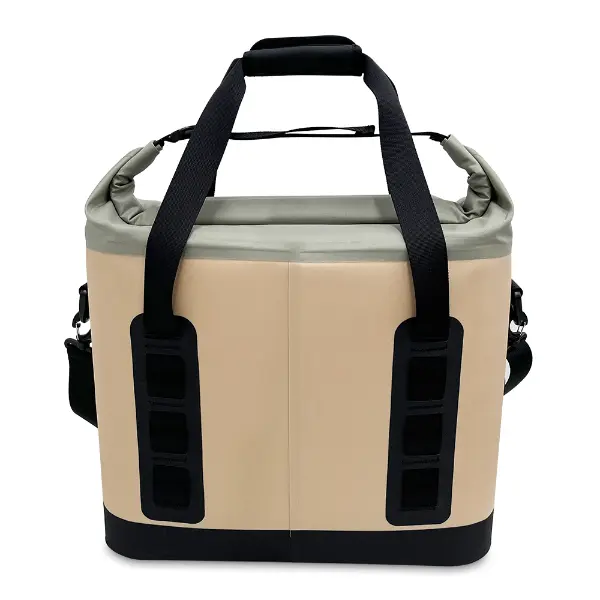
20L Roll-Top Leakproof Cooler (SL-I288) | Closed-cell EPE, 840D TPU, welded roll-top, food-grade liner, up to 48 hr | View |
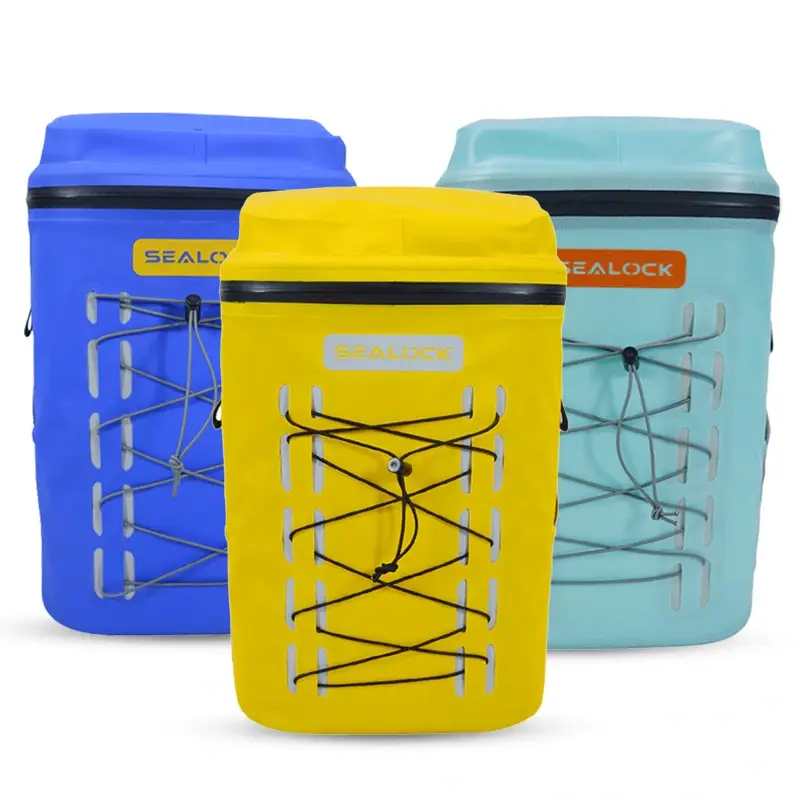
|
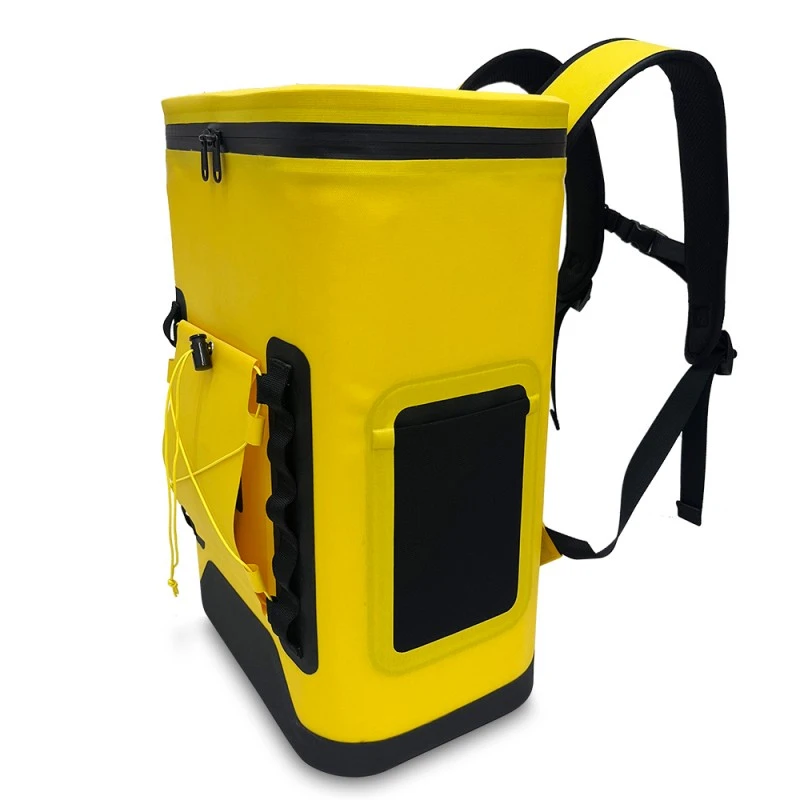
Insulated Cooler Backpack (SL-I075A) | EPE foam, 840D PVC tarpaulin, PEVA liner, 36 cans | View |
Every model can be built with a different foam type or thickness for an OEM order. MOQ starts at 300 pieces, samples take 7–15 days and bulk production 30–45 days; complex custom development, such as new moulded parts, takes longer.
FAQ
Q: What is XPE foam?
A: Chemically crosslinked, closed-cell polyethylene foam. The polymer chains are bonded into a network before foaming, which gives a fine, uniform cell structure and much better recovery after compression than non-crosslinked EPE foam. It is used for insulation, cushioning and flotation, and in soft coolers as the insulating wall between the shell and the liner.
Q: What is the difference between XPE and EPE foam?
A: Both are closed-cell polyethylene foams. XPE is crosslinked, firmer and finer-celled, and keeps its thickness under repeated or sustained load. EPE is not crosslinked; it is lighter, softer and cheaper, but takes a permanent set when compressed. EPE can be mechanically recycled; XPE cannot.
Q: What is the difference between XPE and IXPE?
A: The crosslinking method. XPE is crosslinked chemically with an agent such as a peroxide; IXPE is crosslinked by electron-beam irradiation. IXPE has a finer cell, a smoother surface and no crosslinker residue, and costs more. For most cooler walls, XPE is the practical choice.
Q: Why did my soft cooler stop keeping things cold after a season?
A: The most common causes are foam that has been permanently compressed, especially at the base and back panel, and a liner seam that has opened and let water into the walls. Crosslinked foam and a welded, sealed liner address both.
Q: Does high-density foam insulate better?
A: Not by itself. Denser foam usually conducts slightly more heat because there is more solid polymer. Density buys compression resistance and durability; thickness buys hold time. A good cooler spec sets both.
Q: Is XPE foam food safe?
A: In a cooler the foam should never touch food. It is enclosed between the shell and a food-grade liner, and food-contact testing is done on the liner. The foam is specified for insulation performance and chemical compliance such as REACH.
Q: How thick should the foam be in a soft cooler?
A: It depends on the target hold time. Thin EPE walls suit 24-hour-class bags for day use; thick XPE walls are what reach the 48-hour class, and our heaviest builds use up to 50 mm. Tell us the hold time and use case and we will recommend a foam and thickness per panel, then verify it on the sample.
Specifying insulation for a cooler range? Send us the target hold time, capacity and price point. We will recommend foam type, density and thickness per panel, build a sample and log its cold-hold for you before bulk production.
Email: info@sealock.com.hk · Phone: +86-13632981825 · MOQ 300 pcs · samples 7–15 days
Foam property ranges quoted here come from published manufacturer datasheets for crosslinked polyethylene foam and vary by grade and expansion ratio; confirm values for a specific material with its supplier. Hold times depend on ice load, ambient temperature and how often a cooler is opened.