News

Wholesale Cooler Backpack Manufacturer: Bulk Pricing & FOB Terms

2026-07-31 0 Leave me a message

Buying cooler backpacks at wholesale looks like a hunt for the lowest unit price. It is not. The number that decides whether a container is profitable is landed cost per unit — and on a cooler backpack, an unusually large share of that number is decided after the factory gate, by how much air you are paying to ship. A cooler is light and bulky, which means ocean freight charges it by volume rather than weight, and a packing decision made at the factory can move landed cost more than a hard-won discount on the quote. This guide covers what actually drives a bulk price, how volume breaks really work, the container economics most buyers never model, and what FOB terms with Sealock (YiFuLong Outdoor Gear Co., Ltd.) include.

What Actually Drives the Unit Price

A cooler backpack quote is not one number but a stack of them, and knowing the stack is what lets a buyer negotiate on substance instead of asking for a discount. The cost drivers, roughly in order of impact:

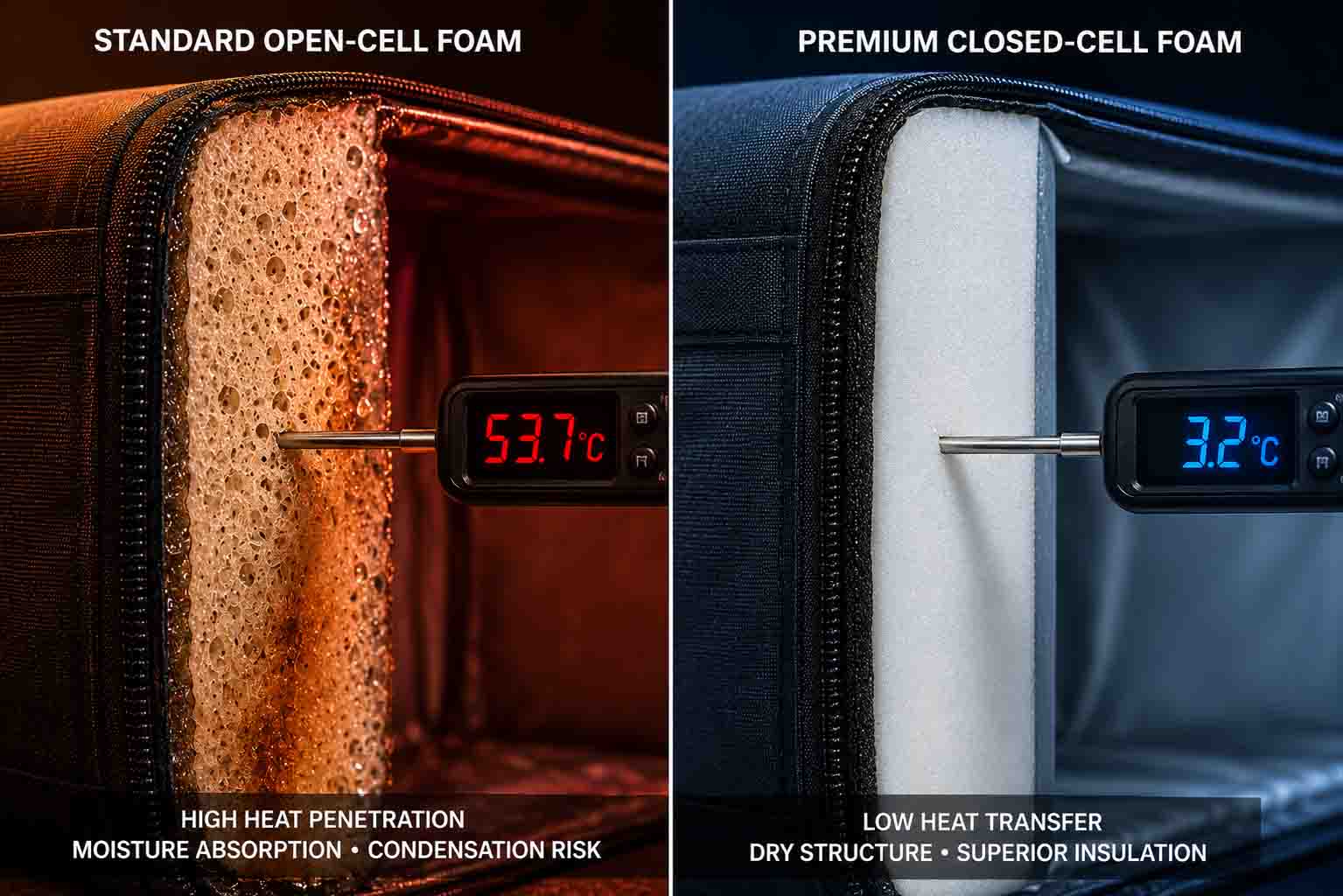
  • Insulation tier and wall thickness. The single biggest material variable. A closed-cell EPE day pack and a 50 mm high-density XPE expedition pack are different products with different bills of material, and premium panels (VIP, aerogel) shift the price to another level entirely.
  • Shell fabric and coating. Denier and coating type — a 600D TPU laminate against an 840D, or PU against TPU — change both the material cost and the weldability.
  • Seal level and closure. An airtight welded zipper is a genuinely expensive component and a slower assembly step than a standard water-resistant zip; IPX8 costs more than IPX6 for real engineering reasons.
  • Welding time and complexity. Every weld is machine time. A simple body welds faster than a multi-panel shape with integrated pockets, and line time is real money at scale.
  • Hardware and harness. A padded strap set is cheaper than a full harness with sternum and waist belt; branded or custom hardware adds tooling.
  • Order structure. Quantity per design, per size and per colourway — not total units — because each variant is its own setup and its own material run.
The negotiation lever most buyers miss: consolidate variants rather than requesting a discount. Three colourways of 300 pcs is three setup runs; 900 pcs in one colourway is one. If the range genuinely needs three colours, that is a legitimate cost — but buyers frequently split an order across variants for marketing reasons, then are surprised the price did not fall.

How Volume Price Breaks Actually Work

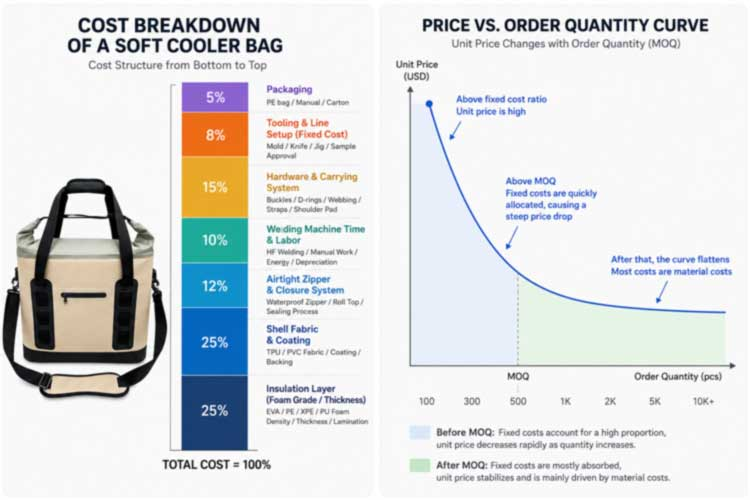
Bulk discounts are not goodwill. Volume pricing works because fixed costs — machinery setup, administration and the like — get spread across a larger output, so cost per unit falls and the saving can be passed on. On a welded cooler, those fixed costs are concrete: pattern setup, welding tooling changeover, fabric roll minimums and line configuration. That is why the price curve is steepest just above MOQ and flattens out later — the setup is being amortised fast at first, then the remaining cost is mostly materials, which do not compress much.

The structure of the break matters as much as its size, and there are two common shapes. Tiered price breaks give a progressively lower per-unit price as each quantity band is reached, while the more aggressive form applies the lower price retroactively — once a buyer crosses the threshold, every unit in the order gets the lower price, not just the units above the break. Ask which structure a quote uses, because it changes the maths of ordering just under versus just over a break point. For scale, volume discounts in the 10–20% range are a common balance between incentivising larger orders and preserving supplier margin — a useful sanity check against a quote promising far more.

Negotiating without just asking for money off

Experienced buyers negotiate the whole package. Practical guidance is consistent: understand the supplier's cost structure so you negotiate from an informed position, signal the long-term value of the relationship rather than a one-off order, and demonstrate genuine capacity for larger volumes. And price is not the only currency — non-price concessions such as prioritised order processing, dedicated account support and shipping terms add value at low cost to the supplier, which often makes them easier to win than a further percentage point.

Other levers that genuinely move a cooler quote: accepting a longer lead time so the order can be slotted into a quieter production window; committing to a forecast across a season rather than a single PO; taking a stock shell colour instead of a bespoke Pantone; and simplifying a feature that costs disproportionate line time for little consumer value.

cooler backpack unit cost breakdown by insulation, shell, zipper, welding time and setup, with volume price curve

The Freight Economics Nobody Models

This is the part that separates buyers who make money on coolers from buyers who are surprised by their landed cost. A cooler backpack is light for its size, and ocean freight prices that against you: freight rates are determined by either physical weight or volumetric measure, whichever is greater, so light but bulky cargo is charged on the CBM basis. In practical terms, you are paying to ship the air inside the bag.

Know your container maths

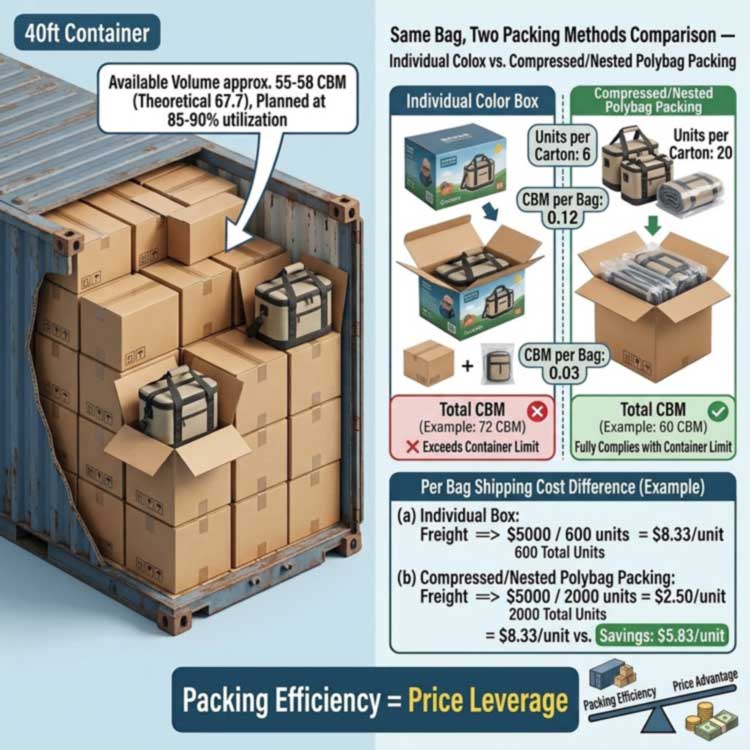
Capacity is finite and the theoretical figures are not what you get. A 20ft dry container holds roughly 33.2 CBM and a 40ft roughly 67.7 CBM — about double, but at a meaningfully lower cost per CBM — though in practice shippers plan on 85–90% utilisation to allow for loading access and cargo shape. Other sources put the practical working figure lower still: a 20ft container's usable volume is typically 25–28 CBM once packing efficiency and wall clearance are accounted for. Plan against the usable number, not the brochure number.

The other threshold worth knowing is when to stop shipping LCL. Many importers start comparing LCL against a 20ft FCL once shipments reach roughly 12–15 CBM, with the actual break-even depending on route and destination fees. And there is a trap in the comparison: LCL shipments typically attract higher per-CBM destination charges — CFS handling, port fees, inland delivery — so a forwarder can quote a competitive ocean rate and recover margin at the destination; always request a full door-to-door quote broken down by line item.

Packing is a price lever, so negotiate it: because coolers are charged by volume, how they are packed is worth real money per unit. Ask the factory what the carton dimensions and units-per-carton are, and what the total CBM is for your order quantity — then ask whether it can be improved. Compressible soft coolers can often be packed flatter or nested; a polybag instead of an individual retail box changes CBM materially; and where retail packaging is required, a flat-packed box assembled at the destination can be far cheaper to ship than a pre-formed one. Request the CBM figure in the quotation as standard, alongside the unit price.

FOB: What It Covers, and Why You Should Control the Freight

Most cooler factories, Sealock included, quote FOB — in Sealock's case FOB Guangdong. Under FOB the supplier delivers the goods to the port of loading and covers everything up to that point; the buyer takes on the ocean freight, insurance, destination charges, duty and inland delivery from there. That makes FOB the practical middle ground between EXW, where the buyer arranges everything from the factory door, and CIF, where the supplier arranges the main carriage.

The reason to prefer FOB is not price — it is control. On FOB the buyer appoints the freight forwarder and the customs broker, which means the buyer controls the shipping documents and can compare freight quotes independently. Buyers who let a supplier or middleman nominate the forwarder lose that leverage, and it is a known route to inflated destination charges. Appointing your own forwarder also lets you consolidate shipments from several suppliers and negotiate the CBM rate directly.

Cost line FOB — who pays
Manufacturing, packing, marking Supplier
Inland haulage to port of loading, export clearance, terminal charges at origin Supplier
Ocean freight and insurance Buyer
Destination terminal, customs clearance, duty and tariffs Buyer
Inland delivery to warehouse Buyer

Duty is the other buyer-side line that deserves modelling rather than guessing, since it varies with the shell material classification and the origin of the goods. That is covered in Soft Cooler Backpack Supplier: MOQ, Lead Times & FOB Sourcing Explained, and the origin question in Vietnam Cooler Bag Manufacturer: Duty-Friendly Sourcing for Importers.

Building a Real Landed-Cost Model

A defensible wholesale decision compares landed cost per unit, not quotes. The components:

  1. FOB unit price × quantity, at the correct price break and per the actual variant split.
  2. Ocean freight, calculated on total CBM at the applicable rate, plus origin and destination charges itemised.
  3. Duty — base rate on the correct HTS classification, plus any surcharges applicable to the origin, confirmed with a licensed broker at the time of import.
  4. Inspection — a pre-shipment inspection is a small fixed cost that protects the whole container.
  5. Inland delivery and warehousing to your first storage point.
  6. Cost of capital — a deposit paid months before goods sell is working capital tied up, and on seasonal ranges it matters.

Divide the total by units received, and compare suppliers on that figure. A quote that is a few percent cheaper but ships at higher CBM per unit can easily be the more expensive option.

cooler backpack container loading and CBM comparison showing how packing method changes freight cost per unit

Wholesale Terms with Sealock

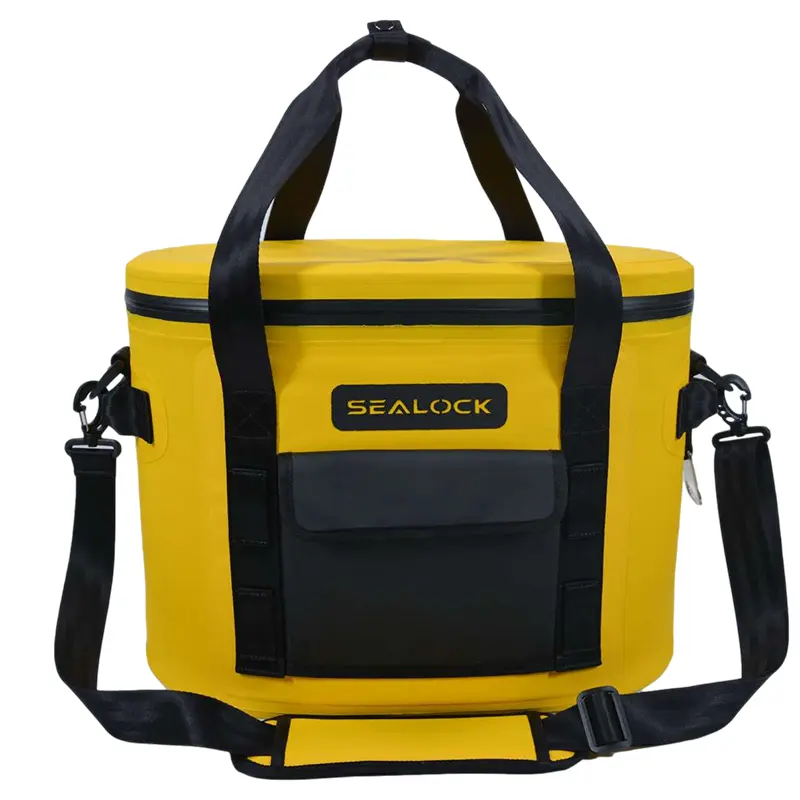
Sealock is the cooler brand of YiFuLong Outdoor Gear Co., Ltd., welding insulated soft bags since 2003 across three high-frequency welding factories in Dongguan, China and Ho Chi Minh City, Vietnam.

Trade terms FOB Guangdong (other terms quotable on request)
MOQ 300 pcs per design, per size and colourway; negotiable on custom programmes
Lead times Samples 7–15 days; production 30–45 days after sample and deposit confirmation
Volume pricing Tiered by quantity per design; consolidating variants improves the break
Packing data Carton dimensions, units per carton and total CBM provided with quotation
Origin options China or Vietnam on the same specification
Quality In-house IQC / IPQC / OQC, AQL sampling, water-immersion batch testing, gold-sample sign-off; SGS or QIMA inspection available
Certifications ISO9001, BSCI, SMETA P4, GRS, HIGG, SCAN
Customisation Branding and specification changes through to full ground-up development

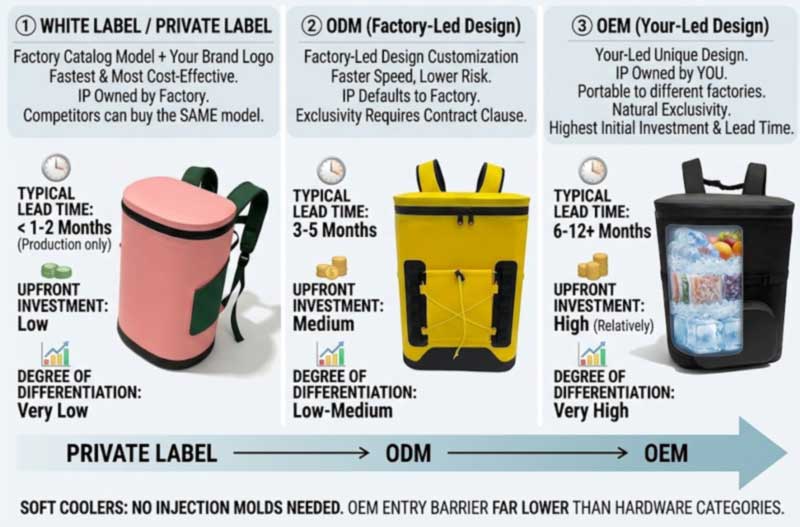
On customisation, the capability runs well past a logo: beyond colour and branding, Sealock develops ground-up from a sketch, sample or performance target — complex forms, premium insulation up to VIP vacuum panels and aerogel, IPX6–IPX8 welded seal levels, bespoke hardware and strict compliance goals are all in scope, and a demanding brief is what an in-house welding and development team exists for. Ground-up work runs longer at the sampling stage, so book against a launch date. See OEM Soft Cooler Backpacks: What You Can Customize Beyond Logo & Color, or Private Label Cooler Backpacks if you are launching a brand on an existing platform.

Cooler Backpacks Available at Wholesale

These are real welded builds, chosen by fit rather than rank — a wholesale range usually mixes cold-hold classes and price points:

Image Model Spec Position in a range Link
leakproof Roll-Top Soft Cooler (SL-I288) 50 mm XPE, Roll top, 48 hr+, full harness Premium anchor SKU View
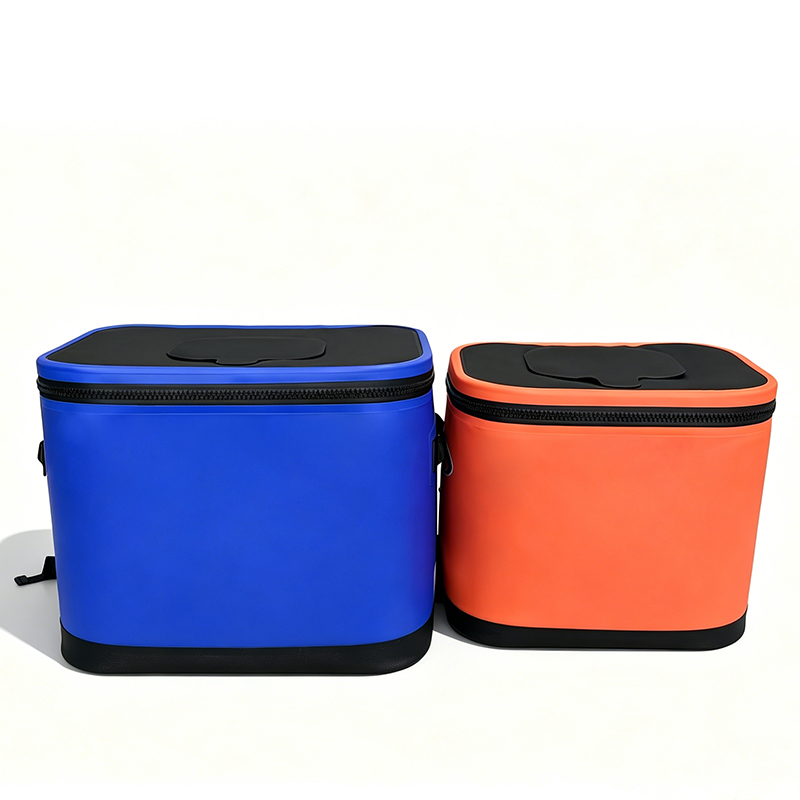
Insulated soft cooler backpack SL-E050B Insulated Cooler Backpack, molded lid (SL-E050B) Closed-cell EPE, molded flip lid, ~25L, ~24 hr, two sizes Volume day-pack SKU View
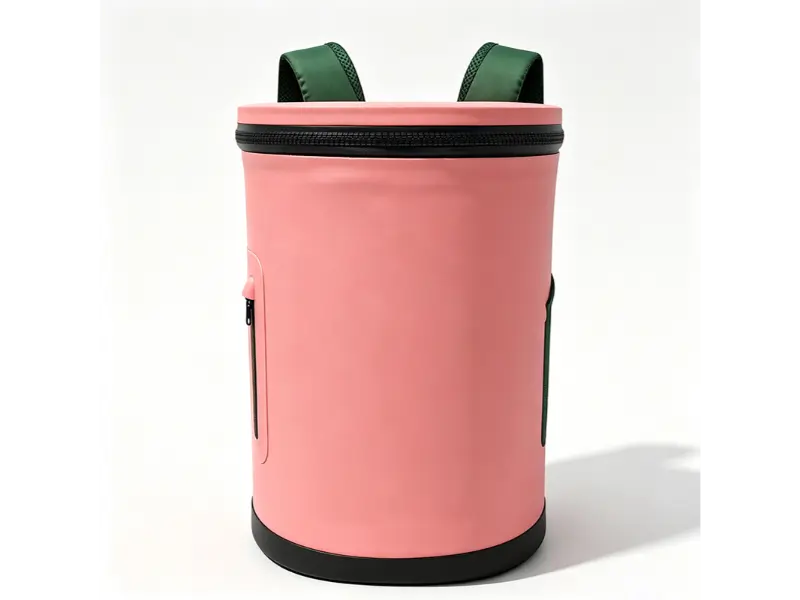
Barrel insulated cooler backpack SL-I309 Barrel Insulated Cooler Backpack (SL-I309) Closed-cell EPE, ~18L, ~24–36 hr, sternum + waist Differentiated silhouette View
Waterproof Soft Cooler Backpack Waterproof Soft Cooler Backpack Fully welded TPU body, waterproof Core welded SKU View

FAQ: Wholesale Cooler Backpacks

Q: What is the minimum order for wholesale cooler backpacks?

A: Sealock's standard MOQ is 300 pieces per design, applied per size and colourway rather than per order, and negotiable on custom programmes. Splitting a quantity across several colours means several setup runs, so consolidating variants is usually the fastest way to a better price.

Q: How do volume discounts work on cooler backpacks?

A: They come from spreading fixed costs — pattern setup, tooling changeover, fabric minimums — across more units, which is why the price curve is steepest just above MOQ and flattens as material cost dominates. Ask whether the quote uses tiered bands or a threshold that reprices the whole order, since that changes the maths of ordering just under or over a break. Discounts in the 10–20% range are a common industry balance.

Q: Why does freight matter so much on cooler backpacks?

A: Because they are light and bulky, and ocean freight charges the greater of actual or volumetric measure — so you pay by CBM, effectively shipping air. Packing efficiency therefore changes landed cost per unit directly. Ask for carton dimensions, units per carton and total CBM in the quotation, and explore flatter or nested packing before accepting the figure.

Q: How many cooler backpacks fit in a container?

A: It depends on carton dimensions, but plan against usable rather than theoretical volume: a 20ft container is about 33 CBM nominal but realistically 25–28 CBM usable, and a 40ft about 67.7 CBM nominal at a lower cost per CBM. Many importers begin comparing LCL with a 20ft FCL at roughly 12–15 CBM, though destination charges shift the break-even.

Q: What does FOB include, and should I take FOB or CIF?

A: FOB covers manufacturing, packing, inland haulage to the loading port, export clearance and origin terminal charges; the buyer takes ocean freight, insurance, destination charges, duty and inland delivery. FOB is usually preferable not because it is cheaper but because you appoint your own forwarder and broker, keeping control of the documents and the ability to compare freight quotes independently.

Q: Can I mix models in one wholesale order?

A: Yes, but MOQ applies per design, so each model in the mix needs to meet its own minimum. Many buyers build a range across cold-hold classes — a premium 48-hour anchor SKU alongside a volume 24-hour day pack — and consolidate colourways within each to keep the price breaks intact.

Pricing a wholesale order? Sealock (YiFuLong Outdoor Gear Co., Ltd.) manufactures welded cooler backpacks factory-direct on FOB Guangdong terms from its own lines in China and Vietnam, quoting with carton and CBM data so you can model landed cost properly. Send your models, quantities and destination market for a full quotation.

Email: info@sealock.com.hk  |  Phone: +86-13632981825  |  Browse the soft cooler range

Container capacities, freight practice, discount norms and cost figures cited here reflect publicly available logistics and sourcing sources as of mid-2026; actual rates, capacities and duty vary by route, carrier, packaging and product classification. Nothing here is customs or freight advice — confirm rates, CBM and duty with your freight forwarder and licensed customs broker before committing to an order.

Related News
Leave me a message
X
We use cookies to offer you a better browsing experience, analyze site traffic and personalize content. By using this site, you agree to our use of cookies.Privacy Policy
RejectAccept