News

Tactical Cooler Backpacks: MOLLE, Molded Foam & Field Durability

2026-08-20 0 Leave me a message
"Tactical" is the most abused word in outdoor gear, usually meaning nothing more than black fabric and a few rows of webbing. Applied properly it means something specific and measurable: a modular attachment grid built to a published military standard, a structure that holds its shape and protects its contents under field abuse, and construction that survives being dropped, dragged and loaded well past what a picnic bag ever sees. This guide covers what each of those actually requires on a cooler backpack — including a genuine engineering conflict between MOLLE webbing and sealed cooler construction that buyers should understand before specifying. Sealock (YiFuLong Outdoor Gear Co., Ltd.) builds welded cooler backpacks for demanding field use.


MOLLE and PALS: A Standard With Real Numbers

Modularity is the defining tactical feature, and it works only because the grid is standardised. The distinction between the two terms is worth getting right: PALS — the Pouch Attachment Ladder System — is the grid of webbing that allows MOLLE-compatible gear to attach to any MOLLE-equipped surface; it is the framework behind the modularity, developed by the U.S. Army Natick Soldier Center and introduced in 1997, and today standardised under military specifications A-A-55301 and MIL-W-17337. MOLLE is the equipment system; PALS is the grid it attaches to.

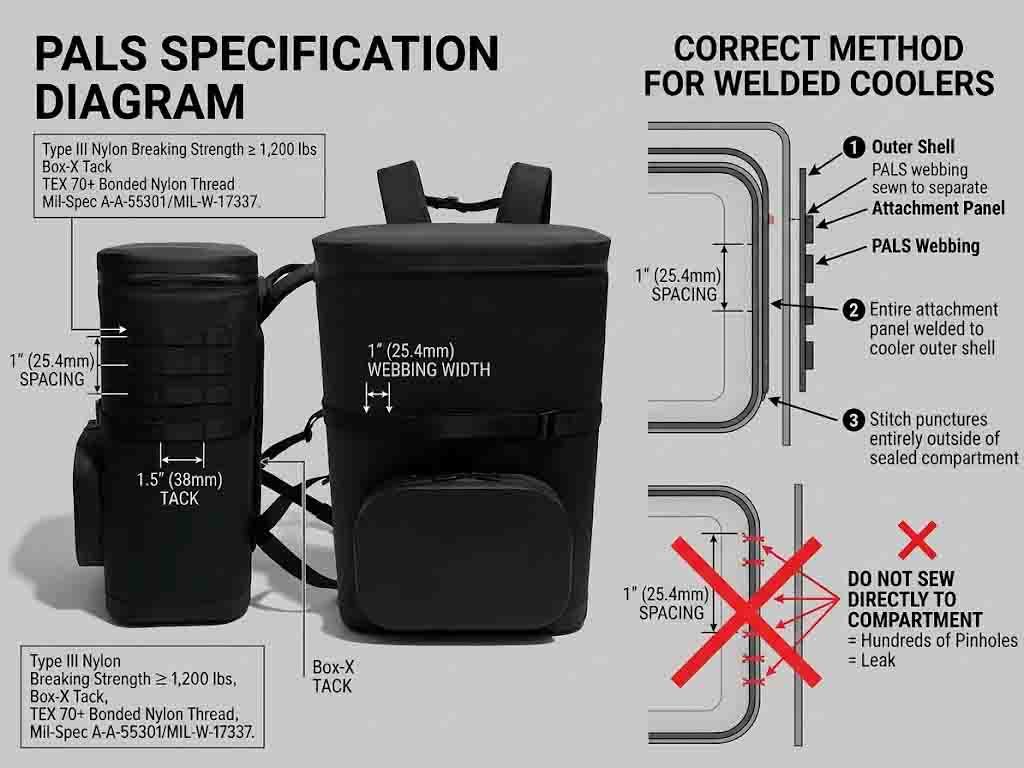
The geometry is not approximate. The published spec is: webbing width 1 inch (25.4 mm) in Mil-Spec nylon only; rows spaced exactly 1 inch (25.4 mm) apart centre-to-centre; bar-tacked to the backing at 1.5-inch (38 mm) intervals to create the individual attachment loops, with bar-tacking at each interval for maximum pull strength under load. Precision is the whole point — if a manufacturer deviates from these measurements by even a fraction of an inch, the entire system becomes difficult or impossible to use, because the 1-inch strap needs the 1.5-inch channel to pass through with working clearance.

Materials and stitching are specified too, and they are where cheap "tactical" gear fails: for military-grade gear use Type III nylon webbing per A-A-55301, offering a breaking strength of at least 1,200 pounds and low stretch, and the standard stitch pattern is a box with an X bar-tack at each 1.5-inch interval, which spreads load better than straight stitches and resists pulling apart, using high-tenacity bonded nylon thread of TEX 70 or greater. As one webbing supplier puts it bluntly: cheap polyester webbing will fail under load — true PALS webbing must be high-tenacity nylon.

For buyers specifying MOLLE on a private-label product: treat the grid as a production standard, not decoration. Industry guidance for importers is specific — confirm MOLLE webbing spacing before bulk production, especially when the product must work with existing pouches; the pouch strap should pass through the grid smoothly without forcing the fabric, bar-tack stitching and webbing tension should prevent pull-out at stress points, and repeat orders should match the approved sample. Get a physical sample, weave a real pouch onto it, and make that sample the reference for every subsequent order.


The Conflict: MOLLE Is Stitched, a Sealed Cooler Is Not

Here is the engineering problem at the heart of a tactical cooler, and it is one most listings quietly ignore. PALS is built by stitching — bar-tacking webbing to a backing every 1.5 inches. A welded, leakproof cooler chamber depends on having no stitching through its walls, because every needle hole is a path for meltwater out and water in.

Stitch a full PALS grid directly onto a sealed cooler body and you have perforated the containment envelope hundreds of times. The bag will still look tactical. It will also leak.

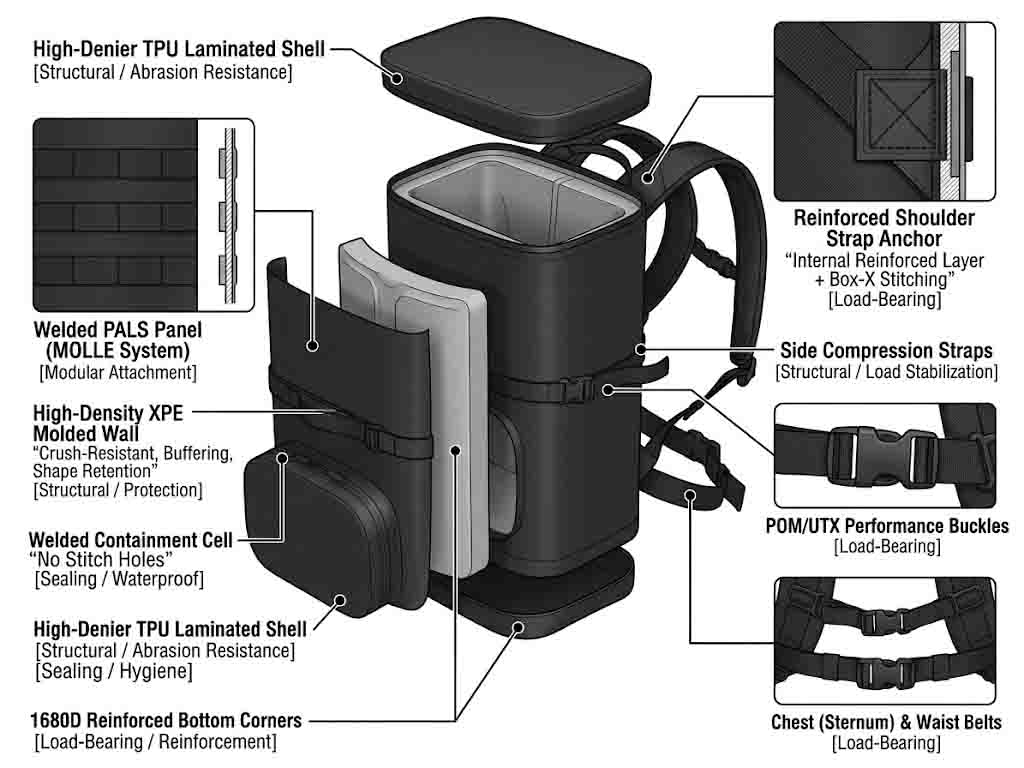
How a serious manufacturer resolves it: the PALS grid is built onto a separate panel that is then welded to the exterior of the cooler body, so the stitching lives entirely outside the sealed chamber and no needle ever penetrates it. The load path (webbing → backing panel → welded attachment zone → bag structure) and the water barrier are kept separate by design. This is the same principle behind anchoring shoulder straps on a welded cooler, and it has to be engineered at the design stage — it cannot be retrofitted onto a finished sealed bag. Any tactical cooler claiming both full MOLLE coverage and immersion sealing should be asked exactly how its webbing is attached. See Leakproof Cooler Backpack Manufacturer: Welded vs Stitched Seams and Heavy-Duty Cooler Backpack Supplier: Built for Abrasion & Overload.


There is a second route worth knowing, increasingly used in modern tactical gear: laser-cut laminate attachment grids instead of sewn webbing. When made from high-quality laminates like 500D or 1000D Cordura bonded with other materials, laser-cut systems are incredibly strong — while they may feel thinner, the tensile strength and tear resistance of modern laminates often exceed that of traditional nylon webbing. For a welded cooler this is attractive precisely because a laser-cut laminate panel can be bonded rather than sewn, reducing the stitching problem at source.

PALS webbing specification dimensions and how a MOLLE panel is welded onto a sealed cooler backpack without piercing the chamber

Molded Foam: Structure, Not Just Insulation

On a picnic cooler, foam is purely thermal. On a tactical cooler it does structural work as well, and the distinction is worth specifying deliberately.

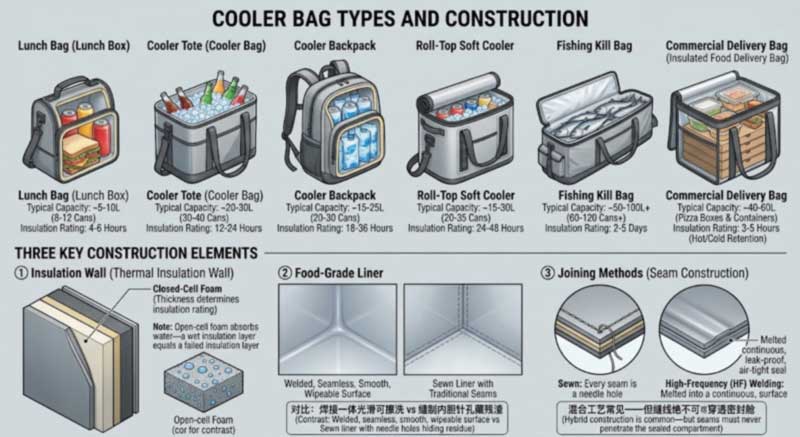
A closed-cell foam wall gives a soft cooler three things at once in field use. It insulates. It resists water — closed-cell foam barely absorbs, so the wall keeps performing when the bag is soaked or submerged. And it provides impact protection and shape: a dense, molded closed-cell wall holds the bag's form when it is dropped, kicked, or stacked under other gear, so contents are not crushed and the bag does not collapse into a shapeless sack when part-full.

Density and grade matter more here than in gentler applications. Cross-linked XPE is markedly more compression-stable than standard EPE, retaining its thickness through repeated crushing loads — and a wall that keeps its thickness keeps its insulating value across the product's life. For a build that will be thrown into vehicles and dropped on hard ground, that compression stability is a durability specification, not a thermal one. The material engineering is covered in Insulated Cooler Backpack Manufacturer: EPE Foam & Cold-Retention Design, and the full foam/liner/capacity decision set in Custom Insulated Cooler Backpacks: Spec Your Foam, Liner & Capacity.

Molded structural elements extend the idea: a molded lid holds its shape and sheds impact, and a reinforced, molded base resists abrasion from vehicle floors and rough ground while carrying the concentrated weight of ice.

Field Durability: What Actually Has to Survive

Requirement Tactical specification Why
Shell High-denier TPU-laminated (840D and up), 1680D at wear zones Abrasion from vehicle beds, rock and repeated drag
Seams HF-welded, seam-free containment No stitching to fail under load or admit water
MOLLE / PALS Spec-accurate grid on welded-on panels Compatibility with existing pouches; sealed chamber preserved
Load-bearing attachment Bar-tack or box-X onto internal reinforcement, welded anchor zones Prevents tear-out where straps meet the shell
Insulation Dense closed-cell XPE; molded lid and base Compression stability, impact protection, shape retention
Hardware Polymer (POM/UTX) primary; 316 stainless where metal needed Corrosion immunity in salt and wet field conditions
Harness Sternum and waist straps; compression straps Heavy loads must transfer to the hips and not shift
Sealing IPX7 / IPX8 where the mission requires Immersion, not just splash
Colourways Subdued tones; low-reflectivity trims Field appropriateness

One honest note on weight: full tactical specification is heavy. As the MOLLE literature itself concedes, MOLLE equipment can be cumbersome, particularly when heavily accessorised — the webbing plus the pouches and their contents quickly compound over long operations or extended hikes. A cooler is already the densest item in a load. Specifying webbing panels across every face, a 50 mm wall and 1680D throughout produces a bag that is genuinely tough and genuinely heavy. The better brief usually places webbing where accessories are actually mounted, and reinforcement where wear actually occurs.

Sealock's Field-Durable Cooler Backpacks

Sealock welds insulated cooler bags at 27.12 MHz across three factories in Dongguan, China and Ho Chi Minh City, Vietnam, with food-grade inner liners across the entire range. Real builds with tactical-relevant construction, chosen by fit rather than rank:

Image Model Field-relevant build Link
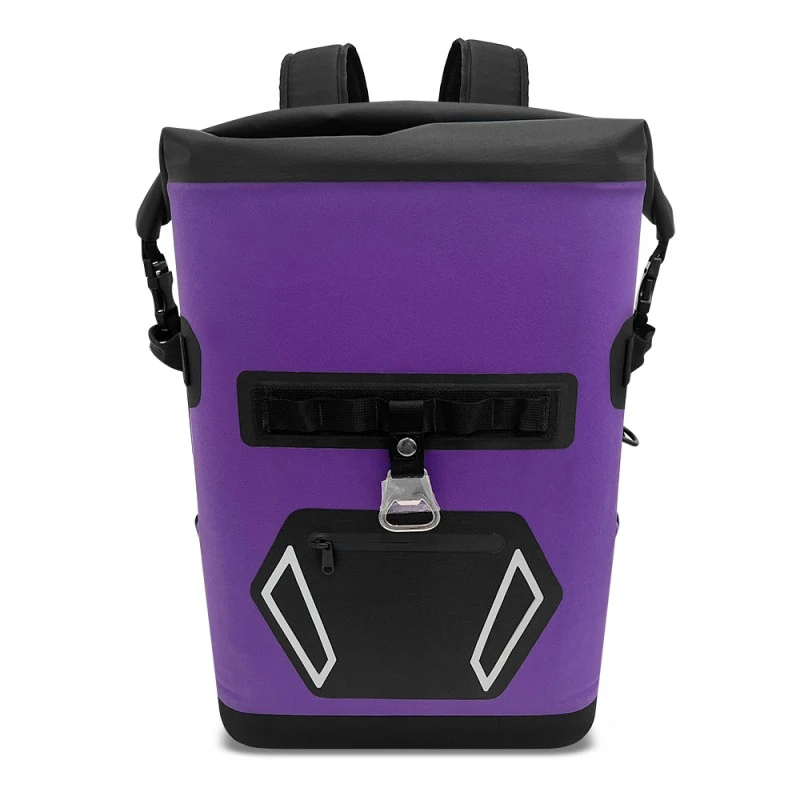
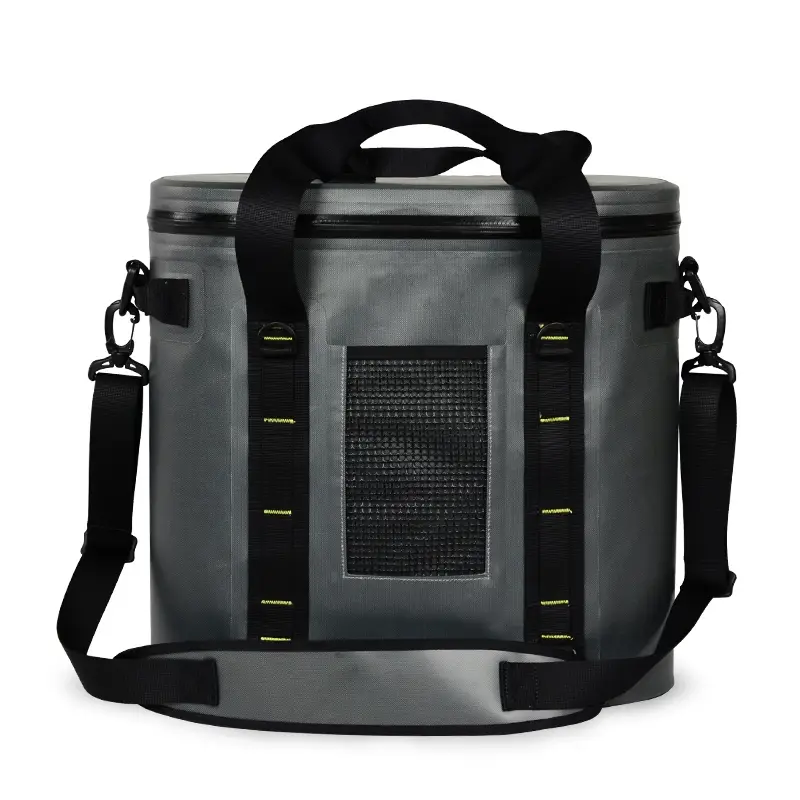
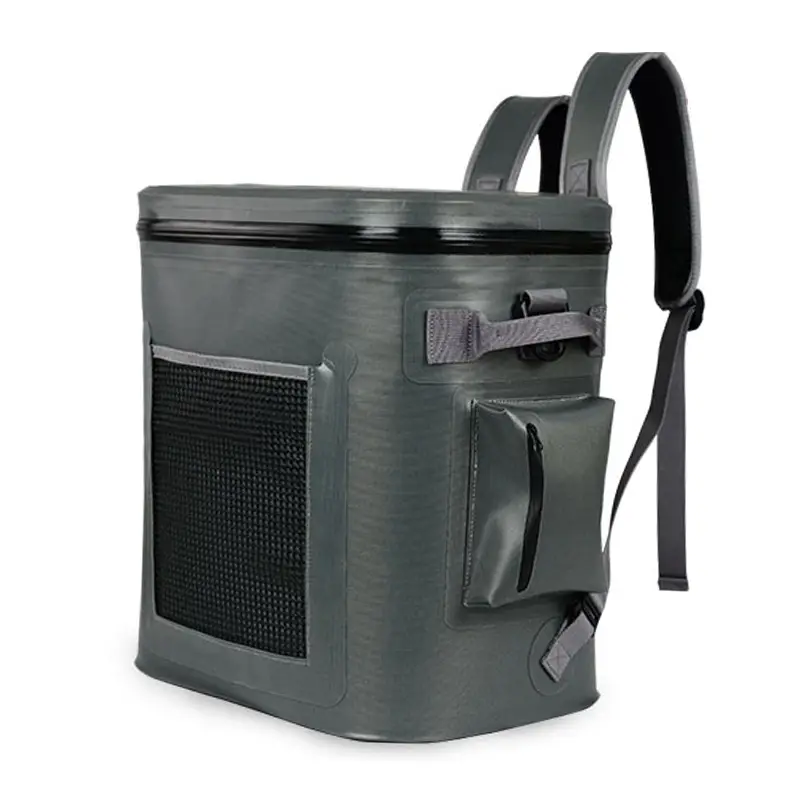
22L IPX7 cooler backpack SL-I280 22L IPX7 Cooler Backpack (SL-I280) 50 mm high-density XPE for compression stability and impact protection, IPX7 welded sealing, airtight zipper, POM clips and D-rings, reinforced TPU base, full sternum and waist harness View
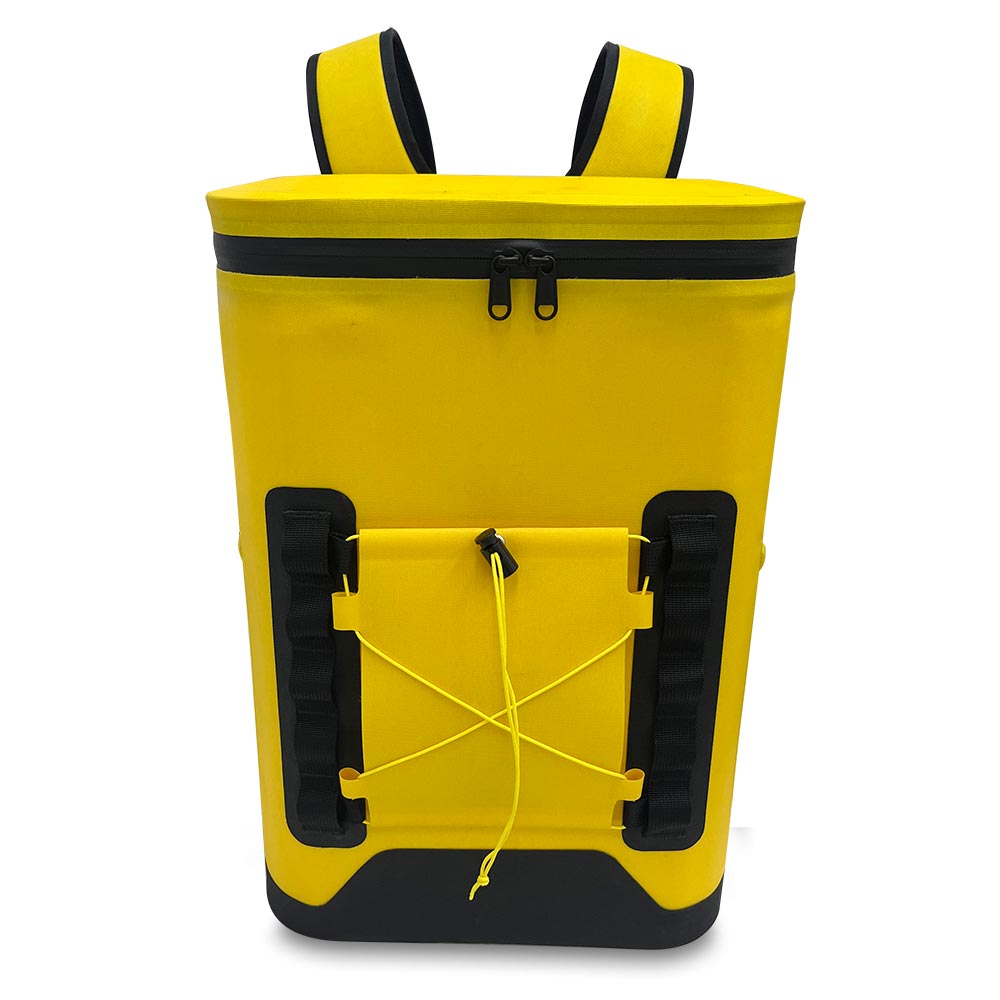
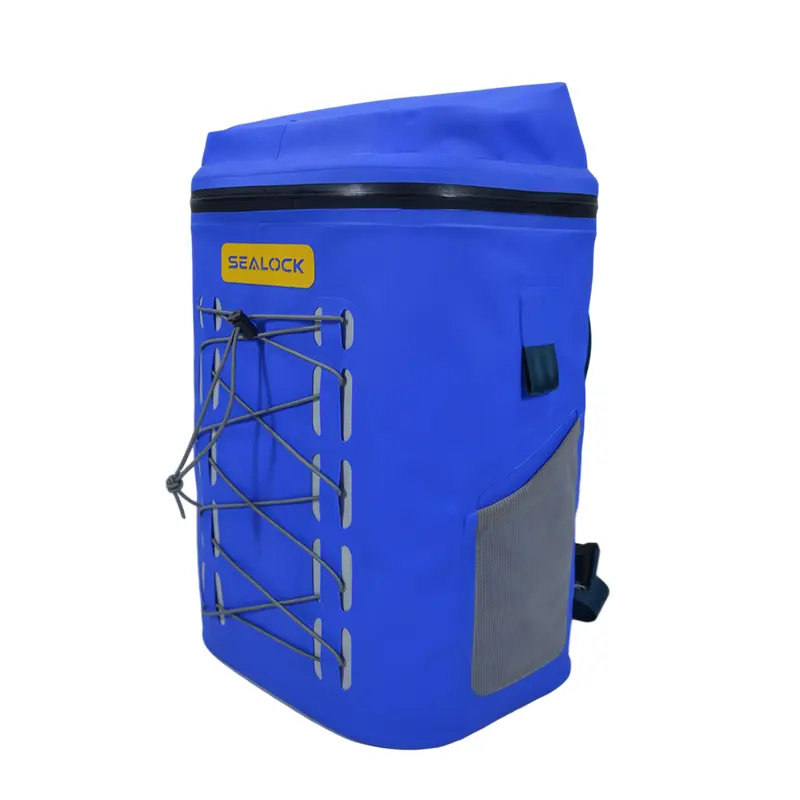
28L airtight-zipper insulated backpack cooler SL-I274 28L Airtight-Zipper Backpack Cooler (SL-I274) 840D TPU laminated shell, HF-welded seams, EVA core, airtight waterproof zipper, UTX buckles, front bungee and side panels for accessory attachment, ergonomic padded harness View
45L roll-top backpack cooler SL-I270 45L Roll-Top Backpack Cooler (SL-I270) 45L welded roll-top with no zipper to foul with grit, 600D TPU, EVA foam, UTX buckles, gear webbing for accessories, reflective trim View
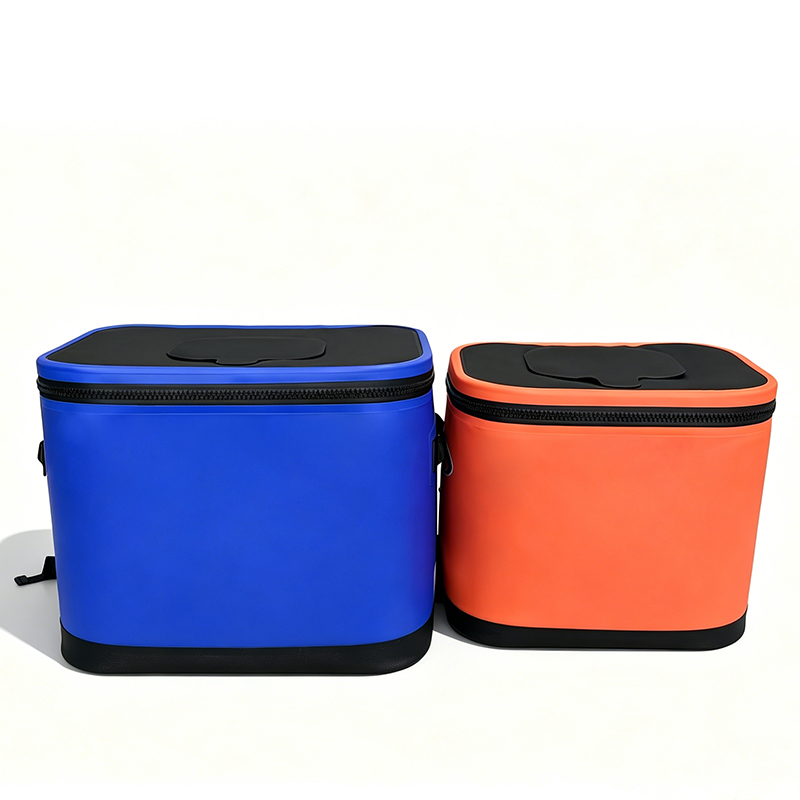
Insulated soft cooler backpack with molded lid SL-E050B Insulated Cooler Backpack, molded lid (SL-E050B) Molded flip lid with recessed grab handle — a structural moulded element that holds shape and sheds impact; closed-cell EPE, reinforced base, two sizes View

These are field-durable welded builds rather than full mil-spec MOLLE platforms. Where a brand needs a spec-accurate PALS grid integrated into a sealed cooler, that is a development project — and it is exactly the kind Sealock builds.

exploded view of a tactical cooler backpack showing welded containment, dense molded XPE wall, welded MOLLE panel and reinforced strap anchoring

For Brands: Developing a Tactical Cooler Backpack

A tactical cooler is a genuinely demanding brief — and demanding briefs are welcome. Beyond colour and logo, Sealock develops ground-up from a sketch, sample or performance target: spec-accurate PALS grids (1-inch webbing, 1-inch row spacing, 1.5-inch bar-tack intervals, Type III nylon, box-X bar-tacks, TEX 70 bonded thread) built on panels welded to the exterior so the sealed chamber is never pierced, or laser-cut laminate attachment grids where a brand prefers them; dense molded closed-cell XPE walls specified for compression stability and impact protection as well as cold-hold; high-denier TPU-laminated shells with 1680D reinforcement at wear zones; strap anchoring with internal reinforcement to prevent tear-out; corrosion-immune polymer hardware with 316 stainless where metal is required; a harness with sternum, waist and compression straps engineered for heavy loads; IPX6–IPX8 welded seal levels proven by immersion testing; and subdued colourways. Premium insulation up to VIP vacuum panels and aerogel is in scope where cold-hold per millimetre matters more than cost. Ground-up work runs longer at sampling, so book against a launch. See OEM Soft Cooler Backpacks: What You Can Customize Beyond Logo & Color and ODM Soft Cooler Backpack Supplier: Design-Led, Ground-Up Development.

MOQ / lead time 300 pcs per design; samples 7–15 days; production 30–45 days; FOB Guangdong
Origin China or Vietnam on the same specification
Lab testing Load cycling, tensile, adhesion, abrasion, salt spray, full water immersion
Certifications ISO9001, BSCI, SMETA P4, GRS, HIGG, SCAN

FAQ: Tactical Cooler Backpacks

Q: What is the difference between MOLLE and PALS?

A: PALS is the grid — the ladder of 1-inch webbing rows stitched to a backing that accessories attach to. MOLLE is the wider modular equipment system that uses that grid. PALS was developed by the U.S. Army Natick Soldier Center and introduced in 1997, and is standardised under A-A-55301 and MIL-W-17337.

Q: What are the exact MOLLE webbing dimensions?

A: One-inch (25.4 mm) wide webbing, rows spaced exactly one inch apart, bar-tacked at 1.5-inch (38 mm) intervals. Deviating even a fraction of an inch makes standard pouches difficult or impossible to weave on, so it is a production tolerance rather than a styling choice. Mil-spec builds use Type III nylon with at least 1,200 lb breaking strength, box-X bar-tacks and TEX 70 or heavier bonded nylon thread.

Q: Can a waterproof cooler backpack have full MOLLE webbing?

A: Yes, but only if the webbing is attached correctly. PALS is built by stitching, and stitching directly through a sealed cooler body would perforate the containment chamber hundreds of times and cause leaks. The correct method builds the grid on a separate panel that is welded to the exterior, keeping all stitching outside the sealed chamber — something engineered at the design stage, not retrofitted.

Q: Why does foam density matter more on a tactical cooler?

A: Because the foam is structural as well as thermal. A dense, molded closed-cell wall protects contents from impact, holds the bag's shape when dropped or stacked, and resists compression — and since a wall that thins loses insulating value, compression stability is a durability specification too. Cross-linked XPE is markedly more compression-stable than standard EPE.

Q: Is a fully tactical specification always the best choice?

A: Not always — it is heavy. MOLLE equipment becomes cumbersome when heavily accessorised, since webbing plus pouches plus contents compound quickly, and a cooler is already the densest item in a load. A better brief usually puts webbing only where accessories are actually mounted and heavy reinforcement only where wear actually occurs.

Q: What should I check on a MOLLE sample before bulk production?

A: Weave a real pouch onto it. The strap should pass through smoothly without forcing the fabric, the bar-tacks should show no sign of pull-out under load, and the spacing should match the standard so third-party pouches fit. Then make that approved physical sample the reference for every repeat order, since consistency across a modular line is what buyers complain about when it slips.

Sourcing tactical cooler backpacks? Sealock (YiFuLong Outdoor Gear Co., Ltd.) welds field-durable cooler backpacks at 27.12 MHz in China and Vietnam — dense molded closed-cell walls, welded attachment panels that keep the sealed chamber intact, corrosion-immune hardware and IPX-rated sealing validated by immersion testing. Send your MOLLE layout, cold-hold target and durability requirements, and the team will engineer and prove the build.

Email: info@sealock.com.hk  |  Phone: +86-13632981825  |  Browse the soft cooler range

MOLLE/PALS specifications, material standards and construction guidance cited here reflect publicly available military-specification and tactical-industry sources as of mid-2026; requirements vary by programme and application. Reference to military specifications describes the dimensional standard only and does not imply military certification or procurement approval of any product. Confirm tolerances and compatibility on an approved physical sample before bulk production.

Related News
Leave me a message
X
We use cookies to offer you a better browsing experience, analyze site traffic and personalize content. By using this site, you agree to our use of cookies.Privacy Policy
RejectAccept