"Insulated cooler bag" covers products that have almost nothing in common beyond the name — a 5L lunch bag and a 45L welded expedition pack are built differently, perform differently and are bought by different people. This guide sorts the category by form, construction and cold-hold class, so you can identify which type you actually need. Written by Sealock (YiFuLong Outdoor Gear Co., Ltd.), a manufacturer of insulated and waterproof bags since 2003.
The Three Things That Define Any Insulated Bag
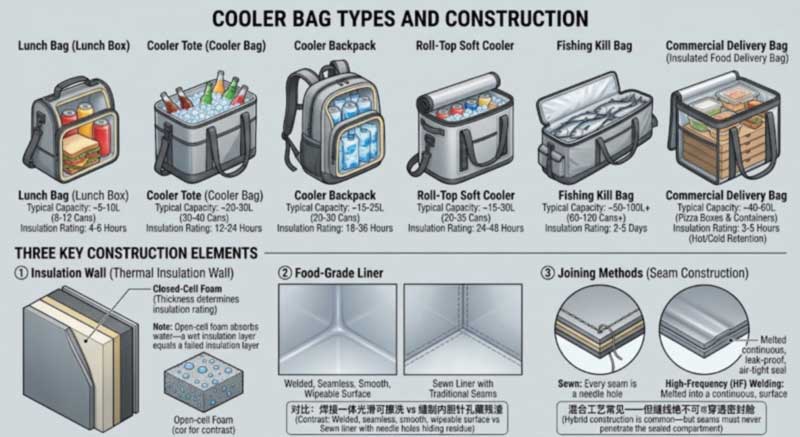
Before form factor, three construction decisions determine what a bag can do. Every product in this category is a combination of them.
1. The insulation wall
Closed-cell foam — EPE, XPE or EVA — is the standard, and the reason is that its sealed gas pockets do three jobs at once: they block heat, they absorb almost no water, and they add buoyancy. Wall thickness sets the cold-hold class. A thin wall gives a working day; 50 mm of high-density XPE reaches the 48-hour class. Premium panels (PU, VIP vacuum, EPP, aerogel) deliver more hold per millimetre at higher cost.
Open-cell foam is the thing to avoid: it waterlogs, and wet insulation is failed insulation.
2. The liner
This is the food-contact surface, so it should be a stated food-grade material — TPU membrane or PEVA film are the common choices. Just as important is how it is attached: a welded liner is a continuous, smooth, non-porous surface that wipes clean, while a stitched liner has needle holes and thread inside the food chamber, where residue lodges and cleaning cannot reach. That is a hygiene difference as much as a leak difference.
3. The construction method
This is the largest single dividing line in the category:
| Sewn | Welded (high-frequency) | |
|---|---|---|
| Seams | Stitched — needle holes down every seam | Fused into one continuous skin, no holes |
| Leak behaviour | Melt-water escapes through seams, usually at the base | Contains melt-water; can be immersion-rated |
| Typical use | Lunch bags, value totes, promotional | Outdoor, marine, fishing, technical |
| Cost | Lower | Higher — machinery and process control |
Many real products combine both: a welded containment chamber for the cold-and-wet part, with conventional sewing for harness, pockets, webbing and trim. That hybrid is normal and often the right answer — what matters is that the stitching never penetrates the sealed chamber.
The Types, Sorted
| Type | Typical size | Cold-hold class | Built for |
|---|---|---|---|
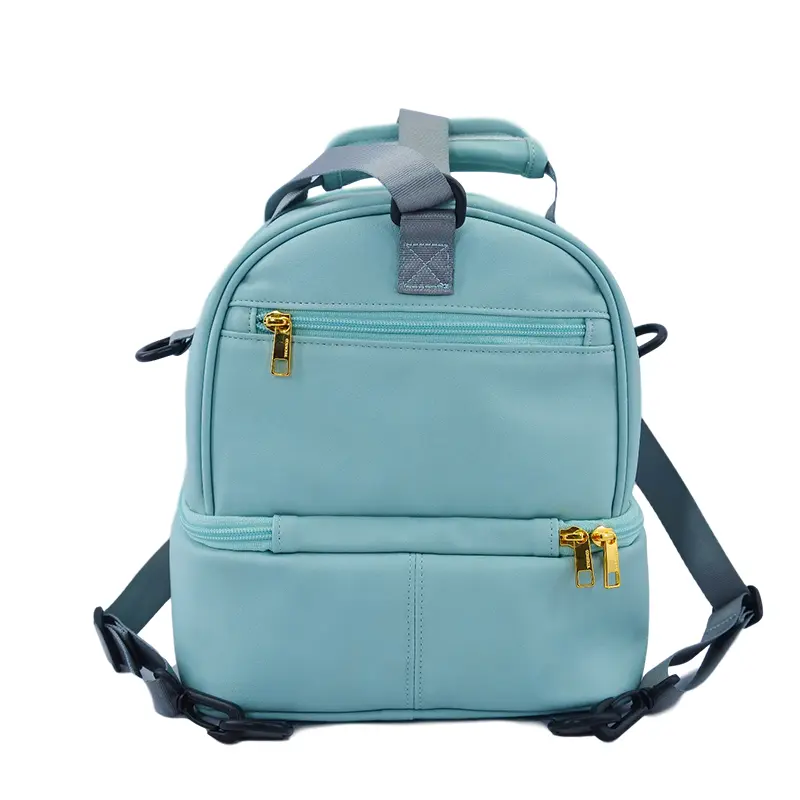
| Lunch bag | ~5–10L | A working day (4–8 hr) | Daily commute and school; cleanability and print quality matter more than hold |
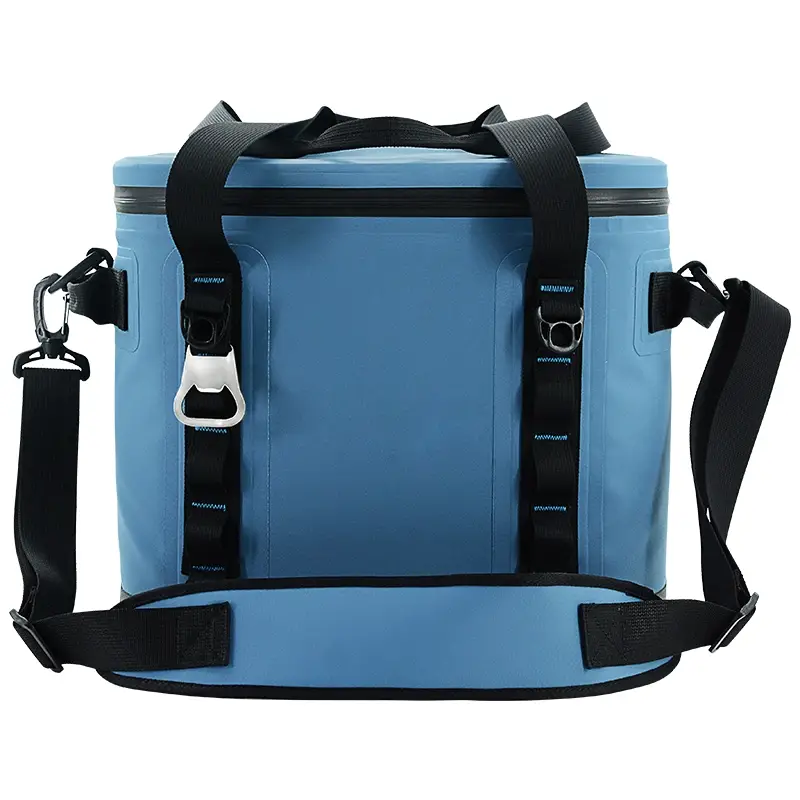
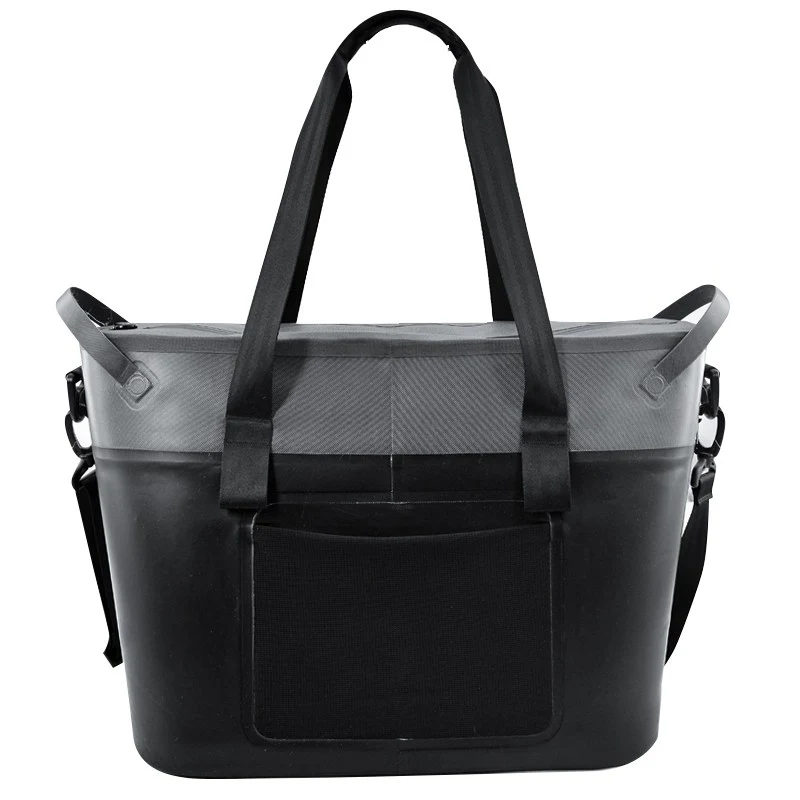
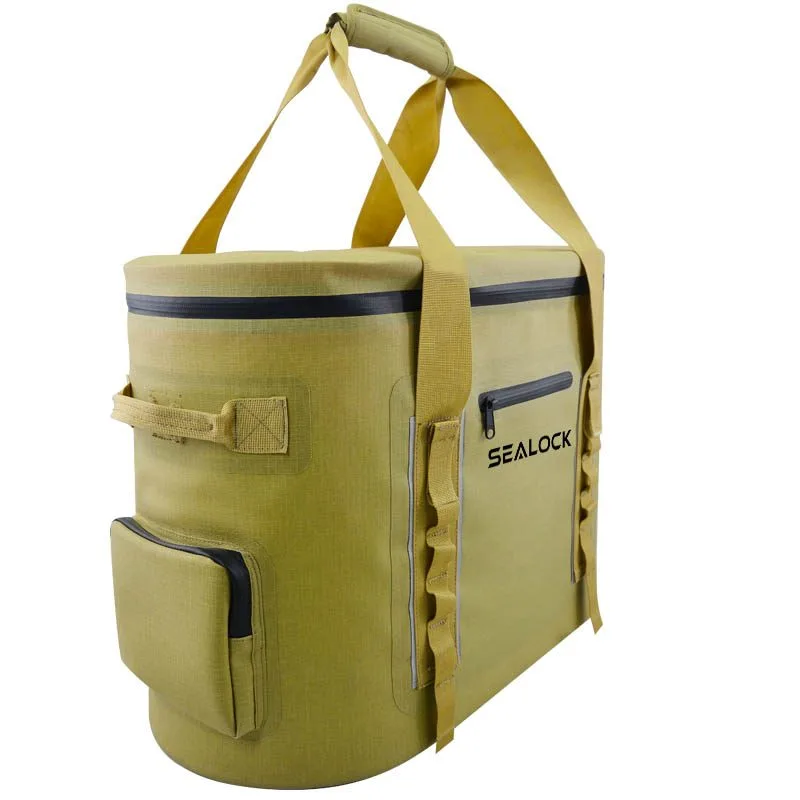
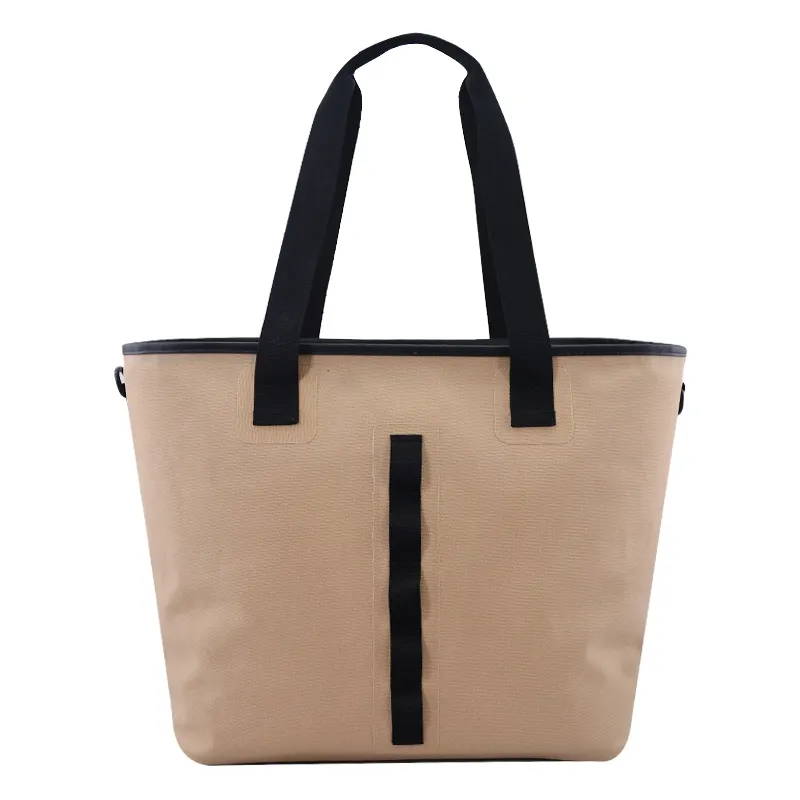
| Cooler tote | ~15–25L | ~24–48 hr | Picnics, beach, shopping; one-handed carry, fast access |
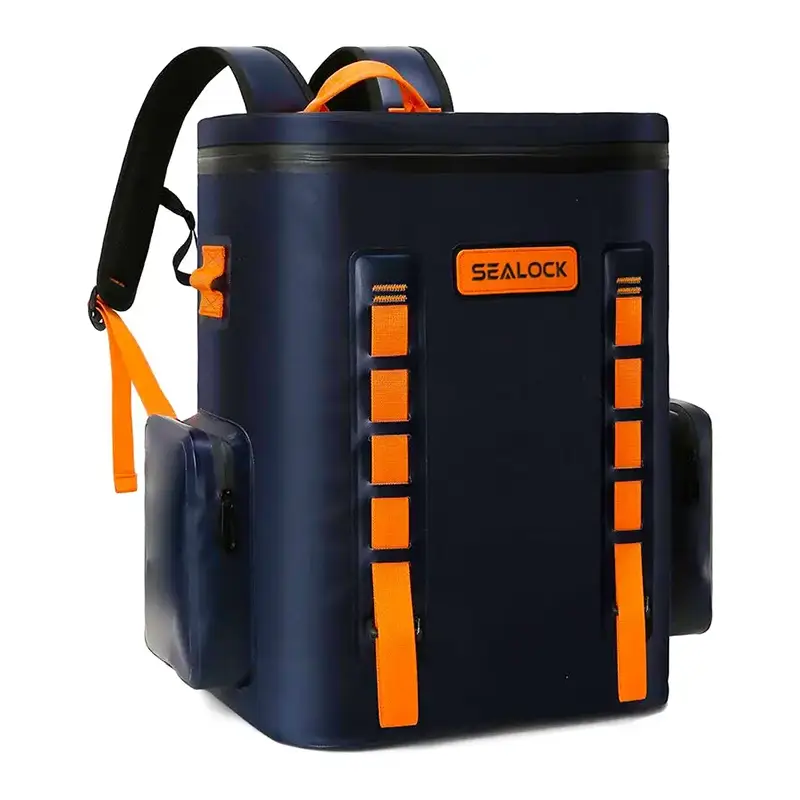
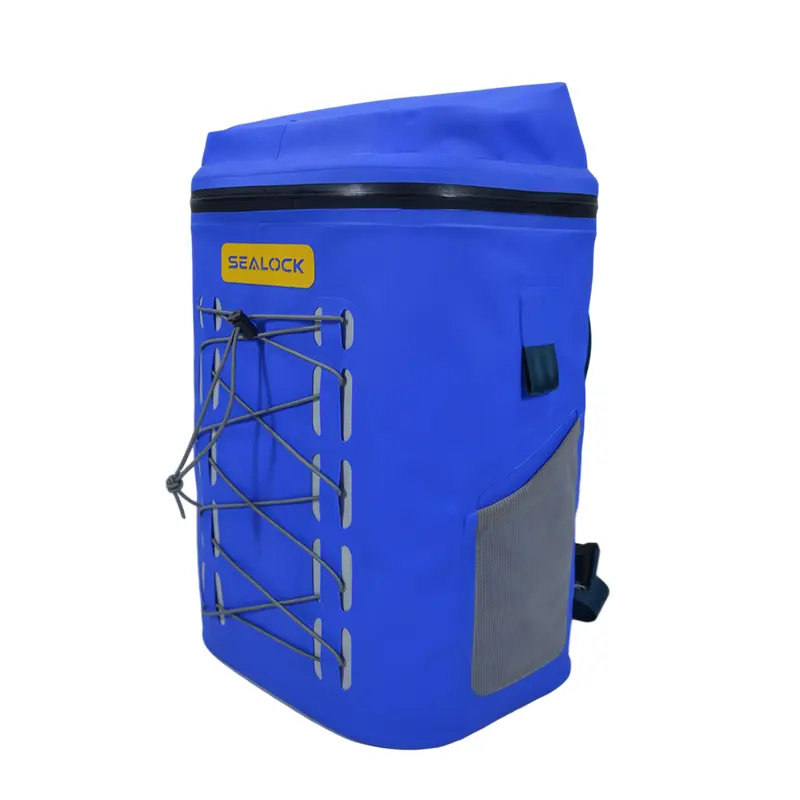
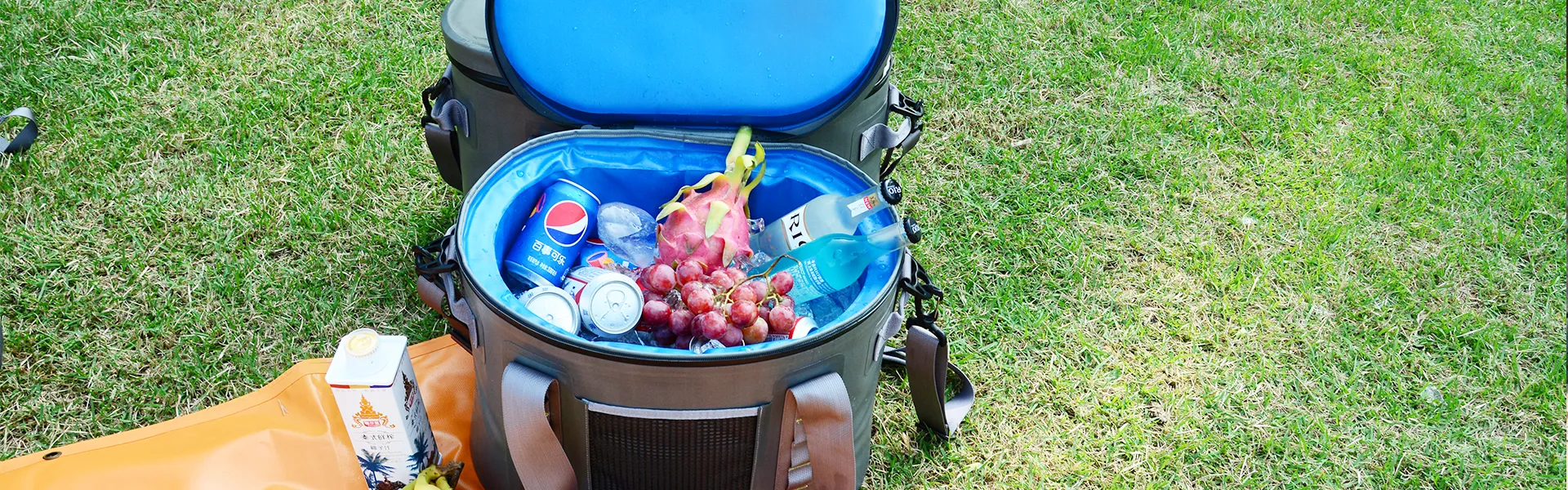
| Cooler backpack | ~15–45L | ~24–48 hr+ | Hands-free carry — hiking, fishing, paddling, events |
| Roll-top soft cooler | ~20–45L | Up to 48 hr | Wet environments; no zipper channel to foul with grit or salt |
| Fish kill bag | 50–120 cm long | Ice-dependent | Catch storage — length matters more than litres, so the fish lies flat |
| Insulated delivery bag | Varies | Hot or cold hold | Commercial rounds; hygiene, durability and repeated daily use |
Cold-Hold: What the Numbers Mean
Published ice-retention figures assume the bag stays shut, in moderate conditions, pre-chilled and packed full. Real use rarely matches that, so treat quoted hours as a comparative class rather than a promise — and expect meaningfully less in the field, particularly if the bag is opened frequently or left in the sun.
| Class | Typical build | Suits |
|---|---|---|
| Working day (4–8 hr) | Thin closed-cell wall, often with reflective film | Lunch bags, commuting |
| ~24 hr | Closed-cell EPE, moderate wall | Picnics, beach days, day trips, delivery rounds |
| 36–48 hr | ~3 cm EVA or thick closed-cell wall | Group outings, camping, boating |
| 48 hr+ | 50 mm high-density XPE | Multi-day, hot climates, marine |
| Longest per mm | PU, VIP vacuum panel, EPP, aerogel | Premium builds where bulk must stay low |
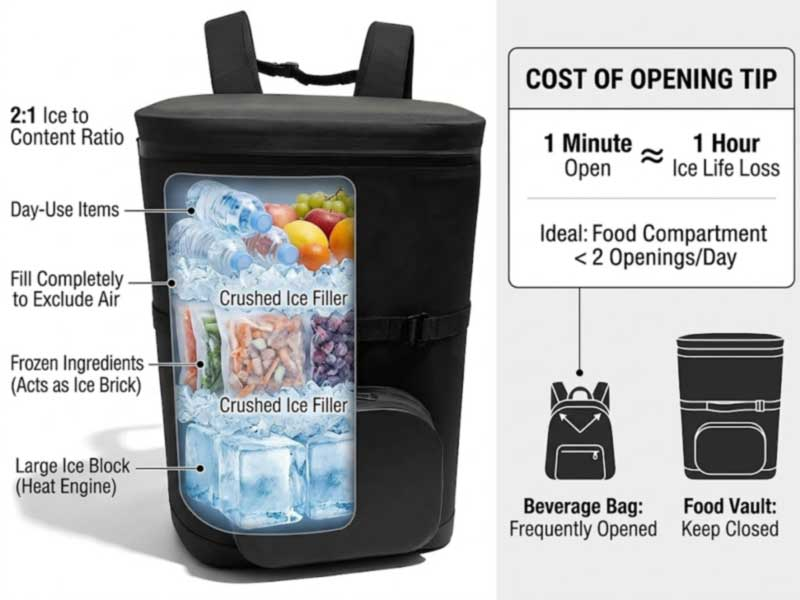
Two habits change results more than the gap between two mid-range bags: pre-chill the bag before loading, and keep it shut — every opening costs cold. Block ice lasts longer; crushed ice chills faster and contacts more surface. Filling empty space helps.
Water Resistance: Two Directions, Two Words
These get used interchangeably in listings and mean different things:
- Waterproof = keeping outside water out. Graded by IPX rating: IPX6 for jets and heavy spray, IPX7 for temporary immersion, IPX8 for continuous immersion. A rating without stated test conditions is marketing.
- Leakproof = keeping melt-water in. This is what stops a car seat getting soaked, and it depends on welded seams, a welded liner, and a closure that seals when the bag is tipped over — not just when it stands upright.
A standard zipper caps a bag at splash resistance whatever the body is made of. An airtight welded zipper or a welded roll-top is what makes either claim real.
How to Choose — by What You Will Actually Do
| Your use | Look for |
|---|---|
| Daily lunch, commuting | Small, light, wipe-clean welded liner, fast opening; 24-hour class is ample |
| Family picnics, park, beach | Welded body for sand and spills, reinforced base to stand upright, easy access, ~24 hr |
| Camping, multi-day | Thickest wall you will carry, sealed closure, plan for re-icing |
| Hiking with elevation | Low empty weight, waist belt, smaller capacity — ice is heavy |
| Fishing | Leakproof containment, rinse-clean liner, corrosion-resistant hardware; a kill bag sized to the species |
| Kayak, boat, marine | IPX7/IPX8 immersion rating, buoyant closed-cell wall, lash points, 316 stainless or polymer hardware |
| Air travel | Carry-on dimensions, welded leakproof build, low weight |
| Commercial delivery | Durability for daily use, hygiene, hot or cold hold as required |
Detailed guides for each: picnic · beach · camping · hiking · fishing · kayak · marine · travel. For choosing a specific product, see the soft cooler backpack buying guide.
What We Manufacture
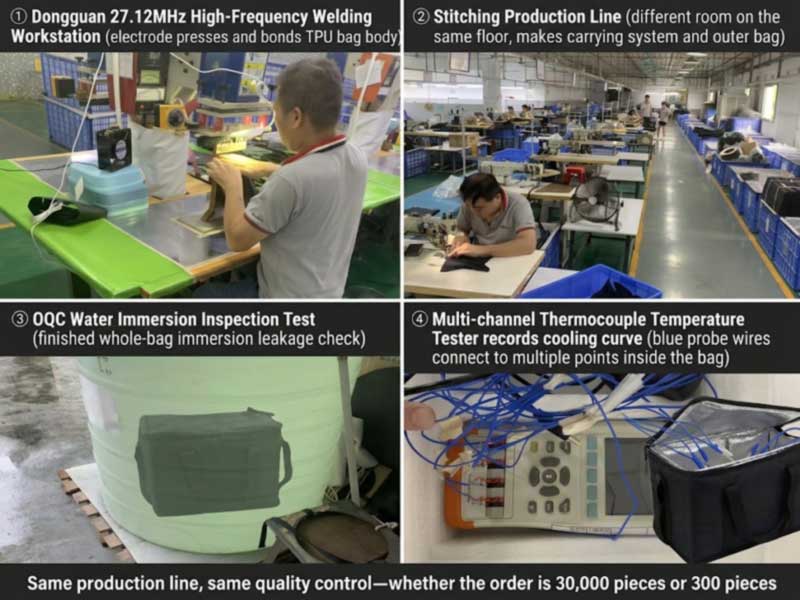
Sealock welds and sews insulated bags at three high-frequency welding factories plus in-house sewing lines, in Dongguan, Guangdong, China and Ho Chi Minh City, Vietnam. Food-grade inner liners across the entire range; sealed builds are water-immersion tested and cold-hold is measured with a multi-channel thermocouple tester.
| Image | Model | Type & build | Link |
|---|---|---|---|
|
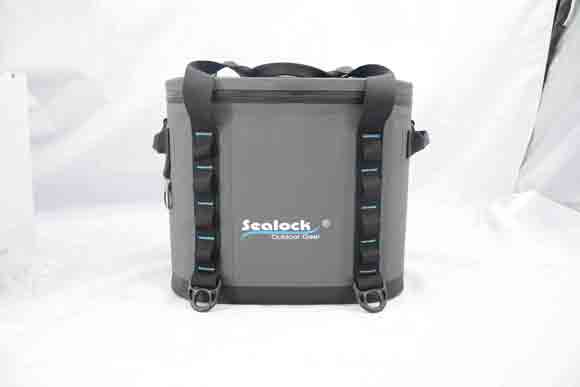
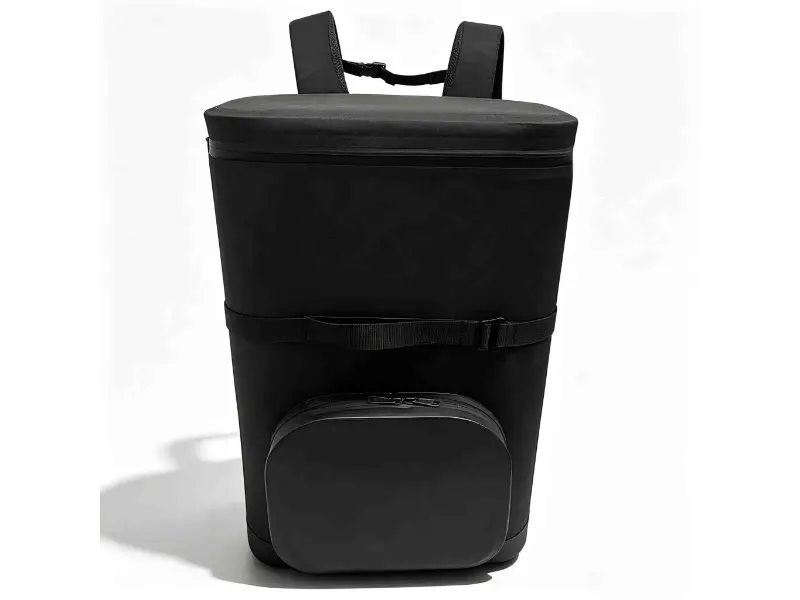
22L IPX7 Cooler Backpack (SL-I280) | Backpack — welded seamless, airtight zipper, IPX7, 50 mm XPE, 48 hr+ | View |
|
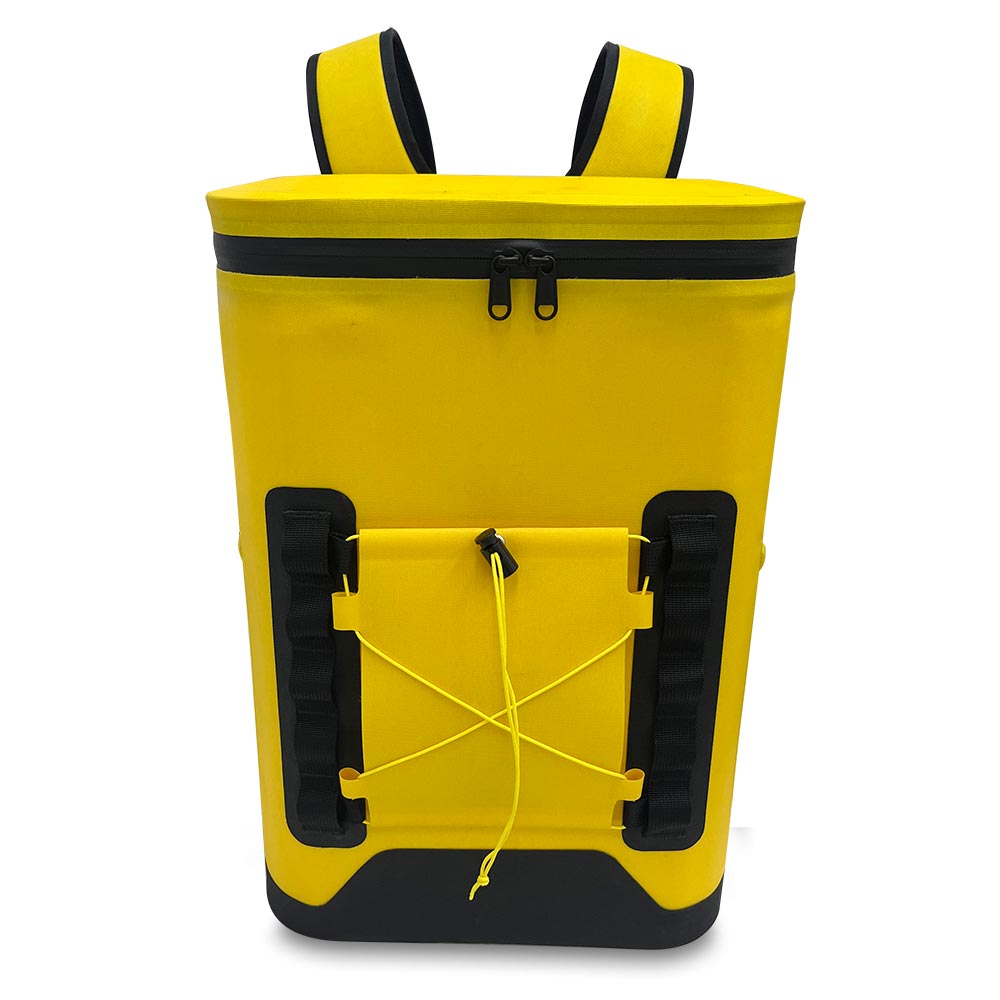
28L Airtight-Zipper Cooler Backpack (SL-I274) | Backpack — 840D TPU, EVA core, food-grade TPU membrane, up to 48 hr | View |
|
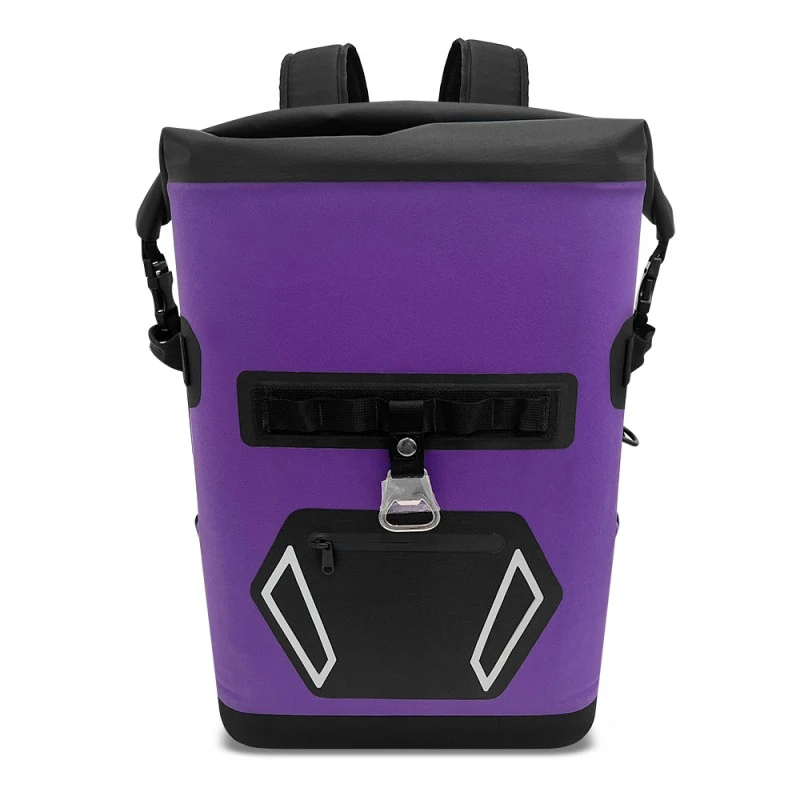
45L Roll-Top Cooler Backpack (SL-I270) | Roll-top backpack — 45L, 600D TPU, EVA foam, up to 36 hr | View |
|
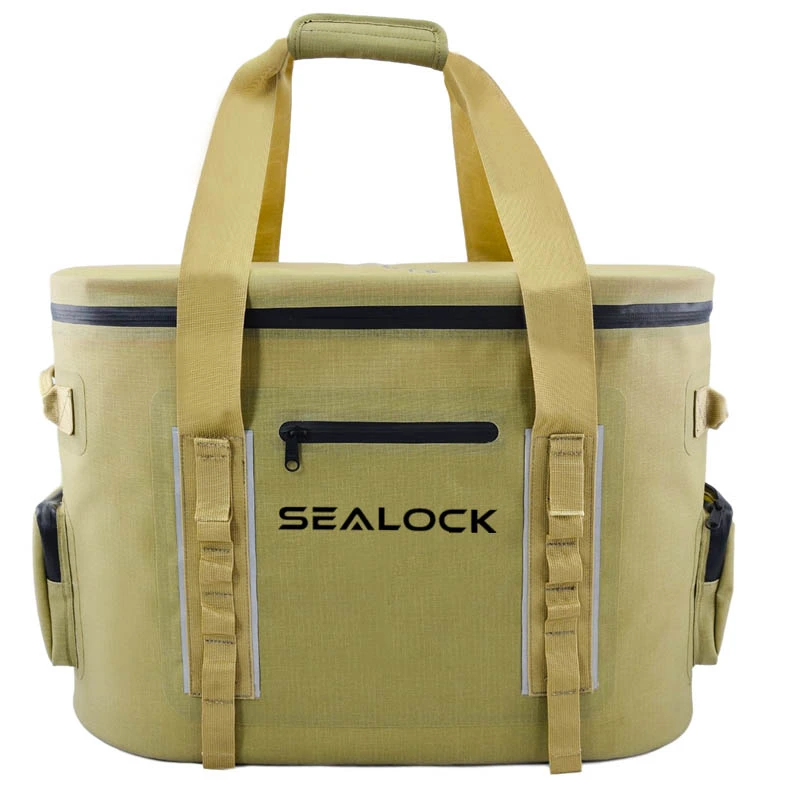
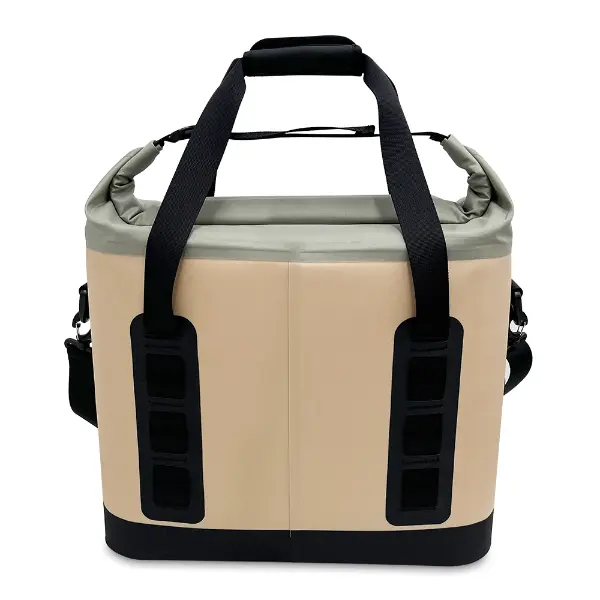
Roll-Top Leakproof Soft Cooler (SL-I288) | Tote / shoulder — 20L, 840D TPU, welded roll-top, MOLLE, up to 48 hr | View |
|
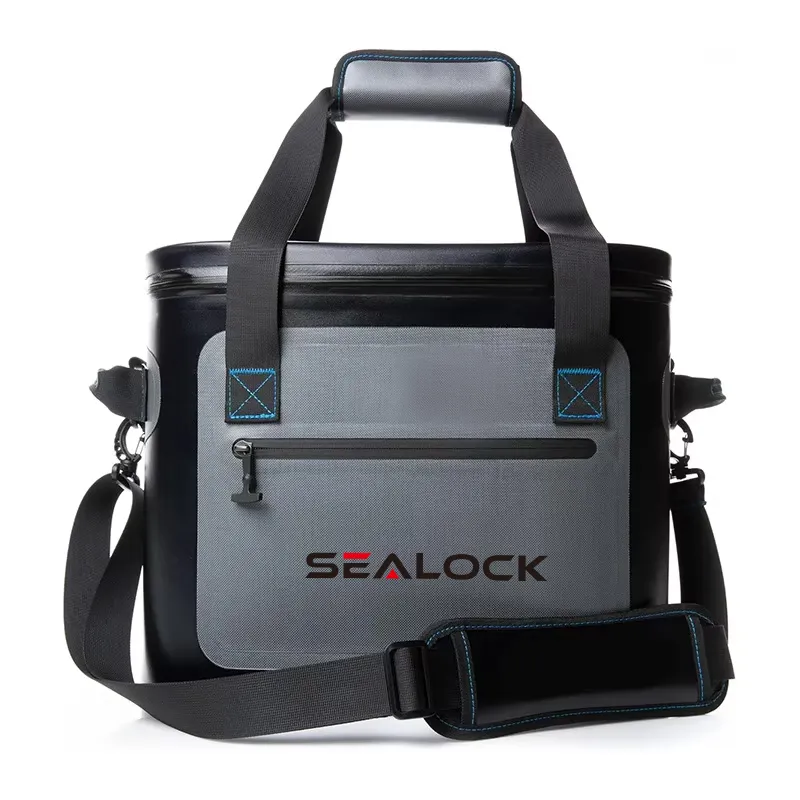
24L Soft Cooler Tote (SL-I230) | Tote — 840D TPU, 20 mm XPE, IPX7, HF welded | View |
|
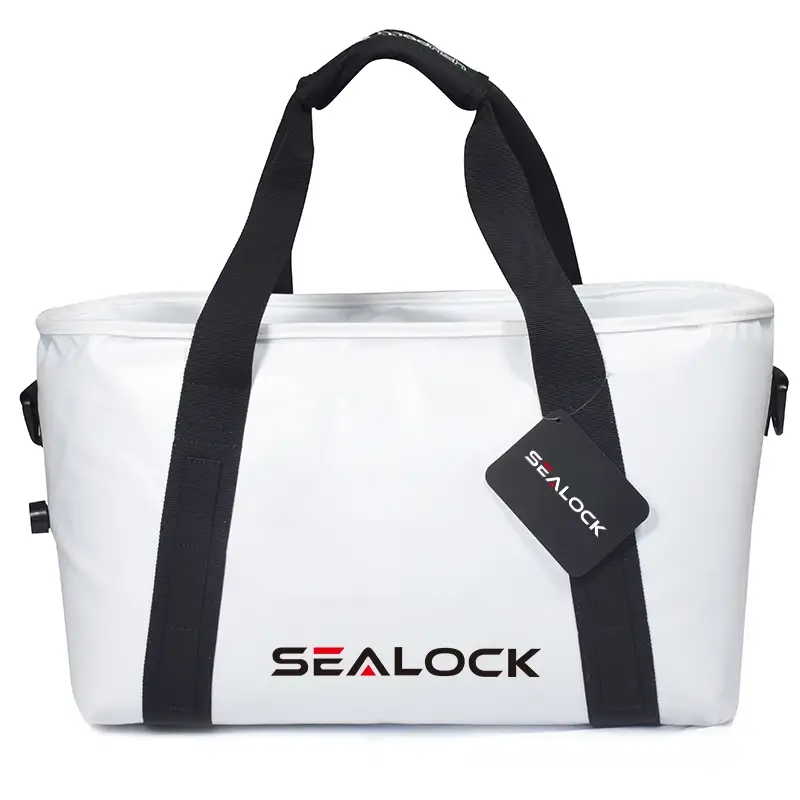
Insulated Fish Kill Bag (SL-C377) | Fishing — 50 × 30 × 30 cm, PVC mesh fabric, insulated, adjustable strap | View |
Sourcing insulated cooler bags for your brand? Send a type, capacity, cold-hold target and quantity — or a photo of a bag you want built. We manufacture OEM, ODM and private label from 300 pcs per design, with samples in 7–15 days.
info@sealock.com.hk · +86-13632981825 · Browse the range
Care: What Actually Extends Service Life
- Rinse after salt or sand. Salt corrodes hardware and abrades zipper teeth; sand acts like sandpaper.
- Wash the liner and dry it fully, open, before storing. Storing a cooler damp and zipped shut is the standard cause of mould and odour — and trapped moisture over time attacks coatings and seams.
- Keep it out of hot cars and direct sun when not in use. Thermal stress degrades plastics and bakes salt into fabric.
- Clean the closure. Grit in an airtight zipper degrades the seal that makes the bag leakproof.
FAQ
Q: What is the difference between an insulated bag and a cooler bag?
A: In practice the terms are used interchangeably. Both describe a soft bag with an insulating wall — usually closed-cell foam — and a liner. What actually differs between products is wall thickness (which sets cold-hold), liner material and attachment, and whether the body is sewn or welded.
Q: How long does an insulated cooler bag keep things cold?
A: Depending on the build, from a working day to 48 hours or more. Thin-walled lunch bags cover a commute; a 24-hour-class wall suits picnics and day trips; 50 mm of high-density foam reaches the 48-hour class. Treat published figures as a comparative class rather than a promise — they assume the bag stays shut, pre-chilled and packed full.
Q: Is a welded cooler bag better than a sewn one?
A: For containing melt-water and for immersion resistance, yes — stitched seams have needle holes that water finds, particularly at the base. For a lunch bag used dry, sewn construction is perfectly appropriate and costs less. Many products sensibly combine both, with a welded chamber and sewn straps and pockets, provided the stitching never penetrates the sealed chamber.
Q: What size should I choose?
A: Size for contents plus ice, since roughly two parts ice to one part contents is standard — a 24L bag is not 24L of food. Also consider how far it is carried loaded, because ice and water are dense. And avoid oversizing: empty space warms the interior faster than a fuller, smaller bag would.
Q: Waterproof or leakproof — which do I need?
A: Leakproof keeps melt-water in and matters for almost everyone, since it is what stops a car seat or luggage getting soaked. Waterproof, expressed as an IPX rating, keeps outside water out and matters if the bag will meet spray or immersion — boating, kayaking, fishing. A standard zipper limits a bag to splash resistance regardless of what the body is made of.
Q: Can you manufacture insulated bags for my brand?
A: Yes — OEM, ODM and private label, from 300 pieces per design, with samples in 7–15 days and production in 30–45 days. We build in China and Vietnam on the same specification, with food-grade liners across the range and performance validated by immersion and temperature testing.
Sealock — YiFuLong Outdoor Gear Co., Ltd.
Insulated and waterproof bags, welded and sewn in China and Vietnam since 2003. ISO9001, BSCI, SMETA P4, GRS, HIGG, SCAN.
Email: info@sealock.com.hk · Phone: +86-13632981825
Cold-hold figures and performance descriptions here are typical and vary with packing, ambient conditions, pre-chilling and opening frequency. Seal ratings apply to the specific builds indicated and are validated by testing; water-resistant models are not submersible.