News

Waterproof Fishing Cooler Backpacks: Keep the Catch Cold and Dry

2026-08-07 0 Leave me a message
Fishing puts a cooler through something no picnic ever will. The bag meets salt spray and rain from outside, and blood, slime and melt-water from the inside — and unlike a case of drinks, the contents are a food-safety clock that starts the moment the fish leaves the water. A fishing cooler backpack has to solve all of that while riding on your back as you wade a river, hike a bank or paddle a kayak. This guide covers what actually keeps a catch fresh, what the bag has to do to support it, and how to choose one that does. Sealock (YiFuLong Outdoor Gear Co., Ltd.) builds welded, waterproof cooler backpacks for exactly this use.


The Catch Is a Clock: What Actually Keeps Fish Fresh

Before the bag matters, the handling does — and the difference between good practice and bad is measured in days of shelf life, not hours.

Bleed and gut early

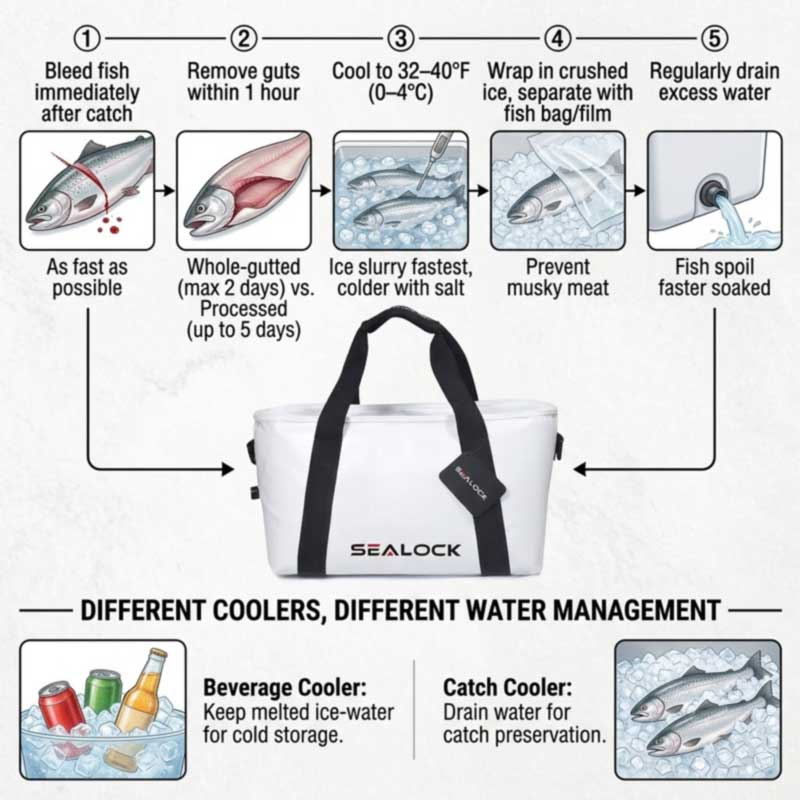
The single biggest factor is what happens in the first minutes. Bleeding immediately improves flesh quality, and fish should be gutted within an hour of catching, or as soon as possible, because leaving them ungutted allows gut bacteria to quickly contaminate the flesh. The payoff is substantial: under ideal conditions — immediate bleeding, gutting and proper icing with drainage — most fish remain excellent for five days, while ungutted fish keep only about two days, with quality significantly compromised. Even bleeding alone buys time — correctly bled fish can be stored ungutted on ice for 24–48 hours without negative effects on taste. Research on catch handling adds a temperature warning: if fish lie in bloody water at temperatures up to ten degrees for a long time after bleeding, it harms both smell and appearance, and high temperatures very quickly start decomposition.

Get it cold, fast — and use the right ice

Chilling is the defence. The target range is a fridge-like band: stored on ice or in an ice slurry, fish sit at around 32–40°F. Two techniques beat simply dropping fish on cubes. First, slurry: an ice slurry chills fish faster and more thoroughly than ice alone — add cold water, saltwater if available, since it creates a colder brine. Second, ice type: crushed ice is better than big cubes because you get more surface area, and more surface area in direct contact with the ice cools the fish more completely.

A useful contradiction, resolved: for drinks coolers the advice is to use block ice, which melts slower. For fish it is crushed ice, which chills faster and contacts more of the fish. Both are right — they optimise different things. Loading a fishing cooler for a long day often means both: a block or frozen bottle low down for endurance, crushed ice packed around the catch for contact chilling.

Protect the flesh, and drain the water

Here is where fishing advice diverges sharply from general cooler advice. For a drinks cooler, keeping the cold melt-water in improves performance. For fish, it does the opposite: a fish sitting in a pool of water will spoil much faster, and melted ice pooling at the bottom spoils fish, so the container should drain or be tilted so water cannot accumulate. Direct contact also costs quality — fish should be placed in a plastic bag or wrapped to protect the flesh from direct contact with ice and melt-water, which can wash away flavour and damage the texture.

What this means for a soft cooler backpack: most soft cooler backpacks have no drain plug — the sealed, welded construction that makes them leakproof is exactly what rules one out. So drainage has to be managed by hand: bag or wrap the fish so it is not sitting in the melt, and pour the water off periodically when you stop. Do not read "leakproof" as "leave the fish swimming in it." The bag's job is to stop that water reaching your back and your car; your job is to keep it off the fish.

One more variable worth knowing when planning a trip: fatty fish like salmon spoil more quickly because of their high oil content, while lean fish such as cod or snapper have less fat to oxidise and last longer.

fishing catch cold chain timeline from bleeding and gutting to icing, slurry chilling and draining meltwater

What a Fishing Cooler Backpack Has to Do

Read the handling requirements above and the specification writes itself. A fishing cooler backpack faces water from both directions and food-safety duty in the middle.

Keep water out — including salt water

Fishing is a wet-environment sport: spray over the bow, rain, a bag set down in the shallows, a kayak that flips. This is where an IPX rating earns its place — IPX6 for heavy spray and wash-down, IPX7 for temporary submersion if the bag might go in the water. Salt adds a second demand: hardware needs to be corrosion-resistant, and the shell needs to tolerate salt exposure and rinse clean. A welded TPU shell wipes down and does not absorb; the rating detail is covered in Waterproof Cooler Backpacks: How Welded Construction Keeps Water Out.

Keep water in — the part fishing punishes hardest

A fishing cooler does not just hold melt-water; it holds melt-water mixed with blood and slime. That is precisely the fluid you least want reaching your shirt, your car seat or your tackle. A stitched cooler leaks it through the needle holes at the bottom seam. A welded body with a welded liner and a sealed closure contains it — and a backpack that seals in any orientation matters because a fishing pack gets laid on its side in a boat far more often than a picnic cooler does. See Leakproof Cooler Backpack Manufacturer: Welded vs Stitched Seams.

Be food-safe, and be cleanable

The liner is a food-contact surface holding raw fish, which makes food-grade material a requirement rather than a nicety — every Sealock insulated bag uses a food-grade inner liner across the range, whether a TPU membrane, PEVA film or equivalent food-grade waterproof liner depending on the model. Cleanability matters just as much in this application: a smooth, welded, pore-free liner rinses out after a trip, where a stitched fabric liner traps fish residue in its seams. That is a hygiene difference, not a cosmetic one.

Carry hands-free, and hold enough

The reason to choose a backpack over a tote for fishing is simple: hands free for the rod, and both shoulders loaded for a hike to the spot or a wade along a bank. Capacity should be planned around the catch plus the ice it needs — a share of the litres is coolant, not fish. Attachment points earn their keep here too: gear webbing, bungee panels and a utility pocket keep pliers, a knife and a bag of ice accessible without opening the cold chamber.

Choosing the Right Fishing Cooler Backpack

Your fishing What to prioritise
Kayak, small boat, anywhere it could go in IPX7 immersion rating, airtight closure sealed in any orientation
Offshore / salt water Corrosion-resistant hardware, rinse-clean welded TPU shell, high spray resistance
Long hike or wade to the spot Lighter build, comfortable harness, capacity sized honestly to the walk
Full-day sessions, bigger catch Larger capacity, longer cold-hold, gear attachment for tools
Bank fishing near the car Cold-hold and leakproofing matter more than immersion rating

Sealock's Fishing Cooler Backpacks

Sealock welds insulated cooler bags at 27.12 MHz across three factories in Dongguan, China and Ho Chi Minh City, Vietnam, with food-grade liners across the range and full water-immersion validation on sealed builds. Two families serve anglers, and they answer different questions — a carry-in cooler backpack for the trip out, and a dedicated insulated kill bag for the catch itself:

Insulated fish kill bags — built for the catch

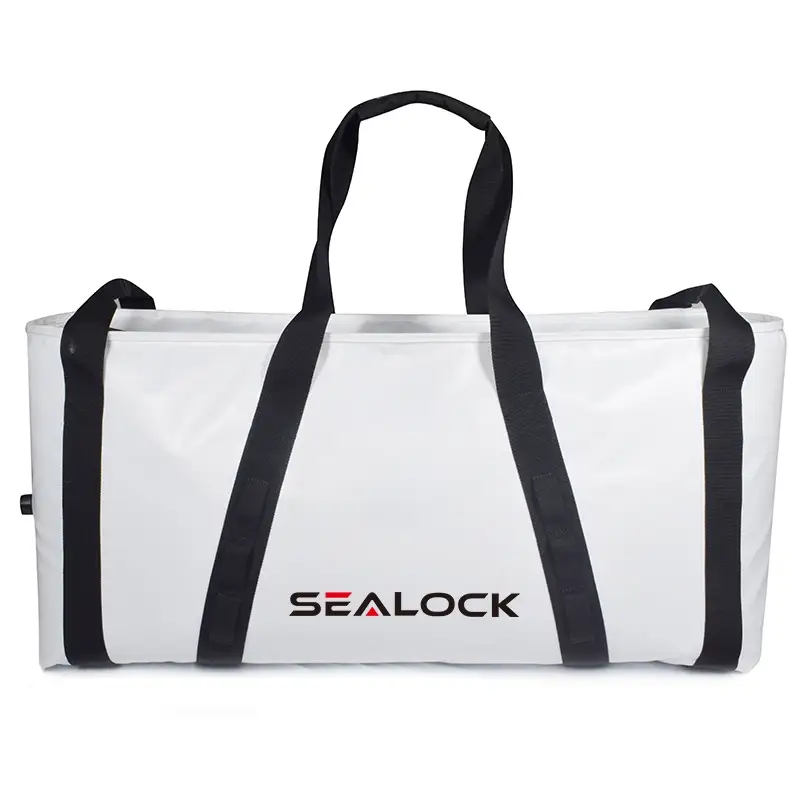
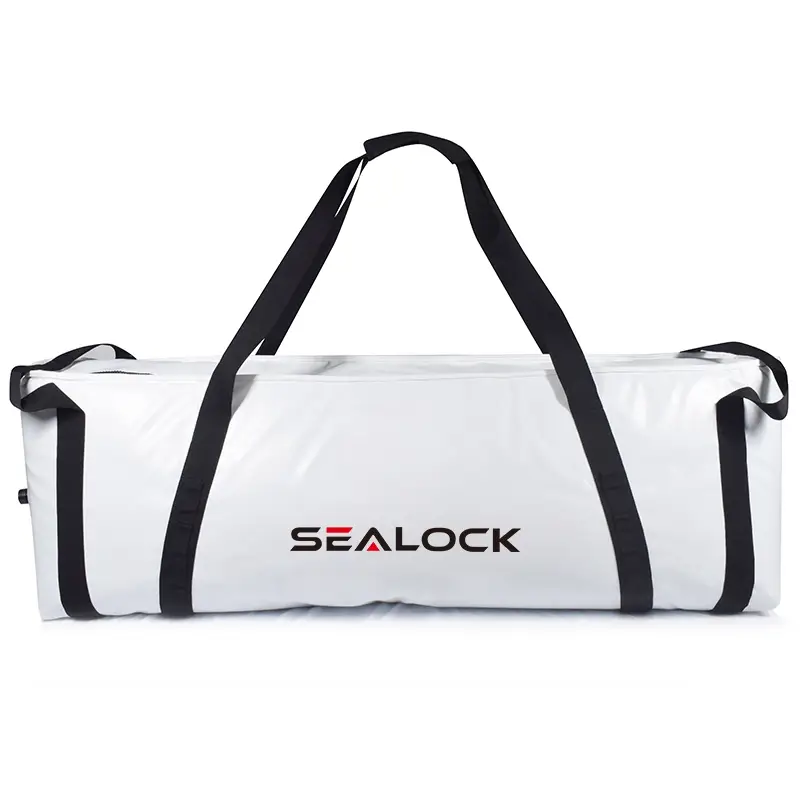
For serious catch storage, a kill bag is the purpose-built answer: long enough to lay a fish flat rather than bending it, insulated to hold ice around it, and portable enough to move between boat and dock. Sealock's kill bags run from a 50 cm bag for lake and inshore work up to a 120 cm bag for tuna and large offshore species:

Image Model Size & build Suited to Link
Insulated fish kill bag SL-C377 Insulated Fish Kill Bag (SL-C377) 50 × 30 × 30 cm, PVC mesh fabric, insulated, adjustable strap Sea and lake fishing; a manageable size to carry View
Kill fish cooler bag SL-C379 Kill Fish Cooler Bag (SL-C379) 85 × 35 × 40 cm, PVC mesh fabric, insulated, adjustable strap Boat fishing; sea bass and mid-size species laid flat View
Large insulated fish kill bag SL-C380 Large Insulated Fish Kill Bag (SL-C380) 120 × 35 × 40 cm, PVC mesh fabric, insulated, adjustable strap Offshore boat fishing; tuna and large species View

The length is the point. A fish bent double to fit a short bag chills unevenly and suffers in the flesh; a bag sized to lay it straight, packed with crushed ice around it, is how the handling advice above actually gets followed on a boat.

Cooler backpacks — hands-free carry to the spot

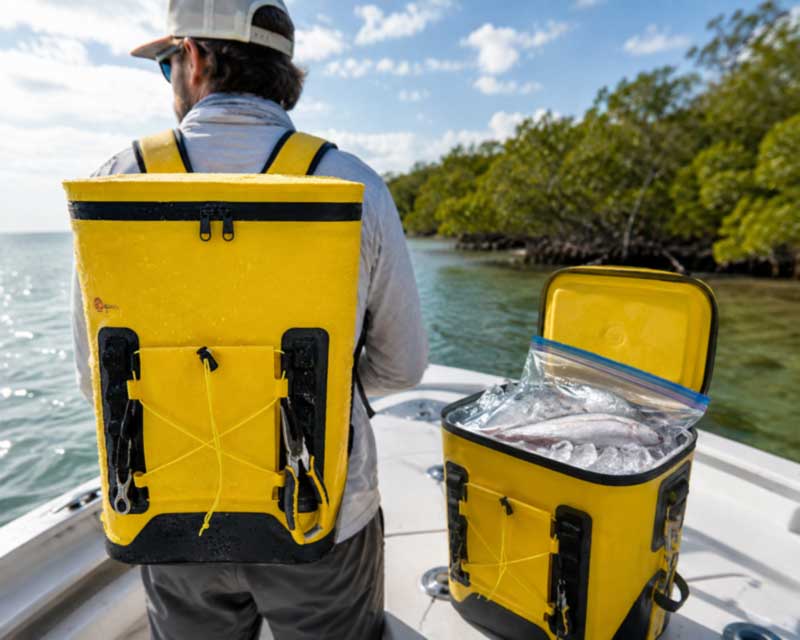
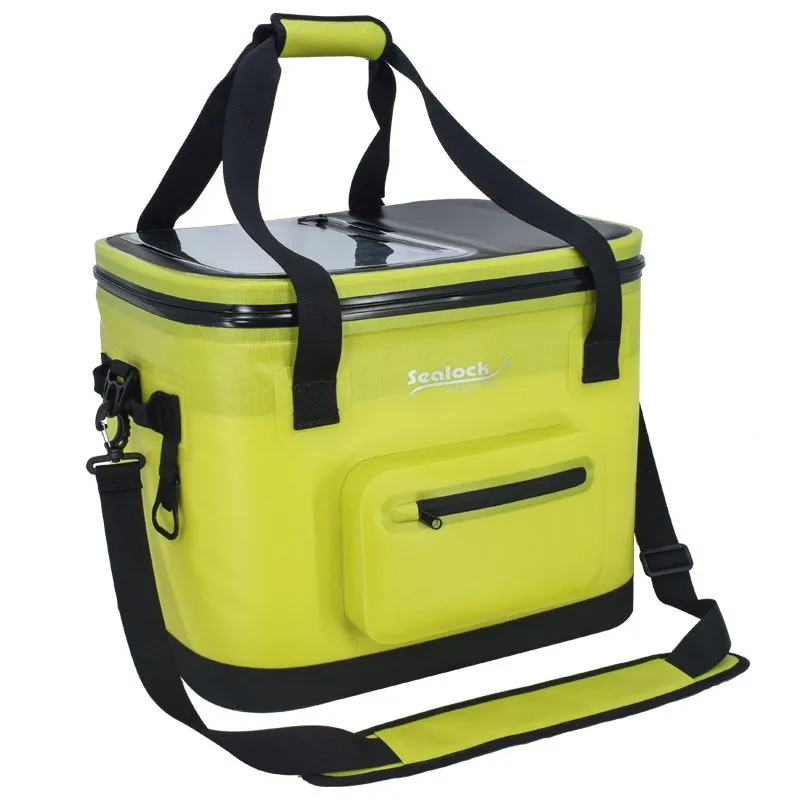
Where the fishing means walking, wading or paddling in, a welded cooler backpack carries food, drinks and a modest catch hands-free:

Image Model Why it suits fishing Link
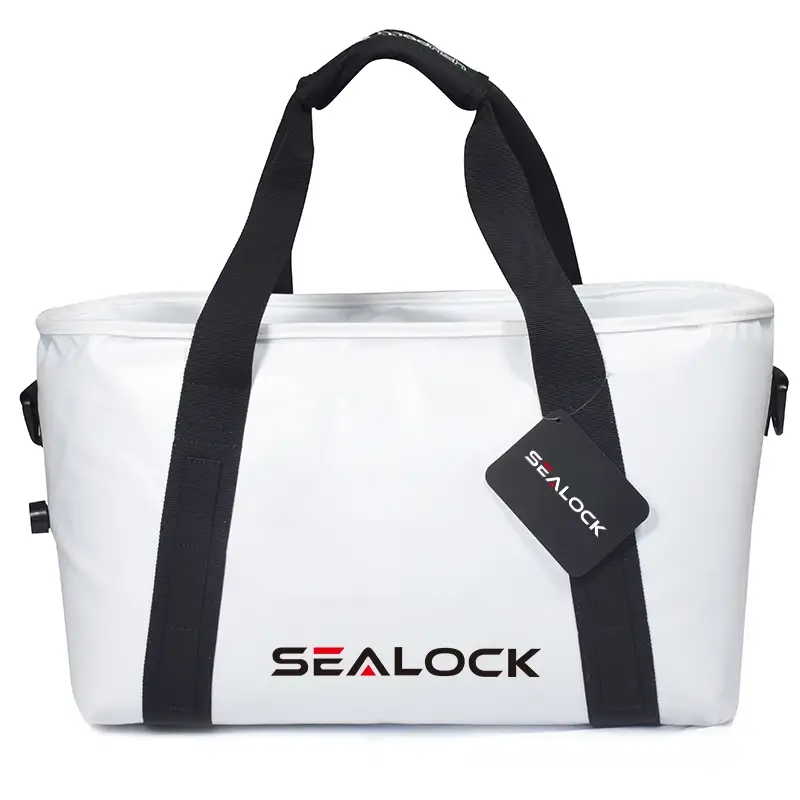
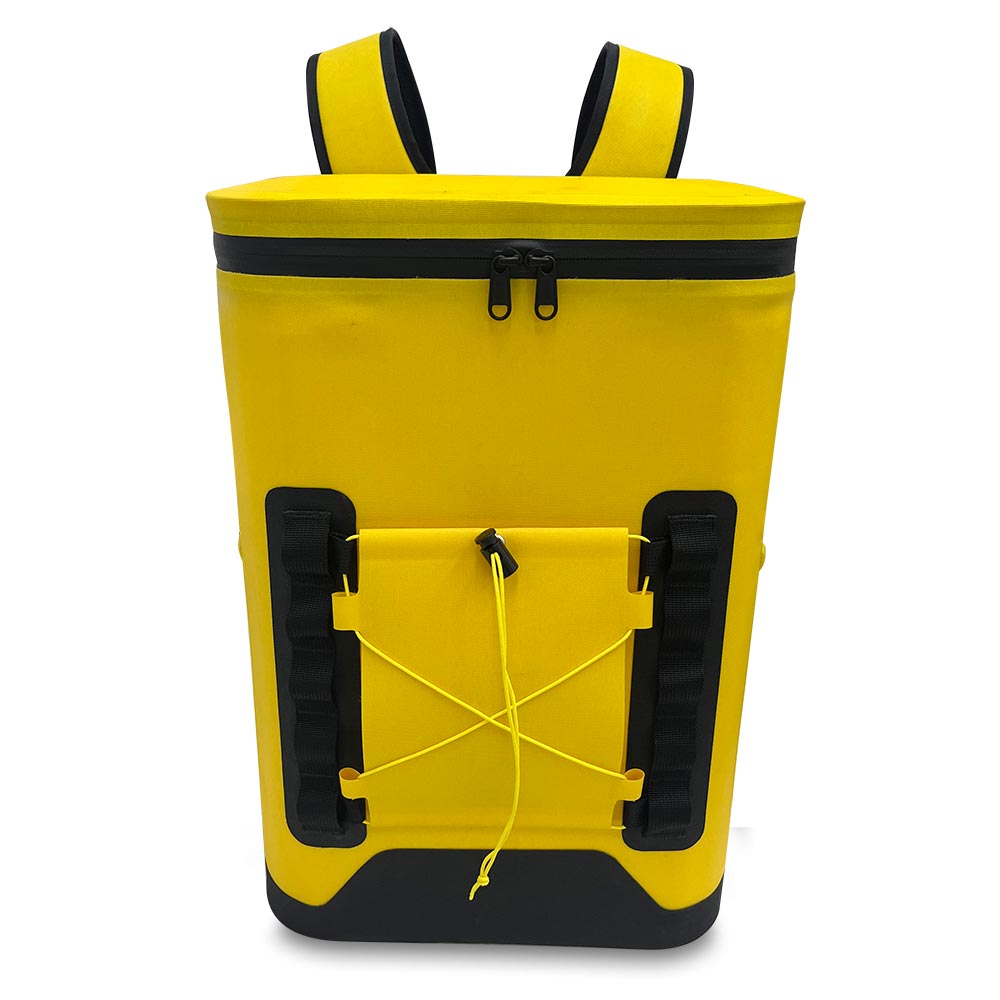
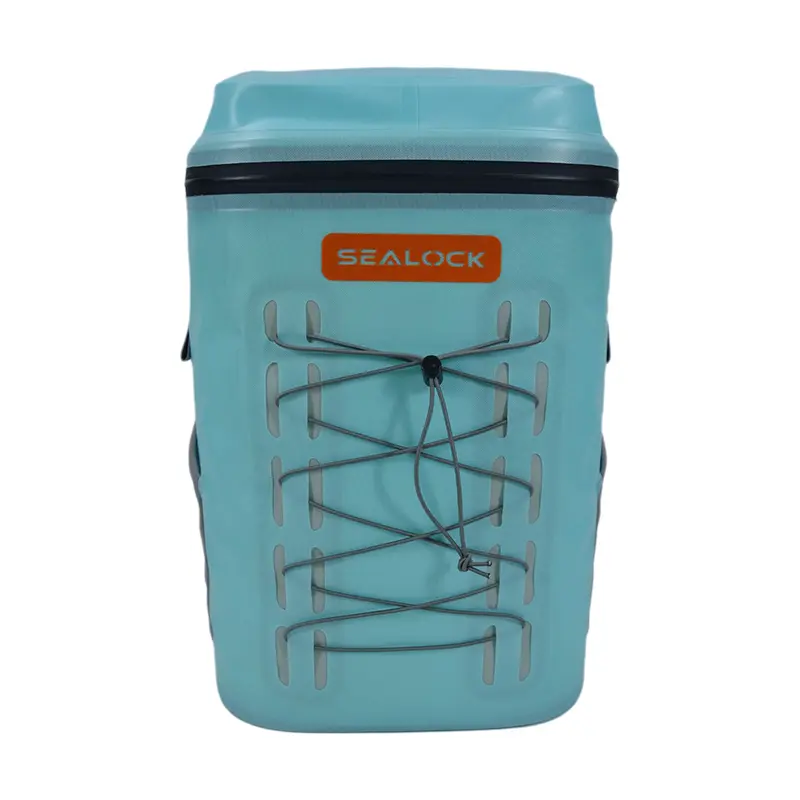
28L airtight-zipper insulated backpack cooler SL-I274 28L Airtight-Zipper Backpack Cooler (SL-I274) 28L, up to 48 hr hold, airtight waterproof zipper, 840D TPU, food-grade TPU membrane, front bungee and utility pocket for tools View
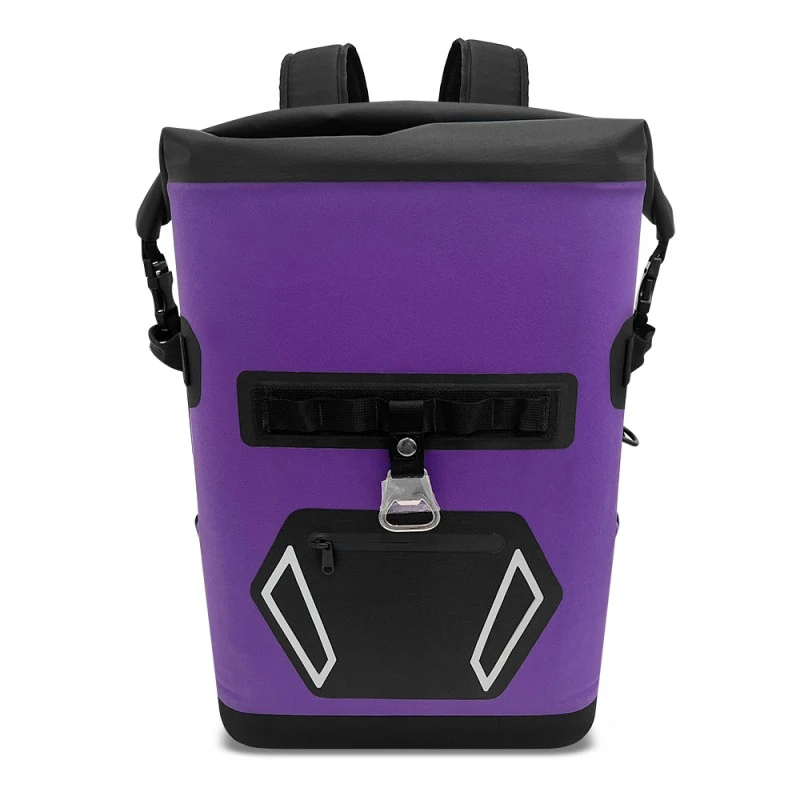
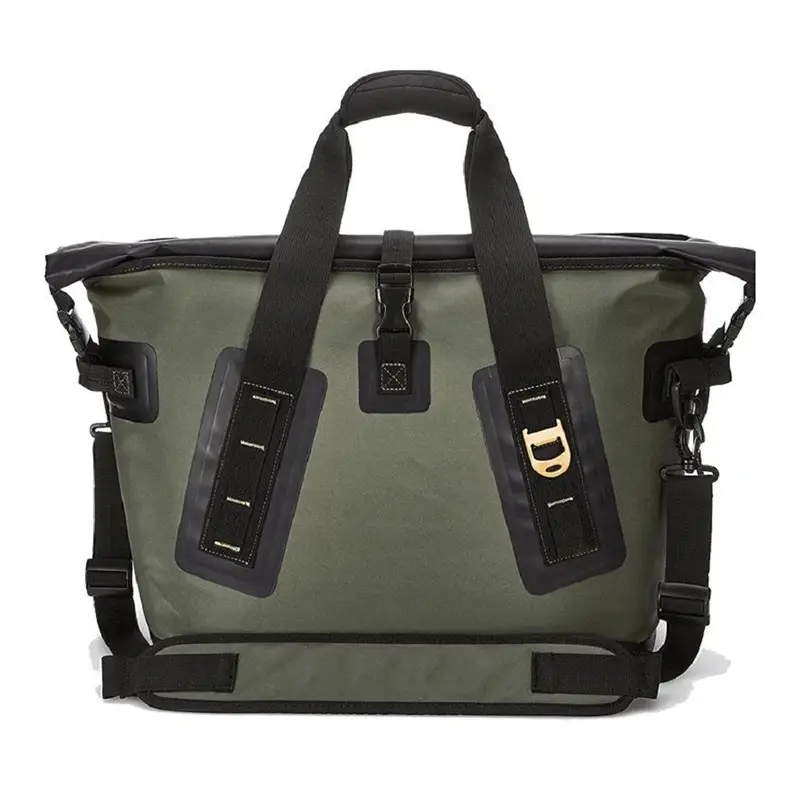
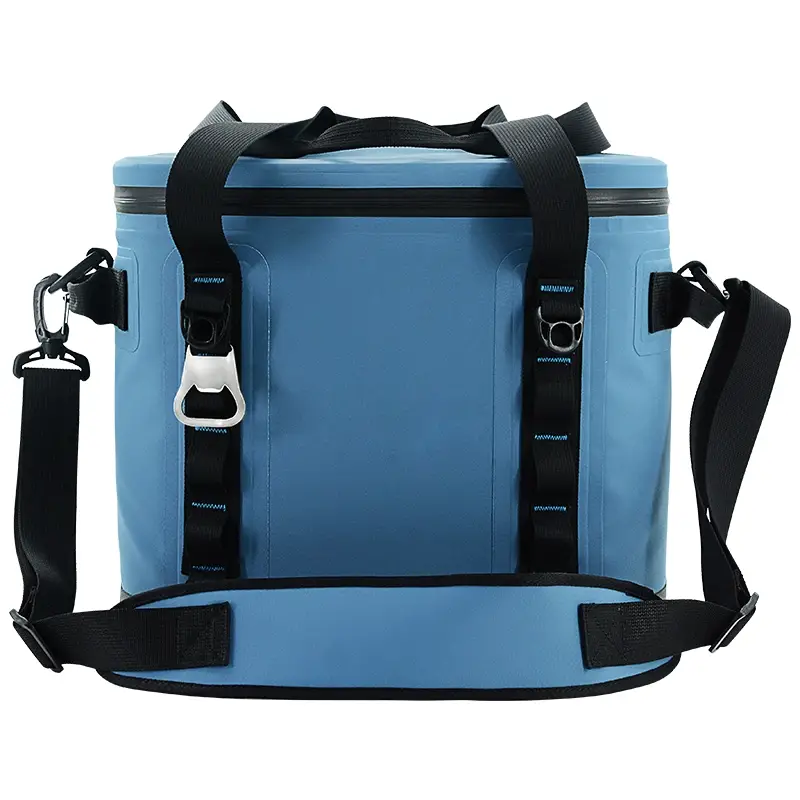
45L roll-top leakproof insulated backpack cooler SL-I270 45L Roll-Top Backpack Cooler (SL-I270) 45L for big days; roll-top has no zipper channel to foul with slime or salt; gear webbing, bottle opener, reflective trim, UTX buckles View

Many anglers end up using both: a kill bag for the catch on the boat, and a backpack cooler for the food, drinks and the walk in.

angler wearing a welded waterproof cooler backpack with crushed ice and bagged catch inside, tools on gear webbing

Care: Making a Fishing Cooler Last

  • Rinse after every salt trip. Salt is corrosive to hardware and abrasive in zipper teeth — a freshwater rinse inside and out is the single best maintenance habit.
  • Clean the zipper or roll-top closure. Grit and fish slime in an airtight zipper degrade the seal; rinse and, where the manufacturer recommends it, lubricate.
  • Wash the liner out. A welded liner rinses clean; mild soap and a full dry before storage prevents odour.
  • Dry it open, store it unfolded. Storing a cooler damp and tightly folded is the worst case for any coated fabric — see TPU Cooler Backpack Manufacturer: Why the Shell Material Matters for why moisture over time is the coating's main enemy.

For Brands: Developing a Fishing Cooler Backpack

Fishing is a demanding brief and a good one to build for — and demanding briefs are welcome. Beyond colour and logo, Sealock develops ground-up from a sketch, sample or performance target: the IPX seal level and closure type, the insulation tier and wall thickness that set the cold-hold, the food-grade liner, corrosion-resistant hardware, rod or tool attachment, and the harness are all engineered to the use, then proven by immersion and cold-hold testing before production. Premium insulation up to VIP vacuum panels and aerogel and IPX6–IPX8 welded seal levels are in scope. Ground-up work runs longer at sampling, so book against a season. See OEM Soft Cooler Backpacks: What You Can Customize Beyond Logo & Color.

MOQ / lead time 300 pcs per design; samples 7–15 days; production 30–45 days; FOB Guangdong
Origin China or Vietnam on the same specification
Certifications ISO9001, BSCI, SMETA P4, GRS, HIGG, SCAN

FAQ: Fishing Cooler Backpacks

Q: How long will my catch stay fresh in a cooler backpack?

A: With immediate bleeding, prompt gutting and proper icing with drainage, most fish stay excellent for up to five days. Bled but ungutted, expect 24–48 hours. Ungutted and unbled, quality falls away within a day or two. The bag's cold-hold matters, but the handling in the first hour matters more.

Q: Should I drain the melt-water like I would in a drinks cooler?

A: For fish, yes — this is the opposite of drinks-cooler advice. Fish sitting in pooled water spoils faster and goes mushy, so pour the water off when you stop, and bag or wrap the fish so it is not in direct contact with melt-water, which washes away flavour and damages texture. Soft cooler backpacks have no drain plug, precisely because they are sealed to be leakproof, so this is done by hand.

Q: Crushed ice or block ice for fishing?

A: Crushed, for the fish. More surface area means faster, more complete chilling in contact with the catch, and an ice slurry — crushed ice plus cold water, saltwater if available for a colder brine — chills fastest of all. Block ice lasts longer, so a common approach on long days is a block or frozen bottle for endurance plus crushed ice packed around the fish.

Q: Do I need an IPX rating for a fishing cooler backpack?

A: It depends where you fish. Bank fishing near the car mainly needs cold-hold and leakproofing. Boat, kayak or wading use should look for IPX6 spray resistance at minimum, and IPX7 immersion rating if the bag could realistically end up in the water — along with a closure that stays sealed in any orientation.

Q: Is a cooler backpack hygienic for raw fish?

A: It should have a food-grade liner — Sealock uses food-grade liners across its insulated range — and a welded, smooth liner is far easier to rinse clean than a stitched fabric one, which traps residue in its seams. Bagging the catch, rinsing after every trip and drying the bag fully before storage keeps it hygienic and odour-free.

Q: What size cooler backpack do I need for fishing?

A: Size for the catch plus the ice it needs, since a substantial share of the volume is coolant rather than fish. Around 20–28L suits most day sessions with a full harness for comfort; 45L suits big days and longer trips. Also weigh how far you carry it — a loaded 45L on a long wade is a serious load.

Sourcing fishing cooler backpacks? Sealock (YiFuLong Outdoor Gear Co., Ltd.) welds waterproof, leakproof cooler backpacks at 27.12 MHz in China and Vietnam — food-grade liners, airtight and roll-top closures, IPX-rated builds validated by immersion testing. Tell the team where your customers fish, and they will spec the seal level, capacity and hardware to match.

Email: info@sealock.com.hk  |  Phone: +86-13632981825  |  Browse the soft cooler range

Catch-handling guidance, storage times and temperature figures cited here reflect publicly available fisheries, food-safety and angling sources as of mid-2026; actual shelf life depends on species, handling, temperature and hygiene. This is general guidance, not food-safety advice — follow local regulations and food-handling rules for your catch.

Related News
Leave me a message
X
We use cookies to offer you a better browsing experience, analyze site traffic and personalize content. By using this site, you agree to our use of cookies.Privacy Policy
RejectAccept