News

Kayak Cooler Backpacks: Waterproof, Buoyant and Deck-Ready

2026-08-13 0 Leave me a message
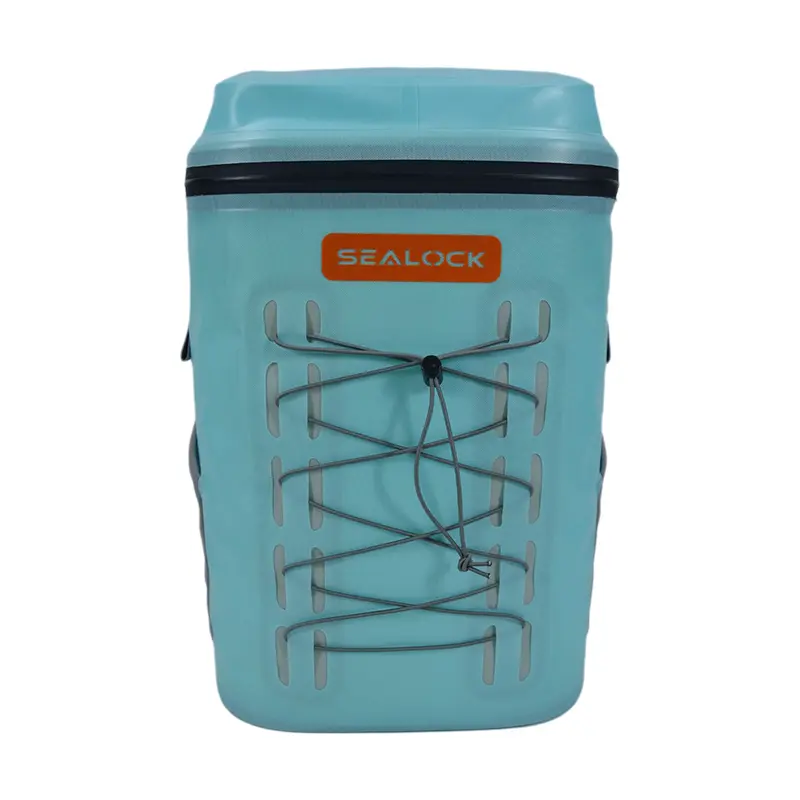
A kayak asks more of a cooler than any other environment. The bag will be splashed constantly, may go fully underwater if the boat rolls, has to be secured against waves and wind, and — the part most buyers never consider — its weight and position affect how the boat handles. A cooler that is merely "water-resistant" is the wrong tool here; so is one simply set loose on the deck. This guide covers what a kayak actually demands: real submersion sealing, buoyancy, and a stowage plan that keeps both the gear and the boat stable. Sealock (YiFuLong Outdoor Gear Co., Ltd.) builds welded, immersion-rated cooler backpacks for this use.


Rule One: Assume Everything Gets Wet

Paddling guidance does not hedge on this. As REI's kayak advice puts it: when storing gear, assume that every nook and cranny of your boat will get wet, which means anything that can soak up water has to go into a dry bag. That single sentence rules out most cooler bags on the market — a stitched cooler with a standard zipper is not a dry bag, no matter what the listing says.

For a kayak the relevant seal level is set by the realistic worst case, and on a kayak the worst case is not spray — it is the boat going over. That means an immersion rating rather than a splash rating: IPX7 for temporary submersion, IPX8 for continuous or deeper immersion. Both require welded, seam-free construction and a closure that seals in any orientation — an airtight zipper or a welded roll-top. A standard zipper caps a bag at splash resistance regardless of how good the body is. The rating detail is in Waterproof Cooler Backpacks: How Welded Construction Keeps Water Out.

There is a second reason sealing matters on a kayak, and it runs the other way: the cooler's own meltwater. A leaking cooler in a cockpit puts water where you sit and are trying to stay dry. Containment matters as much as ingress protection — see Leakproof Cooler Backpack Manufacturer: Welded vs Stitched Seams.

Buoyancy: Real, Useful, and Not a Substitute for a Leash

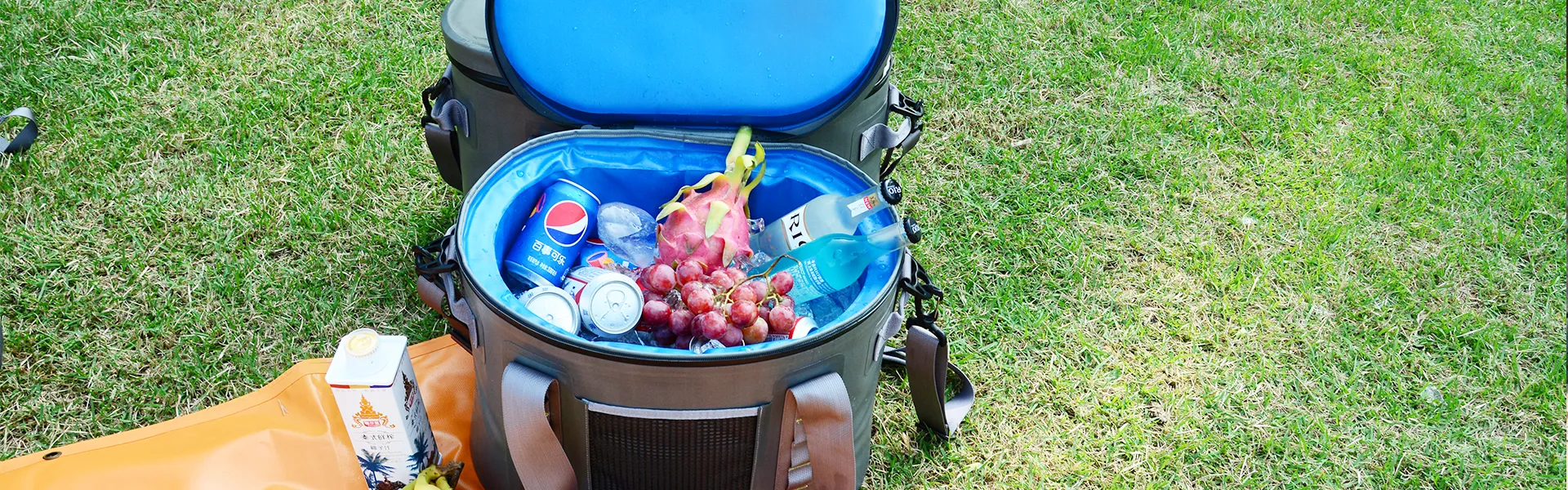
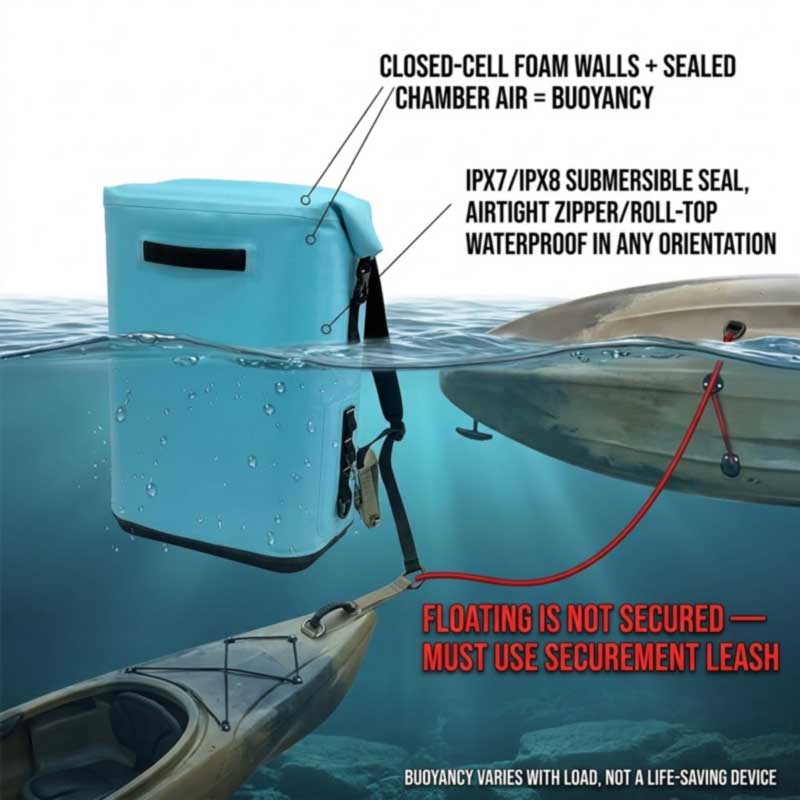
A welded cooler backpack built on closed-cell foam floats. The sealed gas pockets in the foam wall provide buoyancy, and a watertight chamber with air in it adds more — the same physics used in flotation cushions. On a kayak that is a genuine safety margin: a bag that goes over the side bobs rather than sinking. The material science is covered in Waterproof Insulated Backpacks: Cold Retention Meets Full Submersion.

Floating is not the same as staying with the boat. Two honest limits. First, buoyancy depends on load — a cooler packed heavy with ice and dense contents can have enough total weight to sink, and it is never a rated personal flotation device. Second, and more practically: a floating bag in current or wind travels away from you faster than you can swim to it while also managing a capsized kayak. Flotation buys you a chance; a leash or lashing is what actually keeps your gear. Always attach the cooler to the boat.


Deck-Ready: Securing the Cooler Without Unbalancing the Boat

This is where kayaking diverges most from every other cooler use, and where a cooler's weight becomes a handling issue rather than just a carrying one.

Trim: where the weight sits changes how the boat paddles

Paddlers use the word "trim" for load balance, and the standard advice is instructive: avoid overly large dry bags even for overnight gear, because trimming your boat — loading it so the weight is distributed evenly side to side and front to back — is easier with a lot of small bags to shift around. A single large cooler is the opposite of that: one dense, unsplittable mass. The practical consequence is that a smaller cooler is usually the better kayak cooler, and that where you put it matters as much as what it weighs. Deck-rigging guidance is explicit: secure heavy items closer to the kayak's centre of gravity, since a properly organised deck minimises drag and prevents the kayak from feeling unbalanced while underway.

Deck or hull? The default answer is hull

Experienced paddlers apply a clear rule, and it is worth quoting because it contradicts the instinct to strap everything on top: when in doubt, stow it inside the hull; an exposed deck should only hold gear that needs to be deployed instantly. The related discipline is a "clean deck" policy to prevent gear from snagging on low-hanging branches or other obstacles. For a cooler this means: if you are not opening it constantly, it belongs in a hatch or a tank well low in the boat, not perched high on the foredeck raising your centre of gravity.

Sit-on-top kayaks change this calculus — the rear tank well is exactly where a cooler is meant to go, low and central, held by the bungee rigging. That is the classic kayak-cooler position and it satisfies both trim and access.

How it attaches

Attachment is the difference between gear you own and gear you used to own. Most boats give you something to work with: most kayaks have perimeter static lines for safety and bungee cords for quick-stash storage, and you can add your own using existing eyelets or by adding eyelets and lines. Deck-bag guidance frames the requirement plainly — consider how the bag attaches, because you'll want it secure when confronted with waves, wind and even the errant capsize, and note that most deck bags include an integrated D-ring for attaching to the boat via straps, carabiners or parachute cord for additional security. If your boat has no attachment points at all, there is a workaround: fasten two cam straps tightly around the hull to create one.

Two practical notes on hardware and method. Mix your attachment types — use bungees for lighter items and sturdy straps for heavier bags, and a loaded cooler is firmly in the "heavy" category, so a bungee alone is not enough. And specify marine-grade hardware: rigging kits use marine-grade stainless steel pad eyes that resist rust and corrosion in saltwater and freshwater for good reason, and the same logic applies to every buckle, clip and D-ring on the cooler itself.

Why a Backpack Format Works on a Kayak

A cooler backpack has one advantage on the water that a hard cooler cannot match, and one detail to manage.

The advantage is the portage. Kayaking rarely starts at the water's edge — there is a car park, a launch trail, a beach, and often a carry back up at the end, frequently with a paddle and a PFD in your hands. A backpack cooler is carried hands-free to the boat, loaded, and carried out again. A soft, compressible body also stows into spaces a rigid box will not, and side compression straps let a part-full bag be cinched down so it does not shift with the boat's motion.

The detail to manage is the harness itself: loose shoulder straps on a deck are a snag hazard, exactly what the "clean deck" principle warns against. A kayak-friendly design keeps straps stowable or tightly cinched, and gives the bag lash points — D-rings, webbing, compression straps — that let it be tied down rather than relying on the shoulder straps to hold it.

Specifying a Kayak Cooler Backpack

Requirement Specify Why on a kayak
Seal level IPX7 minimum; IPX8 for rough or prolonged immersion The realistic worst case is a capsize, not spray
Construction HF-welded, seam-free body and liner Only welded construction holds an immersion rating
Closure Airtight zipper or welded roll-top Must seal upside down, not just upright
Buoyancy Closed-cell foam wall Floats if it goes over — a margin, not a guarantee
Capacity Smaller than you would choose on land, ~15–22L One dense mass is hard to trim; smaller balances better
Attachment D-rings, webbing, compression straps Must be lashed, not just floated or wedged
Hardware Corrosion-resistant / marine grade Salt attacks every buckle and clip
Profile Low, compact, stowable straps Keeps the centre of gravity low and the deck clean

Sealock's Kayak-Ready Cooler Backpacks

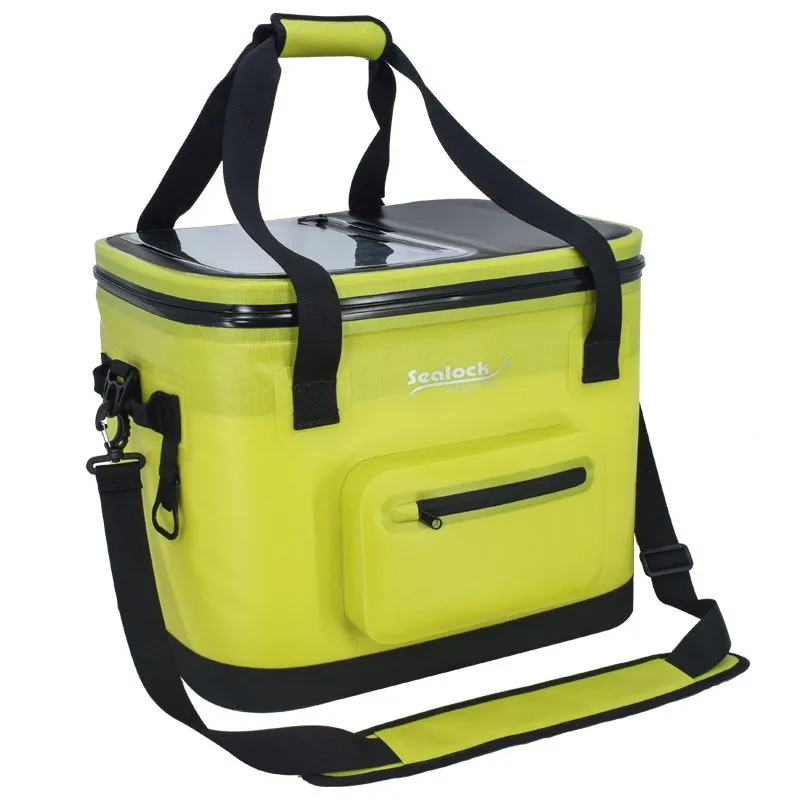
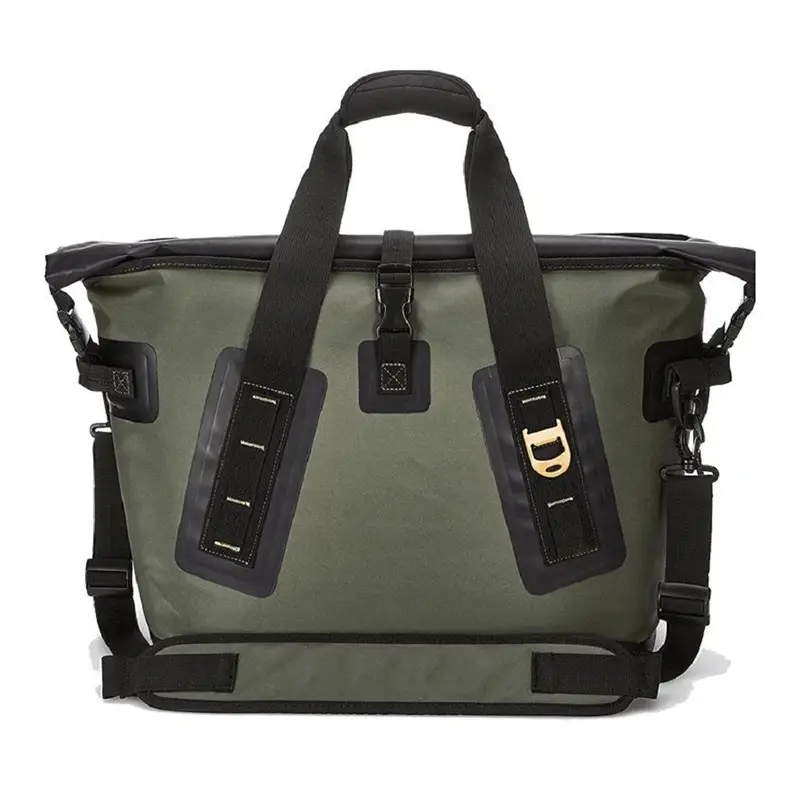
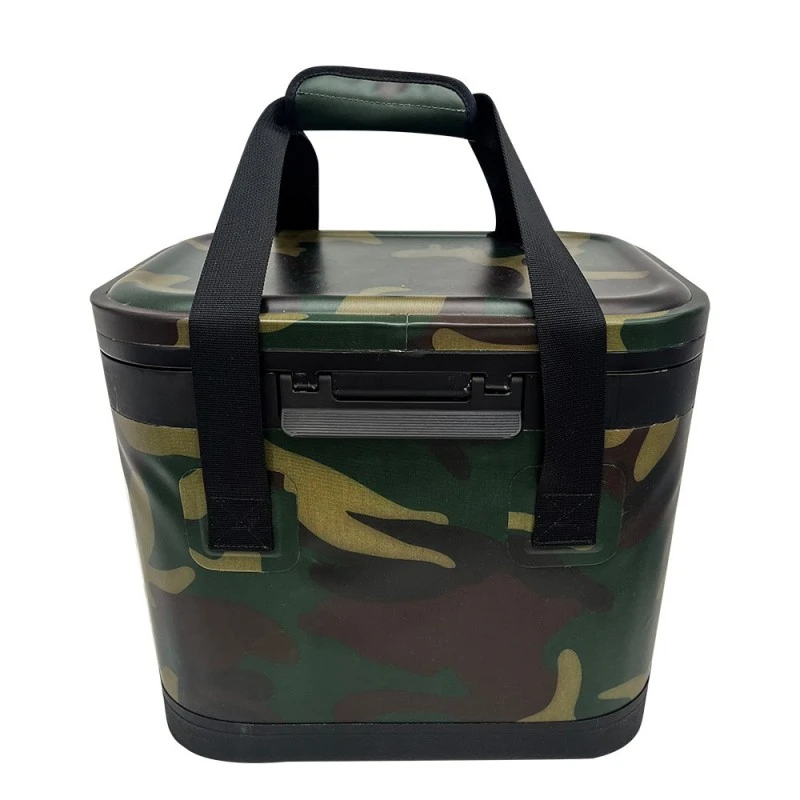
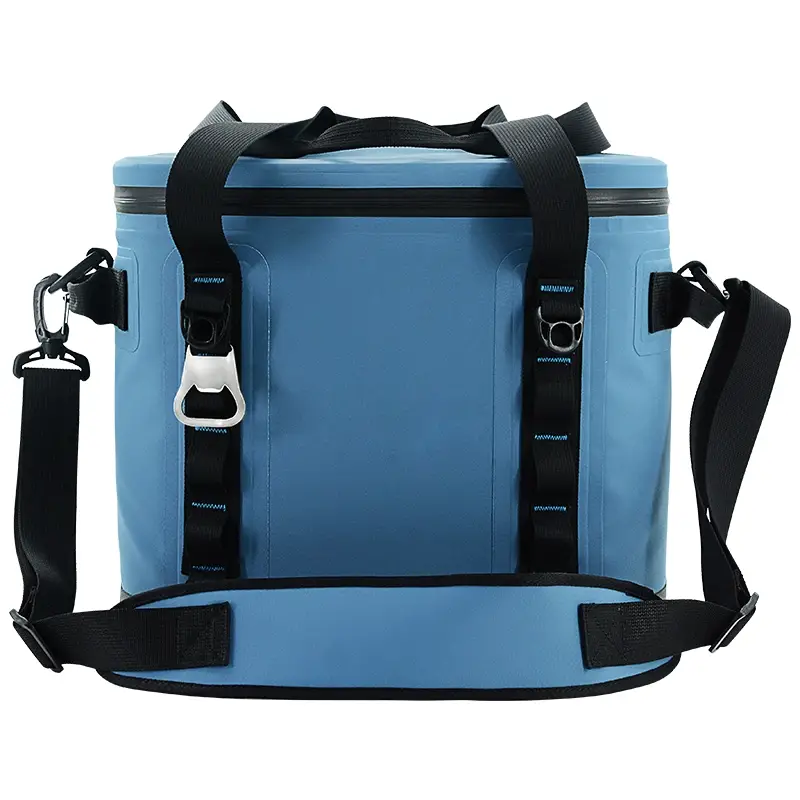
Sealock welds insulated cooler bags at 27.12 MHz across three factories in Dongguan, China and Ho Chi Minh City, Vietnam, with food-grade inner liners across the entire range and full water-immersion validation on sealed builds. Real builds for paddling, chosen by fit rather than rank:

Image Model Sealing & build Kayak fit Link
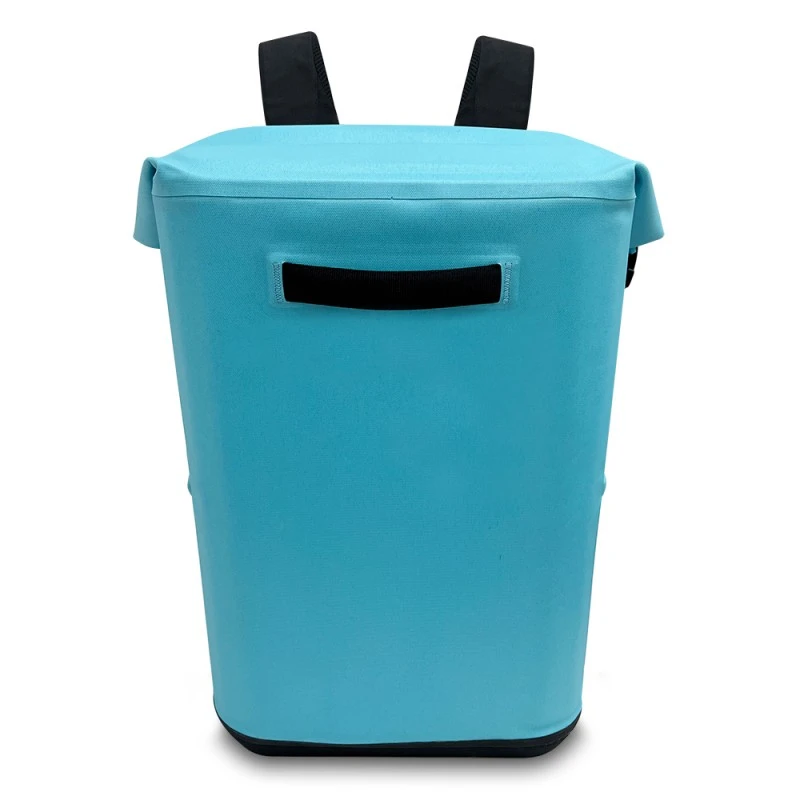
22L IPX7 cooler backpack SL-I280 22L IPX7 Cooler Backpack (SL-I280) IPX7 immersion-rated, welded seamless body, airtight zipper, 50 mm closed-cell XPE, 48 hr+ The kayak pick: the only build here rated for submersion, sealed in any orientation, compact 22L that trims well View
45L roll-top backpack cooler SL-I270 45L Roll-Top Backpack Cooler (SL-I270) Welded roll-top — no zipper channel; 600D TPU, food-grade TPU liner, up to 36 hr Roll-top sealing suits paddling, and gear webbing gives lash points — but 45L is a large mass to trim; better for calm-water touring than rough conditions View
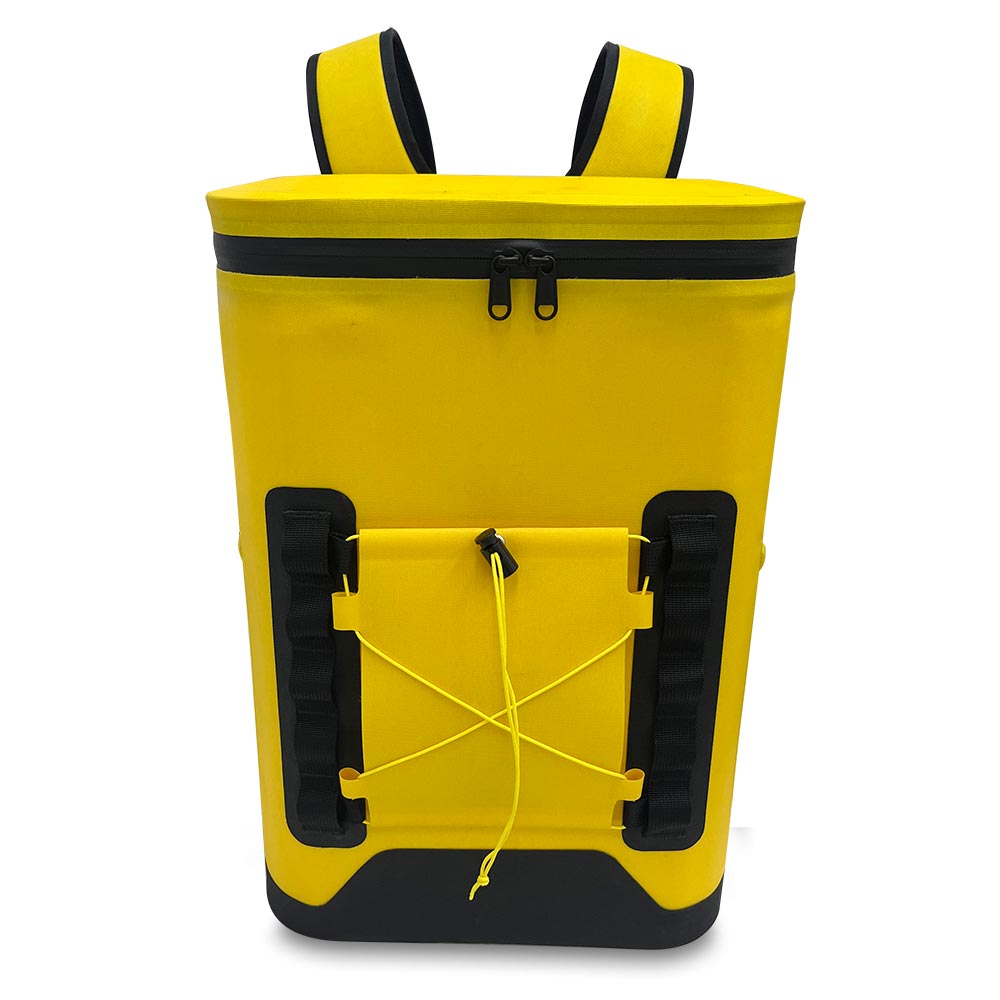
28L airtight-zipper insulated backpack cooler SL-I274 28L Airtight-Zipper Backpack Cooler (SL-I274) Airtight waterproof zipper, HF-welded seams, 840D TPU, food-grade TPU membrane, up to 48 hr Airtight closure and side panels plus front bungee for accessories; 28L suits sit-on-top tank wells View
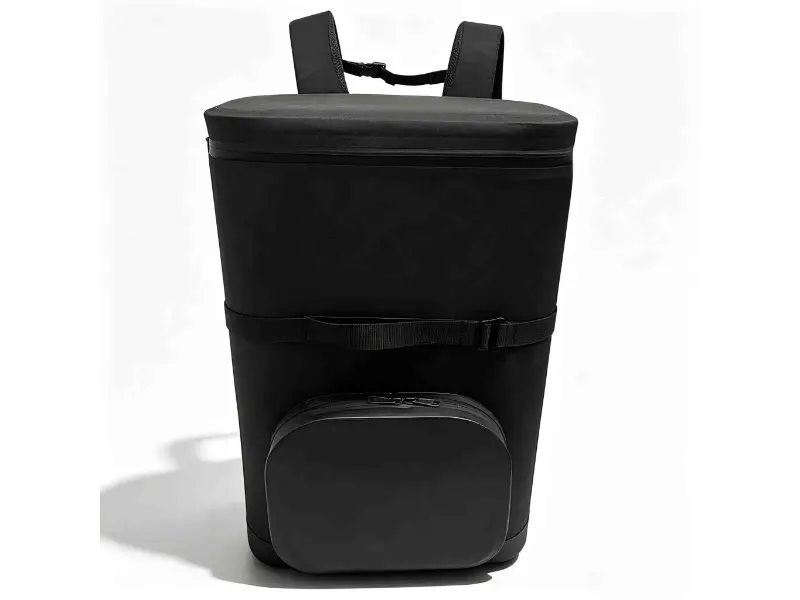
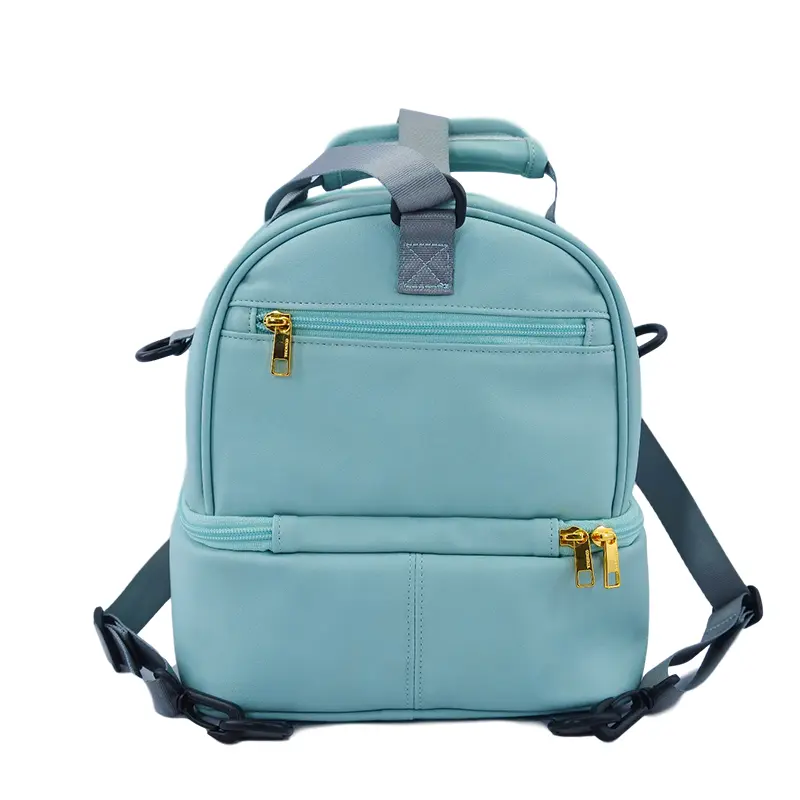
Lightweight waterproof cooler backpack SL-I272 Lightweight Waterproof Cooler Backpack (SL-I272) TPU build, folding closure, 30 × 21.5 × 47.5 cm Light and narrow for a tight cockpit or a long portage to the launch View
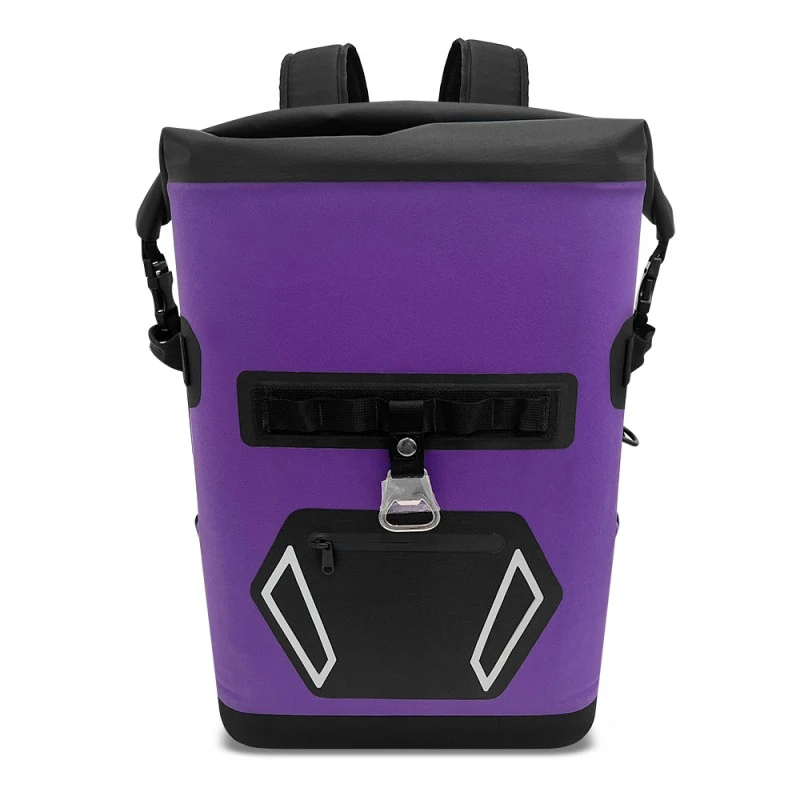
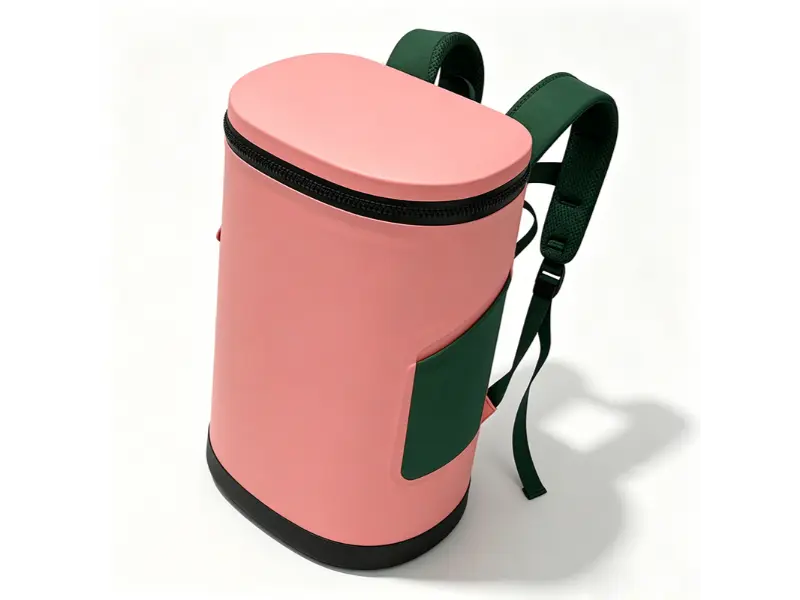
Barrel insulated cooler backpack SL-I309 Barrel Cooler Backpack (SL-I309) ~18L, closed-cell EPE, HF welded, water-resistant — not submersible Compact and light for flat-water day trips where a capsize is unlikely; choose an immersion-rated build for rougher water View

Note the honest distinction in that last row: several cooler backpacks are welded and highly water-resistant without being rated for submersion. For flat water and calm conditions that is often enough; for anything where the boat could roll, the immersion-rated build is the one to specify. A supplier that blurs that line is doing a paddler no favours.

welded cooler backpack floating and still leashed to a capsized kayak, showing immersion sealing and buoyancy

For Brands: Developing a Kayak Cooler Backpack

Paddling is a demanding brief, and demanding briefs are welcome. Beyond colour and logo, Sealock develops ground-up from a sketch, sample or target rating: an IPX7 or IPX8 welded seal level engineered and proven by immersion testing, the closure that delivers it (airtight zipper for fast access, welded roll-top for the simplest reliable seal), a closed-cell wall sized to the cold-hold target while contributing buoyancy, a low compact pattern that trims well on a deck, integrated D-rings, webbing and compression straps for lashing, stowable or low-profile harness components to keep the deck clean, corrosion-resistant marine-grade hardware, and high-visibility colourways and reflective trim for on-water safety. Premium insulation up to VIP vacuum panels and aerogel is in scope where a brand wants maximum cold-hold in a small, trim-friendly package. Ground-up work runs longer at sampling, so book against the season. See OEM Soft Cooler Backpacks: What You Can Customize Beyond Logo & Color and Custom Insulated Cooler Backpacks: Spec Your Foam, Liner & Capacity.

MOQ / lead time 300 pcs per design; samples 7–15 days; production 30–45 days; FOB Guangdong
Origin China or Vietnam on the same specification
Certifications ISO9001, BSCI, SMETA P4, GRS, HIGG, SCAN

FAQ: Kayak Cooler Backpacks

Q: What waterproof rating does a kayak cooler need?

A: An immersion rating, not a splash rating. Paddling guidance assumes every part of the boat gets wet, and the realistic worst case is a capsize — so look for IPX7 (one metre for 30 minutes) as a minimum, or IPX8 for rougher or prolonged immersion. That requires welded seam-free construction and a closure that seals in any orientation; a standard zipper caps the bag at splash resistance.

Q: Will a cooler backpack float if my kayak capsizes?

A: A welded, closed-cell cooler backpack normally floats, because the foam's sealed gas pockets and the sealed air inside a watertight chamber both provide buoyancy. But buoyancy depends on load — a very heavy bag can sink — and it is not a life-saving flotation device. More importantly, a floating bag drifts away in wind and current, so always lash it to the boat rather than relying on flotation.

Q: Where should the cooler go on the kayak?

A: Low and central. On a sit-on-top, the rear tank well is the classic spot — secured by the deck bungees and close to the centre of gravity. Paddling practice says stow gear inside the hull when in doubt and keep the deck clean, since exposed gear raises the centre of gravity, adds drag and snags on obstacles. Only what you need instantly should ride on top.

Q: How do I secure a cooler to my kayak?

A: Use straps rather than bungees alone — bungees suit light items, straps suit heavy bags, and a loaded cooler is heavy. Clip to the boat's existing D-rings, pad eyes or deck lines, or add your own; if the boat has no attachment points, two cam straps around the hull create one. Choose marine-grade stainless hardware, which resists corrosion in salt and fresh water alike.

Q: Should I choose a big cooler for a kayak trip?

A: Usually not. Trimming a boat — balancing weight side to side and bow to stern — is easier with several small loads than one large one, and a cooler is a single dense mass you cannot split. A compact 15–22L cooler balances far better than a 45L bag, and heavy items should sit near the centre of gravity.

Q: Is a water-resistant cooler good enough for kayaking?

A: On flat, calm water where a capsize is unlikely, a well-welded water-resistant bag is often adequate. For open water, moving water or anything rough, specify an immersion-rated build — the difference between "water-resistant" and "IPX7" is exactly the difference between a bag that survives spray and one that survives going under.

Sourcing kayak cooler backpacks? Sealock (YiFuLong Outdoor Gear Co., Ltd.) welds immersion-rated cooler backpacks at 27.12 MHz in China and Vietnam — IPX7 and IPX8 seal levels, airtight and roll-top closures, closed-cell buoyant walls and marine-grade hardware, all validated by immersion testing. Tell the team your water conditions and capacity target, and they will spec and prove the build.

Email: info@sealock.com.hk  |  Phone: +86-13632981825  |  Browse the soft cooler range

Paddling, rigging and stowage guidance cited here reflects publicly available outdoor-industry sources as of mid-2026 and varies with craft, conditions and skill level. Buoyancy is not a substitute for a rated personal flotation device, and no bag replaces proper paddling safety practice. Confirm a product's tested IPX rating before relying on it in the water.

Related News
Leave me a message
X
We use cookies to offer you a better browsing experience, analyze site traffic and personalize content. By using this site, you agree to our use of cookies.Privacy Policy
RejectAccept