News

Marine Cooler Backpacks: Saltwater-Grade Materials & Hardware

2026-08-18 0 Leave me a message
Saltwater does not damage a cooler the way a beach or a river does. It attacks chemically, invisibly, and it goes after the parts a spec sheet rarely mentions — the buckles, clips, D-rings and zipper hardware that hold everything together. A cooler backpack can have a flawless welded body and a 48-hour wall and still fail on a boat because a fastener pitted through after one season. This guide is about the marine-specific side of the specification: which materials survive chloride exposure, why the splash zone is the worst place to be, and what to demand of a supplier. Sealock (YiFuLong Outdoor Gear Co., Ltd.) builds welded cooler backpacks for marine use.


The Counterintuitive Part: Splash Is Worse Than Submersion

Most people assume the harshest place for hardware is underwater. It is not. Marine hardware specialists divide saltwater exposure into zones, and the verdict is surprising: the splash and spray zone sits above the waterline and is, counterintuitively, the most aggressive — seawater deposits on hardware surfaces and then evaporates, leaving behind concentrated chloride residue, and local chloride concentrations in this zone can spike well above the baseline 19,000 ppm, in some cases by an order of magnitude, easily overwhelming the passive film's tolerance threshold.

That is precisely where a cooler backpack lives. It sits on a deck, gets sprayed, and then dries in the sun with salt crystallising on every buckle and zipper pull — wet, dry, wet, dry, concentrating chloride each cycle. A cooler is not an occasionally-splashed item; it is a splash-zone item by definition. Specifying it as though it only needs "some" corrosion resistance is how brands end up with warranty claims after one season.

Hardware: 316 Is the Marine Grade, and the Reason Is One Element

The difference between hardware that lasts and hardware that pits is invisible. 304 stainless contains roughly 18% chromium and 8% nickel, creating the passive chromium oxide layer that gives stainless steel its corrosion resistance in most environments, but as one marine guide puts it, its Achilles' heel is chloride — exposed to saltwater, salt spray or coastal air, Grade 304 is highly susceptible to pitting and crevice corrosion. Grade 316 adds the missing element: approximately 2% molybdenum, which dramatically increases resistance to chlorides and prevents the destructive pitting seen in 304 — for any hardware that will see saltwater, 316 is the minimum requirement.

The performance gap is measurable. In immersion tests, 316 shows a corrosion rate of about 0.0019 mm/year in normal seawater, and it shows no signs of corrosion after 100 hours in a 5% salt spray environment, with a Pitting Resistance Equivalent Number of 24.2. The specification rule practitioners use is refreshingly simple: if salt water can reach it, specify 316. For fastener specifications, note that A4 grade per ISO 3506 specifies 316 stainless or an equivalent molybdenum-bearing austenitic alloy, and 316L, the low-carbon version, is usually the safer specification for welded parts because it reduces sensitization near welds.

Three failure modes buyers should know about:
  • Pitting hides. Pitting corrosion is self-initiating and self-sustaining — once chloride ions breach the passive layer on 304, corrosion accelerates below the surface while the surrounding metal still appears intact, so hardware that passes a visual inspection may already be structurally compromised.
  • Mixing grades makes it worse. If you use both grades together, 304 will corrode faster due to galvanic corrosion. A 316 D-ring on a 304 rivet is not a 316 assembly.
  • Even 316 has a limit. It is not immune to crevice corrosion — in oxygen-depleted tight joints at or below the waterline, 316 will corrode at the crevice even when open surfaces remain unaffected.

The supplier-quality issue behind rust on "316" hardware

This is the detail that separates a specification from a result, and it is a sourcing lesson as much as a materials one. Rapid failure is typically caused by surface contamination, not the base alloy — embedded "free iron" from machining or handling with carbon steel tools creates galvanic sites that rust in hours, which underscores that proper passivation per standards like ASTM A967 and contaminant-free fabrication are as critical as material selection. The conclusion for buyers is direct: facilities must audit their supplier's process control, not just validate material certificates.

The good news is that this failure mode is often cosmetic and reversible: surface rust staining on 316 hardware is usually iron contamination rather than base metal corrosion, and true 316 corrosion typically presents as pitting at crevice zones, not uniform surface rust — contamination staining can be removed with appropriate cleaning compounds without affecting the underlying corrosion resistance. Knowing the difference tells a brand whether it has a cleaning problem or a specification problem.

The simplest marine hardware answer: use less metal. Polymer hardware does not corrode at all. High-grade acetal (POM) and UTX-type buckles, plastic side-release buckles and moulded D-rings are immune to chloride pitting, which is why quality marine soft goods use them wherever the load allows and reserve stainless for points that genuinely need metal strength. Specifying a cooler backpack with polymer buckles plus 316 only where metal is structurally required is usually both more durable and cheaper than putting stainless everywhere.


Materials: What Salt Does to the Bag Itself

Beyond hardware, three material properties matter in marine service.

A shell that salt cannot get into

A woven fabric holds salt crystals in its weave, where they abrade fibres and hold moisture against the material. A TPU-laminated shell is non-porous and smooth: salt sits on the surface and rinses off. That same lamination is what makes the body weldable, so the marine argument and the waterproofing argument point to the same material — see TPU Cooler Backpack Manufacturer: Why the Shell Material Matters.

Welded seams, because stitching is the salt's way in

Stitched seams give salt water a path through the needle holes and into the insulation, and thread is exactly the kind of fibrous material that traps chloride and degrades. A high-frequency-welded body has no stitch holes to admit salt water and no threads to hold it. On a boat this matters twice over: it keeps salt out of the wall, and it keeps meltwater in. See RF-Welded Cooler Backpack Manufacturer: Seamless Waterproof Construction.

Sealing rated for going over the side

On the water the realistic worst case is immersion, not spray, which puts the target at IPX7 or IPX8 with an airtight zipper or welded roll-top. The detail is in Waterproof Cooler Backpacks: How Welded Construction Keeps Water Out, and the closed-cell wall that delivers cold retention also provides buoyancy if the bag does go in — covered in Waterproof Insulated Backpacks: Cold Retention Meets Full Submersion.

Testing: What Proves a Marine Claim

Salt spray testing is the standard method, and Sealock's in-house lab suite includes salt spray testing alongside its load, tensile, adhesion, abrasion and full water-immersion tests. But a straight supplier should also flag the method's limits, because over-reading a salt spray result is a real trap: ASTM B117 is a useful quality audit tool but is not a definitive predictor for stainless steel service life — industry experts note it was primarily developed for coated carbon steel, and humidity cycling tests often better simulate real-world atmospheric conditions.

The practical reading: use salt spray results as a comparative screen and a supplier-control check, not as a guarantee of years in service. Combine them with correct material specification, verified passivation, and honest field expectations.

Specifying a Marine Cooler Backpack

Component Marine specification Why
Metal hardware 316 (A4) stainless; 316L where welded; never mixed with 304 Molybdenum resists chloride pitting; mixed grades corrode galvanically
Non-metal hardware POM / acetal / UTX-type buckles and clips Polymer does not corrode at all — use it wherever load allows
Shell TPU-laminated, non-porous Salt rinses off rather than embedding in a weave
Seams HF-welded, seam-free No needle holes for salt water, no threads to hold chloride
Closure Airtight zipper or welded roll-top Immersion sealing; grit and salt rinse off a sealing surface
Liner Food-grade, welded, smooth Rinses clean of salt, catch residue and sunscreen
Insulation Closed-cell foam Does not waterlog if swamped; adds buoyancy
Base Reinforced Non-skid decks and rough gunwales abrade constantly
Validation Salt spray + immersion testing Comparative screen for hardware, proof of seal for the bag

Sealock's Marine-Suited Cooler Backpacks

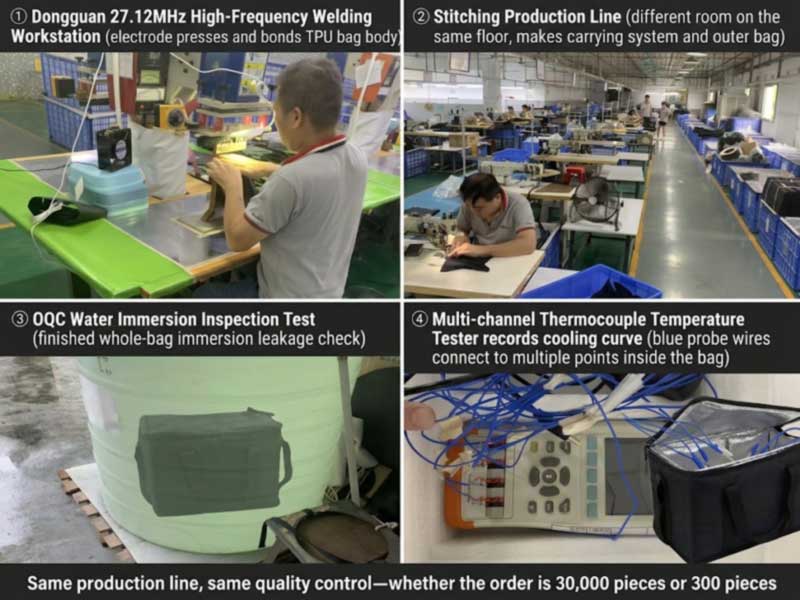
Sealock welds insulated cooler bags at 27.12 MHz across three factories in Dongguan, China and Ho Chi Minh City, Vietnam, with food-grade inner liners across the entire range, and validates sealed builds by full water immersion. Real builds for marine use, chosen by fit rather than rank:

Image Model Marine-relevant build Link
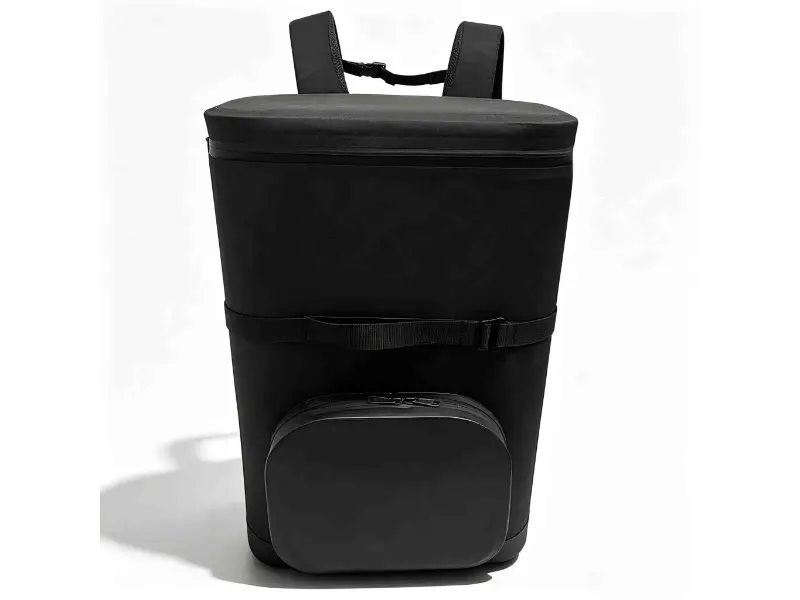
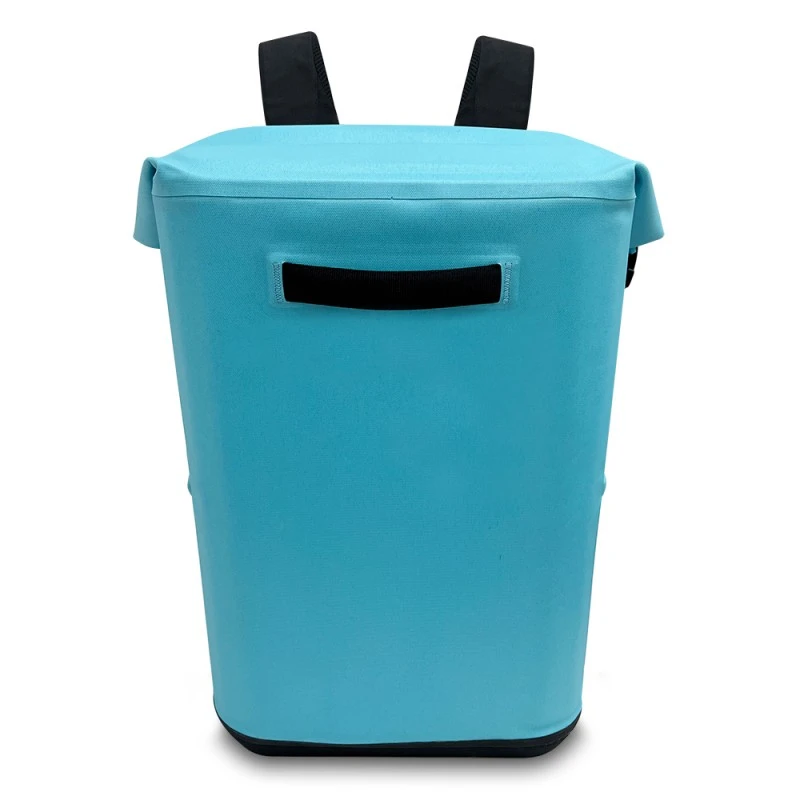
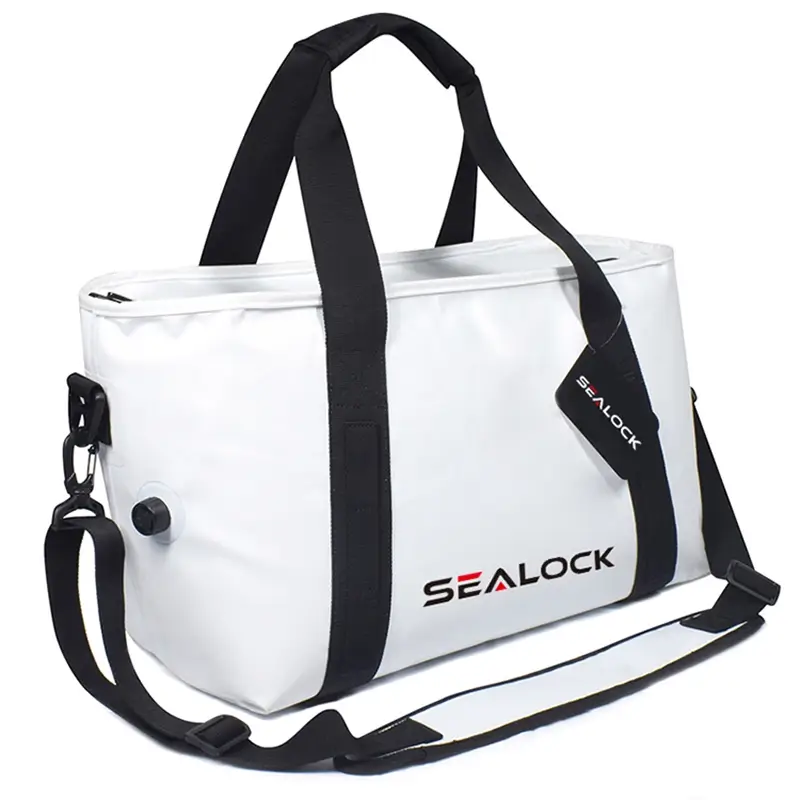
22L IPX7 cooler backpack SL-I280 22L IPX7 Cooler Backpack (SL-I280) IPX7 immersion-rated, welded seamless TPU body, airtight zipper, 50 mm closed-cell XPE, POM clips and D-rings, reinforced TPU base View
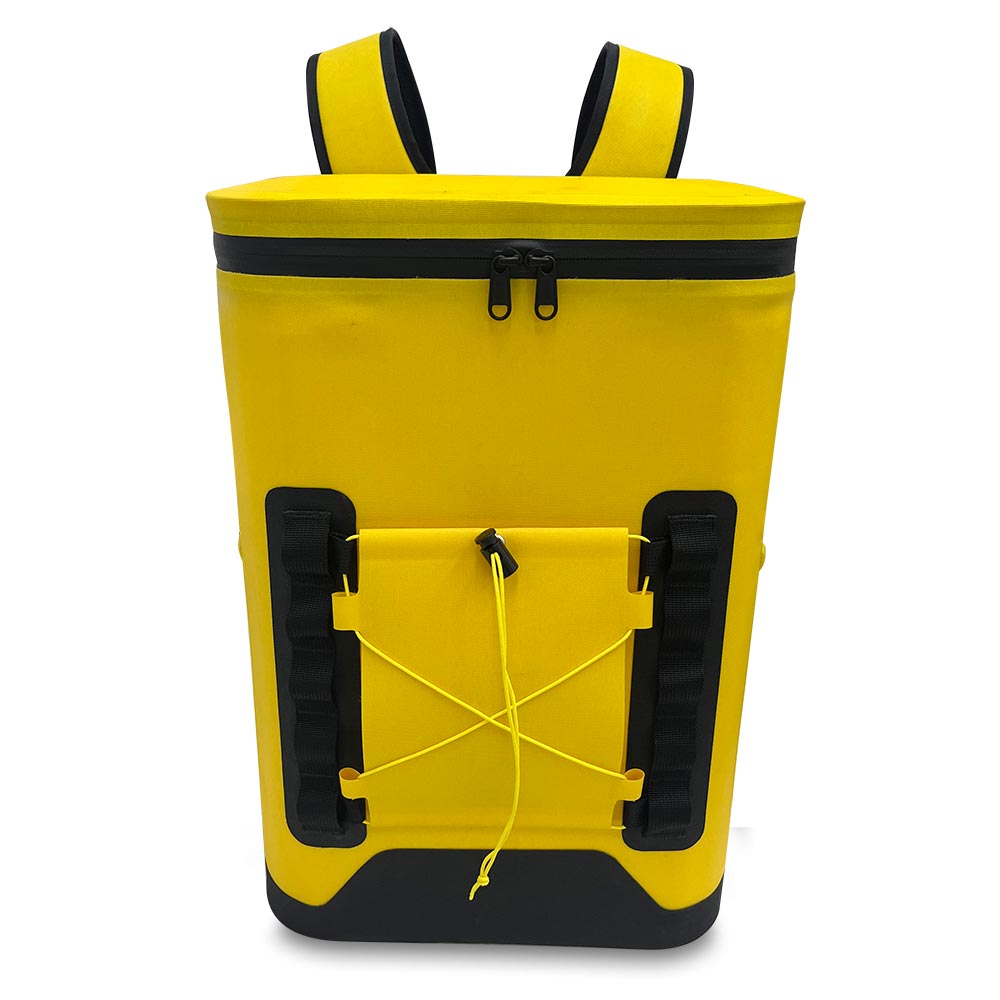
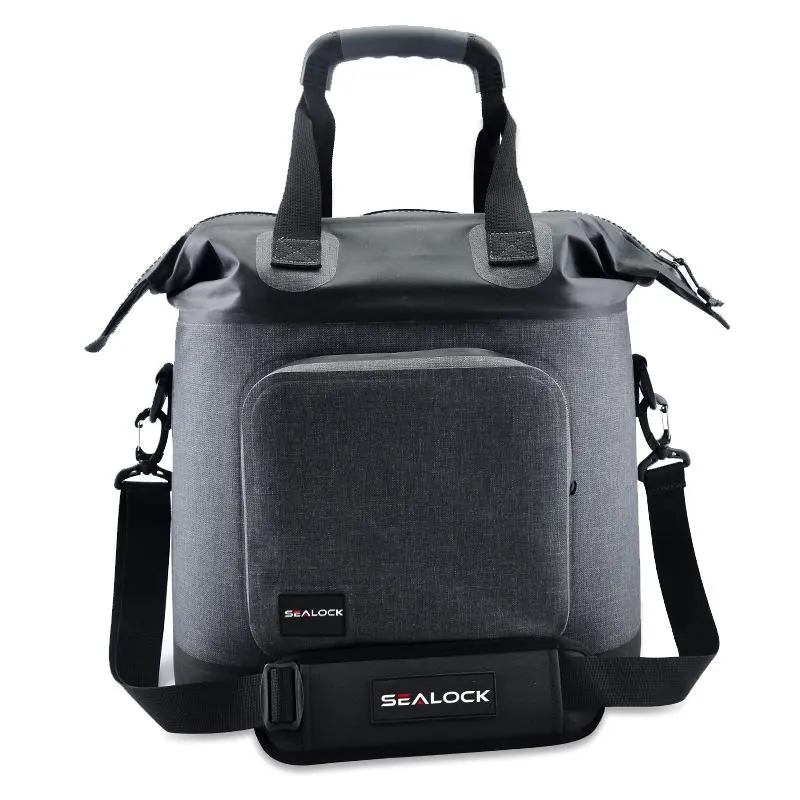
28L airtight-zipper insulated backpack cooler SL-I274 28L Airtight-Zipper Backpack Cooler (SL-I274) Airtight waterproof zipper, HF-welded seams, 840D TPU laminated shell, food-grade TPU membrane, UTX buckles, up to 48 hr View
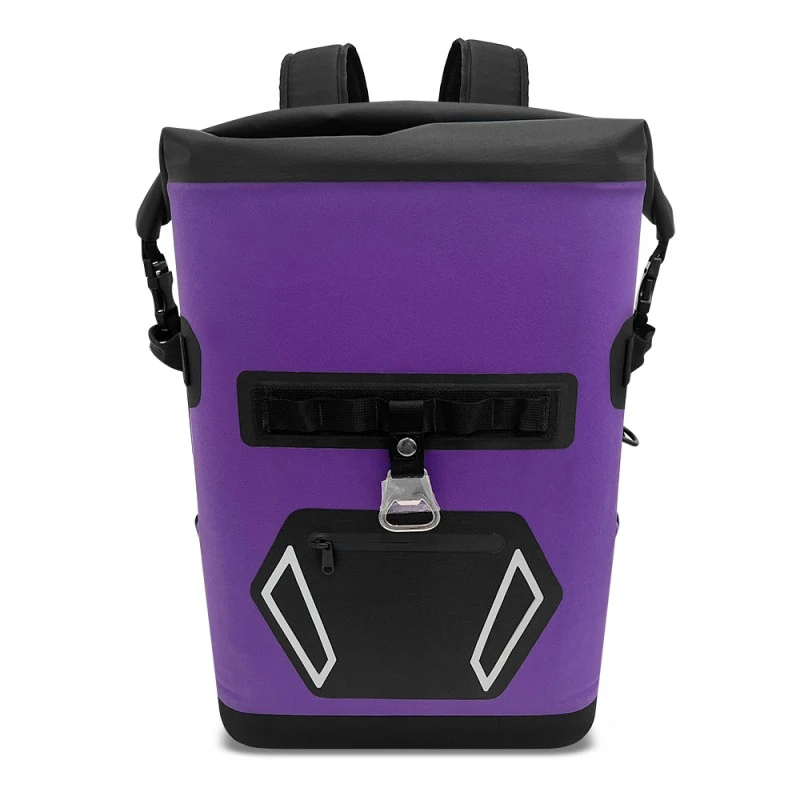
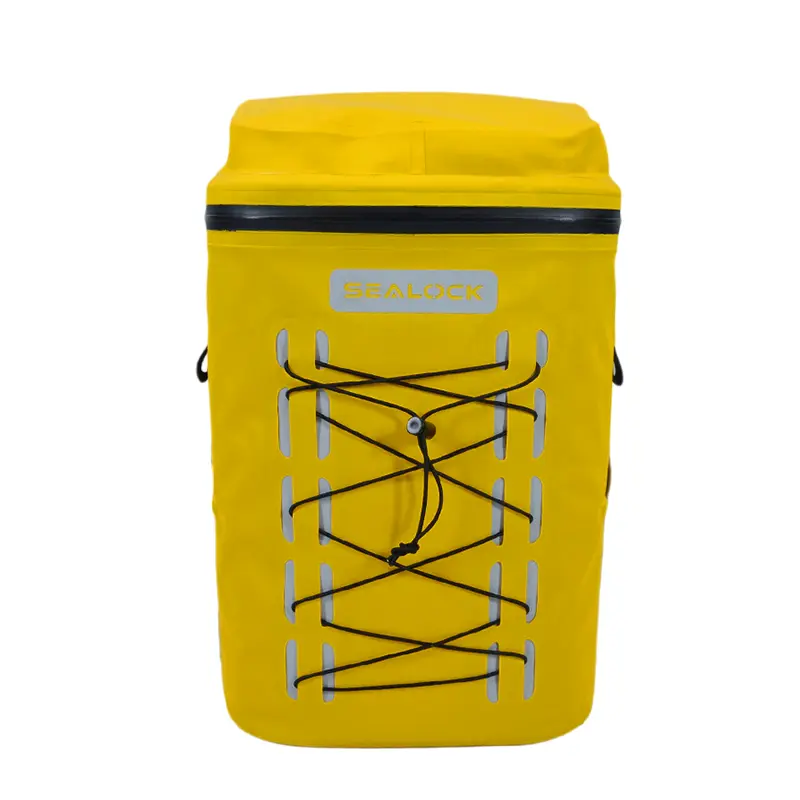
45L roll-top backpack cooler SL-I270 45L Roll-Top Backpack Cooler (SL-I270) Welded roll-top with no zipper channel for salt crystals to foul; 600D TPU, UTX buckles, reflective trim, gear webbing for lashing View
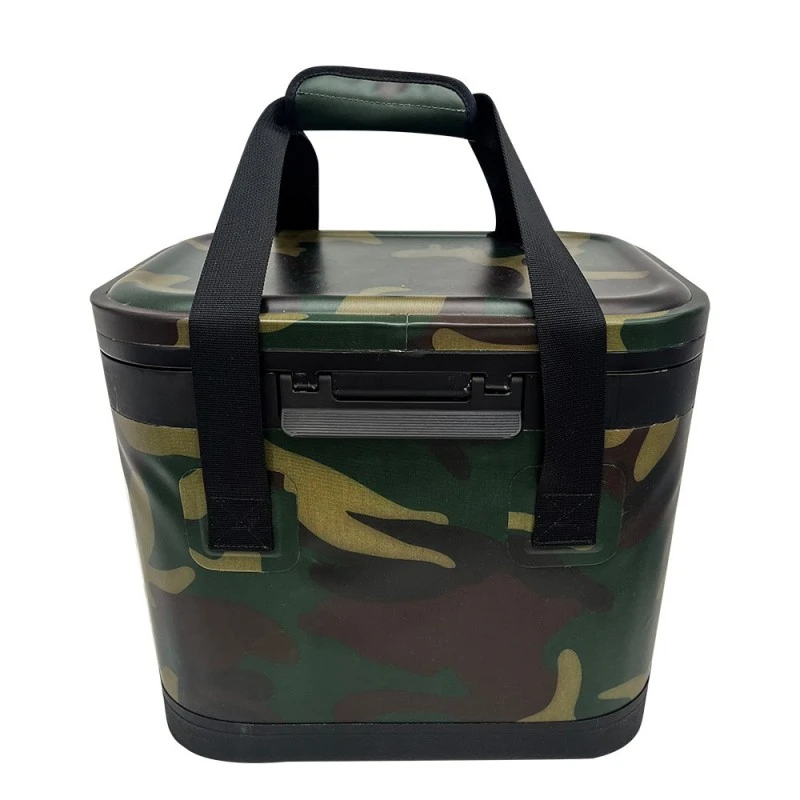
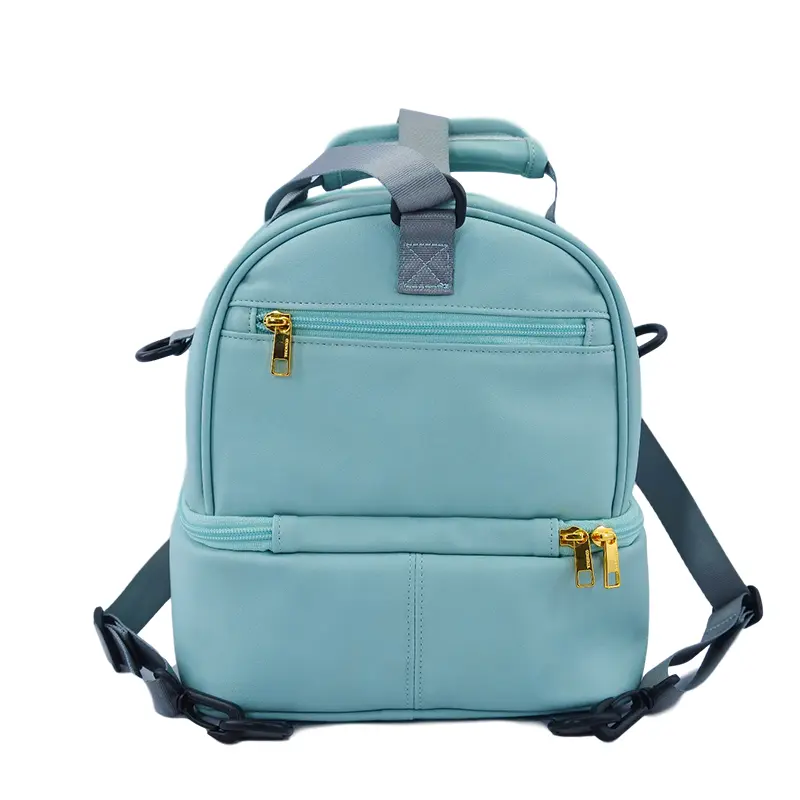
Lightweight waterproof cooler backpack SL-I272 Lightweight Waterproof Cooler Backpack (SL-I272) TPU construction with folding closure — minimal hardware means minimal corrosion exposure View

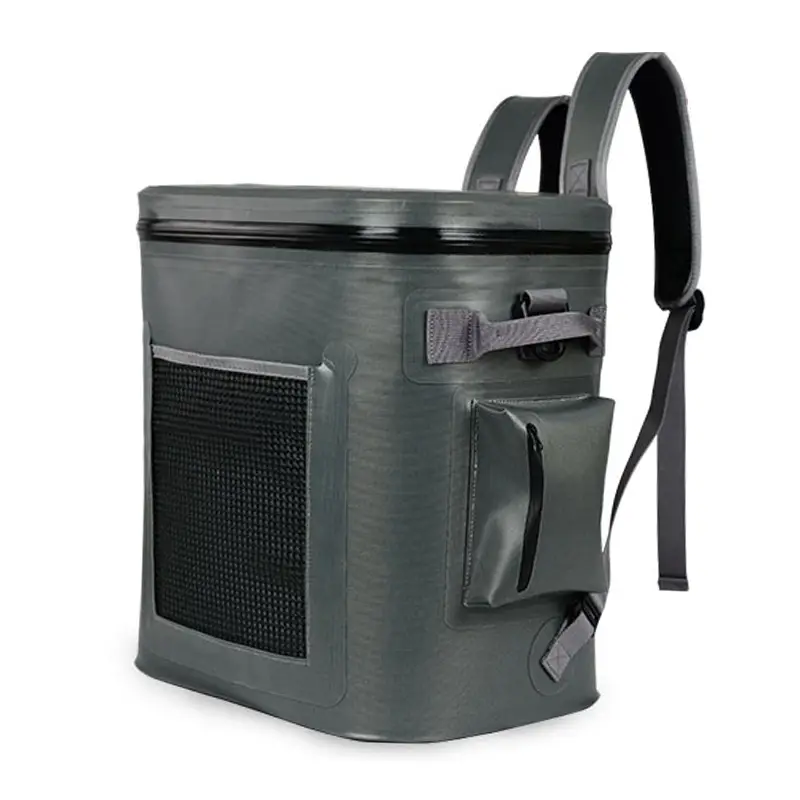
Note the pattern in the hardware: these builds use POM and UTX-type polymer buckles and fittings, which sidestep chloride corrosion entirely rather than trying to resist it. Where a brand needs metal hardware for a specific marine application, 316 is the grade to specify at development.

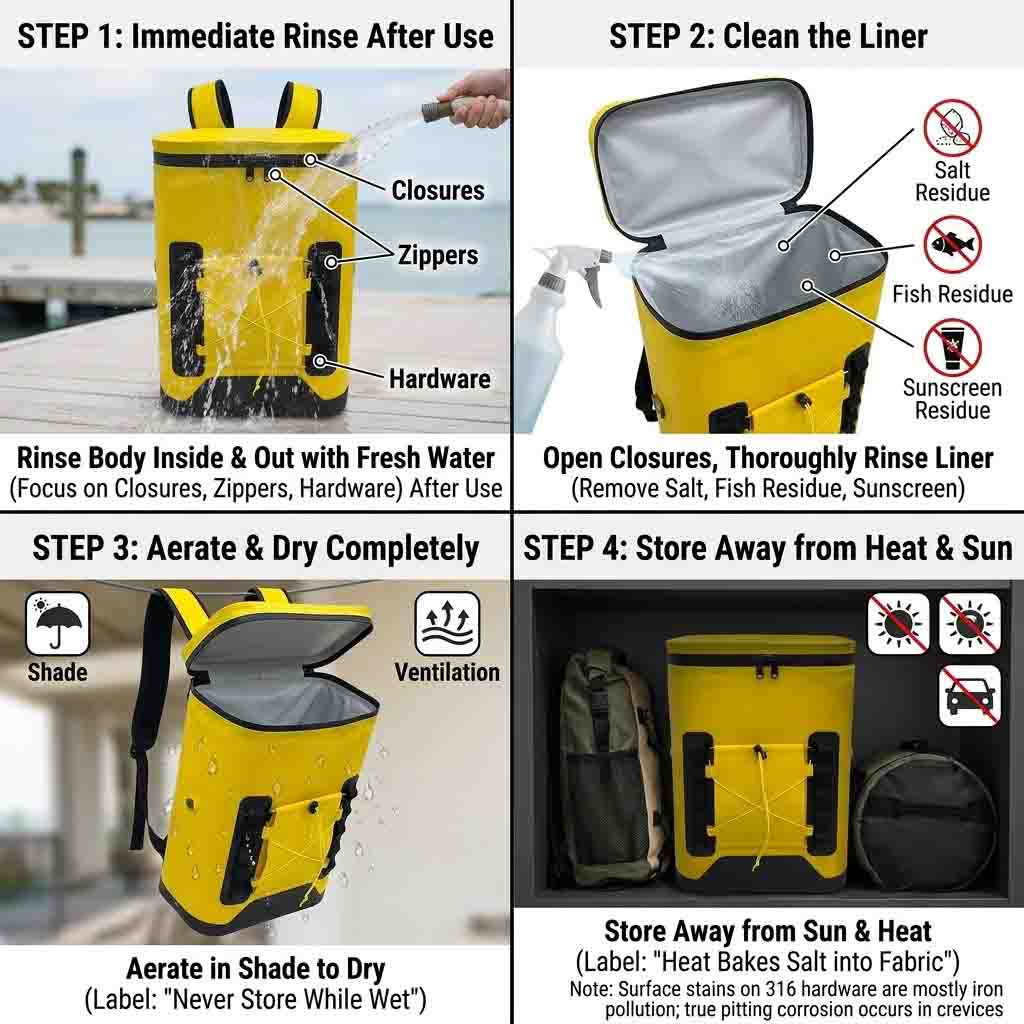
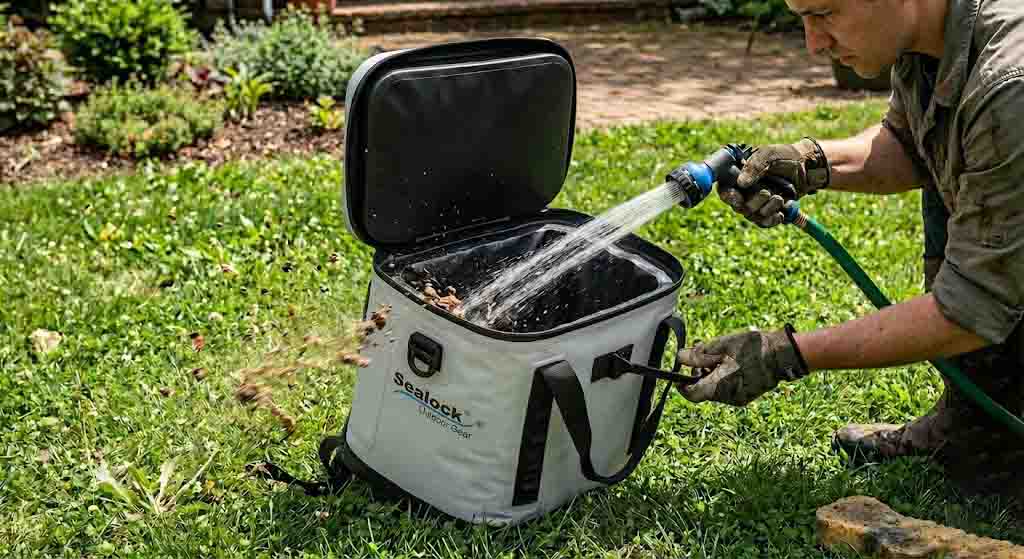
after-boating care routine for a marine cooler backpack: freshwater rinse, liner wash, full dry, cool storage

Care: The Habit That Doubles Service Life

Marine gear survives on one discipline — rinsing. Salt left to dry concentrates chloride exactly where it does damage, and no material specification fully compensates for never washing it off. After every saltwater outing: rinse the bag inside and out with fresh water, paying particular attention to the closure and every piece of hardware; wash out the liner; dry it fully, open, in shade; and store it out of hot sun. Leaving a salty, damp cooler in a hot locker combines every degradation mechanism at once — heat, trapped moisture and concentrated salt.

For Brands: Developing a Marine Cooler Range

Marine is a demanding brief, and demanding briefs are welcome. Beyond colour and logo, Sealock develops ground-up from a sketch, sample or performance target: 316 or 316L stainless where metal hardware is genuinely required and corrosion-immune polymer hardware everywhere else, a weldable TPU-laminated shell in the denier the application needs with reinforcement at wear points, HF-welded seam-free construction, an IPX7 or IPX8 seal level proven by immersion testing, closed-cell insulation sized to the cold-hold target while contributing buoyancy, welded lash points and D-rings for securing on deck, high-visibility colourways and reflective trim, and salt spray testing as part of validation. Premium insulation up to VIP vacuum panels and aerogel is in scope. Ground-up work runs longer at sampling, so book against the season. See OEM Soft Cooler Backpacks: What You Can Customize Beyond Logo & Color and, for supplier due diligence on process control, Choosing an OEM Soft Cooler Backpack Manufacturer: A Buyer's Checklist.

MOQ / lead time 300 pcs per design; samples 7–15 days; production 30–45 days; FOB Guangdong
Origin China or Vietnam on the same specification
Lab testing Salt spray, load cycling, tensile, adhesion, abrasion, colour fastness, full water immersion
Certifications ISO9001, BSCI, SMETA P4, GRS, HIGG, SCAN

FAQ: Marine Cooler Backpacks

Q: What hardware grade should a saltwater cooler backpack use?

A: For metal parts, 316 stainless — the roughly 2% molybdenum is what resists chloride pitting that destroys 304 in marine service, and the rule of thumb is simply "if salt water can reach it, specify 316" (A4 per ISO 3506; 316L for welded parts). Better still, use corrosion-immune polymer hardware such as POM or UTX-type buckles wherever the load allows, and reserve stainless for points that genuinely need metal.

Q: Is 304 stainless good enough for a boat cooler?

A: Not for exposed parts. 304 lacks molybdenum and is highly susceptible to chloride pitting and crevice corrosion in salt spray or coastal air. Worse, pitting is self-sustaining and progresses below the surface, so hardware that looks fine on inspection may already be compromised. And never mix grades — 304 next to 316 corrodes faster through galvanic action.

Q: Why is my "316" hardware showing rust?

A: Usually iron contamination rather than the alloy failing. Free iron embedded during machining or handling with carbon steel tools creates galvanic sites that rust quickly despite the base metal being 316, which is why passivation (ASTM A967) and contaminant-free fabrication matter as much as the material certificate. True 316 corrosion shows as pitting at crevices, not uniform surface rust, and contamination staining cleans off without harming corrosion resistance.

Q: Is the splash zone really worse than being submerged?

A: Yes, and it is the zone a cooler backpack lives in. Above the waterline, seawater deposits and then evaporates, leaving concentrated chloride behind — local concentrations can spike well above the 19,000 ppm baseline, in some cases by an order of magnitude, overwhelming the passive film. Repeated wet-dry cycling on a sunny deck is the most aggressive condition, not continuous immersion.

Q: Does a salt spray test prove a cooler is marine grade?

A: It is a useful comparative screen, not a guarantee. ASTM B117 was developed primarily for coated carbon steel and is not a definitive predictor of stainless service life; humidity cycling often models real conditions better. Treat salt spray results as one input alongside correct grade specification, verified passivation and process control at the supplier.

Q: How should I care for a cooler backpack used in saltwater?

A: Rinse it with fresh water inside and out after every outing, focusing on the closure and all hardware, wash the liner, then dry it fully and store it open and out of the sun. Salt left to dry concentrates exactly where it causes damage, and no specification fully compensates for skipping the rinse.

Sourcing marine cooler backpacks? Sealock (YiFuLong Outdoor Gear Co., Ltd.) welds saltwater-ready cooler backpacks at 27.12 MHz in China and Vietnam — TPU-laminated seamless bodies, IPX7 and IPX8 seal levels, corrosion-immune polymer hardware with 316 stainless where metal is required, and in-house salt spray and immersion testing. Tell the team your exposure conditions and capacity target, and they will spec and prove the build.

Email: info@sealock.com.hk  |  Phone: +86-13632981825  |  Browse the soft cooler range

Material grades, corrosion data and test-method notes cited here reflect publicly available marine-industry and metallurgical sources as of mid-2026; real-world service life depends on grade, fabrication quality, exposure zone, maintenance and conditions. Confirm hardware grade, passivation and test evidence with your supplier before relying on a marine claim.

Related News
Leave me a message
X
We use cookies to offer you a better browsing experience, analyze site traffic and personalize content. By using this site, you agree to our use of cookies.Privacy Policy
RejectAccept