News

Travel Thermal Cooler Backpacks — Carry-On Sized, Welded Leakproof

2026-09-14 0 Leave me a message
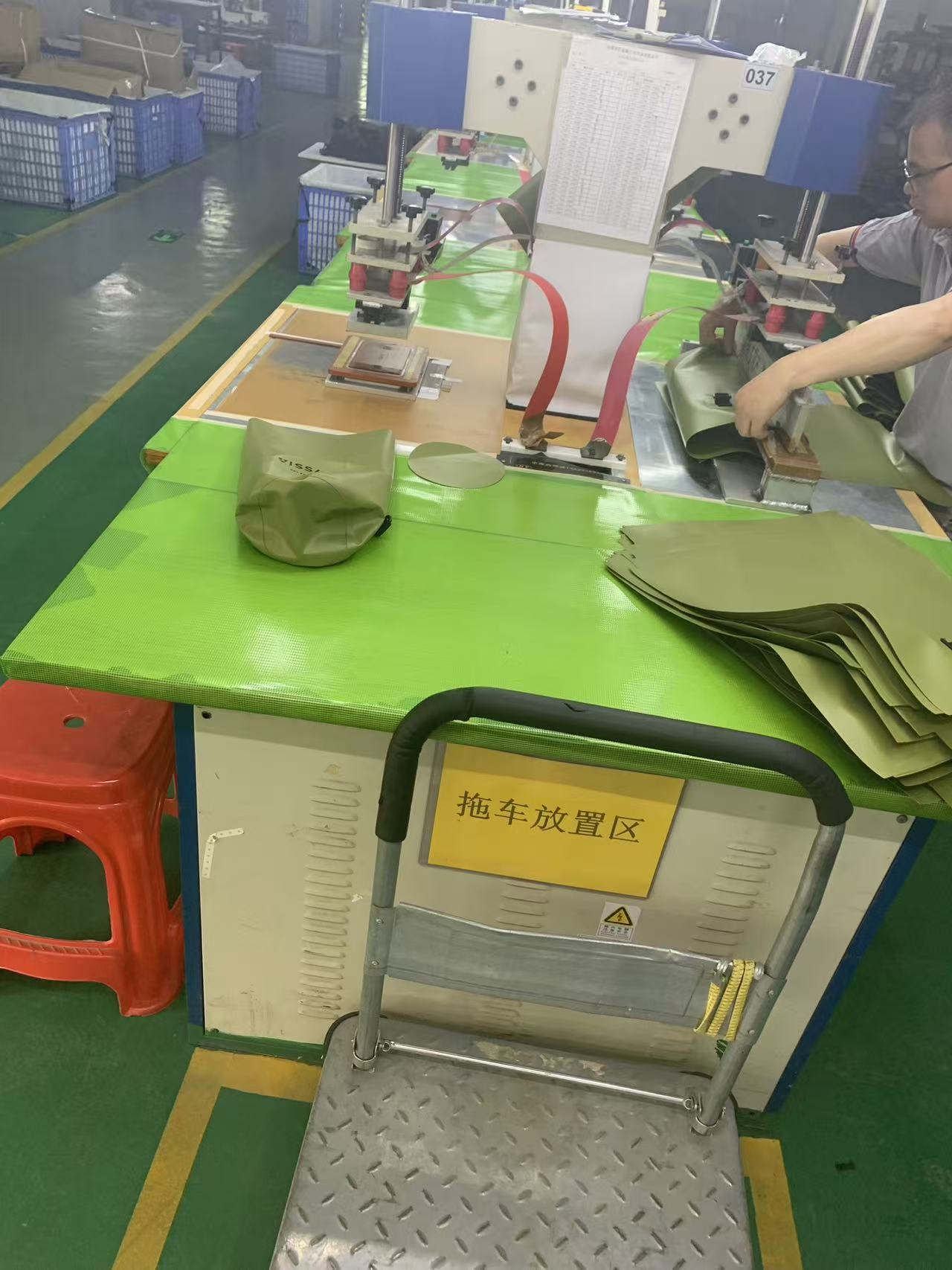
Sealock (YiFuLong Outdoor Gear Co., Ltd.) manufactures travel thermal cooler backpacks built to carry-on dimensions and welded leakproof, so nothing reaches a suitcase or an overhead bin. Factory since 2003 — three in-house high-frequency welding factories plus our own sewing lines, in Dongguan, Guangdong, China and Ho Chi Minh City, Vietnam.


MOQ 300 pcs per design · samples 7–15 days · production 30–45 days · FOB Guangdong · OEM, ODM and private label.

Send your target dimensions: info@sealock.com.hk · +86-13632981825

Travel Is the One Use Where Dimensions Are Non-Negotiable

Most cooler specifications start with capacity. A travel build starts with an envelope, because an airline cabin allowance is a hard limit and a bag that misses it gets gate-checked — which defeats the reason your customer bought a cooler backpack in the first place.

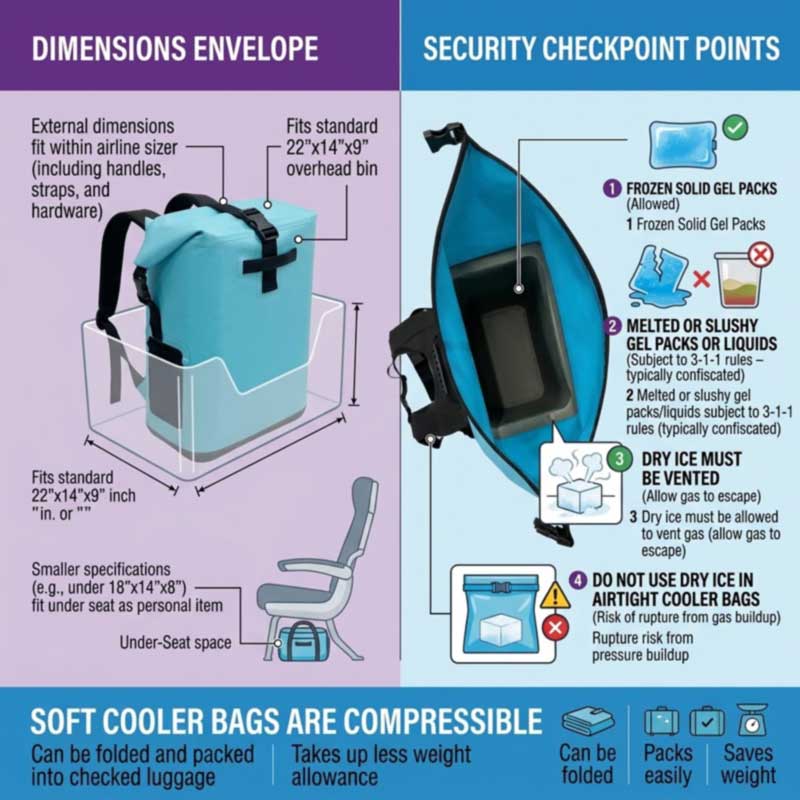
Carry-on allowances vary by airline: several major US carriers list 22 × 14 × 9 inches for a standard carry-on, while others publish different figures, and all measurements include handles. A smaller build can often travel as a personal item under the seat instead, which leaves the customer's carry-on allowance free for their actual luggage — frequently the more useful product.

We engineer travel builds to a stated external envelope rather than approximating one. Tell us the airline allowance you are designing for, and the pattern is developed to fit it.

The soft-cooler advantage on a plane: a rigid box either fits or does not. A welded soft cooler compresses into the space available and weighs less against airline weight limits. That is why travel is one of the categories where soft construction genuinely beats hard, rather than merely costing less.


Need a carry-on-sized build? Send the external dimensions you need to hit, the capacity you want inside them, and the quantity — we will come back with a specification, price and sample timeline.

info@sealock.com.hk · +86-13632981825

Why Leakproof Matters More in Travel Than Anywhere Else

On a beach a leaking cooler wets sand. In an overhead bin it wets other passengers' luggage; in a checked bag it soaks the owner's clothes for an entire flight before anyone notices. Travel is the use case where containment failure has the highest consequence and the least chance of early detection — which makes construction, not marketing language, the specification that matters.

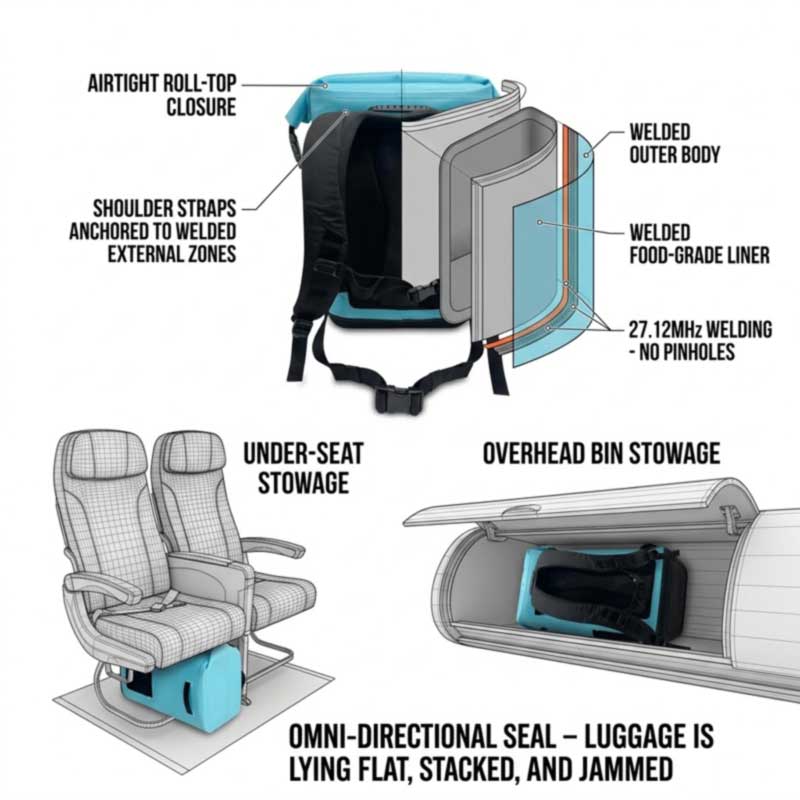
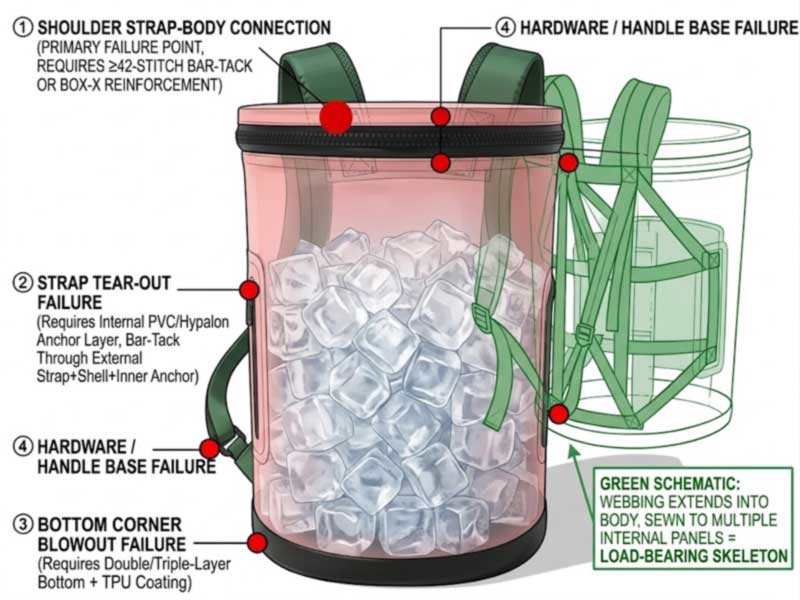
Our travel builds use the same containment architecture as the rest of the range: body, base and closure fused by high-frequency welding at 27.12 MHz into one continuous skin with no stitch holes, a welded food-grade liner, and load-bearing straps anchored to welded external zones so no needle penetrates the sealed chamber. Finished bags are water-immersion tested as a batch before shipping, because a weld defect is invisible once the bag is lined and assembled.

For a travel bag specifically, the closure has to hold in any orientation — luggage is laid flat, stacked and wedged sideways. An airtight welded zipper or a welded roll-top does that; a standard zipper does not.

Cold-Hold Has a Regulatory Consequence in Travel

This is the detail that separates a travel cooler that works from one that gets emptied at security. US screening rules allow frozen items through the checkpoint only when they are frozen solid at the moment of screening — a gel pack that has gone slushy, or has any liquid pooled in it, is treated as a liquid and is subject to the 3-1-1 limits, which almost no ice pack meets.

Which means insulation quality has a practical job here that it does not have on a picnic: keeping the packs solid through the drive to the airport, the check-in queue, and a security line of unknown length. A 24-hour-class wall is usually sufficient; a longer-hold build gives margin on long itineraries and delays. We verify cold-hold with a multi-channel thermocouple temperature tester rather than estimating it, so the hours quoted on your packaging come from a measurement.

Dry ice is a separate matter and worth knowing if your product may be marketed for it: airline rules permit limited quantities only in packaging that vents, which makes an airtight cooler unsuitable for dry ice unless deliberately left able to vent. We will flag this if your brief mentions it.

travel cooler backpack carry-on dimension envelope and airport screening requirements for ice packs

Travel-Suited Builds We Make

Check external dimensions against the airline allowance you are targeting — we list them so you can:

Image Model Dimensions & build Link
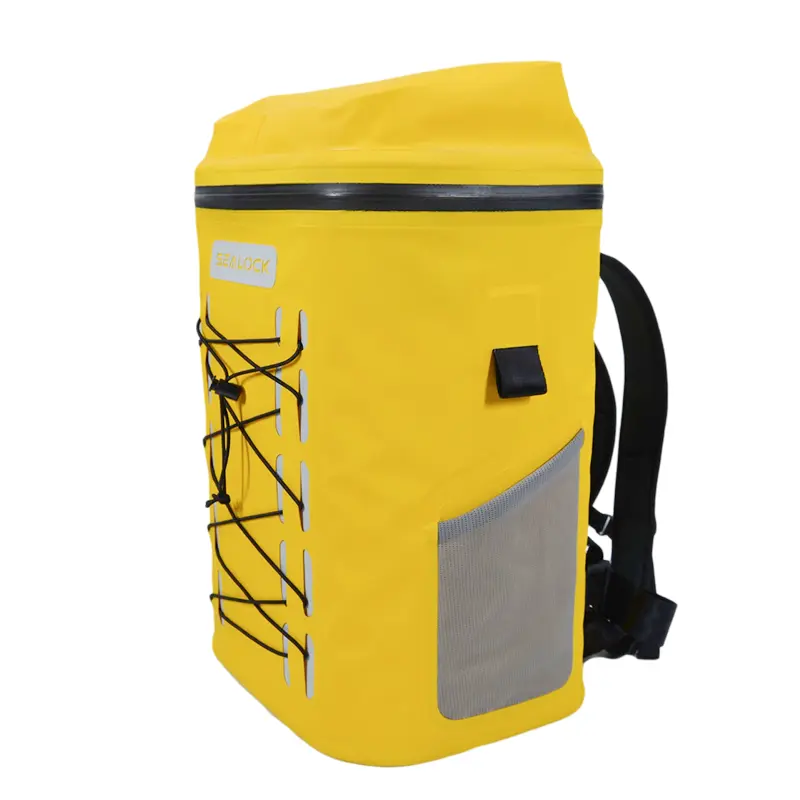
Lightweight travel thermal cooler backpack SL-I272 Lightweight Waterproof Cooler Backpack (SL-I272) 30 × 21.5 × 47.5 cm — TPU, folding closure, the lightest build in the range; tall narrow profile carries easily through a terminal View
18L barrel travel cooler backpack SL-I309 Barrel Cooler Backpack (SL-I309) 34 × 23 × 47 cm, ~18L, 1.3 kg — closed-cell EPE, HF welded, ~24–36 hr, sternum and waist straps; compact and light through a terminal View
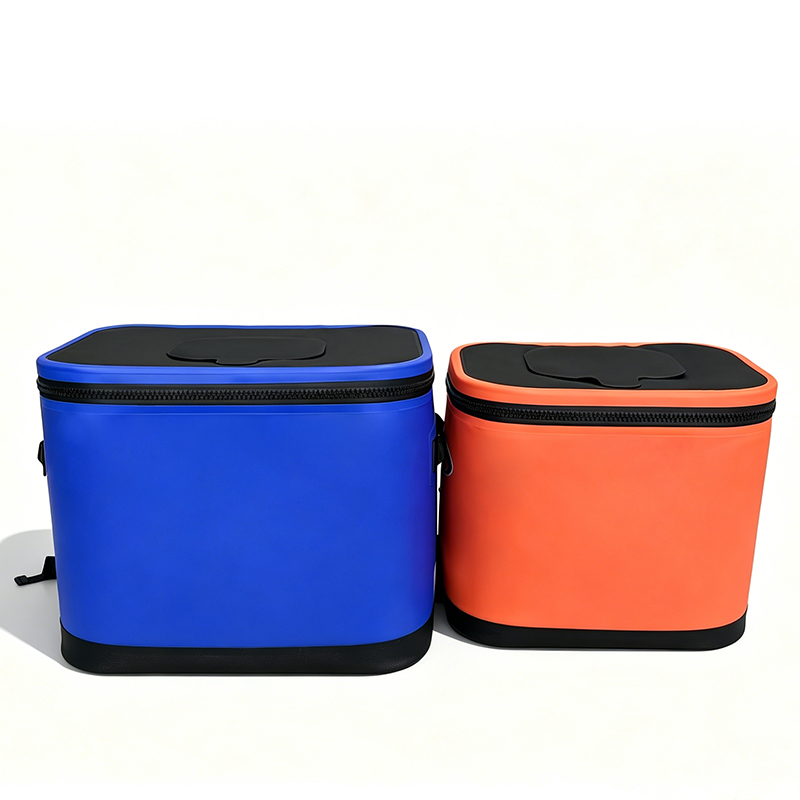
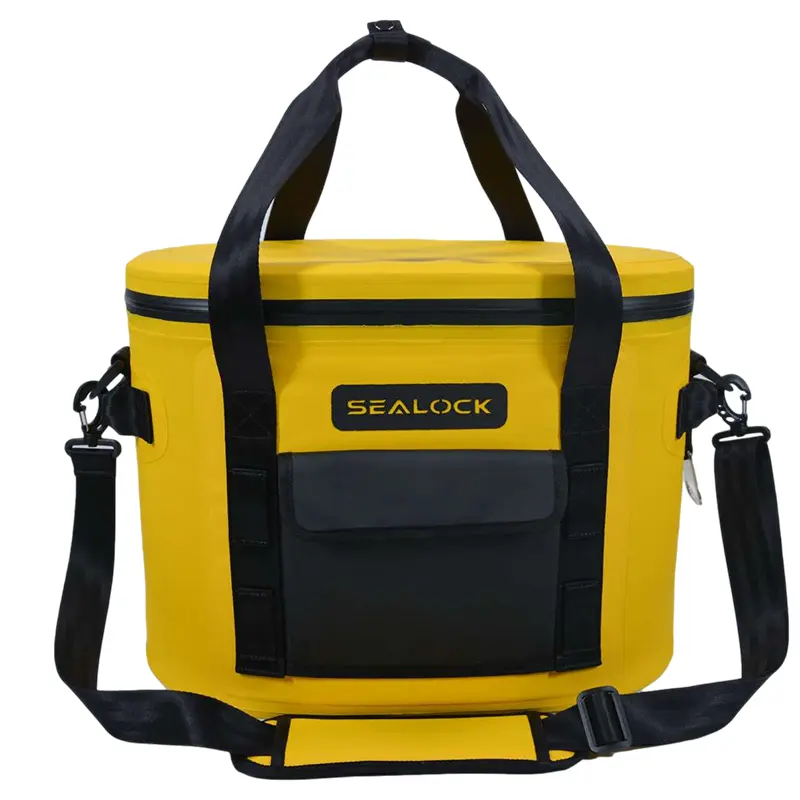
25L travel cooler backpack molded lid SL-E050B Insulated Cooler Backpack, molded lid (SL-E050B) 37.5 × 26.5 × 32 cm, ~25L, 1.4 kg — wide fast-opening molded lid for checkpoint inspection; available in two sizes View
22L IPX7 travel cooler backpack SL-I280 22L IPX7 Cooler Backpack (SL-I280) 22L, 50 mm XPE, IPX7 immersion-rated, airtight zipper, 48 hr+ — the longest cold-hold and the safest sealing for long itineraries View
28L airtight zipper travel cooler backpack SL-I274 28L Airtight-Zipper Cooler Backpack (SL-I274) 32 × 22 × 47 cm, 28L, 2 kg — 840D TPU, EVA core, airtight zipper, up to 48 hr; check dimensions against your airline before assuming carry-on View

Custom dimensions are the norm rather than the exception for travel programmes. Because soft bags need no injection tooling, engineering a pattern to a specific airline envelope is sampling work, not a mould investment — which is why a bespoke travel size is realistic at our 300-piece minimum.

Who We Make For

Our factories produce insulated and waterproof bags for international brands including Stanley, YETI, Hydro Flask, Osprey, Musto and Simms, and YETI visits our Vietnam plant regularly. The systems those programmes require — in-line weld inspection, immersion testing, AQL sampling, gold-sample sign-off — are the same ones that run on a 300-piece first order.

Specify Your Travel Build

External dimensions Engineered to a stated carry-on or under-seat envelope
Capacity ~12L to 45L in current builds; custom sizes developed to spec
Empty weight From ~1.3 kg — specified low, since it counts against airline allowances
Cold-hold ~24 hr through 48 hr+; verified by multi-channel temperature testing
Seal level Welded water-resistant, IPX6, IPX7 or IPX8 — validated by full water immersion
Closure Airtight welded zipper, welded roll-top, molded flip lid — sealing in any orientation for luggage handling
Soft construction Compresses into available space, unlike a rigid box; compressible or packable builds available to spec
Harness Padded straps, sternum strap, waist belt; stowable strap options to keep bins clear
Shell TPU-laminated 600D / 840D, PVC tarpaulin; GRS recycled-content options
Liner Food-grade TPU membrane or PEVA film, welded — wipe-clean for hotel-room conditions; migration testing by market
Origin China or Vietnam — same specification

Tell us the airline envelope. Give us the maximum external dimensions and the capacity you want inside them, and we will engineer the pattern to fit — or tell you honestly if the two do not reconcile.

info@sealock.com.hk · +86-13632981825 · Browse the range

Working Terms

Company YiFuLong Outdoor Gear Co., Ltd. — manufacturer, registry-verifiable, manufacturing business scope
Since 2003 — over 20 years in insulated and waterproof bags
Factories Dongguan, Guangdong, China + Ho Chi Minh City, Vietnam; three high-frequency welding factories and in-house sewing lines; 20,000+ m²
Reach Exporting to 80+ countries, serving 3,000+ customers
MOQ 300 pcs per design (per size and colourway); negotiable on custom programmes
Lead times Samples 7–15 days; production 30–45 days; FOB Guangdong
Testing Water-immersion batch testing; multi-channel temperature testing; load cycling, tensile, adhesion, salt spray, abrasion, colour fastness
Quality IQC / IPQC / OQC, in-line weld inspection, AQL sampling, gold-sample sign-off; SGS or QIMA welcomed
Certifications ISO9001, BSCI, SMETA P4, GRS, HIGG, SCAN
welded travel cooler backpack construction, stowed under an airline seat and compressed into luggage space

Verify Us Before You Pay Anything

  1. Check the company — business licence and unified social credit code, verified on China's official enterprise registry; confirm the scope says manufacturing.
  2. See the lines live — request a live video walkthrough and direct it yourself: welding machines, dies, the sewing line, the immersion test station.
  3. Verify the certificates — BSCI on the amfori platform, SMETA via Sedex, GRS in the Textile Exchange database.
  4. Test the sample — measure it against the airline envelope, fill it with water and invert it, and time its cold-hold. We would rather you did.
  5. Book an inspection — SGS, QIMA or your own inspector on our outgoing line, balance released on a pass.

Guides: travel rules and carry-on sizing in detail · vetting a cooler factory · pre-shipment inspection.

FAQ

Q: Can you build to a specific carry-on size?

A: Yes — travel builds are engineered to a stated external envelope rather than approximated. Give us the maximum dimensions and the capacity you want inside them. Soft bags need no injection tooling, so a bespoke size is pattern engineering and sampling, realistic at our 300-piece minimum.

Q: Why does leakproof construction matter so much for travel?

A: Because of where a leak ends up — other passengers' luggage in an overhead bin, or the owner's own clothes in a checked bag for a whole flight before it is discovered. Our travel builds use welded bodies and liners with no stitch holes, and closures that seal in any orientation, since luggage gets laid flat, stacked and wedged sideways.

Q: How much cold-hold does a travel cooler need?

A: Enough to keep gel packs frozen solid through the journey to the airport and the security queue, since screening rules only accept frozen items that are solid at the moment of screening — a slushy pack is treated as a liquid. A 24-hour-class wall usually suffices; longer-hold builds give margin on long itineraries and delays.

Q: Can the bag be used with dry ice?

A: Only in packaging that vents. Airline rules permit limited quantities of dry ice provided the package can release gas, which makes an airtight cooler unsuitable unless deliberately left able to vent. If your brief involves dry ice, tell us and we will specify accordingly.

Q: Are you a factory?

A: Yes — YiFuLong Outdoor Gear Co., Ltd., manufacturing insulated and waterproof bags since 2003, with three high-frequency welding factories and our own sewing lines in China and Vietnam. Ask us anything technical; the answers come from the people running the lines.

Q: What is your MOQ and lead time?

A: 300 pieces per design, per size and colourway, negotiable on custom programmes. Samples in 7–15 days, production in 30–45 days, FOB Guangdong, plus freight and clearance to your warehouse.

Sealock — YiFuLong Outdoor Gear Co., Ltd.
Travel thermal cooler backpacks, welded and sewn in China and Vietnam since 2003.

Email: info@sealock.com.hk · Phone: +86-13632981825

Send your target dimensions and capacity — we will engineer the pattern to fit.

Airline allowances and security rules vary by carrier and country and change frequently — confirm current requirements with the airline and relevant authority. Specifications and lead times stated here are typical and confirmed per order at quotation; seal ratings apply to the specific builds indicated.

Related News
Leave me a message
X
We use cookies to offer you a better browsing experience, analyze site traffic and personalize content. By using this site, you agree to our use of cookies.Privacy Policy
RejectAccept