Waterproof Beach Cooler Backpacks: Sand-Proof, Sun-Ready
The beach is the harshest environment most cooler backpacks ever face, and it is not the water that does the damage. It is sand, which behaves like sandpaper and lodges in every seam and zipper, and it is sun and hot sand, which cook the contents from below while degrading the bag from above. A cooler that performs beautifully on a picnic table can look tired and stop sealing after two summers on a beach. This guide covers what actually makes a cooler backpack sand-proof and sun-ready, including a construction advantage that solves both problems at once. Sealock (YiFuLong Outdoor Gear Co., Ltd.) builds welded cooler backpacks for this use.
Problem 1: Sand Is Abrasive, and It Gets Everywhere
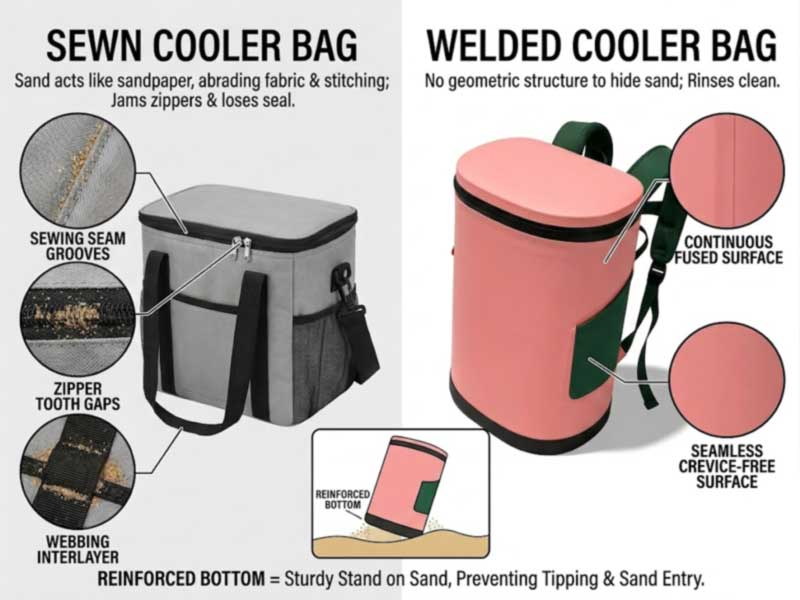
Sand attacks a bag in two ways. First mechanically — sand particles can act like sandpaper, and over time this can damage fabric surfaces. Second by intrusion: it works into zipper teeth, seam channels and any crevice the design offers, where it grinds at the closure every time it is opened and eventually stops the seal working.
The critical insight is that sand resistance is a structural property, not just a material one. As one manufacturing guide puts it, material selection alone does not determine performance — structural design plays an equally important role, and even a highly sand-resistant material can trap sand if the bag's construction gives it somewhere to lodge. A bag made of a slick fabric but built with stitched seams, exposed webbing channels and a standard zipper still fills with sand.
Why a welded cooler is inherently sand-proof
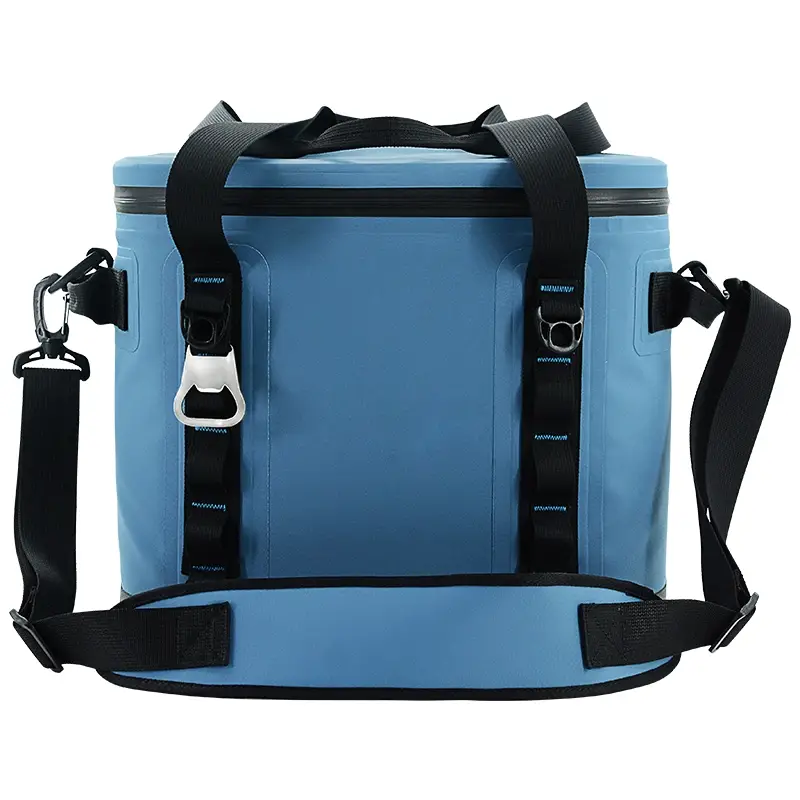
This is where welded construction pays off in a way that has nothing to do with waterproofing. A high-frequency-welded cooler body is a continuous, fused skin: no stitch lines, no seam channels, no thread for sand to embed into. There is simply less geometry for sand to occupy, and the smooth TPU surface rinses rather than holding grit. Compare that with a stitched bag, where every seam is a sand trap and every thread is abraded by the grit it collects.
The closure is the other half. A standard zipper is the classic beach failure — grit in the teeth means a zip that grinds, jams and eventually will not close properly. Two better answers exist: an airtight welded zipper, which has a sealing surface rather than open teeth and can be rinsed clean, and a roll-top, which removes the zipper channel entirely. Roll-tops are well regarded for exactly this environment — a roll-top works by folding the opening several times and securing it with buckles, creating a compression seal, and unlike traditional zippers which can allow water through stitching holes, it relies on compression sealing, with at least two folds recommended. The trade-off is honest: roll-top bags can be slightly slower to open and close, which is why many designs combine roll-top protection with quick-access outer pockets.
Structure that keeps sand out of your things
Two more design details matter on sand. A reinforced base is not only about abrasion — many beach bags lack structure and tip over in the sand, while a reinforced bottom of sturdy water-resistant material keeps the bag upright and prevents sand seeping into your belongings. And separation helps: waterproof pockets for valuables, mesh pockets for wet items and zippered sections keep sandy items away from electronics, snacks and clean clothes. On a cooler backpack, external pockets do this job — and keeping the cold chamber closed also protects the ice.
Problem 2: The Sun Attacks From Both Sides
Beach sun is a dual problem — it degrades the bag, and it destroys the cold.
UV degrades the bag, and buyers notice fast
Sun damage is the number-one complaint driver in beach bags. Industry feedback data is striking: over 40% of negative beach bag reviews mention fading or "looking old too fast," making sun resistance one of the most important factors in material choice. The mechanism is straightforward — strong sunlight slowly breaks down fibers and causes fading, and it is not only the fabric that suffers: exposure to moisture, abrasion and UV radiation weakens stitching over time.
That last point is worth pausing on, because it compounds the sand argument. On a stitched bag, UV attacks the very threads holding the bag together, while sand abrades them. A welded cooler has no structural stitching in its body at all — there is nothing for UV to weaken in the seam. It is the same construction decision solving a second beach problem.
Hot sand is a heat source most buyers ignore
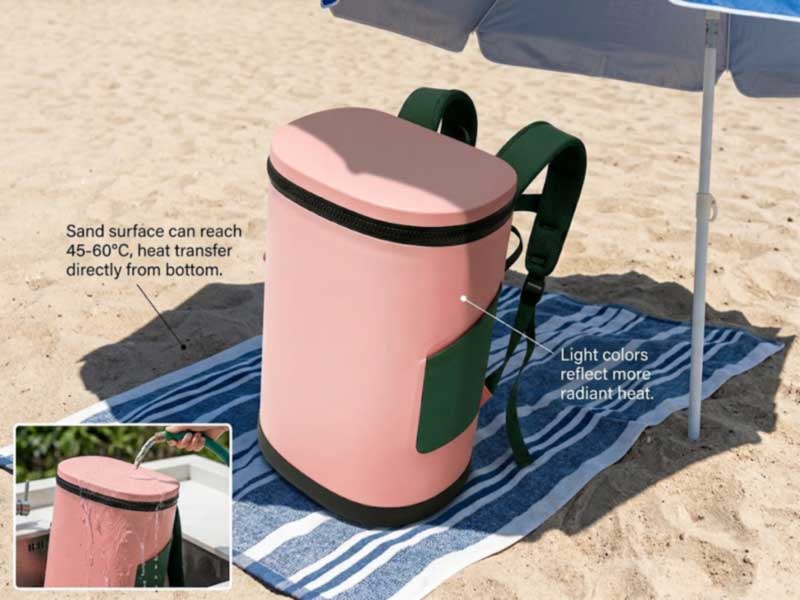
The thermal load at a beach is far higher than most people assume. Beach bags spend hours under direct sunlight, often on hot sand where surface temperatures can reach 45–60°C (113–140°F). That is not ambient air temperature — that is the surface your cooler is sitting directly on, conducting heat straight into the base. A cooler's published ice-retention figure is measured in controlled conditions; a bag resting on 55°C sand in full sun is a much harder test.
Problem 3: Salt, Sunscreen and Cleaning
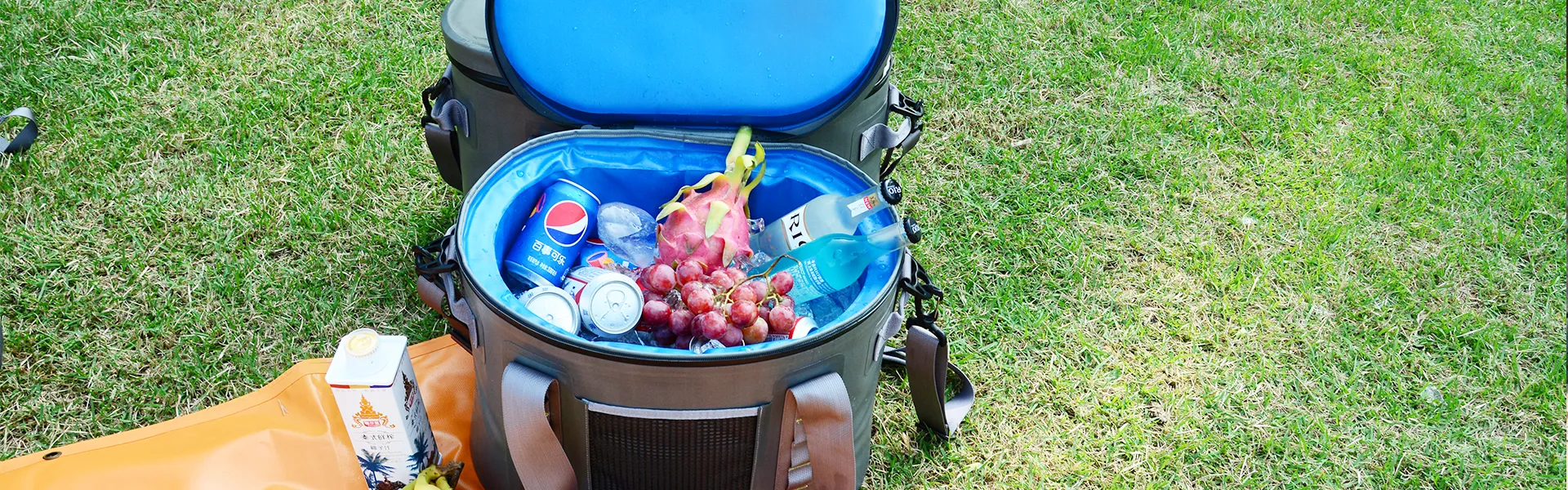
The beach coats a bag in three things that ordinary cleaning misses: salt crystals, fine sand and sunscreen oil. Cleanability is therefore a design property — a beach bag should be easy to clean given exposure to sand, saltwater and sunscreen, and many sand-resistant bags use materials that can simply be wiped down or rinsed with water. A welded TPU shell and a smooth welded liner are ideal here: they are non-porous, so sunscreen wipes off rather than soaking in, and grit rinses away rather than embedding in a weave.
Care habits extend life significantly, and the guidance from outdoor-gear practice is specific: after every trip, spray down zippers and synthetic fabrics with clean fresh water to wash away abrasive sand and corrosive salt crust, and never pack gear away damp — trapped moisture with warm storage breeds mildew that can eat through protective coatings and delaminate waterproof seams within weeks. One more, aimed squarely at beach-day habits: avoid leaving equipment in hot vehicle trunks or direct sunlight when not in use, since thermal stress degrades plastics, weakens elastic cords and bakes salt residue into fabrics.
What to Look For in a Beach Cooler Backpack
| Requirement | What to look for | Why it matters at the beach |
|---|---|---|
| Sand resistance | Welded seamless body; smooth non-porous shell | No seam channels or threads for sand to lodge in or abrade |
| Closure | Airtight welded zipper or roll-top | Standard zipper teeth jam with grit and stop sealing |
| Sun resistance | UV-stable coated shell; no structural stitching to weaken | Fading and seam failure are the top complaint drivers |
| Insulation | Closed-cell wall, 24-hour class minimum for a summer day | Hot sand at 45–60°C conducts heat straight into the base |
| Stability | Reinforced base | Keeps the bag upright rather than tipping into the sand |
| Cleanability | Wipe-clean shell and welded liner | Sunscreen, salt and sand rinse off instead of embedding |
| Water resistance | IPX-rated build if it goes near the water | Splash, spray and the occasional wave reach the bag |
For the seal-rating detail, see Waterproof Cooler Backpacks: How Welded Construction Keeps Water Out; for the insulation tiers, see Insulated Cooler Backpack Manufacturer: EPE Foam & Cold-Retention Design.
Sealock's Beach Cooler Backpacks
Sealock welds insulated cooler bags at 27.12 MHz across three factories in Dongguan, China and Ho Chi Minh City, Vietnam, with food-grade inner liners across the entire range. Real cooler backpacks suited to beach use, chosen by fit rather than rank:
| Image | Model | Beach-relevant build | Link |
|---|---|---|---|
|
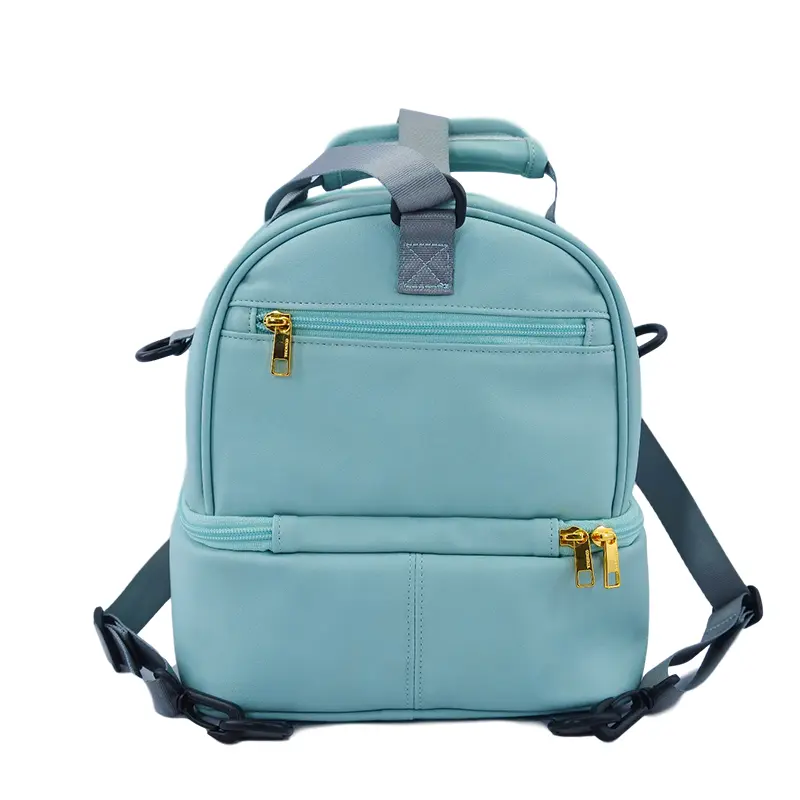
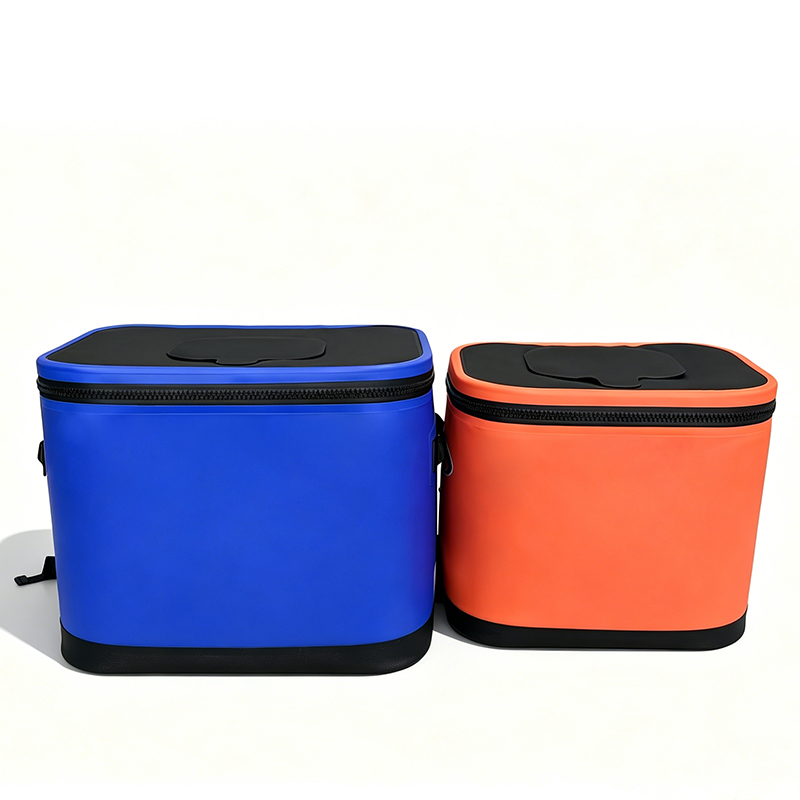
Insulated Cooler Backpack, molded lid (SL-E050B) | Molded flip lid with recessed grab handle, zip-around top, closed-cell EPE, reinforced base, ~25L in two sizes — fast access without letting sand in | View |
|
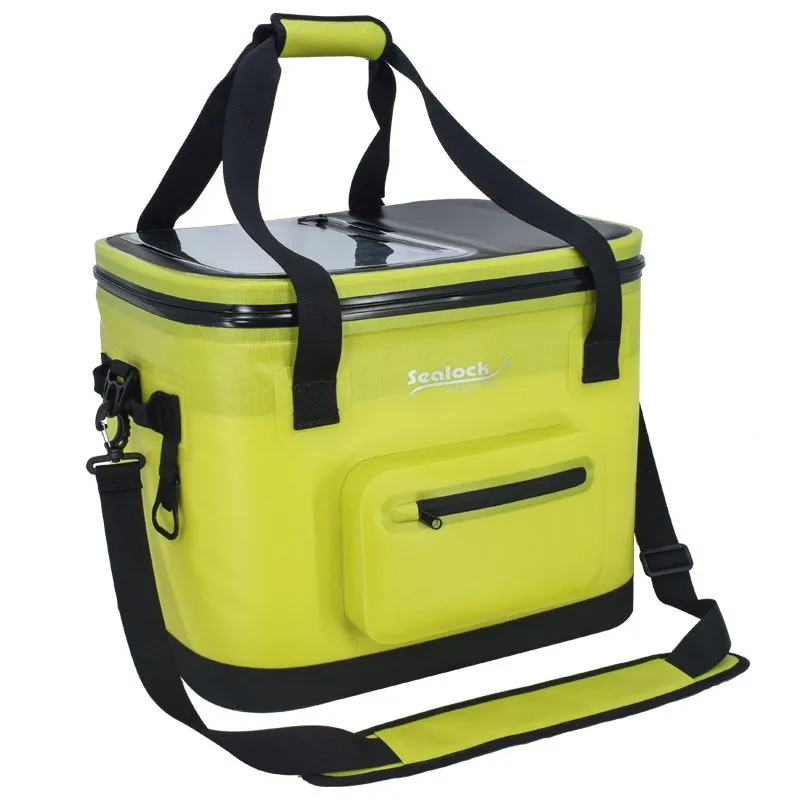
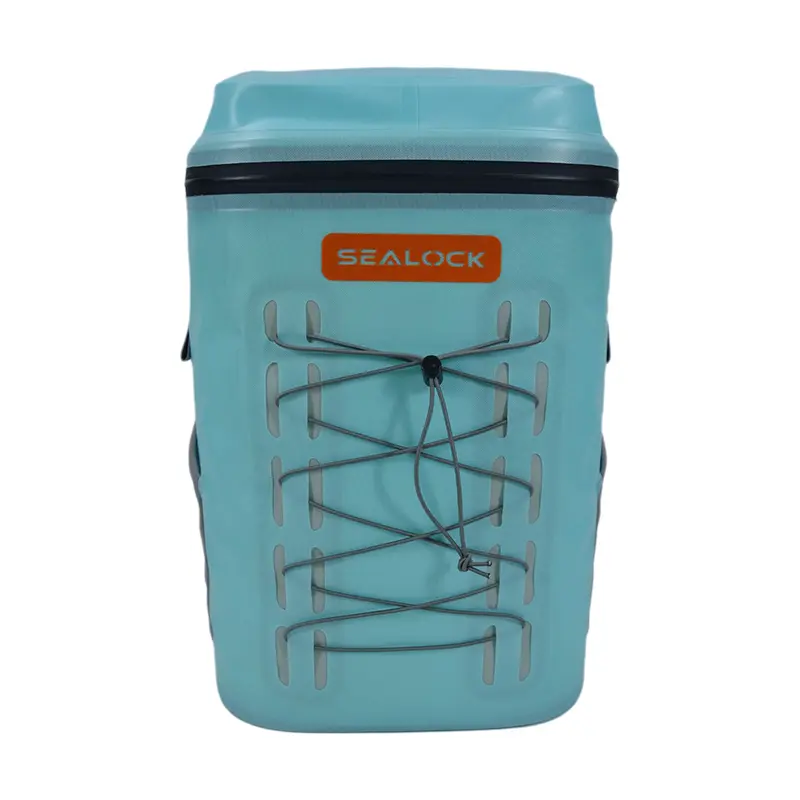
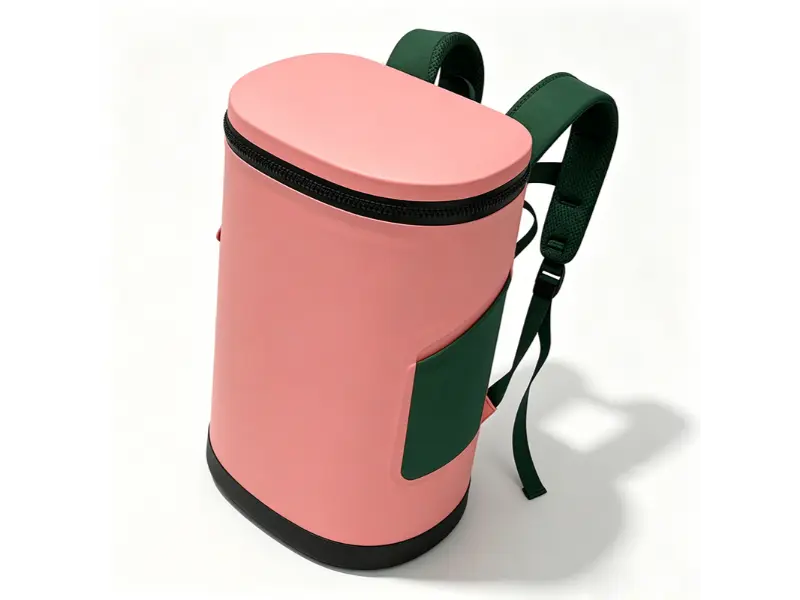
Barrel Cooler Backpack (SL-I309) | ~18L barrel form, closed-cell EPE, reinforced base, sternum and waist straps, front slip pocket — a compact beach-day size | View |
|
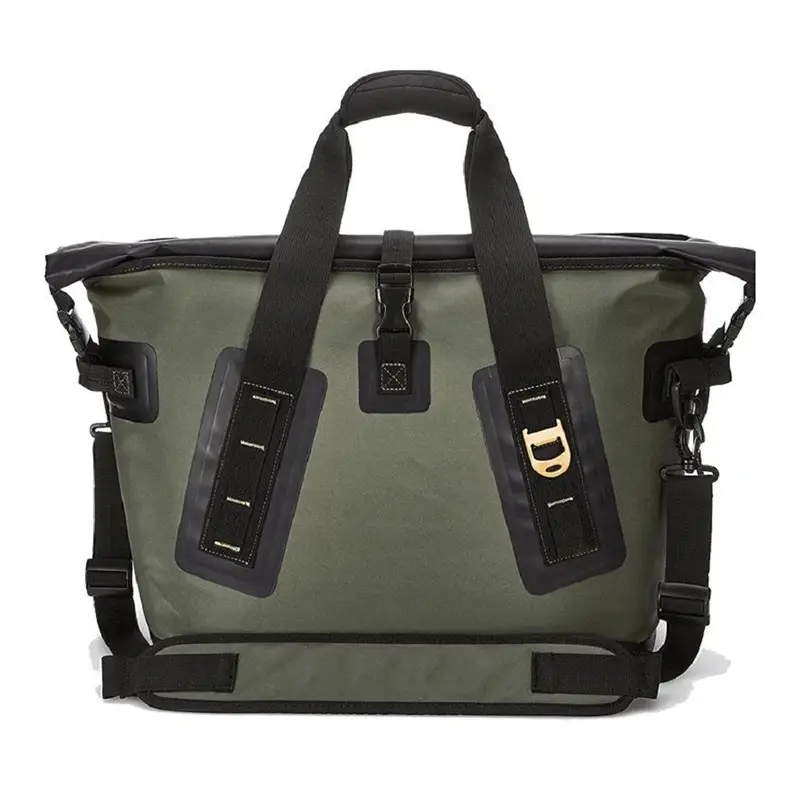
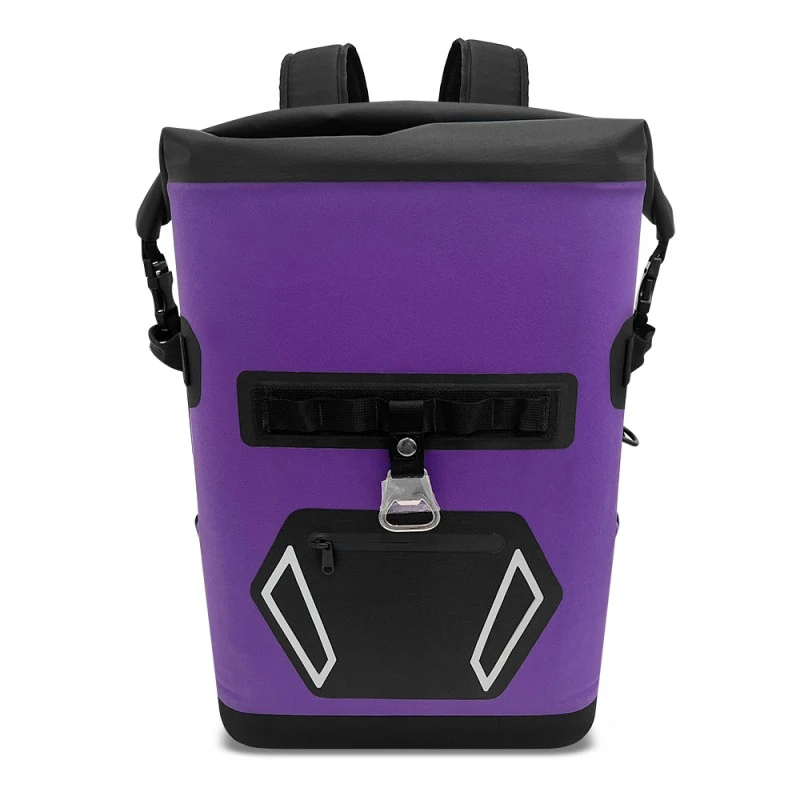
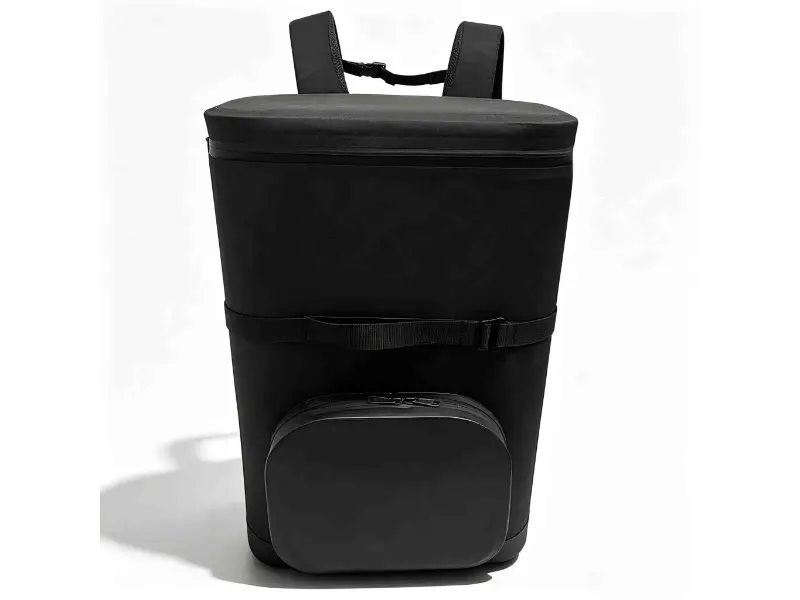
45L Roll-Top Backpack Cooler (SL-I270) | Roll-top closure — no zipper teeth for grit to jam; 600D TPU, HF welded, up to 36 hr, reflective trim, UTX buckles | View |
|
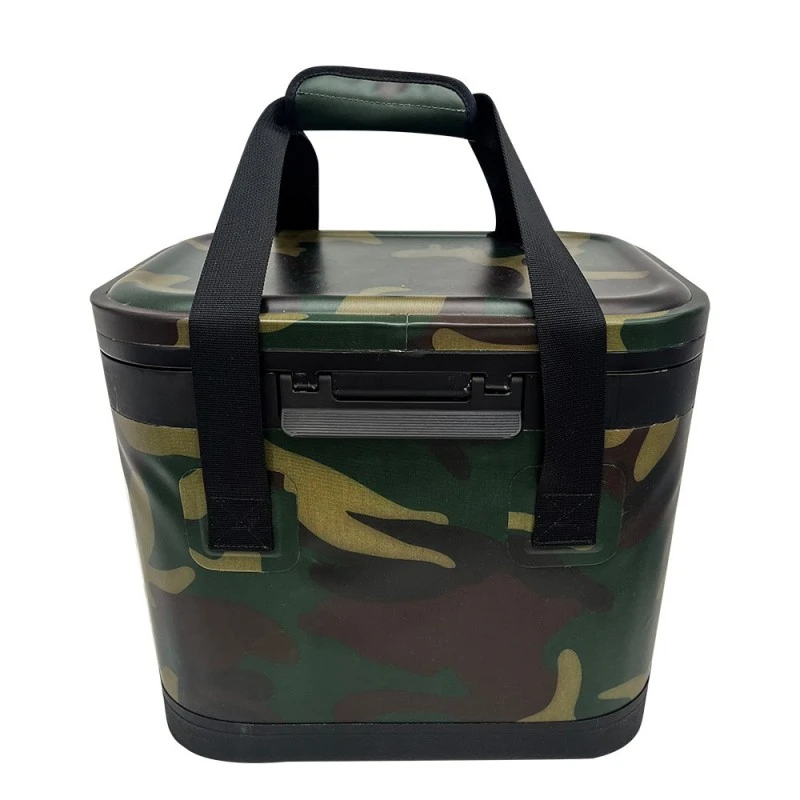
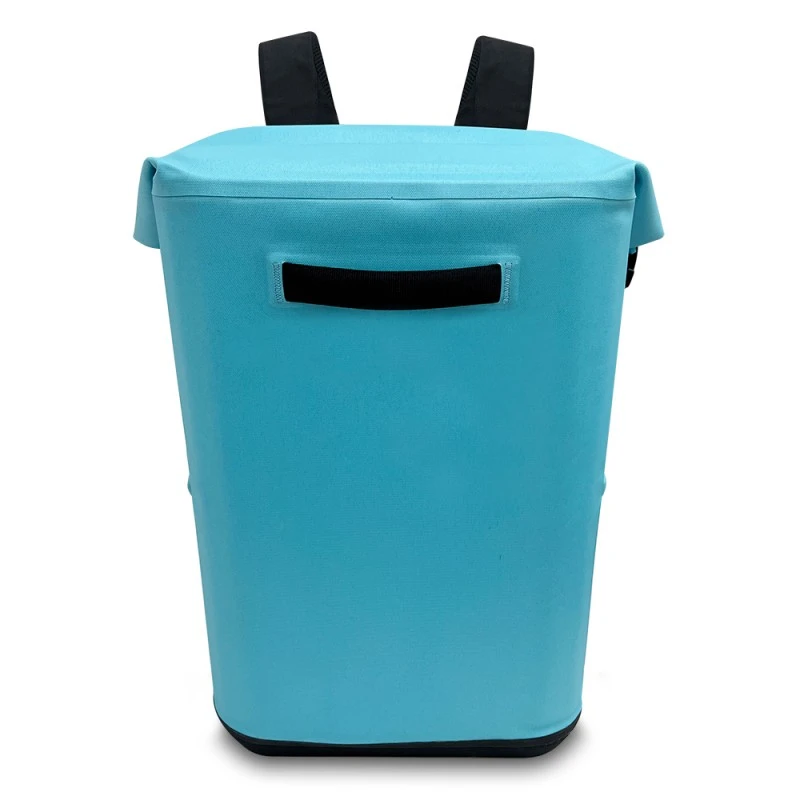
22L IPX7 Cooler Backpack (SL-I280) | 50 mm XPE for hot-sand days, IPX7 airtight zipper that rinses clean, 48 hr+, full harness | View |
|
Lightweight Waterproof Cooler Backpack (SL-I272) | TPU build with folding closure — light for the walk from car park to sand, available in bright colourways | View |
Note the closure spread: the SL-I270's roll-top has nothing for grit to foul, while the SL-I280's airtight zipper gives faster access and a sealing surface that rinses clean. Both beat a standard zipper on sand — they differ in access speed, not in whether sand defeats them.
For Brands: Developing a Beach Cooler Range
Beach is a demanding brief disguised as an easy one, and demanding briefs are welcome. Beyond colour and logo, Sealock develops ground-up from a sketch, sample or performance target: the welded seamless body that gives sand nowhere to lodge, the closure type (airtight zipper for speed, roll-top for grit immunity), the insulation tier sized for hot-sand conditions rather than mild ambient, a reinforced base for stability on soft ground, UV-stable shell materials and colourways, corrosion-resistant hardware for salt air, and wipe-clean welded liners — then proven by immersion and cold-hold testing before production. Premium insulation up to VIP vacuum panels and aerogel and IPX6–IPX8 welded seal levels are in scope. Ground-up work runs longer at sampling, so book against the season — beach ranges sell on a calendar, and the ocean freight has to clear before the summer does. See OEM Soft Cooler Backpacks: What You Can Customize Beyond Logo & Color and Custom Soft Cooler Backpacks: Materials, Sizes & Branding Options.
| MOQ / lead time | 300 pcs per design; samples 7–15 days; production 30–45 days; FOB Guangdong |
|---|---|
| Origin | China or Vietnam on the same specification |
| Certifications | ISO9001, BSCI, SMETA P4, GRS, HIGG, SCAN |
FAQ: Beach Cooler Backpacks
Q: What makes a cooler backpack sand-proof?
A: Structure more than material. Sand lodges wherever the construction gives it somewhere to sit, so a welded seamless body — no stitch lines, no seam channels, no threads — leaves far less for sand to occupy, and a smooth shell rinses clean. Pair that with an airtight zipper or roll-top rather than standard zipper teeth, which jam with grit, and a reinforced base so the bag stands upright instead of tipping into the sand.
Q: Why do beach bags fade and fail so quickly?
A: Ultraviolet light breaks down fibres and causes fading, and it weakens stitching along with moisture and abrasion — which is why over 40% of negative beach bag reviews mention fading or looking old too fast. A welded cooler has no structural stitching in its body for UV to attack, and a UV-stable coated shell holds colour far better than untreated fabrics.
Q: How much insulation do I need for a beach day?
A: More than the ambient temperature suggests. Sand surfaces reach 45–60°C in the sun, and a cooler sitting on it takes heat straight through the base. A 24-hour-class closed-cell wall is the honest minimum for a summer day, with a thicker high-density wall better for hot climates. Keeping the bag on a towel and in shade matters as much as the wall thickness.
Q: Zipper or roll-top for the beach?
A: Both work far better than a standard zip. A roll-top has no teeth for grit to foul and seals by compression — use at least two folds — but is slower to open. An airtight welded zipper gives faster access and has a sealing surface that rinses clean rather than open teeth. Choose by how often you will open it; many beach designs pair either closure with quick-access outer pockets.
Q: How do I clean a cooler backpack after the beach?
A: Rinse it with fresh water inside and out, paying attention to the closure, to remove abrasive sand and corrosive salt. A welded TPU shell and smooth liner wipe clean, so sunscreen does not soak in. Then dry it fully and store it open and out of the sun — packing it away damp lets mildew attack coatings and seams, and leaving it in a hot car bakes salt into the fabric.
Sourcing beach cooler backpacks? Sealock (YiFuLong Outdoor Gear Co., Ltd.) welds seamless, sand-shedding cooler backpacks at 27.12 MHz in China and Vietnam — airtight and roll-top closures, closed-cell insulation tiers, reinforced bases and wipe-clean food-grade liners. Tell the team your market, season and price point, and they will spec and prove the build.
Email: info@sealock.com.hk | Phone: +86-13632981825 | Browse the soft cooler range
Material behaviour, temperature figures and care guidance cited here reflect publicly available gear-industry and manufacturing sources as of mid-2026 and vary with product, climate and use. Confirm specifications and care instructions for a specific product before relying on them.