News

How Much Does a Custom Cooler Backpack Cost

2026-09-15 0 Leave me a message
There is no honest flat price for a custom cooler backpack, and any factory that gives you one before seeing your specification is guessing. Unit cost is driven by insulation tier, shell material, closure type, capacity, quantity and branding — and those choices can move the same-size bag by a multiple, not a percentage.


What this page does instead: shows you exactly what you are paying for, which decisions move the number most, and what to send us so a quotation comes back accurate the first time.

Send a specification, get a real quotation: info@sealock.com.hk · +86-13632981825 · MOQ 300 pcs · samples 7–15 days

Where the Money Goes

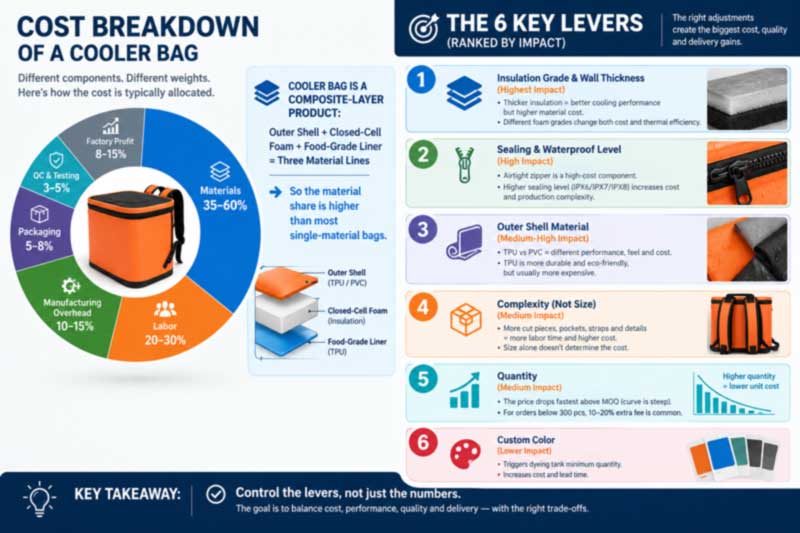
A factory-direct FOB price is built from a small number of buckets. Across soft-goods manufacturing the industry pattern is consistent: raw materials 35–45%, direct labour 20–30%, factory overhead 10–15%, packaging 5–8%, quality control 3–5%, and factory profit 8–15%, with other sources putting materials at 40–60% and labour at 20–30% depending on product type.

A cooler backpack sits at the material-heavy end of that range, for a specific reason: it is a laminate product. Where a standard backpack has one shell fabric, a cooler has a shell, a closed-cell foam wall and a food-grade liner — three material streams instead of one, plus a specialised closure. That is why insulation and closure decisions move a cooler quotation more than they would move a rucksack.

Cost bucket Typical share What drives it on a cooler specifically
Materials ~35–60% Three streams: shell denier and coating, foam type and wall thickness, liner grade. Foam thickness is the single biggest lever.
Labour ~20–30% Welding machine time scales with seam count and complexity; sewn components add assembly minutes. Panel count matters more than size.
Overhead ~10–15% Welding tooling, line setup and process validation — largely fixed per design, so it amortises across the run.
Hardware & trims Within materials An airtight welded zipper is a genuinely expensive component; buckles, webbing and custom pulls add up.
Packaging ~5–8% Polybag versus retail box, hangtags, inserts.
QC & testing ~3–5% In-line weld inspection, immersion testing, AQL sampling, lab testing.

The Six Decisions That Move Your Price Most

In rough order of impact on a cooler backpack:

1. Insulation tier and wall thickness

The largest single lever. A thin closed-cell EPE wall for a 24-hour day pack and a 50 mm high-density XPE wall for a 48-hour build are different products at different prices. Premium panels — PU, VIP vacuum, EPP, aerogel — deliver more cold-hold per millimetre and cost accordingly. Specify the cold-hold you actually need, not the highest number available; a picnic bag does not need an expedition wall, and paying for one is paying for weight your customer will carry for nothing.

2. Closure and seal level

A standard zip, an airtight welded waterproof zipper and a welded roll-top are three different cost points. The airtight zipper is one of the most expensive single components in a sealed cooler. A roll-top can deliver equivalent or better sealing at lower component cost, with the trade-off of slower access — a genuine option if budget is tight and your use case tolerates it.

3. Shell material

Both TPU and PVC weld well, and the cost gap is significant: basic 600D polyester runs roughly $0.80–1.50 per yard while premium high-density nylon can triple that, and in large runs PVC-coated fabric can reduce total product cost meaningfully against TPU. TPU buys lighter weight, better cold flexibility, longer fold life and a cleaner compliance position; PVC buys price and rigidity. See TPU vs PVC: which shell to spec.

4. Complexity, not size

This surprises buyers. Labour is calculated in minutes, and minutes follow panel count and feature count rather than litres. A simple tote might have five fabric pieces; a tactical backpack with multiple compartments, hidden pockets and MOLLE webbing might have 40 or more — the more pieces, the higher the labour cost. On a cooler, every welded attachment zone, external pocket, webbing panel and harness component adds time. A 45L bag with three panels can cost less to build than a 22L bag with fifteen.

5. Quantity

The most powerful lever you control. Setup, tooling and process validation are largely fixed per design, so they spread across the run — which is why the price curve is steepest just above minimum order quantity and flattens later. Note also that below-minimum runs carry real surcharges: under 300 units, factories often charge a 10–20% surcharge because setting up the production line for a small run takes the same effort as a large one.

6. Branding and colour

Logo method matters less than colour. A custom Pantone triggers a dye lot with its own minimum and lead time upstream of the factory, which is frequently the real driver when a small-quantity quote comes back higher than expected. A stock colourway removes it entirely. See why the dye lot usually sets your real minimum.

Want the number instead of the theory? Send capacity, cold-hold target, seal level and quantity — or just a photo of a bag you want built. We will come back with a specification and a price.

info@sealock.com.hk · +86-13632981825

cost structure and the six main price levers for a custom insulated cooler backpack

FOB Is Not What It Lands For

A factory quotation is normally FOB — the cost to make the bag and deliver it to port. Your actual cost per unit is higher, and confusing the two is a common margin error. An FOB quote at $5.00 can end up costing $6.50–7.00 landed after freight and duties, and when comparing suppliers you should confirm whether each quote is FOB, CIF or DDP — otherwise you are comparing different things.

For cooler bags one landed-cost factor deserves particular attention: they are light and bulky, and ocean freight charges by volume. How many units fit a carton, and the total CBM of your order, changes cost per unit materially. Ask for carton dimensions, units per carton and total CBM in the quotation, not just the unit price. See bulk pricing and FOB terms.

Add to FOB to reach landed cost
Ocean freight, charged on CBM — significant for a bulky, light product
Import duty on the correct HTS classification (shell material can affect the subheading)
Customs clearance, port and inland delivery charges
Third-party inspection, if used
Sample and development costs, amortised across the run
Compliance testing for your market — food-contact migration, and CPSIA if children's product

A Price That Is Too Low Is Information

Cheap quotations are not free money; they are a specification you have not been shown. As one industry guide puts it plainly: a factory quoting 30% below the market average is almost certainly cutting material quality, skipping QC steps, or using unskilled labour.

On a cooler specifically, here is where an unexplained low price usually comes from: thinner foam than specified (invisible in a finished bag — nobody can see wall thickness once it is welded shut); a cheaper non-food-grade or uncertified liner; a stitched liner instead of a welded one; a standard zipper described as "waterproof"; welding subcontracted to an uncontrolled workshop; or no immersion testing at all. Every one of those is invisible at the point of purchase and expensive at the point of customer complaint. If a quote is far below the others, ask which of those six things is different.


How to Reduce Cost Without Reducing Quality

The productive approach is finding mutual cost reductions rather than demanding a lower number — simplified design, optimised packaging, longer lead times and volume commitments work; squeezing a factory below its cost does not, it just relocates the compromise somewhere you cannot see. Practical levers we will discuss openly with you:

  • Match the insulation to the actual use. The most common overspend we see. A day-use bag specified at 48 hours costs more and carries heavier for no customer benefit.
  • Simplify panel count. Fewer pieces, fewer welded zones, fewer pockets — direct labour savings, and often a cleaner-looking bag.
  • Consider a roll-top instead of an airtight zipper where access speed is not critical. Equivalent sealing, lower component cost.
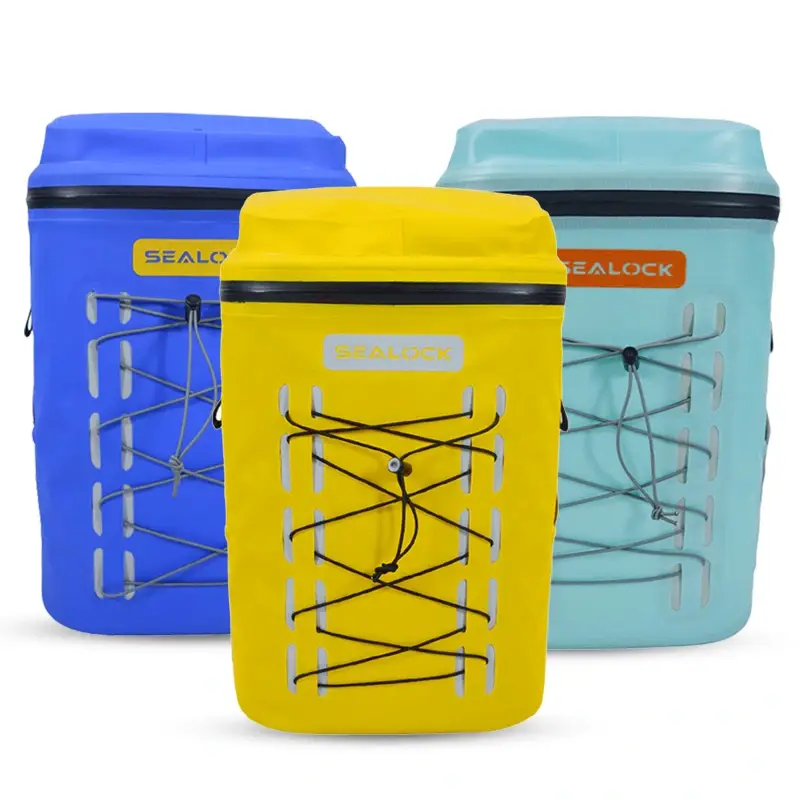
  • Use stock colours on a first order. Removes the dye lot from your critical path and your cost.
  • Consolidate quantity into fewer variants. One design in one colour at 900 pieces prices better than three designs at 300 each.
  • Ask for material alternatives rather than cutting construction. If you need to lower your price, don't reduce the quality of the sewing — ask your factory for alternative material options that look similar but cost less. The same applies to welding: it is not the place to save.
  • Optimise packing. Fewer CBM per unit is a real landed-cost saving that never touches product quality.
  • Give a longer lead time. Off-peak scheduling is worth something to a factory and can be worth something to you.

What to Send Us for an Accurate Quotation

The more of this you provide, the closer the first number is to the final one. If you do not know an answer, say so — we will propose an option rather than guess silently.

Capacity & dimensions Litres, or external dimensions if you have a constraint (e.g. a carry-on envelope)
Cold-hold target The hours you need, and the conditions your customers use it in
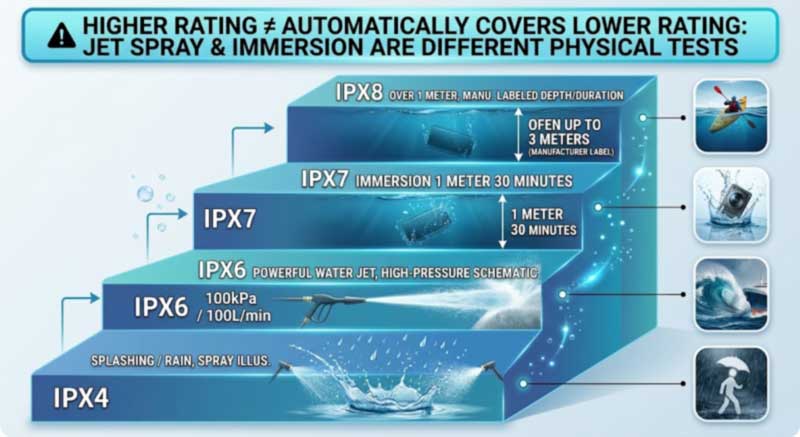
Seal level Water-resistant, IPX6, IPX7 or IPX8 — and whether you need to advertise the rating
Closure Airtight zipper, roll-top, molded lid, zip-around
Shell TPU or PVC, denier, and any recycled-content requirement (we are GRS certified)
Carry Backpack, tote, shoulder; harness level; any attachment or webbing
Branding Logo method, size, placement; stock colour or custom Pantone
Packaging Polybag or retail box; hangtags; barcode format
Quantity Per design, per size, per colourway — plus your realistic reorder view
Market Destination country, for compliance testing and duty classification
Timing Your on-shelf date, so we can work the calendar backwards

A photo of a bag you want built works too — we will read the construction from it and tell you what it would take.

Reference Builds

Real products across price tiers, so you can see what the levers look like in practice:

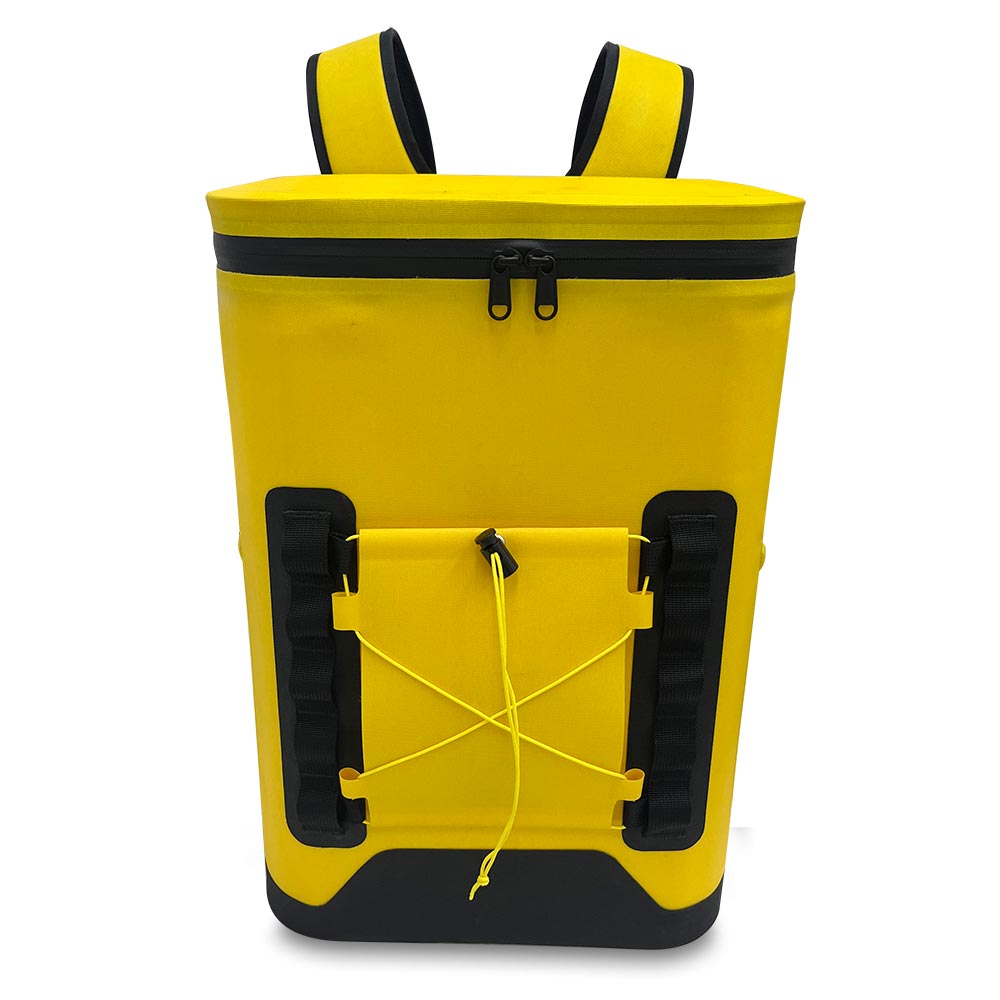
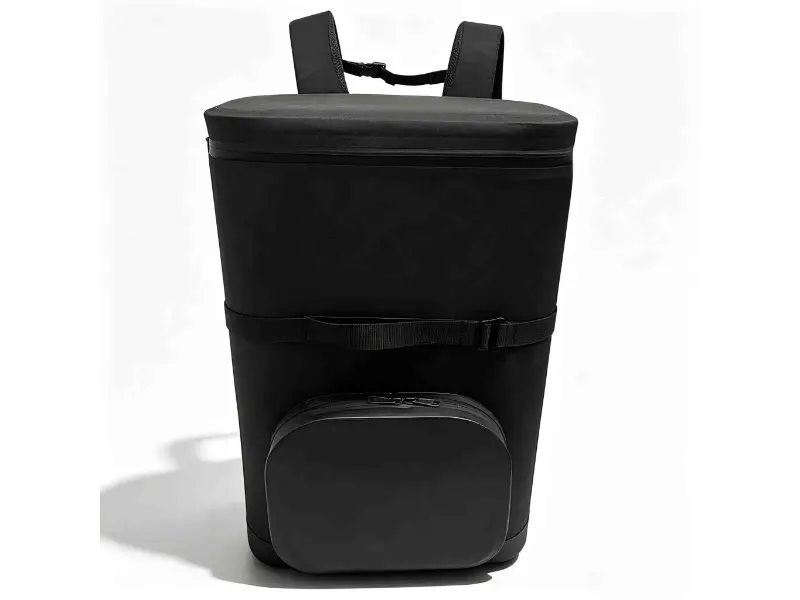
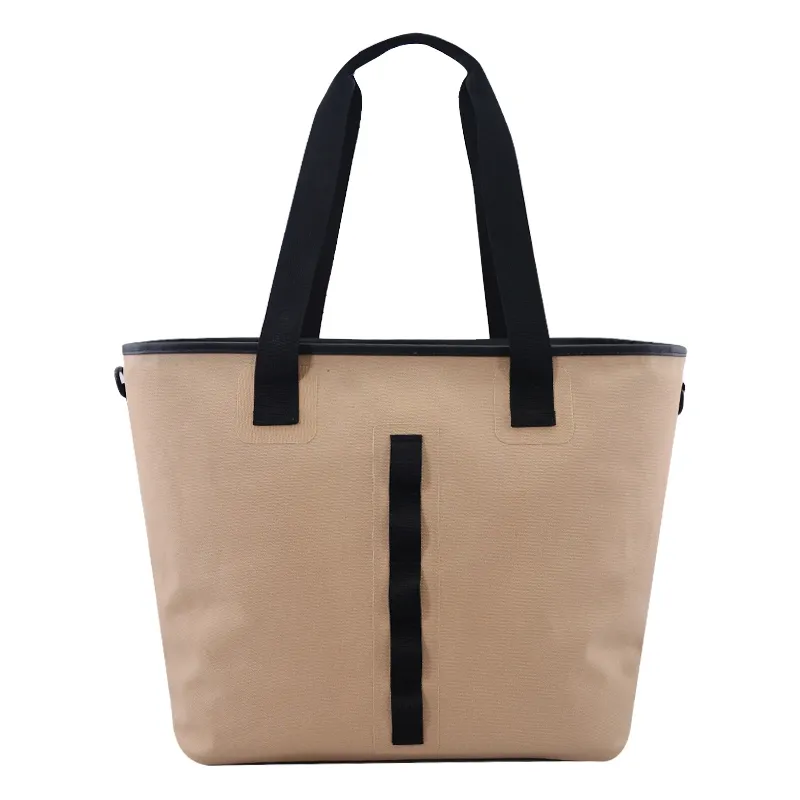
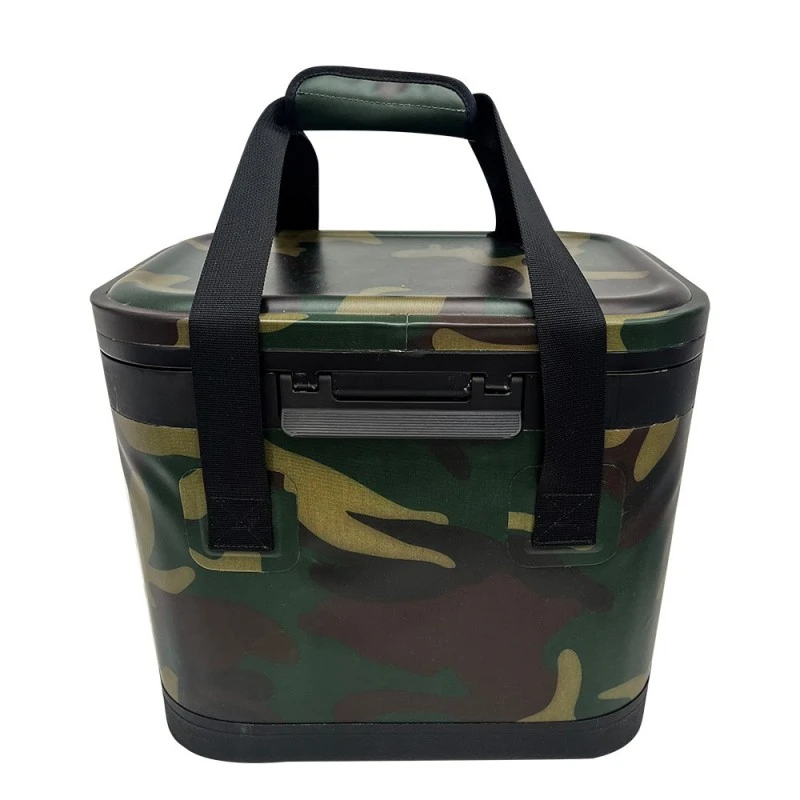
Image Model What drives its cost position Link
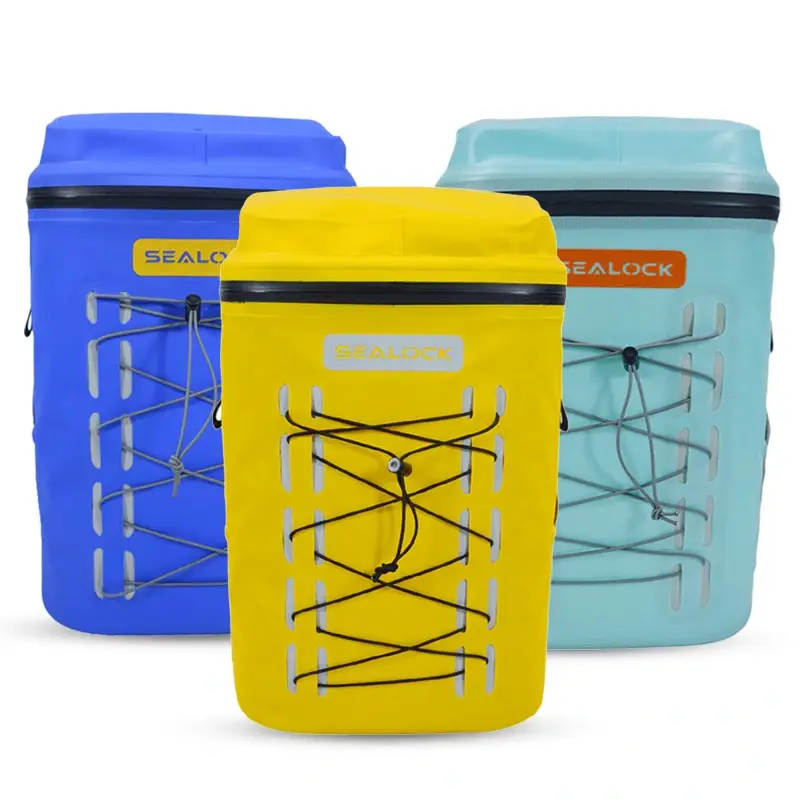
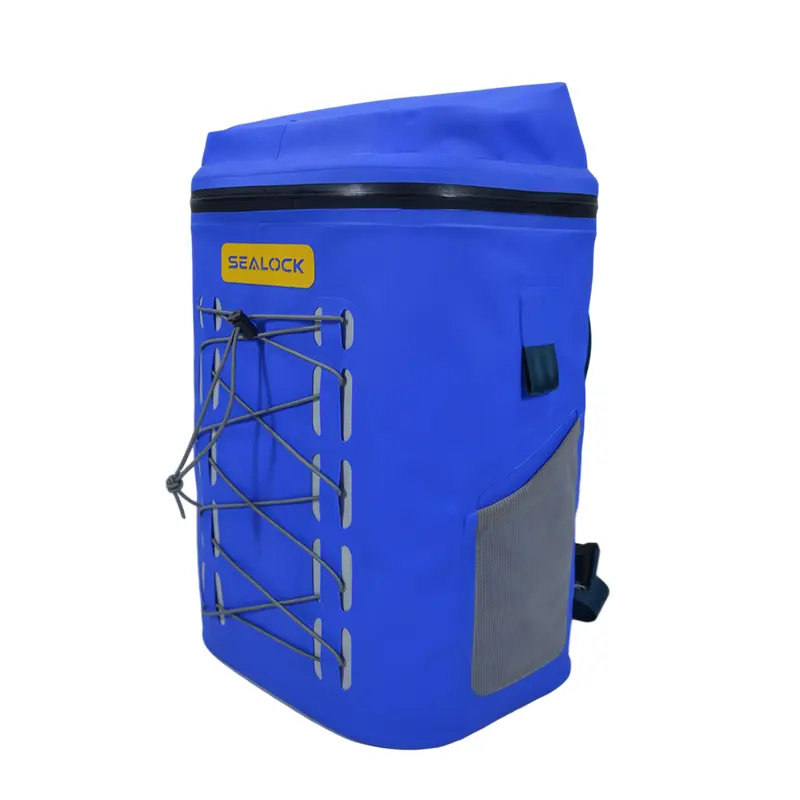
Value tier insulated leakproof cooler backpack SL-I075A Insulated Leakproof Cooler Backpack (SL-I075A) Value tier — PVC tarpaulin shell, EPE foam, PEVA liner, 36-can, stock colours View
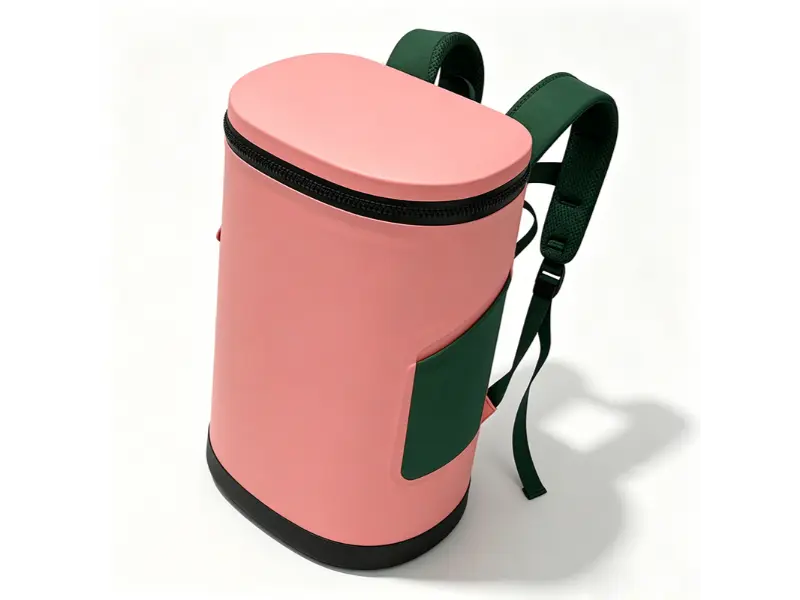
18L barrel cooler backpack SL-I309 Barrel Cooler Backpack (SL-I309) Day-use tier — ~18L, closed-cell EPE, ~24–36 hr, simple panel count, 1.3 kg View
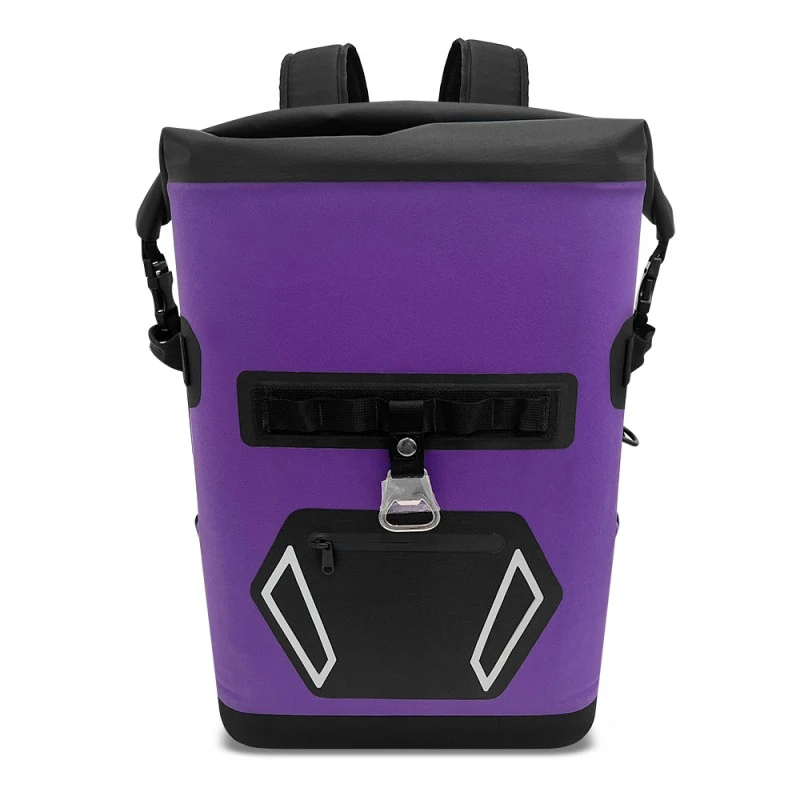
45L roll-top cooler backpack SL-I270 45L Roll-Top Cooler Backpack (SL-I270) Mid tier — 600D TPU, 3 cm EVA, welded roll-top (no airtight zipper cost), 45L, up to 36 hr View
28L airtight zipper cooler backpack SL-I274 28L Airtight-Zipper Cooler Backpack (SL-I274) Upper tier — 840D TPU, EVA core, airtight welded zipper, food-grade TPU membrane, up to 48 hr View
22L IPX7 cooler backpack SL-I280 22L IPX7 Cooler Backpack (SL-I280) Technical tier — 50 mm high-density XPE, IPX7 immersion-rated, airtight zipper, full harness, 48 hr+ View

Note the SL-I270 row: a 45L bag sits below a 28L bag in cost position, because the roll-top removes an expensive component and the wall is specified to a 36-hour target rather than 48. That is the "complexity, not size" principle in a single comparison.

Working Terms

Company YiFuLong Outdoor Gear Co., Ltd. — manufacturer since 2003, registry-verifiable
Factories Dongguan, Guangdong, China + Ho Chi Minh City, Vietnam; three high-frequency welding factories and in-house sewing lines; 20,000+ m²
MOQ 300 pcs per design (per size and colourway); negotiable on custom programmes
Lead times Samples 7–15 days; production 30–45 days; FOB Guangdong
Tooling None required for standard soft-bag customisation — only for bespoke moulded hardware
Quotation includes Unit price at your quantity, carton dimensions, units per carton and total CBM for landed-cost modelling
Testing Water-immersion batch testing; multi-channel temperature testing for cold-hold; lab suite for tensile, adhesion, salt spray, abrasion, colour fastness
Certifications ISO9001, BSCI, SMETA P4, GRS, HIGG, SCAN

FAQ

Q: Can you just tell me a price per bag?

A: Not honestly, without a specification. Insulation tier, closure type, shell material, panel count, quantity and colour can move the same-size cooler by a multiple rather than a percentage. Send those and you get a real number, usually with a breakdown of what is driving it. Any factory quoting a flat price before seeing your spec is guessing, and the correction arrives later.

Q: What makes a cooler backpack more expensive than a normal backpack?

A: It is a laminate product with three material streams instead of one — shell, closed-cell foam and food-grade liner — plus a specialised closure and welding machine time. Materials typically account for the largest share of factory cost in soft goods, and a cooler sits at the heavy end of that range.

Q: Does a bigger bag always cost more?

A: No. Labour follows panel count and feature count rather than litres, so a large simple bag can cost less to build than a smaller, more complex one. Our 45L roll-top sits below our 28L airtight-zipper build for exactly that reason — fewer expensive components and a lower cold-hold target.

Q: How much does quantity change the price?

A: Substantially at the low end, then less. Setup, tooling and validation are largely fixed per design, so the curve is steepest just above MOQ and flattens as volume grows. Below typical minimums, factories commonly apply a 10–20% surcharge because line setup for a small run takes the same effort as a large one.

Q: A competing quote is much cheaper. Should I take it?

A: Find out what is different first. A quote far below market usually reflects thinner foam than specified, a cheaper or uncertified liner, a stitched liner instead of welded, a standard zipper called waterproof, subcontracted welding, or no immersion testing. All of those are invisible when you buy and expensive when your customers complain. Ask the cheaper supplier to confirm those six points in writing.

Q: Is the quoted price what it costs me?

A: No — a factory quote is normally FOB, before freight, duties and clearance. Coolers are light and bulky and ocean freight charges by volume, so ask for carton dimensions, units per carton and total CBM alongside the unit price. Confirm whether competing quotes are FOB, CIF or DDP before comparing them.

Sealock — YiFuLong Outdoor Gear Co., Ltd.
Send a specification, a sketch, or a photo of a bag you want built. We will quote the build, the price and the sample timeline — and tell you where you could spend less.

Email: info@sealock.com.hk · Phone: +86-13632981825 · MOQ 300 pcs · samples 7–15 days

Cost percentages and industry figures cited here reflect publicly available manufacturing sources as of mid-2026 and vary by product type, materials, quantity and factory. No price figures on this page constitute a quotation; pricing is confirmed per specification and quantity at enquiry.

Related News
Leave me a message
X
We use cookies to offer you a better browsing experience, analyze site traffic and personalize content. By using this site, you agree to our use of cookies.Privacy Policy
RejectAccept