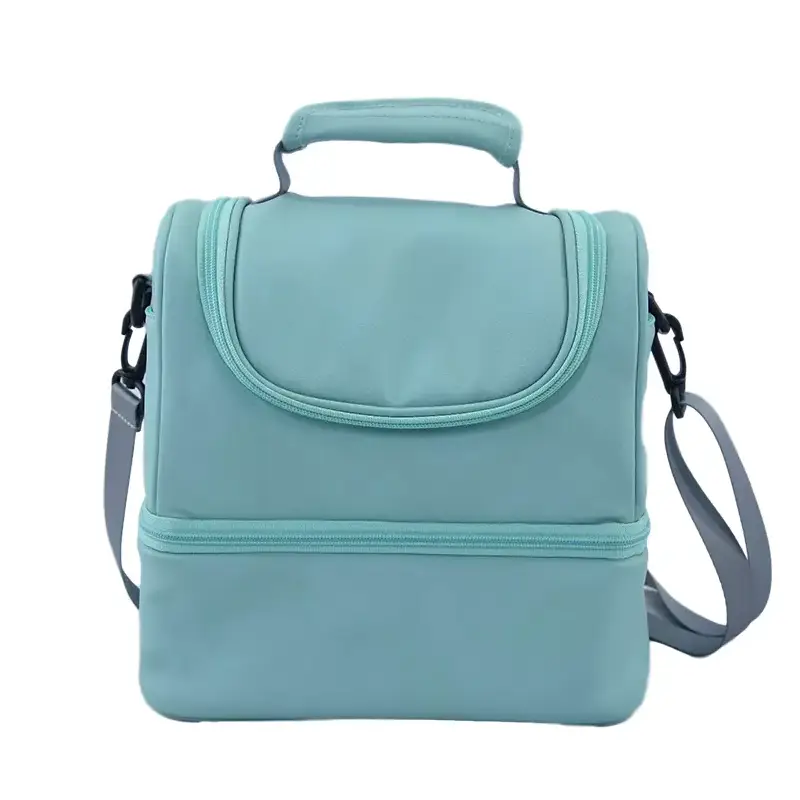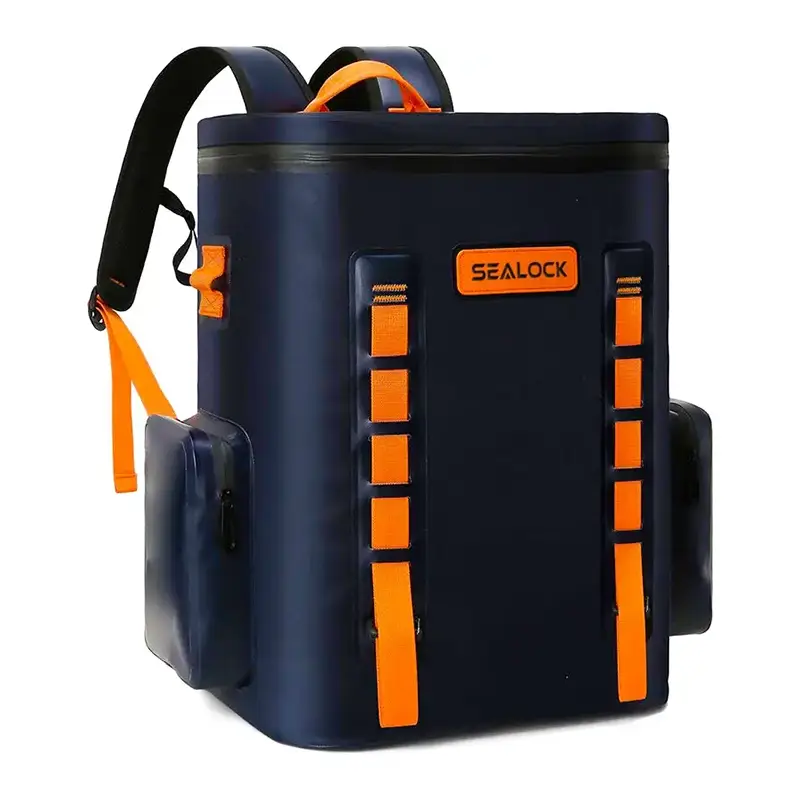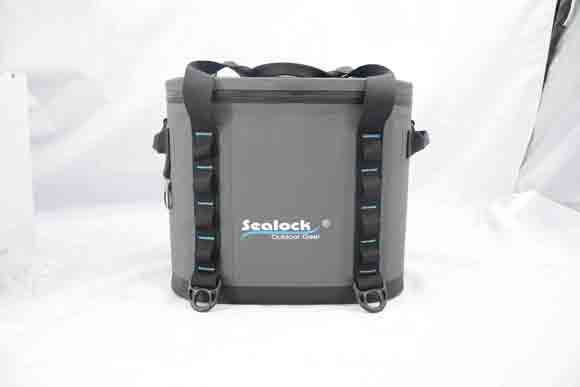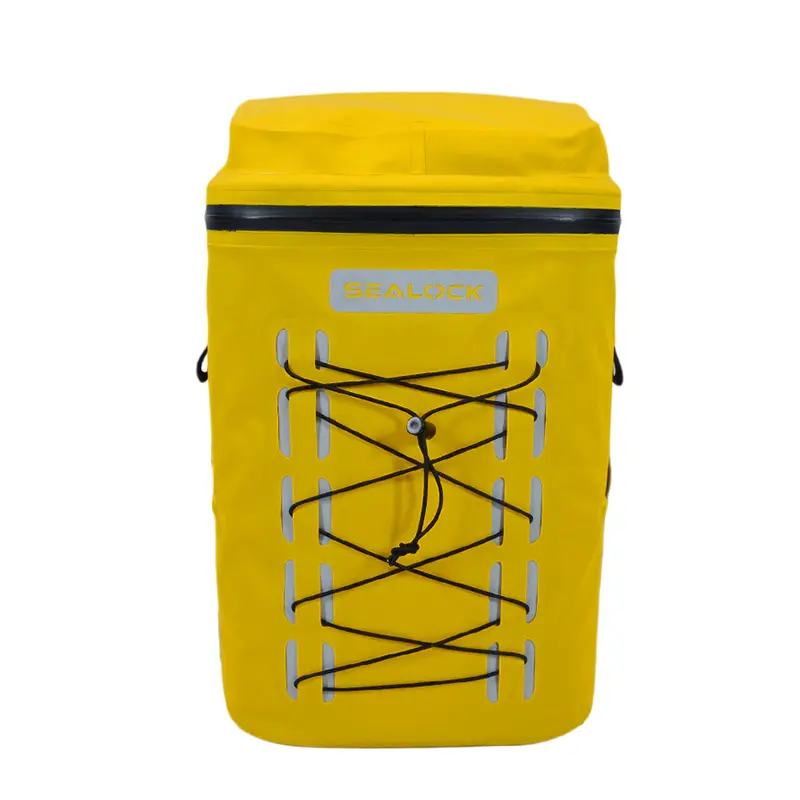
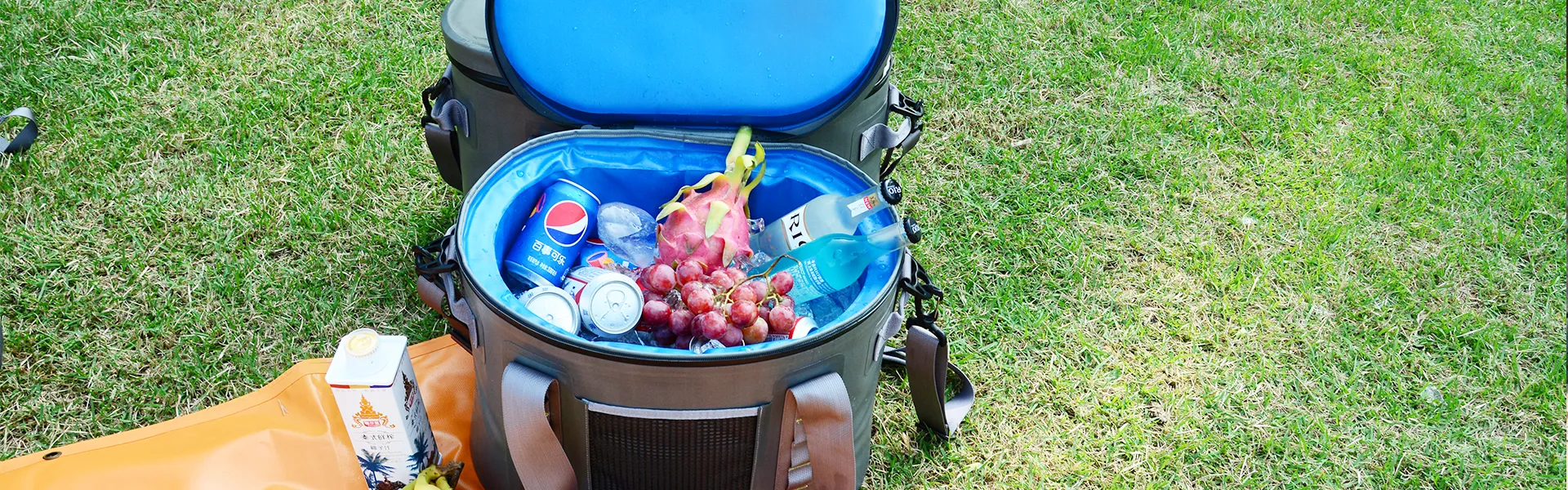
Sealock (YiFuLong Outdoor Gear Co., Ltd.) manufactures insulated wine carriers and beverage cooler bags to specification — bottle dividers, padded protection, welded leakproof liners and branding applied at source.
Factory since 2003 · China and Vietnam · welded and sewn construction in-house · MOQ 300 pcs · samples 7–15 days · production 30–45 days.
Send your bottle count and format: info@sealock.com.hk · +86-13632981825
A Wine Carrier Is a Breakage Problem Before It Is a Cooling Problem
This is the distinction that separates a well-engineered bottle carrier from a cooler bag with dividers dropped in. A cooler's job is thermal. A wine carrier's first job is getting glass to the destination intact, and the thermal performance sits second.
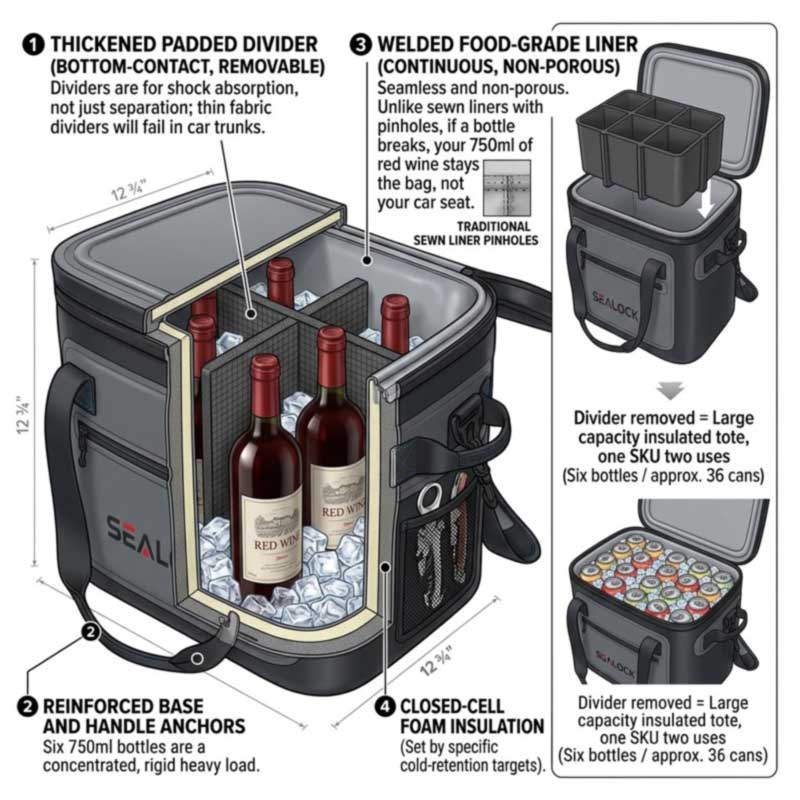
The category's own product descriptions make the priority plain: padded protective lining and adjustable removable divider flap protect glass bottles from breaking during car travel, and removable dividers and padding prevent bottles from breaking during travel. Design follows from that: padded divider for the wine bottles so they are protected, no banging or breakage.
Two engineering consequences for the build:
- Dividers carry impact, not just separation. Thin fabric partitions look right in a photo and fail in a car boot. Padded dividers that reach the base are what stop bottle-on-bottle contact.
- The base takes the load. Six 750 ml bottles is a heavy, concentrated, rigid load in a soft bag. A reinforced base and properly anchored handles matter more here than on a food cooler of the same volume.
Formats and Capacity Conventions
Bottle count is the organising specification in this category, in the same way litres are for a cooler. The conventions buyers expect:
| Format | Typical positioning |
|---|---|
| 1–2 bottle | Gift bag, hostess gift, BYOB, retail checkout add-on — often the premium-materials tier |
| 3–4 bottle | Everyday carrier, tasting-room purchase, picnic |
| 6 bottle | The volume standard — winery clubs, event programmes, corporate gifting. Commonly cross-specified as 36-can capacity with dividers removed |
| Growler / large format | Breweries, taprooms, bars — typically two-growler capacity with a padded divider |
| Wheeled 6-bottle | Transit tier — telescoping handle, locking zipper; for tasting tours and trade programmes |
Two sizing details worth specifying rather than assuming. First, bottle height varies: champagne and magnum bottles do not fit a carrier cut for standard 750 ml, which is why some builds add height or a flexible top flap so wine bottles will fit regardless of size. Second, dimensions should be checked against real bottles at sample stage, not calculated — we will build to whichever bottle format your market actually sells.
Specifying a wine carrier programme? Send the bottle count, the format your market uses, whether dividers should be removable, and your quantity. We will come back with a build, a price and a sample timeline.
info@sealock.com.hk · +86-13632981825
Where a Welded Liner Changes This Category
Most wine carriers on the market use a sewn, water-resistant liner. That is adequate until something goes wrong — and in this category "something goes wrong" means a broken bottle.
Industry descriptions are honest about what a standard liner does: it protects the contents from condensation pooling and contains any leakage from a compromised bottle without soaking through to the exterior. Containment is exactly the point, and it is where welded construction outperforms sewn.
A sewn liner has needle holes down every seam. A welded liner does not — it is one continuous, non-porous surface. If a bottle breaks in transit, the difference between the two is whether 750 ml of red wine stays inside the bag or reaches a car seat, a hotel floor or a retail display. For a premium or gifting programme, that is a warranty and reputation question, not a nicety.
The same construction handles the routine case too: condensation from chilled bottles, and melt-water if the programme includes an ice pack. Our welded builds use food-grade liners across the range, and sealed builds are water-immersion tested before shipping.
Materials and Positioning
This category spans a wider aesthetic range than technical coolers, because much of it is gifting. Material choice carries the positioning:
| Tier | Typical specification |
|---|---|
| Promotional volume | Laminated non-woven or polyester shell, sewn-in dividers, screen-printed logo |
| Retail standard | 600D polyester or ripstop, water-resistant liner, removable padded dividers, front pocket |
| Premium / gifting | Heavier shell with PU leather trim, welded food-grade liner, padded shoulder strap, retail-grade packaging |
| Technical / outdoor | TPU-laminated welded body, leakproof liner, immersion-rated closure — for boat, beach and festival programmes |
Note the ripstop point, which is a genuine durability argument for retail: the ripstop weave resists tear propagation — a puncture or abrasion that would spread across standard polyester stops at the ripstop grid, extending the bag's useful life in field use.
For the shell-material decision more broadly — TPU versus PVC, cost versus cold flexibility and compliance — see TPU vs PVC: which shell to spec.
Branding
Wine carriers are heavily branded products — wineries, distilleries, breweries, corporate gifting and event programmes all want the logo visible. Available methods:
- Screen print — the volume standard, bold and cost-efficient.
- Full-colour / UV print — for label artwork, vineyard imagery or gradients.
- Welded TPU or silicone patch — premium three-dimensional branding that does not pierce a welded shell.
- Deboss — subtle and durable, suits leather-trimmed gifting tiers.
- Woven label — a brand-label aesthetic rather than an imprint.
- Embroidery — available on sewn shells; not on a welded sealed liner or body, where needle holes would defeat the leakproofing.
- Custom hardware and trim — Pantone-matched webbing, zipper pulls, contrast trim.
Decide the decoration method before finalising construction, not after — on a welded build it constrains what is possible. Detail: branding at volume for promotional programmes.
Compliance Points Specific to This Category
Two that come up in retail and promotional programmes:
- Food contact. The liner may hold ice, condensation and, in a picnic configuration, food. Specify a food-grade liner and hold migration test evidence for your market. All our insulated bags use food-grade inner liners; testing is arranged per destination. See food-grade standards.
- Market labelling. Country-of-origin marking, and for promotional programmes into the US, CPSIA and Prop 65 considerations where relevant. Peers in the category routinely state CPSIA and Prop 65 compliant for insulated beverage bags, so retail buyers will ask.
What We Build
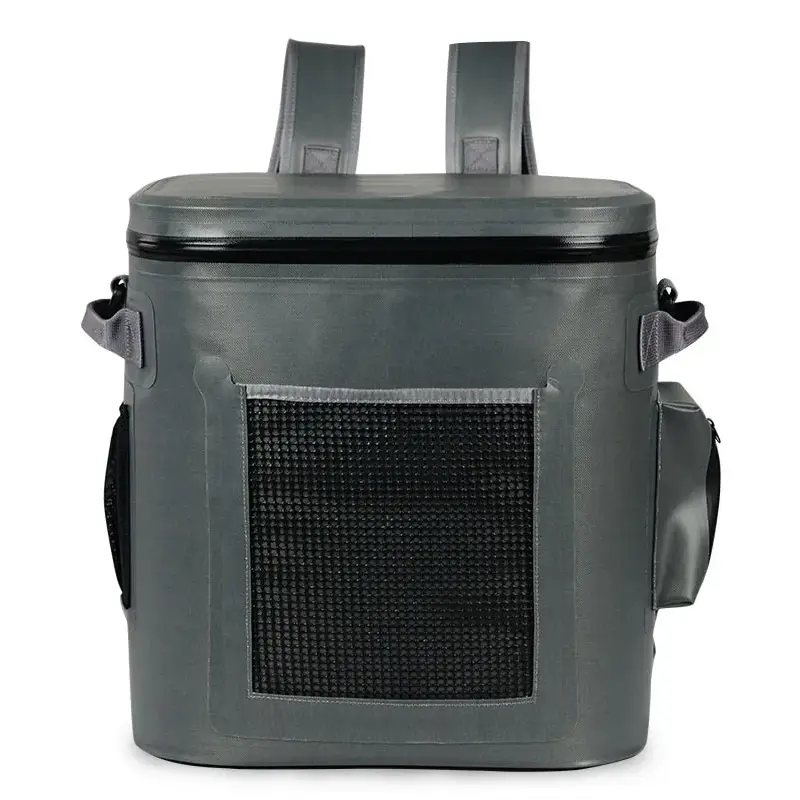
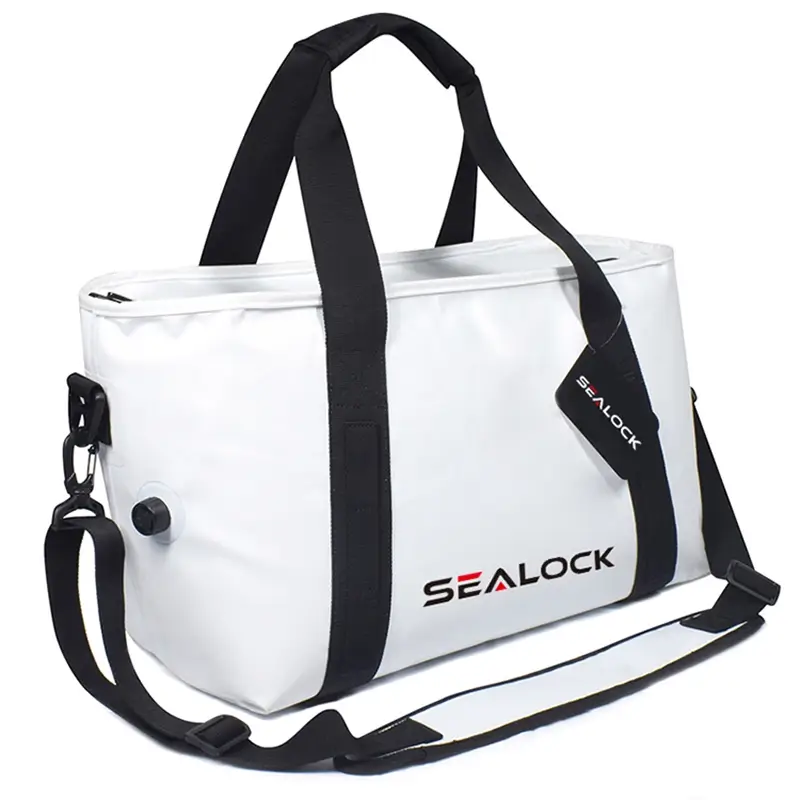
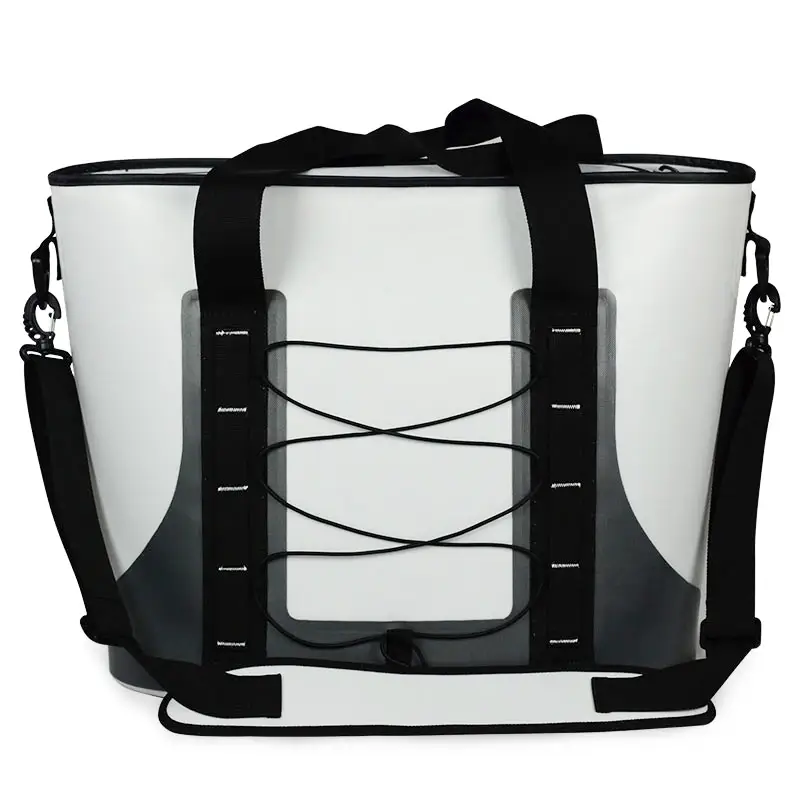
Wine and beverage carriers are made to customer specification rather than sold from a fixed catalogue. The products below are current insulated builds showing the construction, liner and branding capability a bottle-carrier programme draws on:
| Image | Model | Relevant capability | Link |
|---|---|---|---|
|
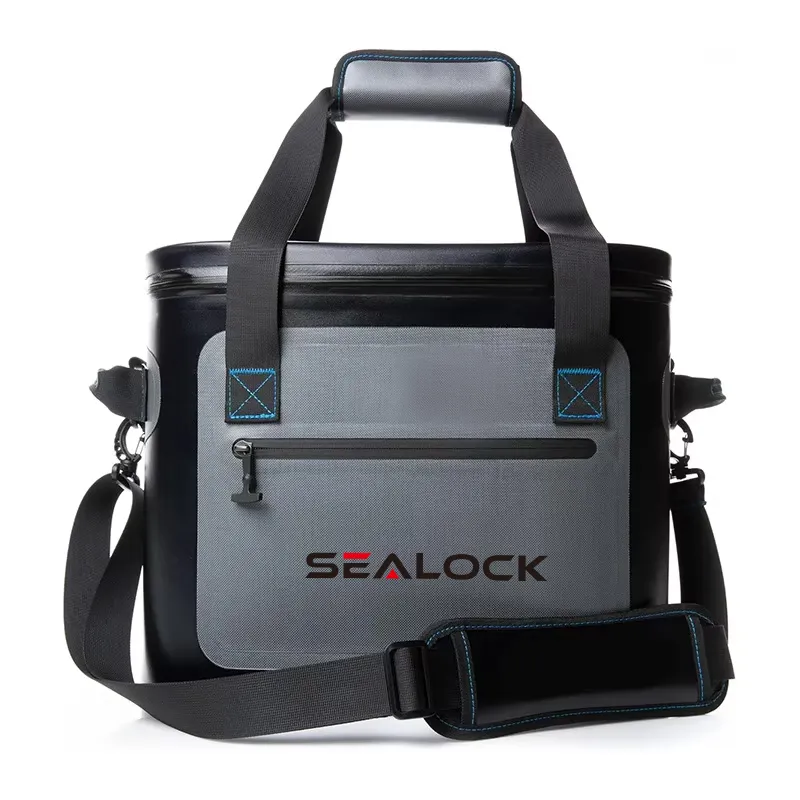
24L Soft Cooler Tote (SL-I230) | Welded tote format with food-grade liner and airtight zipper — the construction base for a premium bottle carrier | View |
|
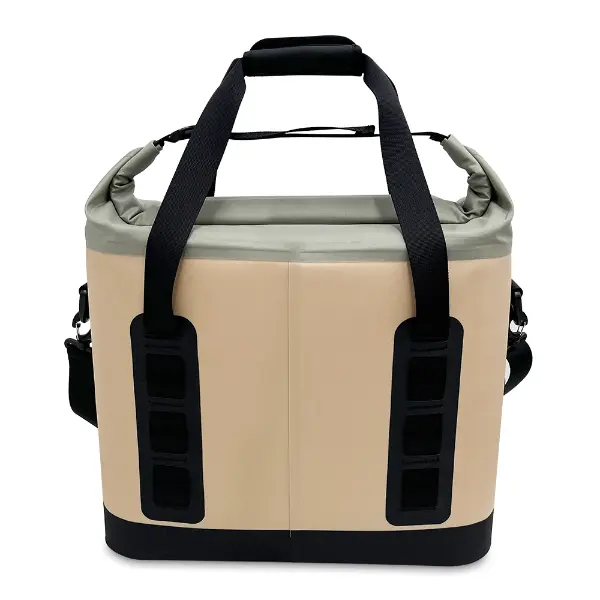
Roll-Top Leakproof Soft Cooler (SL-I288) | 840D TPU welded build with a built-in bottle opener and waterproof zip pocket — design-led gifting reference | View |
|
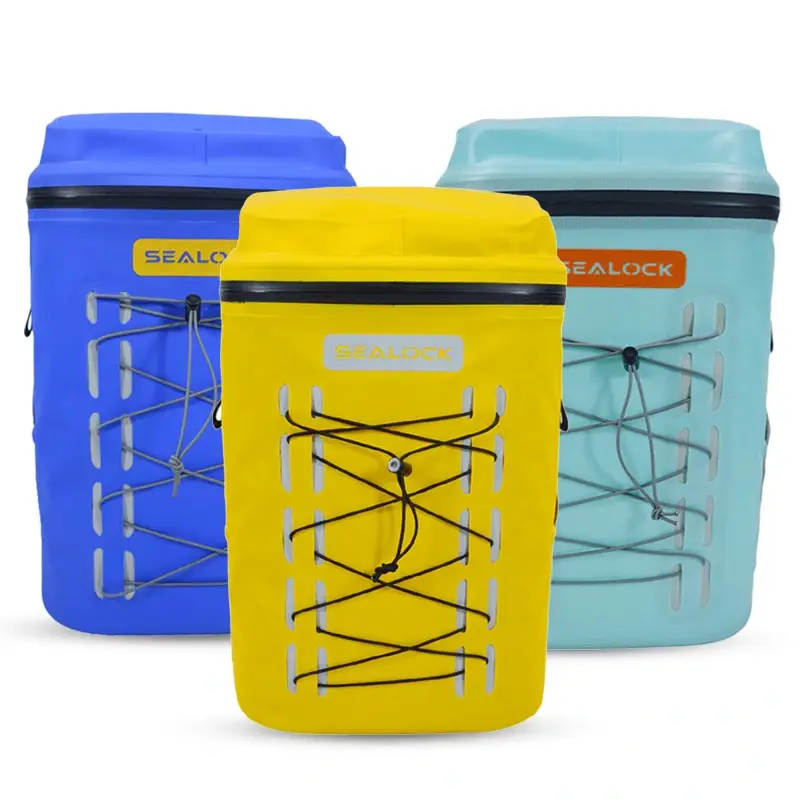
Insulated Cooler Backpack (SL-I075A) | 36-can capacity class — the volume equivalent of a six-bottle carrier with dividers removed | View |
|
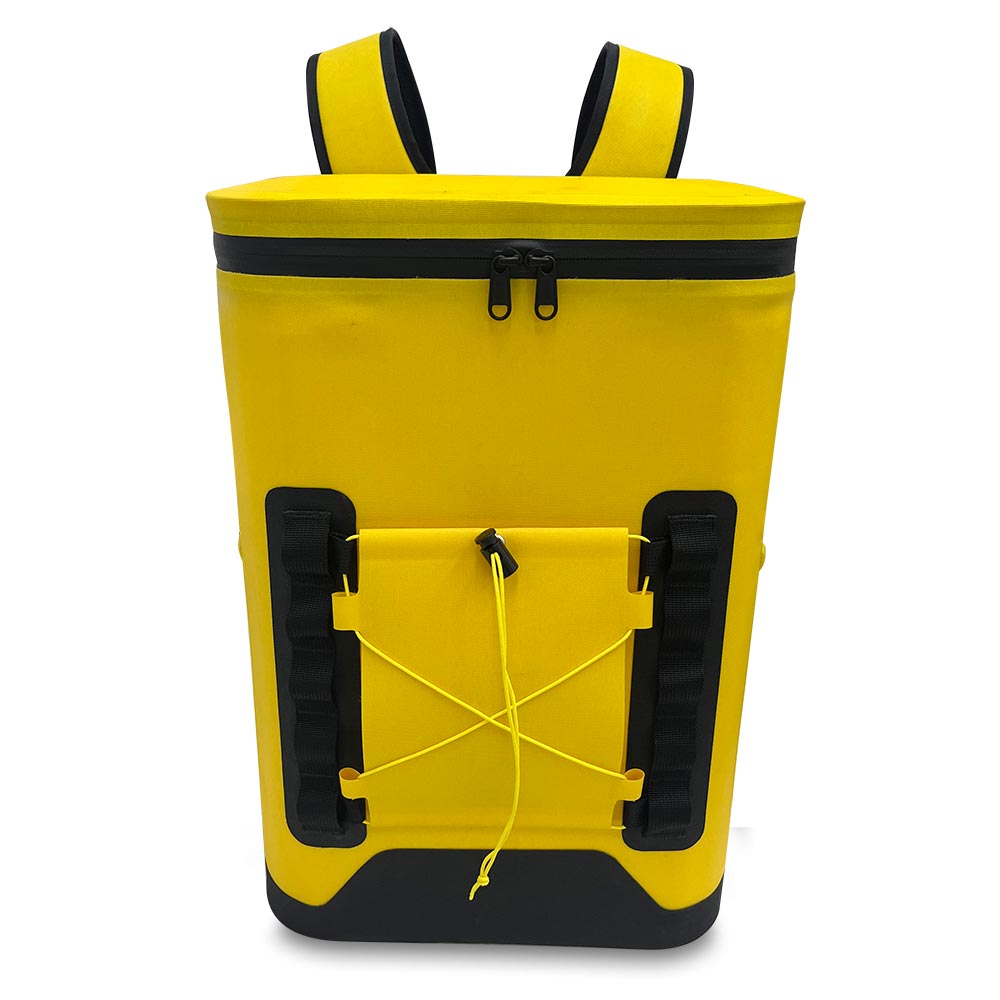
28L Airtight-Zipper Cooler Backpack (SL-I274) | 840D TPU, EVA core, food-grade TPU membrane, up to 48 hr — the premium thermal specification | View |
Because soft bags need no injection tooling, a bespoke bottle carrier — your bottle count, your divider layout, your shell and trim — is pattern engineering and sampling rather than a mould investment. That keeps genuinely custom work viable at 300 pieces.
Our customers include international brands such as Stanley, YETI, Hydro Flask, Osprey, Musto and Simms. The same lines and quality systems run a 300-piece order.
Working Terms
| Company | YiFuLong Outdoor Gear Co., Ltd. — manufacturer since 2003, registry-verifiable |
|---|---|
| Factories | Dongguan, Guangdong, China + Ho Chi Minh City, Vietnam; three high-frequency welding factories and in-house sewing lines |
| Formats | 1, 2, 3, 4, 6-bottle and growler carriers; removable or fixed dividers; tote, shoulder or backpack carry |
| MOQ | 300 pcs per design (per size and colourway); negotiable on custom programmes |
| Lead times | Samples 7–15 days; production 30–45 days; FOB |
| Branding | Screen print, UV print, welded patch, deboss, woven label, embroidery on sewn shells, Pantone-matched trim |
| Liners | Food-grade across the range; welded leakproof construction available |
| Testing | Water-immersion batch testing; cold-hold measured with a multi-channel thermocouple tester |
| Certifications | ISO9001, BSCI, SMETA P4, GRS, HIGG, SCAN |
FAQ
Q: What is the most important design decision on a wine carrier?
A: The dividers. They are what stop bottle-on-bottle contact and breakage in a car boot, so they need padding and full depth rather than thin fabric partitions. Making them removable is the second decision worth taking seriously — dividers in, it is a six-bottle wine carrier; dividers out, it is a large open insulated tote, which means one SKU serves two use cases.
Q: Can you build to a specific bottle count?
A: Yes — one, two, three, four or six bottles, growler formats, or a custom layout. Tell us the bottle format your market actually sells, because champagne and magnum bottles do not fit a carrier cut for standard 750 ml. We check the fit against real bottles at sample stage rather than calculating it.
Q: Why specify a welded liner for a wine bag?
A: Because of what happens when a bottle breaks. A sewn liner has needle holes down every seam; a welded liner is one continuous non-porous surface. In this category containment is the point — the difference is whether 750 ml of red wine stays in the bag or reaches a car seat or a retail display. It also handles condensation from chilled bottles and melt-water if you include an ice pack.
Q: Can you print full-colour label artwork on the bag?
A: Yes — UV or full-colour print handles vineyard imagery, gradients and label artwork; screen print suits bold logos at volume; welded patches, deboss and woven labels suit premium gifting tiers. Note that embroidery is fine on sewn shells but not on a welded sealed body, where needle holes would defeat the leakproofing. Choose the decoration method before finalising construction.
Q: What is your minimum for a wine carrier programme?
A: 300 pieces per design, per size and colourway. Because soft bags need no injection tooling, a bespoke bottle count, divider layout and trim specification is pattern and sampling work rather than a mould investment — so genuinely custom carriers are viable at that quantity.
Q: Do these need food-contact testing?
A: Specify a food-grade liner and hold the evidence, yes — the liner meets ice, condensation and, in picnic configuration, food. We use food-grade liners across the range and arrange migration testing for your destination market. Retail buyers in this category also commonly ask about CPSIA and Prop 65 for the US, so raise your markets at specification stage.
Sealock — YiFuLong Outdoor Gear Co., Ltd.
Insulated wine carriers and beverage cooler bags, welded and sewn in China and Vietnam since 2003.
Email: info@sealock.com.hk · Phone: +86-13632981825 · MOQ 300 pcs · samples 7–15 days
Send your bottle count, divider preference and quantity — or a photo of a carrier you want built.
Category conventions, dimensions and feature descriptions cited here reflect publicly available product and industry sources as of mid-2026 and vary by supplier and market. Specifications, lead times and compliance testing are confirmed per order at quotation.