News

Insulated Cooler Backpack Manufacturer: EPE Foam & Cold-Retention Design

2026-07-17 0 Leave me a message

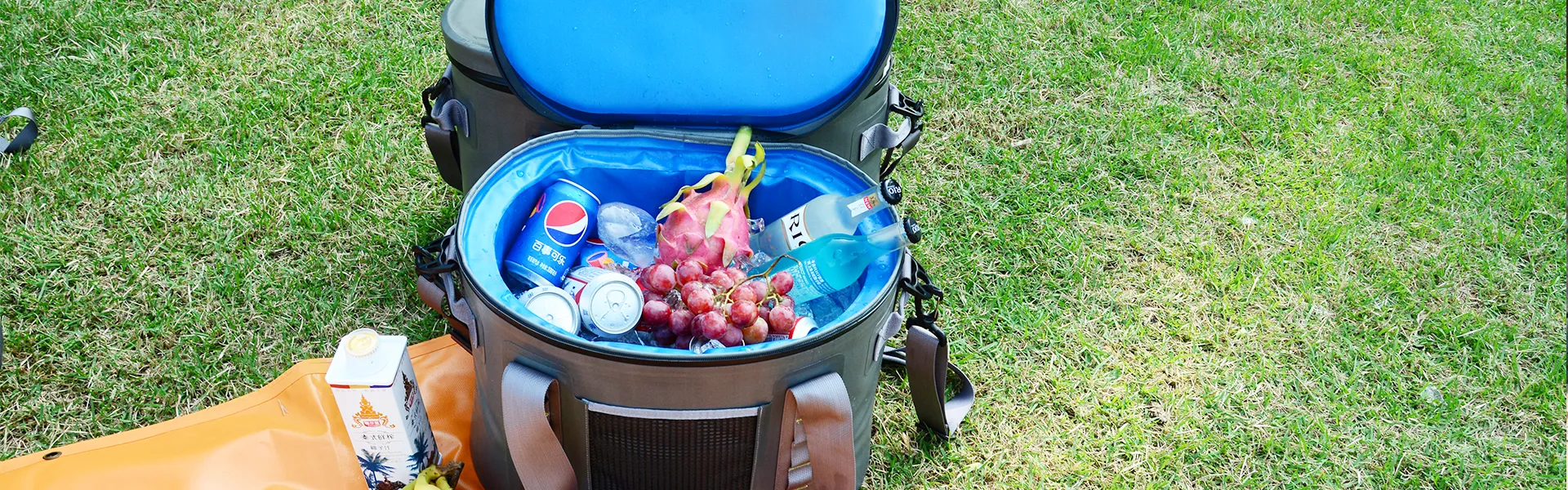
An insulated cooler backpack keeps ice for hours not because of a marketing number on the hangtag, but because of a chain of engineering decisions — the foam in its walls, how thick that foam is, how the seams are sealed, and how the whole system is designed to slow the three ways heat gets in. Most of that is invisible to the buyer and easy for a weak supplier to fake. As a manufacturer, Sealock (YiFuLong Outdoor Gear Co., Ltd.) builds cooler backpacks around closed-cell EPE foam and a deliberate cold-retention design, and this guide explains the material science and the design logic behind a cooler that actually holds cold — with the real numbers a buyer can use to separate a true insulated pack from a padded bag.

Why EPE Foam Is the Default Core for Soft Coolers

EPE — expanded polyethylene — is the workhorse insulation in soft coolers, and the reasons are physical, not habitual. EPE is a closed-cell foam made from low-density polyethylene, with densities typically in the 20–30 kg/m³ range, and its sealed-cell structure gives it waterproofing, moisture and chemical resistance, and tear resistance along with strong thermal insulation. For a cooler, the closed-cell structure is the whole point: sealed cells mean there is no connected air path for heat to move through by convection, and no open pore network for water to soak into.

The insulating performance is quantifiable. EPE offers a thermal insulation value of roughly R-4 per inch, and expanded polyethylene foams generally sit around a thermal conductivity as low as 0.03 W/m·K with a closed-cell structure that gives very low permeability. Just as important for a bag that gets loaded, dropped and carried, EPE resists permanent deformation after repeated impacts, so the wall keeps its thickness — and therefore its insulating value — over a product's life rather than crushing thin.

That combination — genuine insulation, inherent water resistance, resilience and low weight — is why EPE is the sensible default for a soft cooler backpack, where a hard cooler's rigid foam would be too heavy and an open-cell pad would soak up meltwater and lose its loft. Sealock builds its cooler backpacks on closed-cell EPE (and cross-linked XPE for its highest-density walls), matched by thickness to the target cold-hold.

Buyer tip: "Insulated" on a label means nothing without two facts: the cell structure and the wall thickness. Ask whether the foam is closed-cell, and for the wall thickness in millimetres. Closed-cell EPE at a stated thickness is a spec you can verify; "thick padding" is not.

Cold Retention Is a System, Not a Single Number

Heat reaches the ice three ways — conduction through the walls, convection through air gaps and openings, and radiation — and a cooler's real-world hold depends on managing all three. The foam handles conduction; the design and the user handle the rest. This is why two coolers with the same foam can perform very differently, and why an honest manufacturer talks about a system rather than a headline hour count.

The Foam Wall: Material and Thickness

The wall sets the ceiling. Closed-cell EPE around R-4 per inch is the baseline, and thickness scales it almost linearly — a thicker wall buys more hours, which is why a 24-hour day pack and a 48-hour expedition pack differ mainly in wall build. The trade-off is real: more foam means more bulk, weight and shipping volume, so a manufacturer specs thickness to the use rather than maximising it blindly.

The Seal: Convection and Air Exchange

Every opening is a convection leak. A loose zipper or a gaping lid trades cold inside air for warm outside air on every movement and every opening, which is often the difference between a cooler's lab number and its field number. Independent testing makes the scale concrete: manufacturer-claimed retention under ASTM F2825 is measured with the cooler unopened at 90°F, and opening it six times a day can cut retention by 30–40%. A tight zip-around or airtight closure is therefore not a luxury — it is half the thermal design.

The Use: What the Buyer's Customer Controls

A manufacturer can only build the envelope; how it is packed decides the rest, and the physics is well documented. The load-side levers that matter most:

  • Pre-chill everything. Pre-chilling the cooler and its contents before adding ice can reduce the thermal load by up to 57% under NSF/ANSI 184 thermal-efficiency testing, because otherwise over half the ice's cooling capacity is spent chilling the cooler itself rather than the contents.
  • Use a 2:1 ice-to-contents ratio. The standard guidance is twice as much ice as contents — roughly two-thirds ice, one-third food and drink.
  • Choose block over cube ice. A block melts far slower than the same weight of cubes because of its much lower surface-area-to-volume ratio, so blocks give longevity while cubes chill fast.
  • Kill the air gaps. Empty air space accelerates convective heat transfer — in testing a half-full large cooler lost ice faster than a full smaller one.
  • Keep the meltwater until done. Cold meltwater insulates the remaining ice better than air; drain only if it warms.
  • Manage the environment. Shade and elevation matter — ground conduction is an underrated heat source — and every 10°F above 75°F ambient cuts ice life measurably.
Why this matters to a brand: Because field performance depends heavily on use, a responsible manufacturer states its cold-hold honestly and can explain the test conditions behind it. A supplier quoting a big hour number with no test basis is quoting fiction — and a brand that repeats it inherits the complaint.
"insulated cooler backpack heat-flow diagram showing conduction, convection and radiation with EPE foam, sealed zipper and shell defenses

What the Manufacturer Controls in the Design

Reading the system above, a manufacturer's real design levers become clear — and these are the questions a buyer should put to any supplier:

  • Foam type and grade: closed-cell EPE as the baseline, cross-linked XPE for a denser, more compression-stable wall, or premium options (high-density PU, VIP vacuum panel, EPP, aerogel) where the longest hold justifies the cost and weight.
  • Wall thickness by zone: a thicker base and body where heat load is highest, tuned to a target hold rather than a uniform guess.
  • Closure design: a zip-around top, a molded flip lid or an airtight zipper, each trading access speed against how tightly it seals convection.
  • Liner and base: a food-grade waterproof liner that will not absorb meltwater, and a reinforced base that resists ground conduction and abrasion.
  • Shell and color: a TPU-laminated shell for durability and water resistance; lighter shell colors reflect more radiant heat than dark ones.

Sealock sets each of these to the product's job. Its 24-hour-class day packs run closed-cell EPE with a zip-around or molded-lid closure for fast access; its 48-hour-class packs step up to a thick high-density XPE wall with an airtight zipper for the tightest seal. The design follows the intended hold, not a one-size spec.

Construction: Why the Seams Are Welded

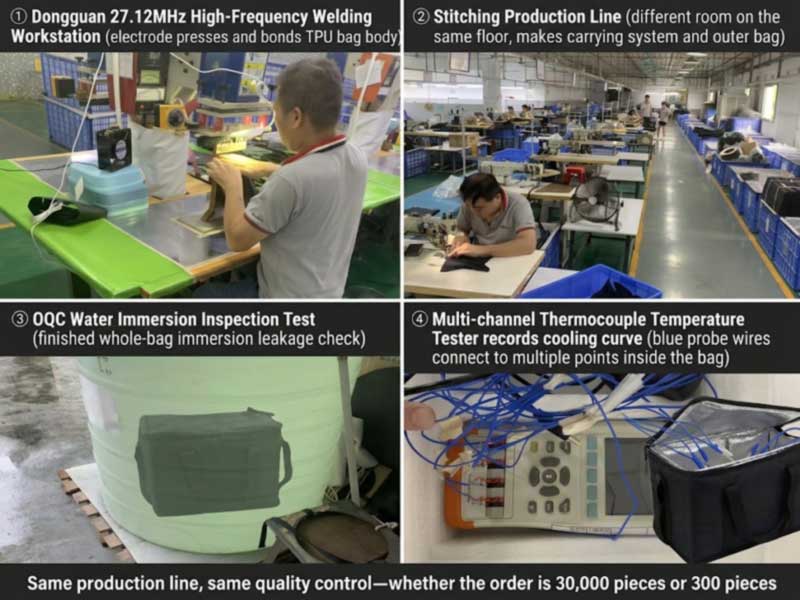
Insulation only performs if the wall stays intact and dry, which is why construction method is part of cold-retention design. A sewn seam puts a needle hole at every stitch; welded construction fuses the TPU-coated panels into a continuous skin with no holes. Independent sources frame the payoff plainly: welded seams keep water in, and heat-sealed liners stop leaks where stitched ones would not, and a closed-cell foam liner keeps meltwater and condensation contained rather than soaking through the walls. A dry wall is an insulating wall; a wet one is not. Sealock welds its cooler backpacks at 27.12 MHz on its own lines and pairs the welded body with a food-grade waterproof liner, so the EPE core stays dry and keeps its rated value. For the closure detail, see Cooler Backpack with Waterproof Zipper Explained.

The Range, Built Around Cold-Retention Design

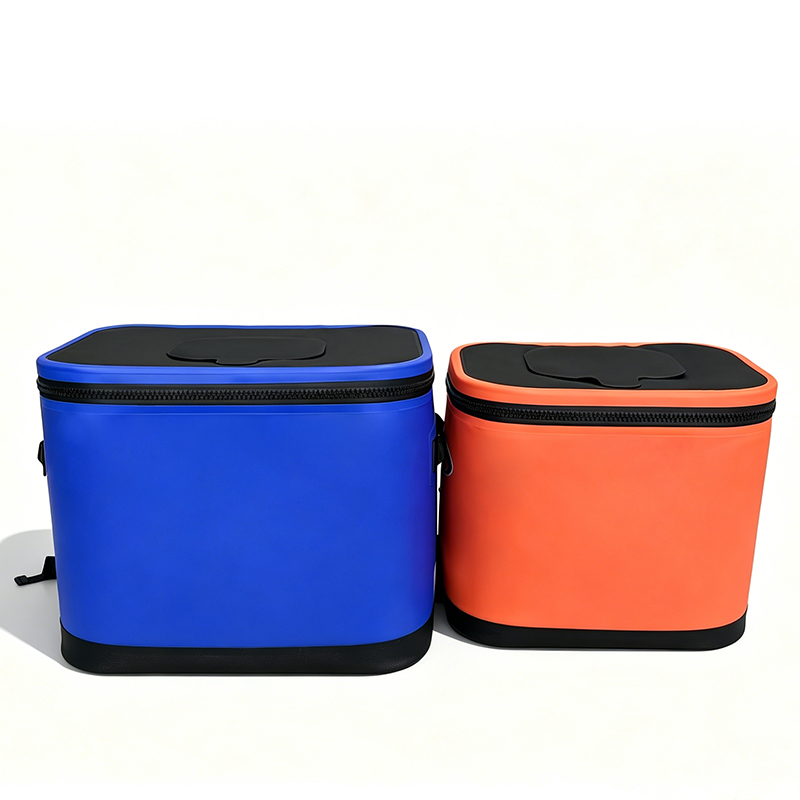
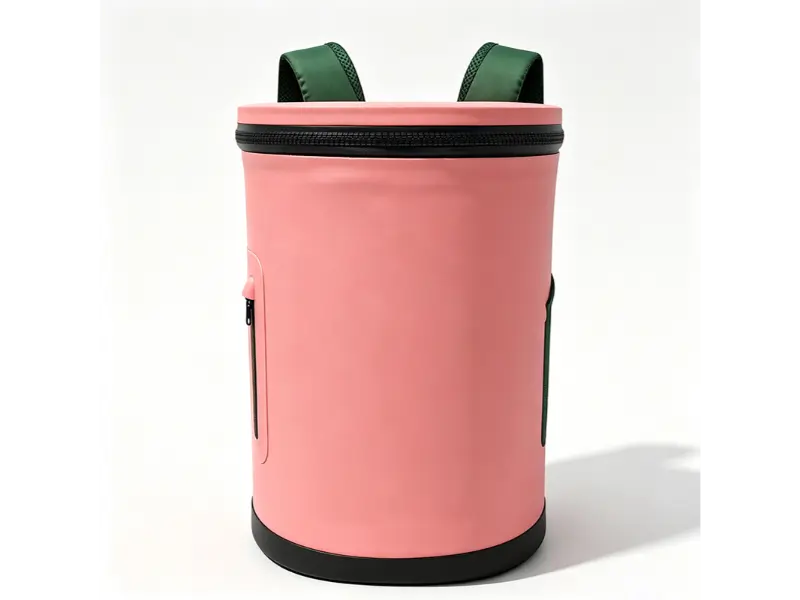
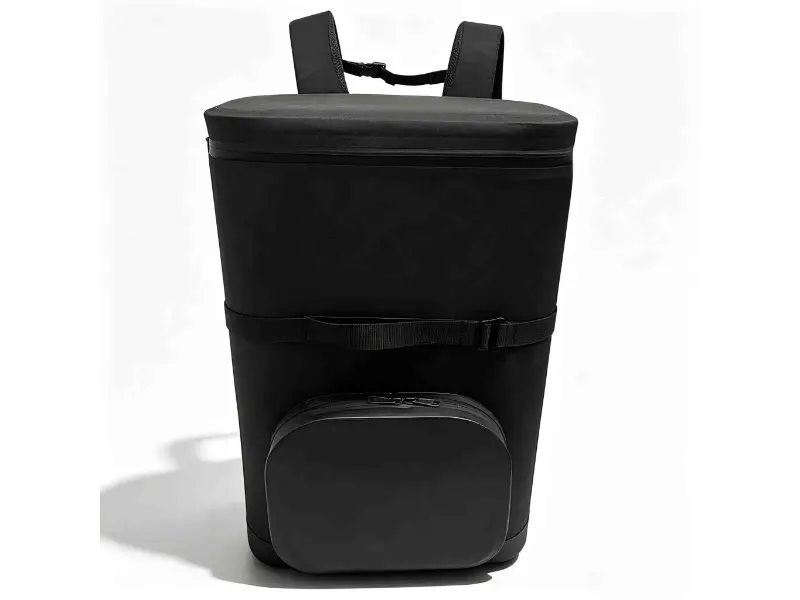
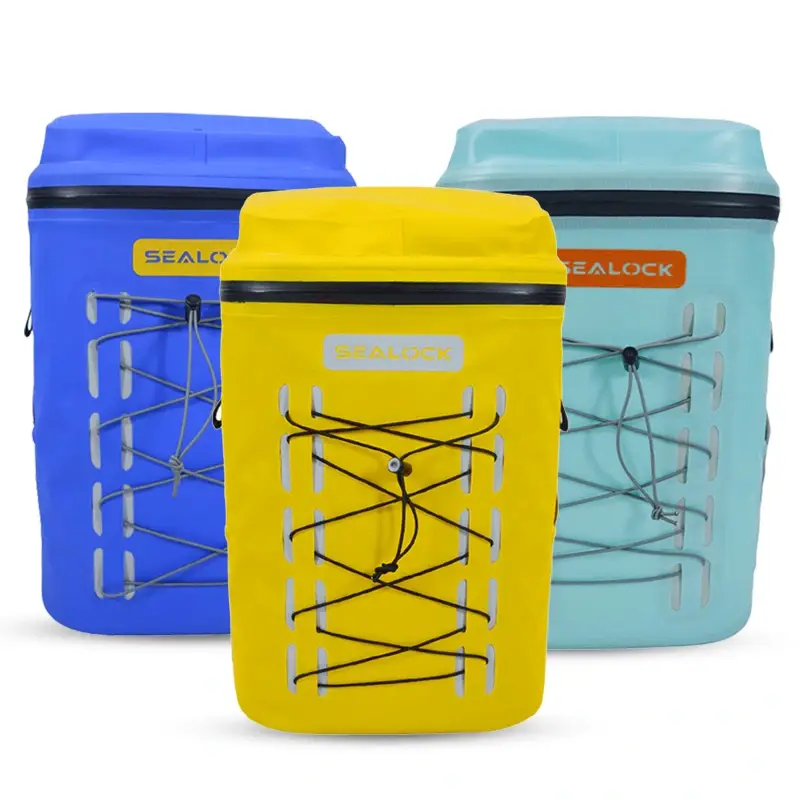
A cooler-backpack maker should show packs designed for different holds, chosen by fit — a 24-hour day pack and a 48-hour expedition pack are different designs, not better and worse versions of one. Sealock's insulated cooler backpacks, all real:

Image Model Cold-hold class Insulation & closure Link
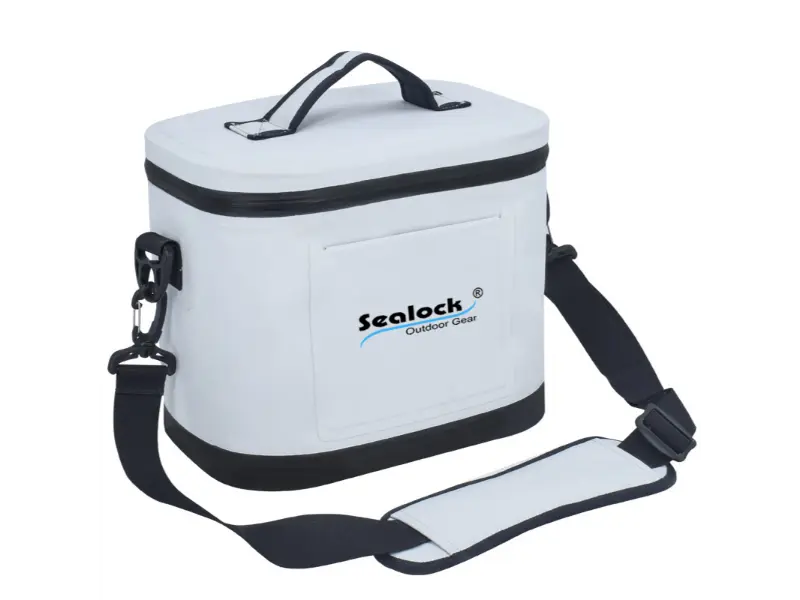
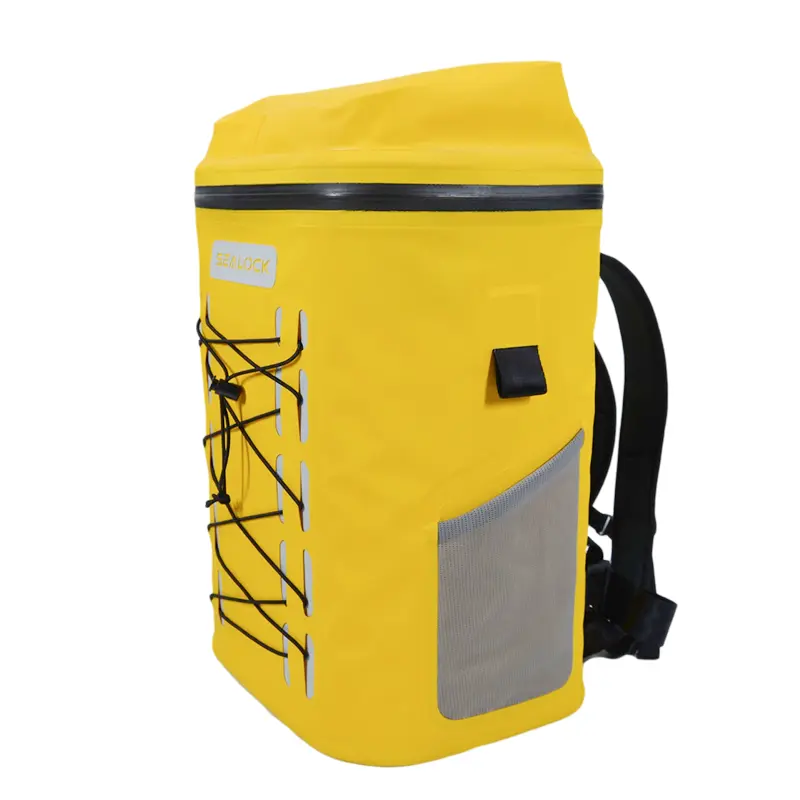
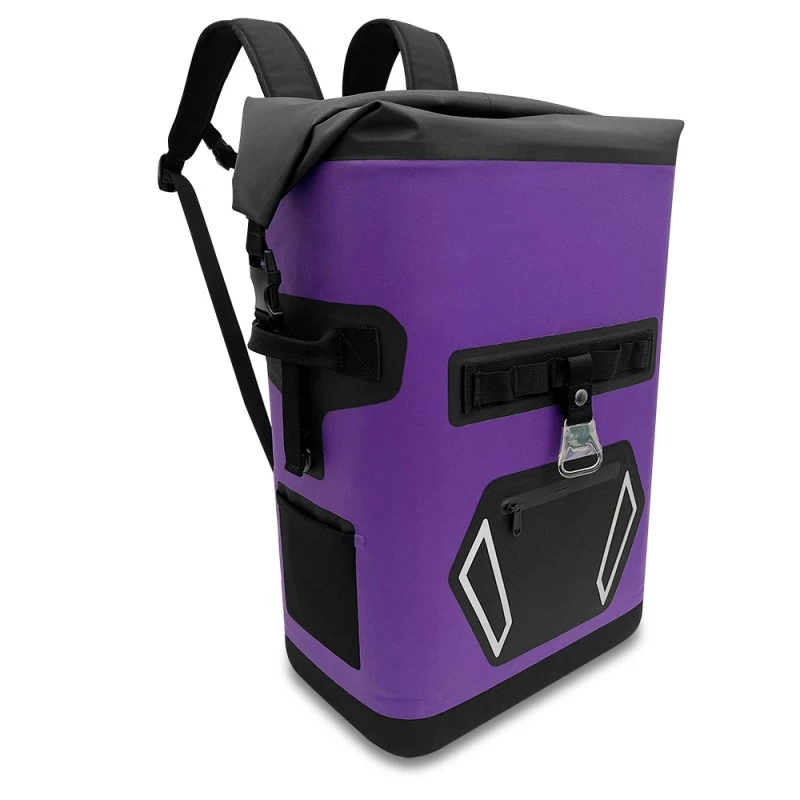
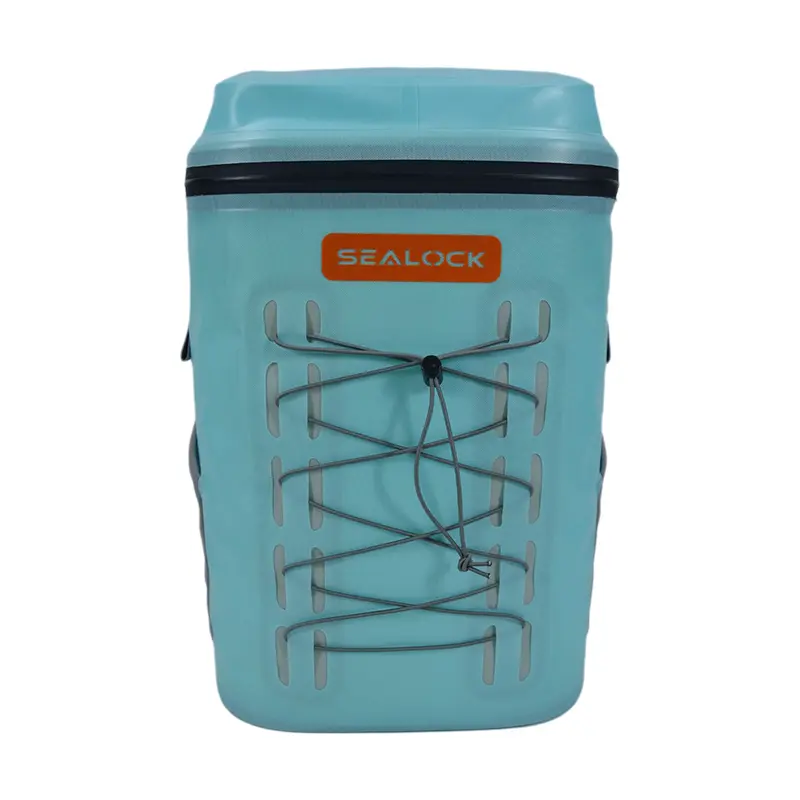
Insulated soft cooler backpack molded lid SL-E050B Insulated Soft Cooler Backpack, molded lid (SL-E050B) ~24 hrs (day pack) Closed-cell EPE, molded flip lid + zip-around View
Barrel insulated cooler backpack SL-I309 Barrel Insulated Cooler Backpack (SL-I309) ~24–36 hrs Closed-cell EPE, zip-around + flip lid, sternum + waist View
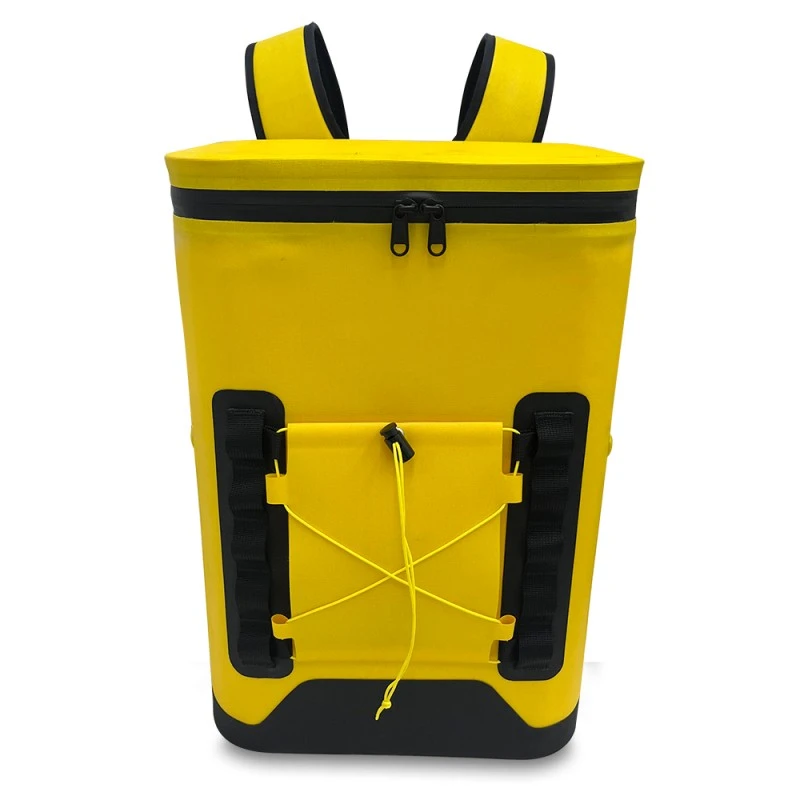
22L IPX7 cooler backpack SL-I280 22L IPX7 Cooler Backpack (SL-I280) 48+ hrs (expedition) 50 mm high-density XPE, airtight zipper, IPX7 View
12-20L TPU waterproof soft cooler SL-I032 Waterproof Soft Cooler 12/15/20L (SL-I032) 48+ hrs, compact 20–25 mm closed-cell XPE, airtight zipper View

The pattern is deliberate: the day packs prioritise fast access and light weight with an EPE wall around a 24-hour hold, while the expedition packs prioritise the tightest seal and a thick high-density wall for 48-plus hours. Neither is "better" — each is designed for a different trip, and a brand can carry both.

OEM & ODM: Designing to a Target Hold

Because cold-retention is a design output, a brand's most useful custom lever is the target hold, and a real manufacturer engineers backward from it. Beyond color and logo, Sealock develops from the ground up — a brand states a target cold-hold, use case and budget, and the factory specs foam type, wall thickness, closure and liner to hit it. For how brands set those specs and the sourcing mechanics, see Custom Cooler Backpacks for Outdoor Brands and Soft Cooler Backpack Supplier: MOQ, Lead Times & FOB Sourcing Explained.

  • Insulation tier to target hold: EPE for 24-hour day packs, high-density XPE for 48-hour packs, premium panels for the longest holds.
  • Closure to use: molded flip lid or zip-around for fast day-use access; airtight zipper for maximum seal.
  • MOQ 300 pcs per design; sampling 7–15 days; production 30–45 days, FOB Guangdong.
  • China or Vietnam origin on the same spec, for tariff and lead-time control.

Quality Control: Verifying the Hold

A cold-hold claim is only worth what the testing behind it proves. Sealock runs in-house IQC, IPQC and OQC: incoming verification of EPE/XPE foam thickness and density and food-grade liner safety; in-line inspection of every weld and closure; and an outgoing gate with AQL sampling, a full water-immersion batch test and a gold-sample sign-off, with SGS or QIMA third-party inspection available. Cold-retention is validated against controlled conditions so the figure a brand advertises reflects a real test, not a hopeful number. Behind the line, ISO9001, BSCI, SMETA P4, GRS, HIGG and SCAN keep the factory audit-ready.

FAQ: Insulated Cooler Backpack Manufacturer

Q: Why do most soft cooler backpacks use EPE foam?

A: EPE (expanded polyethylene) is a closed-cell foam, roughly 20–30 kg/m³ density and about R-4 per inch, that insulates well, resists water and chemicals, and springs back after impacts instead of crushing thin. That mix of insulation, water resistance, resilience and light weight makes it the practical default for a soft cooler, where a hard cooler's rigid foam would be too heavy.

Q: How much cold-hold does EPE foam give, and what changes it?

A: The hold scales with wall thickness and grade — a thin-walled EPE day pack targets around 24 hours, a thick high-density wall reaches 48-plus. But real-world hold also depends on the seal and on use: opening a cooler six times a day can cut retention 30–40% versus the unopened ASTM test, and pre-chilling plus a 2:1 ice ratio and block ice extend it substantially.

Q: What is the difference between EPE and XPE foam in a cooler?

A: Both are closed-cell polyethylene foams. EPE is the lighter, flexible baseline suited to day packs; cross-linked XPE is denser and more compression-stable, holding its thickness better under load, which suits thicker walls for 48-hour packs. Sealock uses EPE for its 24-hour-class packs and high-density XPE for its 48-hour builds.

Q: How can I tell a genuinely insulated cooler from a padded bag?

A: Ask for two facts: the foam cell structure (it should be closed-cell) and the wall thickness in millimetres, then ask on what test basis the cold-hold figure is stated. A real manufacturer answers all three; a reseller quoting only a big hour number cannot.

Q: Can the manufacturer design a cooler backpack to a specific cold-hold target?

A: Yes. Sealock engineers backward from a target hold, setting foam type, wall thickness, closure and liner to reach it, with full ground-up development available. MOQ is 300 pcs per design, samples in 7–15 days, production 30–45 days.

Sourcing insulated cooler backpacks? Sealock (YiFuLong Outdoor Gear Co., Ltd.) manufactures cooler backpacks around closed-cell EPE and XPE foam and a deliberate cold-retention design, factory-direct from China and Vietnam. Tell the team your target cold-hold, use case and market, and they will spec the foam, wall and closure to match.

Email: info@sealock.com.hk  |  Phone: +86-13632981825  |  See an EPE cooler backpack example

Material properties, thermal figures and ice-retention test references cited here reflect publicly available foam-industry, ASTM/NSF and cooler-testing sources as of mid-2026 and are general guidance; real-world performance varies with build, load and conditions. Confirm specifications for a given order at sampling.

Related News
Leave me a message
X
We use cookies to offer you a better browsing experience, analyze site traffic and personalize content. By using this site, you agree to our use of cookies.Privacy Policy
RejectAccept