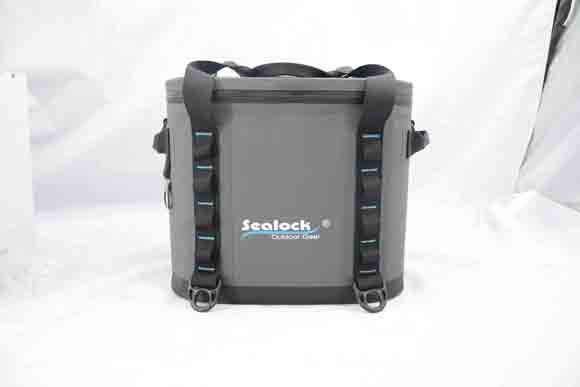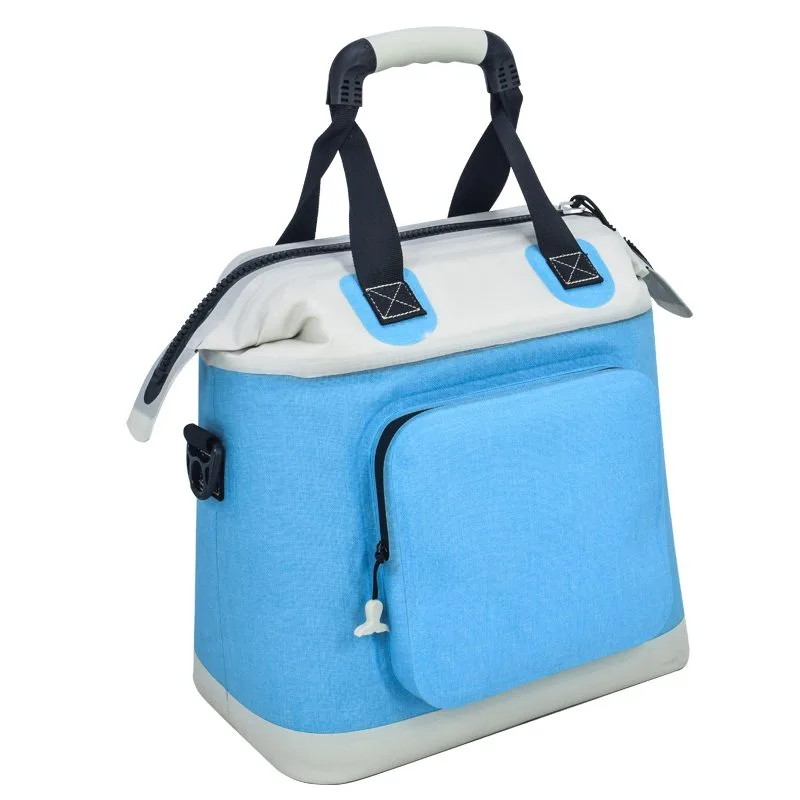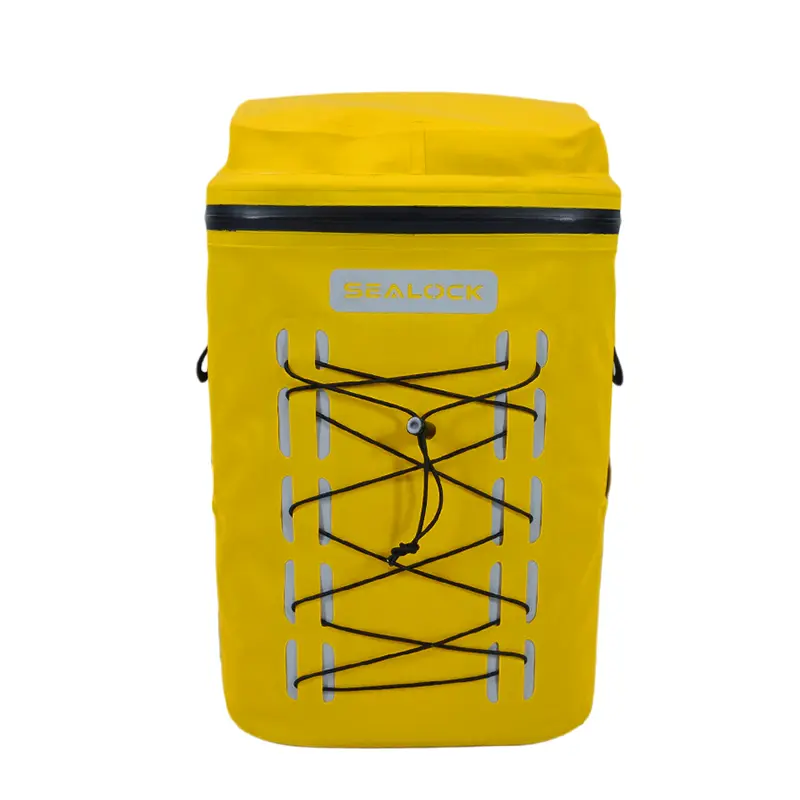
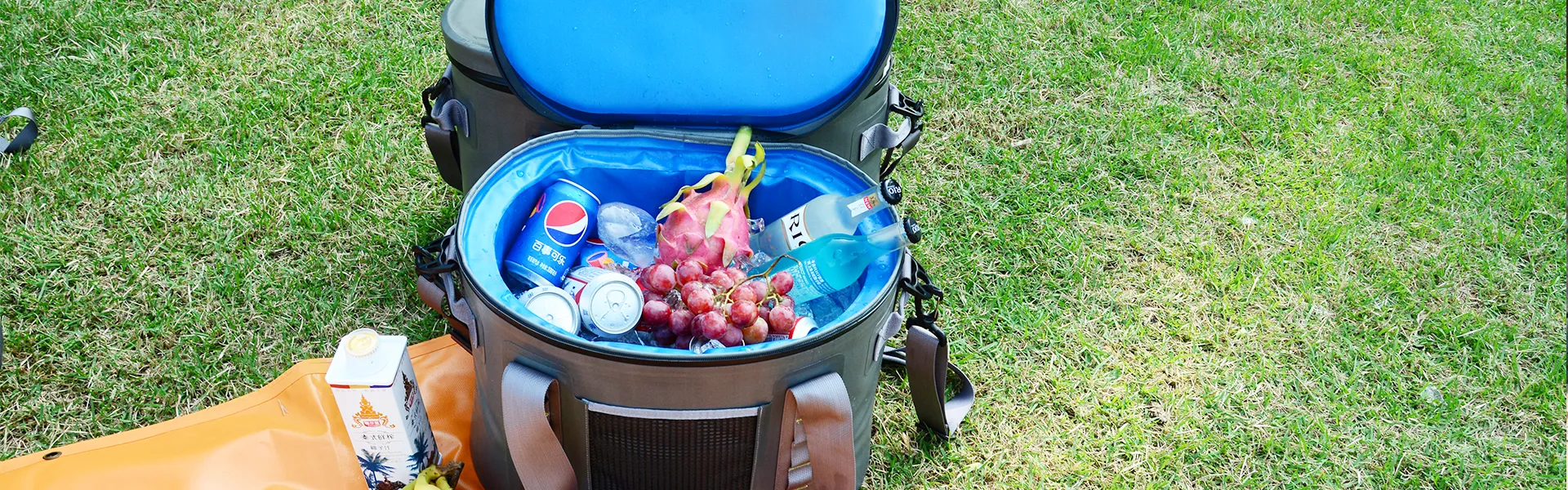
Sealock (YiFuLong Outdoor Gear Co., Ltd.) manufactures insulated delivery bags for restaurant groups, delivery platforms, cloud kitchens and cold-chain operators — built for daily commercial cycles, not occasional use.
Factory since 2003 · China and Vietnam · welded and sewn construction in-house · food-grade liners across the range · MOQ 300 pcs · samples 7–15 days.
Send your route profile and fleet size: info@sealock.com.hk · +86-13632981825
Fleet Buying Is a Different Problem From Buying a Bag
A consumer buys one cooler and uses it occasionally. A fleet buys hundreds and uses each one several times a day, every day, through weather, loading, cleaning and abuse. The economics follow the failure rate, not the purchase price — a bag that costs less and lasts half as long is the more expensive bag, and a fleet re-equipping mid-season is an operational problem, not a procurement one.
The requirement is explicit about what commercial use means: a professional delivery bag ;needs to handle loading, unloading, vehicle transport, weather exposure, cleaning cycles, and different packaging formats. Cleaning cycles in particular are where consumer-grade construction fails, and where most fleet complaints originate.
Start With the Route and the Food, Not the Catalogue
The most useful sourcing principle in this category comes from foodservice procurement: ;start with the food, not the packaging catalog — specify the temperature state, the holding conditions and the route, because ;"food grade" alone does not describe the actual use condition.
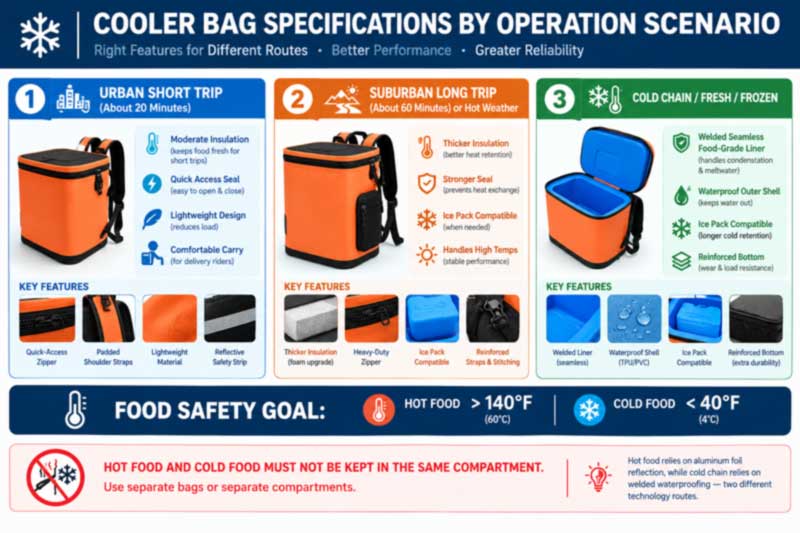
Delivery operations differ enough that one specification cannot serve all of them: ;a dense city center with 20-minute routes may use one design. A suburban food service brand with 60-minute delivery windows may need thicker insulation and stronger closures. A frozen food distributor may require ice pack compatibility and stronger water resistance.
The temperature targets that define the job come from food safety guidance: hot food held above 140°F and cold below 40°F, which insulated delivery bags are expected to maintain through a typical delivery window. Your route length, ambient climate and dwell time at the kitchen determine how much insulation that actually requires — which is why we ask for the route profile rather than a bag size.
Equipping or re-equipping a fleet? Send us your average route time, climate, container formats, carry method and fleet size. We will specify the build, quote it, and tell you what it will and will not hold.
info@sealock.com.hk · +86-13632981825
Hot Side, Cold Side — and Where We Are Strongest
These are two different engineering problems, and an honest supplier says which one it is built for.
Hot delivery relies on reflecting radiant heat back at the food: ;for hot food delivery, many customers choose aluminum foil lining. The construction is typically sewn, with a foil-faced liner and thick foam. We build this, and it is a well-established specification.
Chilled and cold-chain delivery is where our welded capability makes a material difference: ;for grocery and chilled products, PEVA or other washable liners may be more suitable, and cold operations bring condensation, melt-water and ice packs into the bag. A welded, seam-free liner contains that water; a stitched liner has needle holes down every seam and eventually passes it through to the insulation and the vehicle.
Mixed fleets often run both. Food safety guidance is clear that they should not run in the same compartment: use ;separate insulated bags or designated compartments to keep hot and cold foods at appropriate temperatures during transport. If your operation carries both, specify either two bag types or a compartmented build — not one bag used for both.
Hygiene Is a Construction Property
This is the argument that matters most for a fleet, because it compounds daily. Delivery bags are required to be sanitised routinely — staff hygiene guidance for delivery operations includes ;routinely sanitising delivery bags and containers — and the liner's construction decides whether that is a thirty-second job or an impossible one.
A welded food-grade liner is one continuous, smooth, non-porous surface with no stitch lines and no thread. It wipes out in seconds and there is nowhere for residue, moisture or odour to lodge. A stitched fabric liner traps food residue in its seams, where cleaning cannot reach — and after a few hundred cycles that becomes a smell, then a complaint, then a replacement.
For an operation running hundreds of bags multiple times a day, the difference between a liner that cleans and a liner that does not is measured in replacement cycles per year. All our insulated bags use food-grade inner liners across the range, and welded construction is available on any build. Detail: food-grade manufacturing standards.
Durability Details That Decide Replacement Rate
Fleet feedback is consistent about what actually fails, and it is rarely the insulation:
- Structure. A bag that collapses is a bag that spills. Couriers value bags that ;don't sag or fall over on the motorcycle, which means support boards, a reinforced base and a pattern that holds shape when part-loaded.
- Folding fatigue. Where bags are folded between shifts, the insulation has to survive it — bags need to ;withstand constant folding without damaging the insulation. Closed-cell foam and a fold-tolerant shell matter here; this is also where rigid PVC coatings crack at fold lines over time while TPU stays flexible.
- Closures. Opened and closed dozens of times daily. Zippers are the most common mechanical failure point in commercial fleets, and specifying quality here is cheaper than replacing bags.
- Straps and anchor points. Loaded weight plus repeated shock loading from vehicles. Bar-tacked anchoring into reinforcement layers, not stitching into shell fabric alone.
- Weather. Rain and road spray on two-wheel fleets — a coated or welded shell that wipes clean beats an absorbent fabric that stays wet between shifts.
Standardisation Across a Fleet
Two practical points that come up when a programme scales.
Fit the containers, not the litres. Nominal capacity and usable capacity diverge in foodservice — ;nominal capacity and practical food capacity are not always the same thing, because container shapes, lid clearance and stacking reduce what actually fits. Send us the container formats your kitchens actually use and we will build around them rather than around a volume figure.
Decide the SKU count deliberately. Chains often benefit from consolidation: ;the chain should also decide whether SKU consolidation is useful. One standardised bag across all sites simplifies ordering, training and replacement; two or three formats fit the work better but multiply inventory. Each colourway and size is a separate minimum, so this decision has a cost either way.
And write the brief so it can be quoted rather than interpreted — ;each requirement should be measurable enough for suppliers to quote and reproduce rather than interpret differently.
Formats We Build
| Format | Suits |
|---|---|
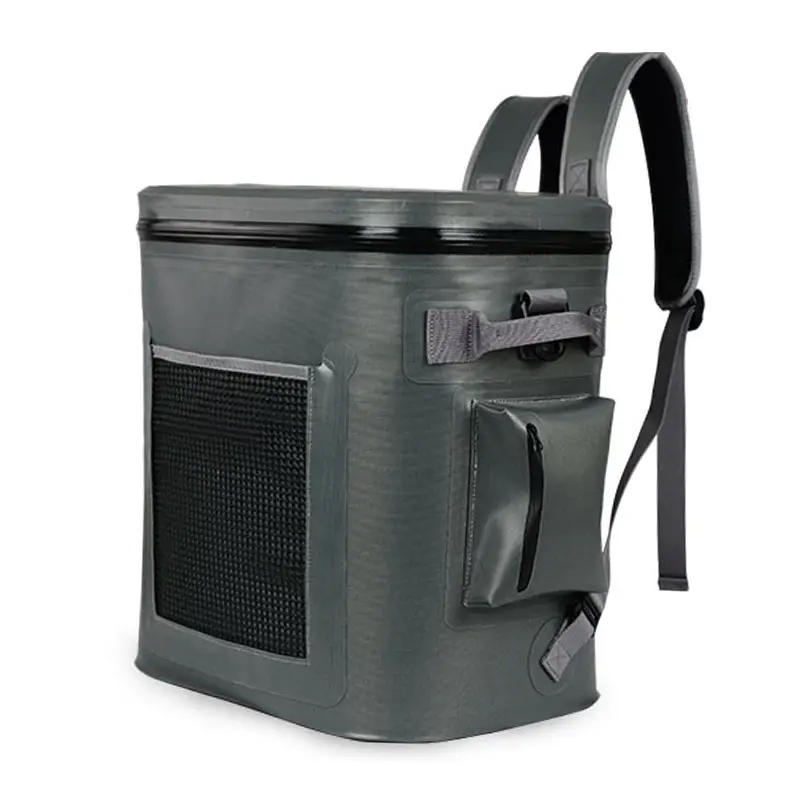
| Courier backpack | Two-wheel fleets — hands-free, harness comfort over a full shift, structured to stay upright |
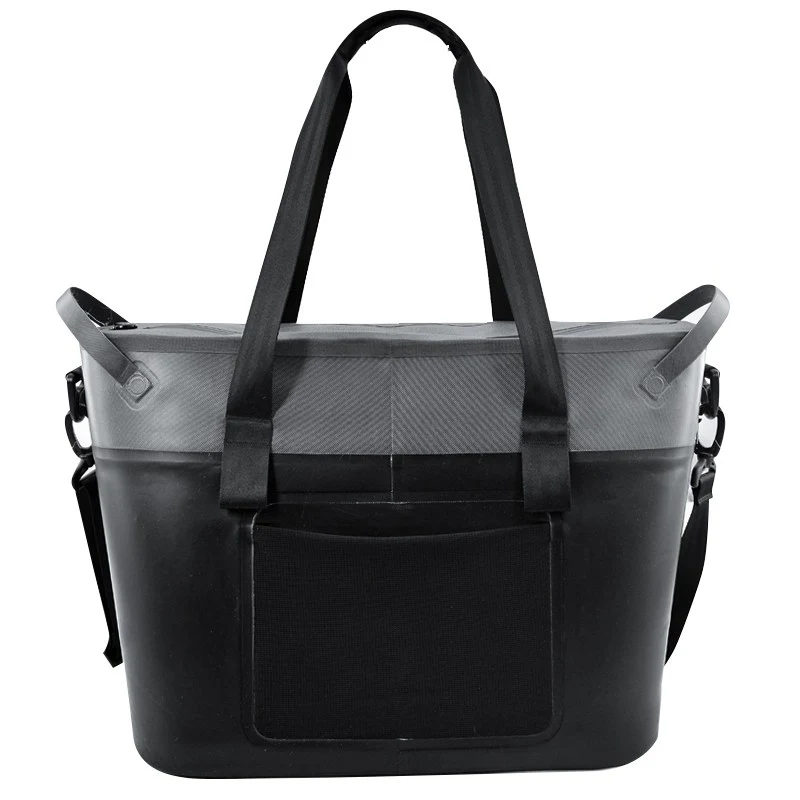
| Top-loading carrier / tote | Car-based delivery and catering transfers — fast loading, wide opening |
| Compartmented build | Operations carrying hot and cold in one trip — separated zones rather than one mixed space |
| Grocery / cold-chain carrier | Chilled and frozen routes — welded liner, ice-pack compatible, waterproof shell |
| Large transfer bag | Kitchen-to-kitchen and commissary movement — capacity and structure over portability |
Branding across a fleet is straightforward: screen print, UV print, welded patch, deboss, woven label, Pantone-matched shells and webbing. Fleet bags are rolling advertising, and a consistent branded fleet is worth specifying properly.
Capability Reference
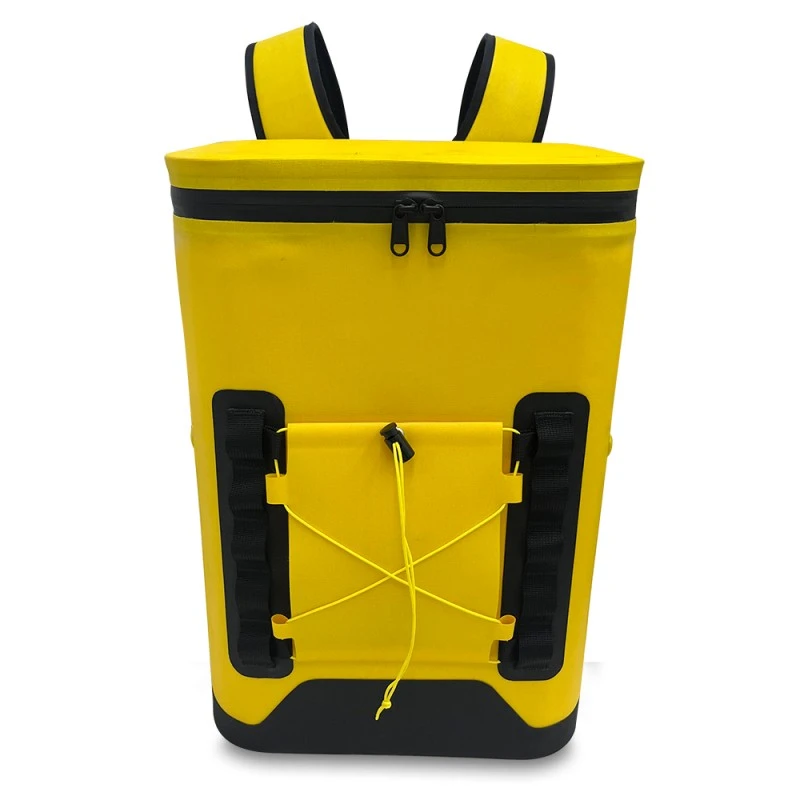
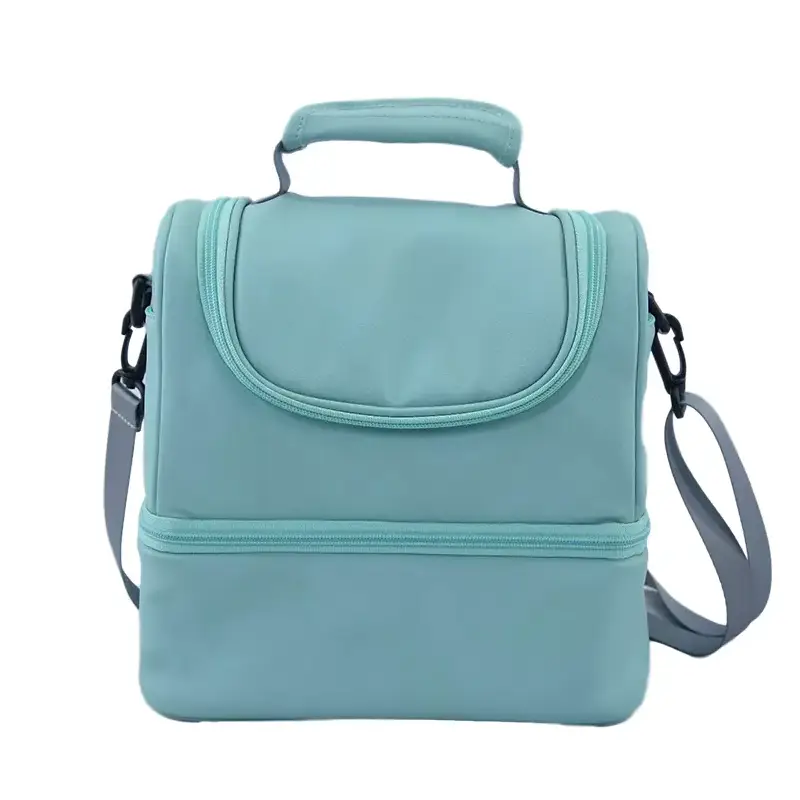
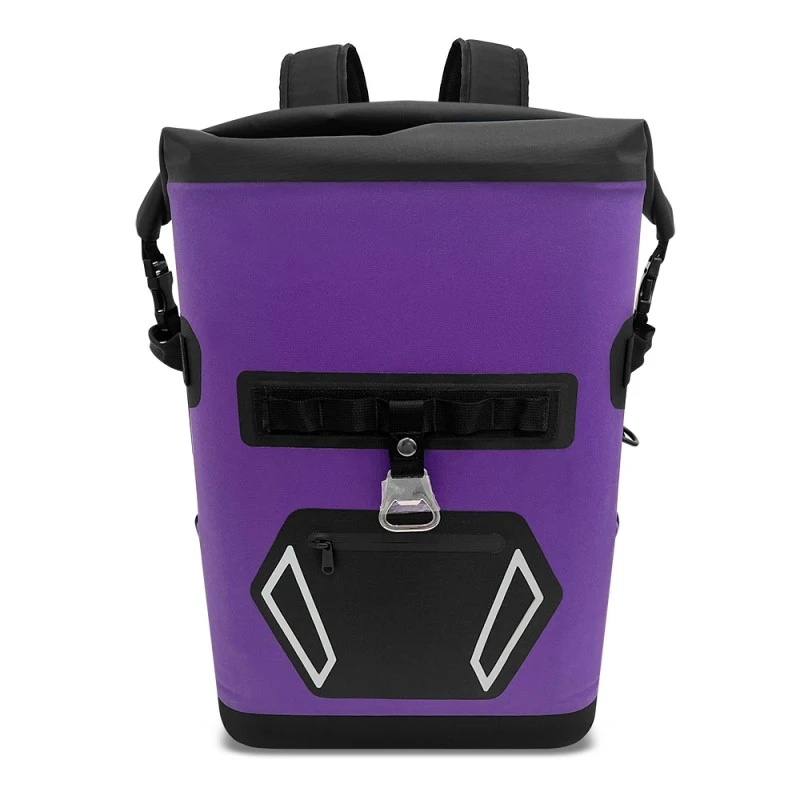
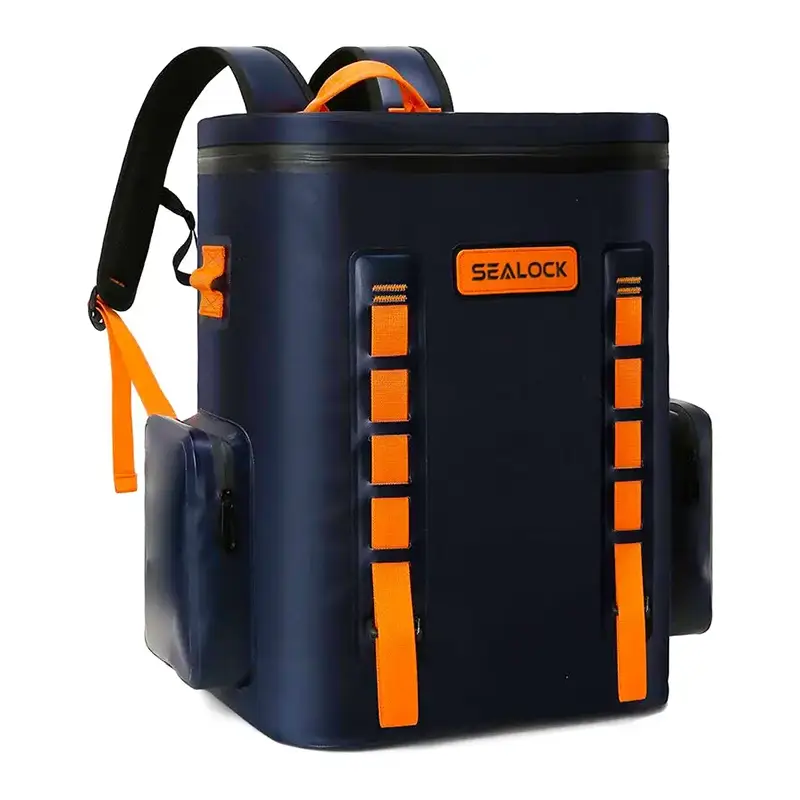
Delivery bags are built to operator specification rather than sold from a fixed catalogue. These current builds show the construction, liner and thermal capability a fleet programme draws on:
| Image | Model | Relevant capability | Link |
|---|---|---|---|
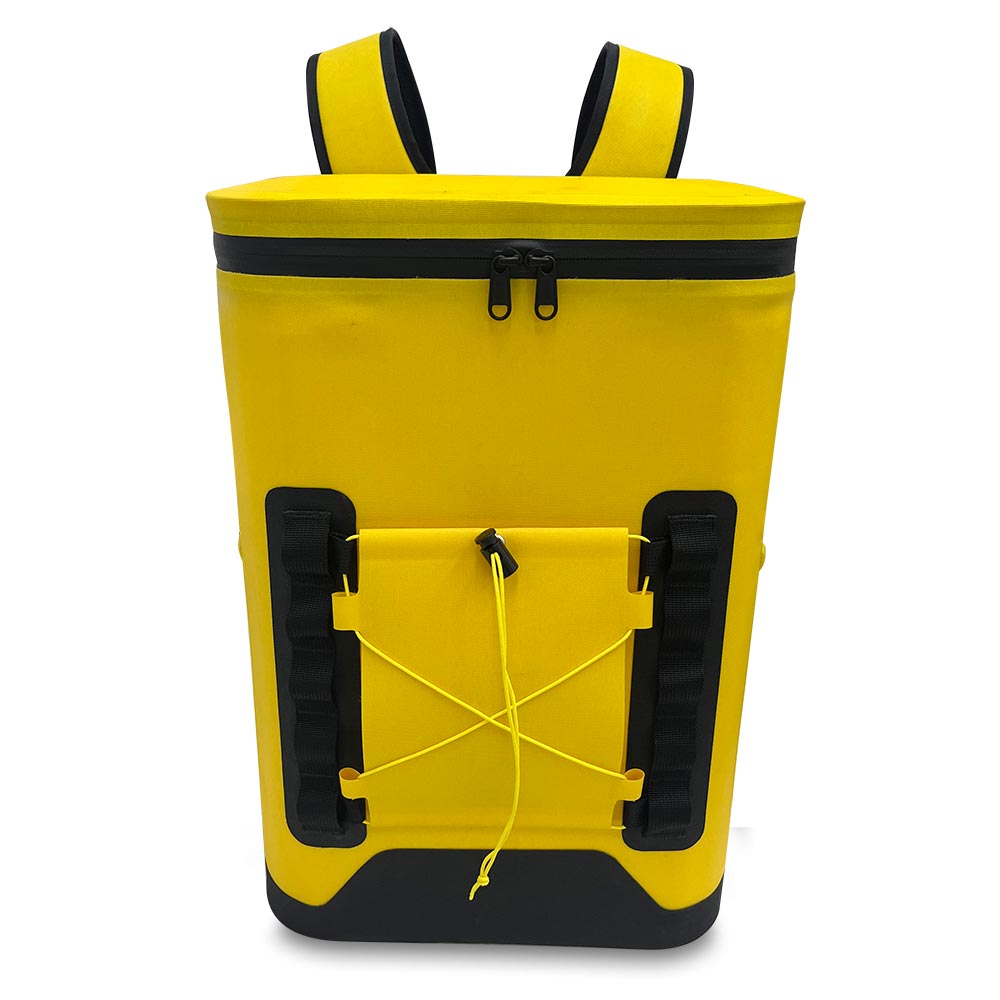
|
28L Airtight-Zipper Backpack (SL-I274) | Backpack carry, 840D TPU, EVA core, food-grade TPU membrane, airtight welded zipper — the courier-backpack construction base | View |
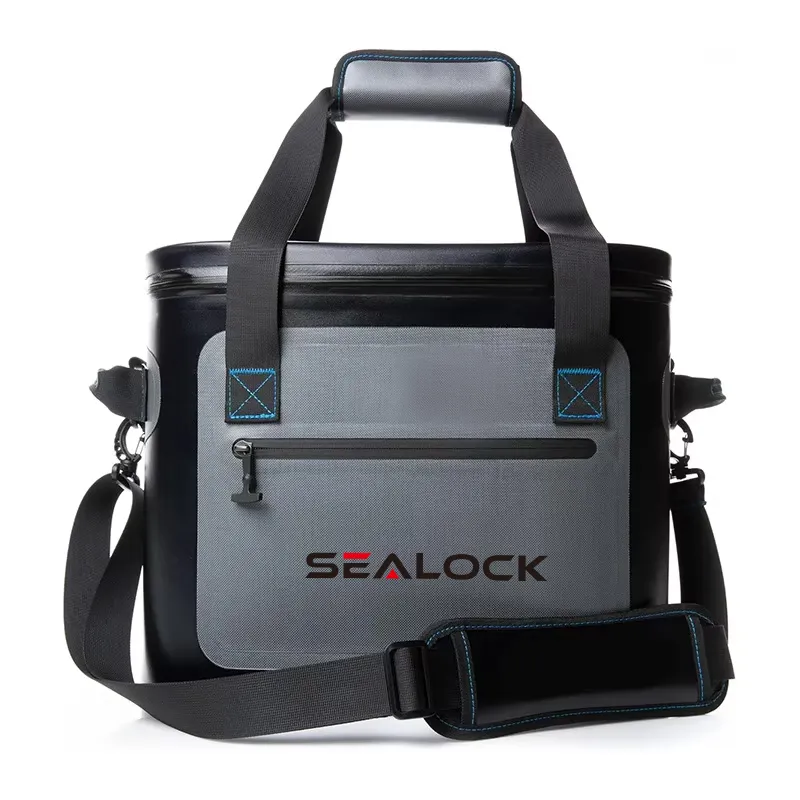
|
24L Soft Cooler Tote (SL-I230) | Welded tote with food-grade liner and IPX7 sealing — top-loading carrier reference for chilled routes | View |
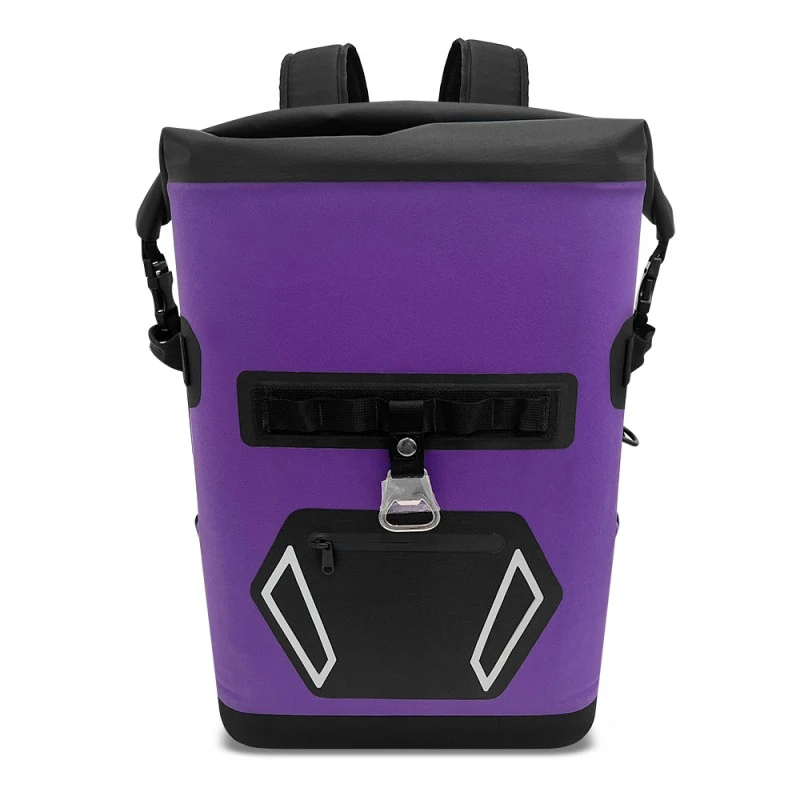
|
45L Roll-Top Backpack (SL-I270) | 45L capacity class with reinforced base and UTX buckles — large transfer and grocery route reference | View |
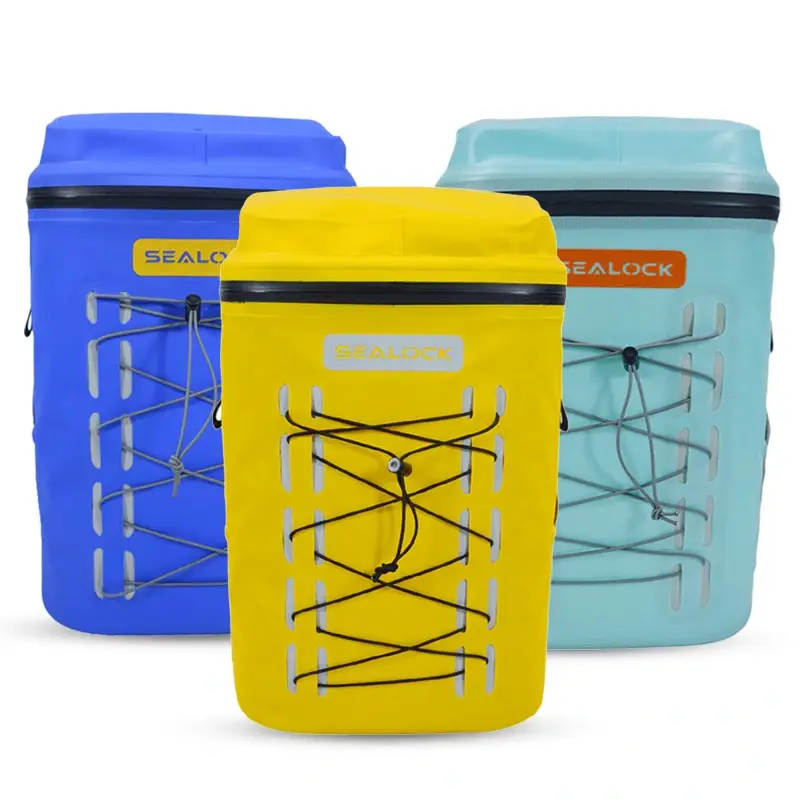
|
Insulated Cooler Backpack (SL-I075A) | PVC tarpaulin shell with EPE foam and PEVA film liner — the wipe-clean value tier for high-attrition fleets | View |
Our customers include international brands such as Stanley, YETI, Hydro Flask, Osprey, Musto and Simms. The same lines and quality systems run a 300-piece fleet order.
Working Terms
| Company | YiFuLong Outdoor Gear Co., Ltd. — manufacturer since 2003, registry-verifiable |
|---|---|
| Factories | Dongguan, Guangdong, China + Ho Chi Minh City, Vietnam; three high-frequency welding factories and in-house sewing lines |
| MOQ | 300 pcs per design (per size and colourway); negotiable on fleet programmes |
| Lead times | Samples 7–15 days; production 30–45 days; FOB — plan re-equipping against your peak season |
| Liners | Food-grade across the range; welded seam-free construction available; foil-faced liners for hot-side builds |
| Insulation | Closed-cell EPE, XPE and EVA; thickness specified to your route profile |
| Branding | Screen print, UV print, welded patch, deboss, woven label, Pantone-matched shells and webbing |
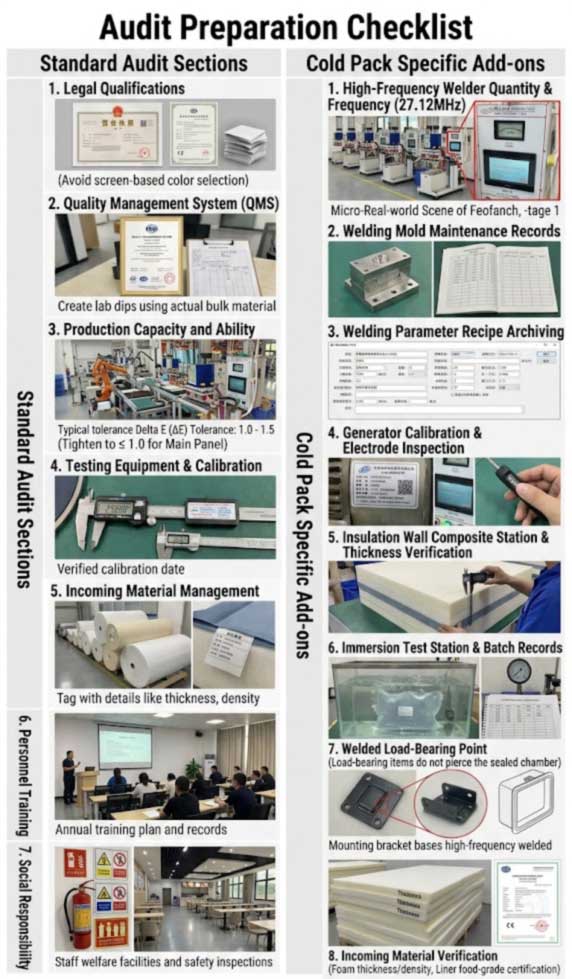
| Testing | Multi-channel thermocouple temperature testing for hold performance; water-immersion testing on sealed builds |
| Certifications | ISO9001, BSCI, SMETA P4, GRS, HIGG, SCAN |
FAQ
Q: How do I specify a delivery bag properly?
A: Start with the food and the route, not a bag size. Tell us the temperature state (hot, chilled, frozen or mixed), average route time, ambient climate, the container formats your kitchens use, the carry method, and fleet size. "Food grade" alone does not describe a use condition — a 20-minute urban route and a 60-minute suburban one need different insulation and closures.
Q: Can one bag carry hot and cold together?
A: Not in the same compartment. Food safety guidance calls for separate insulated bags or designated compartments to hold hot and cold at their proper temperatures. If your operation carries both, specify either two bag types or a compartmented build — a single mixed space compromises both.
Q: Why does liner construction matter for a fleet?
A: Because bags must be sanitised routinely, and construction decides whether that is practical. A welded food-grade liner is one continuous non-porous surface that wipes clean in seconds. A stitched liner traps residue in its seams where cleaning cannot reach, which becomes odour, then complaints, then replacements. Across hundreds of bags cleaned daily, that difference shows up in replacement cycles per year.
Q: What actually fails first on commercial delivery bags?
A: Rarely the insulation. Usually the closure, the strap anchor points, or the structure — a bag that sags spills orders, which is why support boards and a reinforced base matter. Where bags are folded between shifts, the insulation has to tolerate repeated folding, and coated shells that crack at fold lines become a problem over time. Specify those points and the replacement rate drops.
Q: What is your minimum for a fleet order?
A: 300 pieces per design, per size and colourway, negotiable on fleet programmes. Because soft bags need no injection tooling, a bag built around your actual container formats and branding is pattern and sampling work rather than a mould investment.
Q: How long does it take to equip a fleet?
A: Samples in 7–15 days, production in 30–45 days, plus freight and clearance. Plan re-equipping ahead of your peak season rather than during it — a fleet waiting on bags mid-season is an operational problem, and rushing production is where quality corners get cut.
Sealock — YiFuLong Outdoor Gear Co., Ltd.
Insulated delivery bags for restaurant groups, delivery platforms, cloud kitchens and cold-chain operators. Welded and sewn in China and Vietnam since 2003.
Email: info@sealock.com.hk · Phone: +86-13632981825 · MOQ 300 pcs · samples 7–15 days
Send your route profile, container formats and fleet size — we will specify and quote it.
Temperature guidance and industry practice cited here reflect publicly available food-safety and industry sources as of mid-2026 and vary by jurisdiction and operation. Insulated bags slow temperature change; they do not replace temperature-controlled equipment or your own food-safety procedures. Confirm applicable food-handling requirements with your regulator or adviser, and validate hold performance against your own routes.