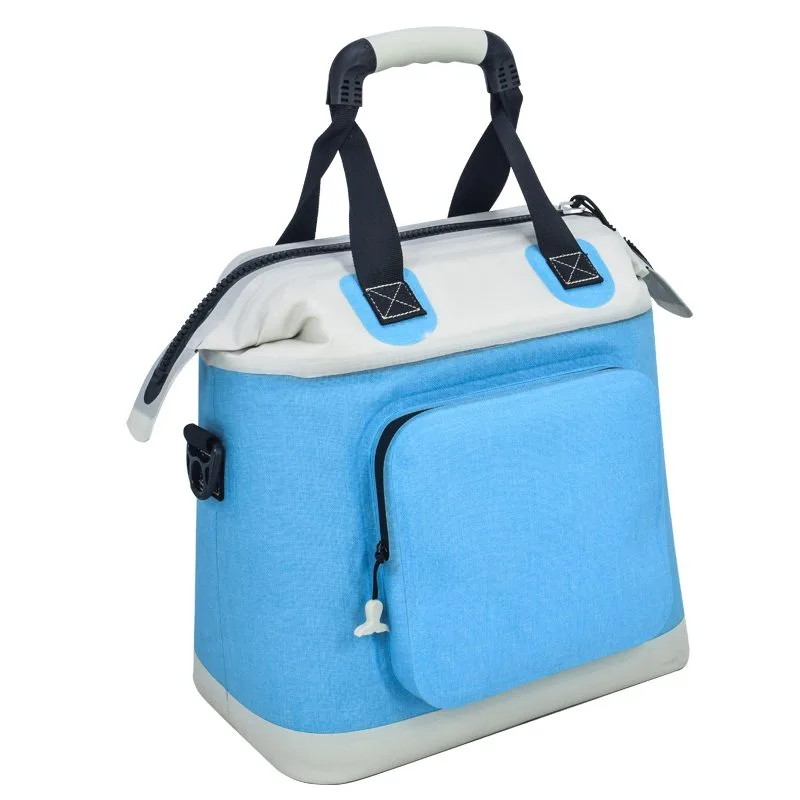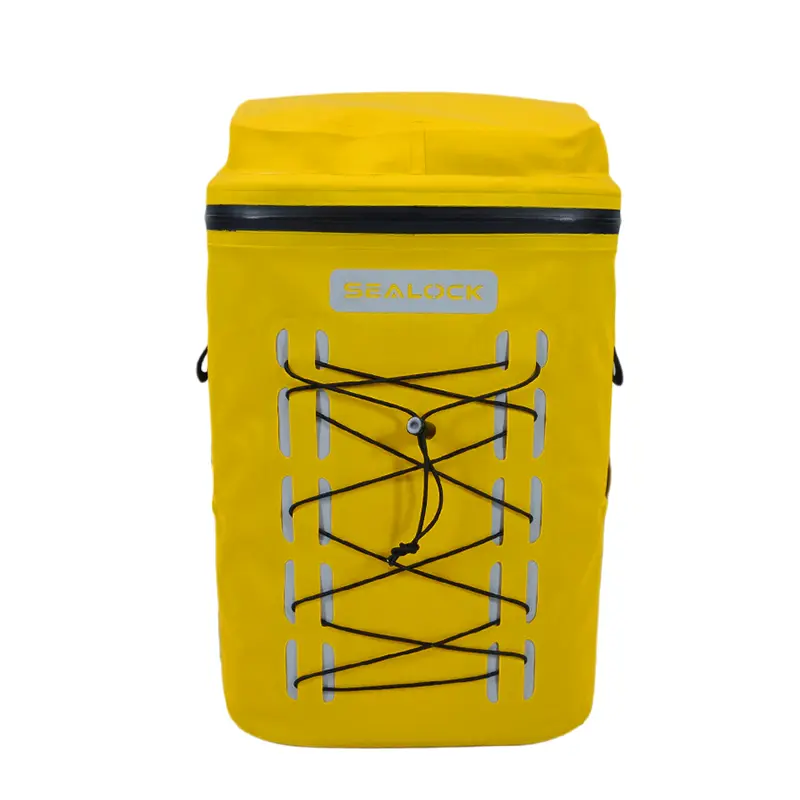
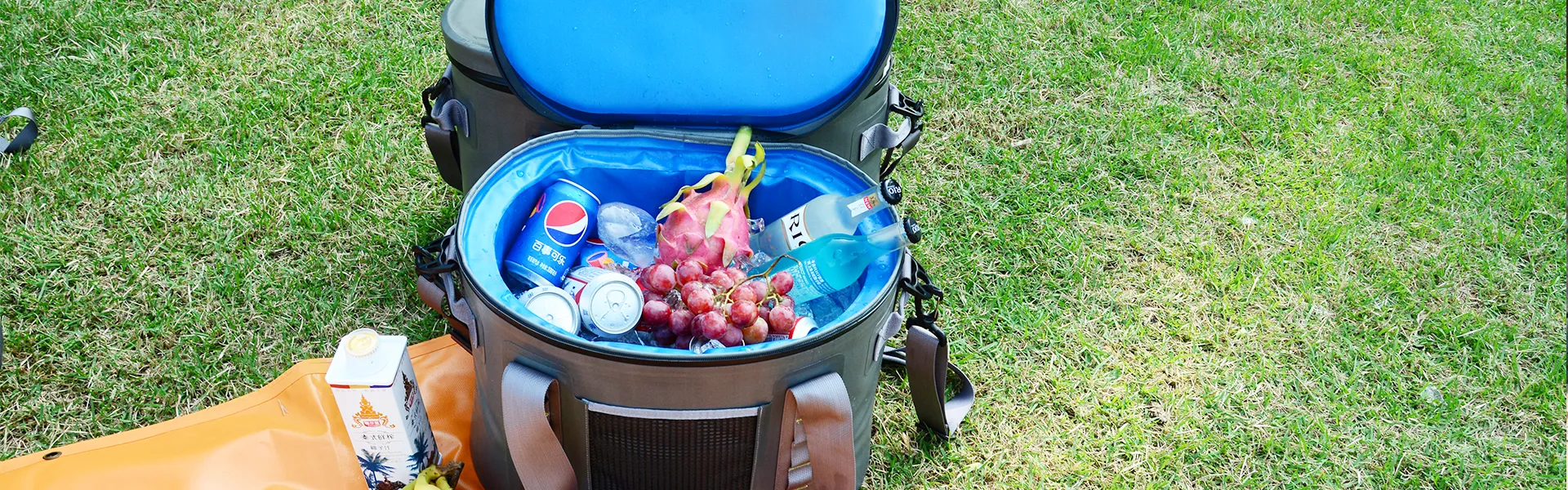
Every supplier says it is a factory. This page shows you what ours contains, station by station — and invites you to verify all of it by video or in person before you pay anything.
Sealock (YiFuLong Outdoor Gear Co., Ltd.) · manufacturing insulated and waterproof bags since 2003 · Dongguan, Guangdong, China and Ho Chi Minh City, Vietnam · 20,000+ m² · exporting to 80+ countries.
Book a live walkthrough: info@sealock.com.hk · +86-13632981825
Two Production Lines, Not One
The most common misunderstanding about a welded-bag factory is that welding is all it does. It is not, and a cooler bag proves why: the sealed chamber is welded, but the harness, pockets, webbing and trim are sewn. Most of our products pass through both processes.
So we run both in-house. High-frequency welding lines and dedicated sewing lines, in separate rooms on the same floor of the same building, with semi-finished goods moving between them. Sewn construction is a core capability here, not a step we send out — which matters to you for two reasons: nobody outside our control touches your product, and we can build sewn, welded or hybrid constructions without pushing you toward whichever one we happen to own.
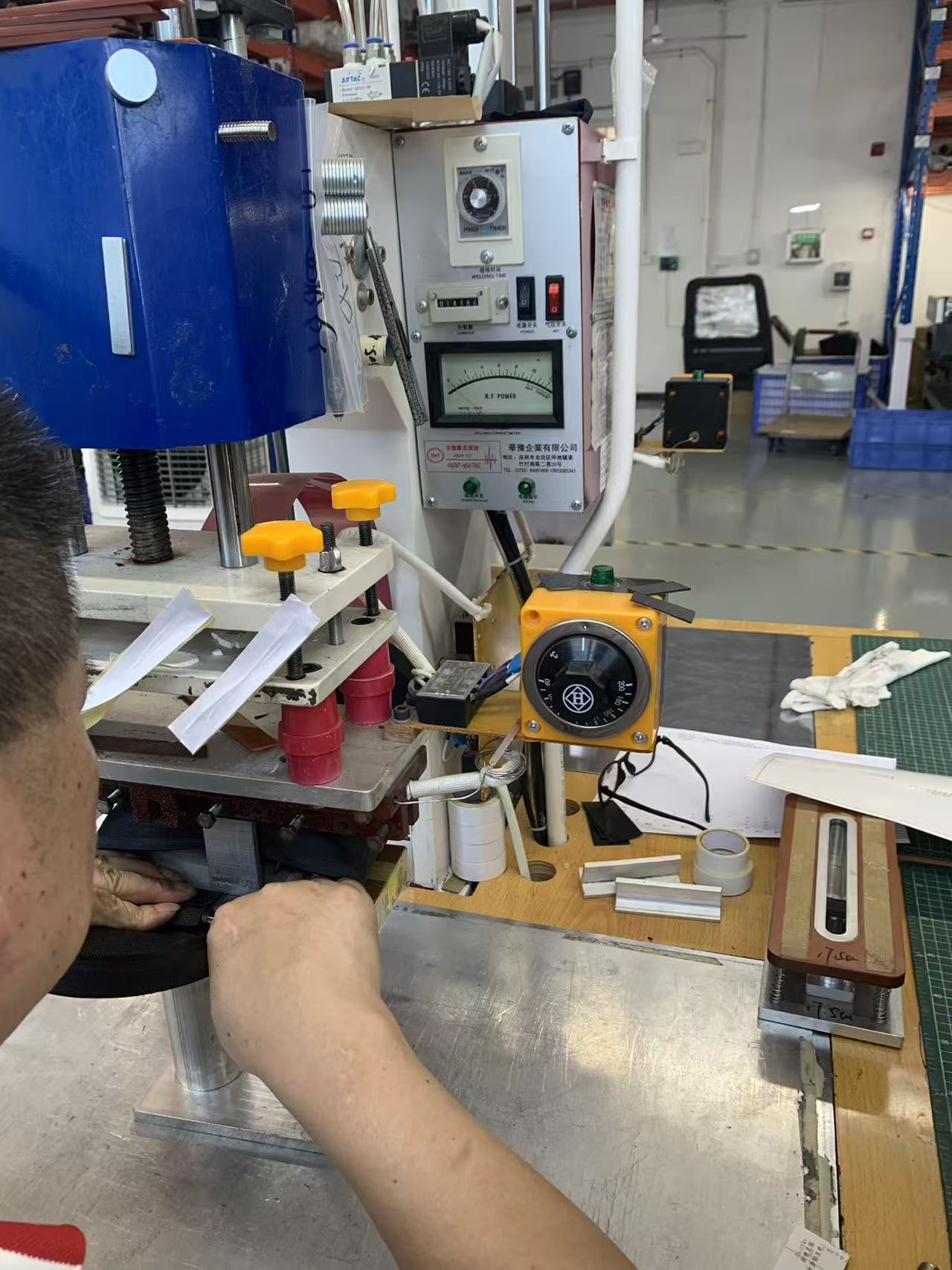
The Welding Floor
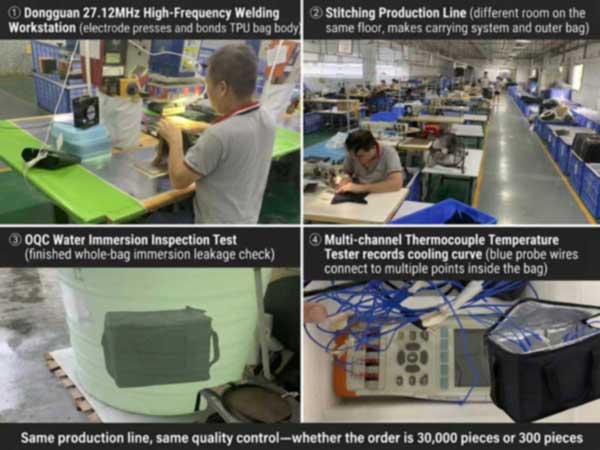
Three high-frequency welding factories, operating at 27.12 MHz. What happens here decides whether a cooler leaks.
High-frequency welding fuses coated panels — TPU or PVC — using an electromagnetic field that heats the material from within, so the two layers bond at the interface into one continuous skin. No needle holes. That is the whole basis of a leakproof cooler, and it is why a sewn cooler eventually passes melt-water through its bottom seam while a welded one does not.
What we control at this stage:
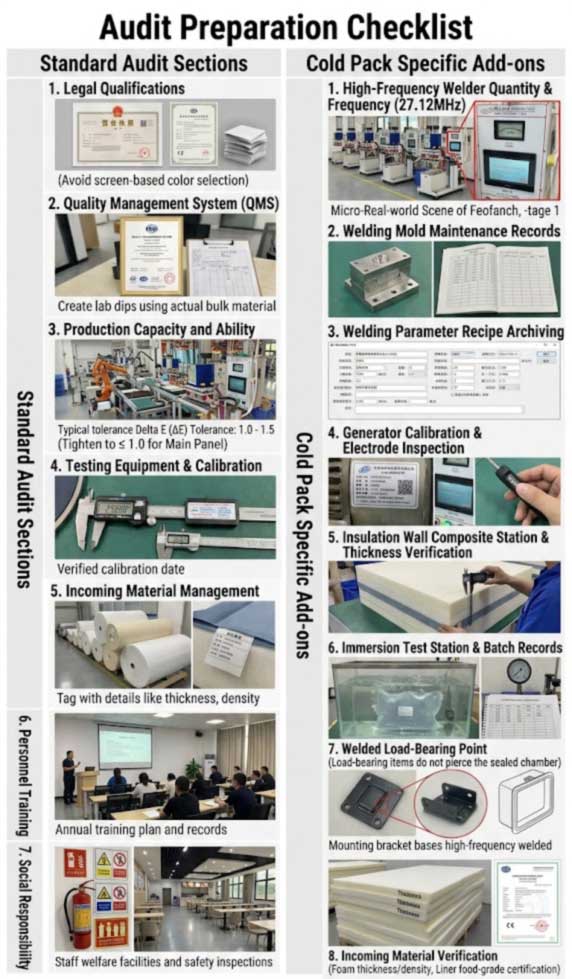
- Weld parameters recorded per material and thickness — power, clamping pressure, weld time and cooling time, set as a recipe rather than judged by each operator on each shift.
- Die condition. The tooling that shapes each weld is inspected and maintained; worn or scarred dies produce thin welds that pass inspection and leak months later.
- Generator calibration and electrode checks on a routine schedule.
- In-line weld inspection — every weld is checked as it is made, because once the liner is fitted and the bag assembled, a weld defect is invisible. Final visual inspection cannot find it. Nothing but in-line checking can.
The Sewing Floor
Separate room, same floor. This is where a cooler becomes a bag you can carry: shoulder straps, sternum and waist straps, external pockets, webbing panels, trim and hardware.
One detail here is specific to welded coolers and worth understanding, because it is where careless factories destroy their own waterproofing. Load-bearing components are stitched — that is how straps are properly anchored, with bar-tack and box-X reinforcement into internal reinforcement layers. But none of that stitching may pass through the sealed chamber. Every harness anchor, webbing panel and pocket attaches to welded-on external zones, so the load path and the water barrier stay physically separate.
That has to be engineered into the pattern at the design stage. It cannot be improvised on the line, and it is the single best question to ask any cooler factory: how do you anchor load-bearing straps without stitching through the sealed chamber? A welding factory has an answer. A sewing shop does not understand why it is being asked.
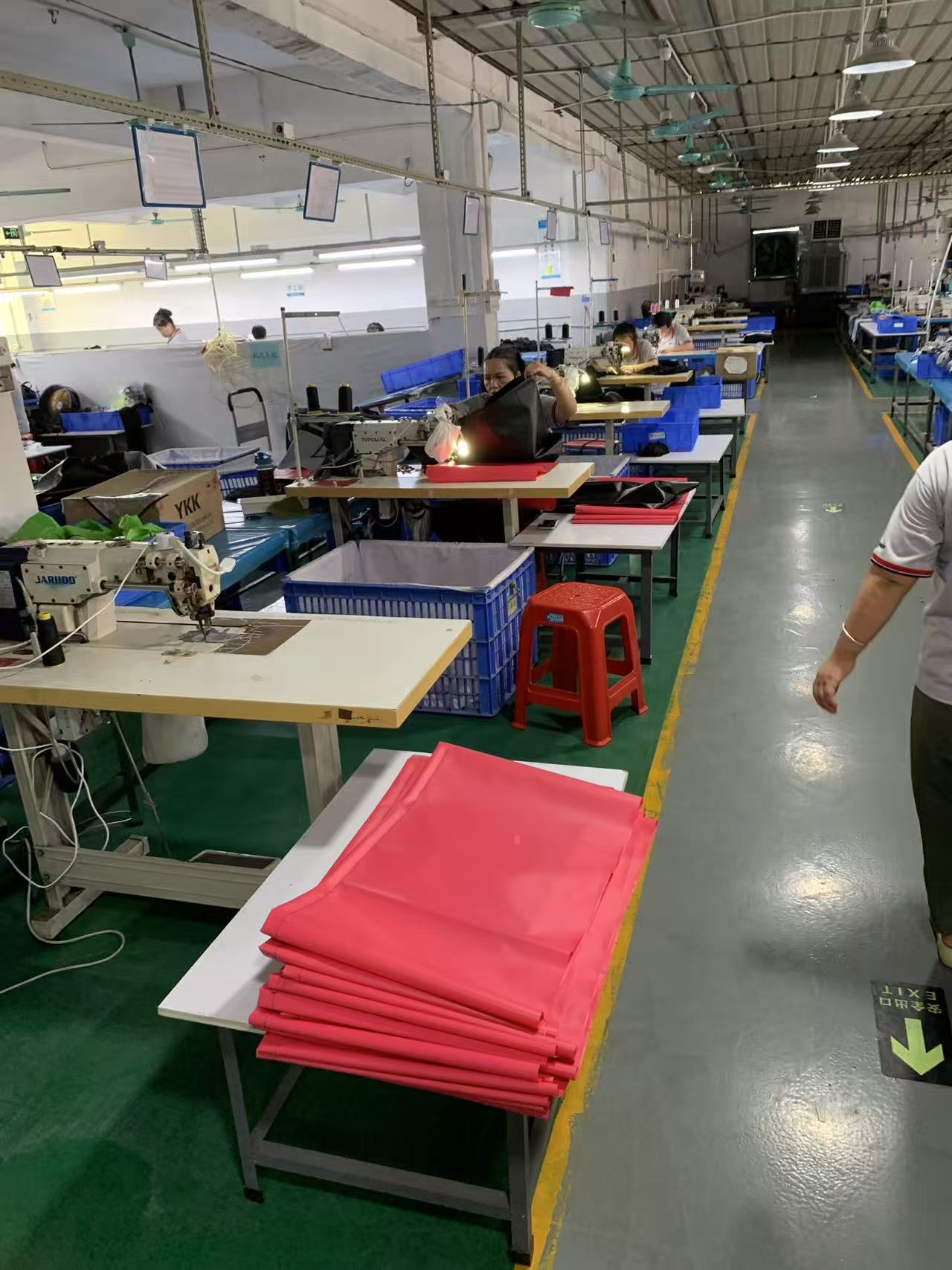
Want to see it live? We run video walkthroughs on request — not a recording. You direct the camera: welding machines, dies, calibration logs, the sewing line, incoming material records, the test bench.
info@sealock.com.hk · +86-13632981825
The Test Bench
Two of the three things that define a cooler are invisible in the finished product. You cannot see foam thickness once the bag is welded shut, and you cannot see a weld defect once the liner is in. So we test rather than inspect visually.
Full water immersion
Finished bags are submerged as a batch test. This is the only test that verifies the body welds, the closure integration and the liner attachment as a single sealed envelope, in the state the customer will use it. Testing a weld coupon proves the machine was set correctly; immersing the finished bag proves the product is sealed.
Multi-channel temperature testing
Cold-hold is measured, not estimated. A multi-channel thermocouple tester logs temperature at several points inside the bag plus ambient over a defined period, producing an actual cold-hold curve. Multiple channels mean several positions or several units can run at once, so the result reflects a batch rather than one lucky bag. It is non-destructive, so tested units are not written off.
This matters commercially as well as technically: the hours you print on a hangtag or a listing should come from a measurement you can point to. If you ask us what test basis a cold-hold figure comes from, you will get a specific answer.
The rest of the lab
Load cycling, tensile strength, adhesion, salt spray, abrasion, colour fastness and colour difference — the tests that predict what a bag looks like and does after a season rather than on day one.
The Quality Chain, End to End
| Stage | What is checked |
|---|---|
| IQC — incoming | Shell denier and coating, foam type, thickness and density, liner material and food-grade documentation, zippers, buckles, webbing. Critical because foam and liner become invisible after welding — if they are not verified here, they are never verified. |
| IPQC — in-process | Cutting accuracy, wall lamination, weld integrity at the weld station, stitch density and bar-tacks, hardware fitting, dimensional checks |
| OQC — outgoing | AQL sampling against agreed acceptance criteria, comparison to the signed gold sample, water immersion, packing and labelling verification |
| Third party | SGS, QIMA or your own inspector welcomed on the outgoing line, with balance payment released on a pass |
The gold sample deserves a note of its own. Once you approve a sample, it is signed, dated and retained here as the production reference, and every run is compared against it at outgoing inspection — not just the first. That is what prevents the quiet drift that shows up as "the second order wasn't like the first."
Two Countries, One Specification
We manufacture in Dongguan, Guangdong and in Ho Chi Minh City, Vietnam. The Vietnam plant performs the transformative steps on site — cutting, insulated wall lamination, high-frequency welding, sewing, assembly and quality control including immersion testing. Raw material goes in, finished cooler bags come out.
The practical value to you is that a specification approved once can be produced at either site. If tariffs, lead times or a customer requirement move, that becomes a production decision rather than a supplier requalification project.
Audited by Customers Who Do Not Take Claims on Trust
Our facilities produce insulated and waterproof bags for international brands including Stanley, YETI, Hydro Flask, Osprey, Musto and Simms. YETI visits our Vietnam plant regularly.
We mention it for one specific reason: programmes at that level are audited continuously, on quality, social compliance and sustainability. The systems that satisfy them — documented weld parameters, in-line inspection, immersion testing, AQL sampling, gold-sample control — are not a separate premium service. They are how the lines run, including on a 300-piece first order.
| ISO 9001 | Quality management system |
|---|---|
| amfori BSCI | Social compliance — the framework most continental European buyers request |
| SMETA P4 | Four-pillar Sedex ethical audit: labour, health & safety, environment, business ethics |
| GRS | Global Recycled Standard — recycled content and chain of custody |
| HIGG | Facility environmental and social performance measurement |
| SCAN | Supply chain security, aligned to C-TPAT minimum security criteria |
All six are verifiable through their issuing platforms rather than by PDF. Ask us to add you as a linked buyer on amfori, share the SMETA report through Sedex, or check our GRS licence in the Textile Exchange database. Detail: what each certification actually proves.
How to Verify All of This
None of the above should be taken on trust, and we would rather you checked:
- Check the entity. Ask for our business licence and unified social credit code and verify it on China's official enterprise registry. Confirm the business scope says manufacturing.
- Direct a live walkthrough. Not a recording. Ask the camera to go to the welding line, pan across the dies, open the calibration log, show the current material lot's IQC records, walk to the immersion test bench. Ask for something unplanned.
- Verify the certificates at source, through the platforms above, and check the addresses match the production site.
- Ask the technical questions. Welding frequency, weld parameter control, how welds are inspected during production, how straps are anchored without piercing the sealed chamber.
- Test a sample yourself. Fill it with water and invert it; time its ice; carry it loaded. See what to test on a sample.
- Book an inspection. SGS, QIMA or your own inspector, with the balance released on a pass.
Related: factory audit checklist · how to tell a factory from a trading company · the full production sequence.
What Comes Off These Lines
| Image | Model | Build | Link |
|---|---|---|---|
|
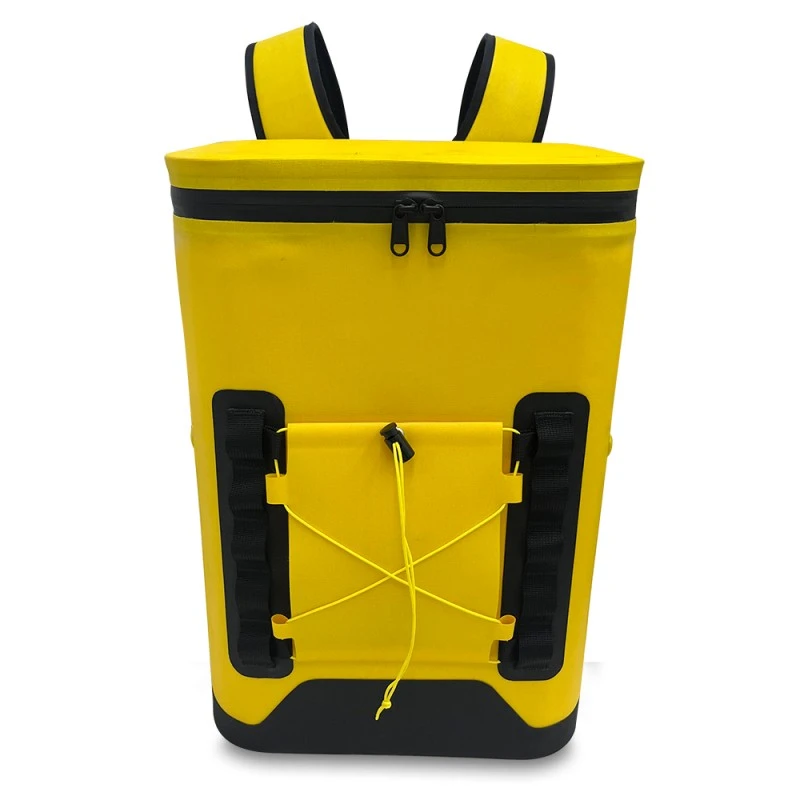
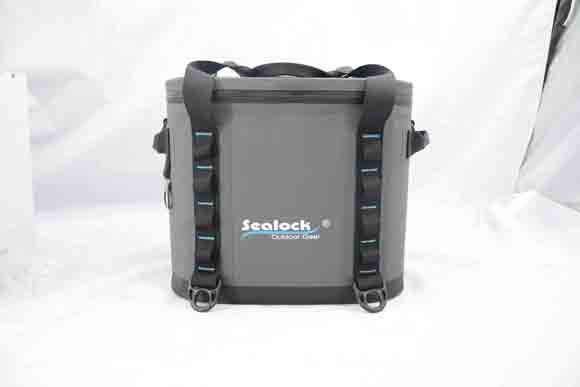
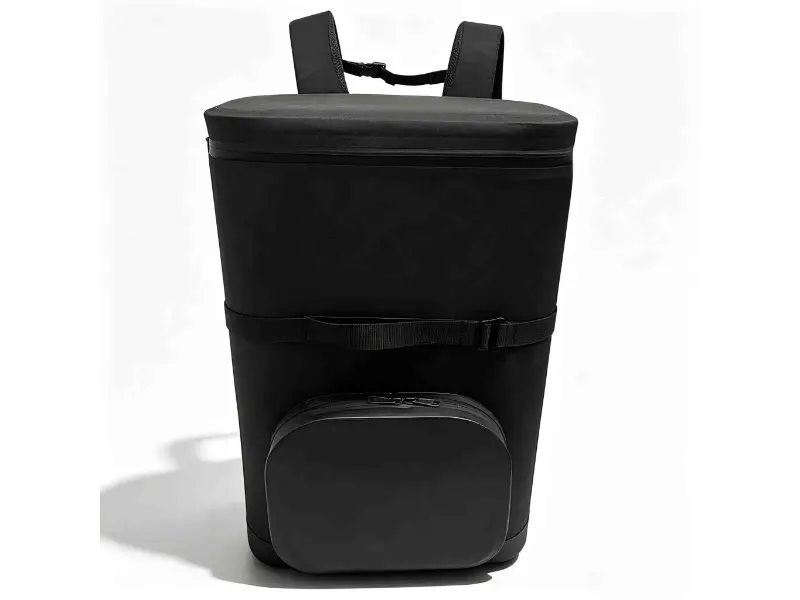
22L IPX7 Cooler Backpack (SL-I280) | Welded seamless body, airtight zipper, IPX7, 50 mm high-density XPE, 48 hr+, full harness | View |
|
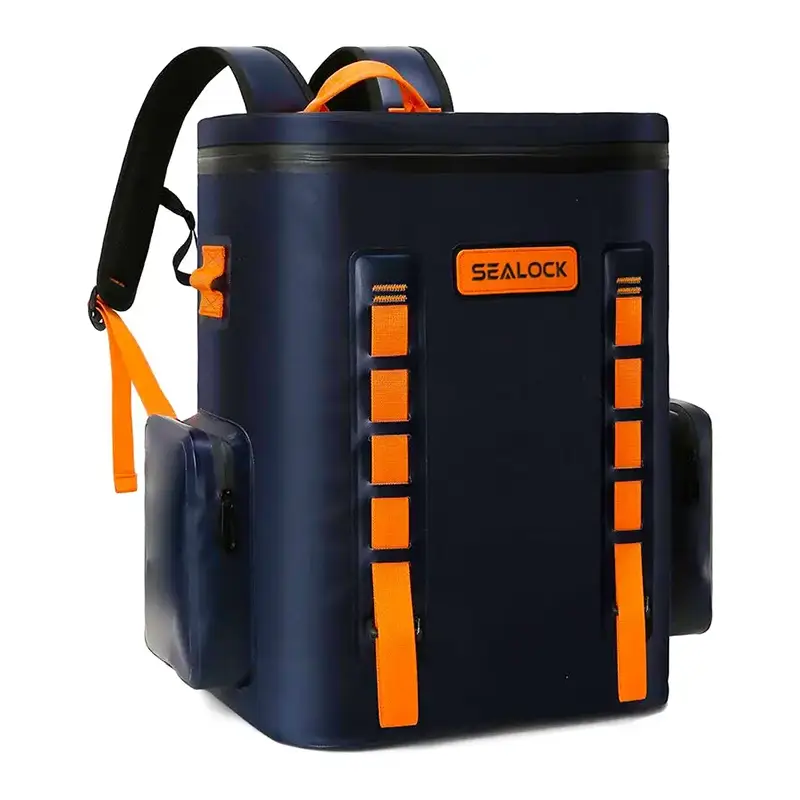
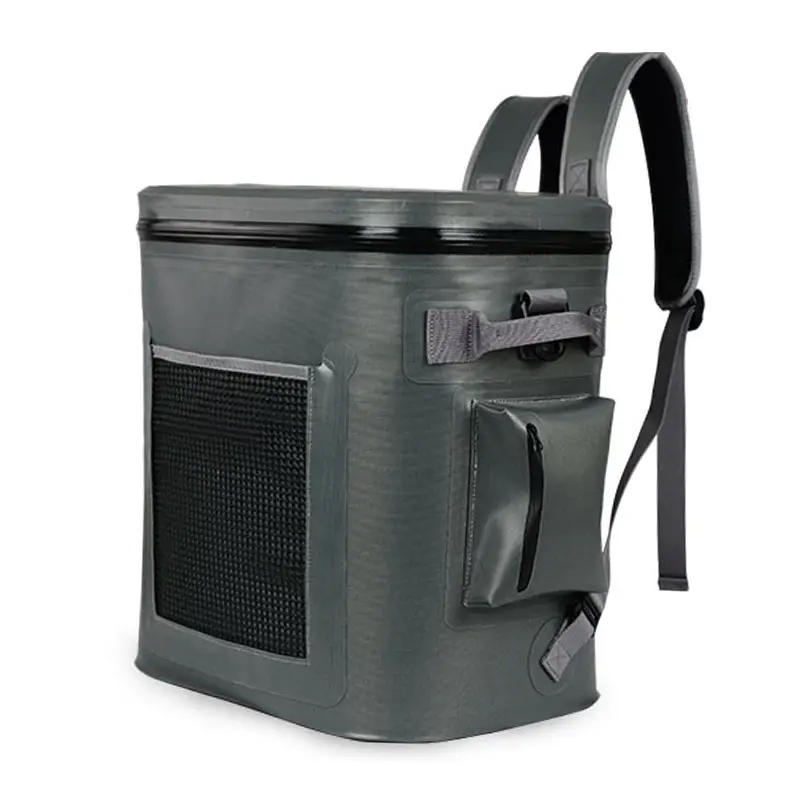
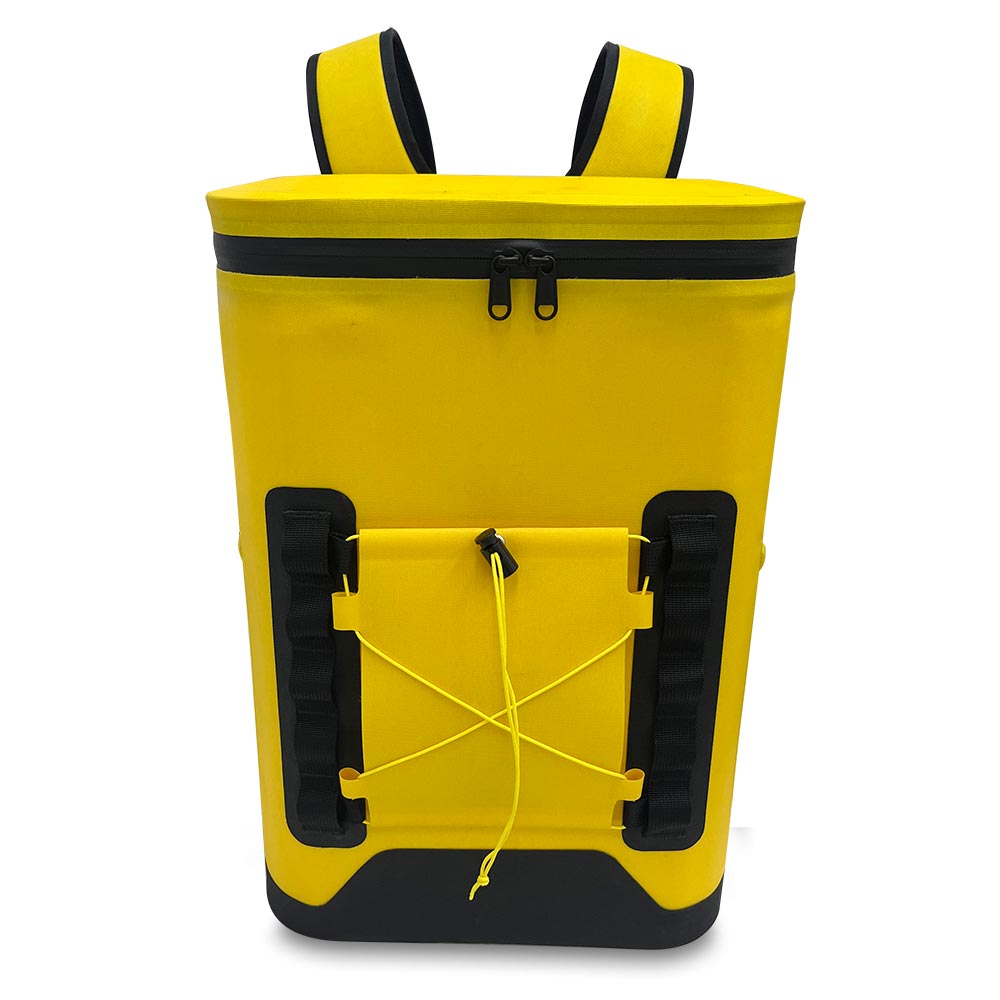
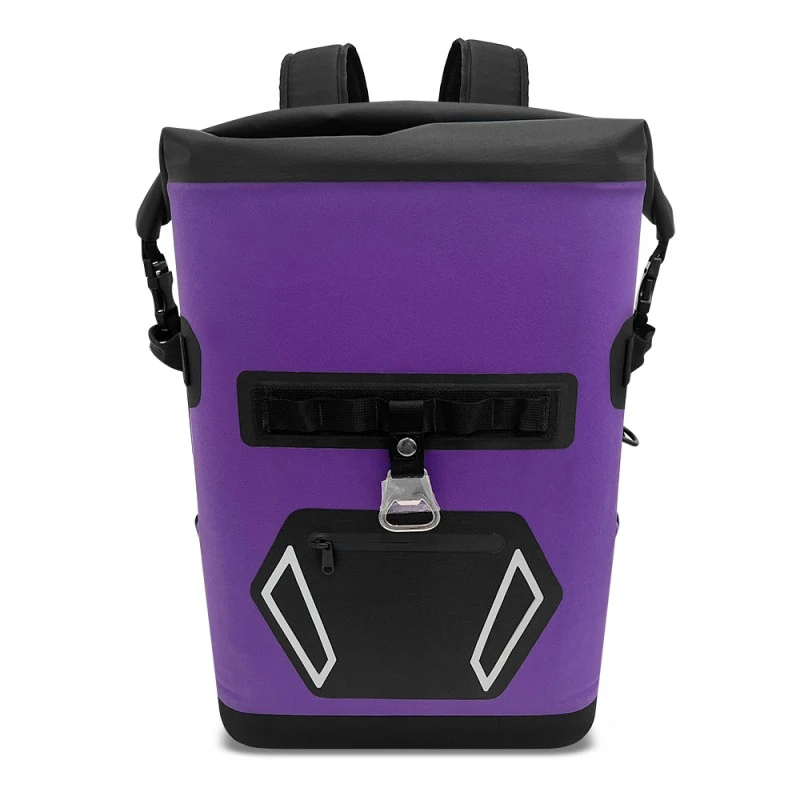
28L Airtight-Zipper Cooler Backpack (SL-I274) | 840D TPU, 3 cm EVA core, food-grade TPU membrane, HF welded, up to 48 hr | View |
|
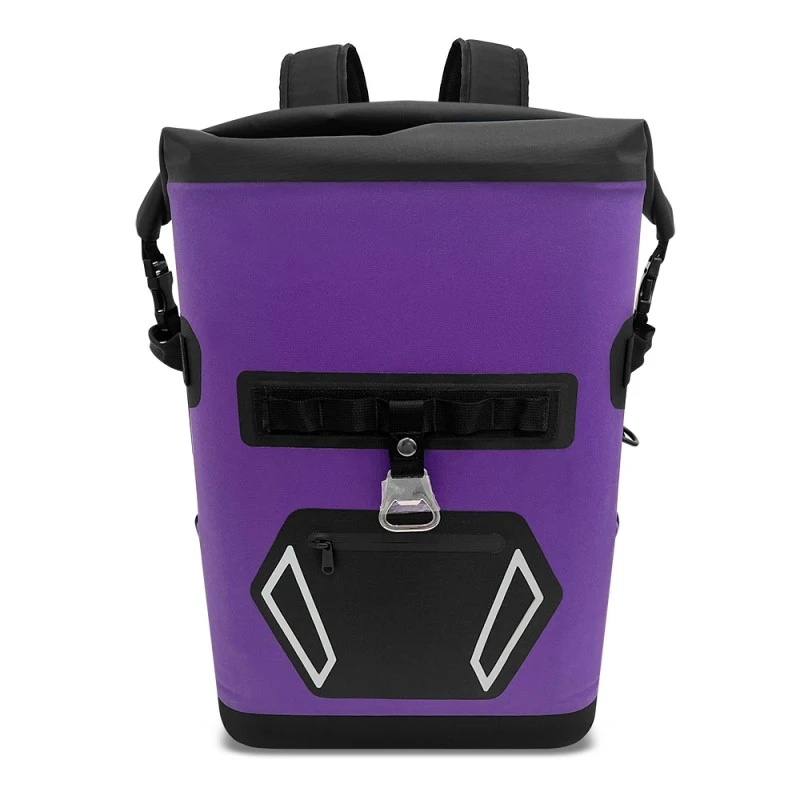
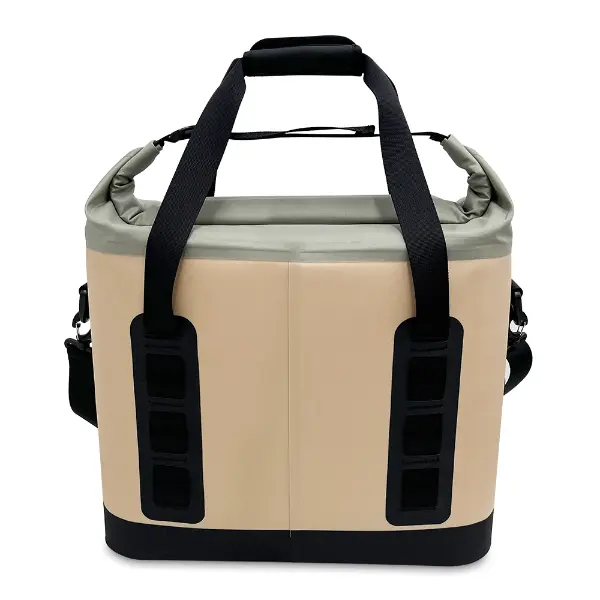
45L Roll-Top Cooler Backpack (SL-I270) | 45L, welded roll-top, 600D TPU, food-grade TPU liner, UTX buckles, up to 36 hr | View |
|
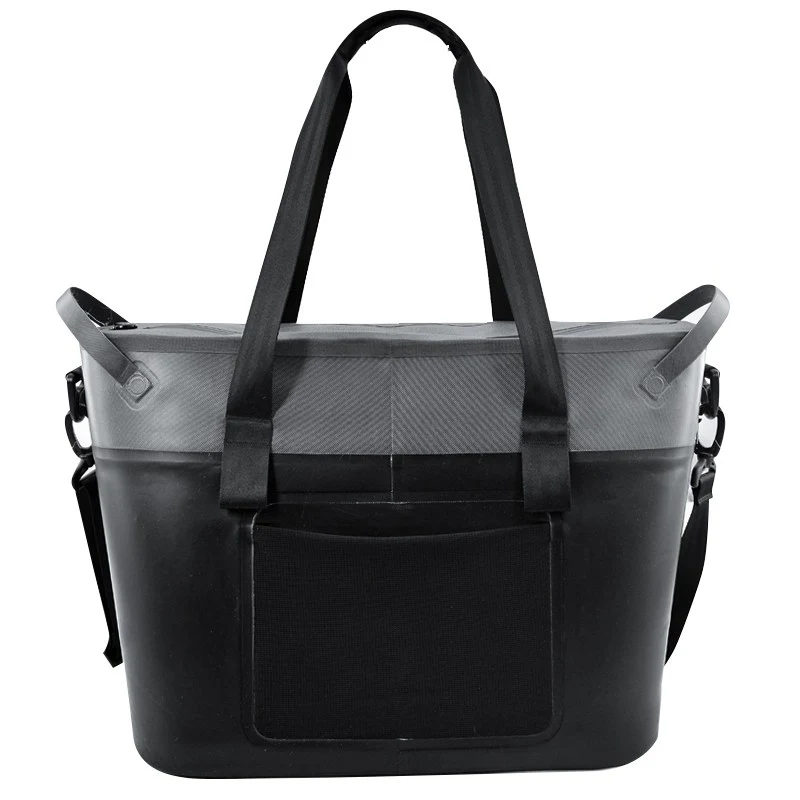
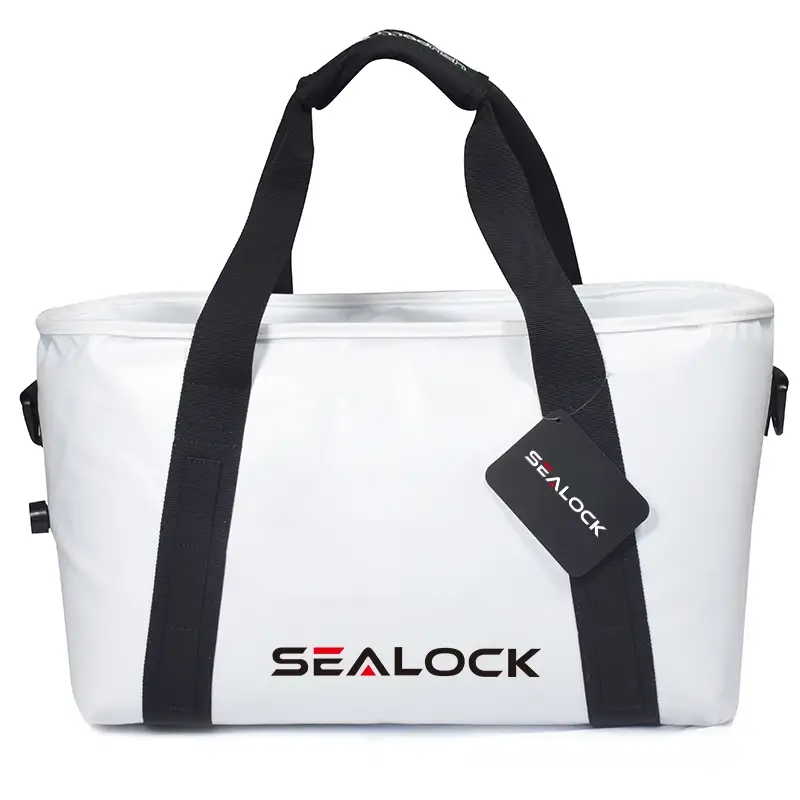
Roll-Top Leakproof Soft Cooler (SL-I288) | 20L tote/shoulder, 840D TPU, welded roll-top, airtight zip pocket, MOLLE, up to 48 hr | View |
|
Insulated Fish Kill Bag (SL-C377) | 50 × 30 × 30 cm, PVC mesh fabric, insulated, adjustable strap | View |
Working Terms
| Company | YiFuLong Outdoor Gear Co., Ltd. — manufacturer since 2003, registry-verifiable |
|---|---|
| Sites | Dongguan, Guangdong, China + Ho Chi Minh City, Vietnam; 20,000+ m² |
| Processes | Three high-frequency welding factories at 27.12 MHz, plus in-house sewing lines |
| Reach | Exporting to 80+ countries, serving 3,000+ customers |
| MOQ | 300 pcs per design (per size and colourway) |
| Lead times | Samples 7–15 days; production 30–45 days; FOB |
| Development | Private label, ODM or full ground-up OEM |
FAQ
Q: Do you do your own welding, or subcontract it?
A: In-house, across three high-frequency welding factories at 27.12 MHz. Welding is the process that determines whether a cooler leaks, so subcontracting it would mean subcontracting our quality. Ask us about weld parameters, die maintenance or generator calibration — the answers come from the people running the machines.
Q: Can you sew as well as weld?
A: Yes — dedicated sewing lines in-house, in separate rooms on the same floor, and sewn construction is a core capability rather than an outsourced step. Most of our products use both processes: welded sealed chamber, sewn harness and pockets. It also means we can recommend sewn, welded or hybrid construction on merit rather than steering you toward the one we happen to own.
Q: How do you know a weld is good if you cannot see it later?
A: By checking it when it is made, and by testing the finished product. Every weld is inspected in-line at the weld station, because once the liner is fitted a defect is invisible and no final visual inspection will find it. Then finished bags are water-immersion tested as a batch, which verifies the welds, closure and liner as one sealed envelope.
Q: How is cold-hold measured?
A: With a multi-channel thermocouple temperature tester — probes logging temperature at several points inside the bag plus ambient over a defined period, producing an actual cold-hold curve. Multiple channels allow several positions or units at once, so the result reflects a batch. It is non-destructive, so nothing is written off, and it means any figure we quote has a measurement behind it.
Q: Can I visit or audit?
A: Yes, at either plant, and we also run live video walkthroughs where you direct the camera. Third-party inspection by SGS, QIMA or your own inspector is welcome on any order. A factory audited continuously by demanding customers is comfortable being audited by a new one.
Q: Do small orders run on the same lines?
A: Yes. There is no separate line and no separate quality standard for a 300-piece order — the same welding parameters, in-line inspection, immersion testing and gold-sample control apply.
Sealock — YiFuLong Outdoor Gear Co., Ltd.
Welded and sewn insulated bags, made in China and Vietnam since 2003.
Email: info@sealock.com.hk · Phone: +86-13632981825 · MOQ 300 pcs · samples 7–15 days
Send a specification, or ask for a live walkthrough before you send anything at all.
Capabilities, equipment and terms described here reflect current operations and are confirmed per order at quotation. Brand customers are named as manufacturing clients only; no product details, volumes or contract terms are disclosed, and no endorsement is implied. All trademarks belong to their respective owners.