Soft Cooler Quality Inspection Before Shipment

2026-09-04 0 Leave me a message
A pre-shipment inspection is the last point at which a problem costs hundreds of dollars instead of an entire container. It is also the step most buyers under-specify — booking an inspection, accepting whatever default settings the agency proposes, and receiving a report they cannot really interpret. This guide covers how AQL sampling actually works, how to define defects for a soft cooler specifically, and the product-specific checks that a generic consumer-goods inspection will miss entirely. Sealock (YiFuLong Outdoor Gear Co., Ltd.) runs its own outgoing inspection and welcomes third-party inspection on every order.


What a Pre-Shipment Inspection Is

The mechanism is statistical rather than exhaustive: (cite index="139-1">instead of inspecting 100% of the products, a predefined sample size is selected randomly from the batch, and the number of defects found in the sample is compared to the acceptance limits defined in the AQL table. The governing standard is (cite index="135-1">ISO 2859-1 (equivalently ANSI/ASQ Z1.4).

One conceptual point deserves emphasis before any numbers: (cite index="137-1">AQL is a limit, not a promise — a passed inspection doesn't mean your shipment has 2.5% defects; it means the sample was consistent with a defect rate at or below the limit.

The Three Defect Categories — and Why You Must Define Them

Every defect found is sorted into one of three buckets, each with its own acceptance limit: (cite index="137-1">a critical defect makes the product unsafe or unsellable, and standard practice is zero tolerance — one critical defect fails the shipment; a major defect means the product won't sell or will come back, a customer would reject it; a minor defect is a cosmetic imperfection a customer would likely accept.

Then comes the sentence that matters most in this whole article: (cite index="137-1">those buckets mean nothing until someone defines them for your specific product. An inspector who has never handled a welded cooler will not know whether an uneven weld line is cosmetic or a future leak. You have to tell them. Best practice is explicit: (cite index="138-1">these definitions should be documented in a written quality agreement with your supplier before production begins — not debated when a shipment comes back with defects.

A starting defect classification for a soft cooler. Adapt it to your product, and agree it in writing with both supplier and inspector before production:
  • Critical — any leak under the agreed water test; wrong or missing food-grade liner; missing country-of-origin marking or required labelling; strap or handle detaching under load; contamination inside the food chamber.
  • Major — weld line thin, burnt, uneven or short of the specified lap; zipper not sealing or not running smoothly; insulation thickness below specification; wrong foam type; broken or missing hardware; stitching that penetrates the sealed chamber; strap bar-tack missing or incomplete; dimensions outside tolerance; capacity below stated; wrong colourway against the approved standard; logo wrong, misplaced or peeling.
  • Minor — small surface scuff not affecting function; slight colour variation within the agreed tolerance; loose thread ends on external stitching; minor packaging print imperfection.

Setting the Numbers

The industry default and its meaning: (cite index="138-1">AQL 0/2.5/4.0 means zero critical defects tolerated, up to 2.5% major, up to 4.0% minor, which is appropriate for most general consumer goods. Typical bands are (cite index="140-1">0.0–0.65% for critical defects, 1.0–2.5% for major, and 2.5–4.0% for minor, with (cite index="134-1">AQL 2.5 the most common standard for general consumer goods, AQL 1.0 for higher-risk categories, and AQL 4.0 where minor cosmetic defects are acceptable.

Inspection level controls sample size: (cite index="135-1">General Level II is the default for virtually all routine consumer product inspections — unless you have a specific reason to change it, use Level II, while (cite index="135-1">General Level I uses a smaller sample size, used when inspection is expensive or destructive (for example, testing waterproofing on bags). That parenthetical is directly relevant here: water-testing coolers is destructive of time if not of product, so a sensible structure is Level II for the general workmanship inspection with a separate, smaller defined sample for water testing.

A worked example

(cite index="135-1">For a lot of 5,000 at General Level II, code letter L indicates a sample size of 200 units. For AQL 2.5 on major defects, the accept number is 10 and the reject number is 11 — the inspector randomly selects 200 bags, inspects each, and counts major defects; 10 or fewer passes, 11 or more fails. A smaller order works the same way: (cite index="138-1">for a shipment of 2,000 units, code letter K gives a sample size of 125, accept if ≤7 major defects, reject if ≥8.

The misunderstanding almost every first-time buyer has: (cite index="135-1">AQL 2.5 does not mean 2.5% of your sample size. If it did, 2.5% of 200 would be 5 defects allowed — but the actual accepted number from the table is 10. The numbers come from statistical probability calculations in ISO 2859-1, not simple multiplication. Read the accept/reject numbers off the table; do not calculate them yourself.


One sampling detail worth specifying, because it affects how representative the result is: (cite index="136-1">pull samples across the square root of the carton count plus one — for example, 100 cartons means selecting 11 cartons — rather than taking the whole sample from cartons stacked nearest the door.

The Cooler-Specific Checks a Generic Inspection Misses

This is where a standard consumer-goods inspection falls short. A soft cooler has two invisible attributes and one destructive test that a general inspector will not think to cover unless instructed.

1. Water testing — the only proof of the seal

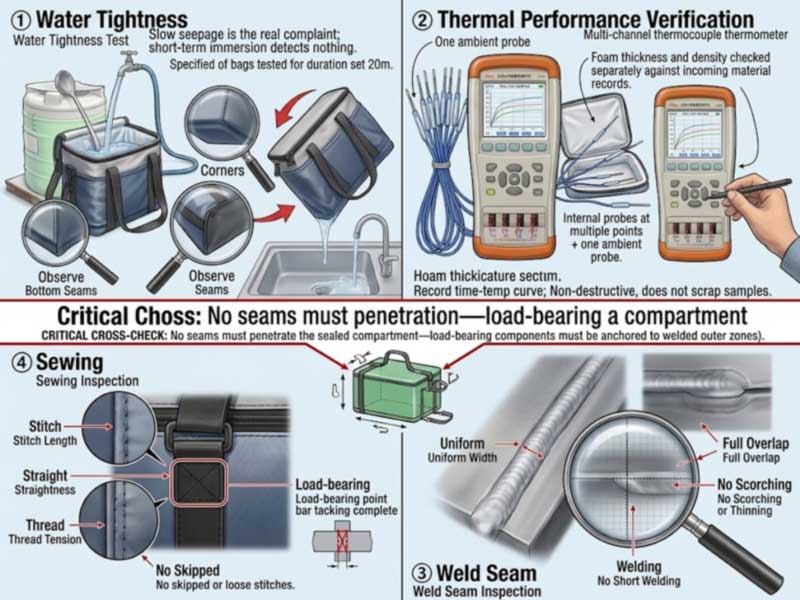
Specify it explicitly: a defined number of units filled with water, sealed, and laid on their side and inverted for a defined duration, with the base seam, corners, zipper ends and strap anchor points observed. Duration matters, because slow seepage is the real-world complaint pattern and a thirty-second dunk will not reveal it. Agree the sample size, the method and the duration in the inspection brief.

2. Insulation verification — measure the performance, not the thickness

Foam thickness and type cannot be judged by looking at a finished bag, and cutting units open is a destructive, wasteful way to find out. The better method is to measure what the insulation actually does, using a multi-channel thermocouple temperature tester: probes placed inside the bag — and one recording ambient outside it — log temperature at intervals over a defined period, producing a curve rather than an opinion.

Sealock uses a multi-channel temperature tester for exactly this. Multiple probe channels allow several points to be logged at once — for example upper and lower positions inside the chamber plus ambient — or several units tested in parallel, so the result reflects the batch rather than one lucky bag. Because the test is non-destructive, tested units are not written off, and it verifies the property the customer actually experiences: how long the contents stay cold.

Where a specification is stated in millimetres of foam rather than hours of hold, incoming material records remain the reference for thickness and density — which is why IQC documentation should also sit within the inspection scope. In practice the two work together: material records confirm what went in, and temperature testing confirms what it does.

3. Cold-hold claims — test them against a defined protocol

If your packaging advertises hours, that figure needs a test basis behind it. The variables must be fixed for the result to mean anything: ambient temperature, the quantity and type of ice or ice packs, whether the bag was pre-chilled, how full it is, and whether it is opened during the test. A cold-hold figure quoted without those conditions is not a measurement.

Practically, a full 48-hour run does not fit inside a pre-shipment inspection window, so cold-hold is normally verified at the sampling stage and maintained through the factory's routine test records, with the pre-shipment inspection confirming that the materials and construction match the approved sample that was tested. Agree with your supplier which protocol its published figure comes from — and advertise that figure, not a rounder one.

4. Both construction methods, inspected separately

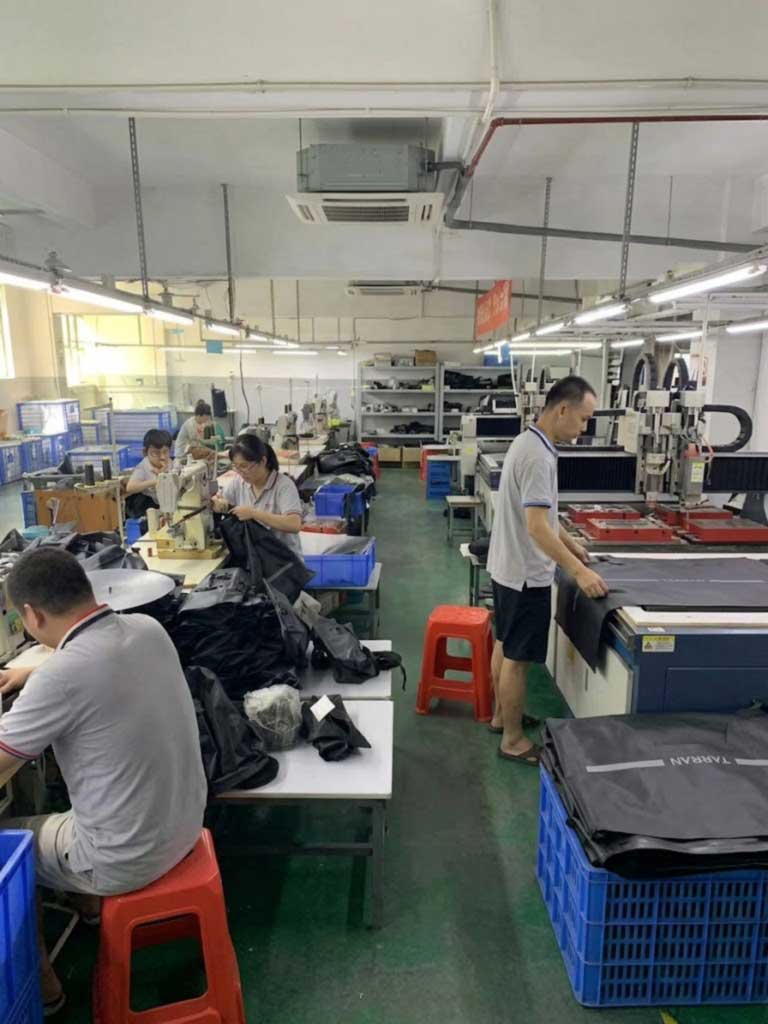
Here is a point buyers often get wrong. A soft cooler is frequently not welded-only — many builds combine high-frequency welded construction for the sealed chamber with conventional sewing for straps, harness, external pockets, webbing and trim. Sealock runs both: high-frequency welding lines and dedicated sewing lines, in separate rooms on the same floor of the same building, and its sewn construction is a core capability rather than an afterthought.

The inspection consequence is that welds and stitching need separate criteria. Weld inspection looks for even width, full lap, no burning or thinning, and no short welds. Stitch inspection looks for stitch density, straightness, thread tension, secure bar-tacks at load points, and no loose or skipped stitches. And there is one cross-cutting check specific to this product: no stitching may penetrate the sealed chamber — every load-bearing attachment should anchor to welded external zones. An inspector should be told to look for that explicitly, because a needle hole through the containment envelope is a leak that no amount of good stitching elsewhere compensates for.

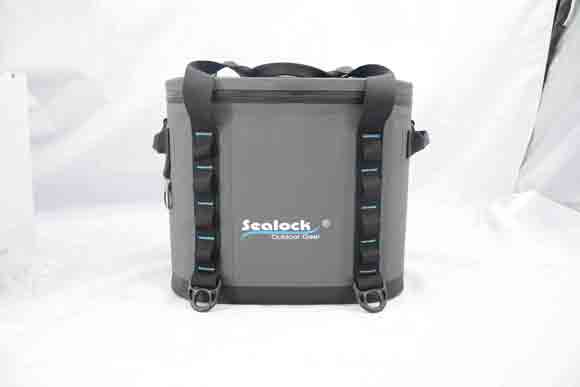
cooler-specific pre-shipment inspection scope covering water test, multi-channel temperature testing, weld inspection and stitch inspection

The Full Inspection Scope

Area What is checked
Quantity & packing Units per carton, total quantity, carton dimensions and weight, carton markings, drop test if specified
Conformity to gold sample Every unit compared against the approved reference sample
Dimensions & capacity External and internal dimensions against specification, with tolerances
Materials Shell fabric and coating, liner material against specification; foam type and thickness against incoming material records
Thermal performance Multi-channel thermocouple temperature logging against the agreed protocol, where specified
Welded construction Weld width, lap, evenness, no burns, thinning or short welds
Sewn construction Stitch density, tension, straightness, bar-tacks at load points, no skipped or loose stitches
Containment integrity No stitching through the sealed chamber; welded anchor zones for load-bearing attachments
Water test Defined sample filled, sealed, inverted for a defined duration
Function Zippers and closures cycled; buckles, D-rings and adjusters operated; harness fitted and loaded
Branding & labelling Logo method, size and position; woven labels; care and origin marking; barcode scanned and matched
Colour Compared to the approved standard under the agreed light source and tolerance
Cleanliness Food chamber free of residue, dust, odour and loose material

Reading the Report and Deciding

The report should give you findings with evidence, not just a verdict: photographs of each defect, counts by category against the accept/reject numbers, and the sampling plan used. What matters is whether it lets you act.

If the lot fails, the options are rework and re-inspect, sort and accept the good units, negotiate a discount, or reject. The decision should be commercial and informed by what actually failed — a batch failing on loose threads is a different problem from a batch failing on leaks. What should never happen is the balance payment being released before the result is known, which is why (cite index="135-1">the pre-shipment inspection is normally tied to the payment milestone.

Book the inspection at the right moment. Standard practice is when production is substantially complete and packed — commonly around 80% finished — so the inspector sees representative finished goods and there is still time to rework before the shipping date. Booking too early means inspecting an unrepresentative sample; too late means no time to fix anything.


What to Give the Inspector

Practical guidance is specific: when booking, (cite index="135-1">provide your inspector with the AQL levels for each defect category (for example: critical 0, major 2.5, minor 4.0), plus:

  1. The approved gold sample, or clear photographs of it and its location at the factory.
  2. Your defect classification list — the single most valuable document you can supply.
  3. The specification: dimensions with tolerances, materials, foam thickness, liner, closure, hardware.
  4. The water test protocol: sample size, method, duration, what counts as a fail.
  5. Branding and packaging artwork, including barcode format and origin marking requirements.
  6. The colour standard and agreed tolerance.
  7. Any destructive testing you want, agreed in advance.

Decide these before production, not when the inspector is standing on the floor. As one guide puts it, the key is (cite index="135-1">to decide before production starts, not after the inspector arrives at the factory.

How Sealock Handles Outgoing Quality

Construction capability High-frequency welding lines and dedicated sewing lines — separate rooms, same floor; many builds combine both processes
Inspection chain IQC on incoming materials, IPQC in-line (including weld inspection at the weld station), OQC at the outgoing gate
Sampling AQL sampling against defined acceptance criteria
Reference Signed gold sample retained and used for comparison at OQC
Water testing Full water-immersion batch testing of sealed builds
Lab suite Multi-channel thermocouple temperature testing for cold-hold, plus load cycling, tensile, adhesion, salt spray, abrasion, colour fastness and colour difference
Third-party SGS or QIMA inspection welcomed at the outgoing line
Certifications ISO9001, BSCI, SMETA P4, GRS, HIGG, SCAN

For how the quality chain runs earlier in production, see How Soft Cooler Backpacks Are Manufactured and RF-Welded Cooler Backpack Manufacturer. For evaluating the factory itself rather than the batch, see Soft Cooler Factory Audit Checklist for Importers.

high-frequency welding line and sewing line in adjacent rooms, with many cooler builds combining both processes

FAQ: Pre-Shipment Inspection for Soft Coolers

Q: What AQL should I use for cooler bags?

A: The general consumer-goods default of AQL 0 critical / 2.5 major / 4.0 minor at General Inspection Level II is a reasonable baseline. Tighten major to 1.0–1.5 if you sell into demanding retail accounts or the product carries higher risk. Remember AQL levels are set separately for each defect category, and critical defects are normally zero tolerance.

Q: Does AQL 2.5 mean 2.5% of my sample can be defective?

A: No — this is the most common misunderstanding. For a 200-unit sample at AQL 2.5, the accept number is 10, not 5. The accept and reject numbers come from statistical tables in ISO 2859-1 rather than from multiplying your sample size by the percentage. Always read them from the table.

Q: What counts as a critical defect on a soft cooler?

A: Typically a leak under the agreed water test, a wrong or missing food-grade liner, missing origin marking or required labelling, a strap or handle detaching under load, or contamination in the food chamber. But these definitions only exist if you write them — document your defect classification in a quality agreement with the supplier before production begins.

Q: How do I get the seal checked during inspection?

A: Specify a water test in the inspection brief: how many units, filled with how much water, sealed, laid on their side and inverted for how long, and which areas the inspector must observe — base seam, corners, zipper ends and strap anchors. Note that slow seepage is the real-world failure pattern, so duration matters; a brief dunk proves very little.

Q: How is the insulation verified if the foam is sealed inside?

A: By measuring performance rather than cutting bags open. A multi-channel thermocouple temperature tester logs temperature at several points inside the bag plus ambient over a defined period, producing an actual cold-hold curve — non-destructive, so no units are written off, and it verifies what the customer actually experiences. Foam thickness and density themselves are confirmed against the factory's incoming material records, so include those in the inspection scope too.

Q: Should the inspection cover stitching as well as welding?

A: Yes. Many soft coolers combine welded construction for the sealed chamber with sewn construction for straps, harness, pockets and webbing, so the two need separate criteria — weld width, lap and evenness on one side; stitch density, tension and bar-tacks at load points on the other. Add one cross-cutting check: no stitching should penetrate the sealed chamber, since a needle hole through the containment envelope becomes a leak.

Planning an inspection? Sealock (YiFuLong Outdoor Gear Co., Ltd.) runs in-house IQC, IPQC and OQC with AQL sampling, gold-sample comparison and full water-immersion testing, across both its high-frequency welding and sewing lines — and welcomes SGS or QIMA inspection on any order. Send your defect classification and AQL settings, and the team will align its outgoing criteria to them.

Email: info@sealock.com.hk  |  Phone: +86-13632981825  |  Browse the soft cooler range

Sampling standards, AQL conventions and inspection practices cited here reflect publicly available quality-assurance sources as of mid-2026; sample sizes and accept/reject numbers must be read from current ISO 2859-1 / ANSI-ASQ Z1.4 tables for your specific lot size and inspection level. Agree defect definitions, AQL settings and test protocols in writing with your supplier and inspection provider before production.

Related News
Leave me a message
X
We use cookies to offer you a better browsing experience, analyze site traffic and personalize content. By using this site, you agree to our use of cookies.Privacy Policy