News

How to Start Your Own Cooler Backpack Brand

2026-08-26 0 Leave me a message
Starting a cooler backpack brand is more achievable than most categories — the products need no expensive tooling, minimum orders are modest, and a manufacturer can carry the entire technical burden. What sinks new brands is rarely the product. It is running out of cash in month nine, pricing a bag that cannot support a retail channel, or launching into a market where nobody was asking for another cooler. This guide is about the business side of the launch: choosing a position, doing the pricing maths, planning the cash, and getting to a first order that does not break you. Sealock (YiFuLong Outdoor Gear Co., Ltd.) manufactures for brands at exactly this stage.


Step 1: Pick a Position, Not Just a Product

The cooler category is crowded at the generic end and thin at the specific end. A brand that says "we sell cooler backpacks" competes with everyone on price. A brand that says "cooler backpacks for kayak anglers" or "the lightest cooler pack for day hikers" or "the leakproof one that will not ruin your car seat" competes on being right for someone.

Validation before commitment is the discipline that separates a brand from an expensive hobby. Look for a triangle of signals: search demand, community chatter and purchase intent. For coolers, that means keyword volume for your specific use case, forums and subreddits where that use case is discussed, and — most usefully — the recurring complaints in one-star reviews of existing products. Those complaints are your specification. Leaking, disappointing ice life, uncomfortable straps, zips that fail, bags that will not stand up: each is a design brief someone has already written for you for free.

Where the product decisions come from: a position translates directly into a specification — seal level, cold-hold class, capacity, closure type, weight target. Those are the levers a manufacturer can set. See Custom Insulated Cooler Backpacks: Spec Your Foam, Liner & Capacity for what each decision does.


Step 2: Choose Your Manufacturing Model

Three routes, with very different capital and control profiles: private label (a proven catalogue product with your branding), ODM (the factory designs, you brand and adapt), and OEM (you specify, the factory builds, you own the design). The comparison in detail is in OEM vs ODM Cooler Backpack Manufacturing: Which Fits Your Brand and Private Label Cooler Backpacks: Launch Your Brand Without a Factory.

For a first-time brand, the sensible sequence is usually: launch on a proven platform, learn what customers actually complain about, then invest development capital into an owned design once you know what to develop. Note that cooler backpacks are unusually friendly to this path — soft bags need no injection tooling, and MOQ at Sealock is 300 pieces per design, which keeps a first order within reach.

Step 3: Do the Pricing Maths Before You Order

This is where most new brands make an unrecoverable error, because a price set without a channel plan cannot be fixed later without alienating whoever you sold to first.

Start from landed cost, not unit price

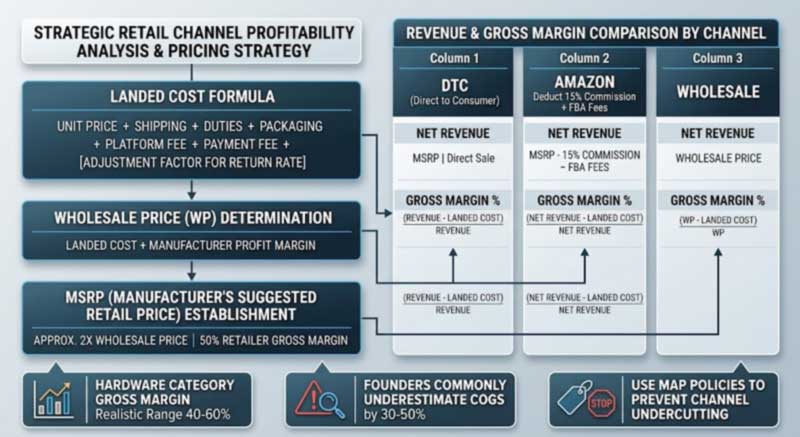
Calculate landed cost per SKU, including unit cost, freight, duties, packaging, platform fees, payment fees and a realistic return rate. On a cooler backpack, freight deserves attention: the bags are light and bulky, and ocean freight charges by volume, so packing efficiency changes landed cost per unit materially. See Wholesale Cooler Backpack Manufacturer: Bulk Pricing & FOB Terms.

Then work forward with margin targets

The benchmark for hard goods is specific: aim for 60–70% gross margin for DTC consumables and 40–60% for hard goods, adjusting for your ad spend model. A cooler backpack is a hard good, so a 40–60% gross margin is the realistic band — and one warning worth taking seriously: most founders underestimate COGS by 30–50% before shipping and platform fees enter the picture.

If you ever want retail, build the ladder now

Retail requires headroom that DTC-only pricing usually destroys. The standard structure: a wholesale price of $14.50 with a standard keystone markup places the MSRP at $29.00, giving retailers a solid 50% margin and establishing a consistent value in the customer's mind. If your cost structure cannot support a wholesale price at roughly half your MSRP, you have a DTC-only product — which is a valid choice, but decide it deliberately rather than discovering it when a retailer asks for terms.

Channel economics differ, and the goal is not one price everywhere: a smart omnichannel strategy doesn't mean having the same price everywhere — it means having a justified price everywhere, with each channel's unique costs and strategic purpose baked into the final number. A worked example from the same source shows how the maths differs on a marketplace: listing at $40 on Amazon, after a 15% referral fee and FBA fees, leaves net revenue of $29 — a lower margin than DTC but better than wholesale. And to stop channels cannibalising each other, a MAP policy sets the lowest price retailers may advertise and is your best defence against public price wars.

pricing ladder from landed cost to wholesale and MSRP with DTC, Amazon and wholesale channel margins compared

Step 4: Plan the Cash, Not Just the Launch

This is the section most launch guides skip and most failed brands wish they had read. Physical-product businesses fail on cash timing rather than on demand, because you pay for inventory months before you sell it.

The modelled arc is sobering: for a mid-range e-commerce launch, the model hits a cash trough around month 9 — this is where underfunded businesses fold; the founder can't reorder inventory, the ad budget evaporates, and organic traffic isn't yet strong enough to compensate. The same analysis notes that profitability on a cumulative basis doesn't arrive until month 17 or 18, and concludes bluntly: anyone who told you e-commerce is a fast path to income is describing the exception, not the model.

Applied to a cooler brand, three timing realities compound this:

  • You pay a deposit before production starts, and the balance before shipment — typically months before revenue.
  • Lead times stack: sampling 7–15 days, production 30–45 days, then ocean freight and customs clearance. Order-to-warehouse is realistically two to three months.
  • Coolers are seasonal. Miss the summer window and your capital is parked in stock until next year — the single most expensive mistake in this category.
Work backwards from your on-shelf date. Subtract customs clearance, ocean transit, production (30–45 days), sampling and approval (7–15 days plus revision rounds), and the deposit lead time. For a summer range that usually means committing in winter. A brand that starts sourcing in April for a June launch has already missed the season. See Soft Cooler Backpack Supplier: MOQ, Lead Times & FOB Sourcing Explained.


Practical mitigations: start with one SKU and one colourway rather than a range (MOQ applies per design, size and colour, so a three-size launch is three orders); order conservatively for the first run and accept selling out over sitting on stock; and treat the second order's timing as part of the first order's plan, since reorder lead time is the same two to three months.

Step 5: Protect the Brand

The brand is the asset you are actually building, and it is worth securing early. Register the business entity, check that your name is available as a trademark in your primary market before printing anything, and secure the domain and social handles at the same time. If you are commissioning a custom design, settle IP ownership in the contract before development starts — ownership is never automatic, and this is far cheaper to agree at the beginning than to argue about later.

Packaging compliance is not optional either: country-of-origin marking, a responsible party's name and address, and the correct barcode (a GS1 UPC for retail, or the marketplace's own identifier for fulfilment) all belong in the artwork before the print run. The detail is in Private Label Cooler Backpacks.

Step 6: Get the First Order Right

Everything above is planning; this is where money leaves the account. The non-negotiables:

  1. Verify the supplier is a real factory before paying anything — see Choosing an OEM Soft Cooler Backpack Manufacturer: A Buyer's Checklist.
  2. Approve a physical golden sample, never a photograph, and keep it as the production reference.
  3. Test the sample properly — fill it with water and invert it, time its ice retention, load and carry it. Your customers will.
  4. Get the claims validated. If your listing says leakproof, IPX7 or 48 hours, make sure the factory has tested it — those claims become returns and reviews if they do not hold.
  5. Structure payment safely: deposit and balance, with the balance tied to a passed pre-shipment inspection, paid to a corporate account matching the business licence.
  6. Model landed cost with a broker before committing, including duty on the correct classification.
The claim discipline that protects a young brand: resist advertising numbers the product cannot hold. A 24-hour-class bag described as 48-hour generates refunds, one-star reviews and a reputation that costs more than the margin gained. Ask the factory what test basis its cold-hold figure comes from, and advertise that.


Platforms to Launch On

Sealock welds insulated cooler bags at 27.12 MHz across three factories in Dongguan, China and Ho Chi Minh City, Vietnam, with food-grade inner liners across the entire range. Real cooler backpacks a new brand could launch on, chosen by fit rather than rank:

Image Model Position it suits Link
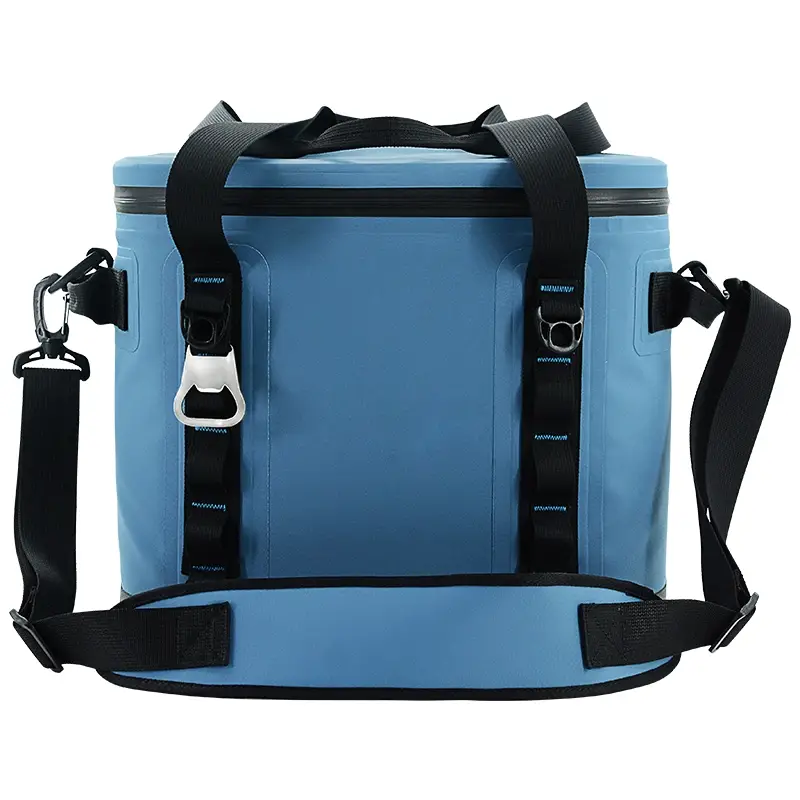
28L airtight-zipper insulated backpack cooler SL-I274 28L Airtight-Zipper Backpack Cooler (SL-I274) A premium sealed flagship — 48 hr, airtight zipper, 840D TPU View
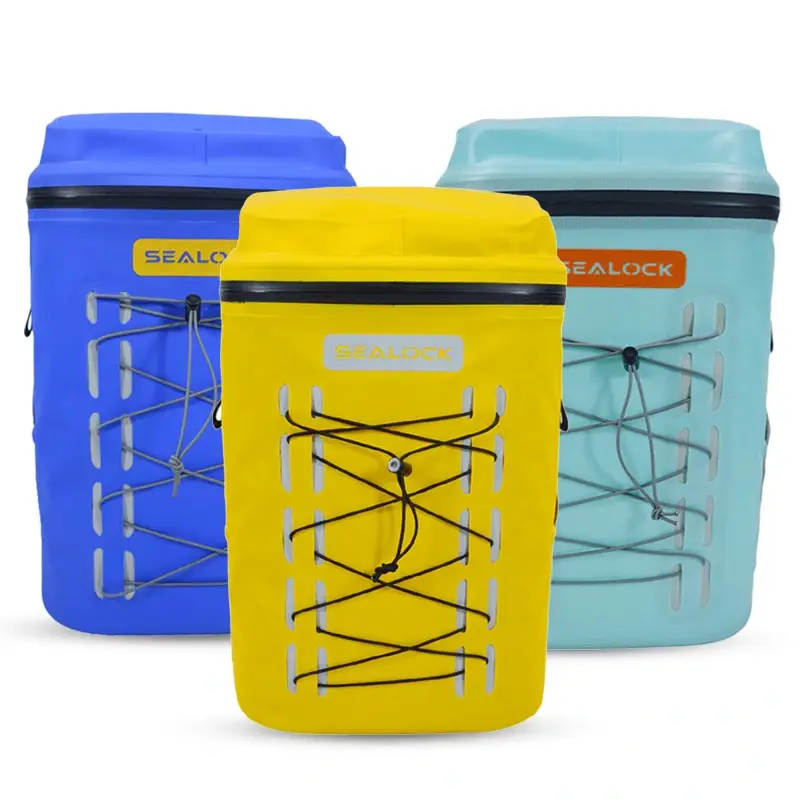
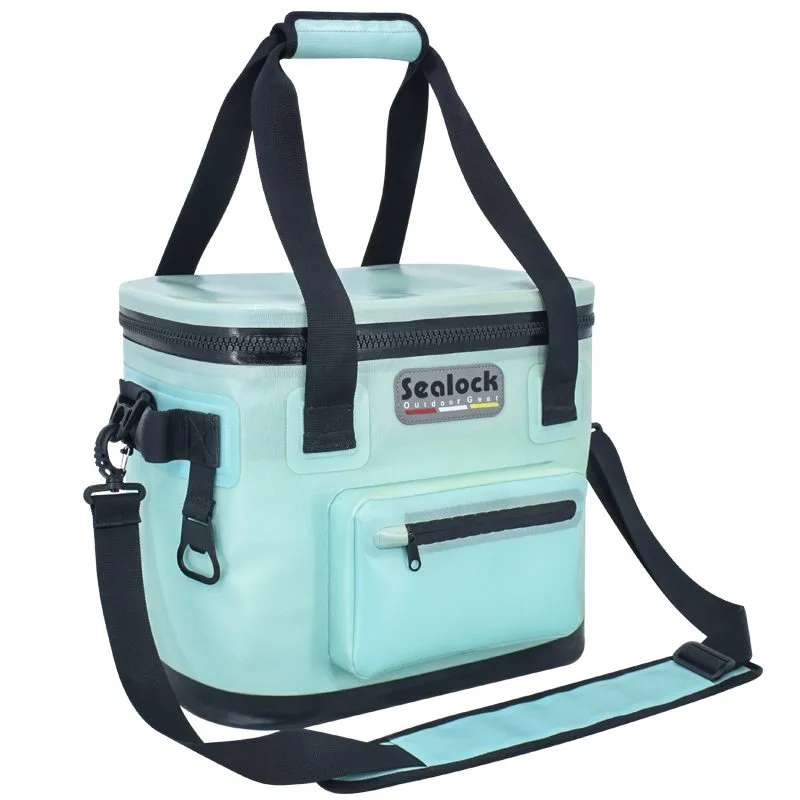
22L IPX7 cooler backpack SL-I280 22L IPX7 Cooler Backpack (SL-I280) A technical water-sports position — IPX7, 50 mm XPE, full harness View
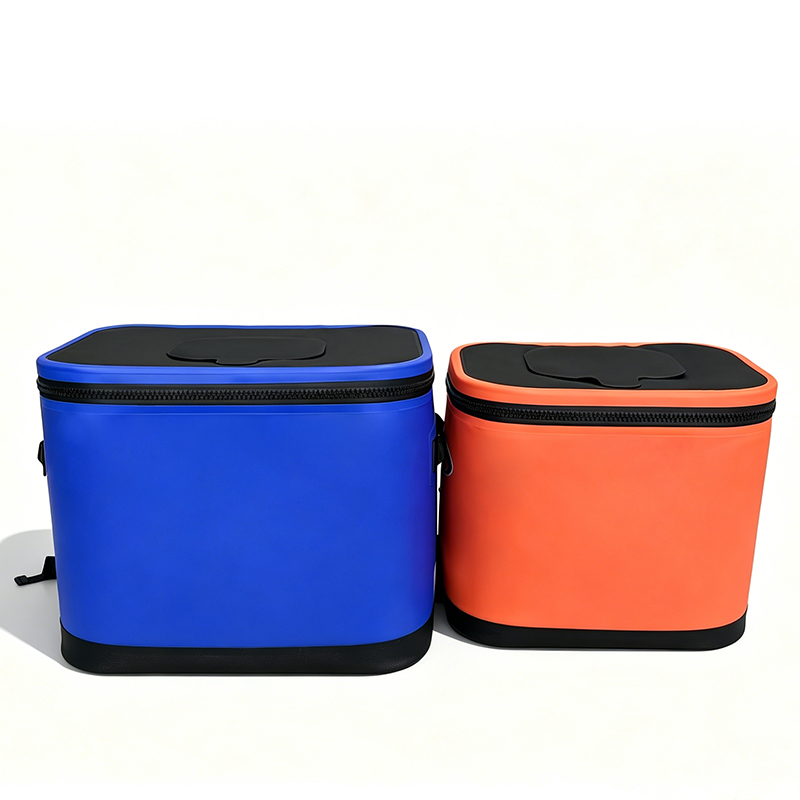
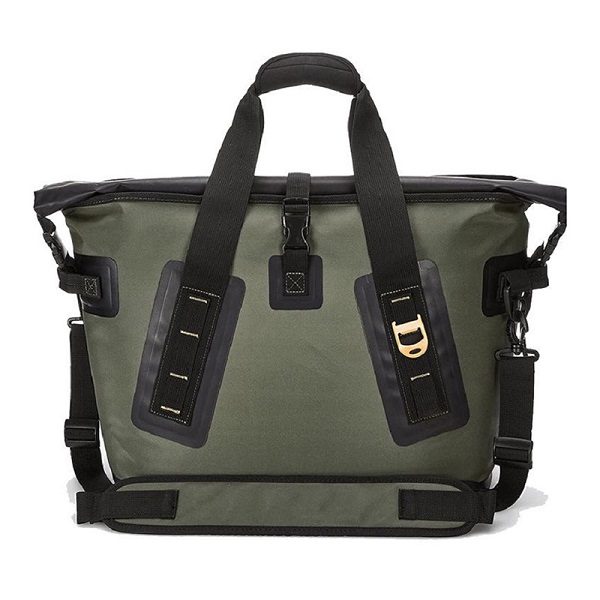
Insulated soft cooler backpack with molded lid SL-E050B Insulated Cooler Backpack, molded lid (SL-E050B) A distinctive everyday pack, already in two sizes — easy range extension later View
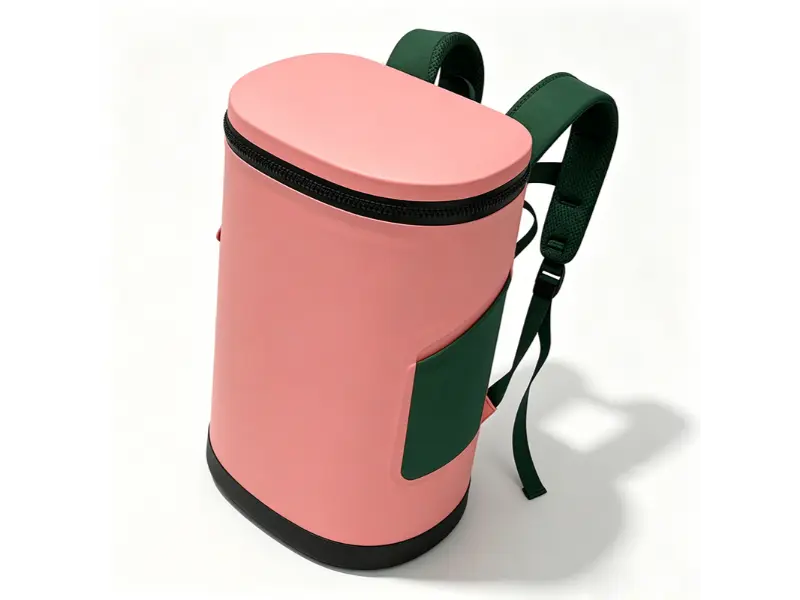
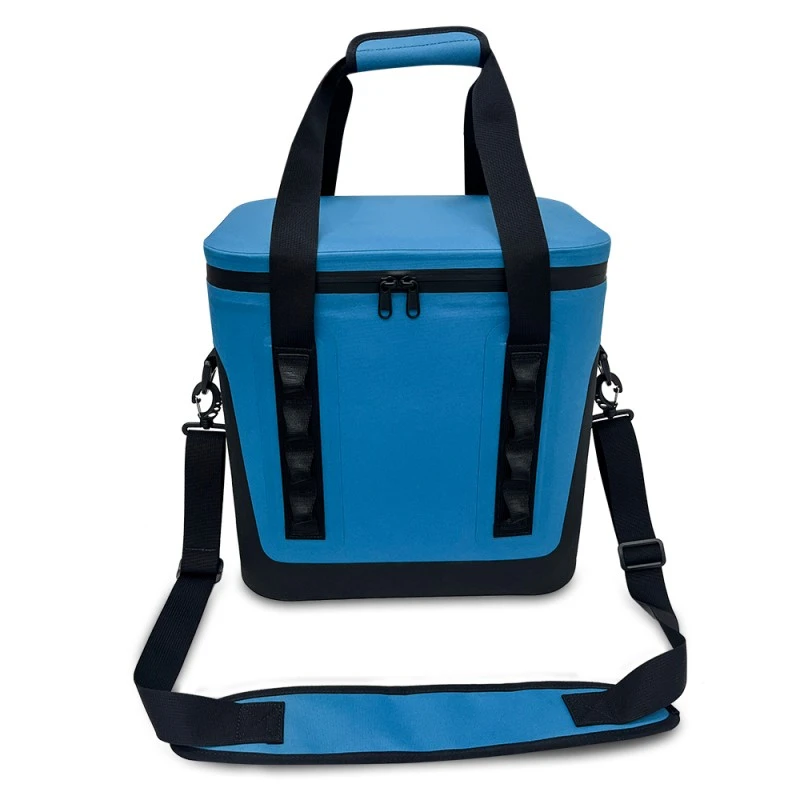
Barrel insulated cooler backpack SL-I309 Barrel Cooler Backpack (SL-I309) A light, visually distinct silhouette — stands out in a crowded listing page View
Insulated leakproof cooler backpack SL-I075A Insulated Leakproof Cooler Backpack (SL-I075A) A value 36-can position for a price-led entry View

Working Terms for a First Order

MOQ 300 pcs per design (per size and colourway), negotiable on custom programmes
Sampling 7–15 days; longer for ground-up development
Production 30–45 days; FOB Guangdong
Tooling None required for standard soft-bag customisation — only for bespoke moulded hardware
Branding Welded TPU or silicone patch, screen print, deboss, UV print, woven label on welded tab; custom pulls, webbing and Pantone-matched shell
Packaging Hangtags, care and origin labels, polybag or retail box artwork
Validation Immersion and cold-hold testing so listing claims are backed; SGS or QIMA inspection available
Origin China or Vietnam on the same specification
Development Private label, ODM or full ground-up OEM — demanding briefs welcome

FAQ: Starting a Cooler Backpack Brand

Q: How much capital do I need to launch a cooler backpack brand?

A: Enough for the first order plus the runway to reach the second, which is more than most founders budget. A launch on an existing platform can start in the low thousands for goods, but the modelled cash trough for a physical-product e-commerce launch arrives around month nine, and cumulative profitability often not until month 17 or 18. Plan working capital for that gap, not just the first purchase order.

Q: What margin should I target?

A: Around 40–60% gross for a hard good like a cooler backpack. Calculate from true landed cost — unit price, freight, duty, packaging, platform and payment fees, and a realistic return rate — and be aware that founders commonly underestimate COGS by 30–50% before shipping and platform fees are counted.

Q: How should I price if I want to sell wholesale later?

A: Build the ladder from the start: a keystone structure puts MSRP at roughly double the wholesale price, giving retailers about 50% margin. If your costs cannot support that, you have a DTC-only product. Price each channel on its own economics rather than identically, and set a MAP policy to stop channels undercutting each other.

Q: What MOQ should I expect for a first order?

A: Sealock's standard is 300 pieces per design, applied per size and colourway. Starting with one SKU in one colour keeps the first order small; a three-size launch is three separate minimums, which is a common way new brands over-commit capital.

Q: How far ahead do I need to start for a summer launch?

A: Work backwards: customs clearance, several weeks of ocean freight, 30–45 days production, 7–15 days sampling plus revisions, and deposit lead time. That typically means committing in winter for a summer season. Starting in spring for a June launch usually means missing the year.

Q: Do I need my own design to start a brand?

A: No. Most brands launch on a proven platform with their own branding and specification choices, then invest in an owned design once they know what customers actually want. Cooler backpacks make that path easy because soft bags need no tooling — the step up to a custom design costs development time rather than moulds.

Ready to start? Sealock (YiFuLong Outdoor Gear Co., Ltd.) manufactures welded cooler backpacks for new and established brands from its own lines in China and Vietnam — 300 pcs MOQ, full branding and packaging support, and tested performance data to back your listing claims. Send your market, target price and launch date, and the team will recommend a platform and quote it.

Email: info@sealock.com.hk  |  Phone: +86-13632981825  |  Browse the soft cooler range

Margin benchmarks, cash-flow models and pricing conventions cited here reflect publicly available e-commerce and retail-industry sources as of mid-2026; actual results vary widely by category, channel, market and execution. Nothing here is financial, legal or tax advice — consult qualified advisers on business structure, trademarks and financial planning before committing capital.

Related News
Leave me a message
X
We use cookies to offer you a better browsing experience, analyze site traffic and personalize content. By using this site, you agree to our use of cookies.Privacy Policy
RejectAccept