Once a brand decides to develop its own cooler backpack, three practical decisions shape the product more than any other: what it is made of, how big it is, and how the brand appears on it. Each looks simple and each hides a trap — a shell material that cracks in the field, a capacity that misreads the use case, or a logo method that literally punctures the waterproofing. Sealock (YiFuLong Outdoor Gear Co., Ltd.) manufactures welded soft cooler backpacks to custom spec, and this guide works through materials, sizes and branding with the real trade-offs behind each, so a buyer specifies on evidence rather than guesswork.
Materials: Shell, Coating, Insulation and Liner
A cooler backpack is a stack of material decisions, and the shell is the one buyers most often get wrong by fixating on a single number.
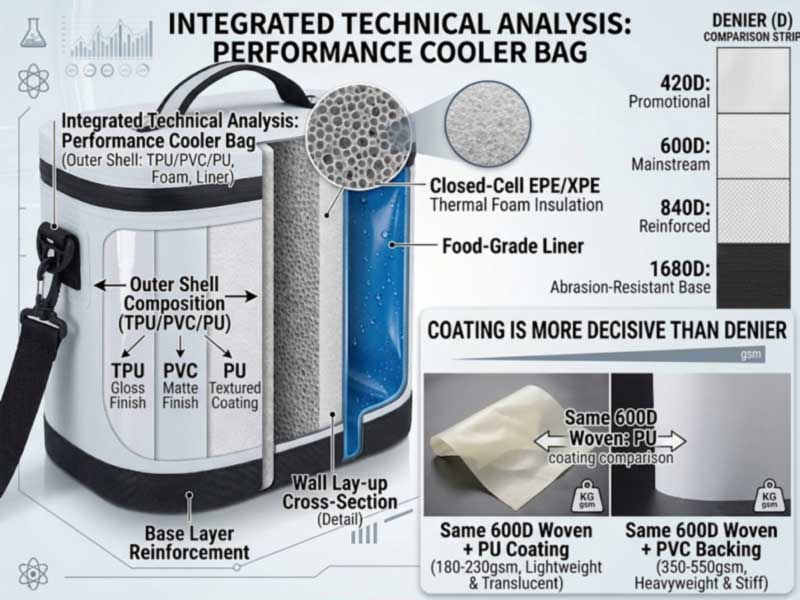
Reading Denier — and Why It Isn't the Whole Story
Denier (the "D" number) states yarn thickness, and it maps roughly to duty: 150D–300D balances drape and printability for fashion totes, 400D–600D delivers durability without excess weight for daily packs, and 800D–1200D+ maximizes abrasion resistance for rugged and tactical gear. For soft coolers specifically, common polyester options run 300D, 420D, 600D, 900D and 1680D, while TPU is the high-end shell for stronger waterproofing, better durability and a premium look.
But denier alone is misleading, because the coating changes everything — two "600D" fabrics can be completely different products. The same denier appears in very different weights depending on coating: a 600D PU-coated Oxford can be around 180–230 gsm, while a 600D PVC-backed version can be 350–550 gsm—same denier, completely different feel and use case. The functional split is clear: a 600D fabric with a thick PVC backing is fully waterproof and heavy, while the same 600D with a PU coating is only water-resistant and more breathable. TPU sits at the top — a waterproof, weldable, low-temperature-flexible coating that is also what makes a seam-free welded body possible.
The smart move on the toughest fabrics is targeted, not blanket: reinforce strategically—back a lighter fabric with TPU or place 1680D only at wear points like the base and corners—because higher-denier fabric also slows production and increases needle wear. A cooler that is 600D TPU on the body with a 1680D reinforced base is a common, sensible custom build.
Inside the wall: insulation and liner
Behind the shell sit two more custom choices. The insulation is closed-cell foam — EPE or XPE for a 24-to-48-hour hold, upgradeable to high-density PU, VIP vacuum panels, EPP or aerogel for a premium long-hold line — specified by thickness to a target cold-hold. The liner is a food-contact material, so it should be a food-grade TPU or PEVA membrane matched to the destination market's requirement. These are covered in depth in Insulated Cooler Backpack Manufacturer: EPE Foam & Cold-Retention Design.
| Shell option | Character | Best for |
|---|---|---|
| 420–600D polyester, PU-coated | Light, water-resistant, economical | Promotional, value retail lines |
| 600D PVC-backed | Fully waterproof, heavier, stiffer | Rugged value builds |
| 600–840D TPU-laminated | Waterproof, weldable, premium feel | Welded seam-free coolers, mid-to-premium |
| 1680D reinforcement | Maximum abrasion resistance, heavy | Base and corner wear zones |
Sizes: Matching Capacity to the Real Use
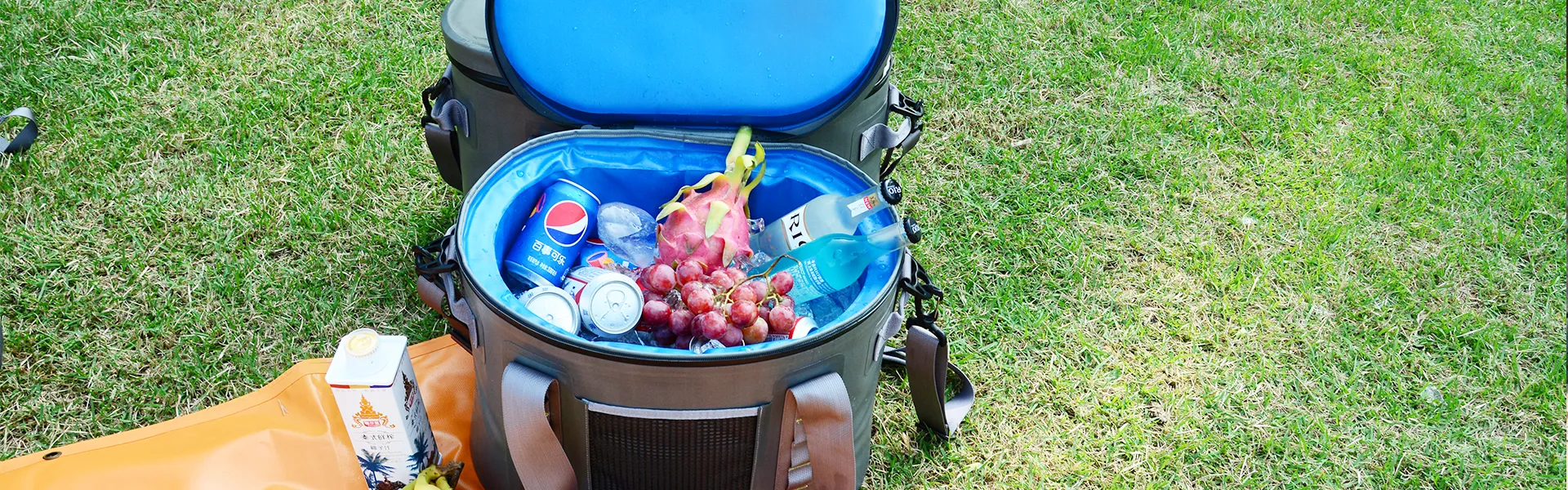
Capacity is where a brand either fits the customer's day or misses it. The useful way to spec size is not "how many litres sounds good" but "what does one user carry on one outing," then working back to litres, dimensions and the carry system that a full load demands. A practical map for cooler backpacks:
| Capacity | Roughly holds | Use case | Carry implication |
|---|---|---|---|
| 12–15L | A personal day's food & drink | Commute, lunch, solo day out | Padded straps sufficient |
| 18–22L | A day for one to two, or a long solo day | Hike, beach, cycling, travel | Sternum strap helps when full |
| 24–30L+ | A group's day, or two days solo | Group camping, tailgate, expedition | Sternum + waist belt needed |
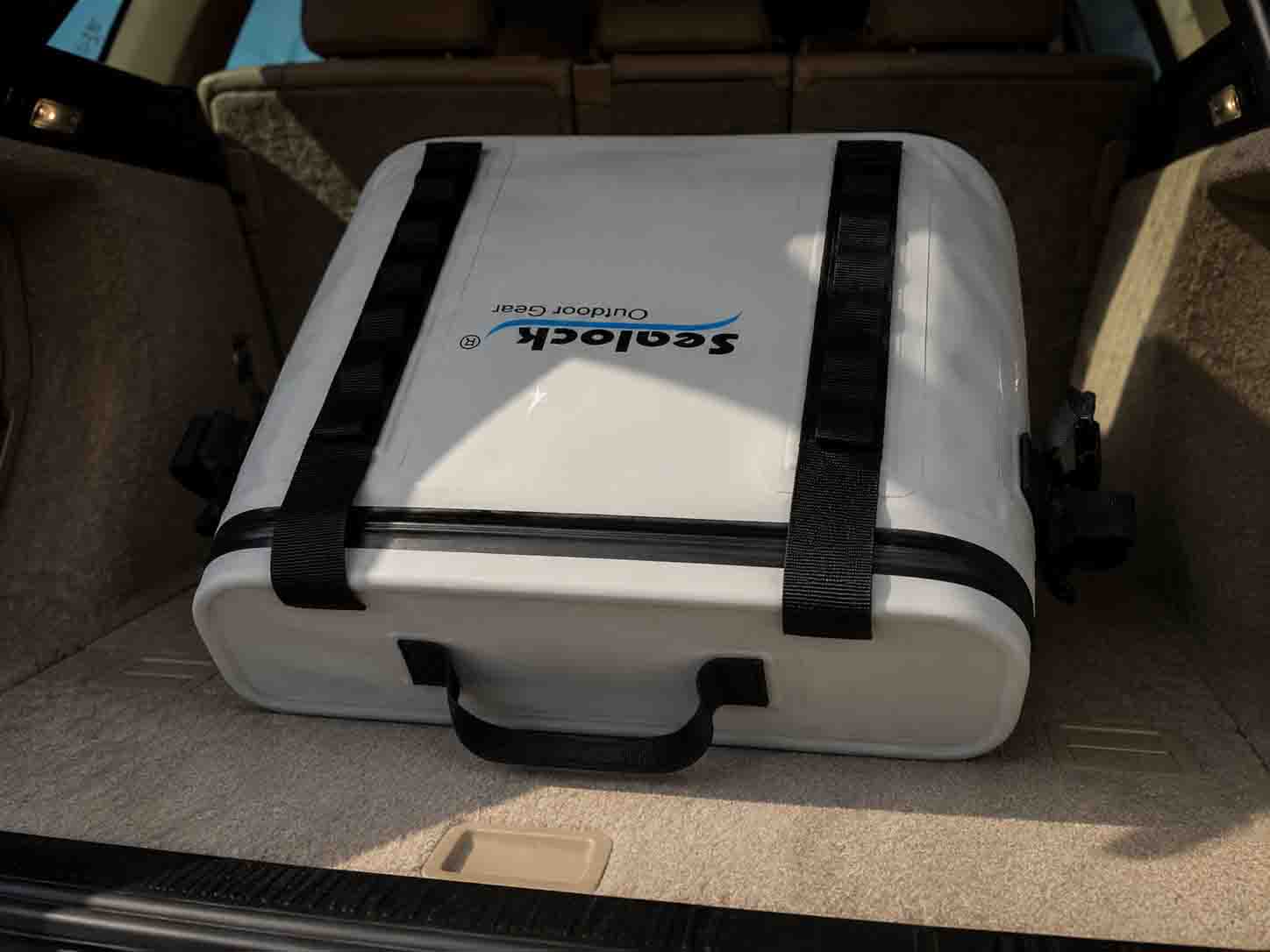
Three sizing realities a brand should build in. First, the harness must scale with the litres — a loaded 24L on padded straps alone is uncomfortable, so bigger capacities need a sternum strap and waist belt engineered in from the start, not added later. Second, internal geometry matters as much as volume: dimensions tuned to stand bottles upright or to fit a specific can count make a cooler feel purpose-built rather than generic. Third, if the cooler is aimed at travellers, the external footprint should be checked against common carry-on and under-seat allowances at sampling. A related decision — offering one design in multiple sizes — lets a brand cover several use cases from a single development; note that MOQ typically applies per size, so a three-size range is three runs.
Offering a family also future-proofs the line. A brand can launch a 15L personal and a 22L day pack on the same design language, then extend to a group size later. For how capacity scales into group use, see Large Capacity Cooler Backpack for Group Camping.
Branding: The Part That Can Ruin the Waterproofing
Branding on a cooler backpack is not the same problem as branding a canvas tote, and this is where inexperienced buyers do real damage. The general substrate rules still apply — screen printing and embroidery suit natural fibres, heat transfer and sublimation demand tightly woven synthetics like nylon and polyester, debossing suits thick hides, and patches attach to almost anything — but a welded waterproof cooler adds one hard constraint the others do not.
The rule that protects the waterproofing
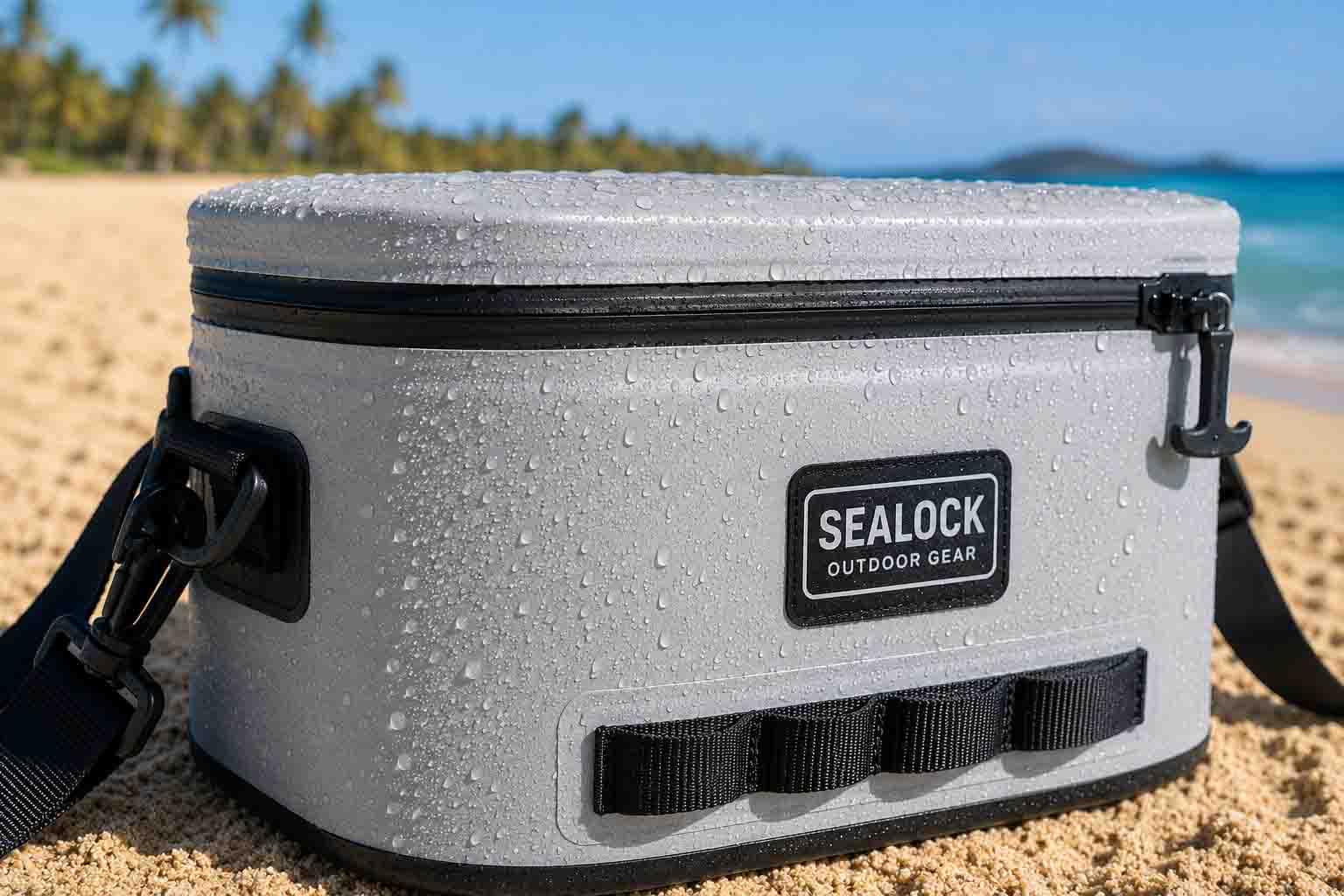
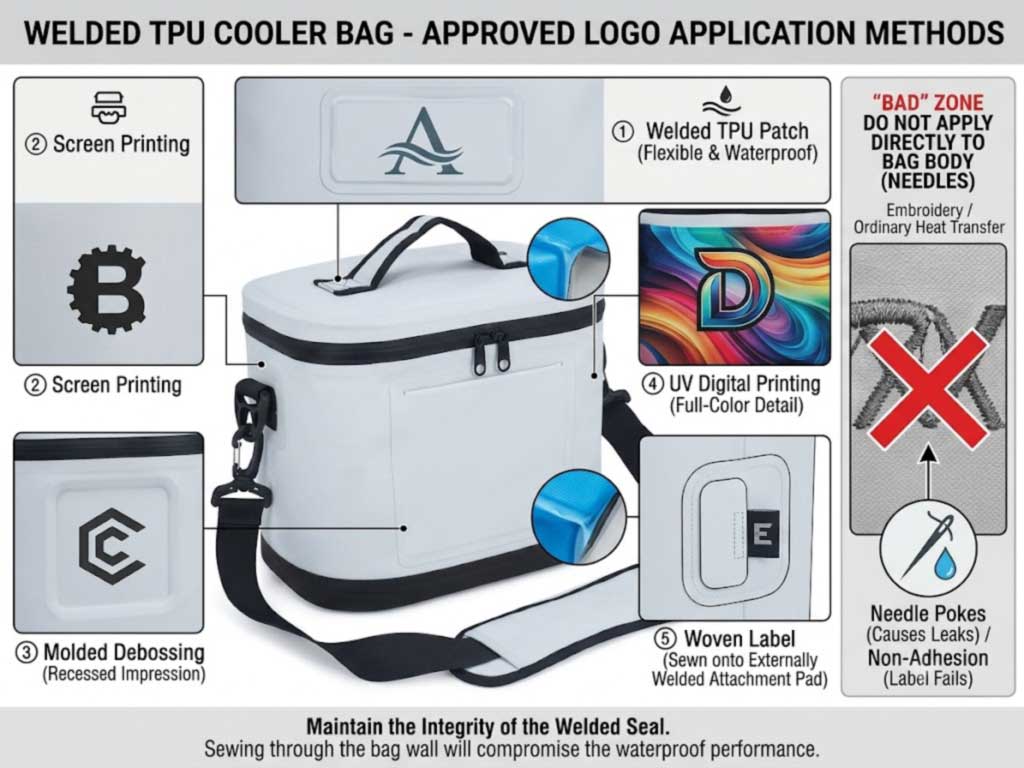
On a welded cooler, a needle is the enemy. A high-frequency-welded bag factory puts it bluntly: brand managers frequently request embroidered logos, and a serious welded-bag factory refuses — a sewing needle punches hundreds of holes into the bag, instantly destroying the waterproof barrier. The correct methods keep the containment chamber intact: screen printing, debossing, or welded TPU patches; and if a stitched woven label is required, the factory welds a separate exterior attachment zone so the needle never penetrates the main chamber. Heat transfer needs care too — it is not suitable for TPU or PU-coated fabrics — so on a TPU shell the reliable routes are UV digital printing or heat transfer formulated for adhesion on non-porous surfaces, alongside welded patches and screen print.
Matching method to goal and volume
Beyond substrate, the method should match the run and the look: screen printing suits simple logos and mass production as a durable, cost-effective choice, while digital and UV printing suit fine lines, gradients and small batches with high resolution. A full private-label presentation goes past the logo — silk-screen or heat-transfer print, rubber or TPU patches, woven labels, hangtags and branded packaging, plus custom zipper pulls, color-matched webbing and hardware, and a color-matched shell to a Pantone reference.
Putting the Three Together: A Worked Spec
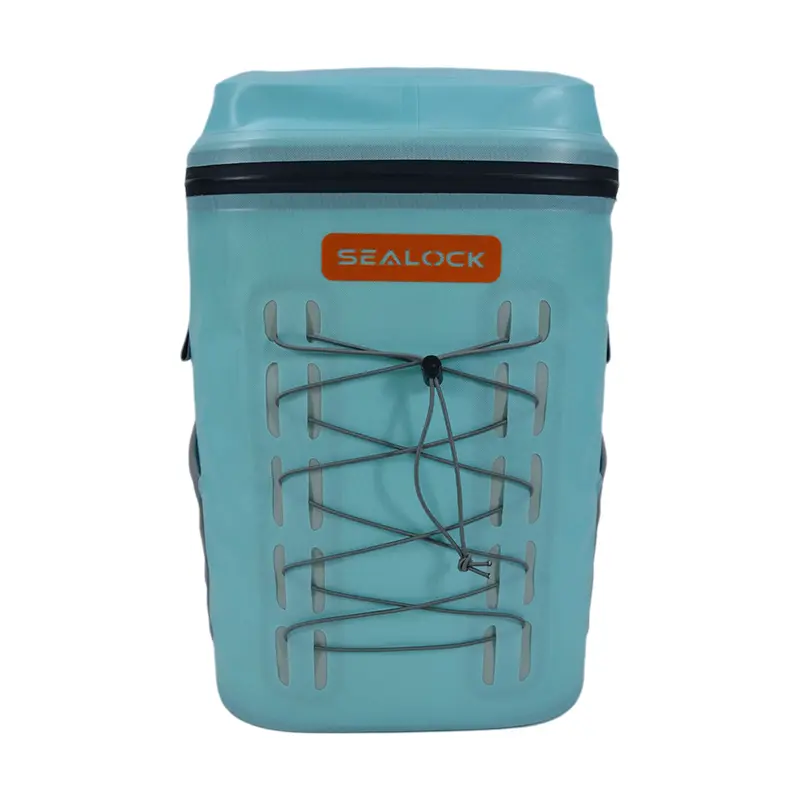
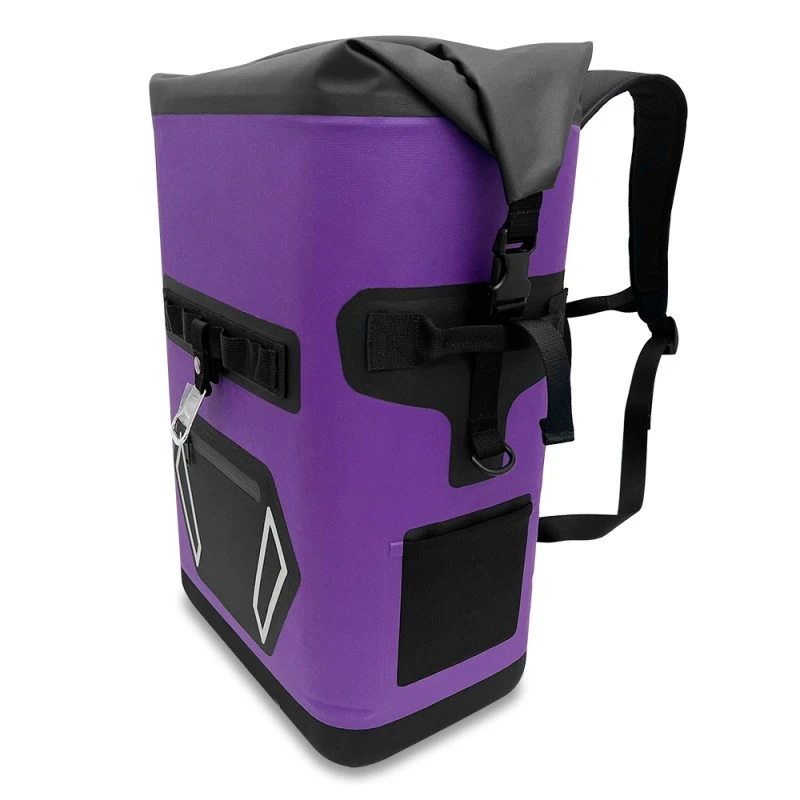
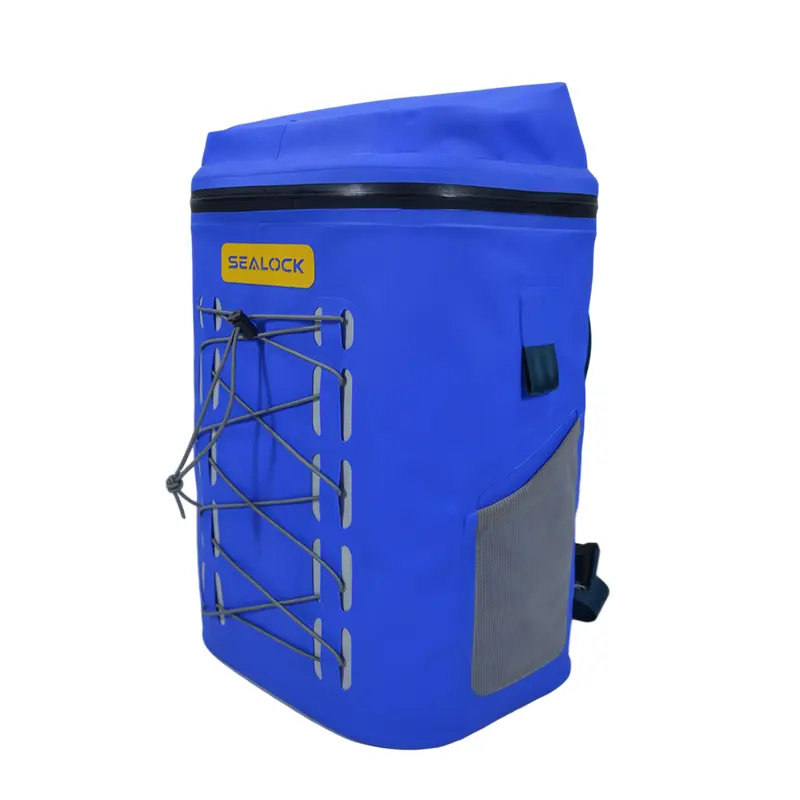
The three axes interact, and a coherent custom cooler backpack is a set of choices that agree with each other. A typical mid-premium outdoor build, for example: a 600–840D TPU-laminated shell (waterproof, weldable, premium feel) with a 1680D reinforced base; a closed-cell XPE wall sized to a 48-hour hold with a food-grade TPU liner; a 22L capacity with a sternum-and-waist harness for the load; and branding by welded TPU patch plus a color-matched shell and zipper pulls, with a woven label on a welded tab. Every choice reinforces the positioning rather than fighting it.
Real Sealock builds show the axes resolved different ways — picked by fit, not tier:
| Image | Model | Material / size / notable | Link |
|---|---|---|---|
|
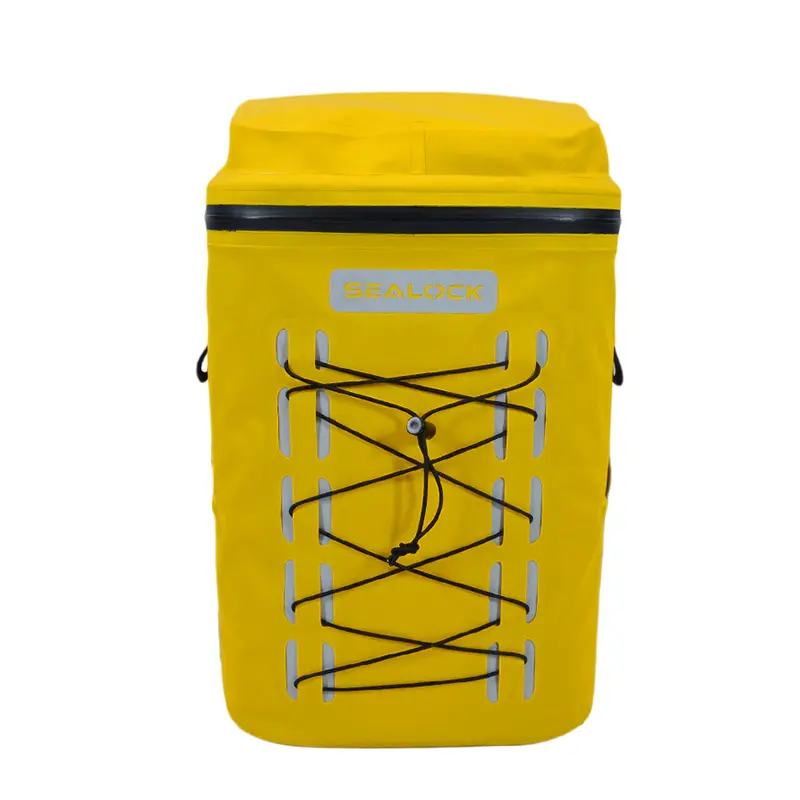
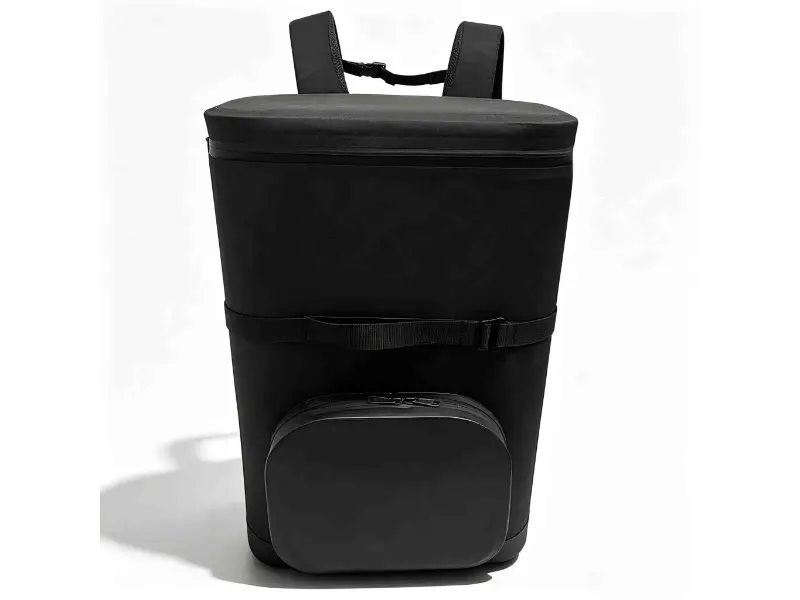
22L IPX7 Cooler Backpack (SL-I280) | 600D TPU, 50 mm XPE, 22L, full harness | View |
|
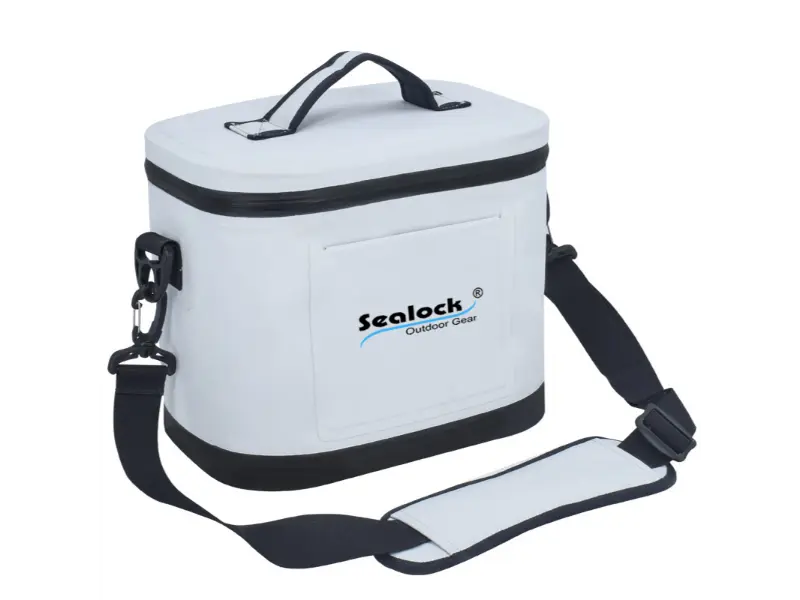
Waterproof Soft Cooler 12/15/20L (SL-I032) | 840D TPU, 1680D base, three sizes | View |
|
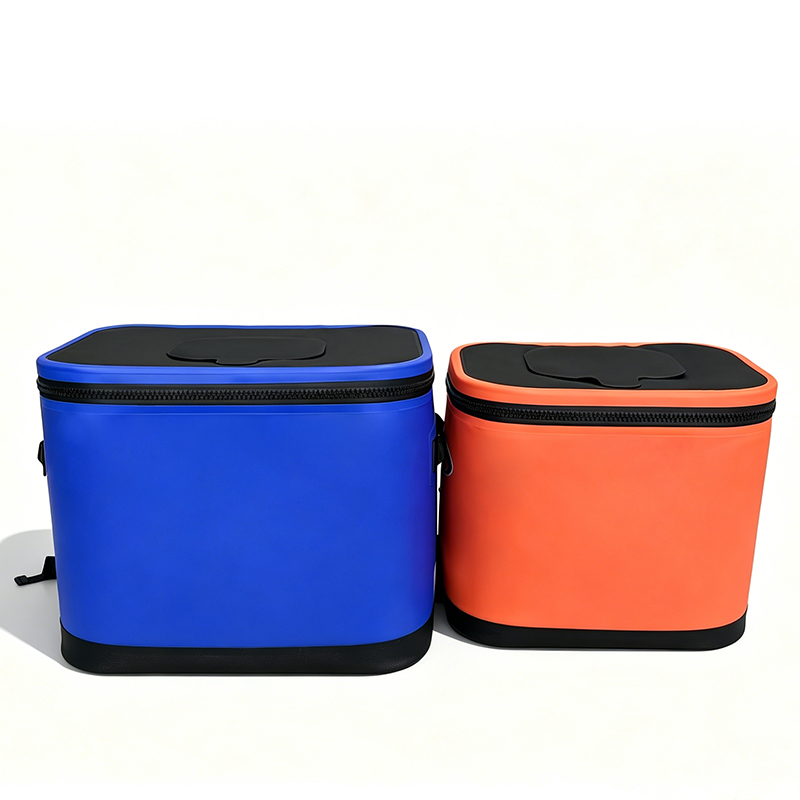
Insulated Cooler Backpack, molded lid (SL-E050B) | TPU shell, EPE, ~25L, two sizes, molded lid | View |
|
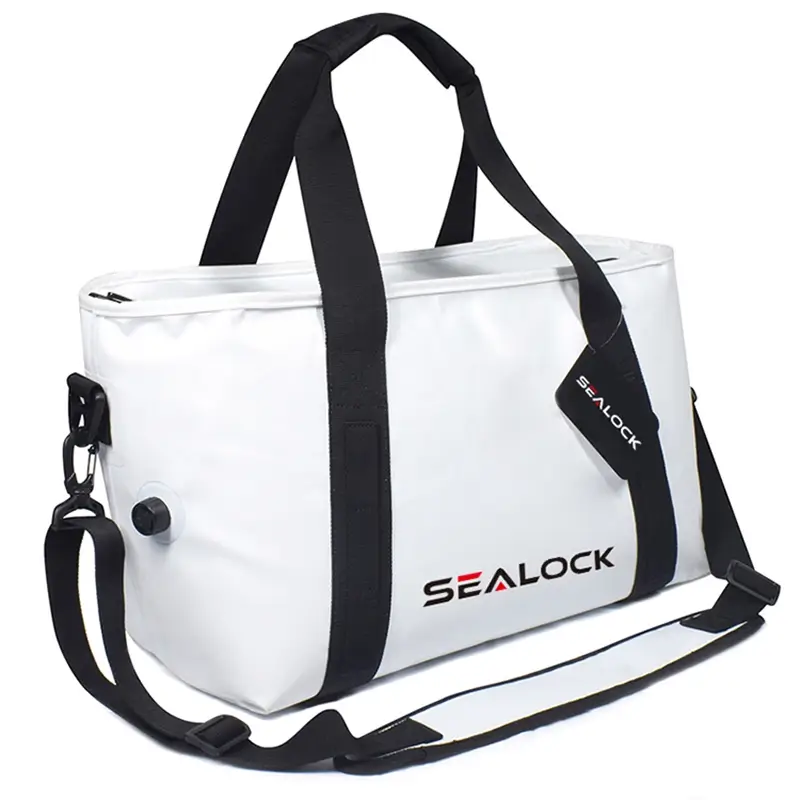
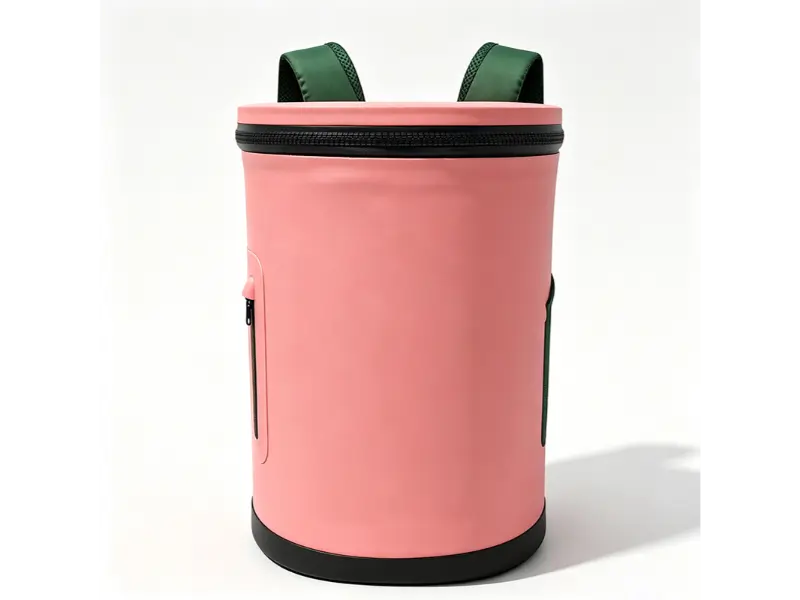
Barrel Insulated Cooler Backpack (SL-I309) | TPU shell, EPE, ~18L, barrel form, front pocket | View |
Working Terms & How Far Customization Goes
Beyond materials, sizes and branding, Sealock develops ground-up and takes on demanding briefs — complex forms, premium insulation tiers, IPX6–IPX8 welded seal levels, bespoke hardware and strict compliance targets are all in scope. For the full customization menu see OEM Soft Cooler Backpacks: What You Can Customize Beyond Logo & Color; for the design-led route from a concept see ODM Soft Cooler Backpack Supplier: Design-Led, Ground-Up Development.
| Shell | 420–840D polyester or TPU-laminated; 1680D reinforcement; PU / PVC / TPU coatings |
|---|---|
| Insulation | Closed-cell EPE / XPE; up to PU, VIP vacuum panel, EPP, aerogel |
| Liner | Food-grade TPU / PEVA to destination-market standard |
| Sizes | ~12L to 30L+, single design available in multiple sizes (MOQ per size) |
| Branding | Welded TPU patch, screen print, deboss, UV print, woven label on welded tab; color-matched shell & pulls |
| MOQ / lead time | 300 pcs per design; samples 7–15 days; production 30–45 days; FOB Guangdong |
| Origin | China or Vietnam on the same spec |
FAQ: Custom Soft Cooler Backpacks
Q: What shell material is best for a custom cooler backpack?
A: For a premium, waterproof, weldable build, a 600–840D TPU-laminated shell is the standard choice, often with a 1680D reinforced base. Denier alone is not enough — the coating matters as much: PU is lighter and water-resistant, PVC is fully waterproof but heavy and stiff, and TPU is waterproof, weldable and low-temperature flexible. Match fabric and coating to the use rather than chasing the highest denier.
Q: Does a higher denier always mean a better cooler?
A: No. Higher denier adds abrasion resistance but also weight, stiffness and cost, and it slows production. A documented cooler case improved durability and feel by moving from 420D with heavy PU to 600D with a thinner TPU coating — a balanced pairing beat the "thicker is better" instinct. Reinforcing only the base and corners with 1680D is usually smarter than building the whole bag from it.
Q: What sizes can a custom cooler backpack come in?
A: Common ranges run from about 12–15L for personal use, 18–22L for a day out, and 24–30L+ for groups or multi-day trips. The harness has to scale with capacity — larger sizes need a sternum strap and waist belt. One design can be offered in multiple sizes, though MOQ typically applies per size.
Q: Can I put an embroidered logo on a waterproof cooler backpack?
A: Not on the waterproof body — embroidery punches hundreds of needle holes that destroy the waterproof barrier, and reputable welded-bag factories refuse it there. Use a welded TPU patch, screen print, deboss or UV print instead; if you need a woven label, it is welded onto a separate exterior tab so the needle never pierces the main chamber.
Q: What branding options give a full private-label look?
A: Beyond the main logo, a complete private-label build can include a color-matched shell to a Pantone reference, custom zipper pulls and webbing, welded or silicone patches, a woven label on a welded tab, hangtags and branded retail packaging — all specified to match the rest of the brand's line.
Specifying a custom cooler backpack? Sealock (YiFuLong Outdoor Gear Co., Ltd.) builds welded soft cooler backpacks to custom material, size and branding specs, factory-direct from China and Vietnam. Tell the team your use case, target price and market, and they will recommend the shell, coating, size and branding that fit — and make a sample to prove it.
Email: info@sealock.com.hk | Phone: +86-13632981825
Material properties, denier guidance and branding-method notes cited here reflect publicly available textile and bag-manufacturing sources as of mid-2026 and vary by supplier and build. Confirm material specifications and branding suitability on a physical sample before bulk production.