News

Waterproof Insulated Backpacks: Cold Retention Meets Full Submersion

2026-08-05 0 Leave me a message
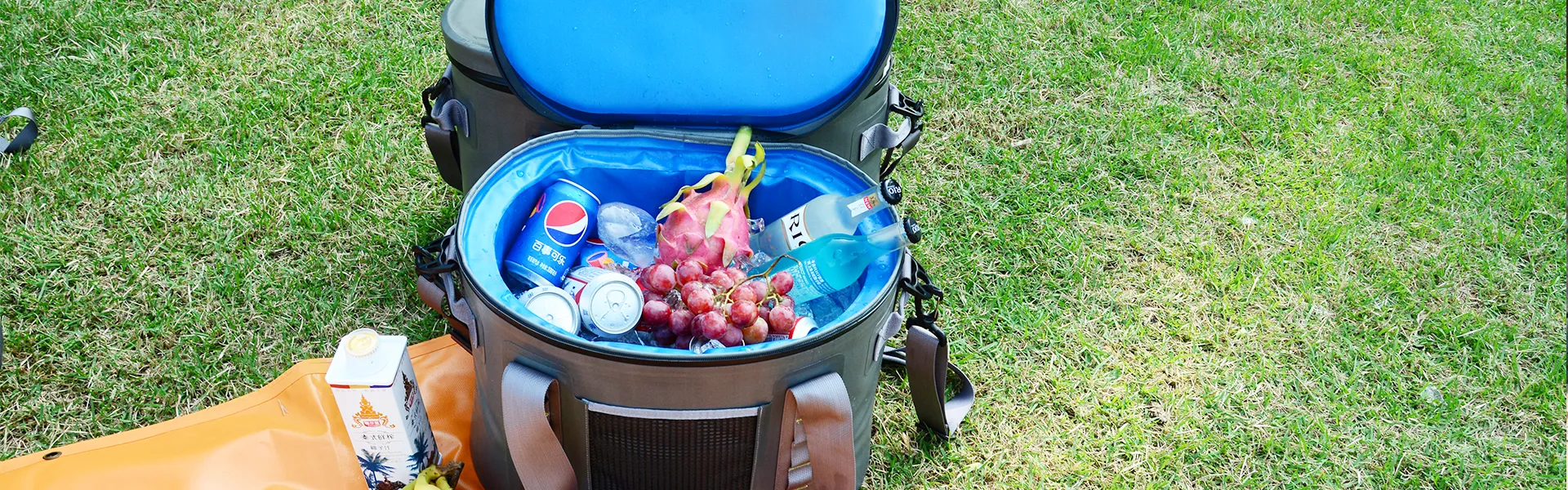
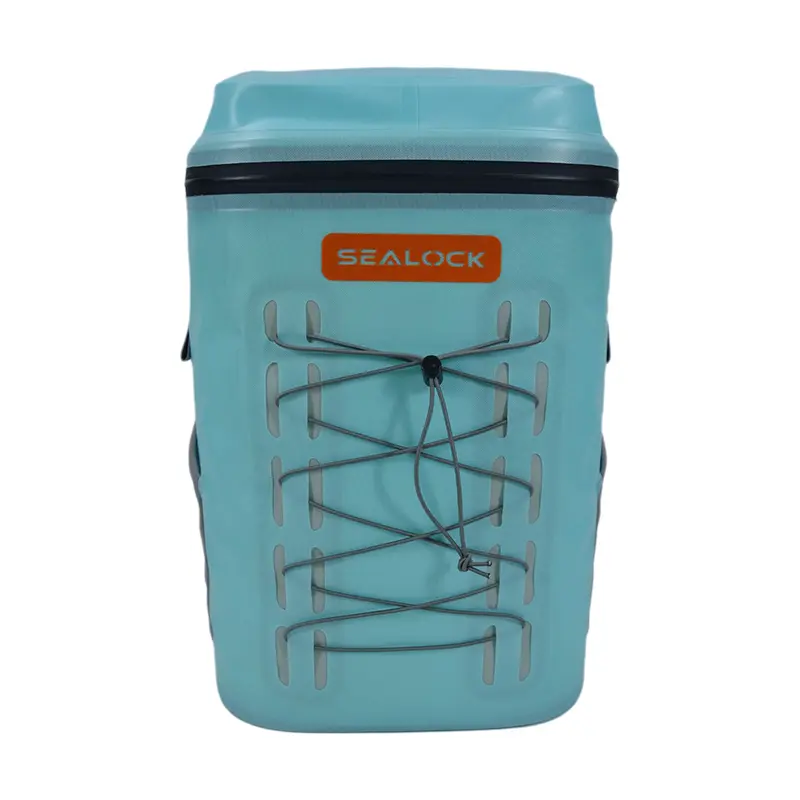
A waterproof insulated backpack is asked to do two jobs that sound like they should fight each other: keep the cold in for hours, and keep water out even when fully submerged. Most product copy treats these as two separate features stapled together. They are not — on a properly engineered bag they come from the same material physics, and understanding why explains both what makes a genuine dual-purpose bag and where the cheap ones fail. This guide walks through how insulation and submersion-proofing actually interact, including one property almost no listing mentions, and how Sealock (YiFuLong Outdoor Gear Co., Ltd.) builds welded bags that deliver both.


The Two Jobs Share One Material

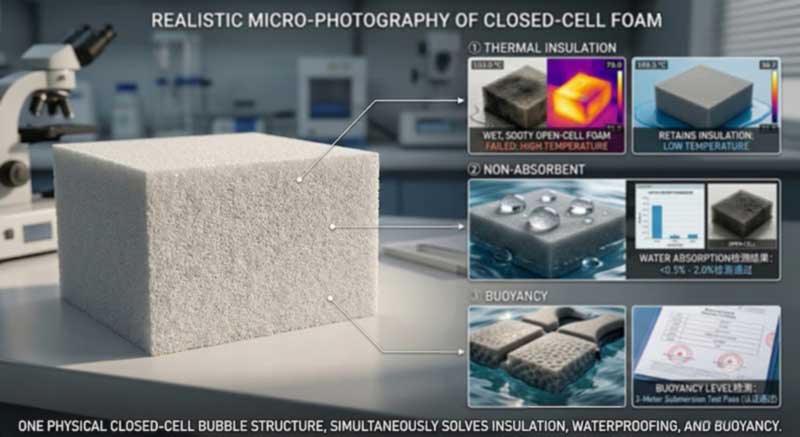
The insight that makes a waterproof insulated backpack possible is that closed-cell foam solves cold retention and water resistance at the same time, with one structure. A closed-cell foam is a mass of sealed gas pockets with no connected pathways, and that single fact produces both properties: the trapped gas blocks heat, and the sealed walls block water. As one materials reference puts it, the trapped gas is what gives closed-cell foam its insulating power and buoyancy, and because each cell is independent, water cannot soak in the way it does through open-cell foam.

The numbers show how completely this works. Closed-cell foam barely takes on water — it holds a water absorption rate of less than 0.5% by volume and maintains performance even when fully submerged — and it keeps insulating after a wetting that would ruin an open-cell material: closed-cell foam absorbs roughly 1–2% water against 20–70% for open-cell, and largely maintains its properties after wetting while open-cell performance significantly degrades. That matters because wet insulation is failed insulation — even 5% moisture content can reduce insulation effectiveness by up to 50%. An open-cell or poorly sealed cooler that lets water into its wall is not just wet; it has lost its cold-hold at the same time.

This is the elegant part: on a closed-cell build, the property that keeps the bag cold and the property that keeps it from waterlogging are the same property. You are not trading one against the other — you are getting both from one correct material choice. The foam families used in soft coolers — closed-cell EPE, XPE, EVA — are chosen for exactly this dual behaviour. The cold-retention side is detailed in Insulated Cooler Backpack Manufacturer: EPE Foam & Cold-Retention Design.

Why this rules out the cheap shortcut: a bag that uses open-cell foam or a loosely sealed wall might pass a quick splash test, but submerge it and the wall drinks water — and now it is both heavy and thermally dead. The only construction that survives real submersion with its cold-hold intact is a closed-cell wall inside a genuinely sealed, welded envelope. The two requirements enforce the same answer.

The Property No Listing Mentions: It Floats

Here is the practical payoff of that shared physics, and it is a genuine safety feature that rarely appears on a spec sheet. Because closed-cell foam traps gas and refuses water, a waterproof insulated backpack is buoyant — it floats, even loaded, even submerged. The same sealed-cell structure that insulates is the structure used to build flotation devices: the sealed gas pockets of closed-cell foam provide reliable buoyancy even when submerged for extended periods, which is why it is the preferred material for personal flotation aids and boat cushions, and its density and sealed structure ensure it does not lose the ability to float over time.

For a cooler used on the water, this is not a gimmick — it is the difference between a bag that goes overboard and bobs, and one that sinks to the bottom of the lake with the day's catch and a phone in the dry pocket. A welded, closed-cell, airtight insulated backpack has two buoyancy sources working together: the foam wall itself, and the sealed air trapped inside a watertight chamber. The result is a cooler that behaves like a float when it hits the water.

An honest caveat on flotation: buoyancy depends on load. A bag packed heavy with ice, cans and dense contents can have enough total weight to overcome the foam and trapped-air buoyancy and sink. "It floats" is true for a normally loaded bag and is a real safety margin, but it is not a life-saving flotation device and should never be described as one. It is a welcome property, honestly bounded — not a rated PFD.


closed-cell foam structure delivering insulation, water resistance and buoyancy at once for a waterproof insulated backpack

Where Insulation and Submersion Genuinely Interact

The foam makes the two jobs align, but a few real engineering interactions still have to be managed — and a serious maker designs around them.

The seal serves both purposes

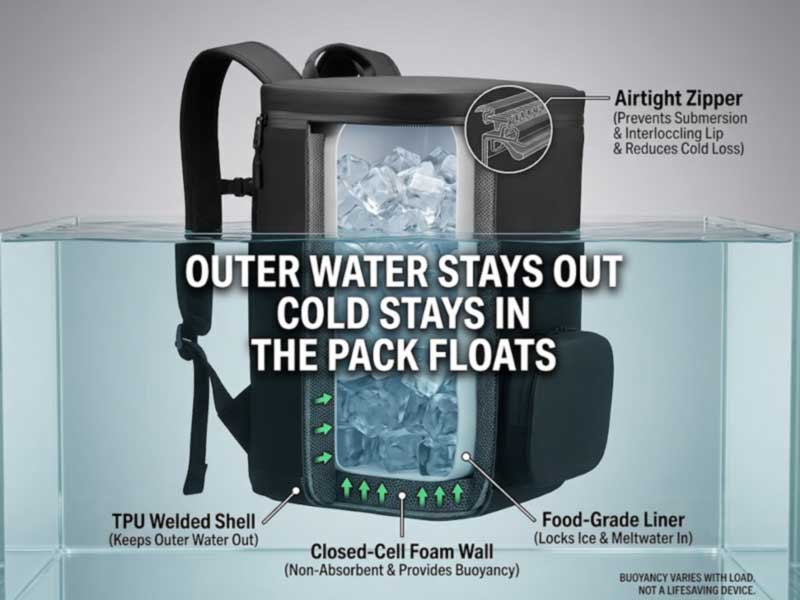
An airtight closure is doing double duty. For submersion, it keeps water out; for cold retention, it stops the convective air exchange that bleeds cold away every time a loose bag is opened or jostled. This is a case where the two requirements reinforce each other — the same airtight welded zipper that earns an immersion rating also tightens the thermal envelope. One component, both benefits.

Trapped air, pressure and temperature

A sealed insulated chamber holds a fixed pocket of air, and that air responds to temperature. Pack a bag with ice and seal it and the internal air cools and contracts slightly; leave a sealed bag in the sun and it warms and expands. It is minor, but it is why a well-designed airtight cooler uses a closure that tolerates small pressure differences without breaking its seal — and why "burping" a very full airtight bag before final closure is sensible practice.

Condensation runs the other way

A waterproof shell keeps outside water out — but a cold interior against warm humid outside air drives condensation on the outer surface, and meltwater collects inside. The closed-cell wall and food-grade liner handle the inside water (it cannot soak into the foam), while the welded exterior sheds the outside condensation. The containment side — keeping meltwater in rather than water out — is covered in Leakproof Cooler Backpack Manufacturer: Welded vs Stitched Seams.

Building for Both: The Full Stack

A bag that truly does both jobs is a stack of matched decisions, each chosen to serve cold retention and submersion at once:

Layer Cold-retention role Submersion role
TPU-laminated shell Outer envelope, sheds condensation Waterproof, weldable barrier
Closed-cell foam wall (EPE/XPE) Blocks conductive heat Won't waterlog; adds buoyancy
Food-grade liner Holds meltwater, wipes clean Inner watertight vessel
Welded seams No gaps in the thermal wall No needle holes for water
Airtight closure Stops convective cold loss Seals against immersion

Every row does two jobs, which is the whole point: a waterproof insulated backpack is not insulation plus waterproofing bolted together, but one integrated system where each layer earns its place twice. The waterproofing depends on welded construction and a rated closure — detailed in Waterproof Cooler Backpacks: How Welded Construction Keeps Water Out — and the shell material that makes both welding and waterproofing possible is covered in TPU Cooler Backpack Manufacturer: Why the Shell Material Matters.

Sealock's Waterproof Insulated Backpacks

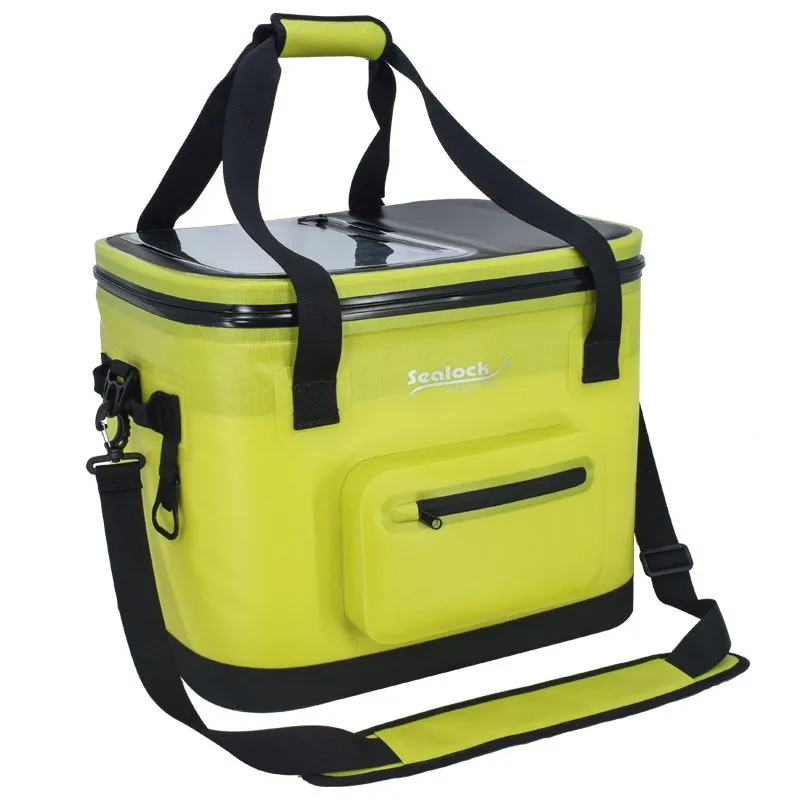
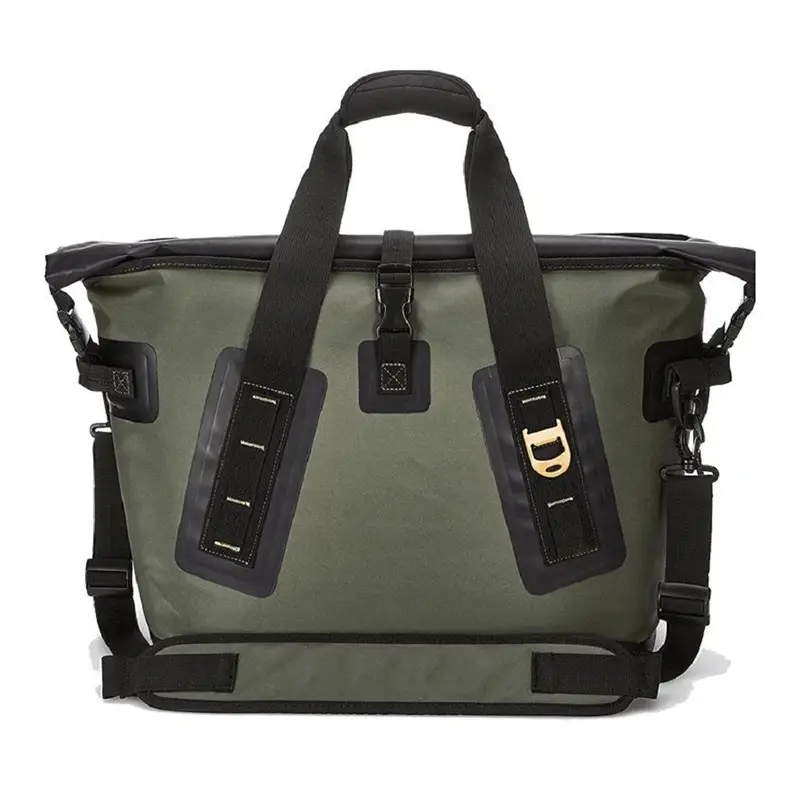
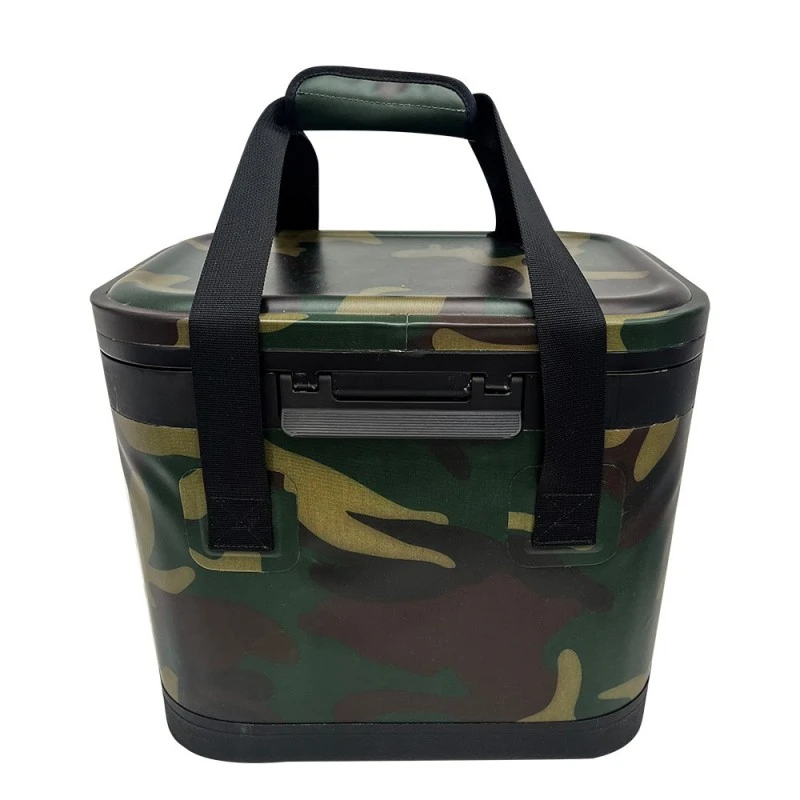
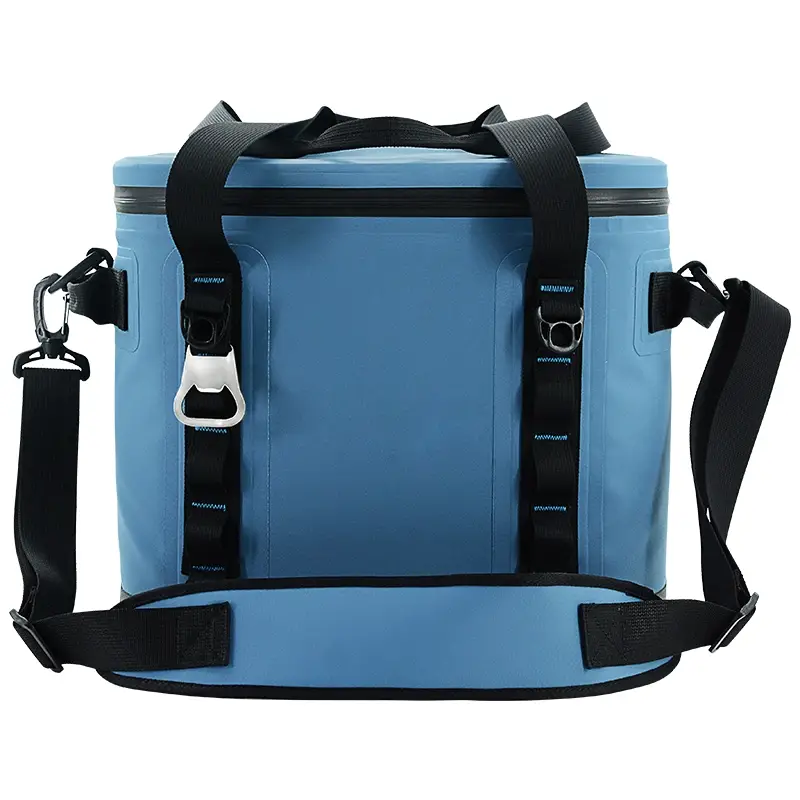
Sealock welds insulated cooler bags at 27.12 MHz across three factories in Dongguan, China and Ho Chi Minh City, Vietnam, on closed-cell foam walls inside welded TPU envelopes, and validates sealed builds by full immersion. Real builds, chosen by fit rather than rank:

Image Model Insulation + seal Link
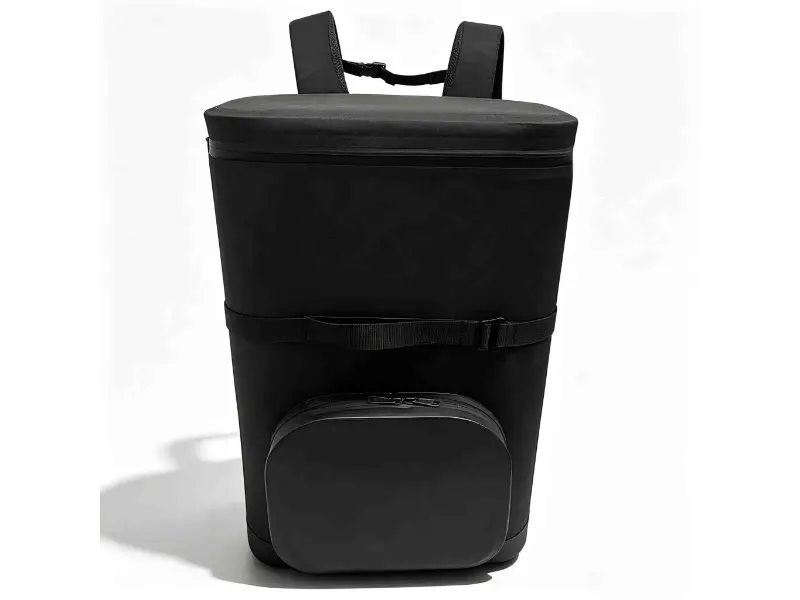
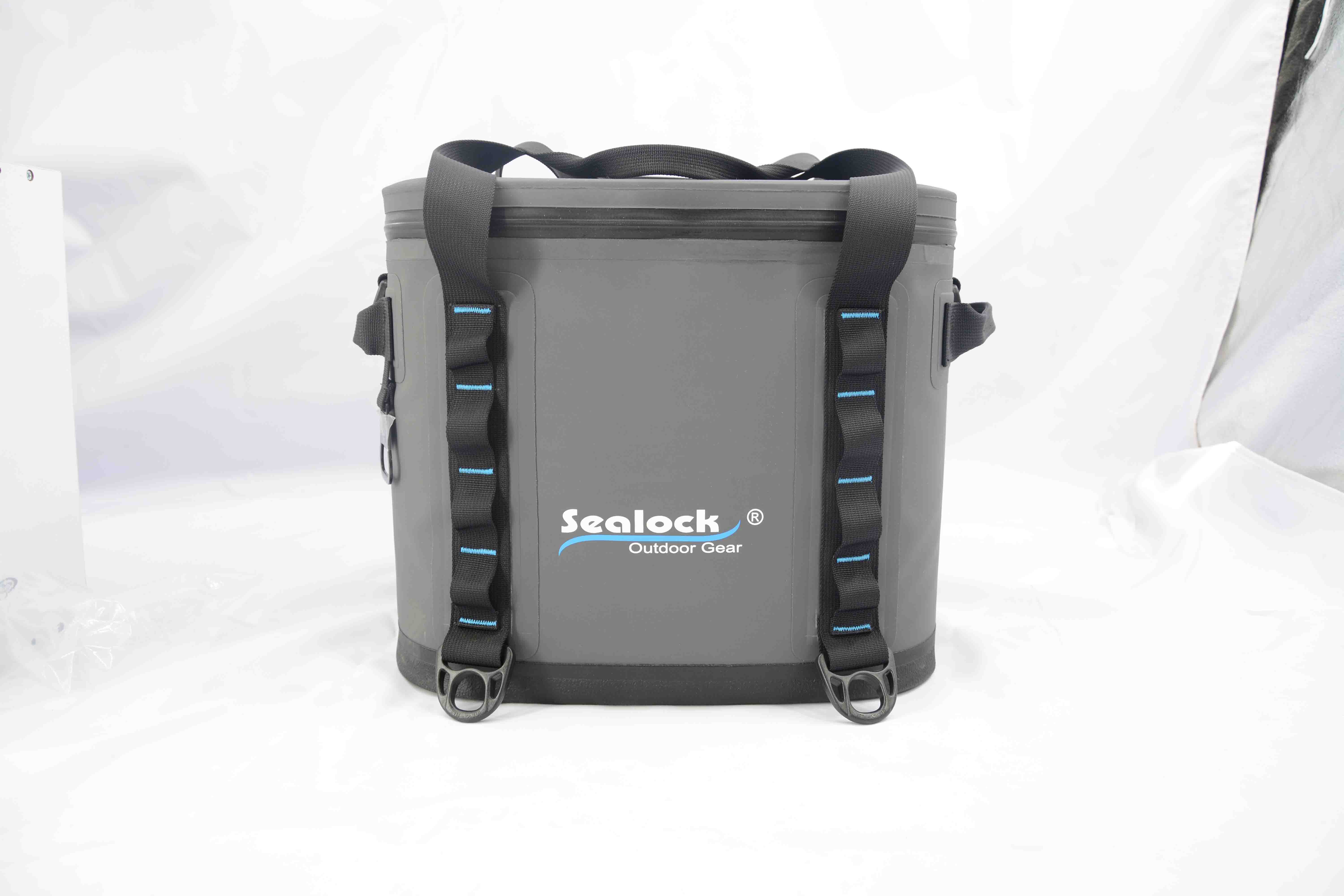
22L IPX7 cooler backpack SL-I280 22L IPX7 Cooler Backpack (SL-I280) 50 mm closed-cell XPE + airtight welded zipper, IPX7, 48 hr+ View
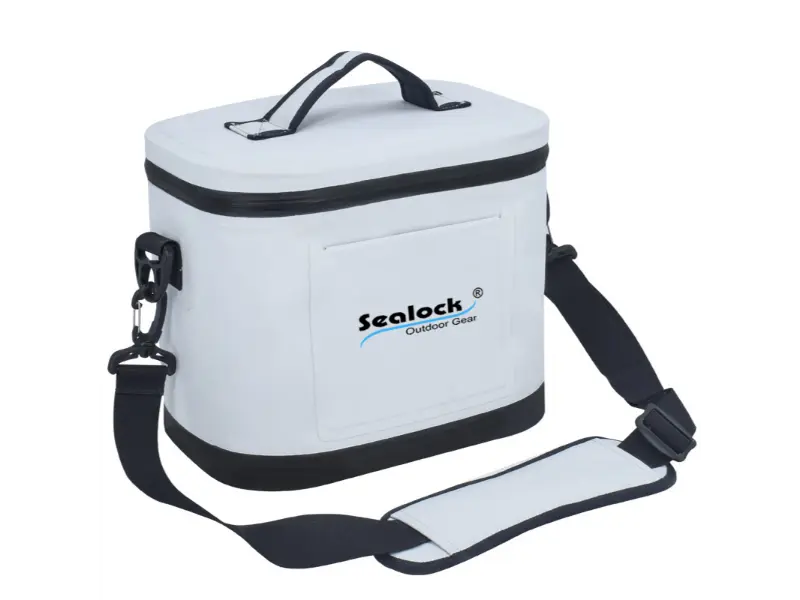
12-20L TPU waterproof soft cooler SL-I032 Waterproof Soft Cooler 12/15/20L (SL-I032) Closed-cell XPE + airtight zipper, IPX7, three sizes View
RF-welded IPX8 cooler tote RF-welded IPX8 Cooler Tote Multi-layer closed-cell wall + IPX8 seamless RF weld, 48–72 hr View
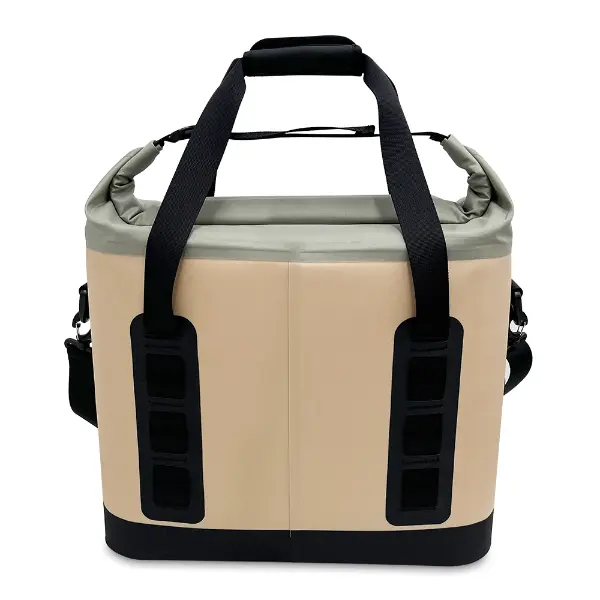
Roll-top leakproof soft cooler SL-I288 Roll-Top Leakproof Soft Cooler (SL-I288) Closed-cell EPE + welded roll-top, 840D TPU, 48 hr View

The immersion-rated models pair a closed-cell wall with an airtight or seamless closure, so the cold-hold and the submersion resistance come from one integrated build — and the sealed, foam-walled construction gives the buoyancy that comes free with the physics.

cross-section of a loaded waterproof insulated backpack partly submerged showing welded shell, closed-cell wall, liner and airtight seal with buoyancy

OEM & ODM: Both Properties to Your Spec

Cold-hold and seal level are both specifications, and a demanding brief is welcome. Beyond colour and logo, Sealock develops ground-up from a sketch, sample or performance target: the insulation tier and wall thickness that set the cold-hold, the IPX seal level and closure that set the submersion resistance, the weldable shell and the food-grade liner are all engineered together to one integrated brief, then proven by both cold-hold and immersion testing before production. Premium insulation up to VIP vacuum panels and aerogel, IPX6–IPX8 welded seal levels and strict compliance targets are all in scope. Ground-up work runs longer at sampling, so book against a launch. See Custom Insulated Cooler Backpacks: Spec Your Foam, Liner & Capacity and OEM Soft Cooler Backpacks: What You Can Customize Beyond Logo & Color.

FAQ: Waterproof Insulated Backpacks

Q: How can a backpack be both fully waterproof and well insulated?

A: Because one material does both jobs. Closed-cell foam is a mass of sealed gas pockets, so it blocks heat and refuses to absorb water at the same time — the same structure delivers insulation and water resistance. Wrap that wall in a welded TPU shell with an airtight closure and you get a bag that keeps the cold in and the water out from one integrated build.

Q: Does the insulation stop working if the bag is submerged?

A: Not if it uses closed-cell foam. Closed-cell foam absorbs only about 1–2% water by volume and keeps its insulating value even after full submersion, whereas open-cell foam can absorb 20–70% and loses much of its performance — and even 5% moisture can cut insulation effectiveness by up to half. A properly sealed closed-cell cooler holds its cold-hold through a dunk.

Q: Do waterproof insulated backpacks float?

A: A normally loaded one generally does, because closed-cell foam and the sealed air inside a watertight chamber both provide buoyancy — the same foam physics used in flotation cushions. It is a genuine safety margin if the bag goes overboard, but buoyancy depends on load: a very heavy bag can sink, and it is not a rated life-saving device.

Q: Why does the airtight seal help with cold retention too?

A: An airtight closure does double duty: it keeps water out for the submersion rating, and it stops the convective air exchange that bleeds cold every time a loose bag is opened or moved. So the same sealed closure that makes a bag submersible also tightens its thermal envelope — the two requirements reinforce each other rather than conflict.

Q: What foam should a waterproof insulated backpack use?

A: A closed-cell foam — EPE, XPE or EVA — because only closed-cell delivers insulation, water resistance and buoyancy together. Open-cell foam waterlogs and fails on submersion. Wall thickness sets the cold-hold (thin walls for day use, thick high-density walls for 48-plus hours), while the closed-cell structure handles the waterproofing regardless of thickness.

Sourcing waterproof insulated backpacks? Sealock (YiFuLong Outdoor Gear Co., Ltd.) welds closed-cell, immersion-rated insulated cooler backpacks at 27.12 MHz in China and Vietnam — cold-hold and submersion resistance from one integrated build, validated by both cold-hold and immersion testing. Tell the team your target hold and seal level, and they will engineer and prove it.

Email: info@sealock.com.hk  |  Phone: +86-13632981825  |  Browse the soft cooler range

Material properties, absorption rates and buoyancy behaviour cited here reflect publicly available foam-industry and materials sources as of mid-2026; figures vary with foam grade, density and construction, and real-world performance depends on the finished build, load and conditions. Buoyancy is not a substitute for a rated personal flotation device. Confirm specifications on a physical sample before production.

Related News
Leave me a message
X
We use cookies to offer you a better browsing experience, analyze site traffic and personalize content. By using this site, you agree to our use of cookies.Privacy Policy
RejectAccept