Sealock manufactures the cooler backpack with a waterproof zipper that buyers increasingly specify by name, because the zipper is the one part that decides whether an insulated bag actually seals or merely looks like it does. The shell can be welded and the foam can be thick, but if the closure lets water and air pass, the bag leaks melt-water and loses cold. What follows breaks down what a waterproof zipper really is, how it differs from the coil zipper on an ordinary cooler, what the IPX ratings mean, and how a buyer can verify the claim before ordering.
What "Waterproof Zipper" Actually Means
The phrase gets used loosely, so it helps to separate three things that are not the same:
- Water-resistant zipper: a standard coil zipper with a PU-coated tape and often a storm flap. It sheds light rain from above but is not sealed — hold it under water or tip a full bag and it lets liquid through.
- Waterproof zipper: a closure whose tape is a continuous TPU or rubber film and whose teeth clamp into a sealed channel, so the closed zipper forms one continuous membrane. It holds against submersion, not just spray.
- Airtight waterproof zipper: a waterproof zipper made to a tight enough tolerance that it also blocks air exchange, so the sealed bag holds a slight internal pressure. This is what keeps melt-water in even when the bag is flipped, and slows warm-air ingress that melts ice.
A true cooler backpack with a waterproof zipper uses the second or third type, welded into a welded body so the closure and the seams form a single sealed vessel. A water-resistant coil zipper sewn onto a bag is a different, lesser thing wearing the same word.
Why a Standard Cooler Zipper Fails
An ordinary coil zipper fails a cooler in specific, repeatable ways — not one vague "it leaks," but a set of distinct mechanisms, each of which a real waterproof closure is designed to remove:
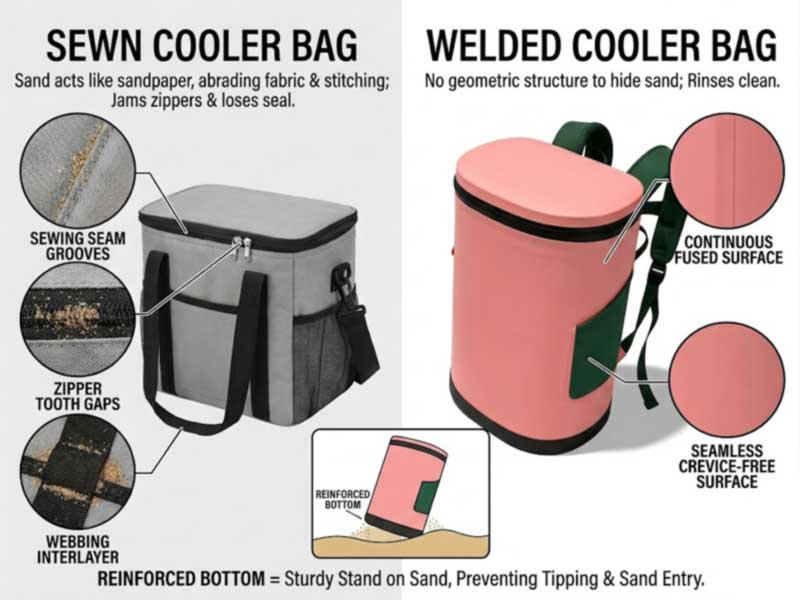
- Water wicks through the coil gaps: the interlocking spiral of a coil zipper never fully closes; capillary action pulls water through the tooth gaps under the slightest pressure.
- Leakage through the sewn tape: a standard zipper is stitched to the bag, and every needle hole along the tape is a path for melt-water to weep through, independent of the teeth.
- Storm flaps only shed, never seal: a fabric flap over the zipper deflects rain from above but does nothing once the bag is tipped, submerged or pressed against wet ground.
- Air exchange accelerates melt: a coil zipper leaks air freely, so warm outside air trades with cold inside air every time the bag moves, melting ice faster than the foam alone would allow.
- Grit breaks the partial seal: sand and dirt lodge in the coil and hold it slightly open, turning a marginal seal into an open one.
- PU coatings crack with flex and age: the thin polyurethane coating that makes a tape "water-resistant" stiffens, cracks and peels after a season of flexing and UV, losing what little sealing it had.
- No pressure hold means sloshing leaks: because a coil zipper cannot hold even slight internal pressure, a bag full of melt-water pushes liquid out through the closure whenever it is jostled or tipped.
None of these is fixed by a heavier coil or a wider flap. Removing them requires a different closure entirely.
How a Waterproof Airtight Zipper Is Built
A waterproof airtight zipper solves the list above by changing both the tape and how it joins the bag:
- A continuous film tape: instead of woven fabric, the tape is a TPU or rubber film, so there is no textile weave for water to wick along.
- Clamping, sealed teeth: the elements press into a matched channel that closes into a continuous seal rather than an interlocking spiral with gaps.
- Welded, not sewn, to the body: the film tape is high-frequency welded to the bag's welded panels, so there are no needle holes anywhere along the closure — the zipper and the seams become one sealed skin.
- Airtight tolerance: built tightly enough to block air exchange, the closed zipper lets the bag hold a slight internal pressure, which is what keeps melt-water sealed in when the bag is flipped and slows the warm-air ingress that melts ice.
Because the zipper is welded to a welded body, the construction only works in a factory that welds both. That is why a genuine waterproof-zipper cooler comes from a high-frequency welding line, not a standard sewing line with a fancier zipper dropped in.

IPX Ratings, Explained for Coolers
"Waterproof" is a marketing word; the IPX scale is the measurable one. For soft coolers, three levels matter, and each maps to a real use and a real Sealock product:
| Rating | What it withstands | Real use | Example |
|---|---|---|---|
| IPX6 | Powerful jets, heavy rain and spray, not submersion | Rain, poolside, wet decks | Standard waterproof cooler totes |
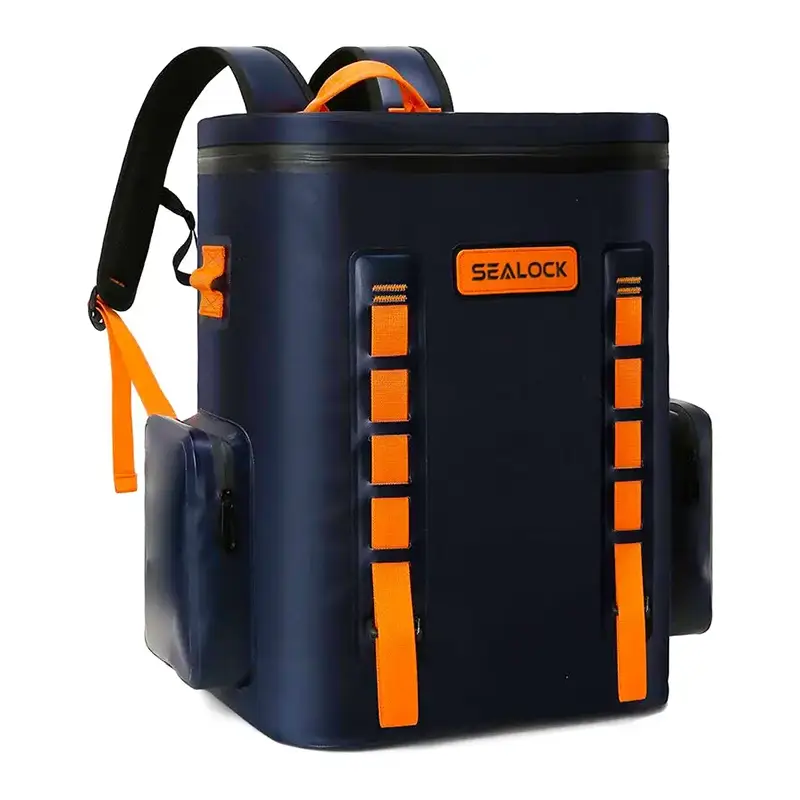
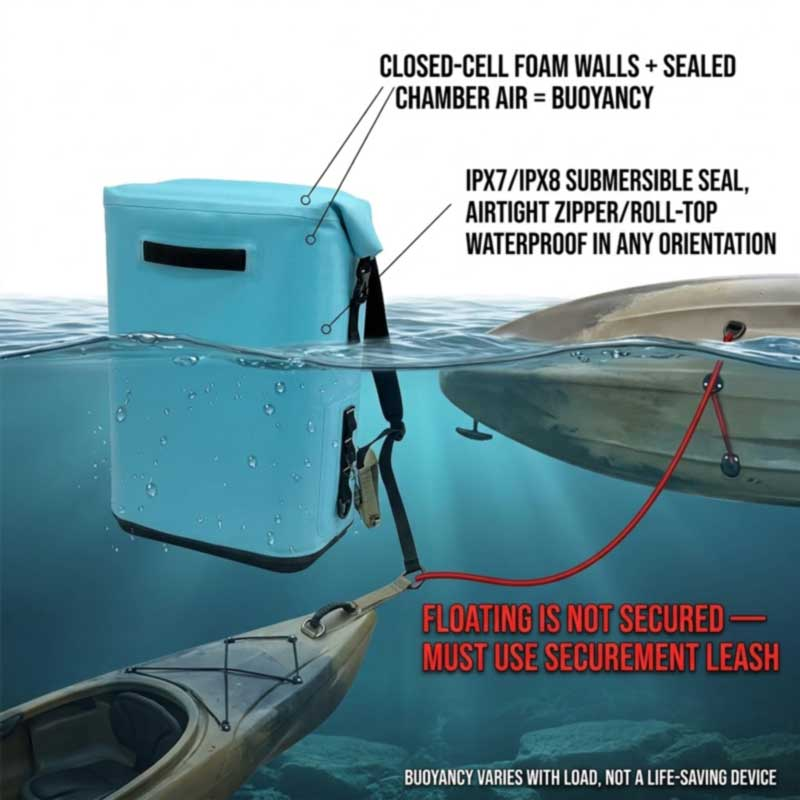
| IPX7 | Temporary submersion (about 1 m, 30 min) | Kayak, boat, dropped in shallows, heavy travel | 22L IPX7 Cooler Backpack (SL-I280) |
| IPX8 | Continuous submersion beyond IPX7 conditions | Offshore, full immersion, harshest marine use | RF-welded IPX8 Cooler Tote |
The practical read: IPX6 keeps rain out, IPX7 survives a dunk, IPX8 takes sustained submersion. A cooler backpack for anything on or near water should be IPX7 at minimum, which is why the airtight-zipper family is built to that level.
The Maker: Sealock
Because a waterproof zipper only seals when it is welded to a welded body, the factory has to weld both to a tested standard. Sealock is the cooler brand of YiFuLong Outdoor Gear Co., Ltd., welding insulated soft bags since 2003 across three high-frequency welding factories, using 27.12 MHz welding to bond airtight zippers into sealed bodies.
| Founded | 2003 (over 20 years in soft coolers) |
|---|---|
| Factories | Dongguan, China + Ho Chi Minh City, Vietnam (second Vietnam line added 2024) |
| Build methods | High-frequency (27.12 MHz) welded and sewn, across three welding factories |
| Certifications | ISO9001, BSCI, SMETA P4, GRS, HIGG, SCAN |
| OEM clients | Helly Hansen, Musto, West Marine, attwood, KAILAS, DESCENTE, among others |
| Standard MOQ | 300 pcs per design |
What It Looks Like on a Real Product
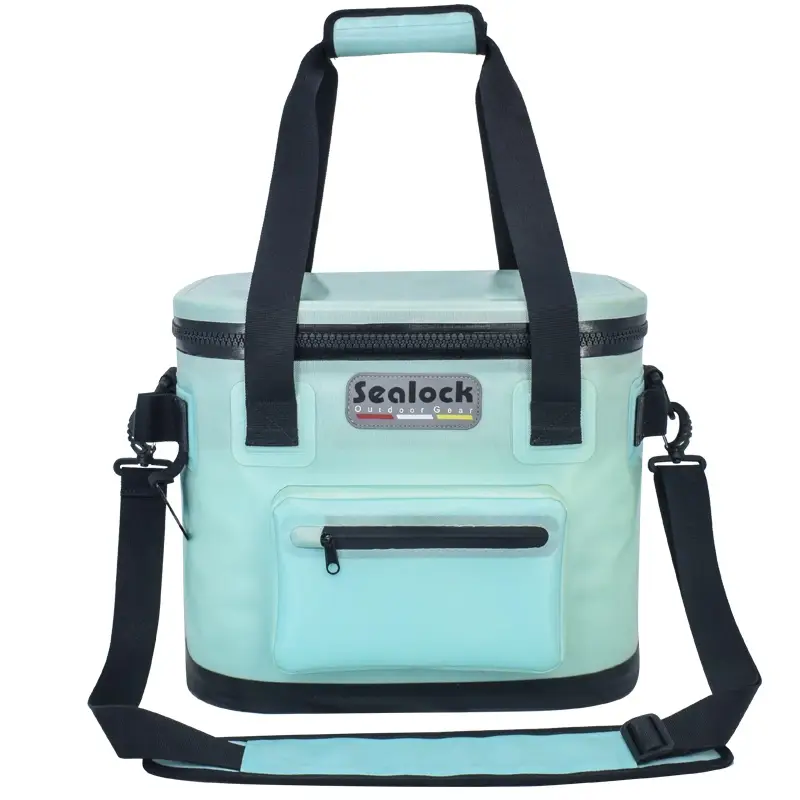
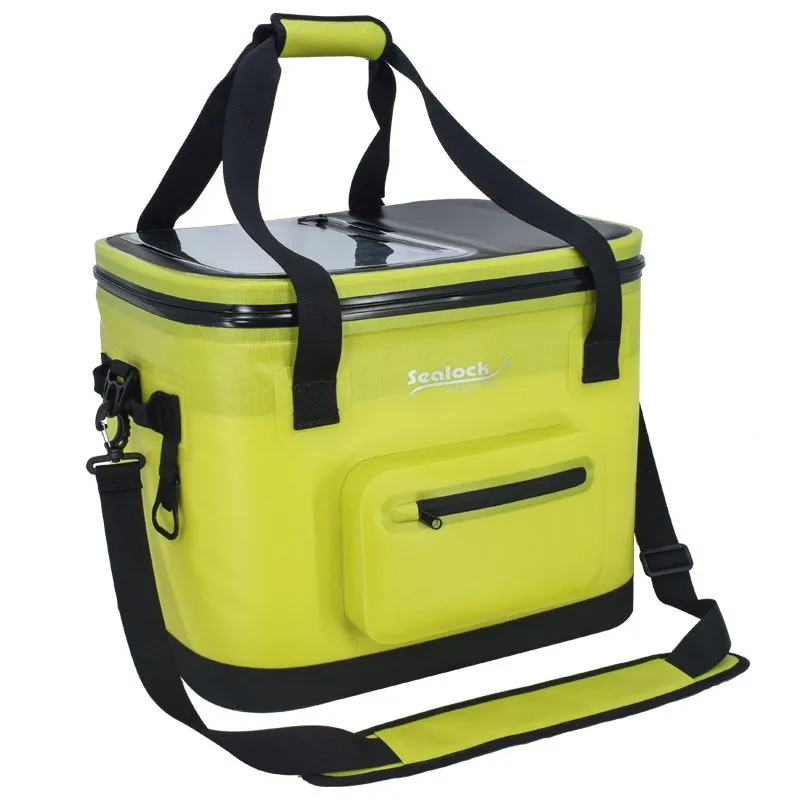
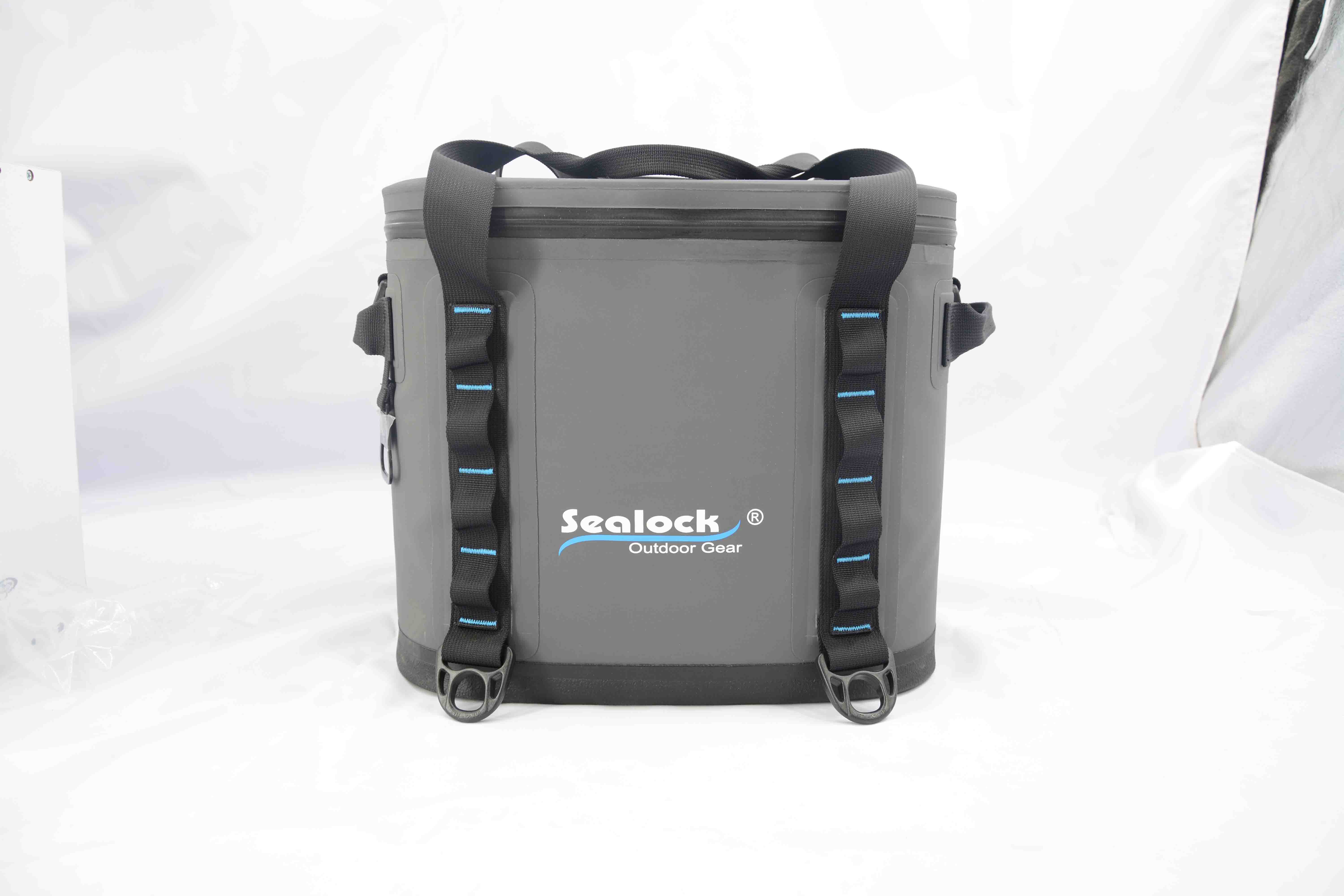
The clearest way to understand a waterproof zipper is on the bag built to the highest sealing level. The RF-welded IPX8 Cooler Tote is the reference example — a 100% seamless radio-frequency welded body closed by an IPX8 leakproof airtight zipper, the top of the range.
| Product | Waterproof Soft Cooler Tote (RF-welded) |
|---|---|
| Closure | IPX8 leakproof airtight zipper |
| Waterproof rating | IPX8 (highest in the range) |
| Construction | 100% seamless RF (radio-frequency) welded seams |
| Outer material | Heavy-duty matte TPU laminated fabric (marine grade) |
| Inner liner | Food-grade waterproof liner (direct ice-contact safe) |
| Insulation | Multi-layer high-density foam wall |
| Ice retention | 48–72 hours |
| Capacity | 15.5 L / 40–44 cans (exterior 38 × 27 × 31 cm) |
| MOQ | 300 pcs |
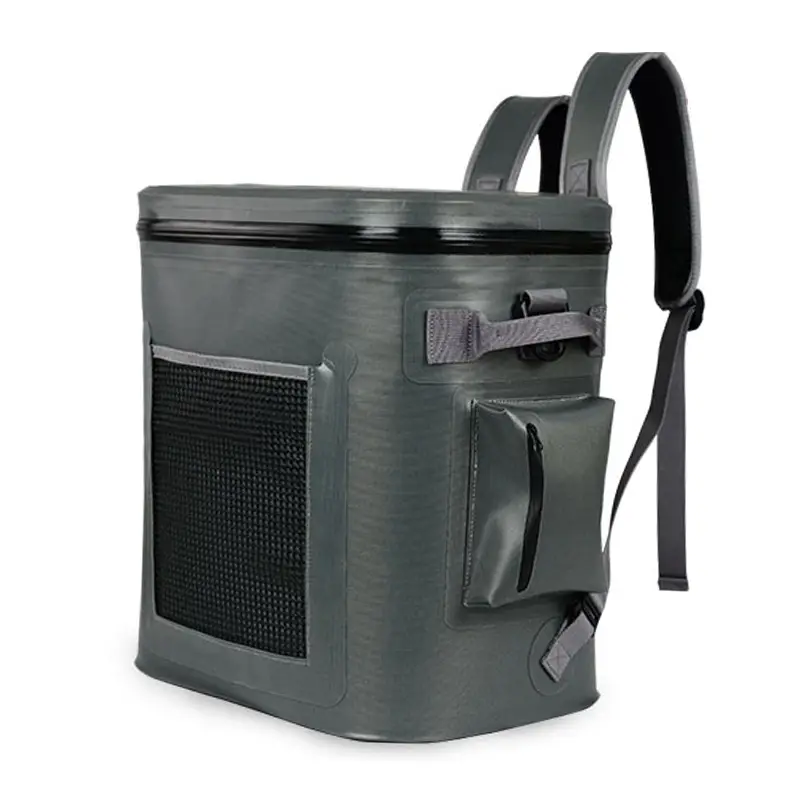
Below that top-tier tote, the same airtight-zipper principle runs across an IPX7 family, from a compact bag to a large backpack, so a buyer can offer a matched sealing standard at several sizes:
| Image | Model | Rating | Zipper | Link |
|---|---|---|---|---|
|
RF-welded IPX8 Cooler Tote | IPX8 | IPX8 leakproof airtight (top tier) | View |
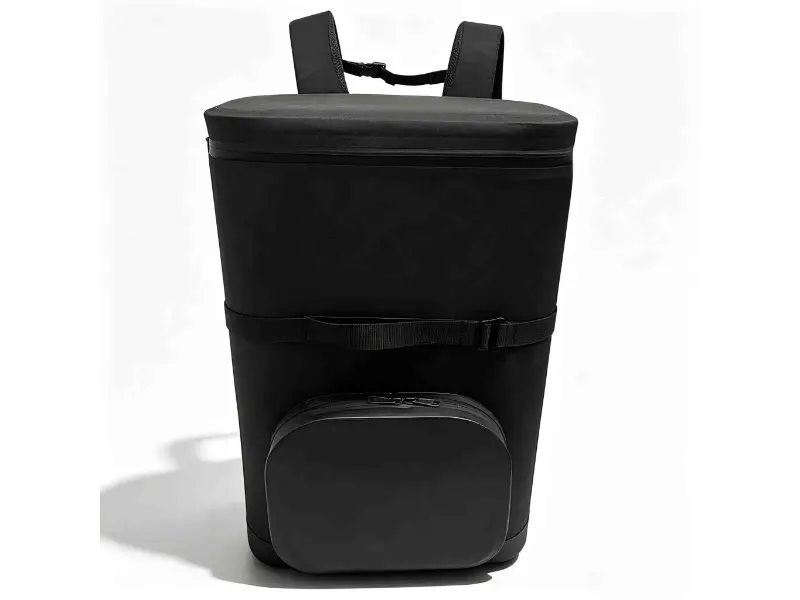
|
22L IPX7 Cooler Backpack (SL-I280) | IPX7 | Airtight waterproof | View |
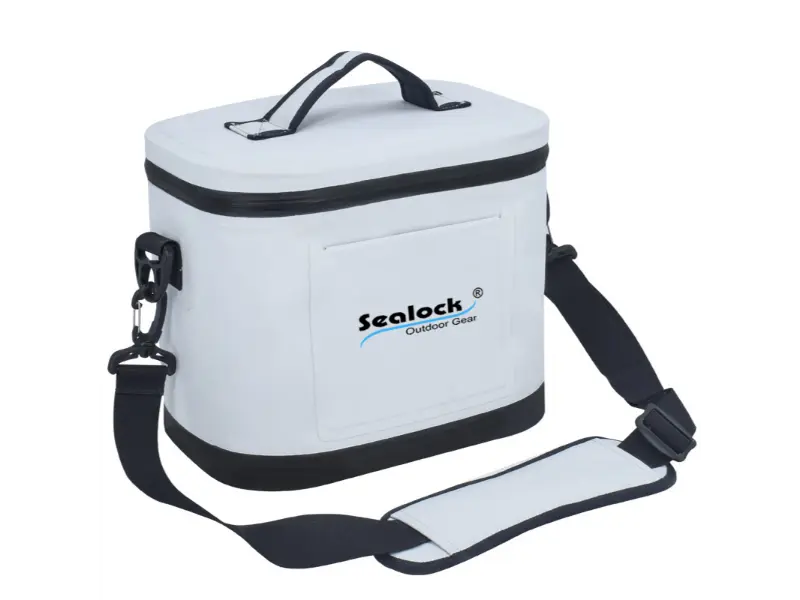
|
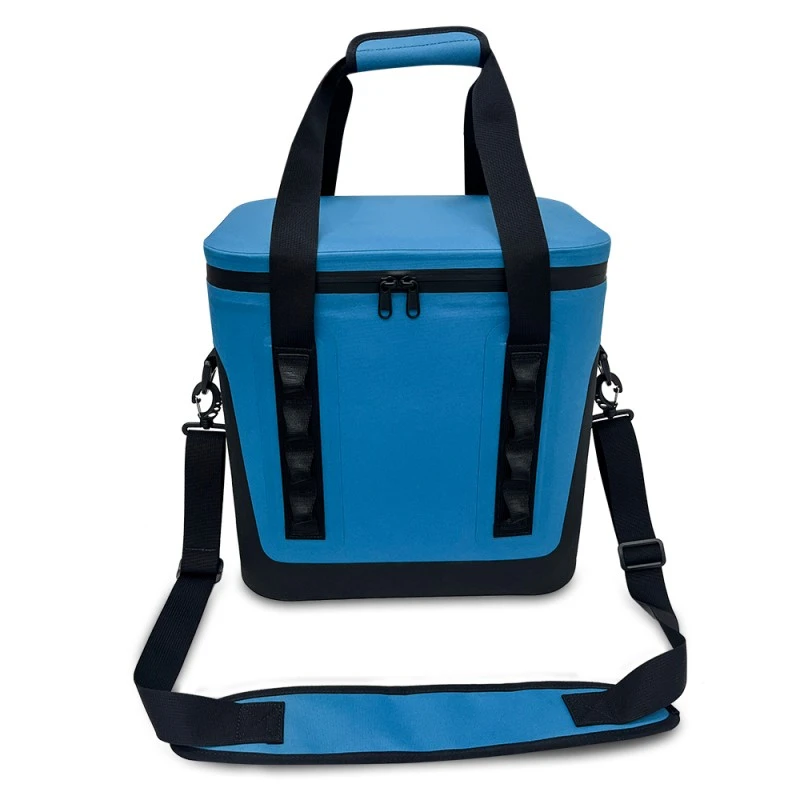
Waterproof Soft Cooler 12/15/20L (SL-I032) | IPX7 | Airtight waterproof | View |
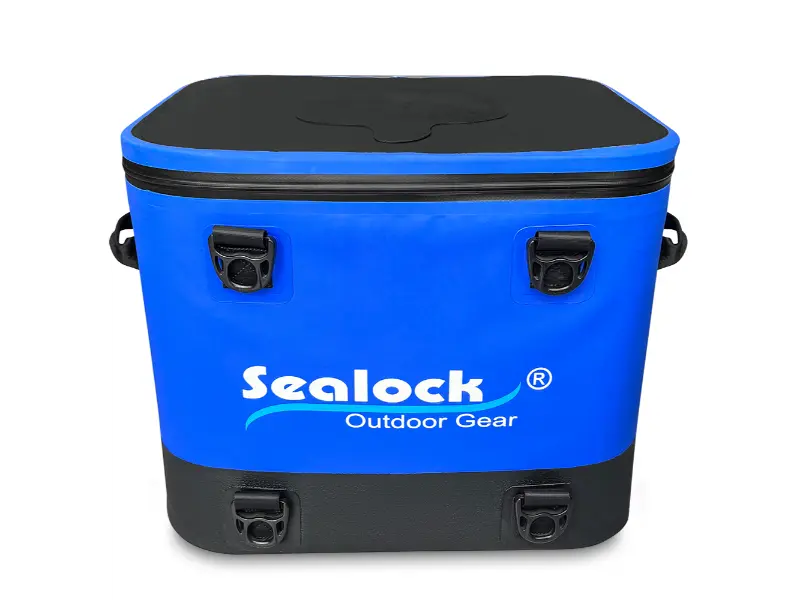
|
24L Leakproof Soft Cooler (SL-I094) | IPX7 | Airtight waterproof + UTX buckles | View |
How to Verify a Waterproof Zipper When Sourcing
Because the word is easy to print on a listing, a buyer should confirm the claim rather than trust the label. Four checks separate a real waterproof zipper from a water-resistant one:
- The flip test: fill the bag with water, seal it and turn it upside down. A real waterproof airtight zipper holds; a water-resistant coil weeps at the closure within seconds.
- Look at the tape: a waterproof zipper has a smooth TPU or rubber film tape, not a woven fabric tape. Woven tape means water-resistant at best.
- Check how the zipper joins the body: welded film with no stitching along the closure is the tell; a line of stitches along the zipper tape means needle holes and a leak path.
- Ask for the IPX rating and a test report: a genuine supplier states IPX6, 7 or 8 and can show an immersion test result, not just the word "waterproof."
How Sealock Tests the Zipper
The zipper is checked as its own failure point, not just as part of the bag:
- IQC (incoming): zipper tape, elements and the TPU membrane are verified before assembly.
- IPQC (in-process): the weld bonding the zipper tape to the body is inspected in-line, since that join is where a sewn imitation would leak.
- Full water-immersion test: sealed builds are submerged to confirm the IPX rating at the closure, the real proof behind the label.
- Zipper cycling: a 3,000-cycle open-close test confirms the seal survives repeated use, not just the first close.
- Load test: a 1,500-plus-cycle load test on the strap and body confirms the bag around the zipper lasts as long.
- OQC (outgoing): AQL sampling and a gold-sample comparison clear each order before it leaves Dongguan or Ho Chi Minh City.

OEM & ODM: Specifying the Zipper Level
For a brand, the zipper is a spec decision with a cost and a positioning attached, so it is worth setting deliberately. Sealock builds to any of the three levels and, beyond a logo and color swap, develops a bag from the ground up around the chosen closure.
What a brand controls
- Seal level: IPX6 for a rain-ready value line, IPX7 for the airtight mainstream, IPX8 for a premium marine build.
- Zipper hardware: pull-tab size, color-matched tape and UTX or POM buckles on the surrounding closure.
- Body match: the welded shell, liner and insulation tier that the zipper seals into.
- Origin: produce in China or Vietnam on the same spec to manage tariffs and lead times.
Working terms
- MOQ 300 pcs per design, negotiable on custom.
- Sampling 7–15 days; production 30–45 days, FOB Guangdong.
- Welded across three HF-welding factories, with immersion testing on sealed builds.
FAQ: Cooler Backpack with Waterproof Zipper
Q: What is the difference between a waterproof zipper and a water-resistant zipper on a cooler backpack?
A: A waterproof zipper has a continuous TPU or rubber film tape and sealed teeth welded to the body, so it holds against submersion. A water-resistant zipper is a standard coil with a coated tape and maybe a storm flap — it sheds rain but leaks when tipped or submerged. Only the waterproof type keeps melt-water sealed in.
Q: Does a waterproof zipper make a cooler backpack keep ice longer?
A: Indirectly, yes. An airtight waterproof zipper blocks the air exchange a coil zipper allows, so less warm air trades in with each movement, which slows melt on top of what the foam wall provides. It is not a substitute for insulation, but it helps the wall do its job.
Q: What IPX rating should a cooler backpack with a waterproof zipper have?
A: For anything on or near water, IPX7 is the sensible minimum — it survives temporary submersion of about a meter. IPX6 suits rain and spray only, while IPX8 is for continuous submersion and the harshest marine use.
Q: How can I verify a supplier's waterproof zipper claim before ordering?
A: Do the flip test with a water-filled sealed bag, check that the tape is a TPU film welded to the body rather than a woven tape stitched on, and ask for the IPX rating with an immersion test report. A genuine supplier can show the test, not just the word.
Q: Can Sealock build a cooler backpack to a specific waterproof zipper level?
A: Yes. Sealock builds to IPX6, IPX7 or IPX8 and welds the chosen airtight zipper into a matched welded body, with full ground-up development available. MOQ is 300 pcs per design, samples in 7–15 days.
Ready to source? Sealock (YiFuLong Outdoor Gear Co., Ltd.) supplies waterproof-zipper cooler backpacks at IPX6, IPX7 and IPX8 from its China and Vietnam factories. Send a target rating and spec, and the team will quote the closure, body and origin for the range.
Email: info@sealock.com.hk | Phone: +86-13632981825 | See the RF-welded IPX8 Cooler Tote page