News

TPU vs PVC Soft Cooler Backpacks: Which Shell to Spec

2026-08-24 0 Leave me a message
This is the first material decision on a soft cooler backpack and it sets almost everything downstream: unit cost, weight, cold-weather behaviour, service life, compliance exposure and even the import duty line. It is also the decision most often made by default rather than deliberately — a brand accepts whatever the factory quotes, then discovers the consequences a season later. This guide compares the two shells honestly, including where PVC genuinely wins, and gives a framework for deciding. Sealock (YiFuLong Outdoor Gear Co., Ltd.) builds cooler backpacks in both materials, which is the only position from which the comparison can be fair.


The One Structural Difference Everything Else Follows From

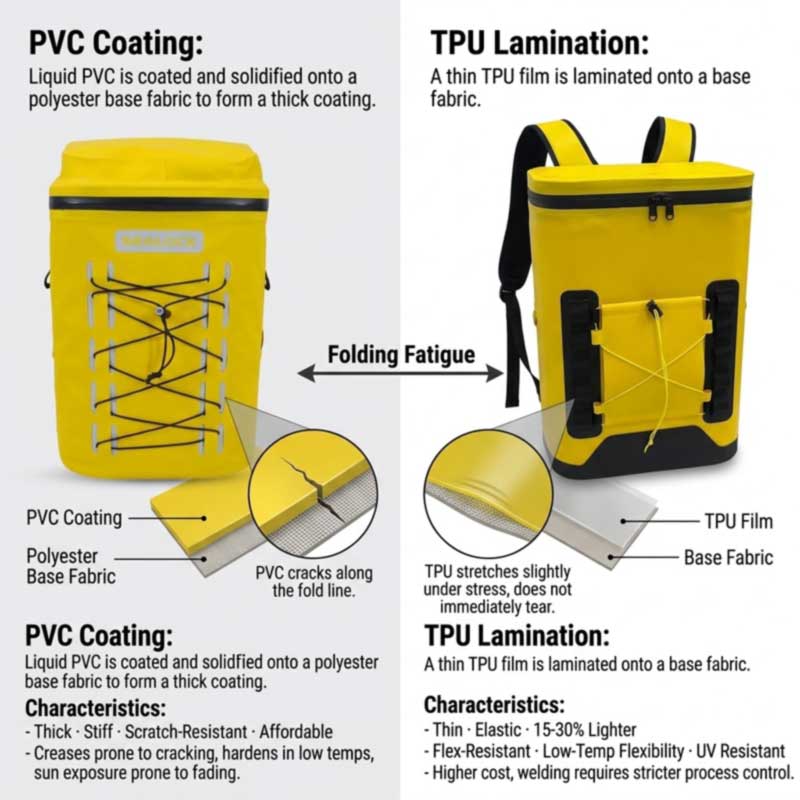
PVC and TPU are not two versions of the same thing. They are constructed differently, and that construction drives every practical difference. PVC-coated fabric is built by coating: liquid PVC is applied to a polyester base fabric and then cured to form a thick waterproof coating, producing a durable composite with strong water resistance and structural stiffness. TPU fabric is built by lamination — a layer of TPU is laminated to a polyester base material, giving high tensile strength, tear resistance and flexibility.

A thick cured coating versus a thin laminated film. From that single distinction come the weight difference, the flex behaviour, the cold performance and the cost gap.

Where TPU Wins

Weight

The gap is measurable and matters on a backpack: compared to PVC-coated fabrics, TPU-laminated materials can be 15%–30% lighter depending on construction, which becomes significant in applications such as hiking, travel or sports where carrying comfort matters. On a cooler — already the densest item anyone carries once loaded with ice — shell weight is weight you feel on every climb.

Flex fatigue and fold life

This is TPU's strongest technical argument, and it is about how the two materials fail rather than how strong they start. PVC tarpaulin fabrics are often thicker and can provide strong resistance to surface abrasion, but their rigidity makes them more vulnerable to cracking after repeated bending, while TPU laminated fabrics are thinner but more elastic, allowing them to absorb stress without breaking. The failure mode is specific: if the PVC coating layer becomes thin or brittle after long-term use, cracks may form at fold lines — so for applications involving frequent rolling, compression and movement, TPU materials generally last longer.

Note what that means for a roll-top cooler backpack in particular: the closure is a fold line, worked every single use. Fold-line cracking is not a theoretical risk there.

Cold weather

TPU bags hold up well in cold weather and resist UV damage better than PVC, and TPU's defining characteristic is its elasticity across a wide temperature range. A cooler is a cold product by definition, and one used on a winter dock or an alpine morning is exactly where a stiffened PVC shell creases and a TPU shell stays pliable.

UV and appearance over time

PVC tarpaulin is more susceptible to cracking and fading over time, especially when exposed to intense sunlight, while TPU fabric maintains its colour and flexibility much better and is often used where long-term performance is critical. For a beach or marine range that lives in the sun, this is a warranty-cost consideration, not a cosmetic one.

Tear behaviour

The mechanism is worth understanding: TPU fabrics stretch slightly under stress instead of tearing immediately, which helps prevent sudden material failure when a bag catches on a sharp object, whereas PVC fabrics rely on thickness for durability. Elastic absorption versus mass resistance — two different strategies, with different failure characteristics.

Where PVC Genuinely Wins

An honest comparison does not end with "TPU is better." PVC holds real advantages, and for some products it is the correct specification.

Cost, and the gap is large

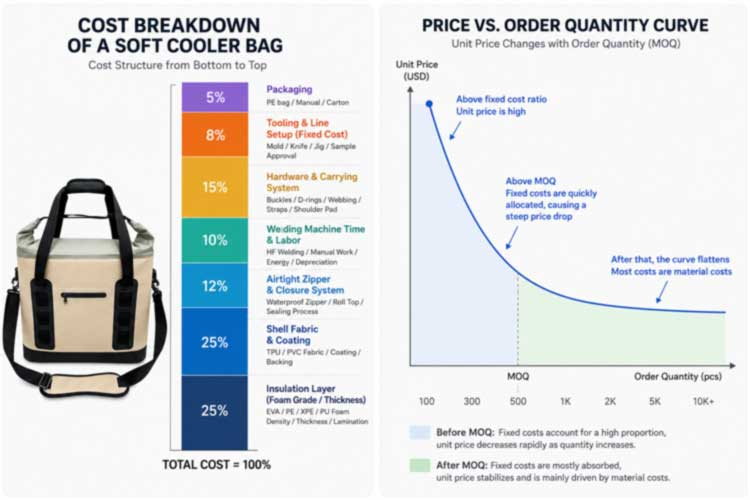
This is decisive in volume programmes: PVC coatings are widely produced at industrial scale, making them significantly cheaper than TPU films — which is why many entry-level waterproof bags use PVC — and in large production runs, PVC materials can reduce total product cost by 20–40% compared with TPU fabrics. A 20–40% material-driven cost difference is not a rounding error; on a promotional or value retail line it can be the difference between a viable programme and no programme.

Rigidity and structure

PVC bags are affordable and rigid, making them a good choice when flexibility isn't essential. For a cooler that should stand up on its own, hold its shape when part-full and resist being crushed in a car boot, that stiffness is a feature. A structured cooler is easier to load one-handed and does not sag into a shapeless heap.

Surface abrasion resistance

Thickness does real work: PVC tarpaulin's thicker coating gives strong resistance to surface scraping, which suits products that get dragged across concrete, truck beds and gunwales rather than folded repeatedly.

Availability and production simplicity

TPU carries a manufacturing overhead as well as a material one: compared to PVC, TPU is usually costlier, and during welding, coating and bulk production even stricter control is required. Both materials weld well — both are polar thermoplastics suitable for high-frequency welding — but TPU demands tighter process control to weld consistently.

The summary in one line: PVC is thick, stiff, tough on the surface and cheap; TPU is thin, elastic, light, cold-tolerant and long-lasting under folding, at a materially higher price. Neither is universally right. The question is which failure mode your product will actually meet — surface scraping, or repeated folding and cold.


cross-section comparison of PVC coated fabric and TPU laminated fabric for cooler backpack shells

The Compliance Dimension That Is Shifting the Market

Material choice is no longer only a performance and cost question. Traditional flexible PVC relies on plasticisers, and phthalate plasticisers face tightening restriction — notably under EU REACH and California Proposition 65 — while TPU requires no plasticiser additives and is generally phthalate-free. For a brand selling into regulated retail, that difference is a risk position rather than a spec-sheet line.

There is a second force pushing the same way, visible to any factory supplying major brands: large brand customers increasingly score their suppliers on formal KPI scorecards that include CSR and sustainability alongside quality and delivery. Material selection feeds directly into those scores, which means a shell decision made purely on unit price can carry a cost elsewhere in a supplier relationship. Recyclability points the same direction — TPU is recyclable, and PVC's chlorinated chemistry makes end-of-life handling harder.

None of this means PVC is unusable. Compliant PVC formulations exist, and PVC remains legitimate for many products — the point is that the compliance requirement must be specified and tested for the destination market, not assumed. If you spec PVC, ask for the phthalate and heavy-metal test data your market requires, and confirm it covers the exact fabric in your bag. See TPU Cooler Backpack Manufacturer: Why the Shell Material Matters for the fuller chemistry and compliance picture.


One Detail Buyers Miss: The Shell Can Change the Duty Line

Both shells classify a soft cooler under the same HTS heading, but the subheading — and therefore the base duty — can differ according to whether the outer surface is plastic sheeting or textile. That is a landed-cost consequence of a material decision, and it is worth modelling with a licensed broker rather than assuming. The classification detail is covered in Soft Cooler Backpack Supplier: MOQ, Lead Times & FOB Sourcing Explained.

Head to Head

TPU-laminated PVC-coated (tarpaulin)
Construction Thin film laminated to base fabric Thick liquid coating cured onto base fabric
Weight 15–30% lighter Heavier
Material cost Higher 20–40% lower in large runs
Flex / fold life Elastic, absorbs stress, longer under repeated folding Rigid; can crack at fold lines over time
Surface abrasion Good Excellent — thickness does the work
Cold weather Stays pliable Stiffens
UV / colour Holds colour and flexibility More prone to fading and cracking in strong sun
Structure Softer, more packable Rigid, holds shape, stands up
HF weldability Excellent; needs tighter process control Excellent
Plasticisers None required; phthalate-free Traditionally phthalate-plasticised; restricted grades required for some markets
Recyclability Recyclable Harder end-of-life

Which to Spec: A Decision Framework

If your product is... Spec Why
Premium outdoor, marine, kayak or fishing TPU Cold flexibility, UV stability, fold life and lighter carry justify the premium
Roll-top closure of any kind TPU The closure is a fold line worked every use — the exact PVC failure mode
Hiking or travel, weight-sensitive TPU 15–30% lighter shell on a load that is already dense
Regulated retail into EU / California TPU (or fully tested compliant PVC) No plasticisers to restrict; simpler compliance position
Volume picnic, promotional, value retail PVC 20–40% material cost saving can decide programme viability
Needs to stand up and hold shape PVC Rigidity is a structural feature here
Dragged and scraped more than folded PVC Thicker coating resists surface abrasion
Brand's sustainability scorecard matters TPU Recyclable, plasticiser-free, better positioned for CSR criteria

Both, Built in the Same Factory

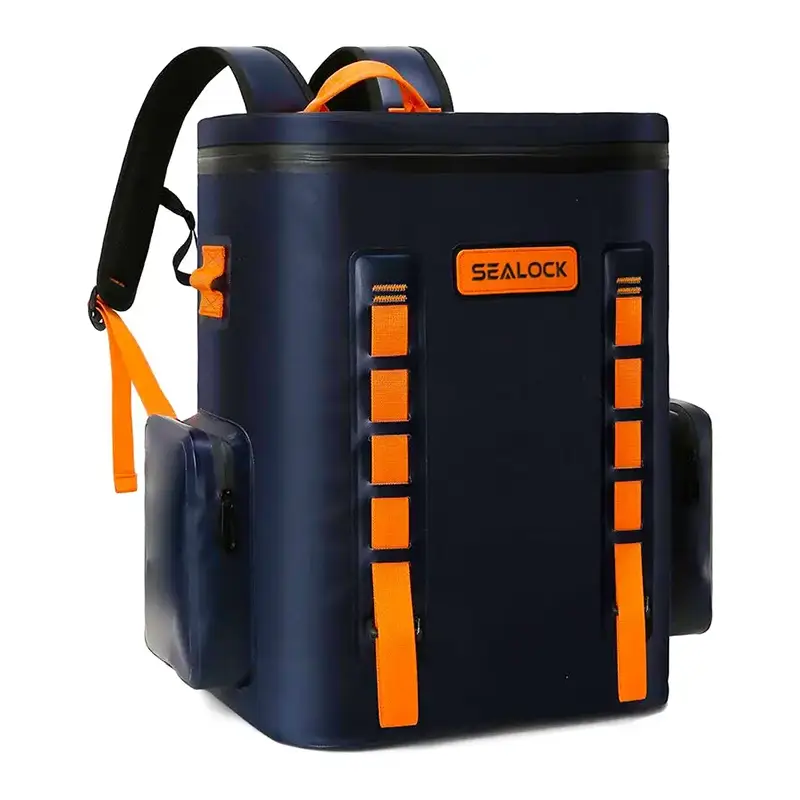
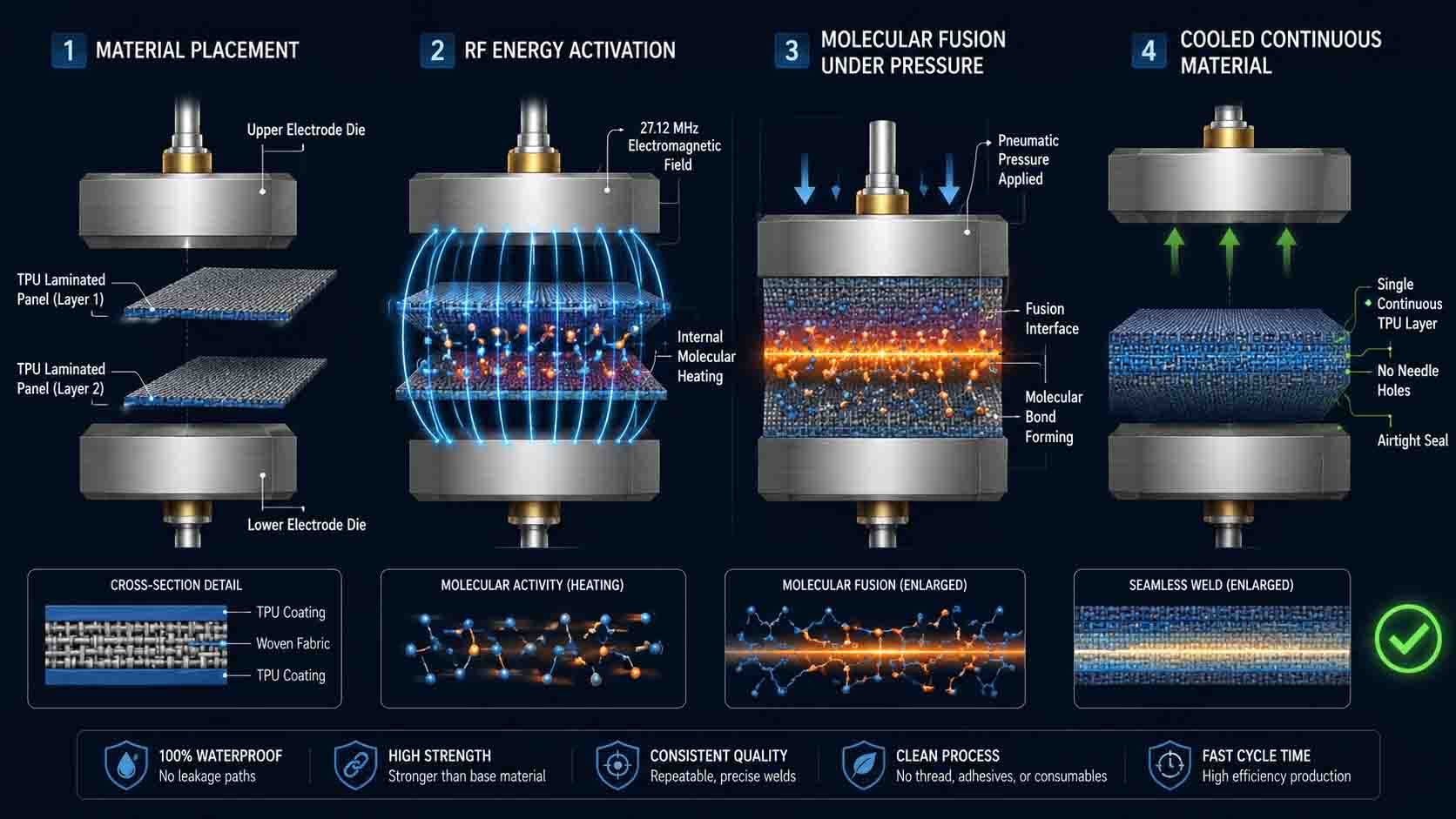
Sealock welds insulated cooler bags at 27.12 MHz across three factories in Dongguan, China and Ho Chi Minh City, Vietnam, with food-grade inner liners across the entire range — and produces both shell materials, so a brand can choose on merit rather than on what a supplier happens to stock. Real cooler backpacks in each:

TPU-shelled builds

Image Model Shell & build Link
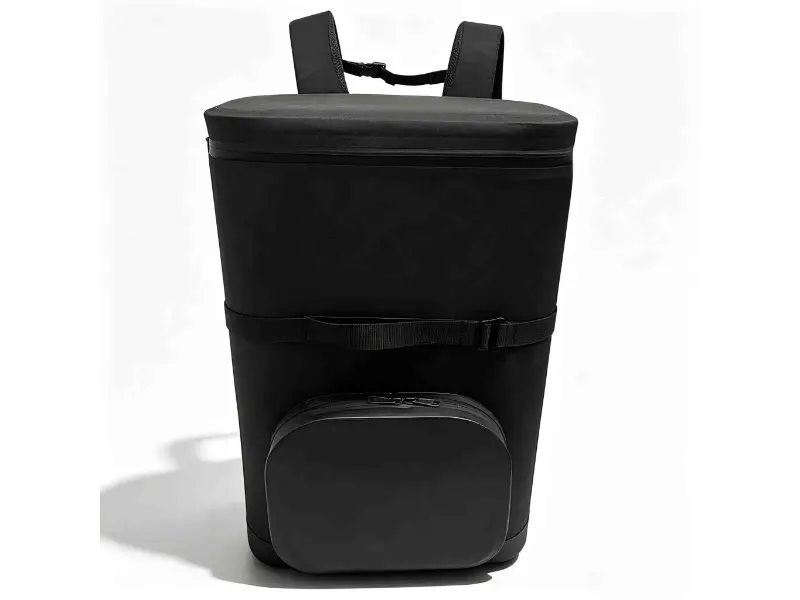
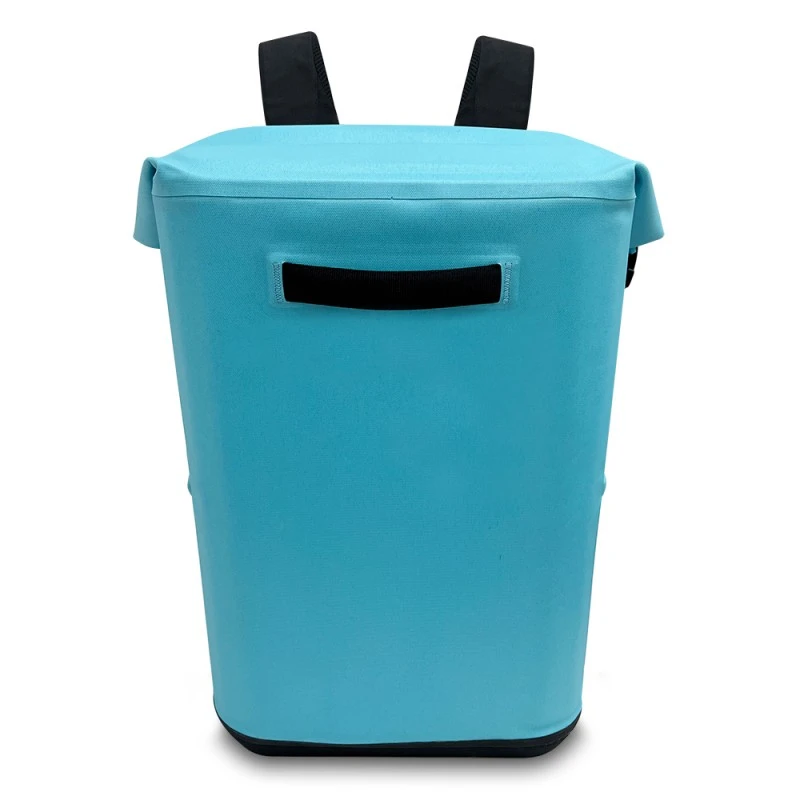
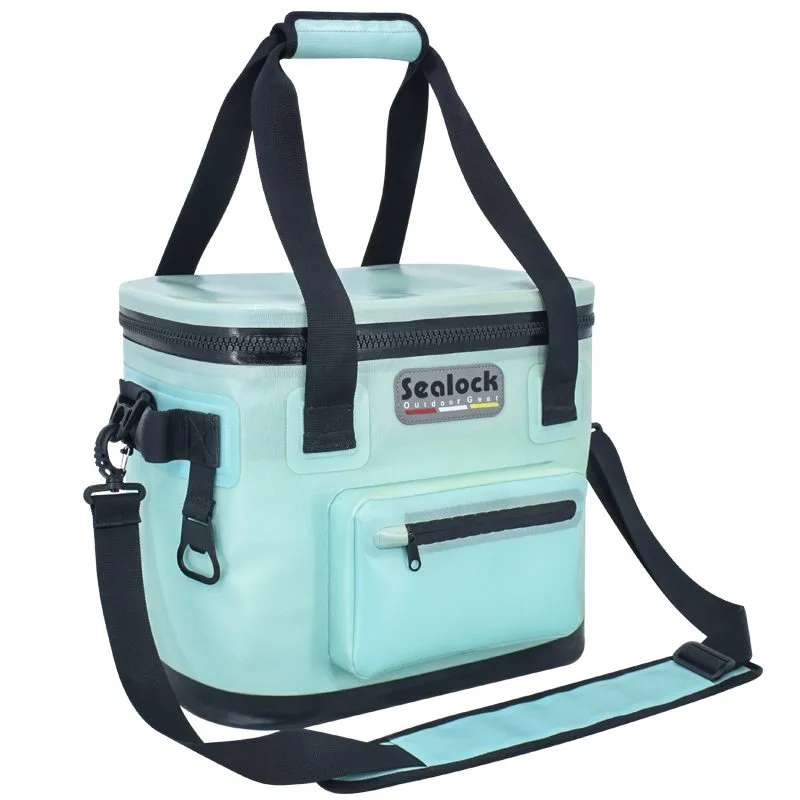
28L airtight-zipper insulated backpack cooler SL-I274 28L Airtight-Zipper Backpack Cooler (SL-I274) 840D TPU laminated, EVA core, food-grade TPU membrane, airtight zipper, up to 48 hr View
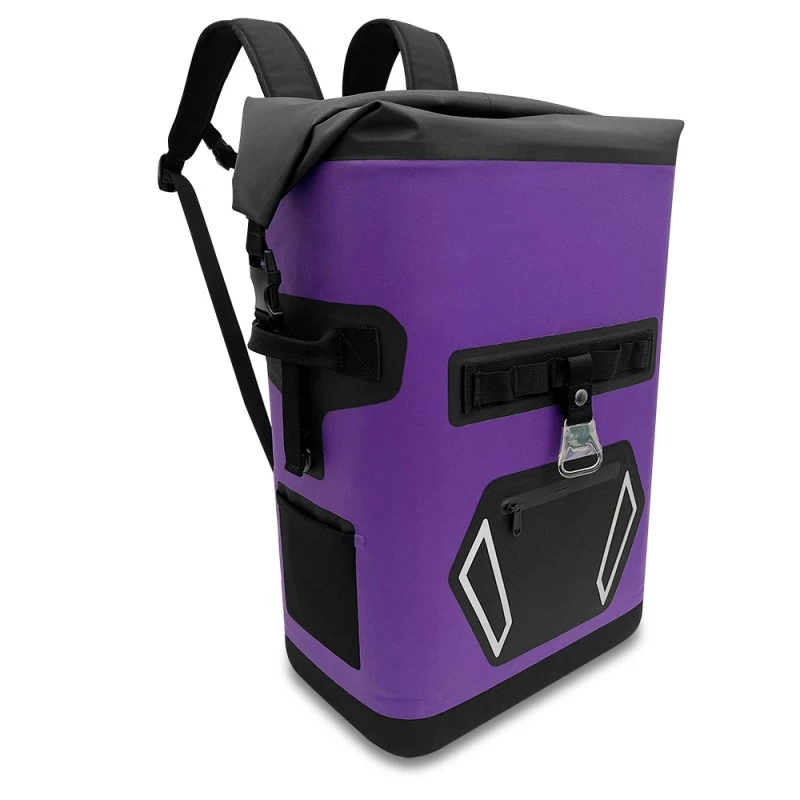
45L roll-top backpack cooler SL-I270 45L Roll-Top Backpack Cooler (SL-I270) 600D TPU, EVA foam, food-grade TPU liner, roll-top — TPU's fold life matters here View
22L IPX7 cooler backpack SL-I280 22L IPX7 Cooler Backpack (SL-I280) TPU shell, 50 mm XPE, IPX7 airtight zipper, 48 hr+ View
Lightweight waterproof cooler backpack SL-I272 Lightweight Waterproof Cooler Backpack (SL-I272) TPU, folding closure — the weight-led option View

PVC-shelled builds

Image Model Shell & build Link
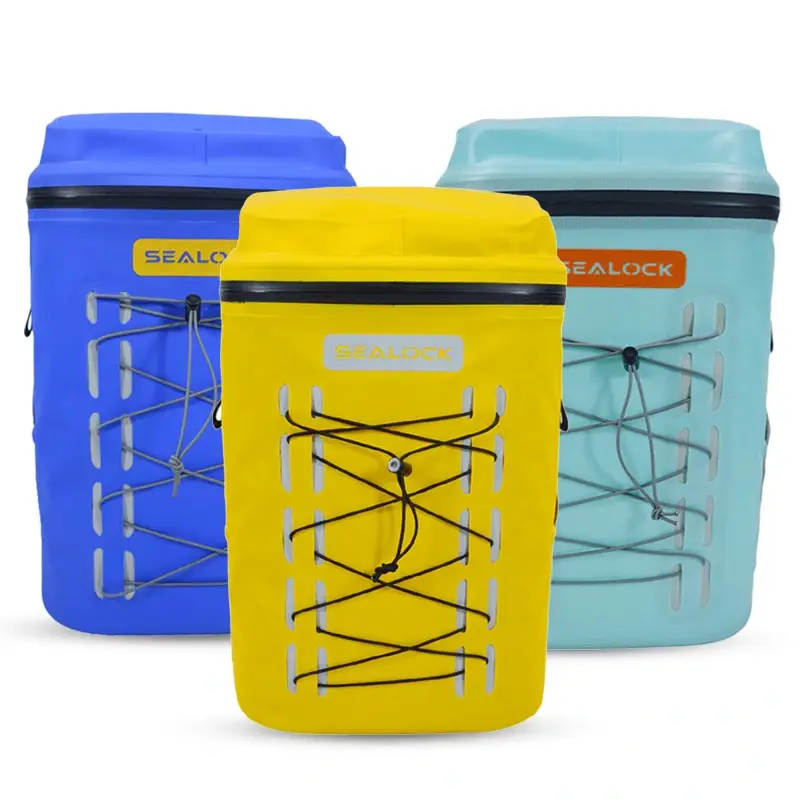
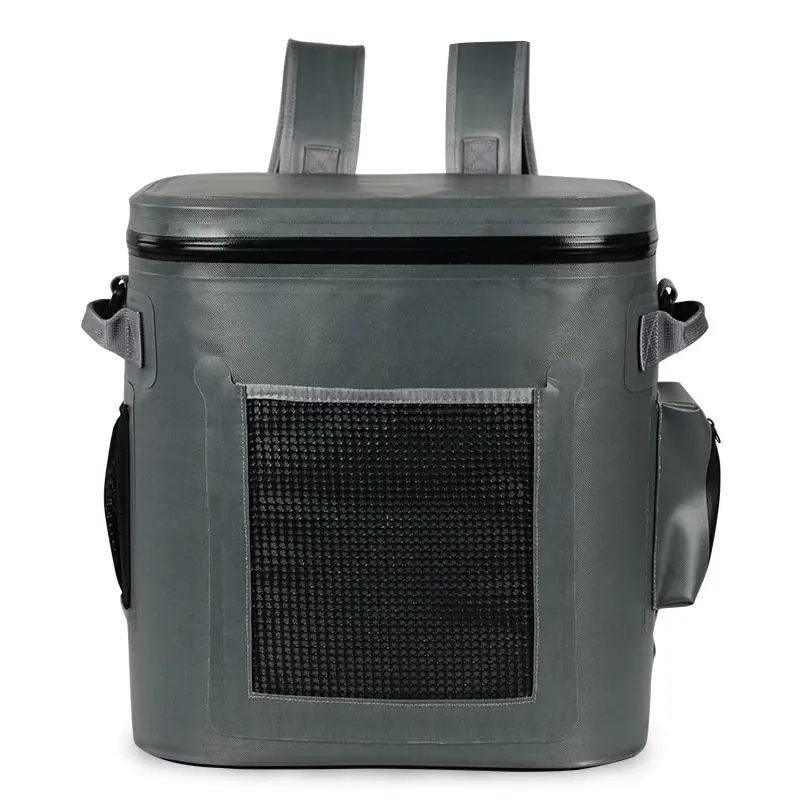
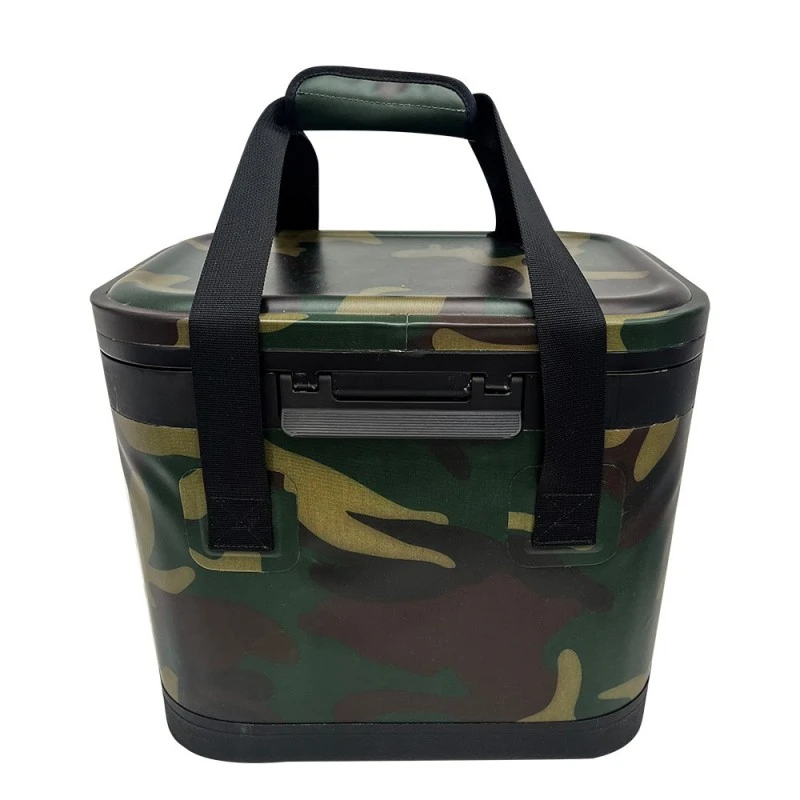
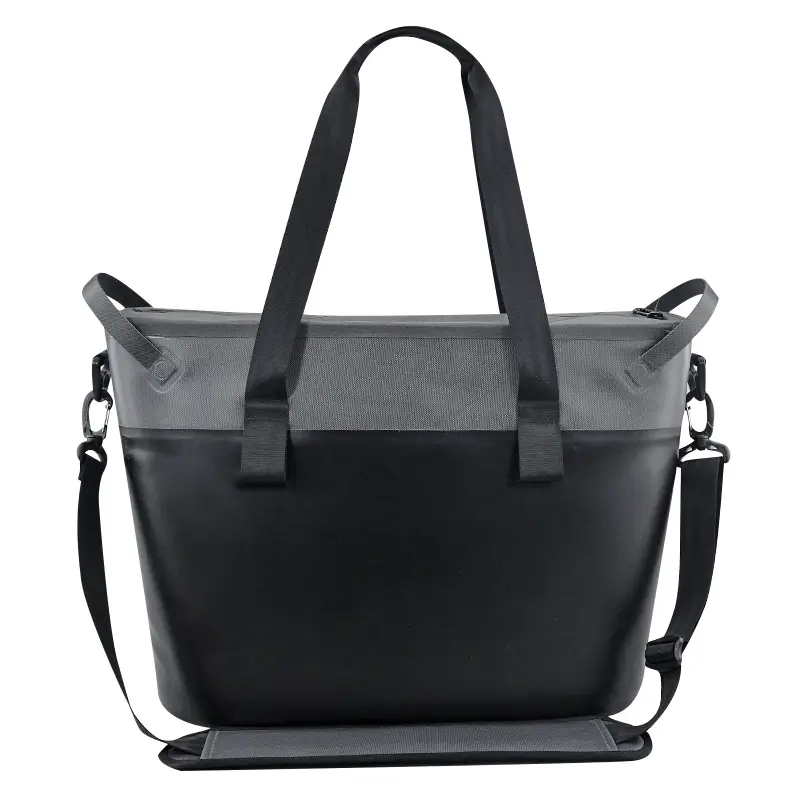
Insulated leakproof cooler backpack SL-I075A Insulated Leakproof Cooler Backpack (SL-I075A) 840D PVC tarpaulin + EPE foam + PEVA film liner, 36-can View
Insulated backpack cooler SL-I014 Insulated Backpack Cooler (SL-I014) 840D PVC tarpaulin + EPE foam + PEVA film liner, 36-can, customisable colours View
Soft insulated cooler backpack SL-I232 Soft Insulated Cooler Backpack (SL-I232) 840D PVC tarpaulin + EPE foam + PEVA film liner, 36-can, blue or grey View

The split is instructive: the technical, sealed, weight-sensitive builds run TPU, while the value-positioned 36-can family runs 840D PVC tarpaulin. That is the framework above expressed as a product range rather than a theory.

For Brands: Specifying the Shell

Beyond colour and logo, Sealock develops ground-up from a sketch, sample or performance target, and the shell is one of the first decisions engineered: material (TPU laminated or PVC tarpaulin), denier, coating weight and finish, with reinforcement placed only at wear points rather than across the whole bag. That sits alongside the insulation tier and wall thickness, the IPX seal level and closure, the food-grade liner and its market compliance testing, hardware, harness and pattern — all proven by immersion and cold-hold testing before production. Demanding briefs are welcome; premium insulation up to VIP vacuum panels and aerogel and IPX6–IPX8 welded seal levels are in scope. Ground-up work runs longer at sampling, so book against a launch. See Custom Soft Cooler Backpacks: Materials, Sizes & Branding Options and OEM Soft Cooler Backpacks: What You Can Customize Beyond Logo & Color.

Shell options TPU-laminated 600D / 840D; 840D PVC tarpaulin; 1680D reinforcement at wear zones
Welding 27.12 MHz high-frequency, in-house across three factories — both materials weld
Lab testing Load cycling, tensile, adhesion, salt spray, abrasion, colour fastness, full water immersion
MOQ / lead time 300 pcs per design; samples 7–15 days; production 30–45 days; FOB Guangdong
Origin China or Vietnam on the same specification
Certifications ISO9001, BSCI, SMETA P4, GRS, HIGG, SCAN

FAQ: TPU vs PVC Cooler Backpacks

Q: Is TPU always better than PVC for a cooler backpack?

A: No — it is better on most technical measures but costs materially more. TPU is lighter, more cold-tolerant, more UV-stable and far better under repeated folding; PVC is cheaper, more rigid and excellent against surface abrasion. The right choice depends on whether your product will meet folding and cold, or scraping and a tight price point.

Q: How much cheaper is PVC?

A: Substantially. PVC coatings are produced at industrial scale and are significantly cheaper than TPU films — in large production runs PVC can reduce total product cost by 20–40% compared with TPU. On a value or promotional programme that gap often decides whether the programme happens at all.

Q: Why does TPU last longer on a roll-top cooler?

A: Because a roll-top closure is a fold line worked every use, and folding is PVC's weak point. PVC's rigidity makes it vulnerable to cracking after repeated bending, and once the coating thins or embrittles, cracks form along fold lines. TPU is elastic and absorbs that stress, so for products involving frequent rolling and compression it generally lasts longer.

Q: Can both materials be high-frequency welded?

A: Yes — both are polar thermoplastics suitable for HF welding, which is why both can be built as seam-free leakproof coolers. TPU requires stricter process control during welding, coating and bulk production, which is part of why it costs more to manufacture as well as to buy.

Q: Does the shell material affect compliance?

A: It can. Flexible PVC traditionally relies on plasticisers, and phthalates face tightening restriction in markets such as the EU and California, whereas TPU needs no plasticiser and is generally phthalate-free. Compliant PVC formulations exist, so PVC remains usable — but the test data for your destination market has to be specified and verified rather than assumed.

Q: Which shell is heavier, and does it matter?

A: PVC is heavier; TPU-laminated fabrics can be 15–30% lighter depending on construction. It matters most on backpacks carried any distance — hiking, travel and paddling — because a loaded cooler is already the densest item in the load. For a bag that mostly moves from car to picnic table, the weight difference matters much less.

Deciding on a shell? Sealock (YiFuLong Outdoor Gear Co., Ltd.) welds cooler backpacks in both TPU-laminated and PVC tarpaulin at 27.12 MHz in China and Vietnam, with food-grade liners across the range and immersion-validated builds. Tell the team your use case, market and target price, and they will recommend the shell that fits — and sample it in either material so you can compare.

Email: info@sealock.com.hk  |  Phone: +86-13632981825  |  Browse the soft cooler range

Material properties, cost ranges and performance comparisons cited here reflect publicly available textile and bag-industry sources as of mid-2026; figures vary with grade, construction, coating weight and supplier. Regulatory requirements differ by market and change over time. Confirm material specifications, compliance test data and duty classification for your destination market before production.

Related News
Leave me a message
X
We use cookies to offer you a better browsing experience, analyze site traffic and personalize content. By using this site, you agree to our use of cookies.Privacy Policy
RejectAccept