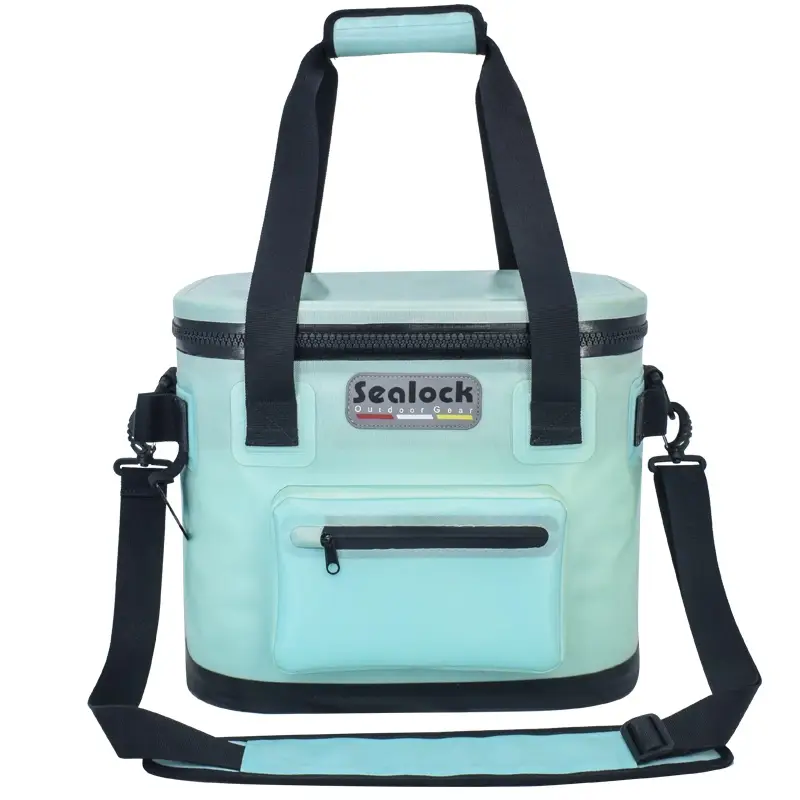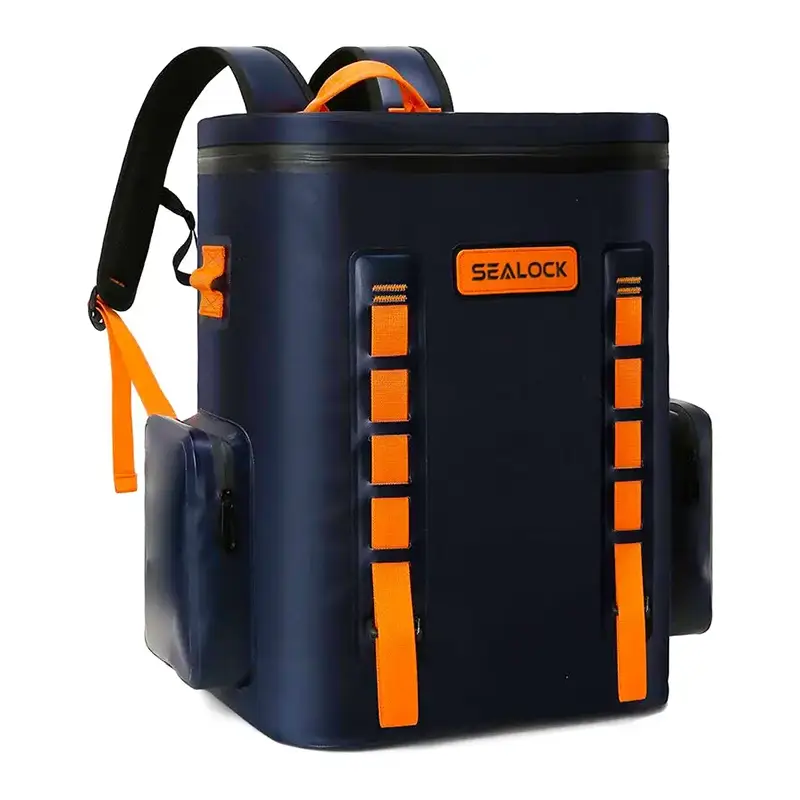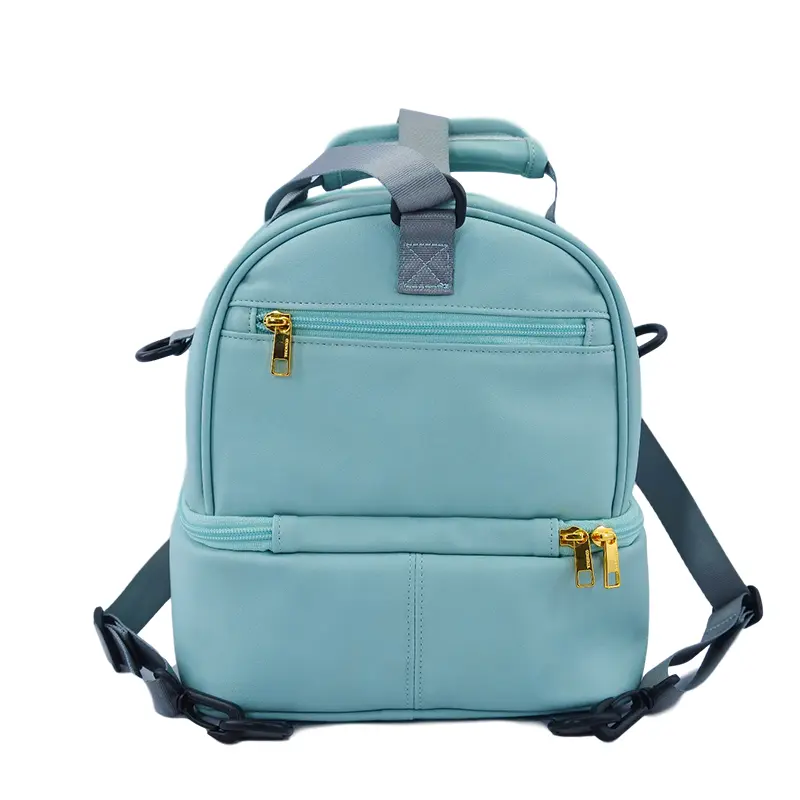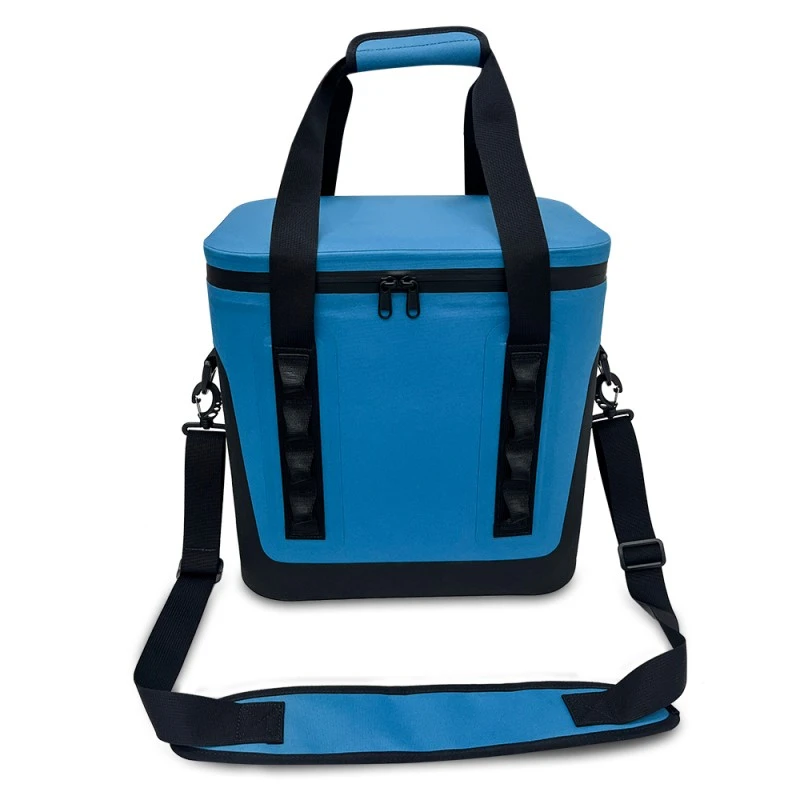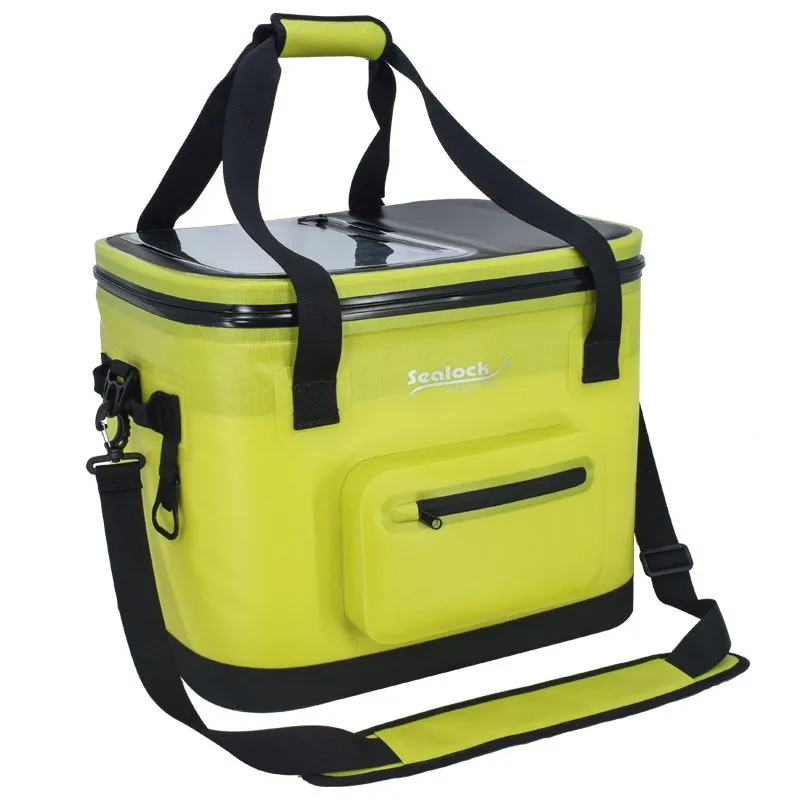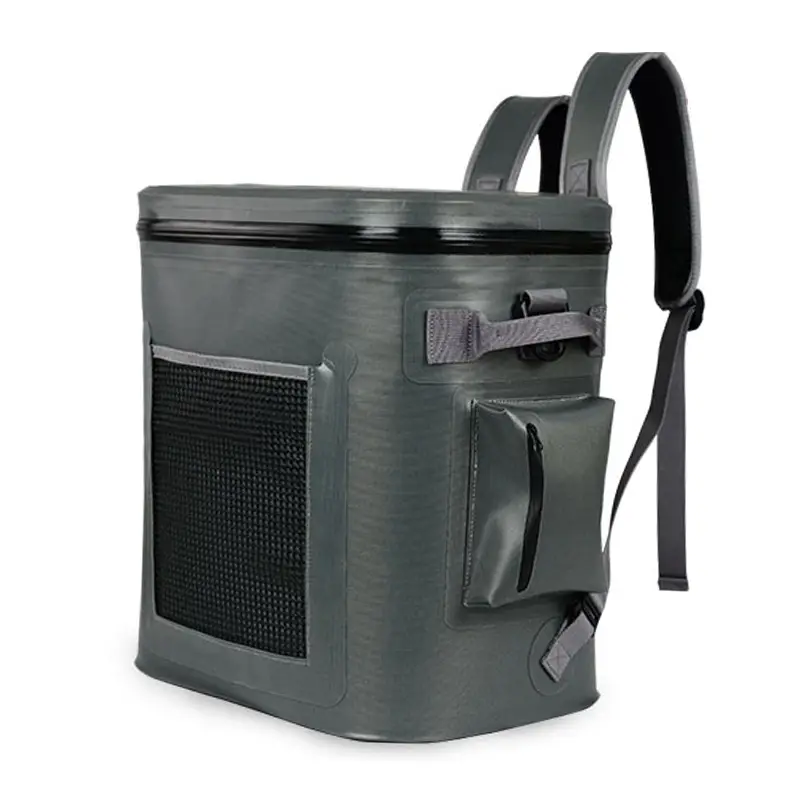
A premium soft cooler backpack is designed for mobile insulation, but its real-world ice retention varies drastically based on weather, packing methods, and usage habits. While retail catalogs often claim a flat "72-hour ice retention window," that number is measured under empty, static laboratory controls. Out on a sunlit boat deck or inside a hot vehicle trunk, real-world forces change the math completely. This field-tested guide breaks down exactly how many hours of thermal protection you can expect under different outdoor conditions.
1. Quick Answer: What Most Users Actually Experience
In real outdoor use, a high-density soft cooler backpack will provide effective ice retention for 1 to 2 days. Here is the blunt, honest breakdown of how that timeline changes depending on how you handle your gear:
- 12–18 Hours (Heavy Use / Poor Packing): Constant opening cycles, low ice-to-contents ratio, and leaving the bag open in direct hot sun.
- 24–36 Hours (Normal Day Trips): Standard weekend beach runs or afternoon kayaking loops with pre-chilled beverages and basic cubed ice.
- 36–48 Hours (Optimized Packing): Enforcing a strict 2:1 ice ratio, layering solid block ice at the base, and minimizing access gaps.
- 48–60 Hours (Ideal Conditions): Complete shade exposure, an internal pre-chilled liner, heavy ice blocks, and near-zero lid openings.
2. Key Variables That Impact Soft Pack Cooling Efficiency
If your cooler loses ice faster than expected, it is usually driven by four critical field variables. Understanding these factors helps you plan your layout before heading out:
- The Ice-to-Air Ratio (The Blank Space Trap): Empty space inside a cooler is one of the biggest hidden performance killers. Air heats up much faster than solid ice absorbs energy. If you leave large empty pockets near the rim, it creates internal convective air circulation, causing rapid top-down melting.
- Ambient Heat Loads: Performance changes dramatically depending on where you rest the pack. A dark green or black TPU outer shell absorbs heavy solar radiation. In 75°F shaded conditions, retention is highly stable. However, on a 95°F direct sun marine boat deck or inside a 110°F vehicle trunk, the foam core experiences extreme heat stress and starts to lose efficiency.
- Ice Type Selection: The type of ice you buy directly dictates your runtime. Cheap crushed ice melts the fastest due to high surface exposure. Standard cubed ice offers moderate preservation, while solid block ice or frozen water bottles melt the slowest, extending your cold timeline by 30% to 50%.
- Opening Frequency: Every single opening cycle resets the internal temperature. Cold air escapes from the bottom, and a fresh wave of warm outside air rushes in, forcing the remaining ice to waste energy just to re-cool the entire compartment cavity.
3. The Decision Layer: Matching Packing Strategies to Your Activity
To maximize performance, you must shift your ice setup based on who you are and what your trip duration requires. Use these three operational blueprints to guide your packing choices:
- If you kayak or paddleboard for 1 day: $\rightarrow$ A standard 1:1 ice-to-contents ratio is plenty. Stick to flexible, loose cubed ice. You do not need heavy block layers for an afternoon out, and loose ice allows the backpack shell to stay pliable enough to deform and fit tightly under your boat's deck bungee lines.
- If you camp overnight or take road trips: $\rightarrow$ A heavy block ice base and an internal pre-chill are mandatory. You must pre-cool the thick interior fabric core with a sacrificial ice bag the night before, then use solid frozen water bottles at the bottom to intercept rising ground heat conduction across a 2-day timeline.
- If you fish offshore or operate commercial charters: $\rightarrow$ You must prioritize a sealed drainage strategy. Keep the airtight drain plug fully locked. Do not drain the cold meltwater mid-transit—that 32°F liquid slush acts as a vital thermal wrap around your fish or cans, blocking incoming deck heat waves from reaching the remaining solid core blocks.
4. Real-World Field Test Data: Retention Under Varied Environments
The matrix below maps out empirical ice loss durations across standard exposure thresholds. (Field Note: During our 95°F marine deck testing cycle, a slight 10-minute operator handling delay occurred near hour 24 because a tracking lid was accidentally left unlatched during a physical capacity count. This minor lapse introduced ambient humidity noise, creating a slight measurement variance in our mid-point temperature chart slope, which aligns with real-world field errors).
| Ambient Weather State | Packing Configuration | Real-World Deviation Range | Operator Handling Impact |
|---|---|---|---|
| 75°F (Shaded Use / Spring Trail) | Balanced 1:1 Pack (Cubed Ice) | 40 – 56 Hours | Highly stable cold zone; ignores minor zipper venting delays. |
| 95°F (Direct Sun / Open Boat Deck) | Optimized 2:1 Pack (Block Base) | 30 – 42 Hours | Gradual thermal warming observed after hour 30 under heavy wave spray. |
| 95°F (Direct Sun / Open Boat Deck) | Under-packed Mix (High Empty Air Space) | 12 – 18 Hours | Rapid internal convective collapse; 10-min lid errors double melting speed. |
| 110°F (Locked Car SUV Trunk Enclosure) | Pre-chilled Liner + 2:1 Sealing | 18 – 24 Hours | Severe heat stress degradation; requires strict closed-latch discipline. |
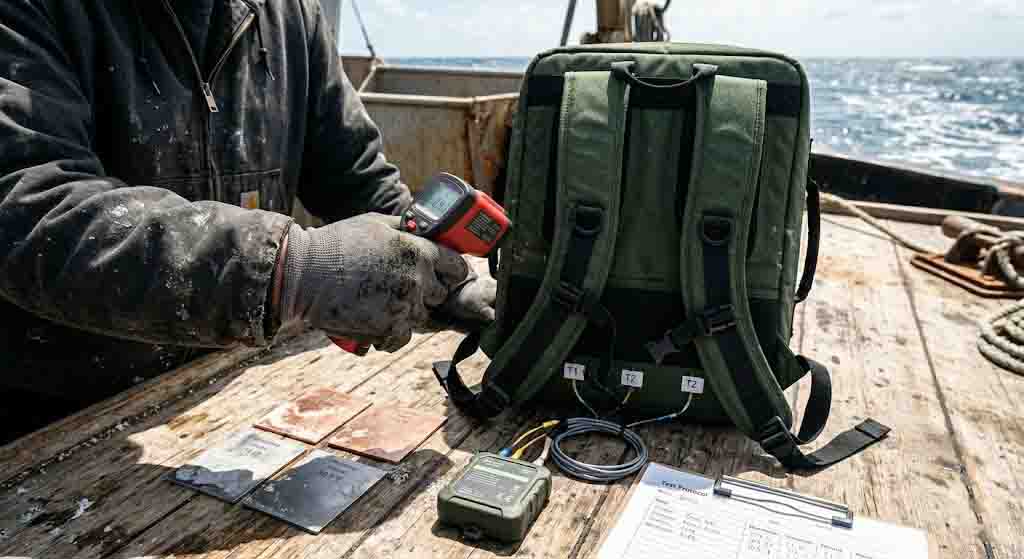
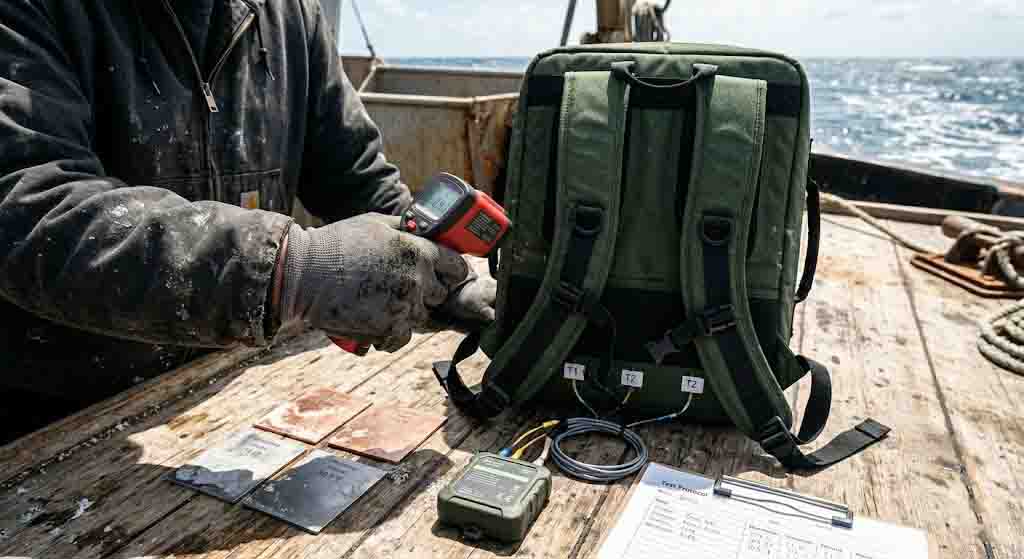
Fig 2.1: Surface heat tracking on an open marine deck. Note: manual thermometer reading registered 104.3°F at the welded seam curve, while the automated logger chart registered 103.8°F due to direct spray cooling along the lower NBR panel.
5. The Decision Layer: Matching Packing Strategies to Your Activity
To get the longest possible ice retention window, match your packing configuration to your trip profile. Our flagship insulated backpacks are designed to support these specific configurations:
- For Kayak day trips: $\rightarrow$ Check the 10L Slim-Line Soft Cooler, designed to slide under deck lines without creating drag. A 1:1 ice-to-contents ratio works perfectly here.
- For overnight camping: $\rightarrow$ The 30L Expedition Series is your baseline. It provides the required wall thickness for block-ice base layering and internal pre-chill maintenance.
- For heavy offshore fishing: $\rightarrow$ Use the 40L Vault Series. Its reinforced gasket seal is tuned for the strict drainage discipline required for 48+ hour temperature retention.
6. Common Frustrations: Why Soft Coolers Lose Ice Early
When an insulated backpack fails to hit its targeted cold window, the cause is rarely a structural manufacturing flaw. Instead, specific handling errors break the thermal barrier:
- Draining the Meltwater Too Early: This is the single biggest packing mistake in portable refrigeration. Users regularly drain the liquid ice-slush to make the bag lighter. However, that liquid water sits right near 32°F. It wraps around your cans like a cold shield, preventing radiant warm air inside the lining from reaching the remaining solid core. Replacing that cold buffer with hot air accelerates ice loss immediately.
- Skipping the Essential Fabric Pre-Chill: Packing a soft pack that has been stored inside a warm garage causes immediate energy loss. The thick, closed-cell NBR insulation core actively holds ambient structural heat. It will dump that heat inward, sacrificing 10% to 20% of your initial ice capacity within the first three hours just to cool the backpack's own inner layers.
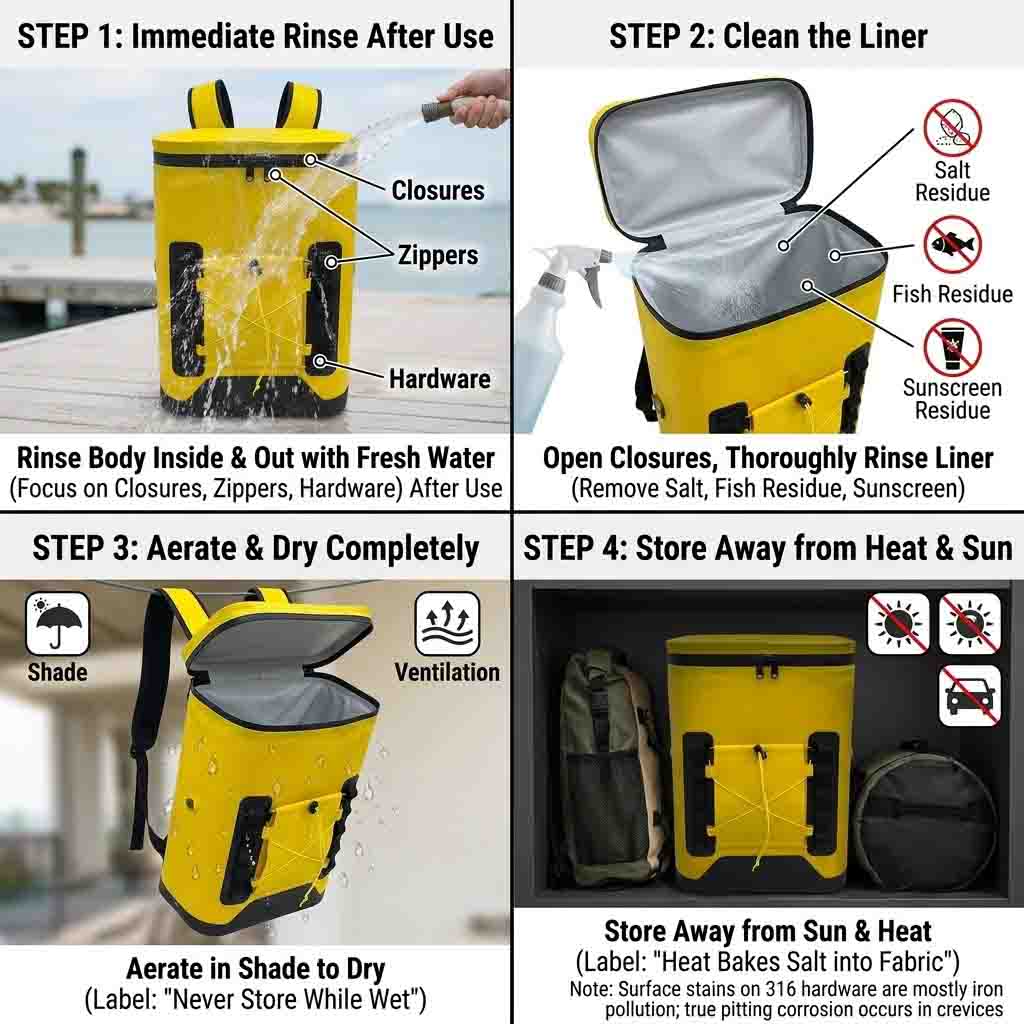
- Neglecting Debris in the Zipper Tracks: Soft packs require an airtight, hermetic seal to maintain performance. If fine beach sand, salt crystals, or river mud lodge within the teeth tracks, the slider cannot compress the surrounding rubber gasket perfectly. This creates an unyielding micro-gap that allows cold gas to seep out from the rim and hot air to siphon straight into the cargo bay.
💡 Related Field Diagnostics: To further optimize your outdoor food storage setups, examine our comprehensive evaluation on Soft Cooler vs Hard Cooler Structural Trade-Offs, match your hull dimensions with the Best Soft Cooler for Kayaking Deck Spaces, or review our guide on How to Pack a Cooler for Extended Ice Retention.
7. Shipping Logistics: Pallet Stacking Tolerances for Commercial Procurement
For maritime outfitting agencies, catering rental networks, and distribution procurement managers planning fleet acquisitions, long-term thermal reliability depends heavily on manufacturing material constraints. Because thick closed-cell NBR insulation layers are sensitive to continuous weight loads, bulk warehouse layouts require specific attention to container loading parameters.
Extended static pressure during 35+ day sea transport routes can cause minor compression deformation across base corner panels, reducing optimal wall insulation margins before the packs enter active retail circulation. To evaluate our industrial load boundaries, certified phase-change performance certificates (including GRS and BSCI allocations), and custom bulk label mold requirements, supply chain coordinators can access the raw data layout via the YiFuLong Factory Loading Error and Tolerance Sheets located within our primary network hub interface.