News

TPU Cooler Backpack Manufacturer: Why the Shell Material Matters

2026-07-29 0 Leave me a message
The shell of a cooler backpack is treated as a styling choice and is actually the most consequential engineering decision in the product. It determines whether the bag can be welded seam-free or must be stitched, whether it survives cold weather without cracking, whether it clears the chemical regulations your market enforces, and how many seasons it lasts before the coating fails. TPU has become the premium answer to all four — but "TPU" is not one material, and the grade a factory chooses matters more for a cooler than for almost any other bag, because a cooler spends its life wet. Sealock (YiFuLong Outdoor Gear Co., Ltd.) builds welded cooler backpacks on TPU-laminated shells, and this guide explains what the material actually delivers, where it fails, and what to specify.


TPU, PVC and PU: The Honest Comparison

Three coatings dominate waterproof bag construction, and each is a genuine engineering trade-off rather than a good/bad ranking. As one materials guide frames the field, PVC remains the most widely used waterproof coating because it delivers strength and weldability at low cost, PU has grown on softness and versatility, and TPU is favoured for high-performance applications needing low toxicity, superior cold resistance and eco-label compliance.

What TPU brings to a cooler specifically is a combination that is hard to assemble any other way: it is a high-performance elastomer with strong wear, tear and oil resistance plus low-temperature toughness; it retains flexibility in cold where PVC stiffens; its smooth, pore-free surface resists stains and wipes clean; and it is recyclable and free of phthalate plasticisers. Every one of those maps to something a cooler actually does — it gets cold, it gets dirty, it holds food, and it gets thrown in a boat.

TPU PVC PU
Waterproofing Fully waterproof Fully waterproof Water-resistant, coating-dependent
Cold flexibility Stays flexible Stiffens, can crack Moderate
Weldability (HF) Excellent Excellent Weldable, grade-dependent
Plasticisers Phthalate-free Traditionally phthalate-plasticised Generally phthalate-free
Abrasion / tear High Good, heavier Moderate
Weight Lighter Heaviest Lightest
Cost Highest Lowest Middle

The cost point is real and worth stating plainly: TPU coated fabric is usually more expensive than PVC or PU alternatives, though it offers better performance and sustainability. Whether that premium pays back depends on the product's life — on a cooler used hard for years, the durability argument is strong; on a giveaway promotional bag, it may not be.

The Compliance Angle Buyers Underestimate

Material chemistry is now a regulatory exposure, not just a performance question, and the consequences are expensive. One industry account records a European luggage brand that failed a REACH audit because its PVC tarpaulin contained outdated phthalate plasticisers, triggering a recall that cost over $300,000. The direction of travel is one-way: global regulations are shifting toward safer chemistries — phthalate restrictions, solvent limits, VOC caps and chlorine scrutiny — so coating chemistry has to be matched to the regulatory profile of the target market, not only to performance.

TPU is the low-risk position here. It generally contains none of the harmful chemicals such as BPA or phthalates found in PVC, requires no toxic plasticiser additives, and many TPU formulations meet stringent safety standards including FDA approval, making them suitable for food-contact use. For a cooler backpack — a product whose interior touches food and ice, and which is sold into both US and EU retail — specifying a shell and liner chemistry that will not become a compliance problem is cheap insurance. The liner-side food-contact requirements are covered in Custom Insulated Cooler Backpacks: Spec Your Foam, Liner & Capacity.

The Distinction Almost No Cooler Buyer Is Told: Ester vs Ether TPU

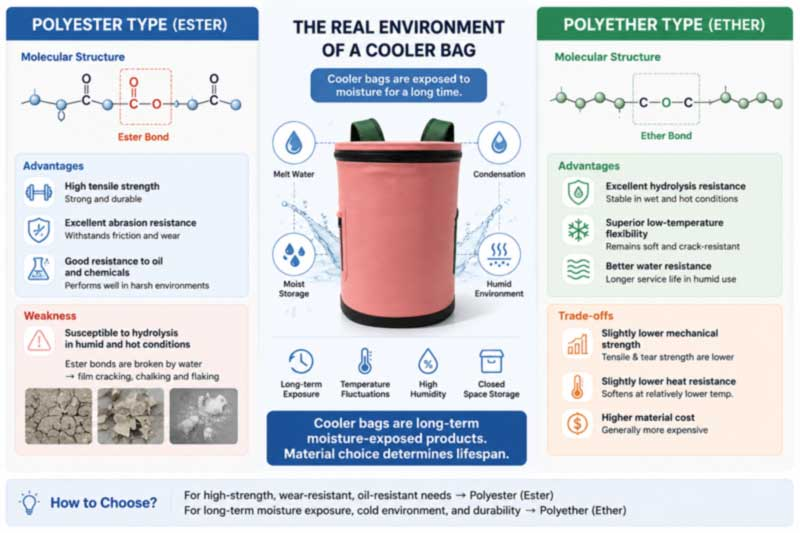
This is the part that separates a supplier who understands the material from one who just writes "TPU" on a spec sheet. TPU is not a single polymer — the soft segment of its molecular chain is built either on polyester or polyether polyols, and the two behave very differently in exactly the conditions a cooler lives in.

The core difference is water. The ester bonds in polyester-based TPU are susceptible to hydrolysis, causing significant performance degradation in hot, humid environments, while the ether bonds in polyether-based TPU are stable and hydrolysis-resistant, making polyether the preferred choice for underwater or high-humidity applications. Put more bluntly by a film supplier: put polyester TPU in a humid environment or submerge it and the molecular chains break down over time, causing the film to crack and crumble — polyether TPU is virtually immune to hydrolysis.

But polyester is not the inferior grade — it wins on mechanics. Ester-based TPU has exceptional mechanical properties including higher tensile strength and superior abrasion resistance, with hydrolysis sensitivity as its drawback. The trade is explicit: polyester TPUs give high chemical and oil resistance with strong abrasion, cut and tear performance, while polyether TPUs offer better moisture resistance and perform better at low temperatures. There is also a price dimension — polyether grades cost more than polyester because the polyol is priced higher and harder to produce. And a third route exists: polycarbonate-based TPU combines both, resisting oils, fuels and hydrolysis, and typically lasting 3–5 years even in very humid or harsh conditions.

Why this matters more for a cooler than for a backpack: a cooler is a wet product by definition. It holds melting ice for hours, condenses moisture on its walls, gets rinsed, and — the real killer — frequently gets folded away damp at the end of a trip. That is a hydrolysis exposure profile, sustained over years. Ageing research notes that mechanical stress compounds hydrolysis and oxidation under high temperature and humidity, with polyester-based TPUs more susceptible to moisture-related deterioration than polyether. A shell chosen purely for abrasion numbers, with no consideration of moisture exposure, is a shell chosen for the wrong failure mode.

The practical answer is not "always use ether." It is that the grade should be chosen against the product's real exposure: a marine or immersion-rated cooler that lives wet leans toward hydrolysis-resistant chemistry; a rugged land cooler dragged over rock and exposed to fuel or oil weights abrasion and chemical resistance more heavily; and stabilised or polycarbonate grades exist for builds that need both. Note also that hydrolysis stabilisers such as polycarbodiimide can be added to delay degradation, and that polyether grades may carry slightly lower mechanical strength and heat resistance, so a balance has to be struck.

Ask this at sampling: "Is the shell TPU polyester-based or polyether-based, and why was that grade chosen for this product?" A factory that engineers its materials will answer immediately and explain the trade-off. A trader will not know the question exists. It is one of the fastest ways to tell the two apart — see Choosing an OEM Soft Cooler Backpack Manufacturer: A Buyer's Checklist.
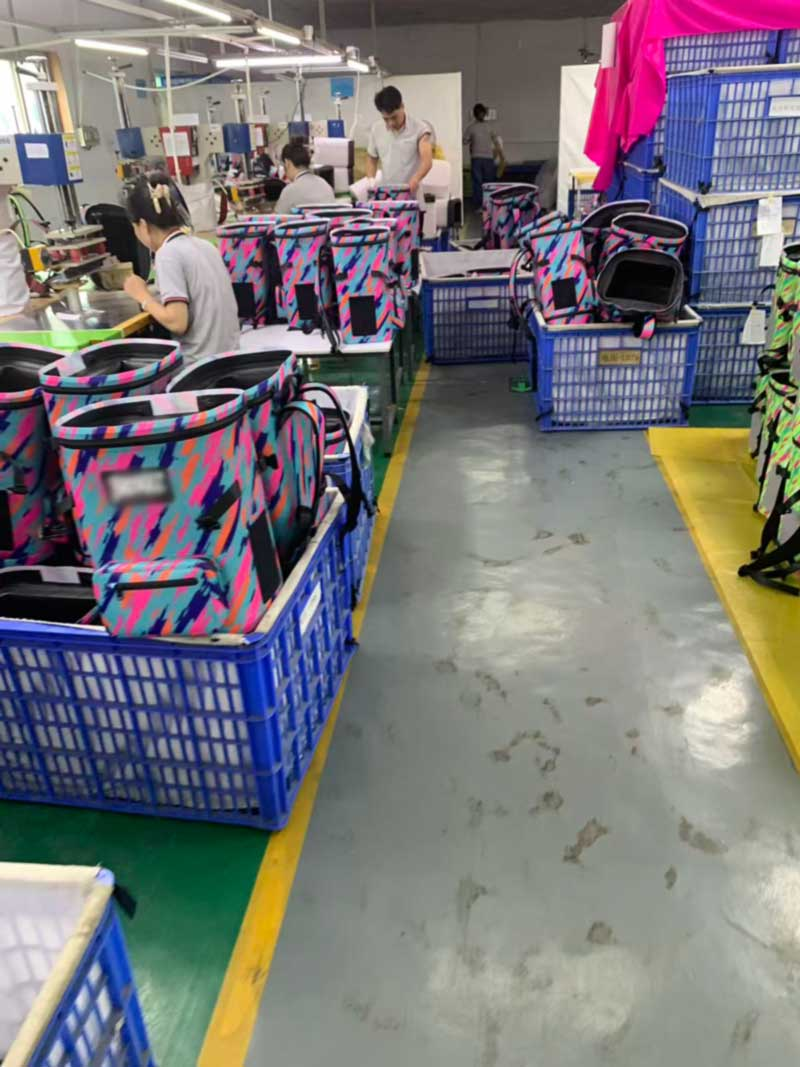
Real-shot photos of the cooler bag high-frequency welding production line

TPU Is What Makes a Seam-Free Cooler Possible

There is a second reason a serious welded cooler is built on TPU, and it is structural rather than cosmetic. High-frequency welding only works on polar thermoplastics — TPU, PVC, PU, EVA and coated nylons — while polyethylene and polypropylene generally cannot be RF-welded without additives. So the shell material decides whether a factory can fuse the panels into a continuous, needle-hole-free skin at all, or must sew and tape them and accept that the tape will eventually lift. A TPU shell is therefore doing two jobs: it is the waterproof barrier, and it is the substrate that lets the seams be welded rather than stitched. The welding engineering itself is covered in Waterproof Cooler Backpack Manufacturer: HF-Welded, Seam-Free Builds.

Where TPU Is Not the Answer

An honest material argument includes the limits. TPU carries the highest coating cost of the three, which can be the wrong call for promotional or entry-price lines where a PU-coated shell delivers adequate water resistance at a lower price. It is not meaningfully breathable — irrelevant for a cooler, but worth knowing. And its environmental credentials are relative, not absolute: TPU is durable but does not break down naturally, and burning it releases harmful gases, so "recyclable and phthalate-free" is a genuine improvement over plasticised PVC rather than a claim of harmlessness. A supplier that presents TPU as flawless is selling, not engineering.

What to Specify on a TPU Cooler Shell

  • Base fabric and denier: 600D for lighter packs, 840D for tougher builds, 1680D reinforcement at the base and corners where abrasion concentrates.
  • TPU grade: ester, ether or stabilised, chosen against the product's real moisture and chemical exposure.
  • Lamination: single- or double-sided, and the coating weight — which affects both hand-feel and weldability.
  • Finish: matte, gloss or micro-texture, a CMF decision that also affects scuff visibility.
  • Compliance: phthalate-free confirmation and, for the liner, food-contact testing for the destination market.
  • Validation: immersion testing on the finished bag, since a good fabric badly welded still leaks.

For the full material, size and branding menu, see Custom Soft Cooler Backpacks: Materials, Sizes & Branding Options.

Sealock's TPU-Shelled Cooler Backpacks

Sealock welds insulated soft bags on TPU-laminated shells at 27.12 MHz across factories in Dongguan, China and Ho Chi Minh City, Vietnam. These are real builds, chosen by fit rather than rank:

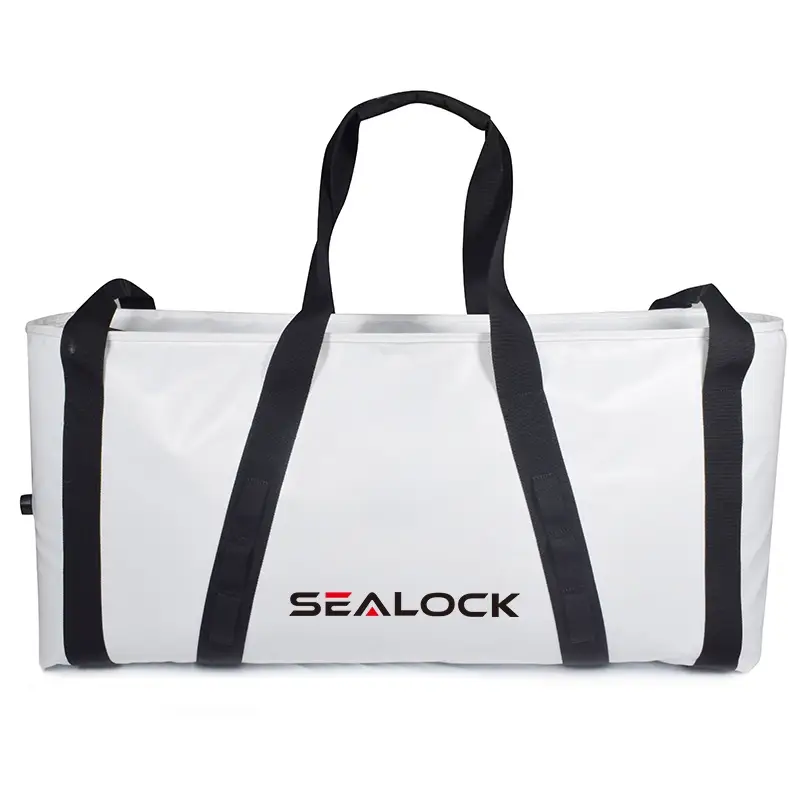
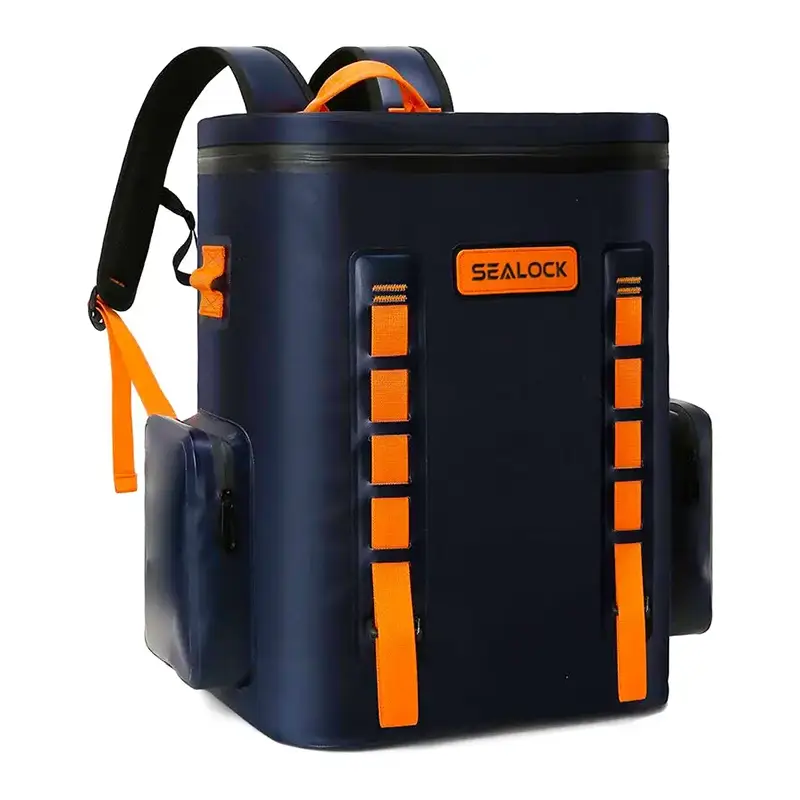
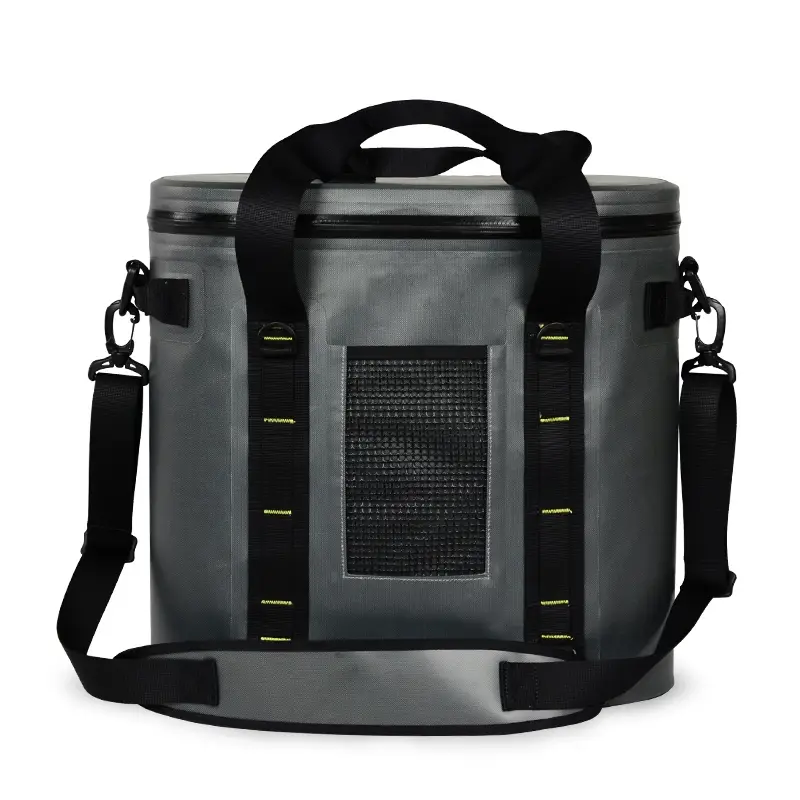
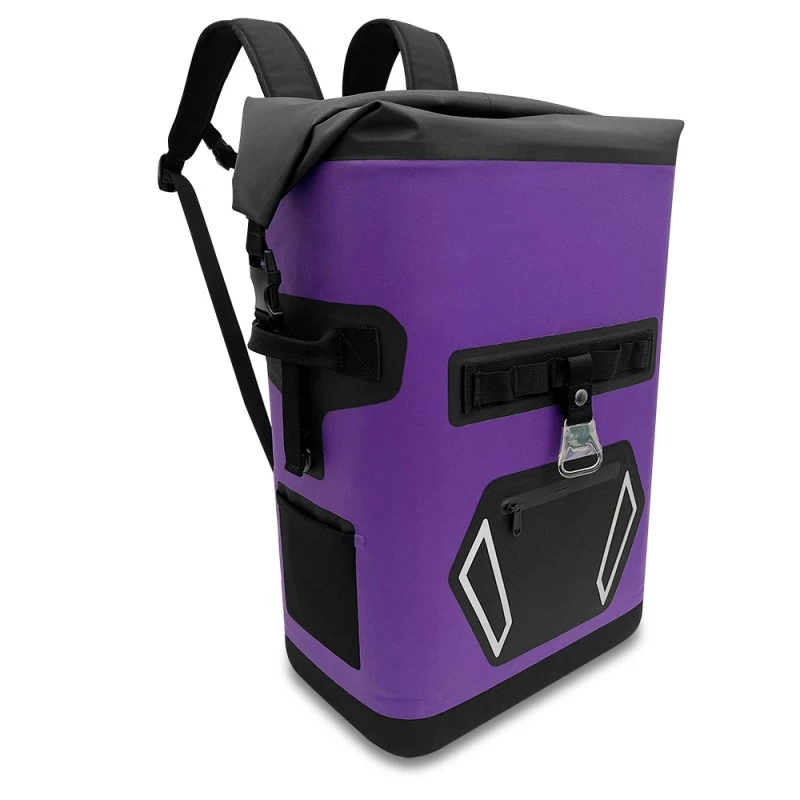
Image Model Shell & build Link
22L IPX7 cooler backpack SL-I280 22L IPX7 Cooler Backpack (SL-I280) 600D TPU, reinforced TPU base, HF welded, IPX7, 50 mm XPE View
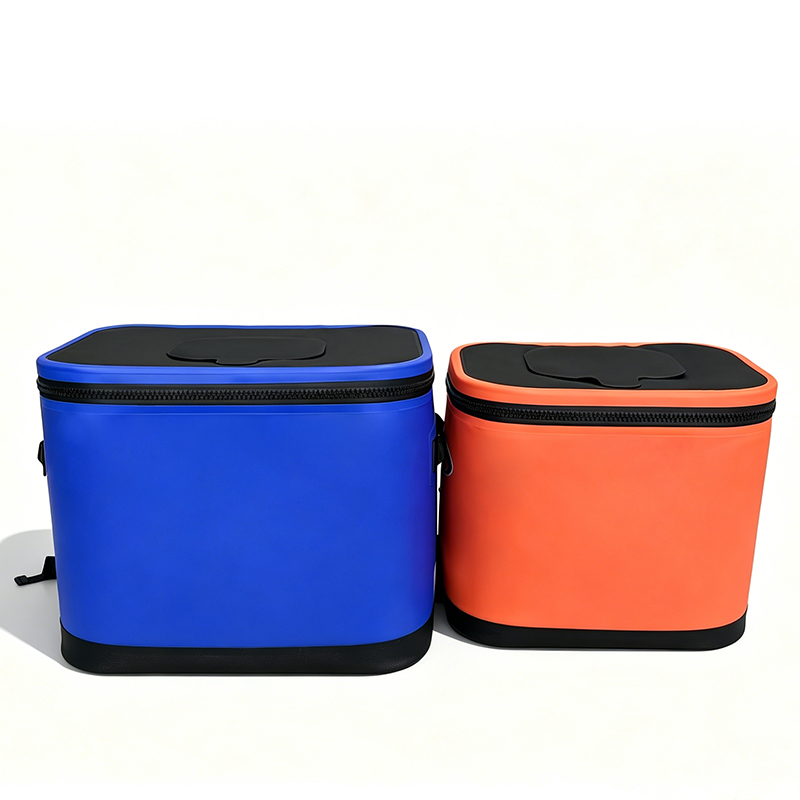
Waterproof Soft Cooler Backpack Waterproof Soft Cooler Backpack Fully welded TPU body, waterproof View
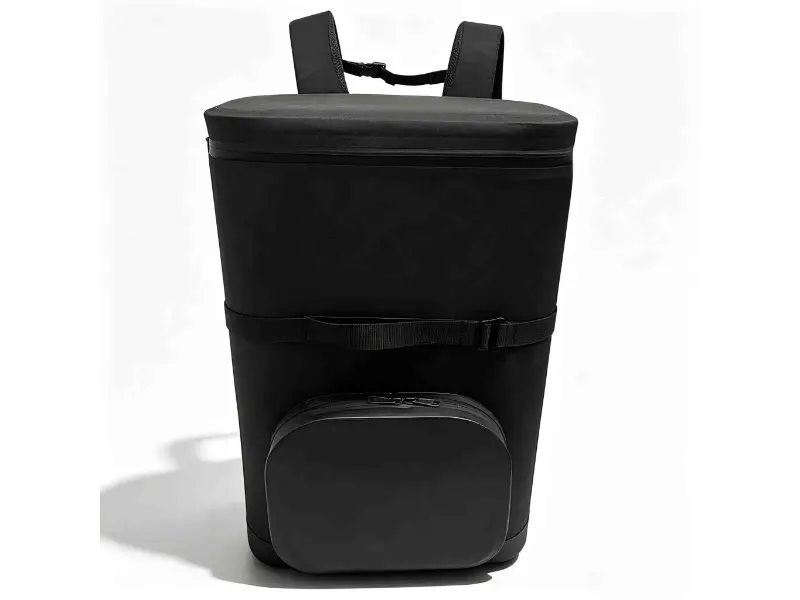
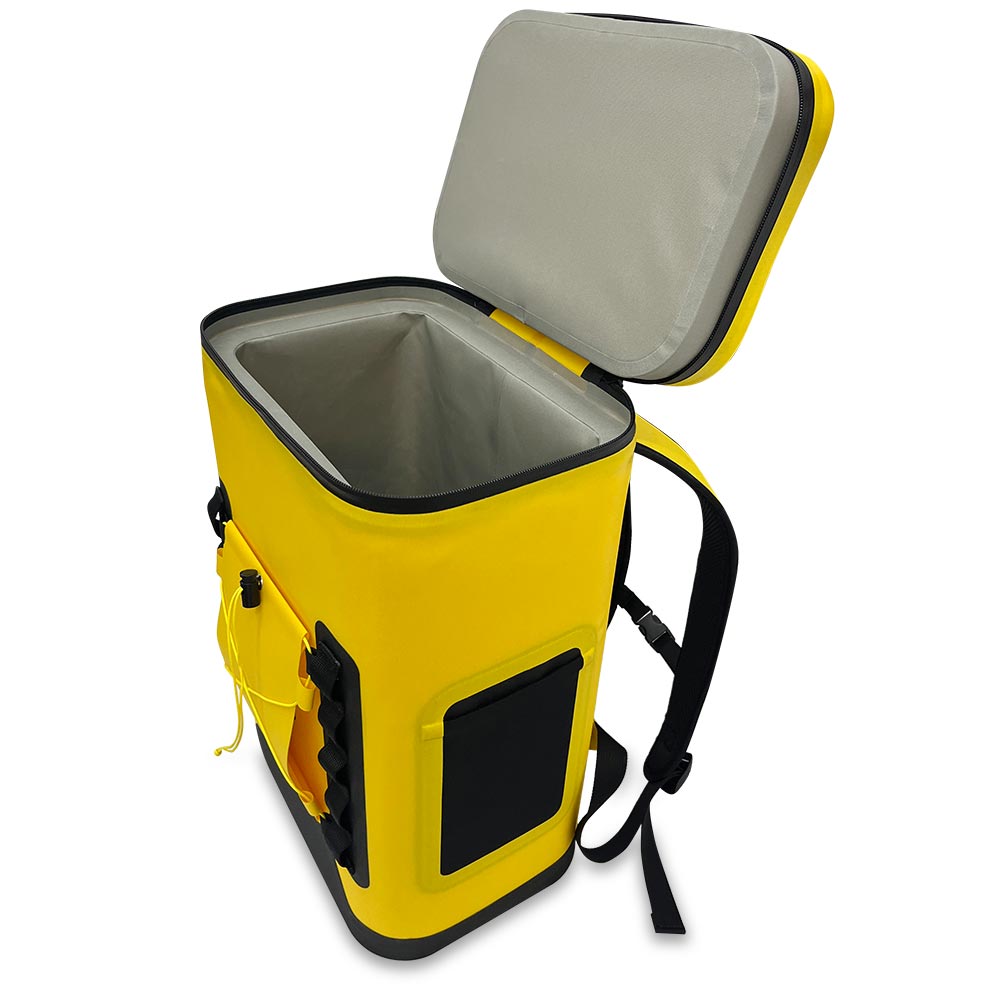
Insulated soft cooler backpack SL-E050B Insulated Cooler Backpack, molded lid (SL-E050B) TPU laminated shell, closed-cell EPE, HF welded, ~24 hr View
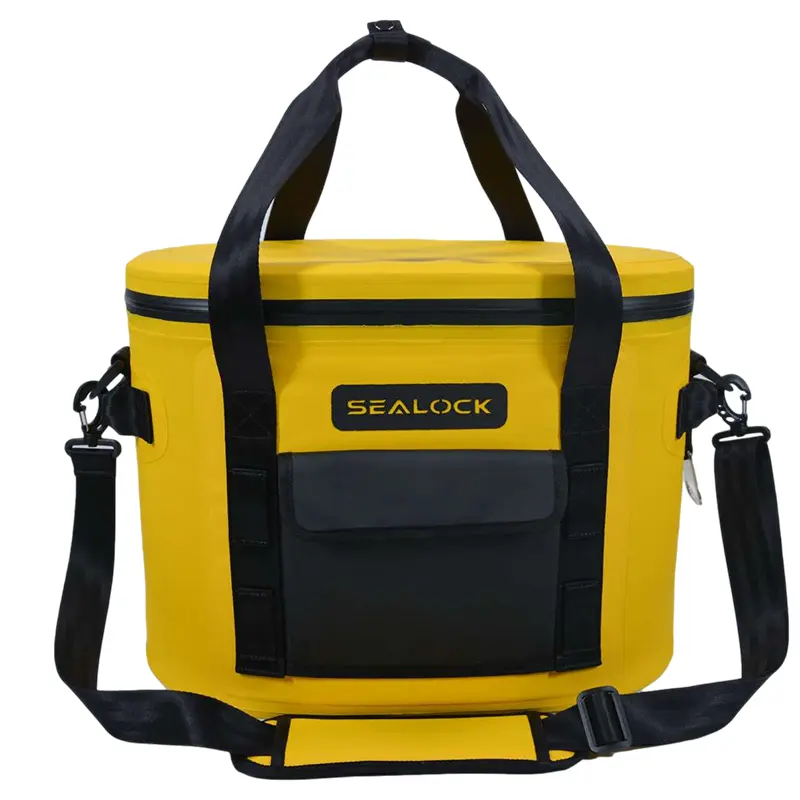
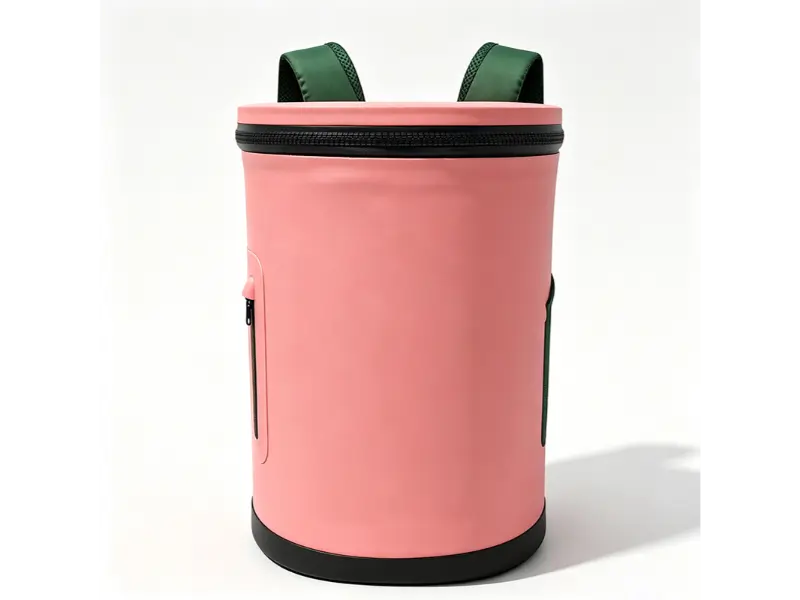
Barrel insulated cooler backpack SL-I309 Barrel Insulated Cooler Backpack (SL-I309) TPU laminated shell, closed-cell EPE, HF welded, ~24–36 hr View
Shell options TPU-laminated 600D / 840D; 1680D reinforcement; PU or PVC where a brief calls for it
Welding 27.12 MHz high-frequency, in-house across three factories
Liner Food-grade TPU or PEVA, welded, tested to destination-market requirements
Validation Full water-immersion batch testing; AQL and gold-sample sign-off; SGS / QIMA available
MOQ / lead time 300 pcs per design; samples 7–15 days; production 30–45 days; FOB Guangdong
Origin China or Vietnam on the same specification
Certifications ISO9001, BSCI, SMETA P4, GRS, HIGG, SCAN

On customisation the material is fully open, and a demanding brief is welcome: beyond colour and logo, Sealock develops ground-up from a sketch, sample or performance target — specifying the shell chemistry, denier, lamination and finish alongside insulation tier, seal rating, pattern and hardware to hit a stated goal, then proving it with immersion and cold-hold testing. Complex forms, premium insulation up to VIP vacuum panels and aerogel, IPX6–IPX8 welded seal levels and strict compliance targets are all in scope. Ground-up work runs longer at sampling, so book against a launch date. See OEM Soft Cooler Backpacks: What You Can Customize Beyond Logo & Color.

Real-shot photos of the cooler bag high-frequency welding production line

FAQ: TPU Cooler Backpacks

Q: Why use TPU instead of PVC for a cooler backpack shell?

A: TPU stays flexible in cold where PVC stiffens and can crack, offers strong abrasion and tear resistance at lower weight, wipes clean thanks to a pore-free surface, and is phthalate-free and recyclable. PVC is cheaper and equally weldable, so it still suits cost-driven builds — but for a premium cooler used in cold and wet conditions, and sold into markets tightening on plasticiser chemistry, TPU is the lower-risk choice.

Q: Is TPU food-safe?

A: TPU generally contains no BPA or phthalates and needs no toxic plasticisers, and many TPU formulations meet stringent safety standards including FDA approval, which is why food-grade TPU is used for cooler liners. The correct approach is still to specify a food-grade liner and obtain migration test data for your destination market rather than relying on the material name alone.

Q: What is the difference between polyester and polyether TPU?

A: It is the soft segment of the polymer. Polyester TPU has higher tensile strength and better abrasion, oil and chemical resistance, but its ester bonds hydrolyse in hot, humid conditions, so it can crack and crumble over time when kept wet. Polyether TPU resists hydrolysis and performs better in cold, at slightly lower mechanical strength and higher cost. Since a cooler lives wet, the moisture exposure deserves as much weight as the abrasion figures.

Q: Does a TPU cooler bag degrade over time?

A: All coatings age, and the dominant mechanism for TPU is hydrolysis, accelerated by heat, humidity and mechanical stress. Grade choice is the main defence — hydrolysis-resistant polyether or polycarbonate chemistries, or polyester with hydrolysis stabilisers added. Polycarbonate-based grades are cited as lasting 3–5 years even in very humid or harsh conditions. Storing a cooler dry and unfolded meaningfully extends its life.

Q: Does the shell material affect whether the bag can be welded?

A: Decisively. High-frequency welding only works on polar thermoplastics such as TPU, PVC, PU and coated nylons; polyethylene and polypropylene cannot generally be RF-welded. A TPU-laminated shell is therefore what makes a seam-free, needle-hole-free cooler body possible — a non-weldable shell forces stitched-and-taped construction, where the tape eventually lifts.

Q: Is TPU worth the higher cost?

A: It depends on the product's life. TPU costs more than PVC or PU, but on a cooler used hard over several seasons the durability, cold-weather performance and compliance headroom usually justify it. For a low-price promotional bag, a PU-coated shell may be the more sensible specification — the right answer follows the use case, not the premium.

Specifying a TPU cooler backpack? Sealock (YiFuLong Outdoor Gear Co., Ltd.) manufactures HF-welded cooler backpacks on TPU-laminated shells from its own lines in China and Vietnam, with immersion validation and food-grade liners. Tell the team your use environment, market and target price, and they will recommend the shell grade, denier and construction to match.

Email: info@sealock.com.hk  |  Phone: +86-13632981825  |  Browse the soft cooler range

Material properties, degradation behaviour, service-life figures and regulatory references cited here reflect publicly available materials-industry and technical sources as of mid-2026; performance varies by formulation, grade, construction and conditions of use. Nothing here is regulatory or legal advice — confirm chemical-compliance requirements and test data for your destination market before production.

Related News
Leave me a message
X
We use cookies to offer you a better browsing experience, analyze site traffic and personalize content. By using this site, you agree to our use of cookies.Privacy Policy
RejectAccept