News

Waterproof Cooler Backpacks: How Welded Construction Keeps Water Out

2026-08-04 0 Leave me a message
"Waterproof" is the most overused word in the cooler category and the least defined. It can mean a bag shrugs off a rain shower, or that it survives a full dunk when a kayak flips — and those are not the same product. The precise language exists: the IPX rating system, an international standard that states exactly how much water a bag keeps out and under what conditions. This guide decodes what those ratings actually mean, matches them to the way a cooler backpack is really used, and explains why welded construction is what makes any of them achievable. Sealock (YiFuLong Outdoor Gear Co., Ltd.) builds welded, IPX-rated cooler backpacks, and rates them by test rather than by adjective.


What "Waterproof" Actually Means: The IPX System

The rating behind a credible waterproof claim is not marketing — it is a defined standard. As the testing literature explains, the Ingress Protection (IP) rating system, codified under international standard IEC 60529, establishes a structured methodology for classifying the degree of protection an enclosure provides against solid particles and liquid ingress. On a cooler you usually see the "X" form — IPX6, IPX7, IPX8 — where the X simply means the dust rating was not separately assessed, and the number is the water level.

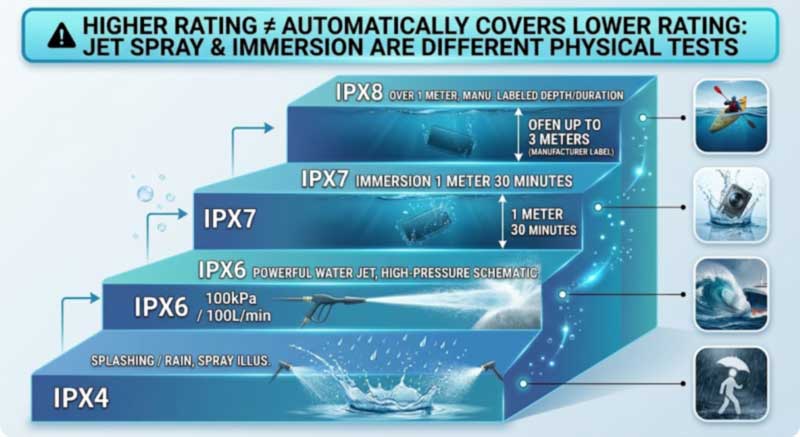
The single most important thing a buyer can understand is that the levels are not a simple ladder where higher always includes lower. The standard is explicit on this: achieving a higher rating such as IPX8 does not automatically subsume the requirements of lower ratings like IPX5 or IPX6, because these tests simulate fundamentally different physical phenomena — pressure-driven water jets versus static hydrostatic pressure — and often require separate validation. In other words, a bag rated for submersion has not necessarily been proven against a high-pressure jet, and vice versa. Two different threats, two different tests.

What each level is really testing

The distinction between the levels maps to a real difference in physics. As one standards guide frames it, the difference between IPX3, IPX4, IPX5 and IPX6 is not merely incremental but reflects fundamentally different physical stress scenarios — and the same is true climbing into immersion. The actual test parameters:

Rating Test (per IEC 60529) Real-world equivalent
IPX4 Water sprayed from all directions, ~10 L/min for at least 5 minutes at low pressure — splashing, not jets Rain, splashes
IPX6 Powerful water jets, 3 minutes at ~100 kPa, 100 litres per minute Heavy spray, wash-down, boat deck spray
IPX7 Immersion at 1 metre depth for 30 minutes Temporary submersion, accidental drop in water
IPX8 Immersion deeper than 1 metre, for a duration and depth specified by the manufacturer — commonly up to 3 metres Continuous / repeated submersion, kayaking

Two details worth knowing about the immersion tests, because they define the promise precisely. IPX7's one-metre figure is not arbitrary — it corresponds to the hydrostatic pressure of one metre of water column, about 9.8 kPa, the level encountered during brief submersion incidents, and the standard requires the device to be positioned in its most vulnerable orientation, with the lowest point submerged first. And IPX8 is only as meaningful as its stated numbers: an IPX8 rating is contingent on the manufacturer's precise declaration of test depth and duration — "IPX8" with no depth and time attached is an incomplete claim.

IPX rating ladder IPX4 to IPX8 for cooler backpacks with test parameters and matching real-world use scenarios

Matching the Rating to How the Bag Is Used

The right rating is not the highest one — it is the one that matches the water the bag will actually meet. Over-specifying costs money for protection the use never calls on; under-specifying produces a wet failure and a return. A practical map for cooler backpacks:

  • Picnics, commuting, day hikes in fair weather — the threat is rain and splashes. IPX4-class resistance covers it, and the real job of the build is leakproofing the meltwater inside, not repelling submersion outside.
  • Beach, poolside, wash-down, open boat decks — the threat is heavy spray and jets. This is IPX6 territory, and it is a genuinely different test from immersion.
  • Fishing, paddling, anything that might be dropped in — the threat is temporary submersion. IPX7 is the target: proven to survive a metre for half an hour.
  • Kayaking, rafting, repeated or prolonged submersion — the threat is sustained immersion, sometimes deep. This calls for IPX8 with a stated depth and duration.

Because jet resistance and immersion resistance are separately validated, a cooler used on a boat — which faces both deck spray and the risk of going overboard — ideally addresses both threats in its specification, rather than assuming a single high number covers everything.

Why Welded Construction Is What Delivers the Rating

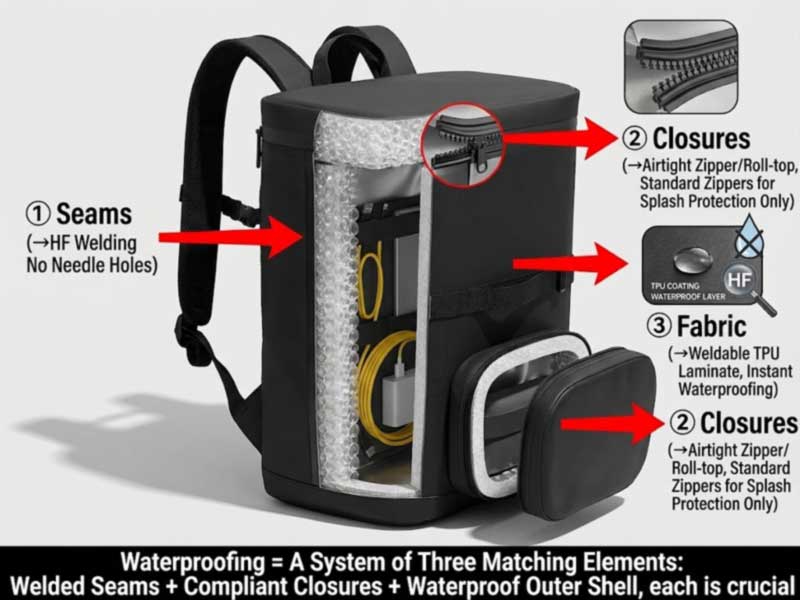
An IPX rating is a claim about the whole enclosure, and an enclosure is only as waterproof as its weakest opening. There are three ways water gets into a cooler from outside — through the seams, through the closure, and through the fabric — and welded construction is what closes the first of them completely.

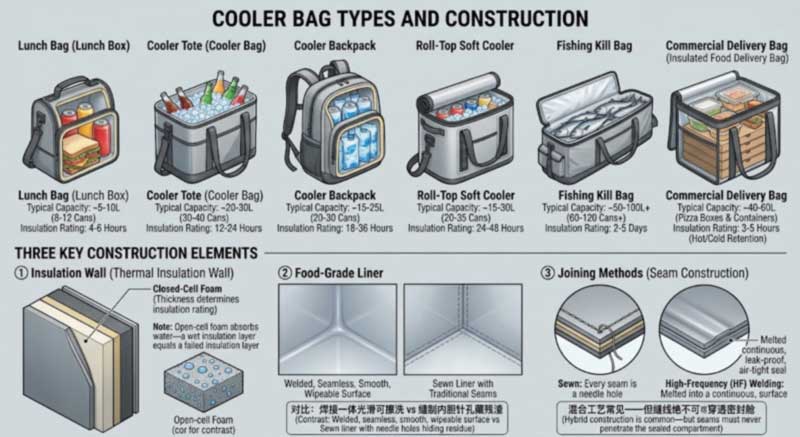
A stitched seam cannot hold an immersion rating for long, because every stitch is a needle hole and the tape over it ages. High-frequency welding fuses the TPU-laminated panels into one continuous skin with no holes to seal — which is why immersion-rated coolers are welded rather than sewn. The welding engineering is covered in depth in Waterproof Cooler Backpack Manufacturer: HF-Welded, Seam-Free Builds, and the quality control that keeps welds consistent in RF-Welded Cooler Backpack Manufacturer: Seamless Waterproof Construction.

The other two paths have to match. The closure sets the ceiling on the rating — a standard zipper caps a bag at splash resistance no matter how well the body is welded, while an airtight or submersible zipper, or a welded roll-top, is what lets a bag reach IPX7 or IPX8. And the fabric has to be a weldable, inherently waterproof TPU laminate in the first place, which is what makes both the welding and the waterproofing possible; see TPU Cooler Backpack Manufacturer: Why the Shell Material Matters. A waterproof cooler is a system of three matched decisions — welded seams, a rated closure, and a waterproof shell — not a single feature.

Waterproof out vs leakproof in: keeping outside water out (IPX ingress) and keeping meltwater in (leakproof containment) are related but not identical, and a good cooler needs both. A welded body with an airtight closure delivers them together, but they are validated differently — ingress by the IPX test, containment by holding meltwater in every orientation. The containment side is covered in Leakproof Cooler Backpack Manufacturer: Welded vs Stitched Seams.


What the IPX Number Does Not Tell You

A straight manufacturer is honest about the limits of the rating, because a buyer who over-trusts a number is a buyer who gets a surprise. The testing literature is candid: IPX ratings are tested in laboratory conditions, not real-world scenarios; they do not account for water-pressure changes with depth; salt water can be more damaging than fresh; and physical damage can compromise water resistance over time.

Each of those matters for a cooler specifically. Lab conditions use controlled clean water at a set temperature; a real boat deck adds salt, grit and UV. The rating is a snapshot of a new bag; abrasion, a punctured shell or a worn zipper degrades it. And a rating is static — it does not describe how the bag behaves when it is dropped loaded, or dragged over rock. This is why an IPX rating should sit alongside real-world validation, not replace it: Sealock immersion-tests finished bags rather than relying on a component certificate, so the rating reflects the assembled product. For hard-use durability specifically, see Heavy-Duty Cooler Backpack Supplier: Built for Abrasion & Overload.

How to read a waterproof claim without being fooled: ask for the IPX rating with its parameters (an IPX8 claim needs a stated depth and time); confirm whether jet resistance and immersion resistance were both tested if the use needs both; check that the closure matches the rating (a standard zipper cannot deliver IPX7); and ask whether the finished bag is immersion-tested or only the fabric is certified. "Waterproof" with none of these behind it is a word, not a specification.


Sealock's Waterproof Cooler Backpacks

Sealock welds insulated cooler bags at 27.12 MHz across three factories in Dongguan, China and Ho Chi Minh City, Vietnam, and validates sealed builds by full water immersion. Real IPX-rated builds, chosen by fit rather than rank:

Image Model Rating & closure Suited to Link
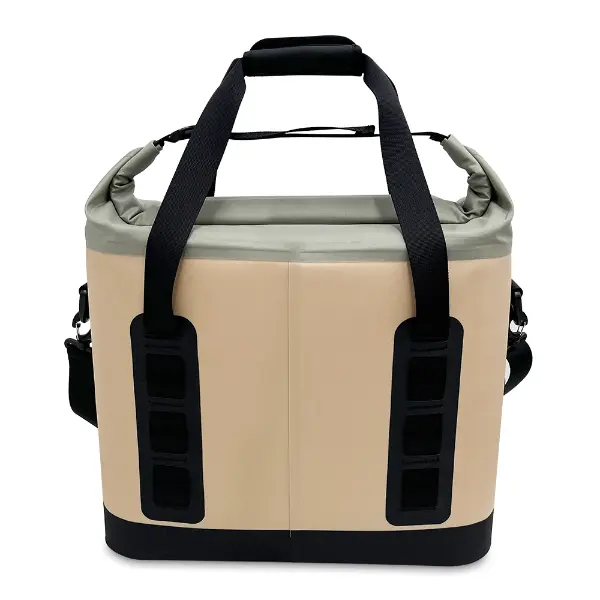
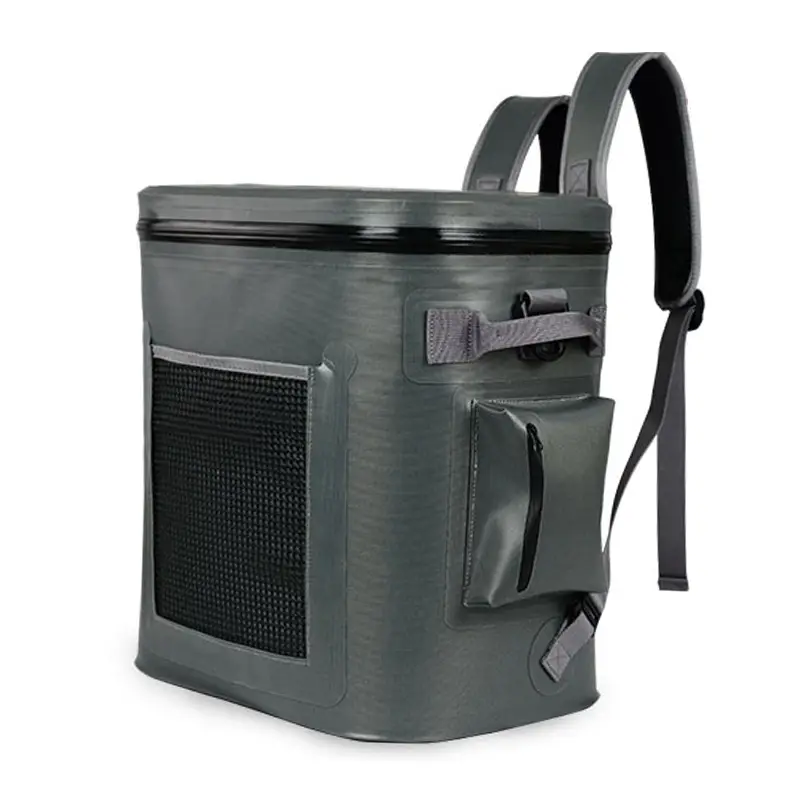
22L IPX7 cooler backpack SL-I280 22L IPX7 Cooler Backpack (SL-I280) IPX7, airtight welded zipper Fishing, paddling, drop-in risk View
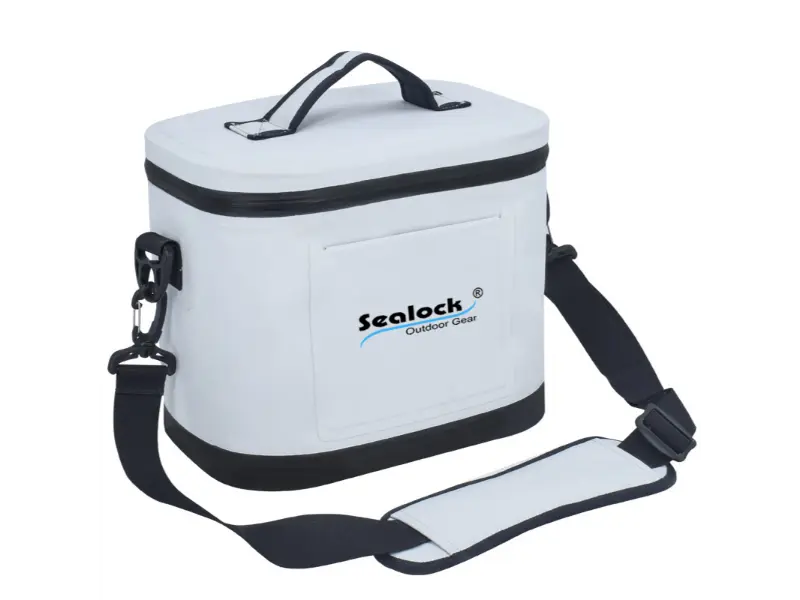
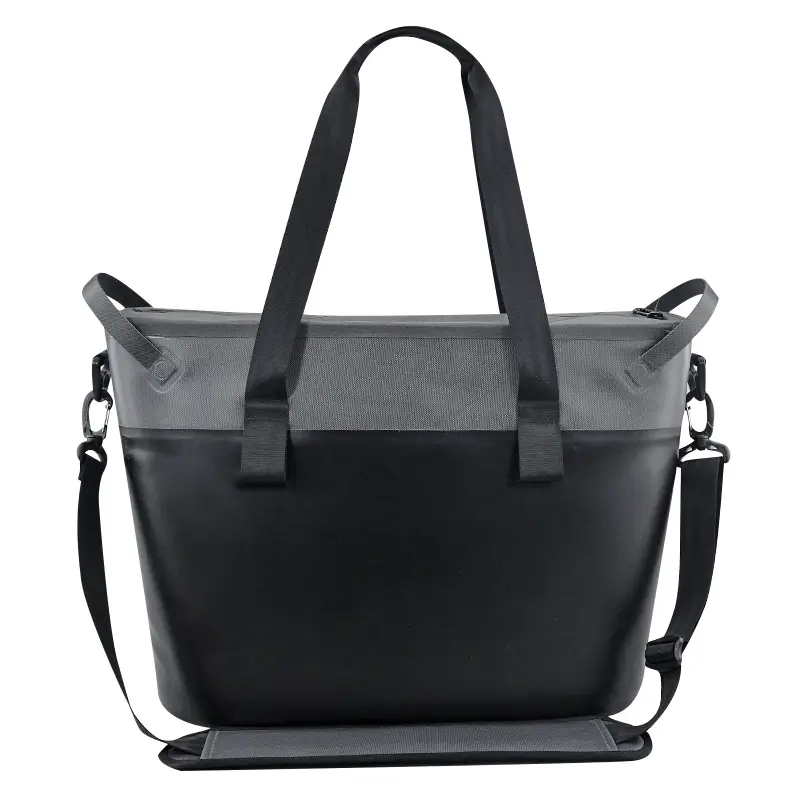
RF-welded IPX8 cooler tote RF-welded IPX8 Cooler Tote IPX8, 100% seamless RF welded Continuous immersion, marine View
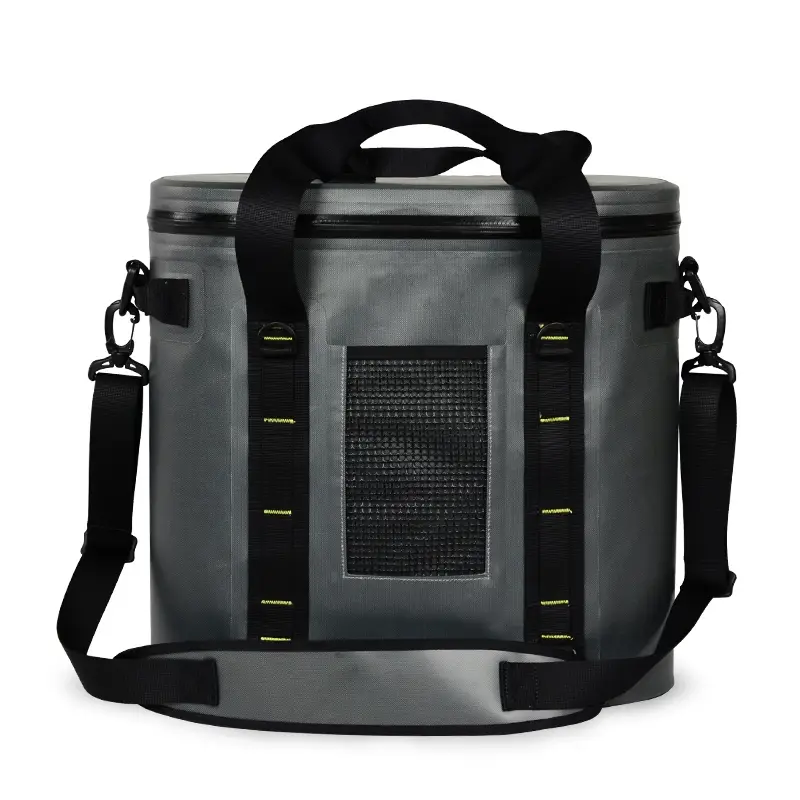
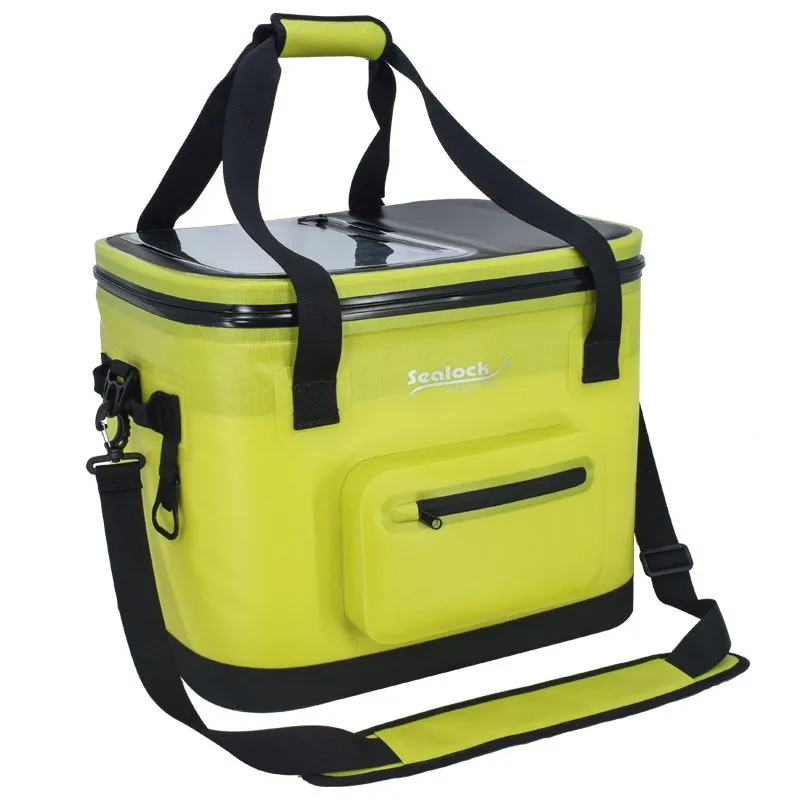
Roll-top leakproof soft cooler SL-I288 Roll-Top Leakproof Soft Cooler (SL-I288) Welded roll-top, airtight zip pocket Paddling, boating, wet transport View
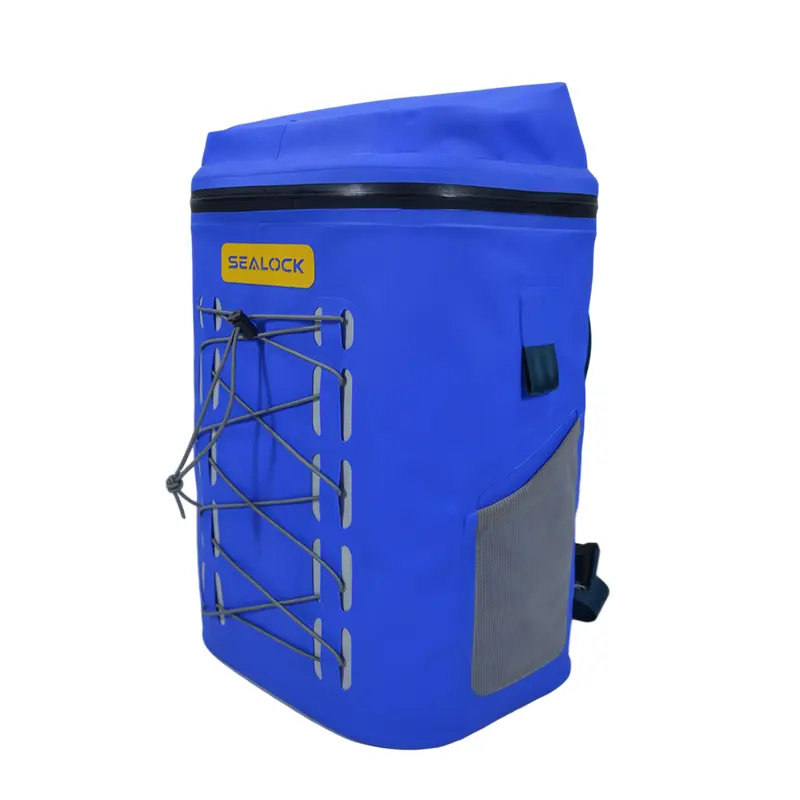
12-20L TPU waterproof soft cooler SL-I032 Waterproof Soft Cooler 12/15/20L (SL-I032) IPX7, airtight zipper, three sizes General waterproof day use View

Each is rated by the test it actually passes, with the closure matched to the level — an airtight welded zipper for the immersion-rated packs, a welded roll-top on the SL-I288 where the main opening has no zipper channel at all.

three water ingress paths into a cooler backpack — seams, closure, fabric — and how welding, a rated zipper and TPU address each

OEM & ODM: Built to a Target Rating

Water resistance is a specification, and a demanding one is welcome. Beyond colour and logo, Sealock develops ground-up from a sketch, sample or target IPX rating: the seal level (IPX6 jet resistance, IPX7 temporary immersion, IPX8 continuous immersion), the closure that delivers it, the weldable shell and the seam architecture are all engineered to the brief, then proven by immersion testing on the finished bag before production. Complex welded structures, premium insulation tiers and strict compliance targets are all in scope — a hard brief is what an in-house welding and development team is for. Ground-up work runs longer at sampling, so book against a launch. See OEM Soft Cooler Backpacks: What You Can Customize Beyond Logo & Color.

FAQ: Waterproof Cooler Backpacks

Q: What does IPX7 mean on a cooler backpack?

A: Under IEC 60529, IPX7 means the bag has been tested against immersion at one metre depth for 30 minutes, positioned with its most vulnerable point submerged first. It is the first level that offers true temporary-submersion protection — suitable for fishing, paddling and accidental drops — but it is a temporary-immersion test, not proof against high-pressure jets or prolonged deep submersion.

Q: Is IPX8 always better than IPX6 or IPX7?

A: Not in the way people assume. A higher immersion rating does not automatically include the lower jet ratings, because jets (IPX6) and static immersion (IPX7/8) are fundamentally different tests. A bag proven for submersion has not necessarily been validated against a powerful spray. For uses that face both — a boat deck, for instance — look for both threats addressed, not just the biggest single number.

Q: Does "IPX8" alone tell me how deep the bag is waterproof?

A: No. IPX8 is defined by the manufacturer's declared depth and duration, so the rating is only complete with those figures attached. "IPX8" with no stated depth and time is an incomplete claim — ask for the tested depth and duration before relying on it.

Q: Why does a waterproof cooler have to be welded?

A: Because seams are the first place water gets in. Stitched seams have needle holes that only seam tape covers, and tape ages; high-frequency welding fuses the panels into a continuous skin with no holes, which is why immersion-rated coolers are welded. But welding is only one of three matched requirements — the closure and the shell fabric have to match the target rating too.

Q: Can a cooler backpack with a normal zipper be waterproof?

A: Only to splash level. A standard zipper caps the bag's rating regardless of how well the body is welded — reaching IPX7 or IPX8 needs an airtight or submersible zipper, or a welded roll-top with no zipper channel. The closure sets the ceiling on how waterproof the whole bag can be.

Q: Does an IPX rating guarantee my cooler will stay waterproof?

A: It is a lab snapshot of a new bag, not a lifetime guarantee. Ratings are tested in clean water under controlled conditions and do not account for salt water, pressure changes with depth, or physical damage over time. That is why a finished-bag immersion test and rugged construction matter alongside the rating — and why storing and handling the bag well preserves the waterproofing it was rated for.

Sourcing waterproof cooler backpacks? Sealock (YiFuLong Outdoor Gear Co., Ltd.) welds IPX6, IPX7 and IPX8 cooler backpacks at 27.12 MHz in China and Vietnam, rated by immersion testing of the finished bag rather than by adjective. Tell the team the water your product will meet, and they will spec the seal level, closure and shell to match — and prove it.

Email: info@sealock.com.hk  |  Phone: +86-13632981825  |  Browse the soft cooler range

IPX definitions and test parameters cited here reflect the IEC 60529 standard and publicly available testing sources as of mid-2026; exact pass criteria depend on the accredited test performed, and IPX8 parameters are set by the manufacturer. Ratings describe laboratory tests on new products and do not guarantee performance after wear or in salt water. Confirm the tested rating and parameters for a specific product before relying on them.

Related News
Leave me a message
X
We use cookies to offer you a better browsing experience, analyze site traffic and personalize content. By using this site, you agree to our use of cookies.Privacy Policy
RejectAccept