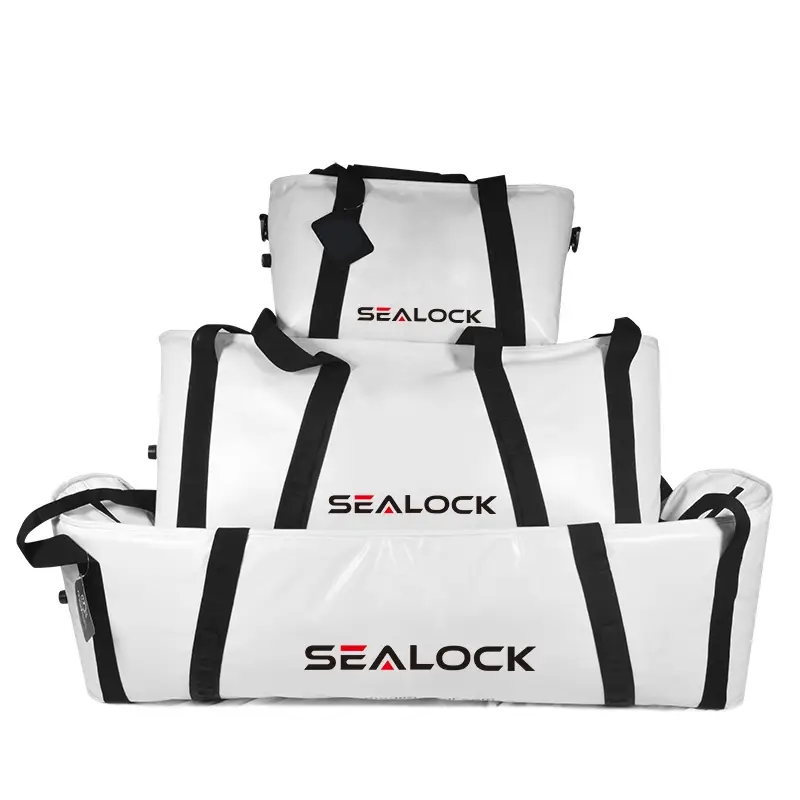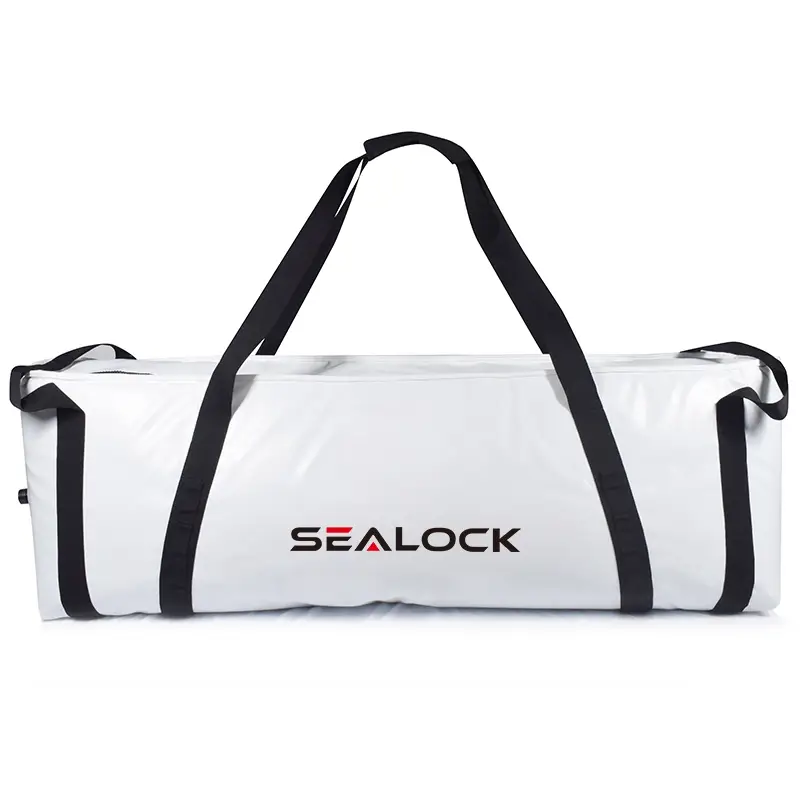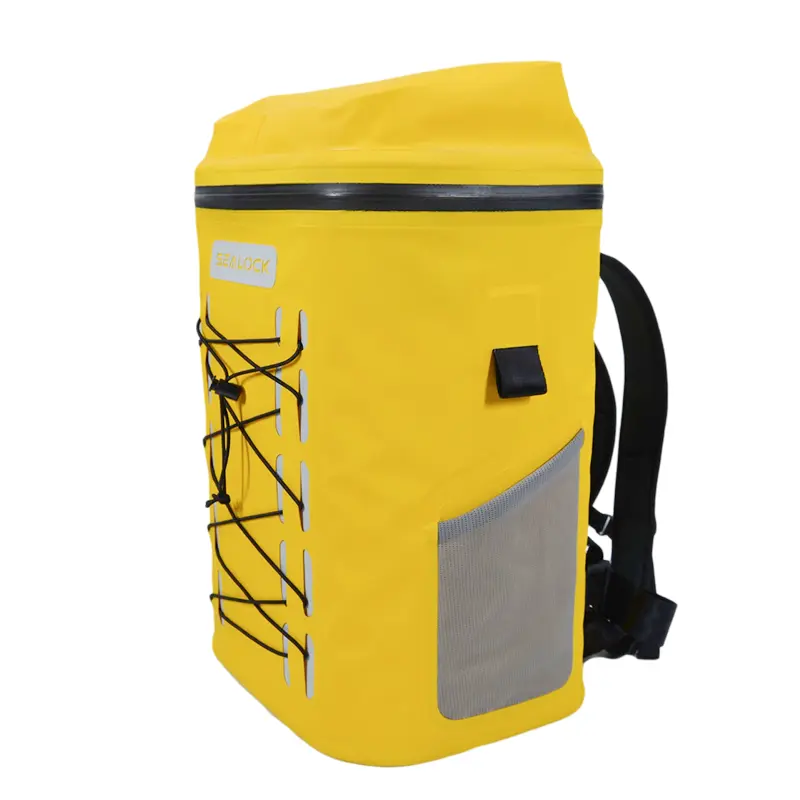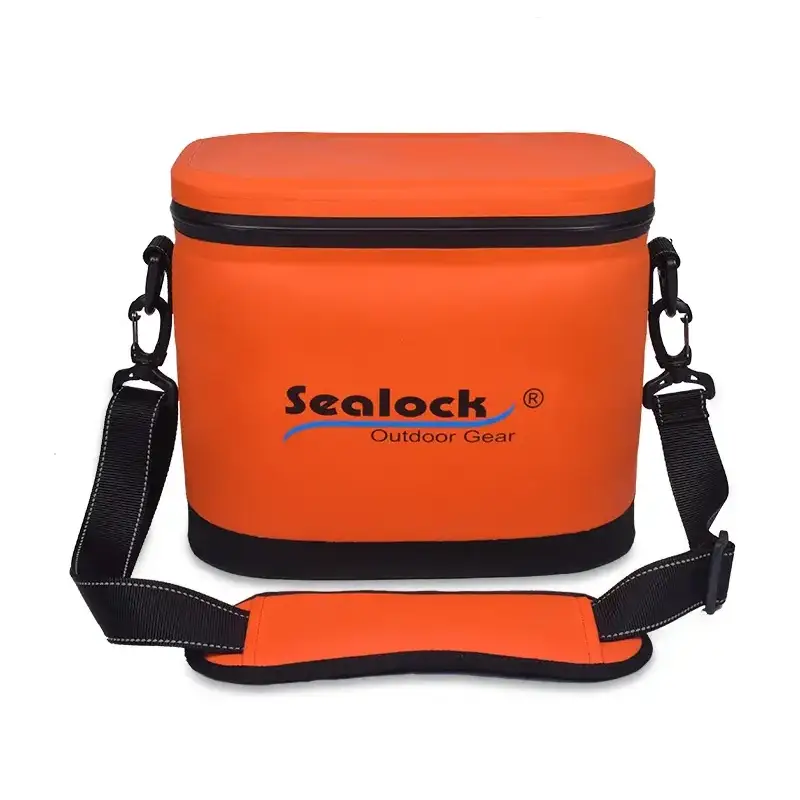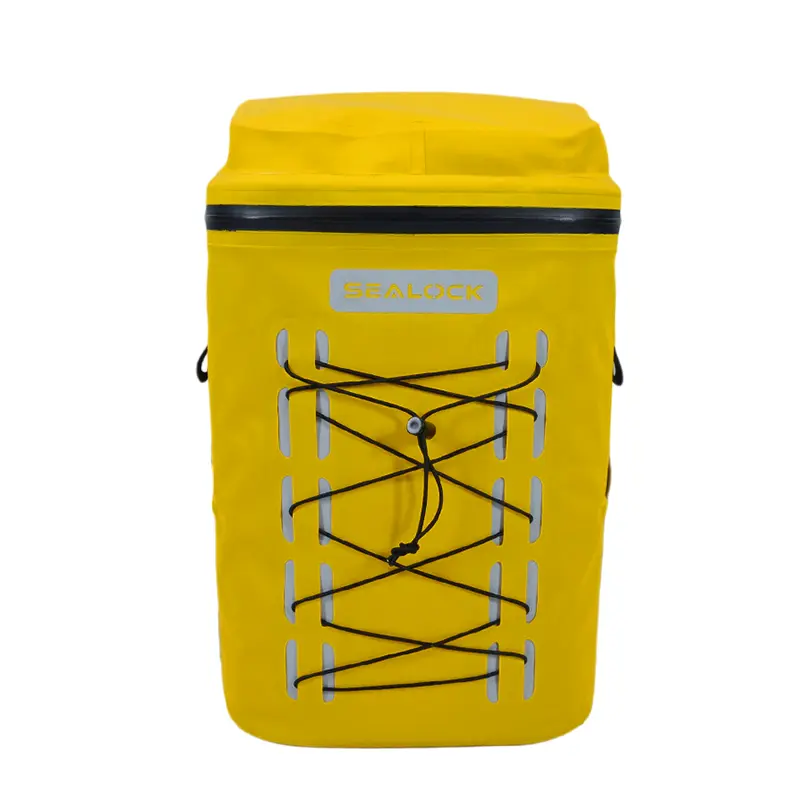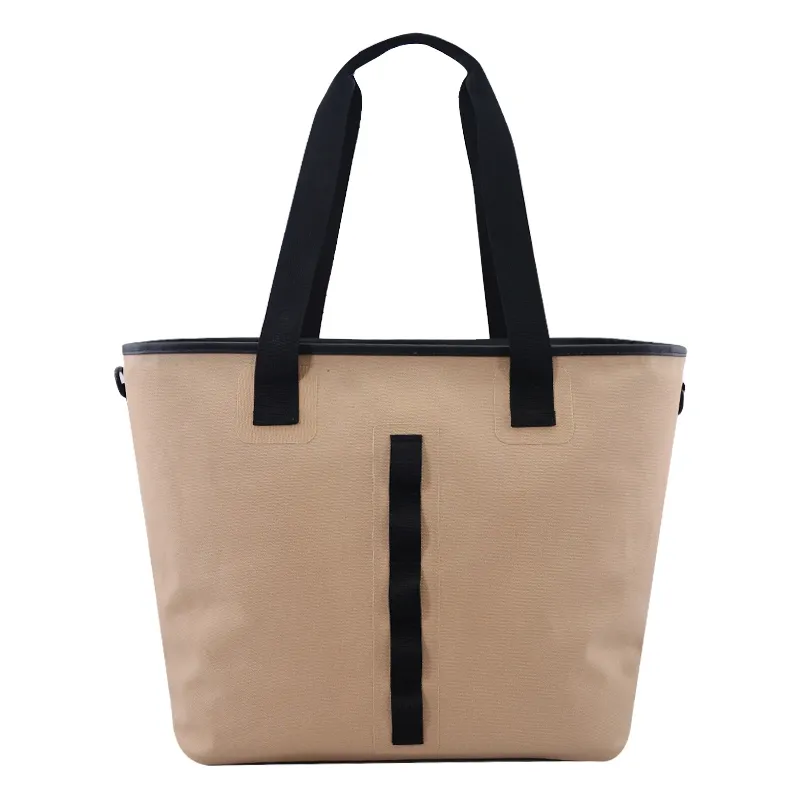
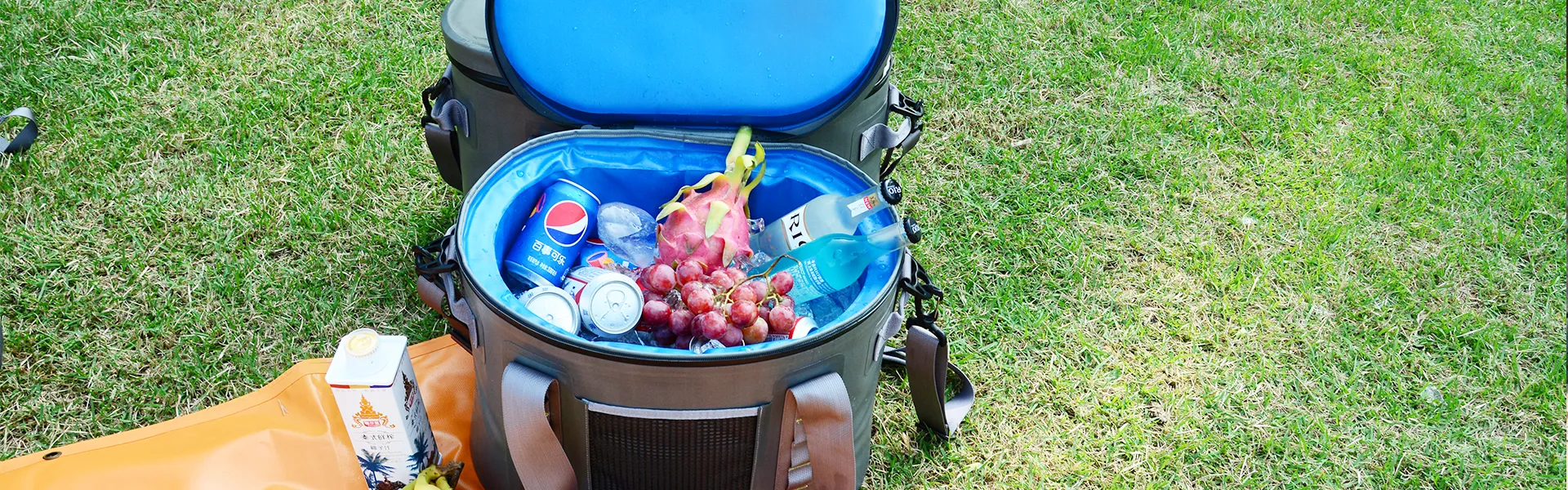
A $200 Wagyu beef delivery that arrives spoiled doesn't just cost $200. It costs the refund, the customer service time, the review, and a meaningful fraction of that customer's lifetime value. At scale, across a fleet using inadequate bags through a July heat wave, the operational impact is measurable in the kind of numbers that get supply chain directors into difficult conversations with their CFO.
This article works through three specific failure scenarios that standard commercial cooler bags produce in real delivery conditions, and explains what the construction needs to look like to avoid each one.
Scenario 1: The Extended Porch Hold — Where Standard Insulation Fails
A delivery driver drops a premium seafood meal kit on a customer's front porch at noon in July. The customer won't be home until 3 PM. The outdoor temperature is 100°F (38°C), and the porch is fully sun-exposed. The bag was issued by the company: standard stitched construction, open-cell foam liner, aluminum foil facing.
Within 45 minutes, the ice packs have melted. Within 90 minutes, the internal temperature has crossed the 40°F (4.4°C) food safety threshold. By the time the customer opens the bag, the seafood has been in the danger zone for over an hour. The company issues a refund, receives a one-star review, and loses a customer who was spending $150 per week on the service.
This isn't an edge case. It's a predictable outcome of using open-cell foam insulation in summer delivery conditions, and it happens across the fleet every day temperatures exceed 90°F.
The Insulation Physics
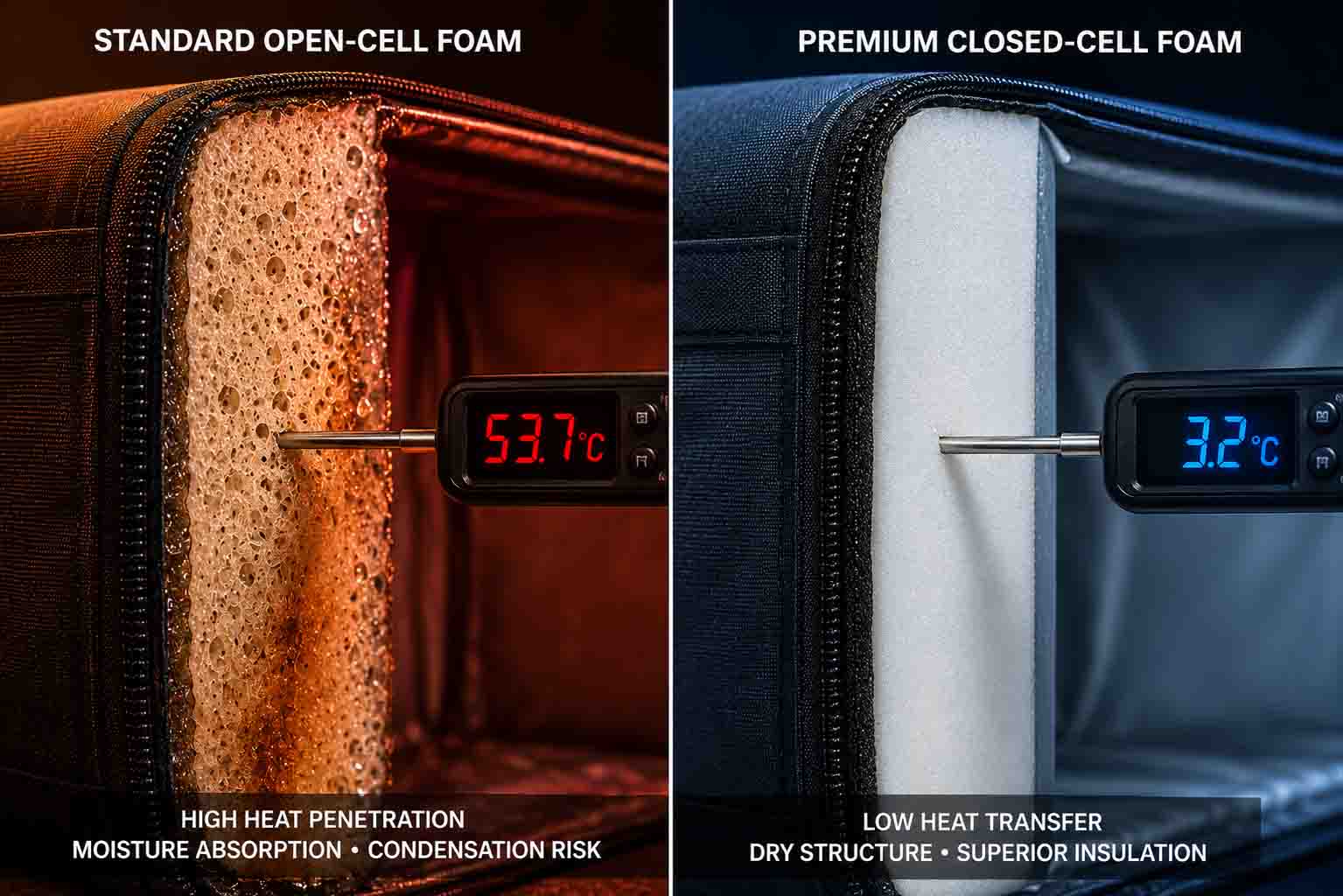
Open-cell foam has an interconnected internal structure. Air—and heat—moves through it. The thermal resistance it provides is modest and degrades further when the foam absorbs moisture from condensation, which it inevitably does in a cooler environment. Once the foam is damp, its insulating properties drop sharply because water conducts heat far more efficiently than the air it replaced.
High-density closed-cell foam works on a different physical principle. Each gas bubble in the foam is fully sealed from its neighbors—there's no pathway for convective heat transfer through the material. The trapped gas stays trapped, and the thermal resistance it provides doesn't degrade with moisture because the sealed cell structure physically prevents water absorption. A bag built with properly specified closed-cell foam and an airtight shell maintains internal temperatures well below the food safety threshold for 48 to 72 hours under sustained ambient heat—not because the ice packs last that long, but because the rate of heat ingress is slow enough that the thermal mass of the payload and ice holds the temperature.
The specific foam density and thickness needed to meet a defined temperature hold window under a defined ambient condition is an engineering calculation, not a catalog selection. For operations running deliveries in Phoenix in August versus Seattle in October, the specifications are different. A manufacturer with genuine insulation engineering capability will size these parameters against your actual delivery scenario, not a generic spec sheet.
Scenario 2: The Seam Leak — Cross-Contamination as an Operational Liability
Melted ice and condensation are facts of life in insulated delivery bags. The question isn't whether water will pool inside the bag during a long shift—it will. The question is where it goes from there.
In stitched bag construction, the answer is through the seams. Every needle pass through a waterproof liner creates a perforation. A typical bottom seam might have several hundred of these perforations per meter. Seam tape covers them initially, but tape adhesion degrades with repeated flex cycles and exposure to standing water. Once tape bond edges lift, the perforations underneath become active leak pathways.
For a bag carrying raw seafood, raw meat, or marinated meal kit components, the liquid that finds those pathways carries biological material with it. That liquid leaks onto the customer's floor, into the driver's vehicle upholstery, or both. The hygiene implications are significant. The liability implications—in an industry already subject to food safety regulation—are more significant. And the customer who watches bloody water drain onto their kitchen floor from a premium food delivery service is not going to reorder.
Why RF Welding Is the Only Structural Solution
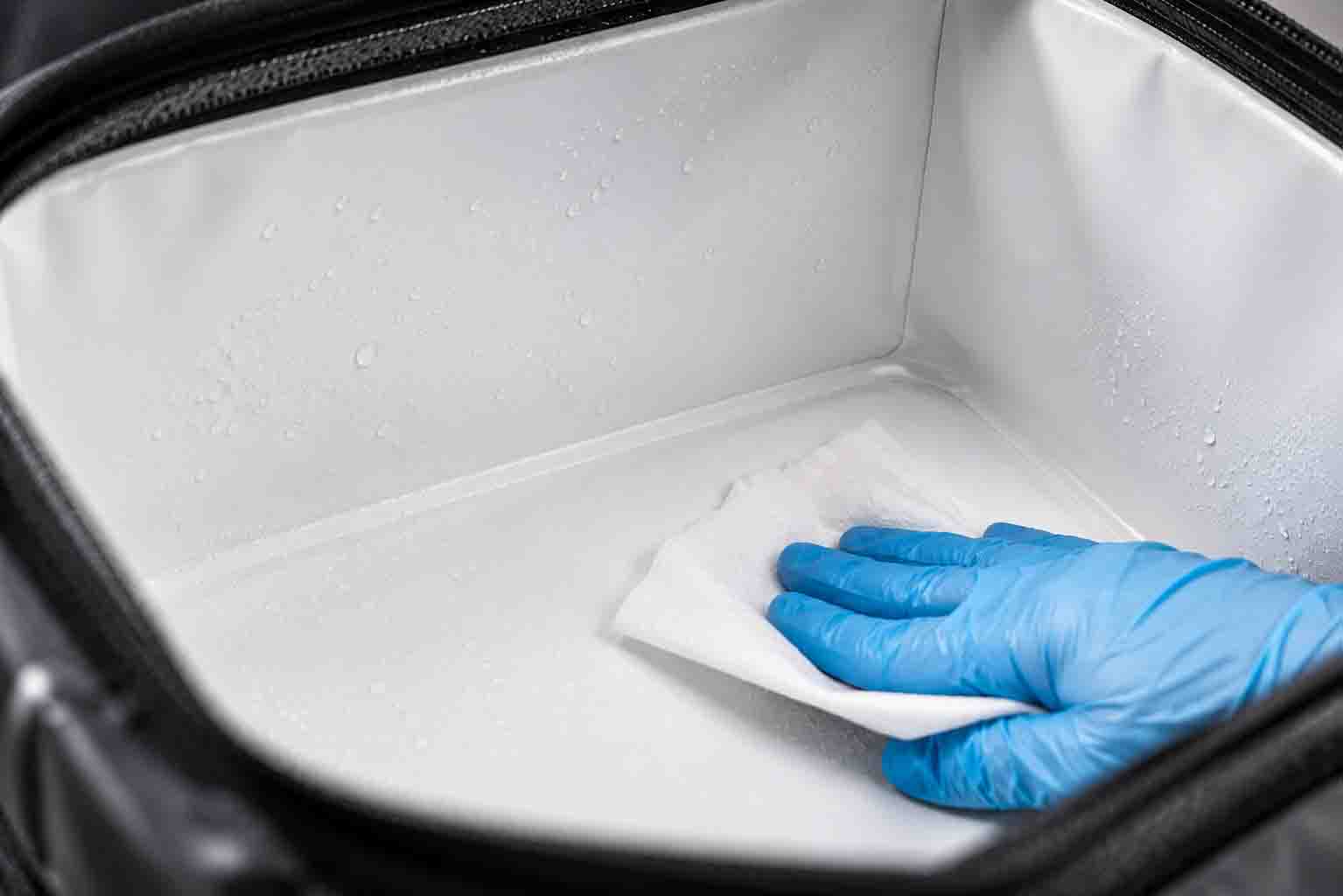
Seam tape addresses the symptom. RF welding eliminates the cause. When TPU liner panels are joined using 27.12 MHz high-frequency welding, the electromagnetic field generates heat inside the material at the join interface. Under controlled pneumatic pressure, the two panels fuse at the molecular level. The result isn't a seam covered by tape—it's a continuous piece of material with no join at all in the functional sense. No needle holes, no tape edges, no structural discontinuity where water can find a pathway.
The interior of an RF welded delivery bag is effectively a watertight basin. Melted ice water, condensation, and spilled liquids pool in the bottom of the liner and stay there until the bag is emptied and wiped out. Nothing migrates through the liner into the insulation foam, which means the foam stays dry, maintains its thermal resistance, and doesn't become a mold environment. The smooth, non-porous TPU surface can be sanitized with commercial cleaning agents between shifts in the time it takes to wipe it down—no seam crevices for bacterial growth to establish, no compromised tape edges that need inspection before the next delivery run.
For operations managing driver fleet hygiene at scale, the difference between a bag that requires detailed inspection and spot seam tape replacement versus one that can be wiped clean and turned around in two minutes is a real operational variable, not just a product quality distinction.
Scenario 3: Fleet Depreciation — When Cheap Bags Become an Operational Budget Problem
Commercial delivery backpacks don't live a gentle life. They get loaded to the weight limit with glass bottles and heavy produce, dropped onto concrete loading docks, dragged across sidewalks when drivers are running behind schedule, tossed into car trunks at the end of shifts, and run through this cycle six days a week. Procurement decisions made on unit cost alone tend to produce fleets that need full replacement every three to four months—which, when the full cycle is calculated, often costs more than a more durable bag would have at twice the initial unit price.
The specific failure modes of standard PVC delivery bags under commercial use are predictable. PVC becomes brittle at low temperatures—relevant for winter delivery operations—and surface cracks begin to develop at fold lines and high-stress areas. PVC coatings delaminate under repeated exposure to cleaning chemicals, which is unavoidable if hygiene standards are being maintained. Zippers on budget bags aren't rated for daily commercial use; once a zipper starts failing, the bag is effectively non-functional regardless of the condition of everything else.
The Materials and Construction for Commercial Fleet Durability
840-Denier TPU-coated nylon is the shell material specification for commercial delivery bags intended to survive genuine fleet use. The 840D denier count provides a base fabric dense enough to resist puncture and tear propagation from the kind of contact commercial bags experience routinely. The TPU coating stays flexible across the full temperature range of commercial operations—including winter conditions where PVC would have already started cracking—and maintains its adhesion to the base fabric through repeated cleaning cycles.
Zipper specification matters as much as shell material for commercial longevity. Watertight zipper systems with rated cycle counts—not just rated submersion depths—are the appropriate specification for bags that will be opened and closed dozens of times per shift for years. The zipper hardware and pull system should be sized for operation with both hands loaded, because that's how delivery drivers actually use them. A zipper that requires two careful hands to align properly will be forced by drivers in a hurry, and forced zippers fail faster than almost anything else on a delivery bag.
The total cost of ownership calculation for commercial delivery bag procurement should run over a 24-month horizon minimum: initial unit cost plus replacement frequency plus the labor cost of fleet management and replacement processing. A bag that costs 60% more per unit but lasts 18 months instead of 4 months is significantly cheaper over two years. That calculation is worth doing explicitly before a procurement decision, not after the third replacement cycle.
The Procurement Decision That Actually Reduces Spoilage Costs
The spoilage economics in premium food delivery are asymmetric in a way that makes the insulated bag specification decision more consequential than its unit cost suggests. A bag failure during a single high-value delivery can cost more in refunds and customer churn than the price difference between a standard bag and a properly engineered one, multiplied across an entire order. At fleet scale, through a summer with sustained heat, the difference between adequate insulation performance and marginal insulation performance shows up in spoilage rate data that operations teams can pull from their refund records.
The three engineering specifications that address the scenarios above—high-density closed-cell foam for thermal performance, RF welded seams for leak containment, and 840D TPU shell for fleet durability—are not independent upgrades. They compound: an RF welded bag with open-cell foam still fails thermally, and a well-insulated bag with stitched seams still leaks. The construction needs to address all three failure modes to reliably avoid the spoilage, contamination, and depreciation costs that drive the true total cost of ownership above what the unit price implies.
When evaluating OEM partners for commercial food delivery bags, the questions that matter: What closed-cell foam density do they specify, and how is that density validated on incoming material batches? Are seams RF welded throughout the liner, including the base, or only on visible exterior panels? What is the rated cycle count on their zipper systems, and how is that tested? Can they produce food-contact compliance documentation for the interior liner material? These questions have straightforward answers if the manufacturer actually builds to the specification they describe.
Frequently Asked Questions
Why do standard stitched delivery bags fail in commercial food delivery conditions?
Two failure modes operate simultaneously. Open-cell foam insulation, which most budget delivery bags use, provides modest thermal resistance that degrades further as the foam absorbs condensation moisture—a process that accelerates in hot ambient conditions. And stitched seam construction creates needle perforations through the liner that seam tape covers temporarily but doesn't seal permanently; once tape bond edges lift under flex stress and moisture exposure, the perforations become active leak pathways for melted ice and food liquids. Neither problem is a manufacturing defect—both are structural outcomes of the construction method and material selection.
How does closed-cell foam maintain food-safe temperatures in summer delivery conditions?
Closed-cell foam's thermal resistance comes from sealed gas bubbles that block convective heat transfer—there's no pathway for air movement through the material, so heat ingress is limited to conduction through the foam matrix, which is slow. Unlike open-cell alternatives, the sealed cell structure prevents moisture absorption, so the thermal resistance doesn't degrade during a delivery shift as condensation accumulates. When paired with an airtight RF welded shell and properly specified phase change materials, a closed-cell foam bag can maintain internal temperatures below the food safety threshold for 48 to 72 hours under sustained ambient heat above 100°F.
How does RF welded TPU compare to standard bags for end-of-shift cleaning?
The difference is operationally significant at fleet scale. RF welded TPU interiors have no seam crevices, no tape edges, and no fold channels where food residue, bacteria, or mold can establish. The smooth, non-porous surface wipes clean with commercial sanitizing solution in under two minutes. Standard stitched bags require inspection of seam tape condition, attention to corners and fold channels where contamination accumulates, and eventual tape replacement as adhesion fails—all of which adds per-bag time and introduces variability in hygiene outcomes across a large driver fleet.