News

Leakproof Cooler Backpacks: Stop Melt-Water Leaks for Good

2026-08-06 0 Leave me a message
A leaking cooler backpack is one of the most annoying failures in outdoor gear — and it is worse on a backpack than on any other cooler format, because the bag is against your back, riding on a car seat, or slung over one shoulder when it tips. The culprit is almost always melt-water: the cooler's own ice, escaping from the inside. The good news is that melt-water leaks are entirely preventable, and it comes down to two things — buying a backpack built to contain water, and using it in ways that keep water where it belongs. This guide covers both. Sealock (YiFuLong Outdoor Gear Co., Ltd.) builds welded leakproof cooler backpacks, and the buying advice here applies to any brand.


Why Cooler Backpacks Leak in the First Place

The source of almost every cooler leak is not rain getting in — it is ice melting inside. The problem is described precisely in a cooler-design patent: as the ice melts, water accumulates inside the cooler and tends to leak through the seams where the cooler is sewn together, or the seams become saturated and themselves provide a path for leakage. A soft cooler that is simply sewn and lined has needle holes down every seam, and melt-water finds them — especially at the bottom, where the water pools and the weight is greatest.

A backpack format adds two pressures a tote does not. First, it is worn: a leak does not just make a puddle, it soaks a shirt. Second, it gets set down, leaned over and packed into car boots on its side far more often than a tote gets tipped — so the ability to stay sealed in any orientation matters more, not less.

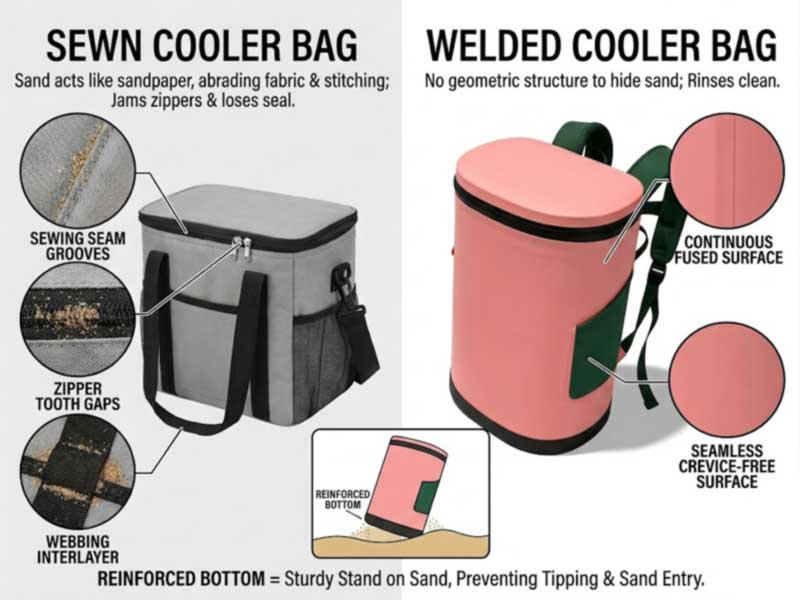
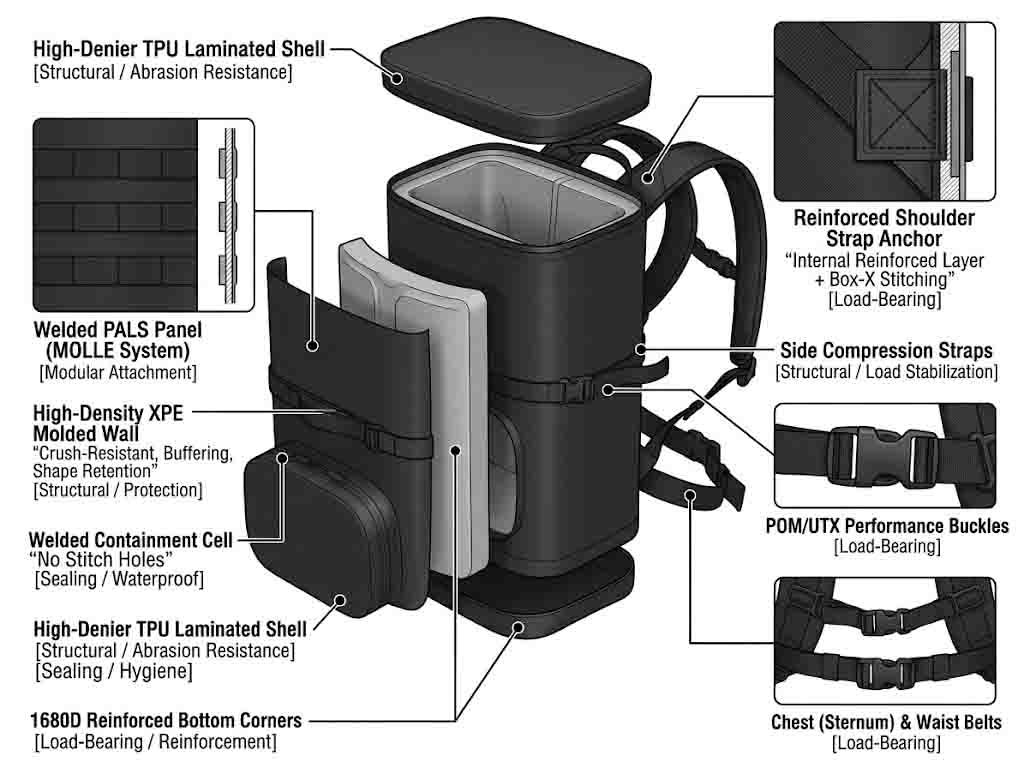
That is why construction matters more than any habit. A genuinely leakproof cooler backpack is welded rather than stitched: high-frequency welding fuses the panels into one continuous, hole-free skin, so there are no needle holes for water to escape through. The full construction story — welded versus stitched seams, and where coolers structurally fail — is covered in Leakproof Cooler Backpack Manufacturer: Welded vs Stitched Seams. This guide focuses on what you can do about it: choosing right, and using right.

Part 1: How to Choose a Genuinely Leakproof Cooler Backpack

Marketing calls almost everything "leakproof." Here is how to tell a real one before you buy.

Check the seams: welded, not sewn

Look at the interior and the seams. A welded cooler backpack has smooth, continuous seams with no stitch line through the water-holding chamber; a sewn one has visible stitching, sometimes with tape over it. Stitching through the liner is a leak by design — the needle holes are already there. If the listing does not say "welded" or "seamless," and you can see stitches inside the compartment, treat the leakproof claim with suspicion.

Check the closure: does it seal when tipped?

This is the detail that separates a truly leakproof backpack from one that only holds water sitting upright. A standard zipper leaks the moment the bag falls over. A genuinely leakproof closure — an airtight or submersible zipper, or a welded roll-top — seals in any orientation. Ask, or test at home: a leakproof cooler backpack should hold water tipped on its side or upside down, not just standing up.

Check the liner: welded and food-grade

The liner is the actual water vessel. It should be a welded (heat-sealed) food-grade membrane — a TPU or PEVA film — not a stitched-in fabric. A welded liner has no seams for water to wick through; a stitched one does.

Check the harness attachment

This is backpack-specific and easy to miss. Shoulder straps have to attach somewhere, and if they are stitched straight through the containment chamber, every anchor point is a set of needle holes in the water barrier. A well-built leakproof backpack anchors the harness to welded-on external zones so no stitching penetrates the sealed compartment. Look at where the straps meet the body: on a good build, the inside of that area shows no stitch line.

The at-home leak test: when a new cooler backpack arrives, test it before you trust it with a car interior. Close it empty, pour in a litre or two of water, seal it fully, and lay it on its side and then upside down over a sink or bathtub for several minutes each. Watch the seams, the bottom corners, the zipper ends and the strap anchor points — the usual leak paths. A genuinely leakproof bag stays dry outside in every position. Better to find a weakness over a bathtub than over a car seat.


Part 2: How to Use a Cooler Backpack So It Doesn't Leak

Even a well-built backpack can make a mess if it is used carelessly. These habits stop the leaks construction alone cannot.

Close it fully — every time

The most common "leak" is a closure that was not completely sealed. An airtight zipper has to be run all the way to its end stop; a roll-top needs the specified number of folds before buckling. A backpack is only as leakproof as its closure at the moment it goes on your back, so make full closure a habit, not an afterthought.

Consider ice packs instead of loose ice

Loose cubed ice becomes loose water. Sealed reusable ice packs keep the coolant contained, so there is far less free melt-water to escape in the first place. The market has shifted this way for exactly this reason — reusable packs are promoted as a long-lasting, mess-free ice substitute that, unlike single-use options which create waste and mess once melted, can be refrozen for future outings. For a cooler worn on your back, ice packs are the tidier choice; loose ice gives the longest cold-hold but the most water.

Seal your food, too — avoid "cooler soup"

Not all the mess is the bag's fault. Loose containers and flimsy packaging leak inside the cooler and mix with melt-water. Experienced packers are blunt about this: repackage foods into sturdy screw-top containers, because when a flimsy tub's lid comes off inside the cooler you get a total mess — and paper containers get wet, weaken and puncture, so putting them straight in is asking for trouble. This matters more in a backpack, which spends its life vertical and gets jostled with every step.

Know when to drain — and when not to

This is the counterintuitive one. Your instinct when you see water in the bottom is to dump it, but that instinct is usually wrong. Testing shows the melt-water is an asset: melt-water stays quite cool — in top-rated coolers it remained below 40°F for a day or two — and during that time it helps keep the interior cold and the contents chilled. The manufacturer guidance agrees: it might seem like a good idea to drain the melted water, but keeping the cold water in helps slow down the remaining ice, so only drain if you need to keep items dry or make room for more ice. The leakproof takeaway: a well-sealed backpack lets you keep the cold melt-water for better performance, precisely because it will not leak — draining is a workaround for a bag you do not trust. (Weight is the counterpoint on a backpack: water you carry on your back is weight, so on a long hike there is a fair argument for draining once the ice is gone.)

Pre-chill, pack full, and store in shade

These extend cold-hold, which indirectly reduces leaking by producing less melt-water over the trip. Putting ice into a warm cooler is a common mistake — a cooler that has been in a hot car absorbs the cold and melts ice faster — so pre-chill the cooler before loading. A fuller pack with less air space and a shaded resting spot melts its ice more slowly, so there is simply less water to manage.

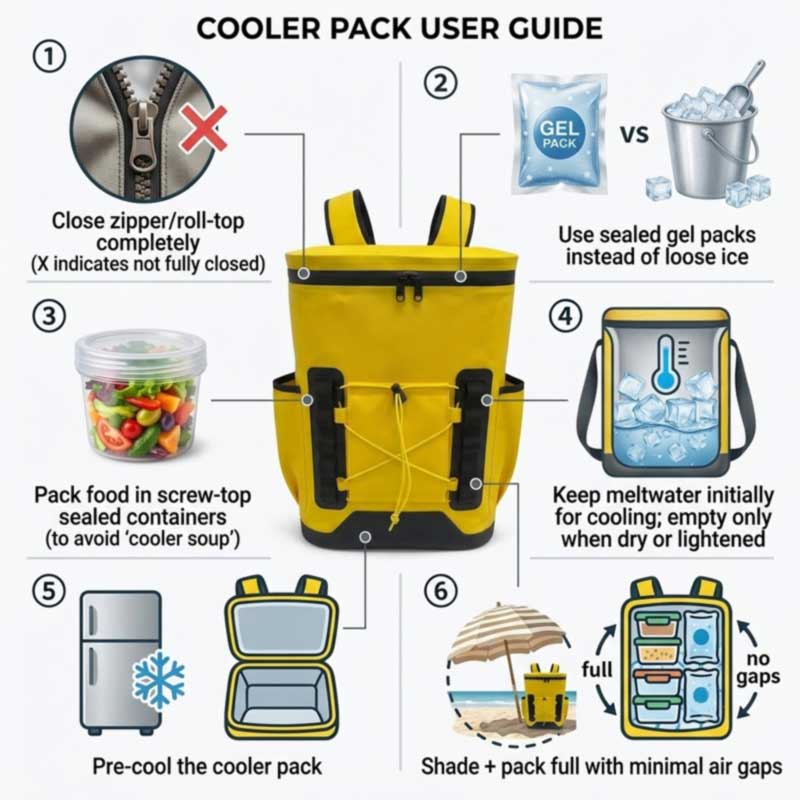
six habits to stop cooler backpack meltwater leaks: full closure, ice packs, sealed containers, keep meltwater, pre-chill, shade

Troubleshooting: Why Is My Cooler Backpack Still Leaking?

Symptom Likely cause Fix
Leaks only when tipped or carried Standard zipper, or closure not fully sealed Seal the closure fully; if it still leaks tipped, the closure is not a leakproof type
Slow drip from the bottom over hours Stitched bottom seam wicking melt-water A construction issue — a welded bag is the real fix
Drips from zipper ends / corners Unsealed zipper terminations or corner seams Construction issue; look for welded, sealed-end closures next time
Damp patch where the straps attach Harness stitched through the containment chamber Construction issue; welded-on strap anchoring is the fix
Mess inside, food wet and mixed "Cooler soup" from loose containers, not a bag leak Repackage into sealed screw-top containers
Wet back panel, no actual leak Condensation from cold interior against a warm back Normal; wipe down, it is not a leak

The pattern is worth noting: the structural causes — a wicking bottom seam, unsealed zipper ends, stitched strap anchors — cannot be fixed by habit. They are built in, and only a welded, sealed-closure backpack solves them. Habits handle the rest.

What Makes Sealock's Cooler Backpacks Leakproof

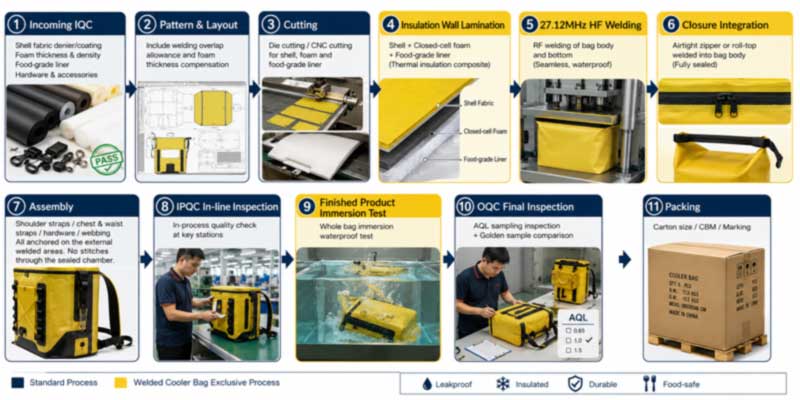
Sealock welds insulated cooler bags at 27.12 MHz across three factories in Dongguan, China and Ho Chi Minh City, Vietnam, and validates sealed builds by full water immersion — so the leakproof claim is tested on the finished bag, not just asserted.

Body seams HF-welded, seamless — no needle holes in the water-holding chamber
Liner Welded food-grade membrane (TPU or PEVA) — no stitched seams to wick
Closures Airtight welded zippers and welded roll-tops — sealed in any orientation
Bottom Reinforced welded base — the highest-load leak point, built continuous
Harness anchoring Straps anchored to welded external zones, so no stitching penetrates the sealed chamber
Validation Full water-immersion batch testing of finished bags; AQL and gold-sample sign-off
Certifications ISO9001, BSCI, SMETA P4, GRS, HIGG, SCAN

Real leakproof cooler backpacks, chosen by fit rather than rank:

Image Model Leakproof architecture Link
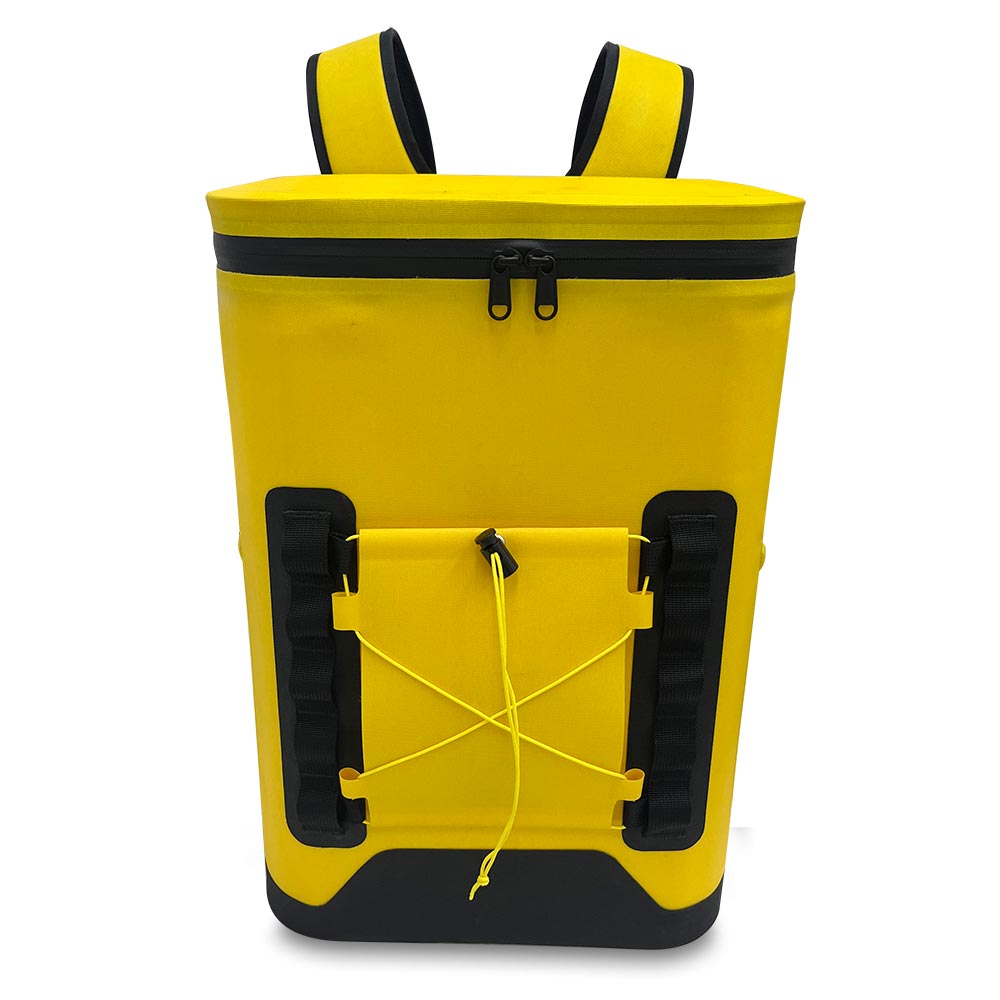
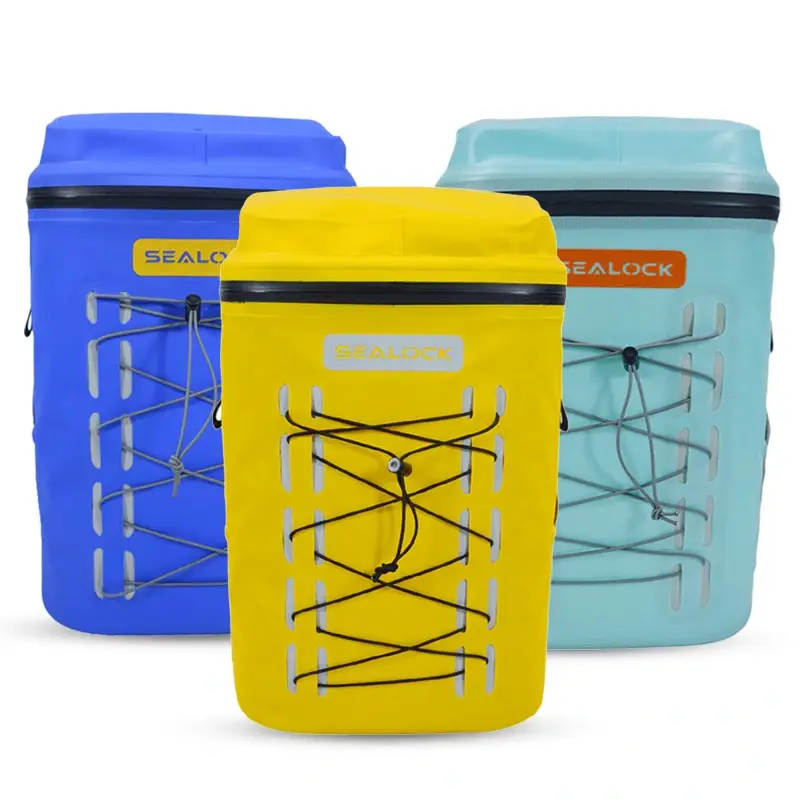
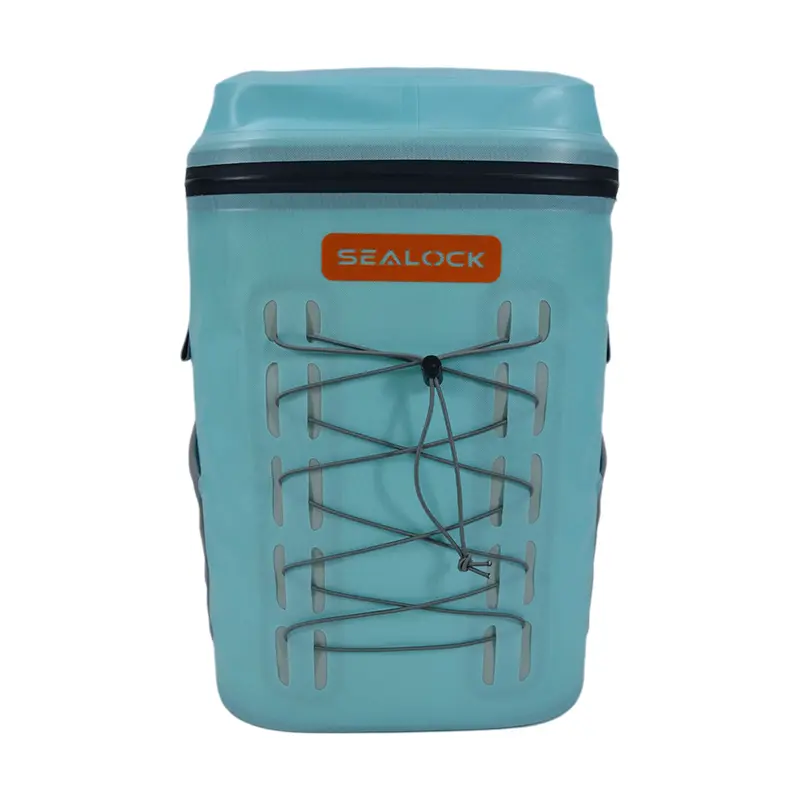
28L airtight-zipper insulated backpack cooler SL-I274 28L Airtight-Zipper Backpack Cooler (SL-I274) HF-welded seams, airtight waterproof zipper, food-grade TPU membrane, 840D TPU, up to 48 hr View
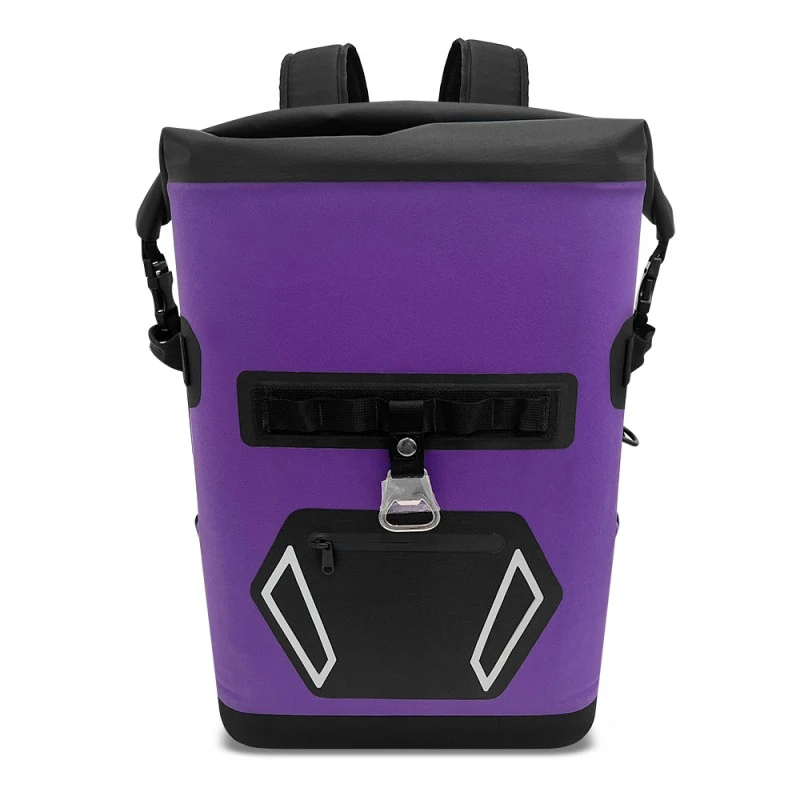
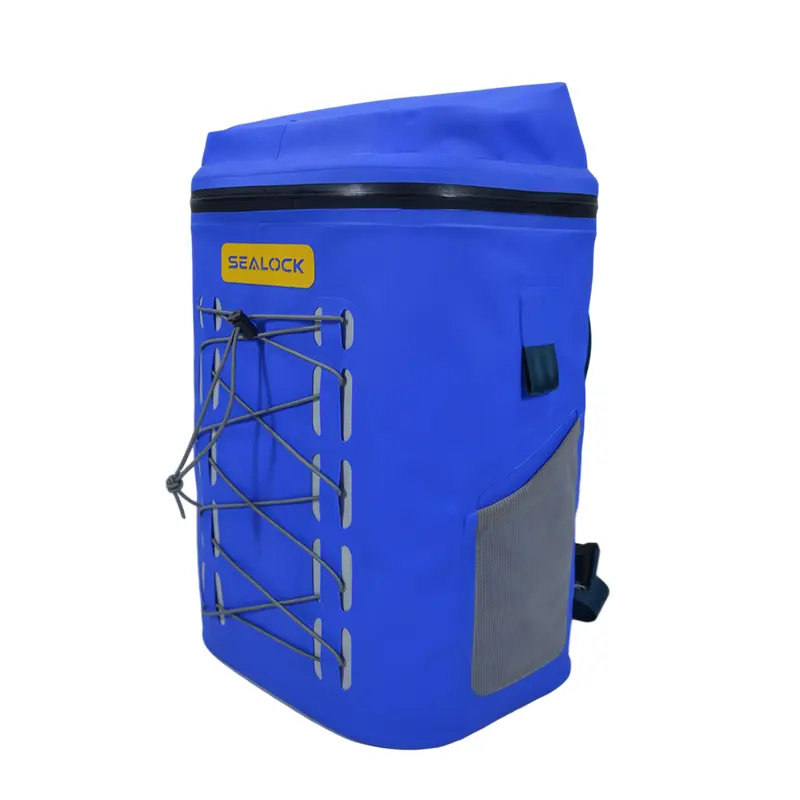
45L roll-top leakproof insulated backpack cooler SL-I270 45L Roll-Top Backpack Cooler (SL-I270) Roll-top closure — no zipper channel to leak; HF-welded, food-grade TPU liner, 600D TPU, up to 36 hr View
22L IPX7 cooler backpack SL-I280 22L IPX7 Cooler Backpack (SL-I280) Welded seamless body + airtight zipper, IPX7 immersion-rated, sealed in any orientation View
Lightweight waterproof soft cooler backpack SL-I272 Lightweight Waterproof Cooler Backpack (SL-I272) TPU construction with folding closure — light build, sealed top View
Leakproof insulated cooler backpack SL-I075A Insulated Leakproof Cooler Backpack (SL-I075A) 840D PVC tarpaulin shell with EPE foam and PEVA film liner, 36-can capacity View

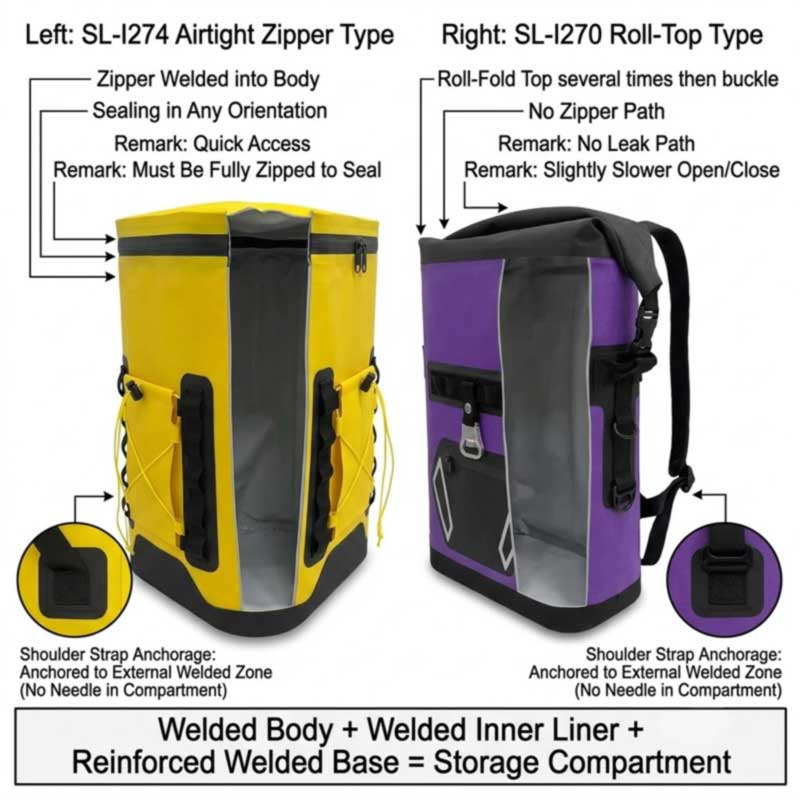
Note the two different routes to the same result at the top of the range: the SL-I274 seals with an airtight zipper, while the SL-I270 removes the zipper from the equation entirely with a roll-top. Both are welded; they differ in how you get in and out, not in whether they hold water.

two leakproof closures on cooler backpacks compared: airtight welded zipper versus welded roll-top, with welded containment chamber

For brands specifying a leakproof cooler backpack to develop, the containment class — upright containment through to any-orientation IPX8 sealing — is a spec Sealock engineers to the brief and proves by immersion. Beyond colour and logo, development runs ground-up from a sketch, sample or performance target, and demanding briefs are welcome. See OEM Soft Cooler Backpacks: What You Can Customize Beyond Logo & Color.

FAQ: Leakproof Cooler Backpacks

Q: Why does my cooler backpack leak melt-water?

A: Almost always because ice melts inside and the water escapes through stitched seams — especially the bottom seam, where water pools — or through a standard zipper when the bag tips. Sewn coolers have needle holes by design; a welded, seamless backpack with a sealed closure removes the escape routes.

Q: How do I know if a cooler backpack is genuinely leakproof before buying?

A: Check four things: welded (not stitched) seams inside the water chamber, a welded food-grade liner, a closure that seals when tipped — an airtight zipper or welded roll-top, not a standard zip — and strap anchors that do not stitch through the sealed compartment. Then run an at-home test: seal a litre of water inside and lay the bag on its side and upside down over a sink for a few minutes.

Q: Should I drain the melt-water from my cooler backpack?

A: Usually not, for cooling reasons. Melt-water stays cold — below 40°F for a day or two in a good cooler — and helps keep everything else chilled, so keeping it in improves performance. Drain if you need to keep items dry, make room for more ice, or cut the weight you are carrying on a long walk. A properly leakproof bag makes keeping it a safe choice.

Q: Airtight zipper or roll-top — which is more leakproof?

A: Both can be fully leakproof; they differ in trade-offs. An airtight zipper seals in any orientation and gives faster access, but must be run fully to its end stop and takes more pull. A roll-top has no zipper channel to leak at all and is very reliable, but needs the correct number of folds and is slower to open. Choose by how often you will open the bag.

Q: My backpack is wet against my back — is it leaking?

A: Often not. A cold interior against a warm back drives condensation on the outer surface, which feels like a leak but is not one. Check whether the moisture is coming from a seam, a zipper end or a strap anchor — that would be a real leak — or is a general dampness across the panel, which is condensation.

Q: Do ice packs prevent leaks better than loose ice?

A: They reduce the mess. Sealed reusable ice packs keep the coolant contained, so there is much less free water to escape, and they refreeze for reuse. Loose ice gives the longest cold-hold but produces the most melt-water. For a cooler worn on your back, ice packs are the tidier choice; for maximum ice life, loose ice in a genuinely leakproof backpack.

Sourcing leakproof cooler backpacks? Sealock (YiFuLong Outdoor Gear Co., Ltd.) welds leakproof cooler backpacks at 27.12 MHz in China and Vietnam — welded bodies and liners, airtight and roll-top closures, validated by immersion testing of the finished bag. Tell the team your containment needs and use case, and they will engineer and prove the build.

Email: info@sealock.com.hk  |  Phone: +86-13632981825  |  Browse the soft cooler range

Usage guidance and performance figures cited here reflect publicly available manufacturer, testing and industry sources as of mid-2026 and vary with product, load and conditions. Confirm a specific product's leakproof rating and care instructions before relying on them.

Related News
Leave me a message
X
We use cookies to offer you a better browsing experience, analyze site traffic and personalize content. By using this site, you agree to our use of cookies.Privacy Policy
RejectAccept