News

Inside a Welded Soft Cooler Production Run at Sealock

2026-07-24 0 Leave me a message

A batch of matte-black soft coolers has just come off the line at our factory and moved into final inspection and packing. There's no bold camo, no branding, nothing to look at but the build — which is exactly why this run is worth walking through. Strip away the print and a soft cooler is only as good as four things: the seam that holds it together, the zipper that closes it, the liner that touches your food, and the foam that keeps the cold in. Below is a close look at each one as it came off this line, and at the testing that decides whether a unit ships or goes back for rework.

Why the seam decides everything

Almost every soft cooler that fails in the field fails at a seam, and it usually fails the same way. A stitched seam is a row of needle holes by definition; each hole is a capillary path, and the thread running through it wicks moisture along its length. Add the mechanical stress of a full, heavy load and the freeze-thaw cycling of melting ice, and those holes work open over time. The bag doesn't burst — it seeps, slowly, from the one place you can't reinforce after the fact.

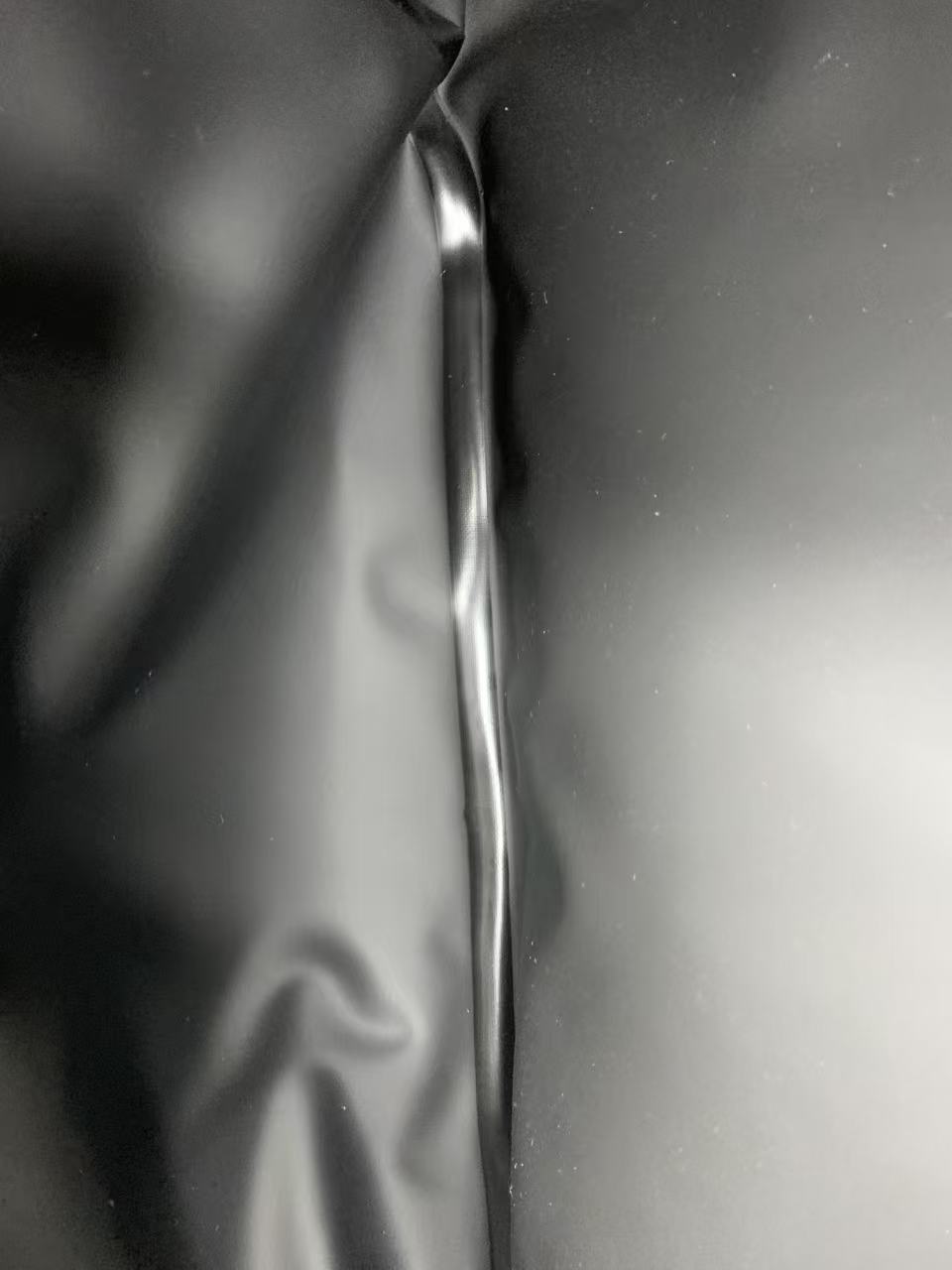
So we don't stitch the body closed. The panels are joined with high-frequency welded seams: the coated fabric is placed between electrodes, and a high-frequency field excites the polymer coating until the two layers fuse into a single continuous mass. There is no thread, no hole, and no separate joining material — the seam becomes part of the fabric rather than something added to it. On a finished unit you can see the result as a smooth, glossy weld line with no puncture points anywhere along it. That is the difference between a cooler that is genuinely leakproof and one that is merely lined.

Weld quality is not automatic, which is why it's monitored rather than assumed. A weld that's under-powered won't fully fuse and will peel under load; one that's over-powered thins and embrittles the material at the joint. Consistent, full-strength welds depend on the right combination of current, dwell time and tooling, and bonding strength is one of the parameters we pull and test rather than eyeball.

Close-up of a high-frequency welded seam on a black soft cooler
A high-frequency welded seam: the coated fabric fused into one continuous, hole-free bead — no stitching, no capillary path for melt-water.

An airtight zipper, and why it feels stiff on purpose

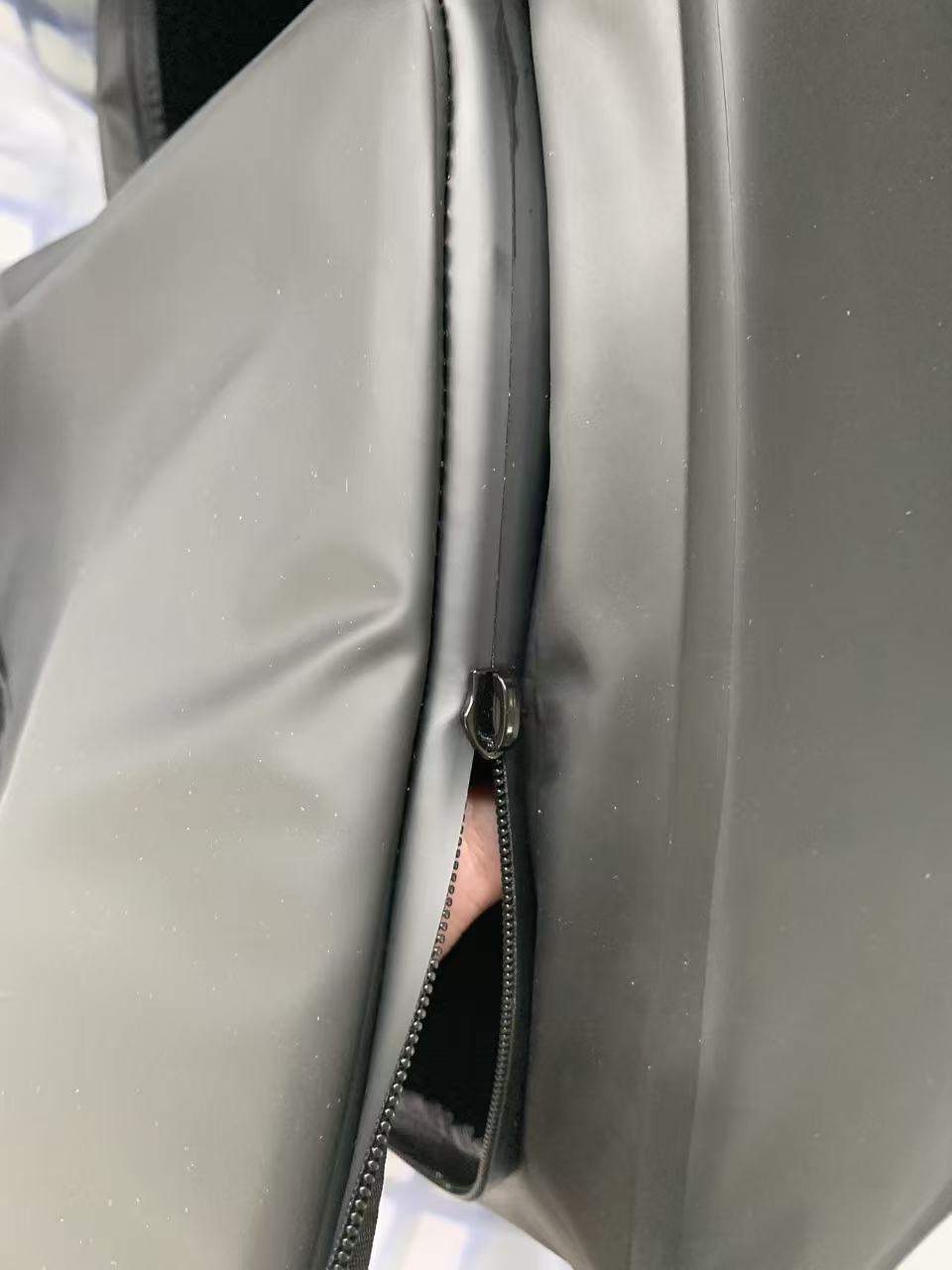
A welded body is wasted if the opening leaks, and the opening is the hardest part to seal because it has to move. The zipper on these coolers is an airtight, waterproof type — a TPU-coated tape with tightly interlocking teeth pressed into a continuous, gasket-like closure. Buyers sometimes flag the first pull as "too tight." It isn't a defect; it's the whole point. A loose nylon coil zipper glides easily precisely because there's air space between its teeth, and air space is exactly what lets cold escape and water in. The resistance you feel is the seal doing its job.

The failure modes we design against here are specific. Cheaper coated zippers crack their coating at the fold line after repeated openings, and the crack becomes a leak; others separate at the coil under lateral load; many simply gap at the ends where the zipper meets the body. We weld the zipper tape directly into the cooler body so there's no stitched transition at the lid line, and the coating is chosen to stay flexible rather than go brittle in cold use — which is, after all, the condition a cooler spends its life in.

Close-up of an airtight waterproof zipper on a soft cooler
The airtight, waterproof zipper — coated tape and tightly-toothed engagement, welded into the body with no stitched transition.

The liner you can actually put food in

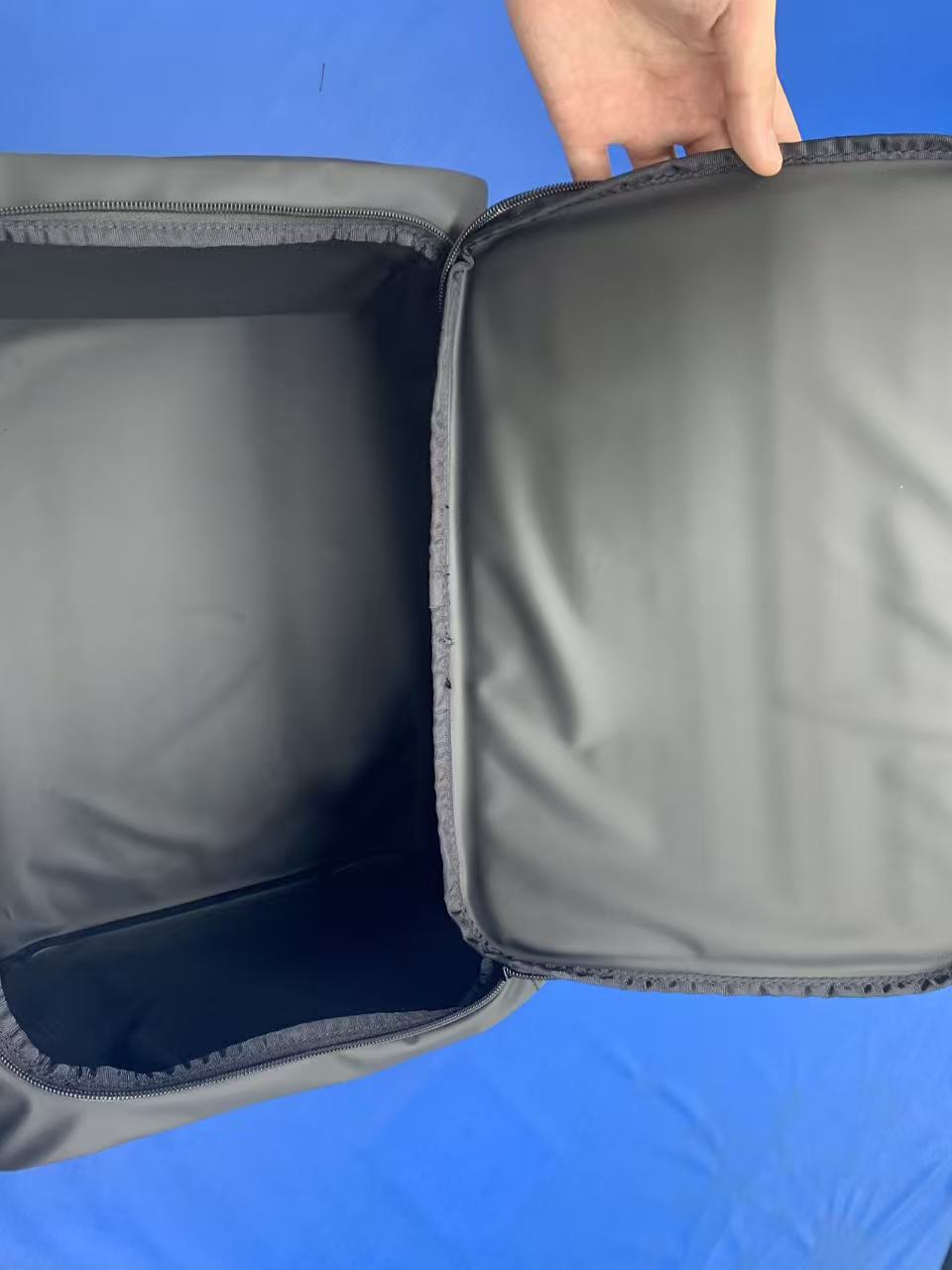
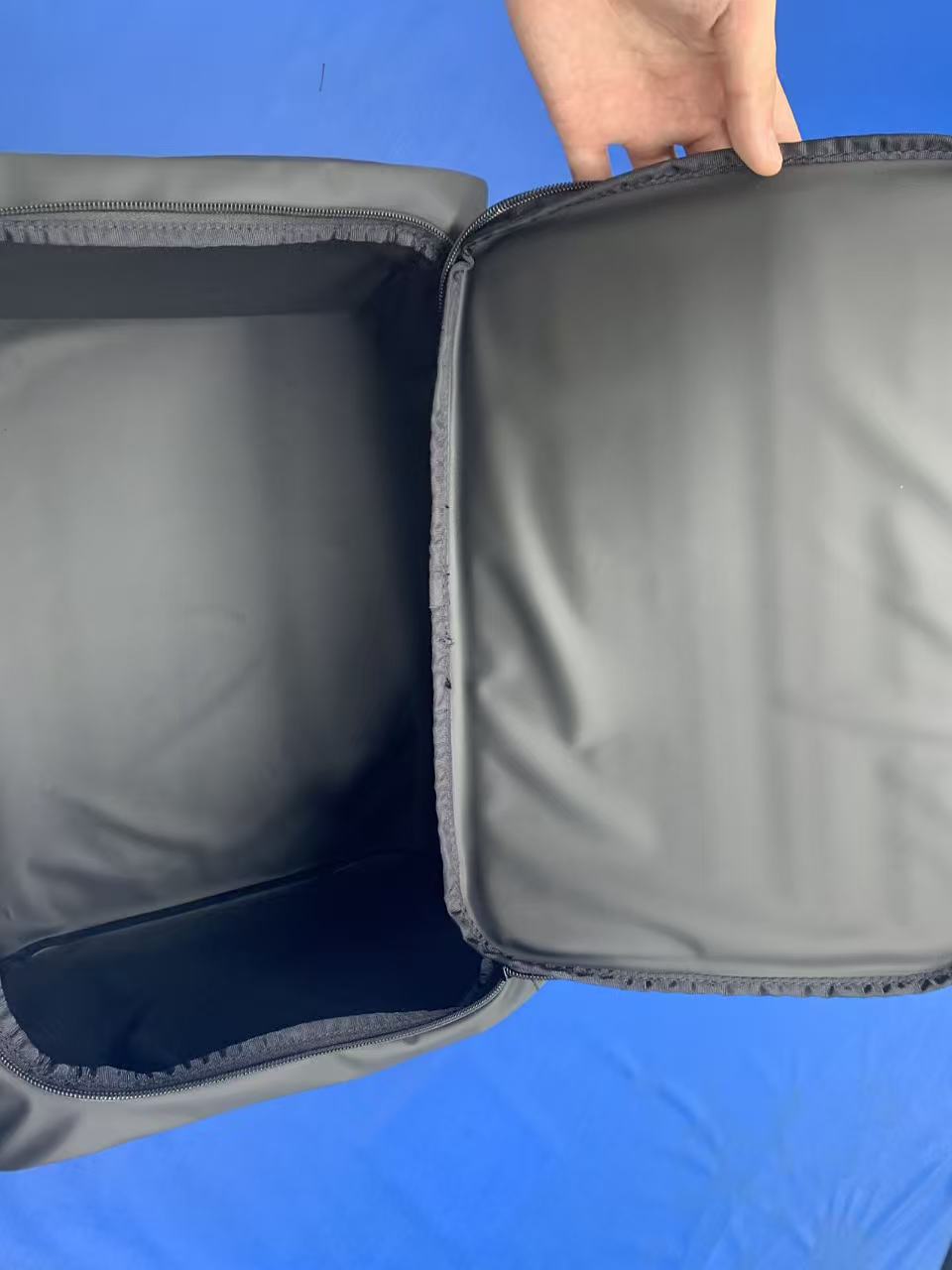
Open one up and the interior is a smooth, glossy black food-grade liner. "Food-grade" isn't decoration here — it means the material that contacts your drinks and food is safe for direct contact, wipes clean without holding odor, and won't leach or stain. Just as important is how the liner is finished: its corners and base are welded, not sewn, so the inside is as hole-free as the outside. A liner that's stitched into place quietly defeats a welded shell, because melt-water finds the stitching and pools under it. Welding the liner keeps the whole vessel continuous, top to bottom.

Between that liner and the outer shell sits the EPE foam insulation layer, and that's where the actual cold-keeping happens. Foam thickness is the lever: more foam is a longer thermal barrier and longer ice retention, at the cost of weight and packed volume, which is exactly the trade-off we tune per program. Paired with the sealed zipper and welded body — so cold air isn't leaking out through a seam or a lid gap while the foam is trying to hold it — these coolers are built to carry ice through a full day out rather than surrendering it by mid-afternoon.

Interior of a soft cooler showing the glossy black food-grade liner
The food-grade, leakproof interior liner — welded at the corners and base so the inside is as continuous as the shell.

Tested before it's trusted

Good construction is a claim until it's verified, so nothing on this run ships on looks alone. Two tests target the waterproof story directly. The first is a full water-immersion test of two-plus hours, which submerges the sealed cooler and confirms the welded body and zipper hold under sustained pressure rather than just resisting a splash. The second is a 0.05 Bar internal-inflation air-tightness check: the closed cooler is inflated to a low, controlled internal pressure and watched for pressure loss, which surfaces the kind of pinhole or weak weld that the eye and a quick splash test would both miss.

Those sit on top of a broader durability suite that catches the slower failures. Load cycling of 1,500-plus repetitions stresses the handles, straps and seams the way a repeatedly-filled cooler does. Zipper fatigue testing of around 3,000 open-close cycles proves the closure lasts a season, not a week. Bonding-strength and tensile testing verify that the welds and the base material won't peel or tear under real load; salt-spray testing checks that hardware won't corrode in the marine and beach environments these coolers live in; and abrasion, color-fastness and color-difference checks make sure the surface and any printed pattern hold up to sun, sand and scuffing. Inspection runs across the whole flow rather than only at the end — incoming material (IQC), in-process (IPQC) and outgoing (OQC) — and where a customer wants an independent stamp, we support third-party inspection through bodies like SGS or QIMA.

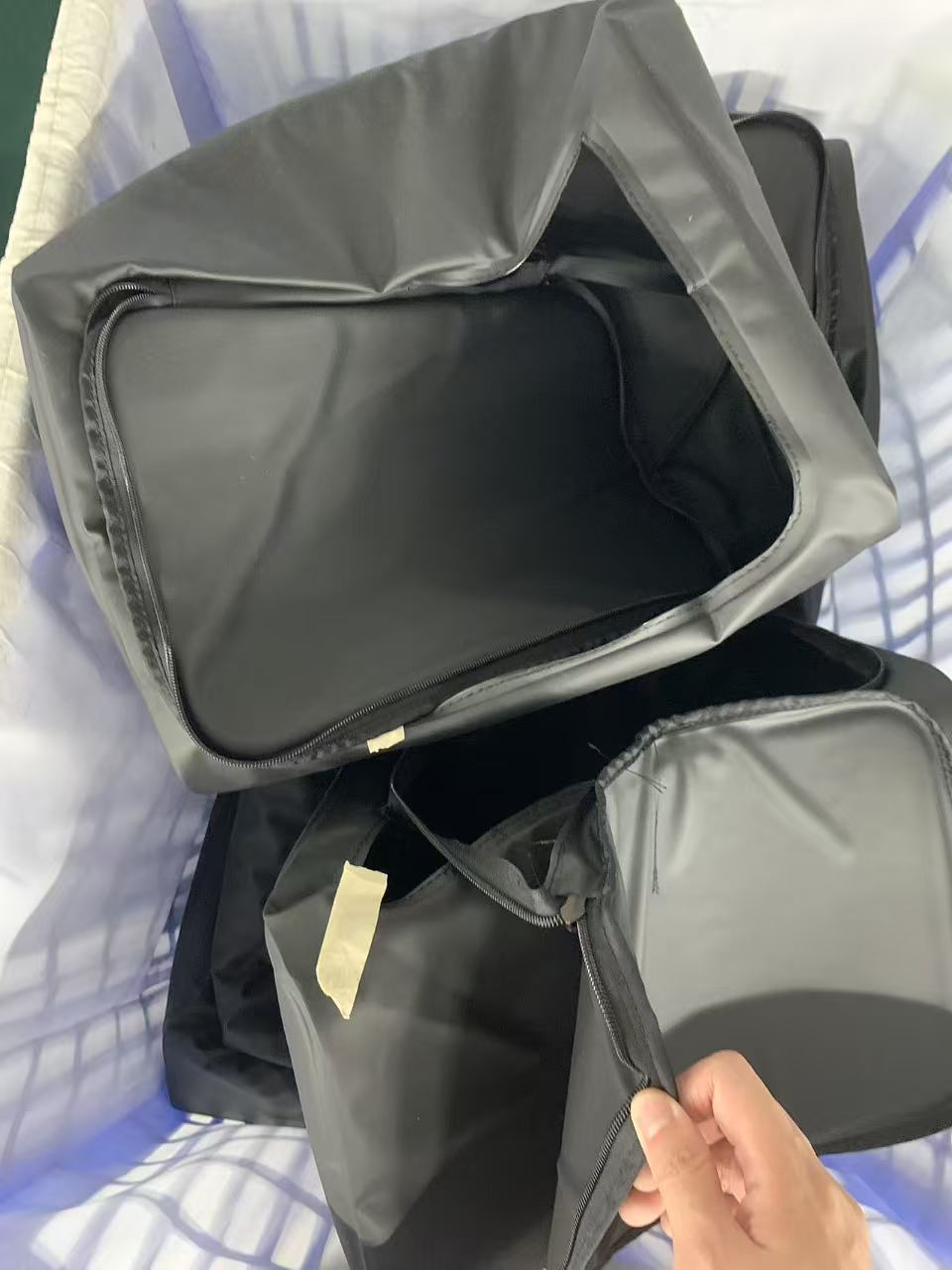
On the floor, that discipline looks mundane and that's the point: each unit is handled and checked one at a time, and the strips of masking tape you'll see are inspectors flagging anything off — a proud weld, a stiff zipper run, a mark on the liner — so it's pulled for rework instead of packed. The bar we hold the line to is simple and posted in the plant: don't accept, don't produce, don't pass on a defect.

Finished soft coolers being inspected with QC tape marks
Every unit is hand-inspected; tape flags mark anything held back for rework rather than shipped.

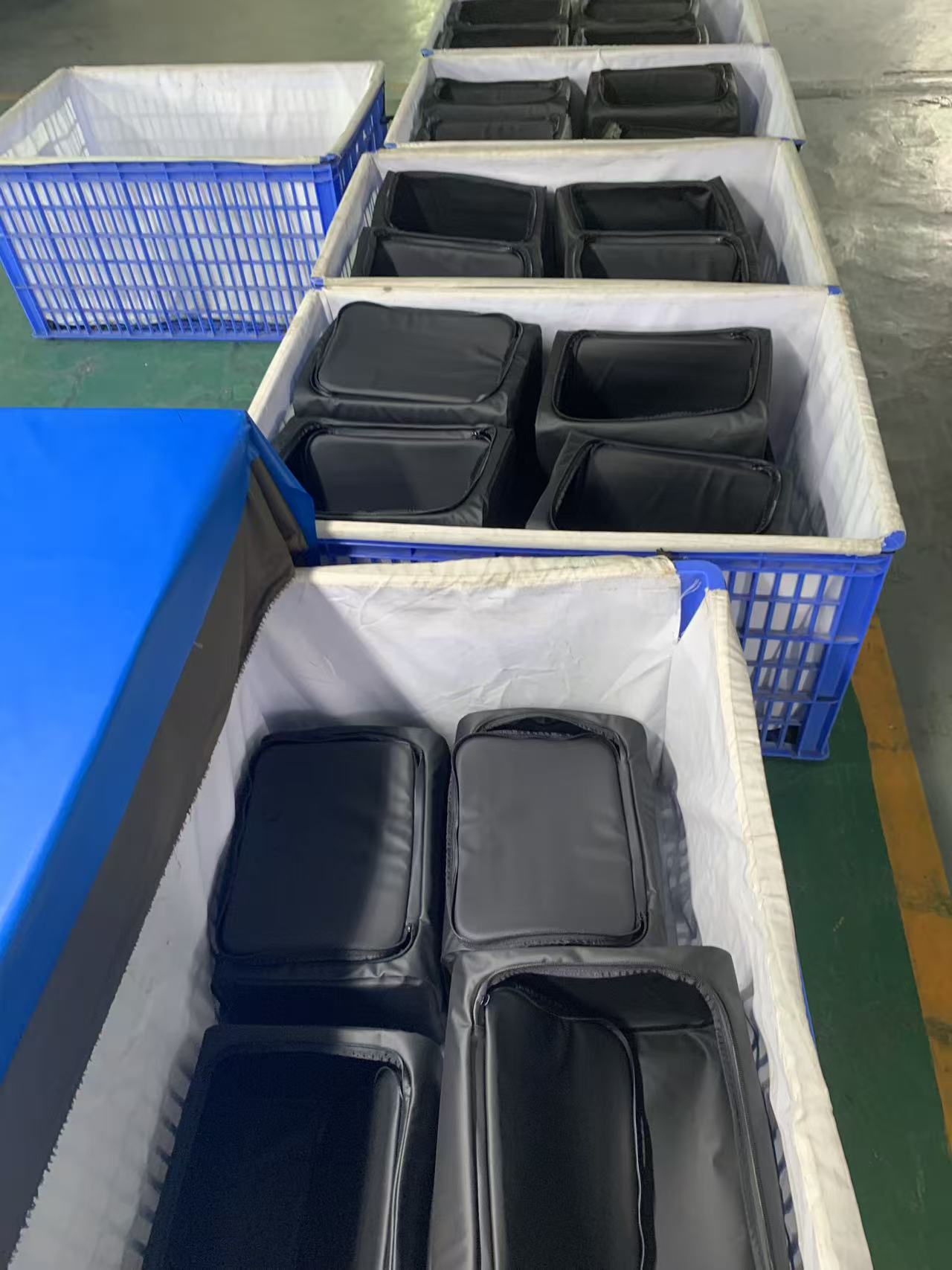
Only cleared coolers are folded, bagged and crated. Even the staging is deliberate — passed units are grouped and lined into fabric-lined crates so nothing rubs or creases on the way to packing, and outgoing QC signs off on the batch before it moves.

Finished soft coolers packed into fabric-lined crates for shipment
Passed units, staged and crated for shipment after outgoing inspection.

Made by the people who weld them

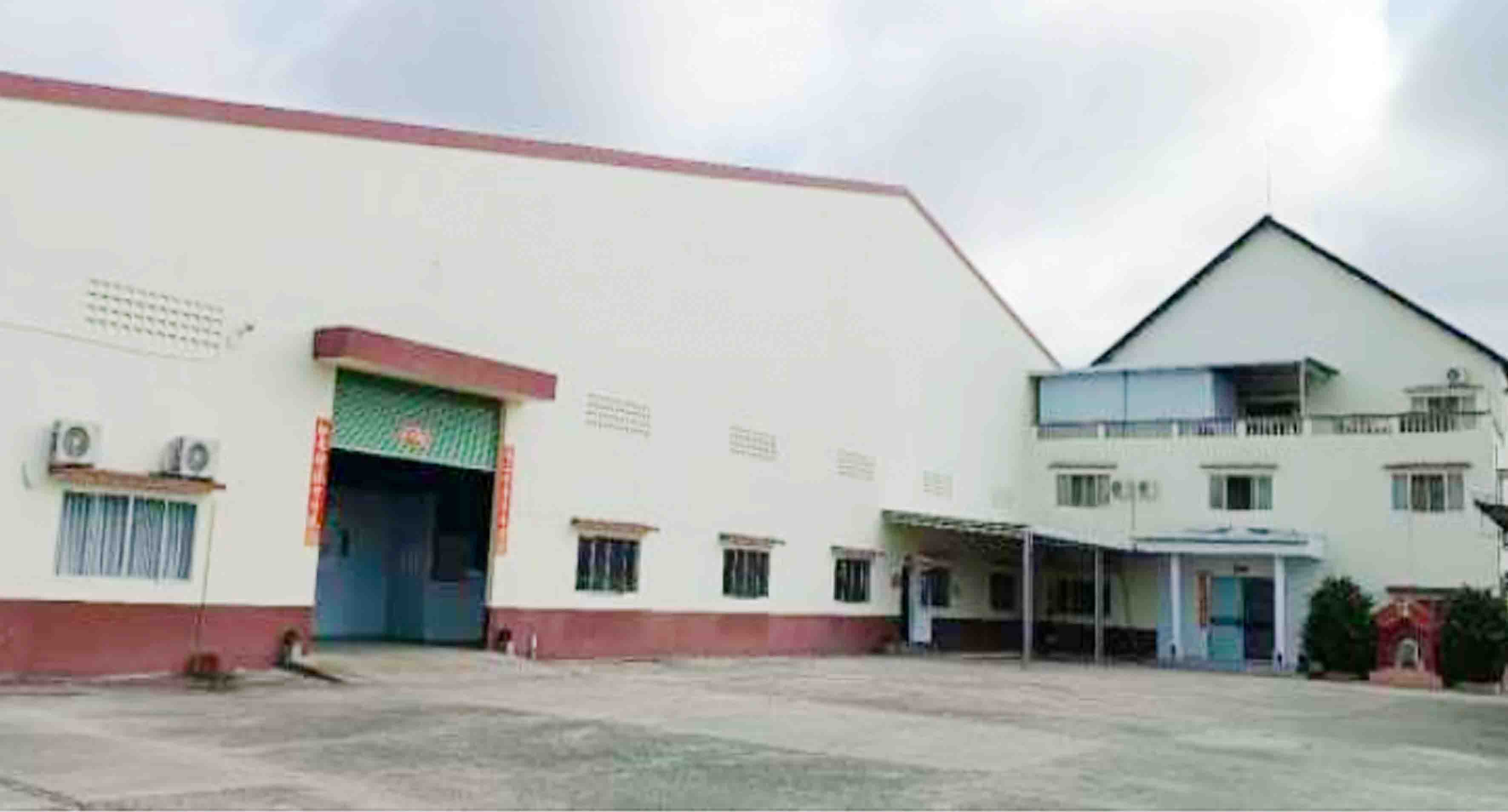
What ties all of this together is that it happens under one roof. We've been building waterproof and soft-sided cooler bags for over 20 years, from our own lines in Dongguan, China and Ho Chi Minh City, Vietnam. Because we weld, assemble and test in-house rather than sub-contracting the hard parts, we can stand behind an OEM or ODM program from end to end — pattern and print, seam welding, hardware, liner, foam and final QC are all decisions we own, not ones we hope a supplier got right.

That control is also what makes customization real rather than nominal. Foam thickness, cooler volume and shape, exterior fabric and print, zipper style, hardware, carry system, interior configuration and branding are all specifiable, and because we build the tooling and run the tests ourselves, we can tell you early what a given change does to weight, cost and lead time instead of finding out at sampling. Standard commercial terms are MOQ from 300 units per design, 7–15 days for samples and 30–45 days for mass production, FOB Guangdong, and our systems and certifications include ISO 9001, BSCI, SMETA and GRS.

If you're weighing a leakproof cooler built to your own spec, explore our soft cooler backpacks and cooler totes, or read more about how we run OEM soft cooler manufacturing. To start a project or request a sample, reach us at info@sealock.com.hk.

Related News
Leave me a message
X
We use cookies to offer you a better browsing experience, analyze site traffic and personalize content. By using this site, you agree to our use of cookies.Privacy Policy
RejectAccept