News

Cooler Bag Pre-Shipment Inspection Checklist: What Buyers Must Check

2026-06-22 0 Leave me a message

A pre-shipment inspection is not a hunt for flaws. It is a release-or-reject decision, made against acceptance standards you agreed before production began. That distinction is the whole game: if you walk into an inspection without pre-set criteria, every finding becomes a matter of opinion, and opinions are where disputes — and shipped defects — come from. Define what "acceptable" means first, and the inspection becomes a clean pass/fail gate instead of an argument.

Most inspection guides online are generic — they apply the same visual-and-packaging checklist to a phone case or a garden tool. A cooler bag fails in ways those checklists never look for: insulation that under-performs, a welded seam that leaks, a liner that is not the food-grade material you paid for. This checklist keeps the standard AQL framework that the trade runs on, then adds the cooler-specific checkpoints that actually protect your order. Work through it in sequence.

Part 1 — Set the standard before you inspect (AQL)

AQL (Acceptance Quality Limit, per ISO 2859-1) is what turns "good quality" from an opinion into a contract. It defines, in advance, how many defects of each severity you will accept in a sample before the whole batch is rejected. Without it agreed up front, an inspection result cannot be enforced. Three defect classes are standard:

Defect Class Typical AQL Tolerance Cooler Bag Example
Critical 0% — zero tolerance Liner leaks under the air-tightness test; non-food-grade liner substituted
Major 2.5% (tighten to 1.0–1.5 for retail) Weak weld, foam under spec density, broken zipper, wrong dimensions
Minor 4.0% Small print misalignment, minor stitching cosmetic, loose thread

AQL sampling at a glance (General Level II, AQL 2.5)

AQL also tells you how many units to pull and how many defects trigger rejection. The table below uses the most common setting for cooler bags — ISO 2859-1 General Inspection Level II at AQL 2.5 for Major defects. "Ac" is the maximum defects you accept; "Re" is the count that rejects the batch.

Order Qty (pcs) Sample Size Accept (Ac) Reject (Re)
281 – 500 50 3 4
501 – 1,200 80 5 6
1,201 – 3,200 125 7 8
3,201 – 10,000 200 10 11

Read it like this: on a 1,000-piece order, the inspector checks 80 units. Find 5 or fewer Major defects and the batch passes; 6 or more and it is rejected. Critical defects keep a 0 / reject-on-1 rule regardless of quantity. Tighten to AQL 1.5 or 1.0 for retail lines.

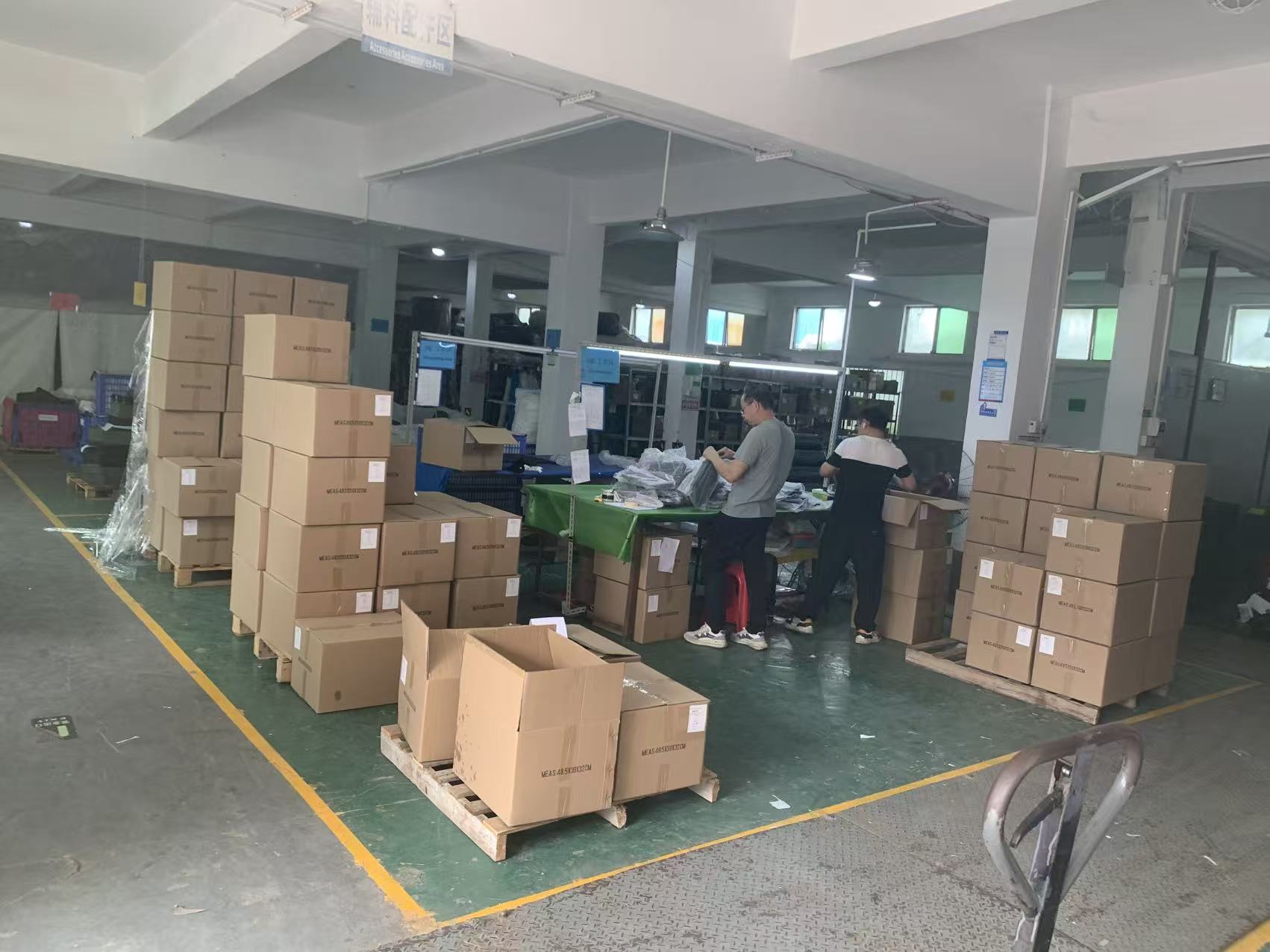
Two timing rules follow directly from how AQL works. First, inspect at 80–100% production completion — a sample drawn earlier does not statistically represent the batch, and packaging defects only appear at the end. Second, for a cooler intended for retail or any food-contact use, tighten the Major limit: a leaking or odour-tainted unit does disproportionate brand damage, so AQL 1.0–1.5 is the right call rather than the looser 2.5 used for throwaway giveaways.

Cooler bag AQL random sampling during pre-shipment inspection at the factory

Figure 1: AQL sampling draws a statistically representative set from the packed order — the basis for an enforceable accept-or-reject decision.

Part 2 — Standard checks (every bag order needs these)

These are the universal checkpoints any competent inspection covers. Tick each against your approved sample and PO:

 Quantity — units match the PO and packing list

 Dimensions & weight — measured against spec, not eyeballed

 Colour & appearance — matches approved sample; no stains, scratches, shade drift

 Workmanship — stitching, trims, assembly complete and even

 Labeling & barcodes — country of origin, care labels, scannable barcodes per destination market

 Packaging & carton — carton specs, inner protection, drop-test integrity, palletization

Part 3 — Cooler-specific checks (the ones generic guides skip)

This is where a cooler inspection earns its keep. A bag can pass every check in Part 2 and still be a failed cooler, because insulation and liquid-seal performance are invisible to a standard visual inspection. Each item below maps to a real field-failure mode:

☐ Foam density & thickness — Cut a sample section, weigh it to confirm density (kg/m³) matches spec, and measure thickness at base, sides, and lid. Prevents: under-spec foam that fails the ice-retention claim, especially a thinned base.

☐ RF-welded seam integrity — Inspect every interior weld line for gaps, thin spots, or cold welds; apply a peel check on a sample. Prevents: seam separation under liquid load.

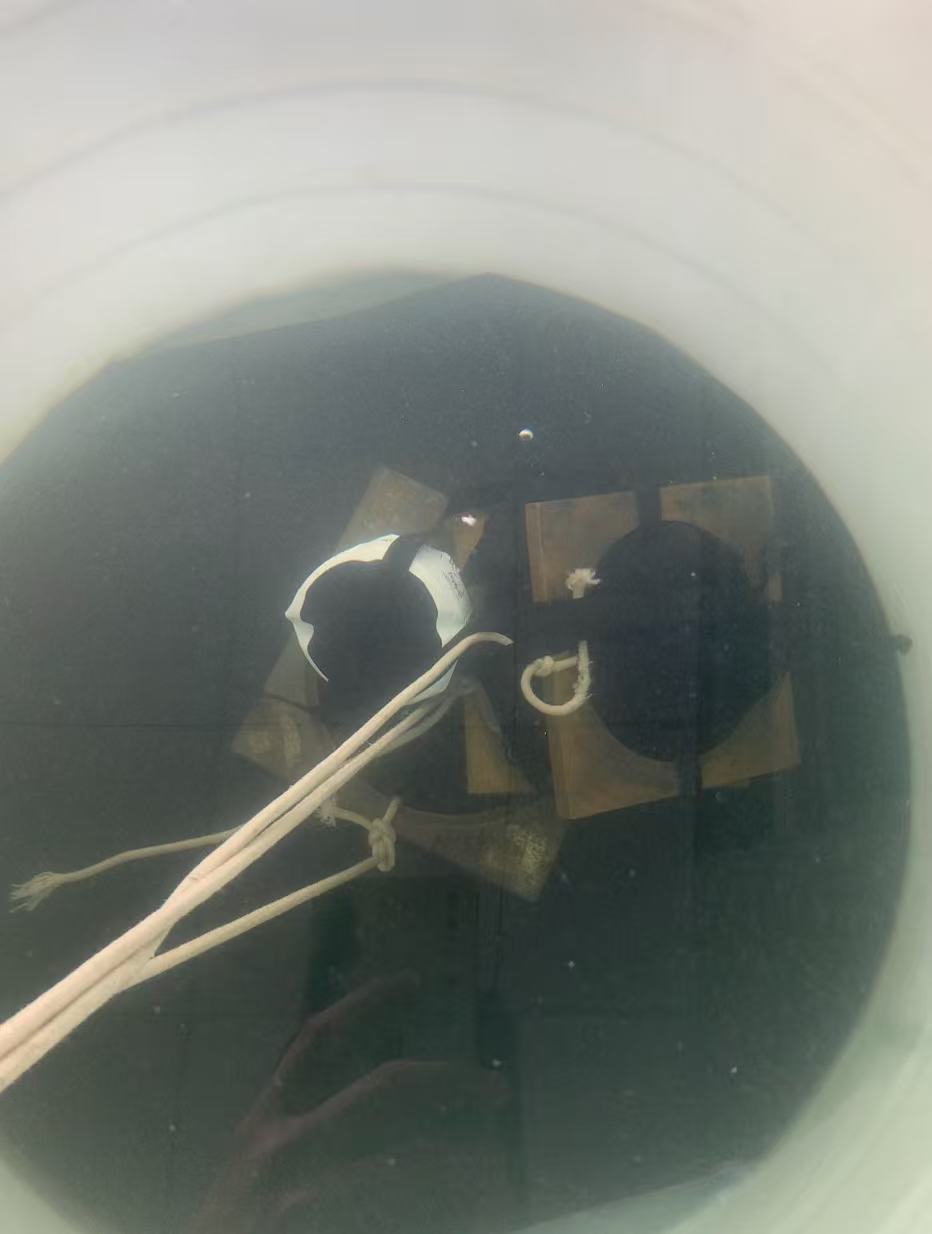
☐ Air-tightness test (0.05 Bar) — Inflate the sealed liner to 0.05 Bar (0.7 PSI) and submerge 15 minutes; any bubble trail is a hidden pinhole. Prevents: melt-water leakage that visual checks miss. Note: this is internal positive pressure, distinct from any external IPX submersion rating.

☐ Food-grade liner lot verification — Confirm the liner material matches the approved food-contact certificate by lot, not just by appearance. Prevents: a quietly substituted, non-compliant liner.

☐ Zipper fatigue & closure — Cycle the zipper repeatedly; confirm smooth travel and that any sealing closure still seals after cycling. Prevents: a closure that fails within the product's retail life.

Cooler bag liner inflated to 0.05 Bar and submerged for an air-tightness bubble test

Figure 2: The 0.05 Bar submersion test reveals pinhole leaks that no visual inspection can catch — a cooler-specific checkpoint absent from generic PSI checklists.

Part 4 — What to do when a batch fails

A checklist that only finds defects is half a system. The other half is the response, agreed in the PO so a failure becomes a defined process rather than a negotiation. When the defect count exceeds the agreed AQL limit:

Hold loading

No shipment authorization until corrective action is complete. This is the leverage; once the container ships, it is gone.

Assign responsibility correctly

Factory execution errors are the factory's cost to fix. Defects caused by a buyer spec change are the buyer's. Defining this split in advance prevents the dispute.

Re-inspect at supplier cost

After rework, a fresh third-party re-inspection — typically funded by the supplier and deductible from the final payment — confirms the fix before release.

Require a CAPA report

A corrective-and-preventive-action report forces the factory to explain how the specific defect will be prevented in the next run — the difference between a one-off fix and a fixed process.

Run this way, inspection stops being a gamble and becomes a repeatable procurement SOP you re-use on every order. A supplier that builds to spec welcomes it, because a clean inspection is also their fastest route to release and payment. You can see the welded construction and food-grade liners these checks are written for across the soft cooler range and the leakproof cooler line.

If you want a copy of the in-house test protocol behind these checkpoints — foam density sampling, weld peel standards, and the 0.05 Bar air-tightness method — you can request it alongside a quote through our insulated bag catalog.

Quality Assurance Division — Insulated Soft Coolers: This guide is published by the engineering center of SEALOCK COOLER (Dongguan Yifulong Outdoor Products Co., Ltd.). Our in-house lab runs tensile, bonding-force, zipper-fatigue, salt-spray, and air-tightness testing on soft cooler production, manufacturing for global retail and outdoor brands for over 20 years.

Through our Dongguan, China R&D headquarters and Phase II facility in Ben Cat, Binh Duong, Vietnam, we provide a tariff-hedged dual-track supply chain audited across SMETA 4-Pillar, BSCI, ISO 9001, GRS, and HIGG Index. Every batch passes a 0.05 Bar (0.7 PSI) low-pressure air-tightness test before release. For cooler bags built to a documented, inspection-ready spec at our 300-piece baseline MOQ, contact our international trade desk: request a Sealock QC protocol & quote.

Related News
Leave me a message
X
We use cookies to offer you a better browsing experience, analyze site traffic and personalize content. By using this site, you agree to our use of cookies.Privacy Policy
RejectAccept