News

Fishing Cooler Backpacks: Sizing, Insulation & Rod-Friendly Design

2026-08-10 0 Leave me a message
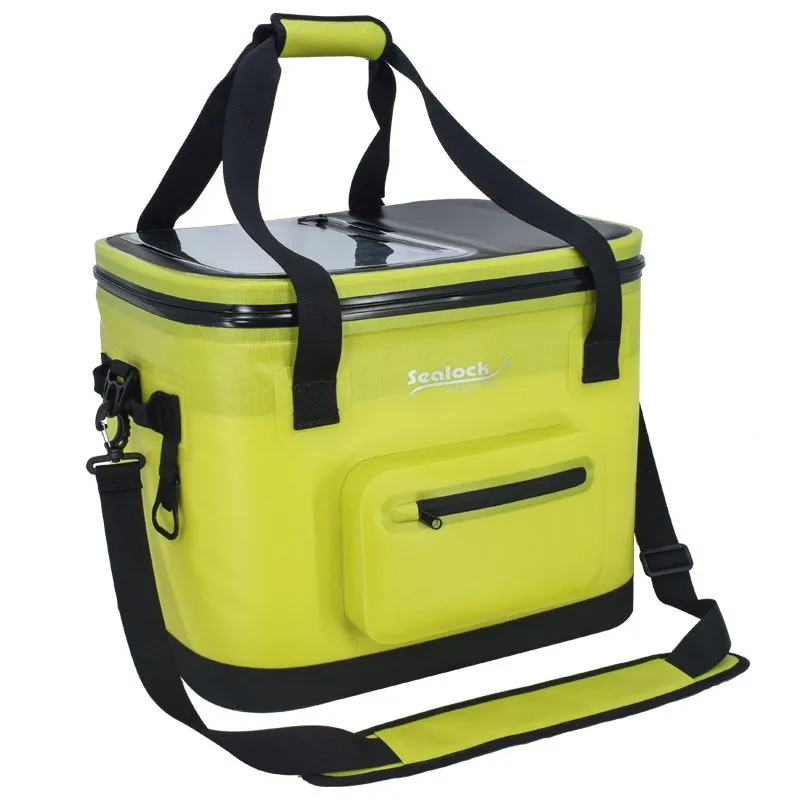
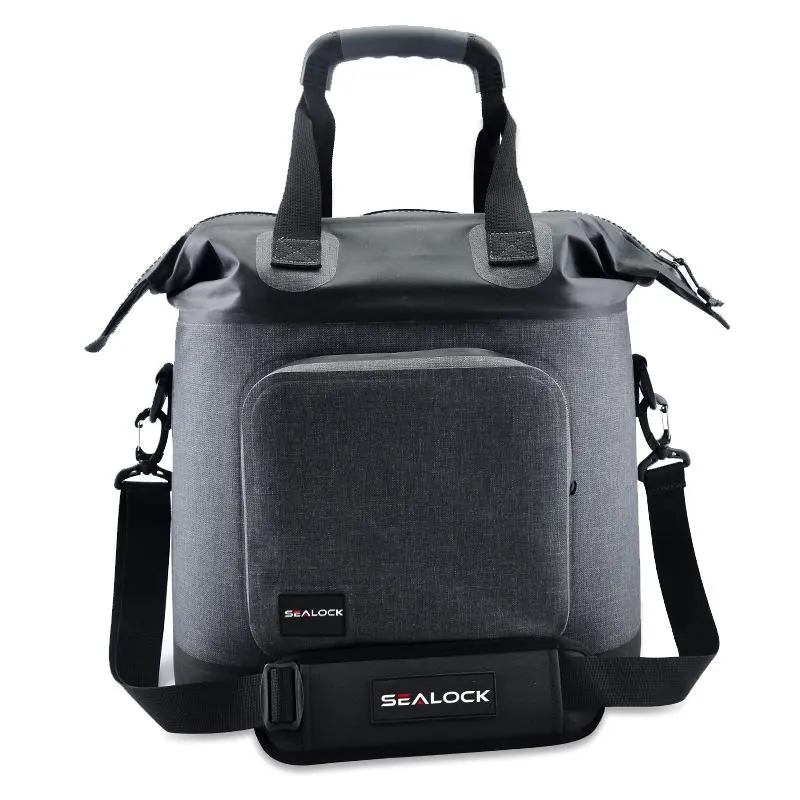
A fishing cooler backpack has to be three things at once: big enough for the catch and the ice, insulated enough for however long you stay out, and shaped so it works alongside a rod rather than fighting it. Get any one wrong and the bag becomes the thing you leave in the car. This guide works through all three — how to size a cooler for fish rather than drinks, how to pick an insulation level honestly matched to your trips, and what "rod-friendly" actually means on a sealed cooler, including one design constraint that trips up buyers coming from tackle backpacks. Sealock (YiFuLong Outdoor Gear Co., Ltd.) builds welded cooler backpacks for this use.


Sizing: A Fishing Cooler Is Not a Drinks Cooler

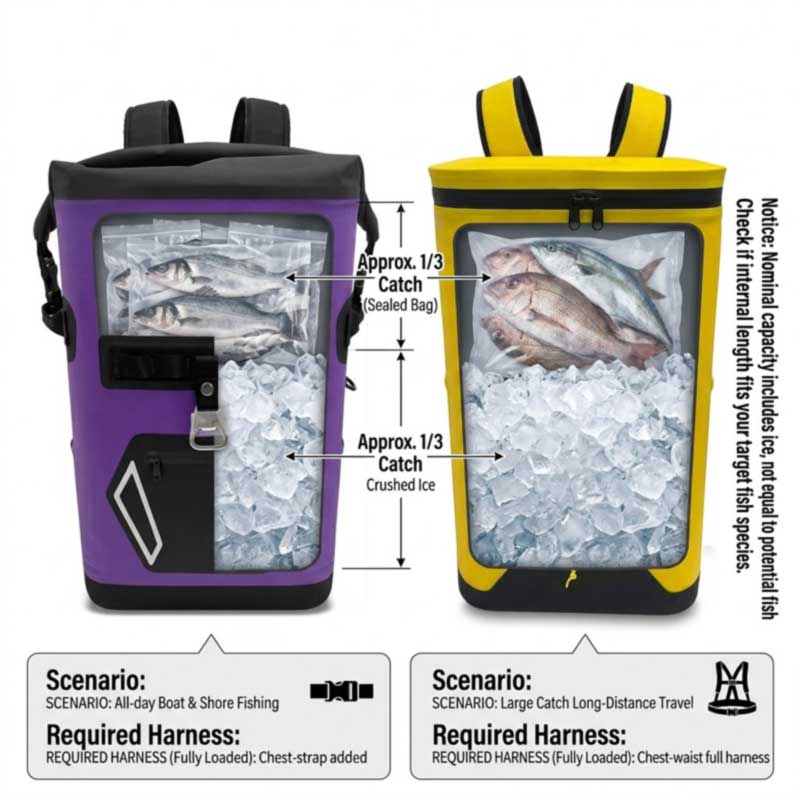
The first mistake is sizing by litres alone. A cooler's stated capacity is total internal volume, and on a fishing trip a large share of that volume is coolant, not catch. Standard cooler practice runs roughly two parts ice to one part contents — so a 28L cooler backpack is not 28L of fish. Size backward from the day: how much you realistically keep, plus the crushed ice needed to chill it, plus a little room to layer ice over the top.

Two dimensions matter beyond the number:

  • Internal length. Fish are long. A cooler that holds 28L in a tall narrow shape may not take a fish that a wider, shallower 24L swallows easily. Check internal dimensions against the species you keep, not just the litre figure.
  • Carry distance. Capacity you have to walk with is weight on your back. A loaded 45L pack on a long wade is a serious carry — the honest question is not "how much fits" but "how much do I want to hike out with."
Capacity Realistic for Carry notes
~15–20L Short bank or creek session, a few fish, lunch Light; padded straps enough
~22–28L Full day, a decent catch plus ice Sternum strap valuable when loaded
~40–45L Big days, multiple keepers, longer trips Full harness needed; heavy when full — plan the walk
If you also carry tackle: dedicated tackle backpacks are sized around standard tray formats — a 20L tackle pack, for example, is described as taking either six 3600 tackle boxes or four 3700 tackle boxes in its main compartment. A cooler backpack's main chamber is a cold, wet, food-contact space and is the wrong home for trays. If you want both, plan for tackle in external pockets and attachment panels, or carry a separate tackle bag — and size the cooler for fish and ice only.

Insulation: Match the Tier to the Trip

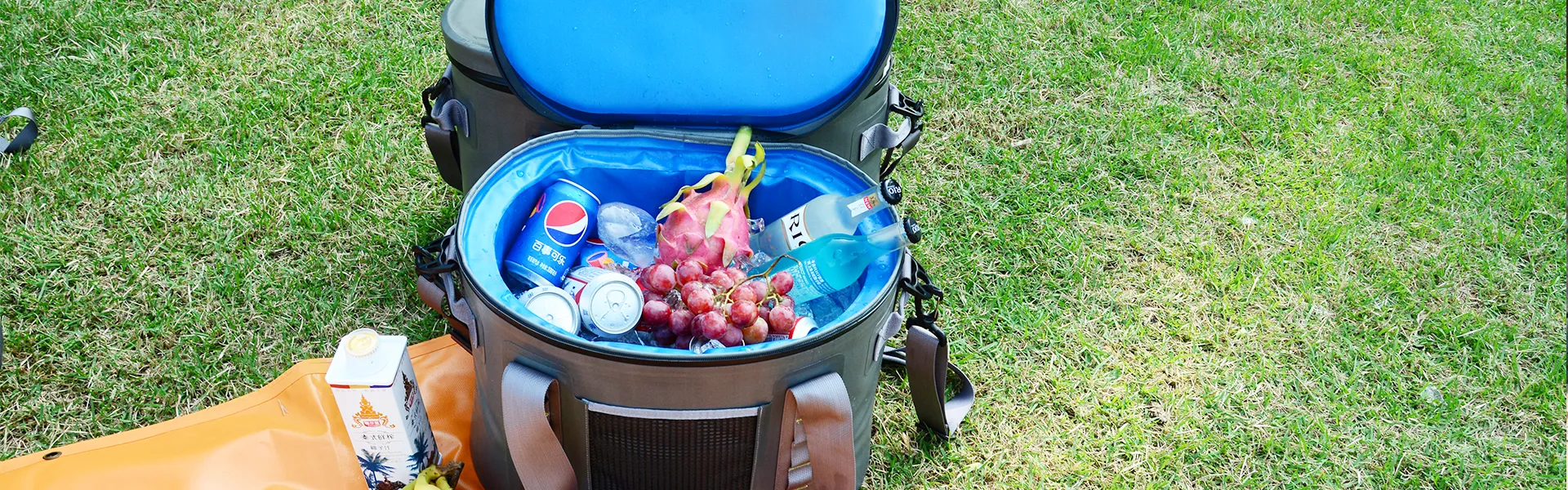
Insulation is where "fishing cooler" diverges most from "picnic cooler," because the contents are perishable protein rather than sealed cans. The wall does three jobs: hold the target temperature band, keep holding it through repeated opening as fish come in, and stay effective when wet.

The tiers, honestly

  • Closed-cell EPE, thinner walls — roughly 24-hour class. Right for short sessions and bank fishing near the car, where you top up ice or head home the same day.
  • EVA or thicker closed-cell foam (around 3 cm) — the practical mid-tier for full days; EVA is denser and holds its shape and thickness well under load.
  • High-density XPE, thick walls (up to 50 mm) — 48-hour class, for long days, hot climates, or trips where re-icing is not an option.
  • Premium panels (PU, VIP vacuum, EPP, aerogel) — the longest hold per millimetre, for flagship or expedition builds.

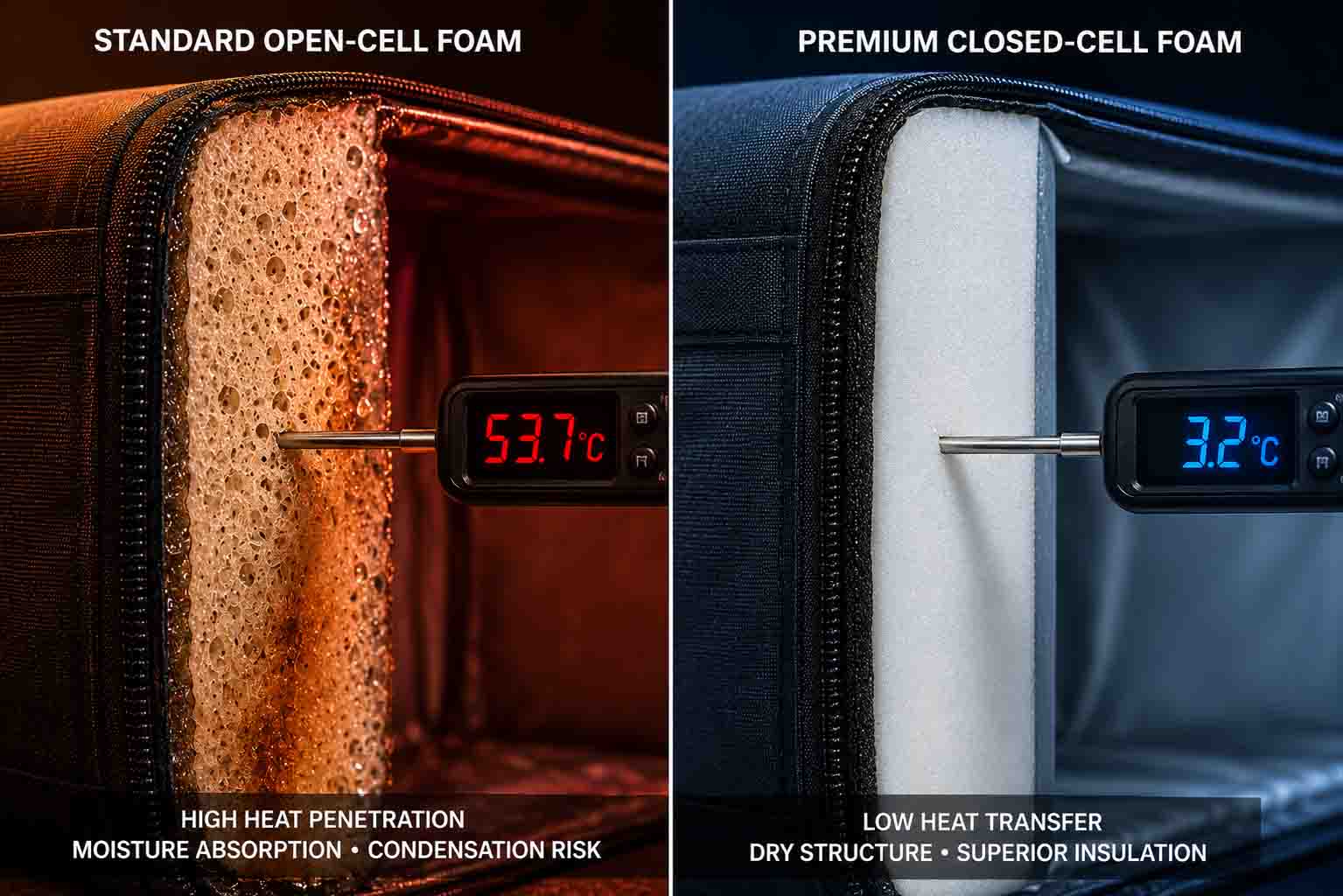
Closed-cell is non-negotiable for fishing. It absorbs almost no water, so the wall keeps its insulating value in a wet environment — and the same sealed-cell structure adds buoyancy, which matters on a boat. The full material science is in Insulated Cooler Backpack Manufacturer: EPE Foam & Cold-Retention Design and Waterproof Insulated Backpacks: Cold Retention Meets Full Submersion.

The fishing-specific insulation reality: published cold-hold figures assume the bag stays shut. Fishing is the opposite — you open it every time a keeper comes aboard. That argues for two things: a tier above what the trip length alone suggests, and a closure you can open and reseal quickly and completely, so each opening costs as little cold as possible.

Rod-Friendly Design: What It Really Means on a Cooler

"Rod-friendly" is where cooler backpacks and tackle backpacks meet, and it pays to know how the dedicated tackle world solves it before judging a cooler.

The two rod-carry systems

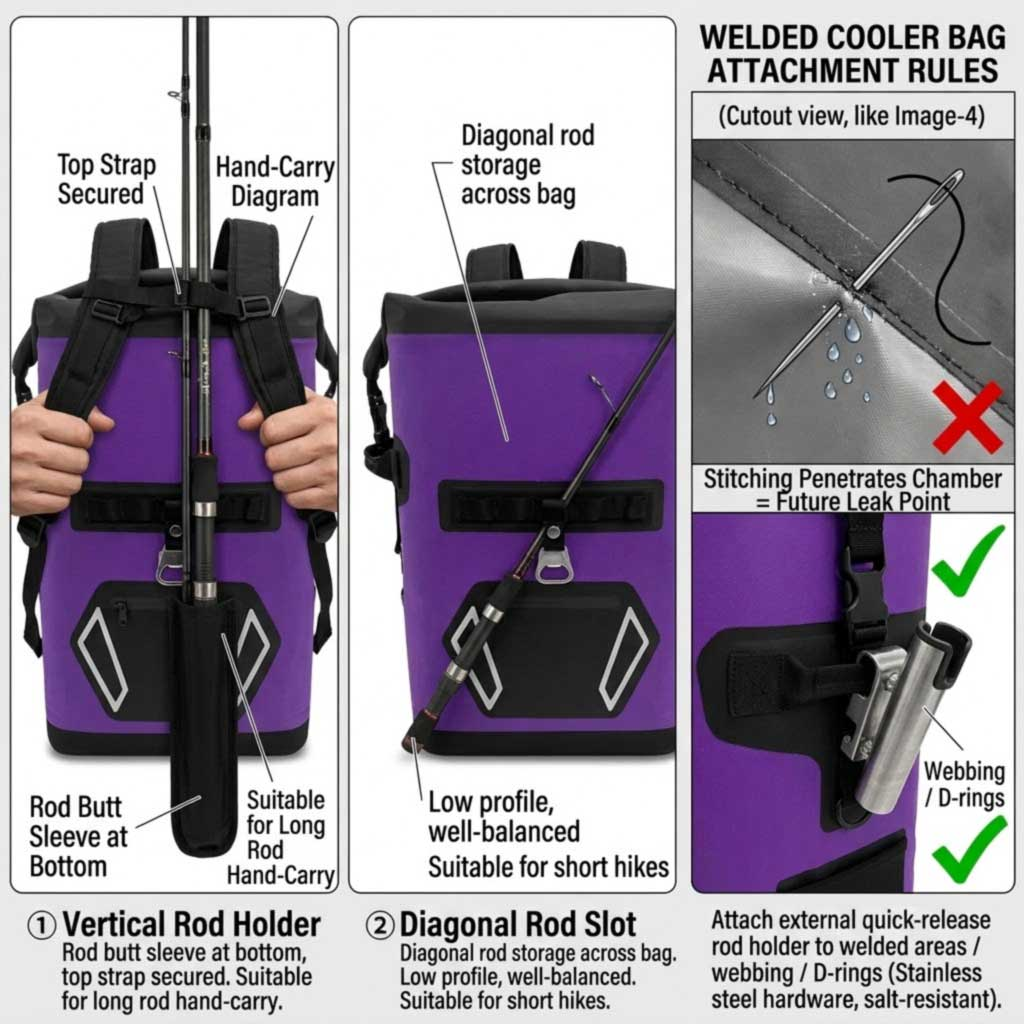
Tackle-pack design uses two established approaches, and they suit different fishing: vertical rod sleeves take the rod butt into a bottom sleeve with the tip secured by a top strap — best for longer rods and two-handed carry — while diagonal rod channels angle the rods across the pack's face for a lower profile and easier balance, ideal for short-travel hikes. A third route keeps it flexible: removable holsters let you switch between single-rod carry and no-rod mode for non-fishing trips.

MOLLE and attachment points do the heavy lifting

On a cooler, the practical answer is usually modular rather than built-in. MOLLE panels allow attachment of clip-on pouches — rod holders, net holsters, removable rod sleeves — while compression straps stabilise loads and reduce pack volume when partially filled. Clip-on rod holders are a real product category built around exactly this: one is described as designed to securely attach and detach to any MOLLE/PALS backpack, assembled with stainless steel hardware to prevent corrosion in saltwater environments. That stainless detail is worth noting for any accessory you add to a saltwater cooler.

The constraint buyers from tackle packs don't expect: on a sewn tackle backpack, a rod holder can be stitched anywhere. On a sealed, welded cooler backpack it cannot — every needle hole through the containment chamber is a future melt-water leak. Attachment points on a welded cooler have to be welded on, or anchored to welded external zones, so no stitching penetrates the cold, wet compartment. This is why welded coolers carry gear webbing, bungee panels and D-rings rather than rod sleeves stitched into the body, and why "add a rod holder later" means clipping to those points, not sewing to the bag. Reinforcement matters too — tackle-pack practice calls for bartack reinforcements on rod-holder seams, and on a cooler that reinforcement has to be built into the welded attachment zone at the design stage, not retrofitted.

What else makes a cooler work alongside a rod

  • Quick-access outer pockets for pliers, clippers and leaders, so you are not opening the cold chamber for tools — which also protects the cold-hold.
  • A closure you can work one-handed while the other hand holds a rod or a fish.
  • Compression straps to stabilise a part-full load so the pack does not shift as you wade or step between rocks.
  • D-rings and webbing for a net, a towel or a landing tool.
  • Corrosion-resistant hardware, since every buckle and ring meets salt.
vertical rod sleeve versus diagonal rod channel carry, and welded attachment zones on a sealed cooler backpack

Putting It Together: Three Fishing Profiles

Short bank session Full day, boat or shore Big day / long trip
Capacity ~15–20L ~22–28L ~40–45L
Insulation Closed-cell EPE, 24 hr class EVA or thick closed-cell, full-day Thick high-density, 36–48 hr
Closure Zip-around, fast access Airtight zipper Roll-top or airtight zipper
Harness Padded straps Straps + sternum Full sternum + waist
Rod handling Clip-on holder or hand carry Webbing / bungee attachment Gear webbing, compression straps

Sealock's Cooler Backpacks for Fishing

Sealock welds insulated cooler bags at 27.12 MHz across three factories in Dongguan, China and Ho Chi Minh City, Vietnam, with food-grade inner liners across the entire range. For fishing, the range splits by what you are sizing for — the catch, or the carry:

Sizing for the catch: insulated kill bags

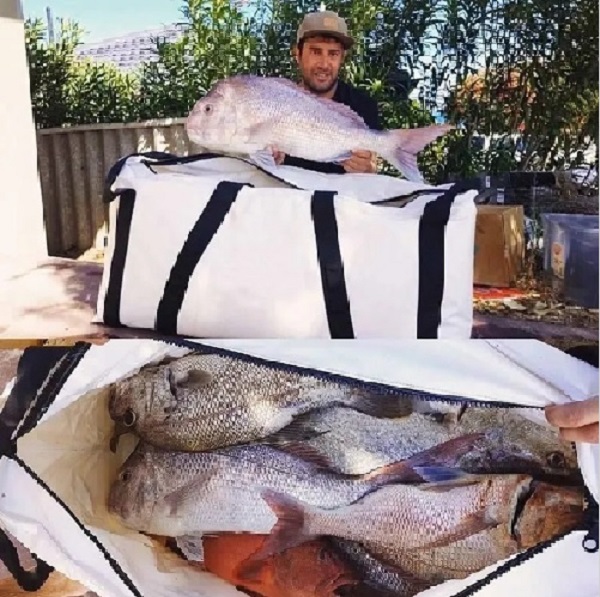
Once the catch outgrows what a backpack sensibly holds, length becomes the governing dimension rather than litres. A kill bag is sized to lay a fish flat and pack ice around it:

Image Model Size Sized for Link
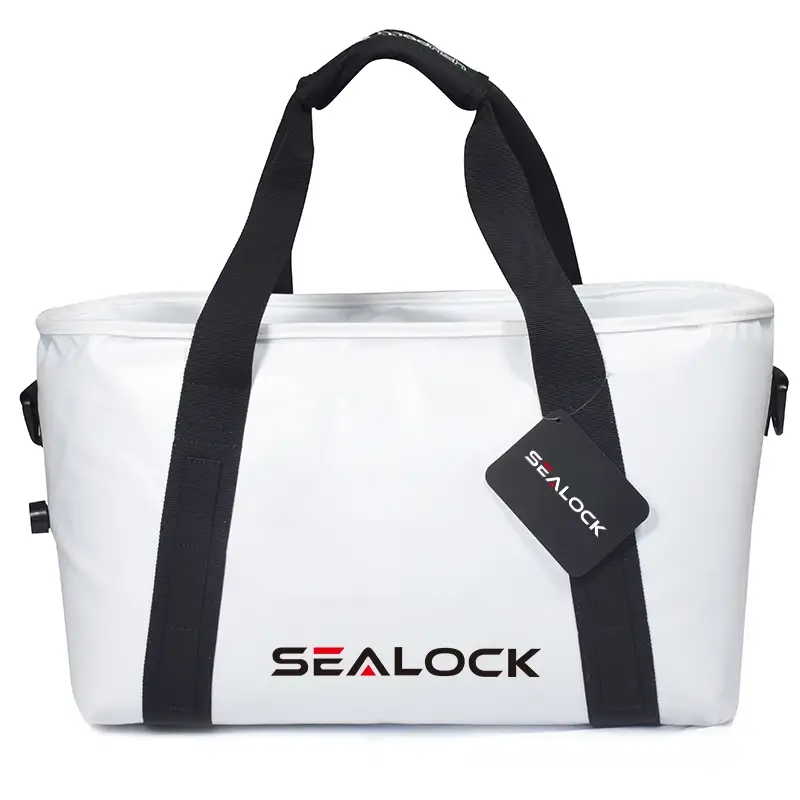
Insulated fish kill bag SL-C377 Insulated Fish Kill Bag (SL-C377) 50 × 30 × 30 cm Sea and lake fishing; insulated, adjustable strap, portable View
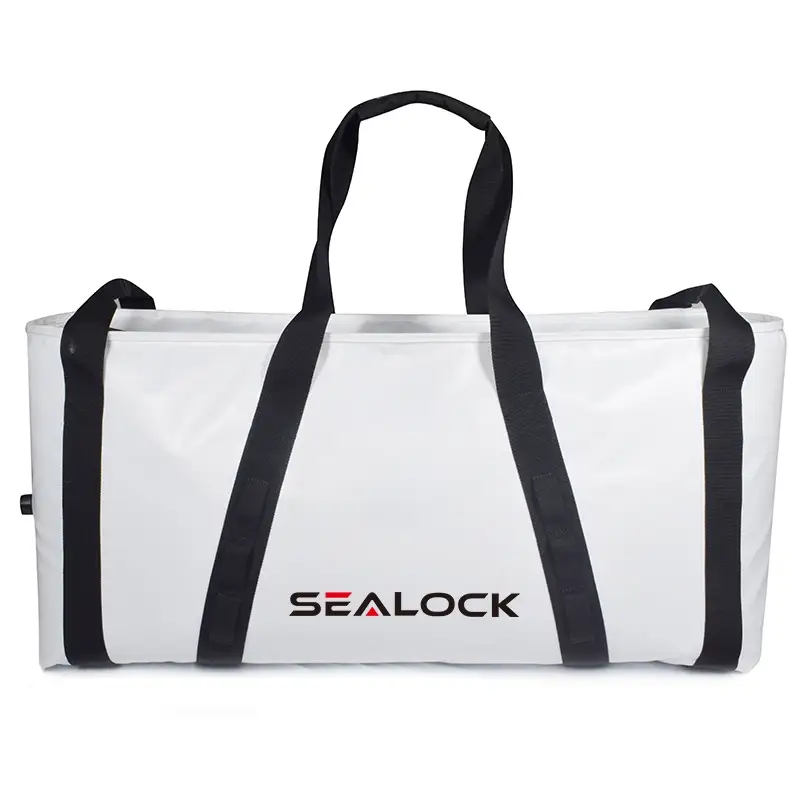
Kill fish cooler bag SL-C379 Kill Fish Cooler Bag (SL-C379) 85 × 35 × 40 cm Boat fishing; sea bass and mid-size species View
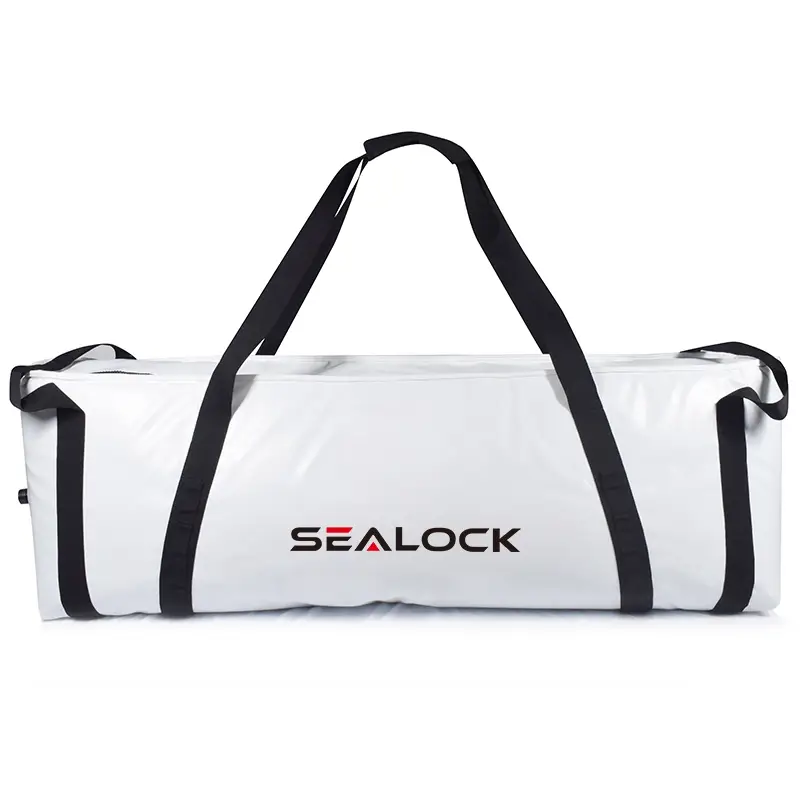
Large insulated fish kill bag SL-C380 Large Insulated Fish Kill Bag (SL-C380) 120 × 35 × 40 cm Offshore boat fishing; tuna and large species View

This is the sizing rule the litre figure hides: a 120 cm bag is not chosen because it holds more volume than an 85 cm one, but because a tuna will not bend into the shorter bag without damaging the flesh. Measure the species you keep, then pick the length.

Sizing for the carry: cooler backpacks

Where you walk, wade or paddle in, the backpack format carries hands-free and takes the attachment points that clip-on rod holders need:

Image Model Size / insulation Rod-friendly features Link
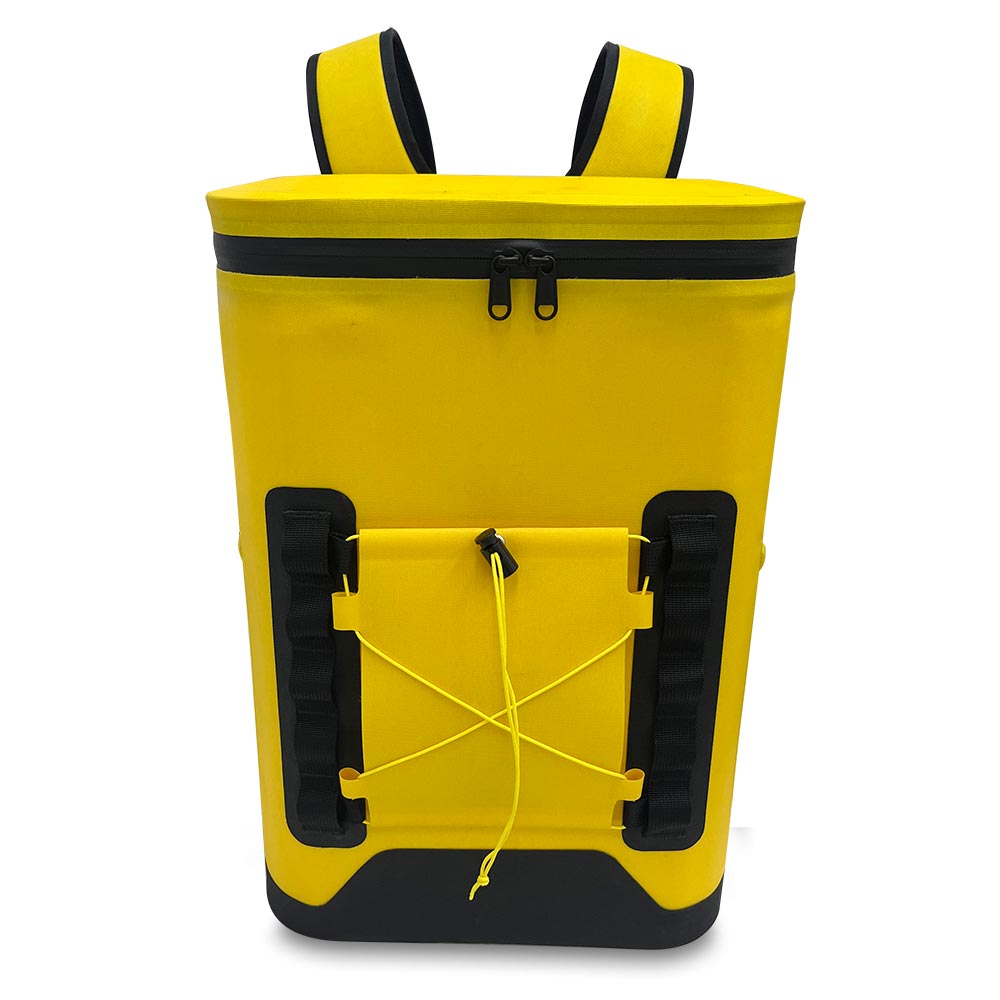
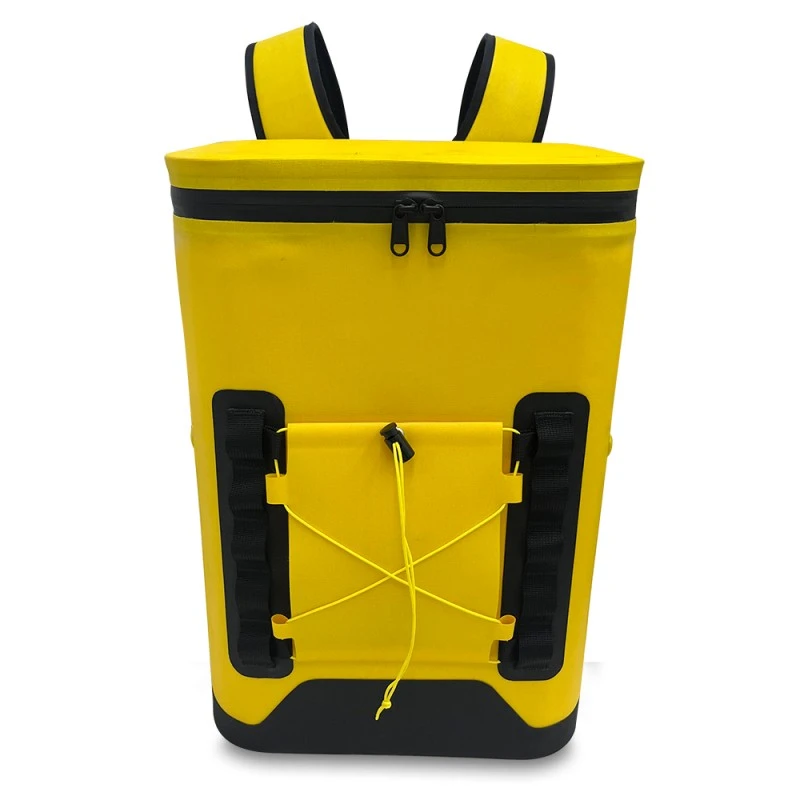
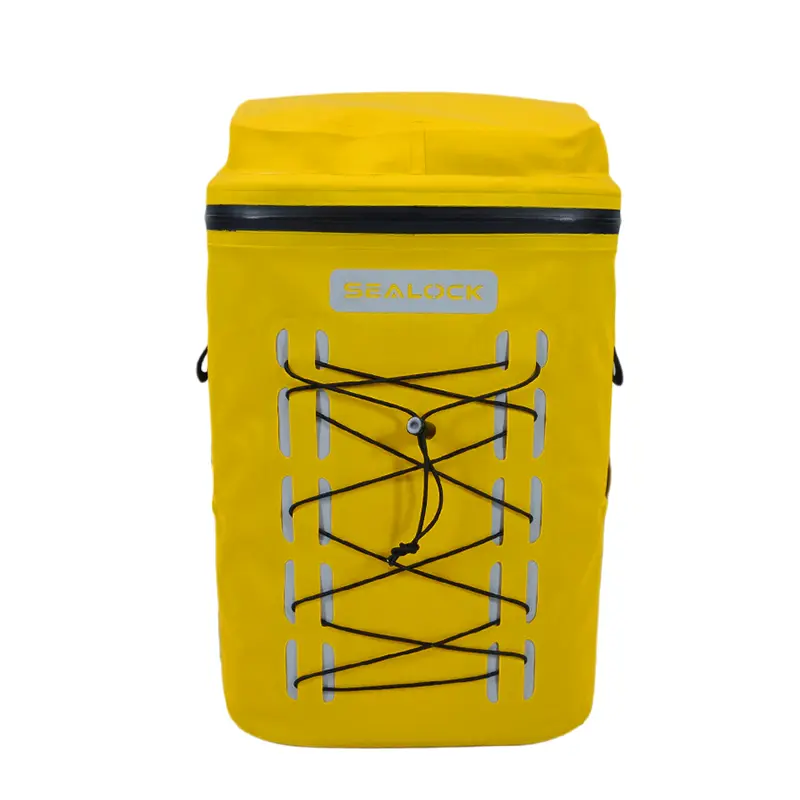
28L airtight-zipper insulated backpack cooler SL-I274 28L Airtight-Zipper Backpack Cooler (SL-I274) 28L, 3 cm EVA core, up to 48 hr Front bungee, utility pocket, side panels; ergonomic padded harness View
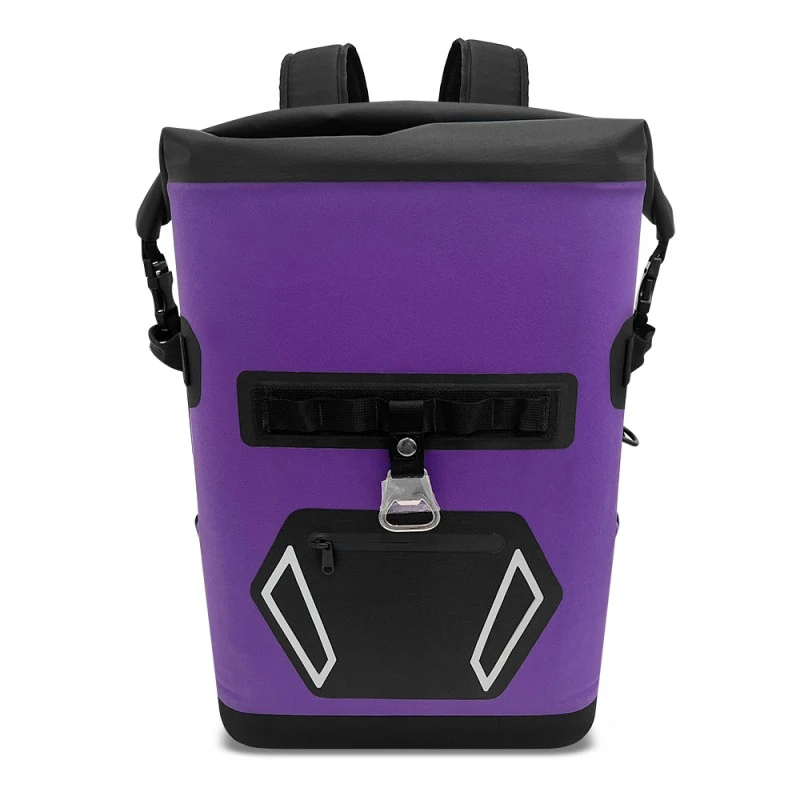
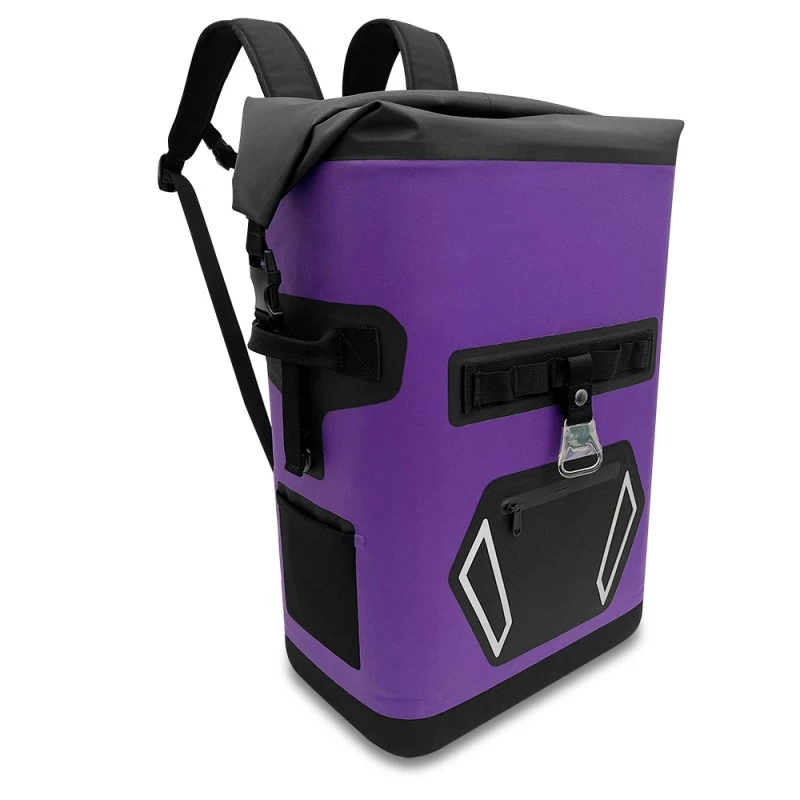
45L roll-top backpack cooler SL-I270 45L Roll-Top Backpack Cooler (SL-I270) 45L, 3 cm EVA foam, up to 36 hr Gear webbing for clip-on accessories, front pocket, bottle opener, reflective trim, UTX buckles View

Note the honest split: these are cooler backpacks with attachment points, not tackle backpacks with built-in rod sleeves. For most anglers that is the right division of labour — a kill bag sized to the catch, a backpack cooler for food, drink and the walk in, and a clip-on holder or separate tackle bag for rods and trays. Where a brand wants rod carry integrated into a welded cooler, that is a development project rather than an off-the-shelf feature, and it is one Sealock builds.

two fishing cooler backpack sizes in cross-section showing ice-to-catch load and matching harness requirements

For Brands: Developing a Rod-Friendly Cooler Backpack

Integrating rod carry into a sealed cooler is exactly the kind of demanding brief a welding factory exists for — and demanding briefs are welcome. Beyond colour and logo, Sealock develops ground-up from a sketch, sample or performance target: welded rod-sleeve or holster attachment zones engineered so no stitching penetrates the containment chamber, MOLLE or webbing panels welded to the shell, reinforced anchor points, the insulation tier and wall thickness that set the cold-hold, the IPX seal level and closure, corrosion-resistant hardware for salt use, and the harness for a loaded carry — then proven by immersion and cold-hold testing before production. Premium insulation up to VIP vacuum panels and aerogel and IPX6–IPX8 welded seal levels are in scope. Ground-up work runs longer at sampling, so book against a season. See OEM Soft Cooler Backpacks: What You Can Customize Beyond Logo & Color and ODM Soft Cooler Backpack Supplier: Design-Led, Ground-Up Development.

MOQ / lead time 300 pcs per design; samples 7–15 days; production 30–45 days; FOB Guangdong
Origin China or Vietnam on the same specification
Certifications ISO9001, BSCI, SMETA P4, GRS, HIGG, SCAN

FAQ: Fishing Cooler Backpacks

Q: What size fishing cooler backpack do I need?

A: Size for catch plus ice, since roughly two parts ice to one part contents is standard — a 28L cooler is not 28L of fish. Around 15–20L suits short bank sessions, 22–28L a full day with a decent catch, and 40–45L big days or longer trips. Also check internal length against the species you keep, and be honest about how far you have to carry it loaded.

Q: What insulation should a fishing cooler backpack have?

A: Closed-cell foam always, because it barely absorbs water and keeps insulating in a wet environment. Thinner EPE suits 24-hour-class short sessions; around 3 cm of EVA or thick closed-cell foam suits full days; thick high-density XPE reaches the 48-hour class for long or hot trips. Because you open a fishing cooler constantly, it is worth going one tier above what the trip length alone suggests.

Q: Can I carry rods on a cooler backpack?

A: Usually via attachment points rather than built-in sleeves. Clip-on rod holders designed for MOLLE or webbing panels attach to a cooler's gear webbing and D-rings, and removable holsters let you drop rod carry entirely on non-fishing trips. Choose stainless hardware for saltwater. Dedicated rod sleeves stitched into the body are a tackle-backpack feature and are not straightforward on a sealed cooler.

Q: Why can't a rod holder just be sewn onto a waterproof cooler backpack?

A: Because stitching through the containment chamber puts needle holes in the water barrier, and melt-water finds them. On a welded cooler, attachment points must be welded on or anchored to welded external zones so nothing punctures the cold, wet compartment. That is why welded coolers offer webbing, bungee panels and D-rings for clip-on accessories rather than stitched-in rod sleeves.

Q: Vertical or diagonal rod carry — which is better?

A: Vertical sleeves take the rod butt into a bottom pocket with the tip strapped at the top, giving stability for longer rods and two-handed carry. Diagonal channels angle rods across the pack for a lower profile and better balance on short hikes. Vertical suits long rods and open ground; diagonal suits moving through brush or over rocks.

Q: Can a cooler backpack carry tackle trays too?

A: Not in the cold chamber — that is a wet, food-contact space and the wrong place for trays. Tackle packs are built around tray formats (a 20L tackle pack takes about six 3600 or four 3700 boxes), so if you need both, keep tackle in external pockets and attachment panels or carry a separate tackle bag, and size the cooler purely for fish and ice.

Sourcing fishing cooler backpacks? Sealock (YiFuLong Outdoor Gear Co., Ltd.) welds insulated cooler backpacks at 27.12 MHz in China and Vietnam — food-grade liners, closed-cell insulation tiers from 24 to 48-hour class, welded attachment zones and IPX-rated builds. Tell the team your customers' capacity, cold-hold and rod-carry needs, and they will engineer and prove the build.

Email: info@sealock.com.hk  |  Phone: +86-13632981825  |  Browse the soft cooler range

Design conventions, capacity guidance and accessory details cited here reflect publicly available angling and gear-industry sources as of mid-2026 and vary by product and use. Confirm dimensions, cold-hold and attachment specifications for a specific product before relying on them.

Related News
Leave me a message
X
We use cookies to offer you a better browsing experience, analyze site traffic and personalize content. By using this site, you agree to our use of cookies.Privacy Policy
RejectAccept