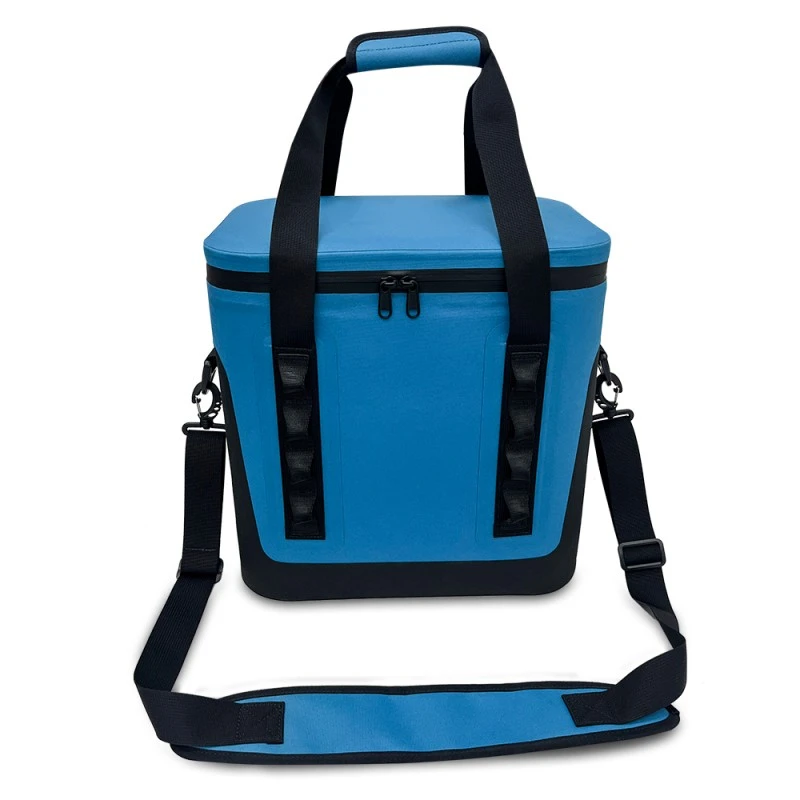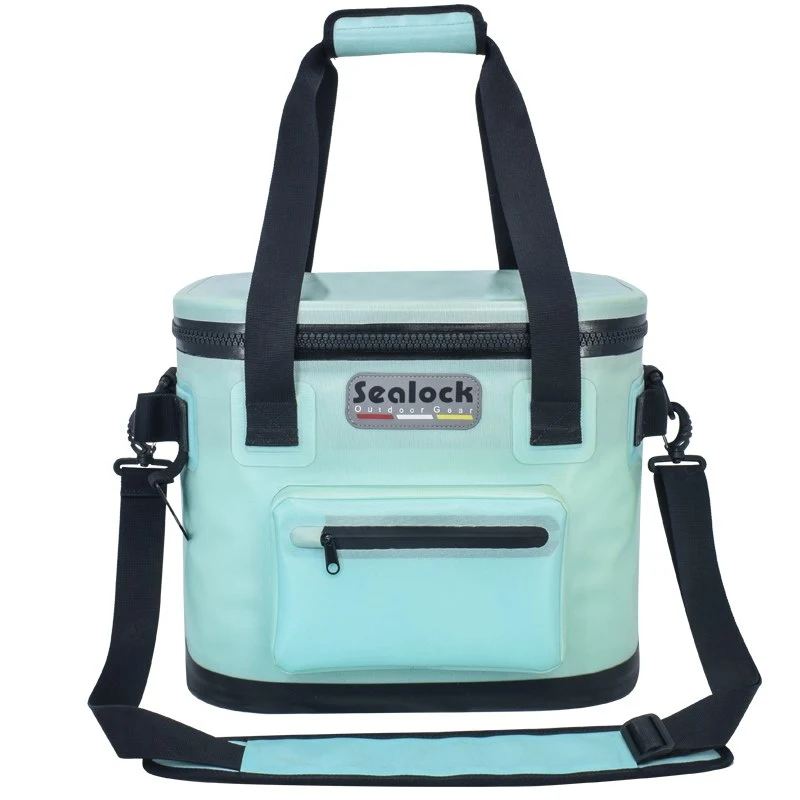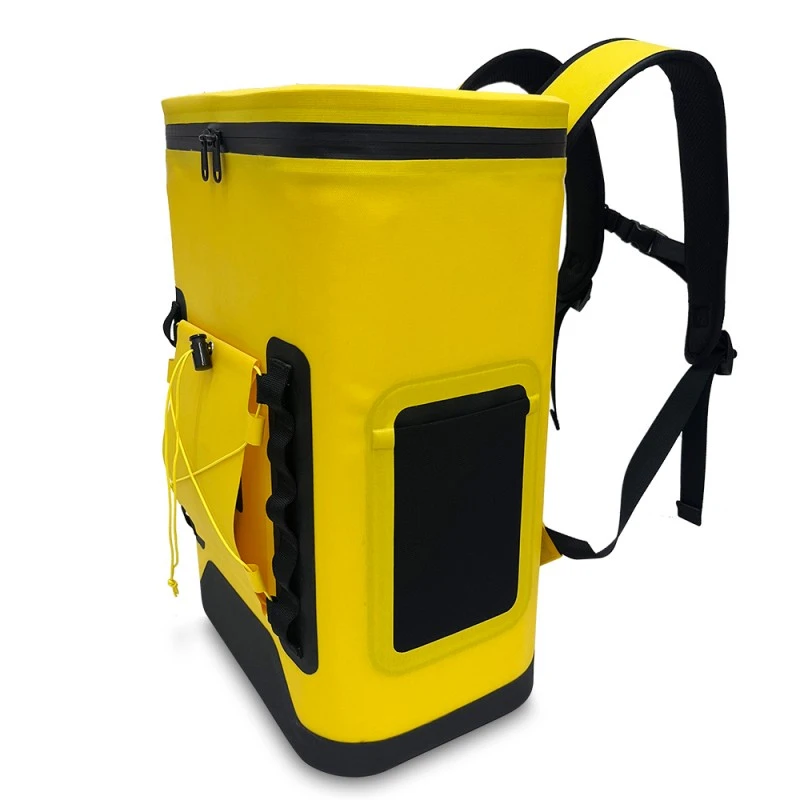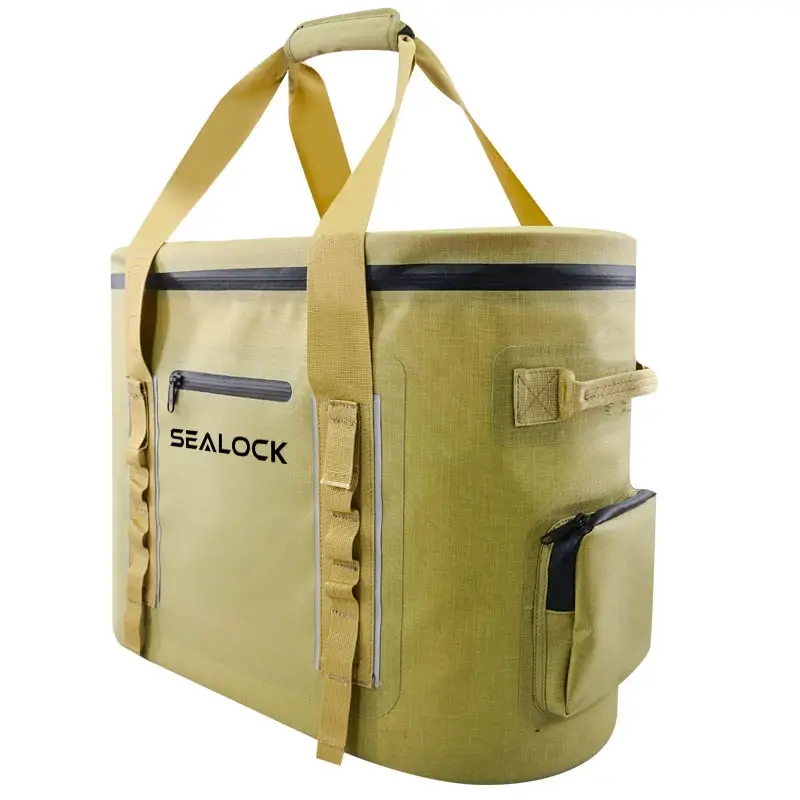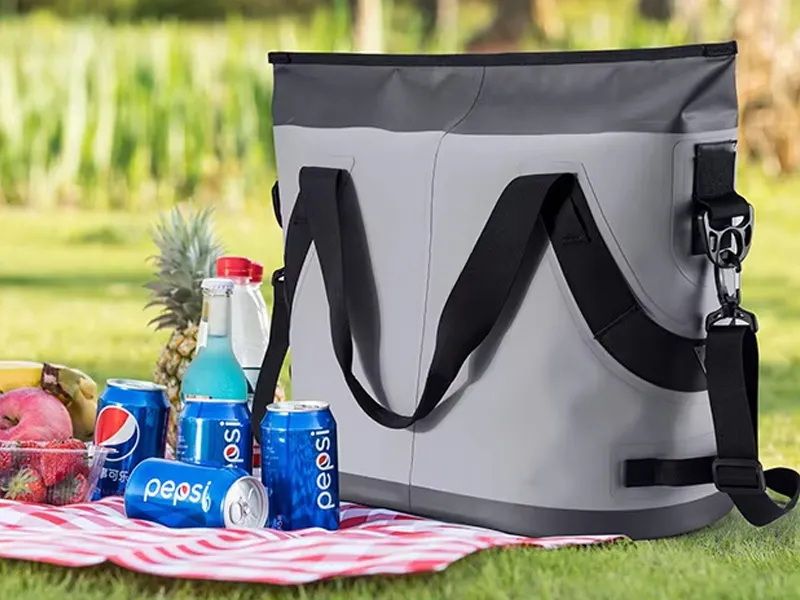
A soft sided cooler is a cooler with a flexible fabric shell instead of a rigid plastic box: insulating foam sandwiched between an outer shell and a waterproof inner liner, closed with a zipper, roll-top or flap, and carried by handles, a shoulder strap or backpack straps. That description covers everything from a promotional can cooler to a welded expedition cooler that holds ice for two days. What separates them is not the shape or the size but how they are built. This guide explains the three ways soft sided coolers are made, what each means for ice retention, leakproofing, weight and price, the shapes they come in, and when a soft cooler beats a hard one. It is written by Sealock (YiFuLong Outdoor Gear Co., Ltd.), which has built soft sided coolers with both sewn and high-frequency welded construction in China and Vietnam for over 20 years, for brands including Stanley, YETI, Hydro Flask and Osprey.
What Is Inside a Soft Sided Cooler
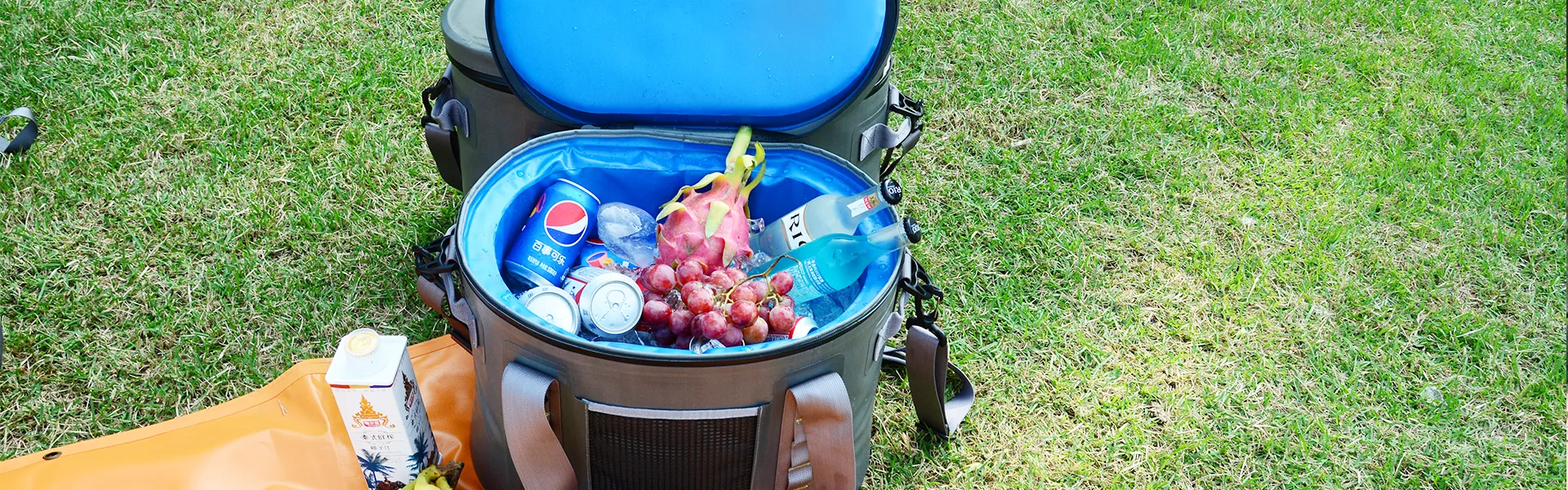
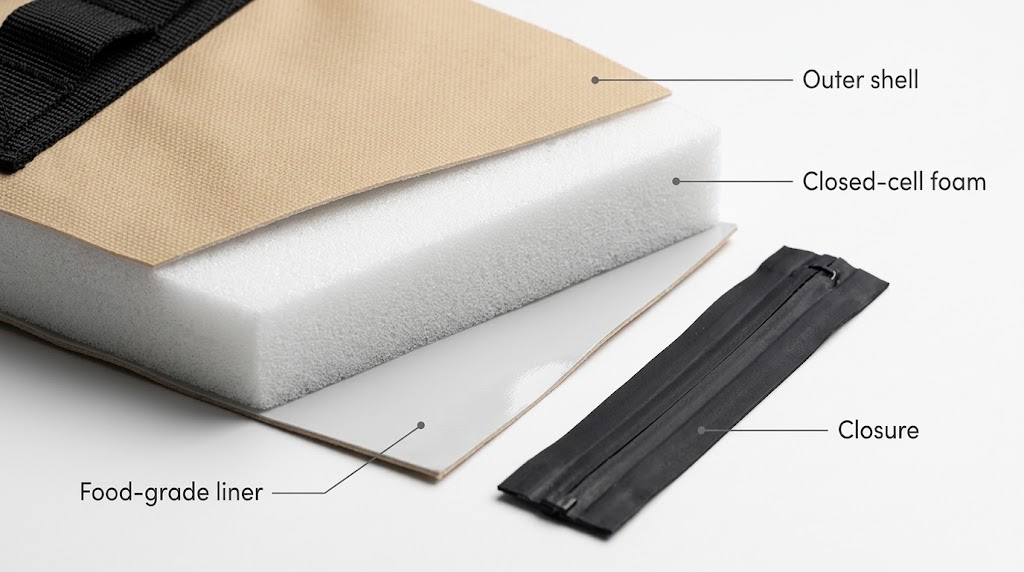
Every soft sided cooler has the same four layers, working from the outside in. The outer shell takes the abrasion, sun and rain: polyester or nylon for lighter coolers, PVC-coated tarpaulin or TPU-laminated nylon for tougher and waterproof ones. The insulation is closed-cell foam, most often polyethylene foam (EPE or crosslinked XPE) or EVA foam, in thicknesses from a few millimetres in a lunch cooler to 20 millimetres or more in a two-day cooler. The liner holds ice and meltwater and touches food, so it should be a food-grade film such as PEVA or TPU. The closure seals the opening and, more than any other part, decides whether the cooler leaks.
Two soft coolers can use identical materials and still perform completely differently, because the way those layers are joined decides whether water and warm air can get through. That is where the three constructions differ.
Construction 1: Sewn
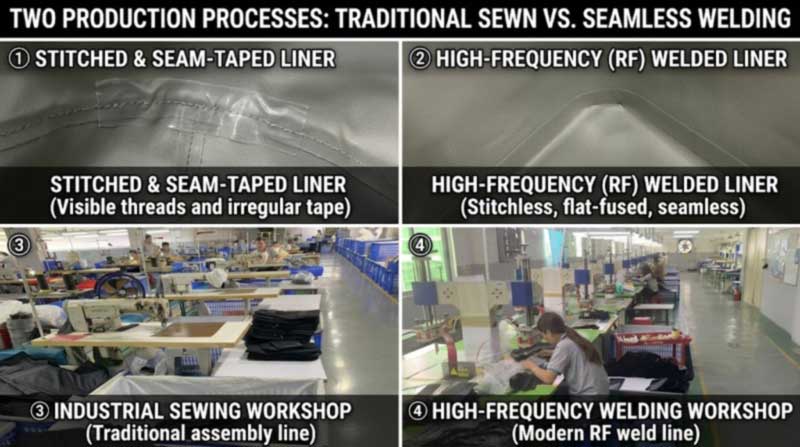
In a sewn soft cooler, the shell, foam and liner are stitched together, and the liner seams are usually covered with tape. Sewing is fast, flexible and inexpensive, and it allows soft, foldable shapes and lots of pockets. It is the construction behind most promotional coolers, lunch coolers, grocery coolers and everyday can coolers.
The limitation is that every stitch is a hole. A sewn liner keeps meltwater in when the cooler is new and upright, but taped seams wear, and over time water finds its way through the stitch line into the foam, where it cannot dry. Sewn coolers are therefore usually sold as water-resistant rather than leakproof, and they generally sit in the "keeps things cold for a day" class. For a cooler that will carry a few drinks and lunch for an afternoon, that is often exactly right.
Construction 2: High-Frequency Welded
In a welded soft cooler, the liner, and usually the outer shell as well, is made from TPU- or PVC-coated fabric joined by high-frequency welding. Radio-frequency energy heats the coating in the seam area from within, and pressure fuses the two layers into one continuous material, with no stitch holes. The welded liner becomes a sealed tub that cannot leak at its seams, and a welded shell keeps spray and rain out completely. Paired with an airtight zipper or a welded roll-top, the cooler can be leakproof even upside down, and models built and tested for it reach IPX7, surviving full immersion.
Welded construction is what allows the thick, continuous insulation and sealed closures that move a soft cooler into the two-day class. In published independent tests, the soft coolers that held ice longest were built this way; one indoor test recorded results from about 35 hours to about 62 hours across the soft coolers it compared. Welded coolers cost more to make, weigh slightly more and are stiffer than sewn ones, but they are the construction for fishing, boating, beach and overnight use. Most good welded coolers still use sewing where it belongs, on straps, webbing and handles, joined to the shell through welded reinforcing patches so the waterproof layer is never pierced.
Construction 3: Hybrid and Hard-Liner Coolers
Between soft and hard coolers sit hybrids: a soft fabric exterior over a rigid or semi-rigid inner tub, or a soft cooler with a moulded lid or base. The rigid parts give structure: the cooler stands up when half empty, protects food from being crushed, and is easier to clean. Molded lids and bases also let the top and bottom carry thicker insulation, which is where many fully soft coolers lose cold first. The trade-off is weight and bulk: a hybrid does not fold flat and is heavier than a fully soft cooler of the same size.
| Sewn | High-frequency welded | Hybrid / hard-liner | |
|---|---|---|---|
| Liner seams | Stitched, usually taped | Fused, no holes | Rigid tub or welded liner |
| Leakproof | Water-resistant | Yes, with an airtight or roll-top closure | Depends on the liner and closure |
| Typical ice life | About a day | About two days in mild conditions | One to two days |
| Weight and packability | Lightest, folds flat | Moderate, holds its shape | Heaviest, keeps its shape |
| Relative cost | Lowest | Highest | Medium to high |
| Best for | Lunch, grocery, promotional, day trips | Fishing, boating, beach, overnight | Picnics, family days, food that must not be crushed |
The Shapes Soft Sided Coolers Come In
Construction and shape are separate choices; each shape can be built sewn or welded. Totes have handles and often a shoulder strap and are the most common soft cooler, from small can coolers to 30-litre-plus family coolers. Cooler backpacks put the load on two shoulders for hiking, festivals, beach walks and launching a kayak, and work best with a padded harness and a sternum strap. Roll-top coolers close like a dry bag, with the rolled top squeezing out air and sealing without a zipper. Slings and small coolers carry a few drinks over one shoulder. Lunch coolers are the smallest of all, built for a few hours rather than a day.
Soft Sided Cooler or Hard Cooler?
A soft sided cooler weighs a fraction of a hard cooler of the same capacity, can be carried any distance, squeezes into car boots, kayak tank wells and boat lockers, and folds or squashes down when empty. A good welded soft cooler matches a hard cooler for day trips and overnight use. A thick-walled hard cooler still holds ice longer over several days, doubles as a seat or step, and protects its contents from crushing. For multi-day trips where the cooler stays in one place, a hard cooler wins; for anything carried or packed into tight space, a soft sided cooler is the practical choice. Our article comparing soft and hard coolers goes further.
Choosing and Caring for One
Start from the use: how many hours the cooler must hold, whether it will be tipped, carried far or splashed, and how much it must hold, ideally with two parts ice to one part contents. That decides the construction; the shape follows from how you will carry it. Before buying, check the closure, the insulation at the lid and base, the liner seams and the strap anchors; our guide to the faults to check in a soft cooler bag lists what to look for. After every use, empty the cooler, wash the liner with warm soapy water and leave it open to dry; most odour comes from a cooler closed while still damp. For longer ice life on any cooler, see what decides soft cooler ice retention.
For Brands: Choosing the Construction for a Range
A soft cooler range usually spans more than one construction: a sewn entry cooler at an accessible price, and a welded flagship that carries the brand's performance claims. Because we run high-frequency welding lines and sewing lines in the same building, we build both, and often both in one product. When developing a range with a brand, we fix the construction tier, foam type and thickness per panel, liner material, closure and hardware for each model, then test the sample to the same standard as production: leak testing (full water-immersion for 2+ hours on IPX7 models, heavy rain and water-jet testing on non-submersible ones), load testing to 1,500-plus cycles, zipper fatigue to 3,000 cycles, tensile and bonding strength on welds, salt spray on hardware and multi-probe cold-hold logging.
Soft Sided Coolers in Our Range
| Image | Model | Construction and build | Link |
|---|---|---|---|
|
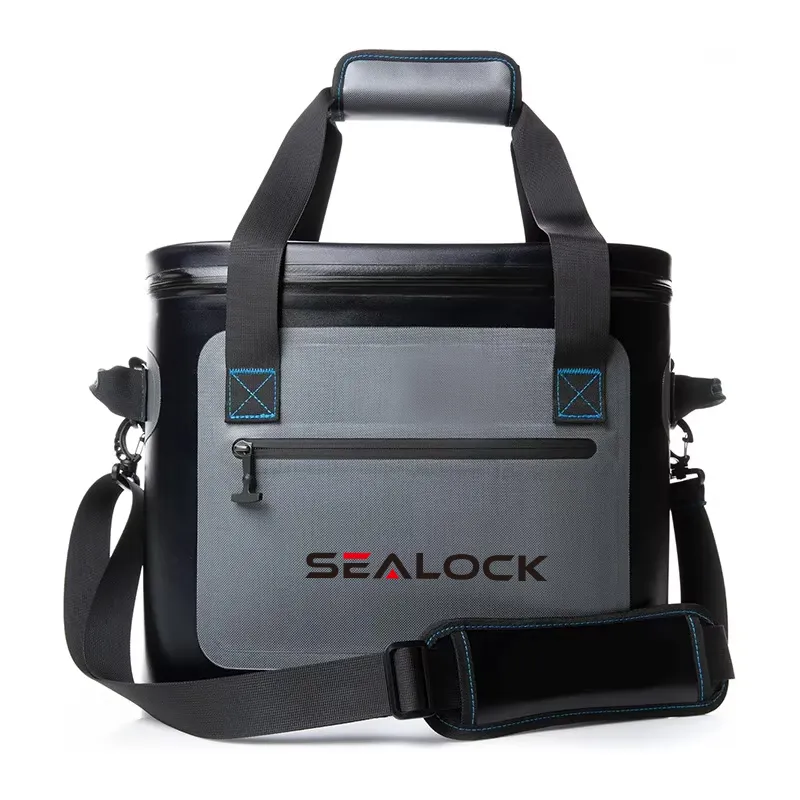
24L Soft Cooler Tote (SL-I230) | Welded tote: 840D TPU, 20 mm XPE, airtight zipper, IPX7, up to 48 hr | View |
|
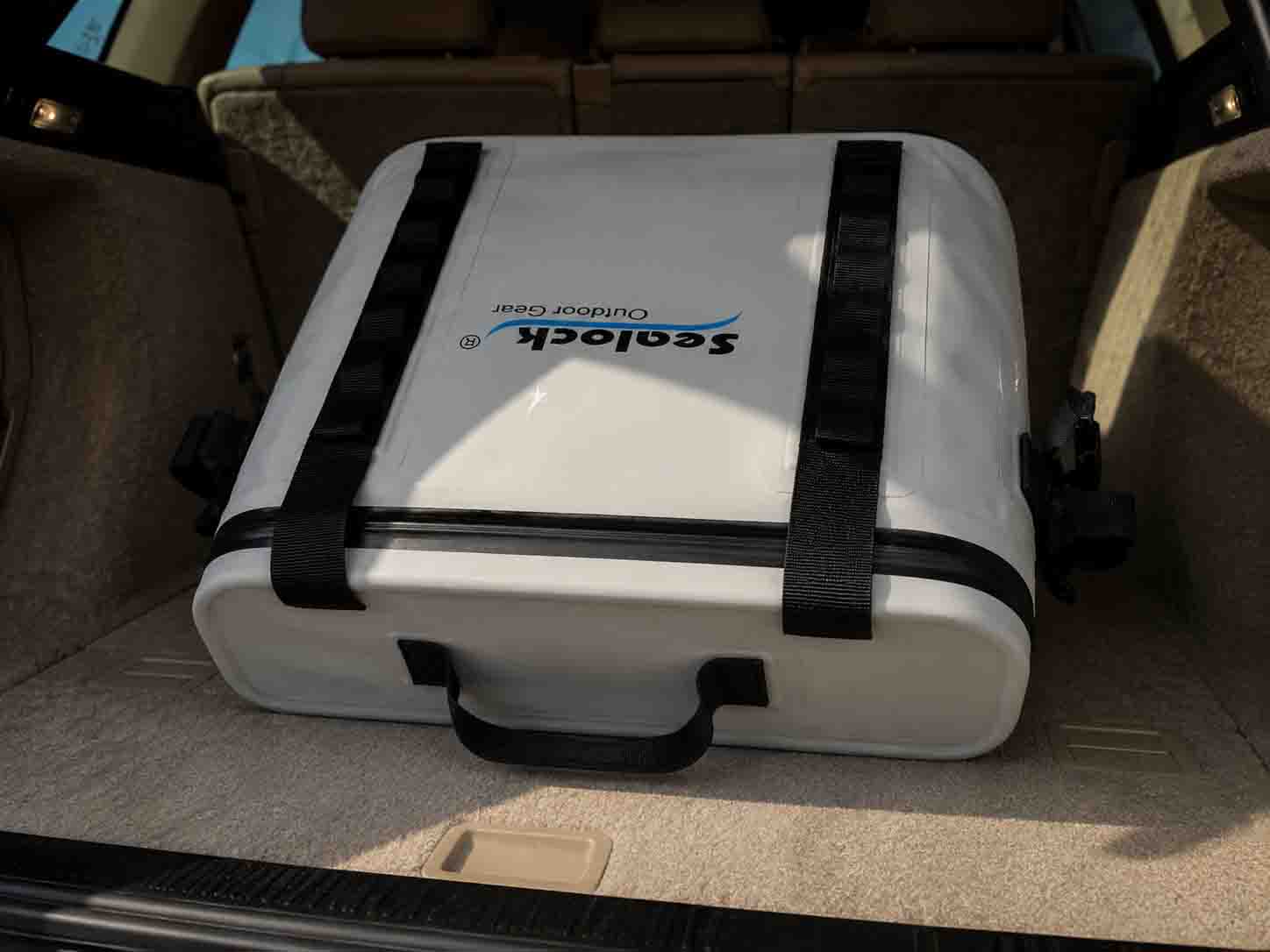
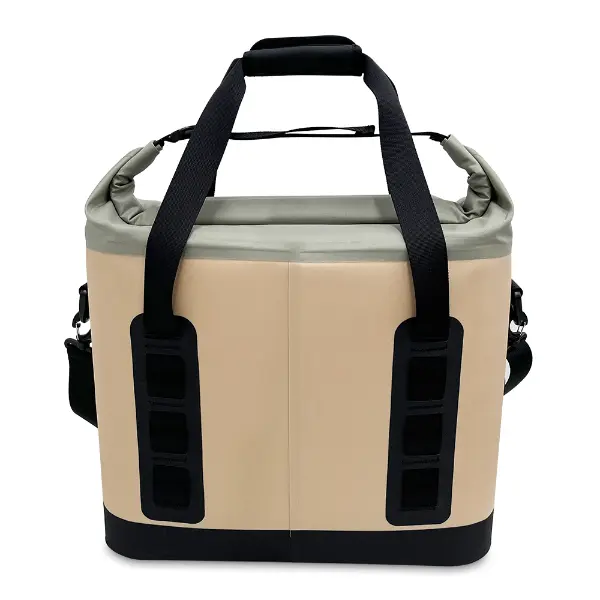
20L Roll-Top Leakproof Cooler (SL-I288) | Welded roll-top: 840D TPU, closed-cell EPE, reinforced base, up to 48 hr | View |
|
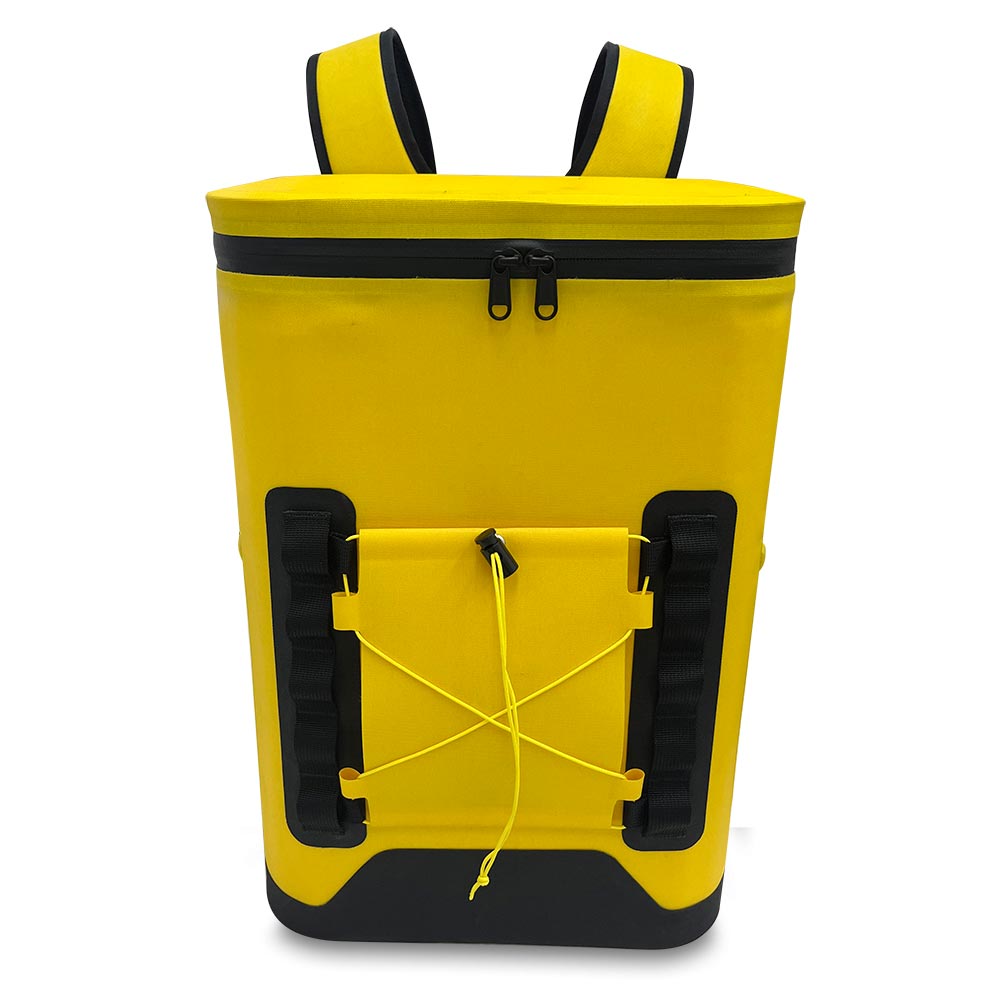
28L Airtight-Zipper Cooler Backpack (SL-I274) | Welded backpack: 840D TPU, 3 cm EVA core, food-grade TPU membrane, airtight zipper, up to 48 hr | View |
|
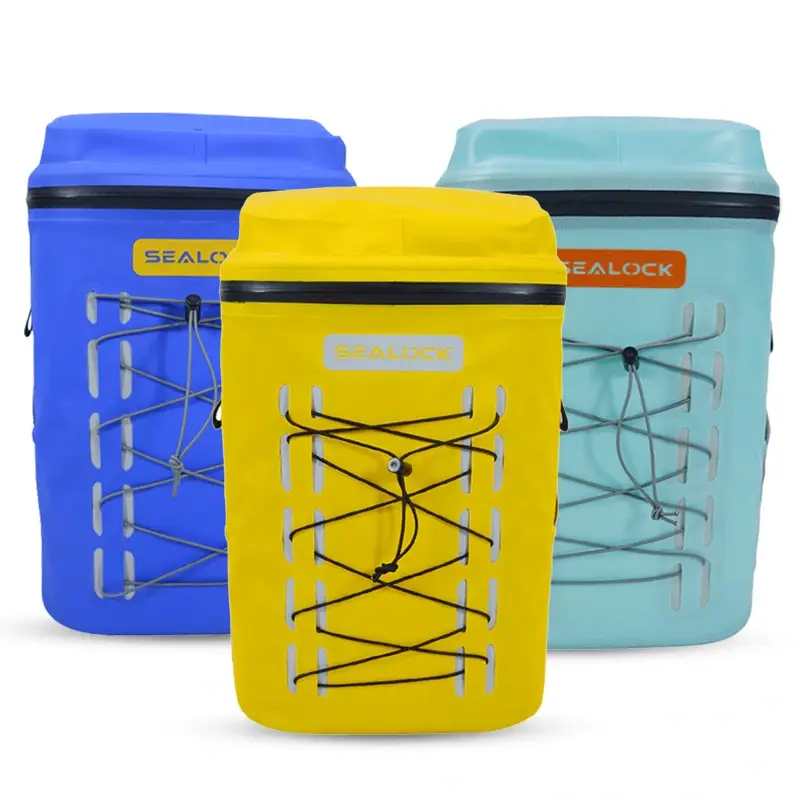
Insulated Cooler Backpack (SL-I075A) | Everyday backpack: 840D PVC tarpaulin, EPE foam, PEVA liner, 36 cans | View |
All models are available for OEM and ODM with your logo, colours and specification. MOQ starts at 300 pieces, samples take 7–15 days and bulk production 30–45 days.
FAQ
Q: What is a soft sided cooler?
A: A cooler with a flexible fabric shell instead of a rigid box, made from an outer shell, closed-cell foam insulation and a waterproof food-grade liner, closed with a zipper, roll-top or flap.
Q: How long does a soft sided cooler keep ice?
A: A sewn soft cooler typically keeps ice for about a day in mild conditions; a welded cooler with an airtight closure and thick foam can reach about two days. Heat, sun and frequent opening shorten both.
Q: Are soft sided coolers leakproof?
A: Welded coolers with an airtight zipper or a welded roll-top are. Sewn coolers are usually water-resistant: they hold meltwater upright but can leak through the zipper or seams if tipped.
Q: Is a soft sided cooler better than a hard cooler?
A: For carrying, tight spaces and day or overnight trips, yes. For several days in one place, a thick-walled hard cooler holds ice longer.
Q: Can you put dry ice in a soft sided cooler?
A: Only in a cooler designed for it and never fully sealed. Dry ice releases carbon dioxide gas, which can build up pressure in an airtight cooler.
Q: How do you clean a soft sided cooler?
A: Empty it, wash the liner with warm soapy water, rinse, and leave it open until completely dry. Do not machine-wash a welded cooler.
Q: Can you make soft sided coolers for our brand?
A: Yes, in sewn, welded or hybrid construction, from 300 pieces per model, with samples in 7–15 days.
Building a soft cooler range? Tell us the uses and price points. We will recommend a construction for each model and send samples in 7–15 days.
Email: info@sealock.com.hk · Phone: +86-13632981825 · MOQ 300 pcs
Independent test figures quoted are from Outdoor Life's published soft cooler test. Ice life depends on ice load, ambient temperature, sun exposure and how often a cooler is opened. Brand customers are named as manufacturing clients only; no endorsement is implied.