A kayak cooler has a harder job than any other cooler. It has to fit a space measured in inches, stay put when the boat rolls, survive spray and the odd wave over the stern, keep drinks and bait cold for a full day on the water, and, if you fish, take a catch that may be longer than the cooler itself. Ice retention matters, but on a kayak, fit, security and waterproofing usually decide whether a cooler works. This guide covers how to choose a kayak cooler: where it goes, which type suits which kayak, what size, how to secure it and how to keep fish. It is written by Sealock (YiFuLong Outdoor Gear Co., Ltd.), which manufactures high-frequency welded soft coolers and fish bags in China and Vietnam for outdoor and fishing brands including Simms, Stanley and YETI.
Start With Where It Goes
Kayaks offer four places for a cooler, and each sets different limits.
| Location | Suits | What to watch |
|---|---|---|
| Rear tank well (sit-on-top kayaks) | The main cooler: a soft cooler or narrow hard cooler, typically around 25 quarts | Tank wells taper; check the width at the narrow end, and leave room for a crate or rod holders if you use them. |
| Behind or on the seat back | A slim cooler for a few drinks and lunch within reach | Small capacity; must not interfere with the seat or your paddle stroke. |
| Bow deck or front hatch | Long, flat fish bags; small soft coolers inside a hatch | Weight in the bow affects tracking; inside hatches a soft cooler that can flex fits better than a rigid one. |
| Towed behind | Floating coolers that add capacity without using deck space | Adds drag; less suited to open or rough water. |
Measure the Tank Well, Then Subtract
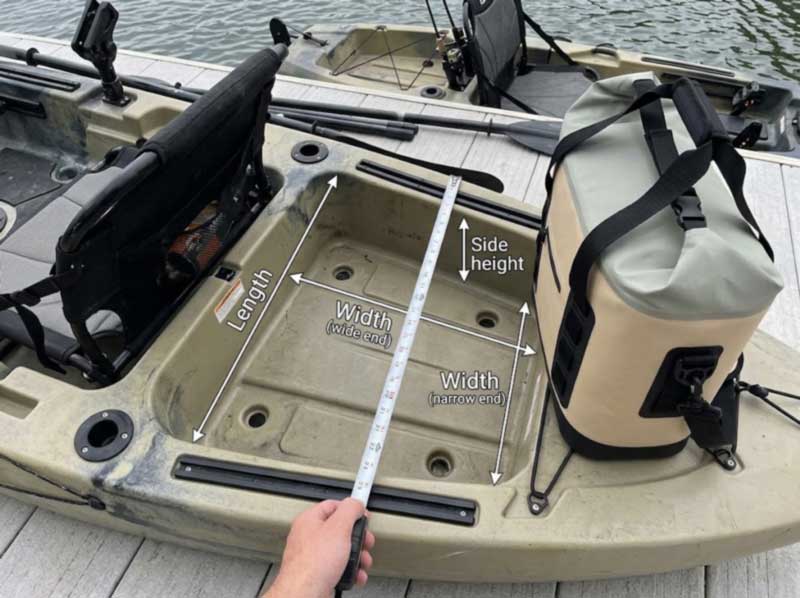
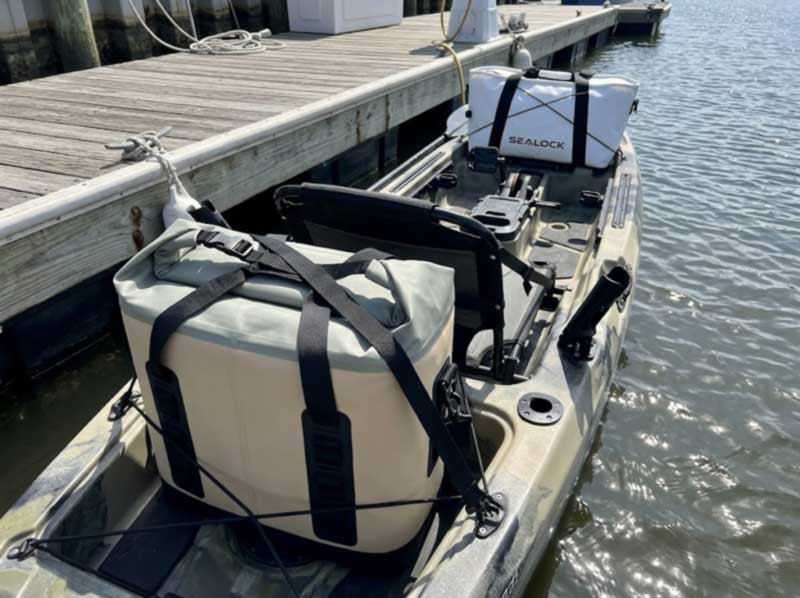
Field & Stream's buying guide notes that most fishing kayak tank wells are designed around a cooler of roughly 25 quarts, about 24 litres. That is a starting point, not a measurement. Tank wells vary from boat to boat and narrow towards the stern; one manufacturer lists a tank well of 19.5 × 31.5 inches at its widest that tapers to 10 inches wide at the back. Measure your tank well's length, its width at both ends and the height of the surrounding sides, then compare those numbers with the cooler's external dimensions, not its capacity. Leave space for anything else that lives there, such as a crate, an anchor trolley or a bait bucket.
Height matters too. A tall cooler raises the centre of gravity behind you and catches the wind. On a narrower or smaller kayak, a low, wide cooler is more stable than a tall, narrow one of the same capacity. And remember that a cooler full of ice and drinks is heavy: a 24-litre cooler packed with ice can easily weigh 15 to 20 kg, all of it sitting behind the seat.
Soft or Hard Kayak Cooler?
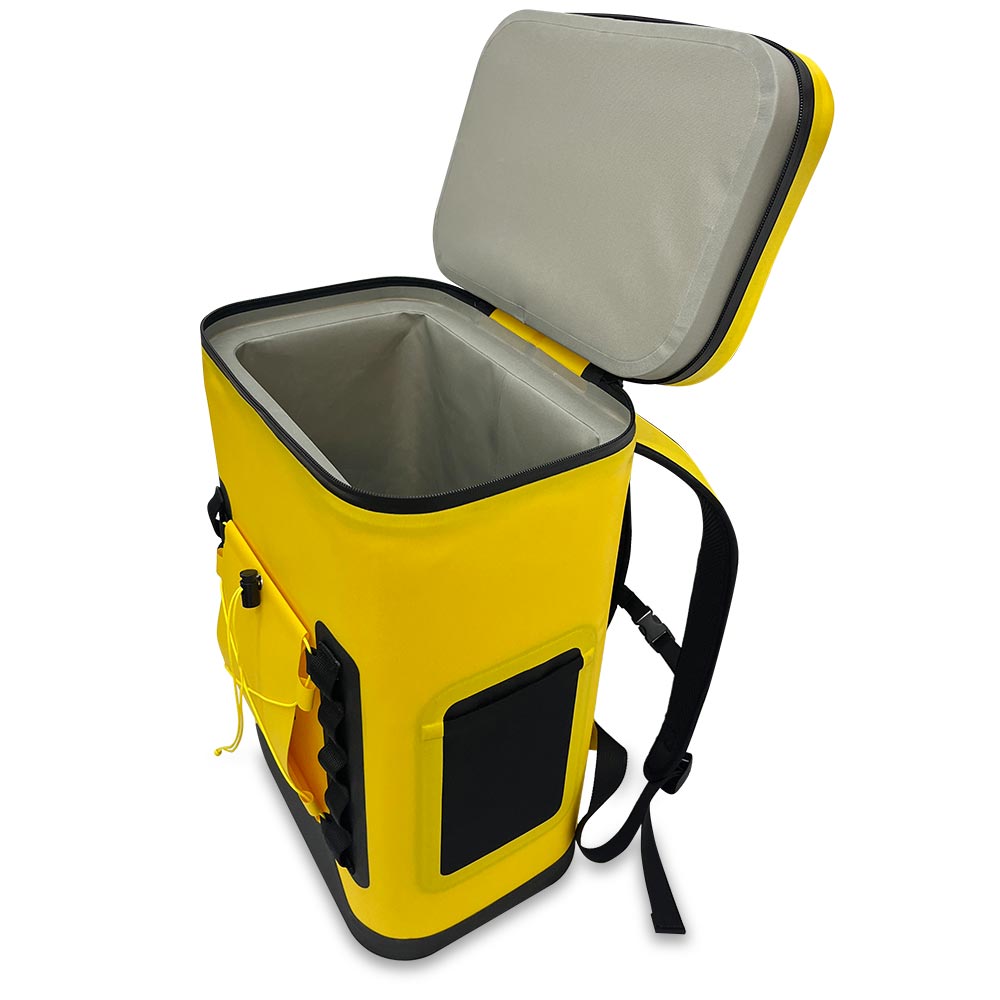
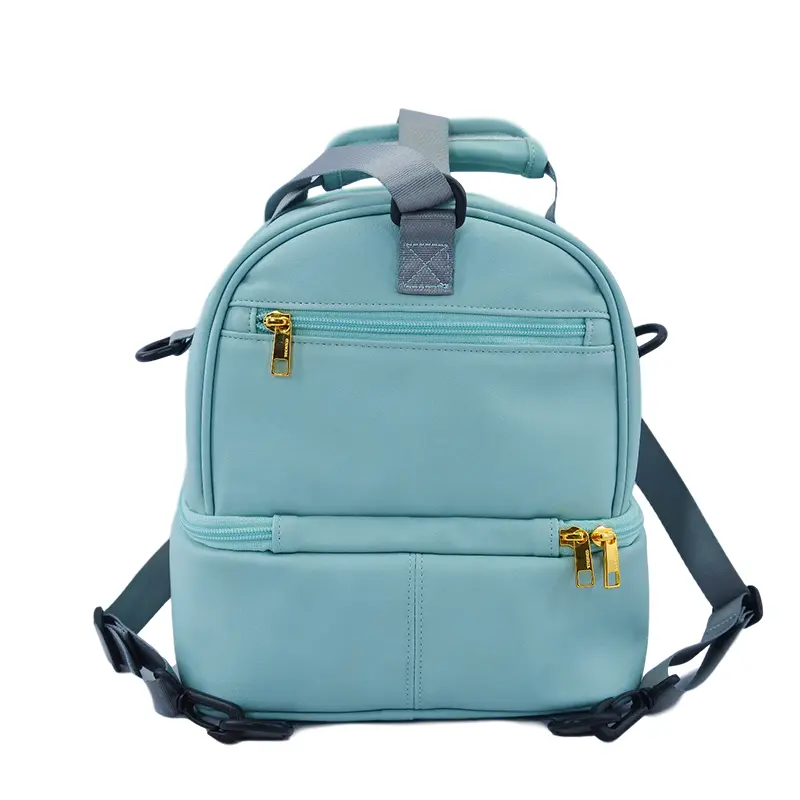
Both work on a kayak, and the choice depends on the boat and the trip. A hard cooler is rigid, protects its contents, doubles as a seat or step and generally holds ice longest, but it takes up fixed space, is heavy before you put anything in it and cannot squeeze into a hatch. A soft cooler weighs a fraction as much, flexes to fit an irregular space, can be carried to the water on a shoulder or as a backpack, and packs down when empty. On smaller kayaks, or anywhere the cooler has to be carried some distance to the launch, a soft cooler is usually the practical choice.
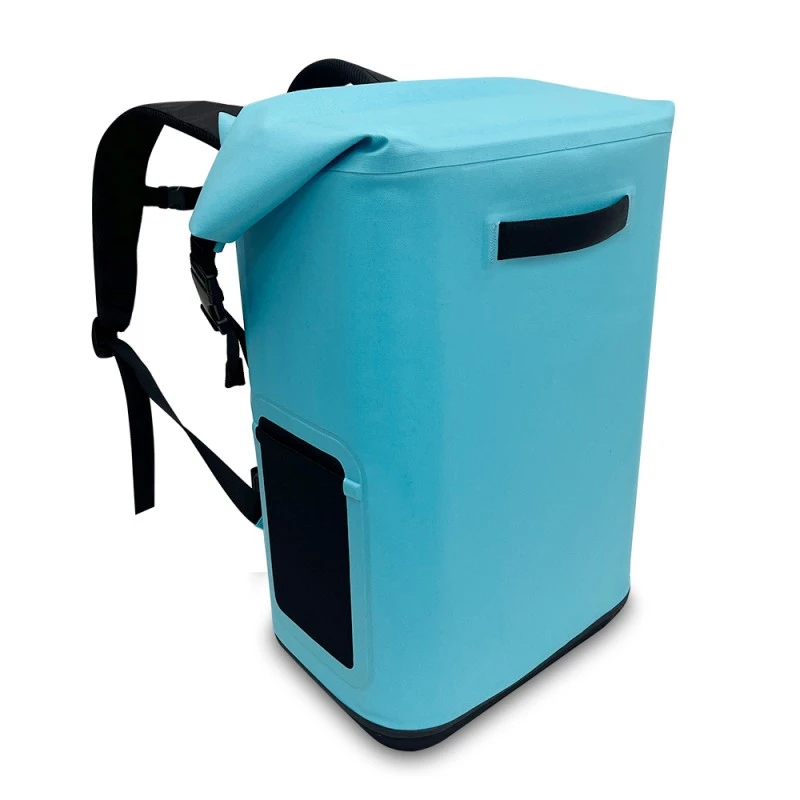
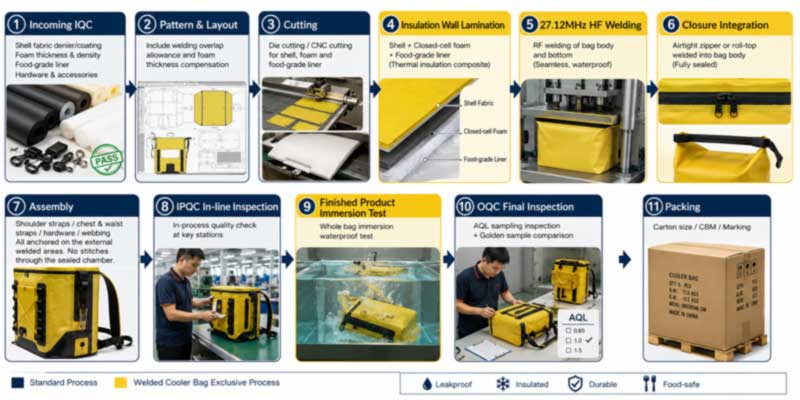
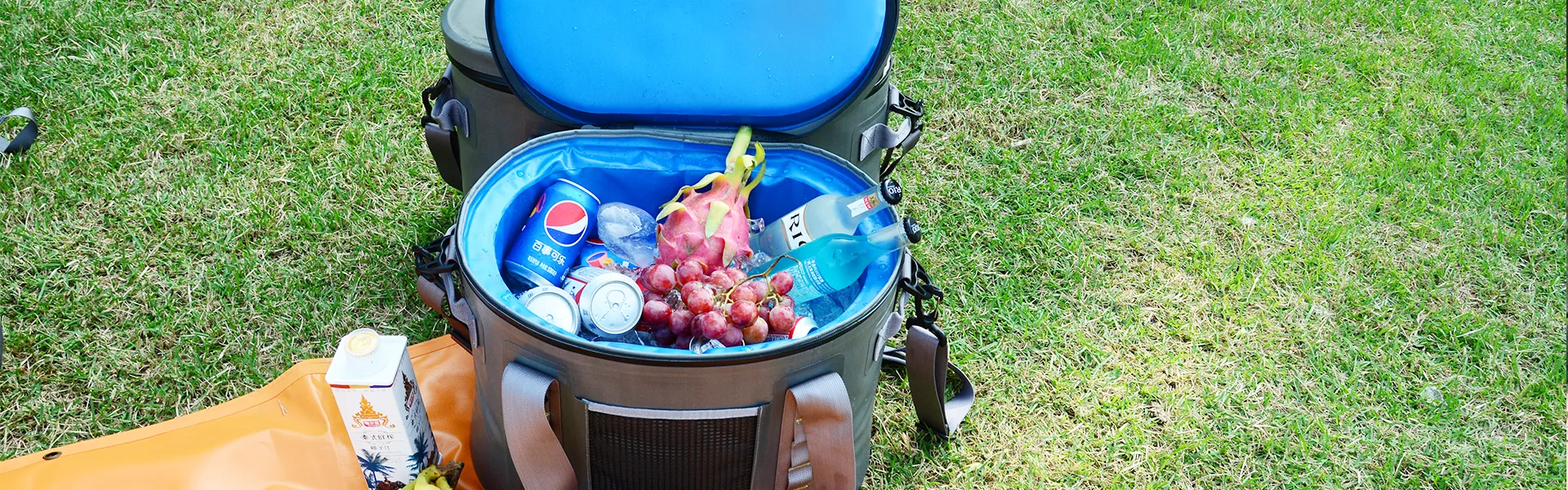
For a soft cooler on a kayak, construction decides everything. Spray and rain land on it all day, and it may sit in water that collects in the tank well. A shell of TPU-laminated fabric joined with high-frequency welded seams, an airtight waterproof zipper or a welded roll-top closure, and a sealed, welded food-grade liner keep water out and meltwater in. A cooler that is merely water-resistant will slowly take on water through its zipper. Our guide to choosing a soft cooler bag covers what to check.
Floating Coolers: Useful, With Limits
A floating kayak cooler serves two purposes: it can be towed behind the boat to add capacity, and it can be recovered if it goes over the side. Purpose-built towed coolers are designed to sit stably in the water, but they add drag and are a poor choice in open water, current or waves.
Many soft coolers float simply because they are sealed with air inside. A welded cooler with an airtight zipper or a properly rolled top traps enough air to stay on the surface even when loaded, and the sealed closure keeps the water out while it does. A cooler with a water-resistant zipper may float briefly and then fill. Either way, flotation is a recovery feature, not a reason to leave a cooler untethered: tie it on.
Securing a Cooler to a Kayak
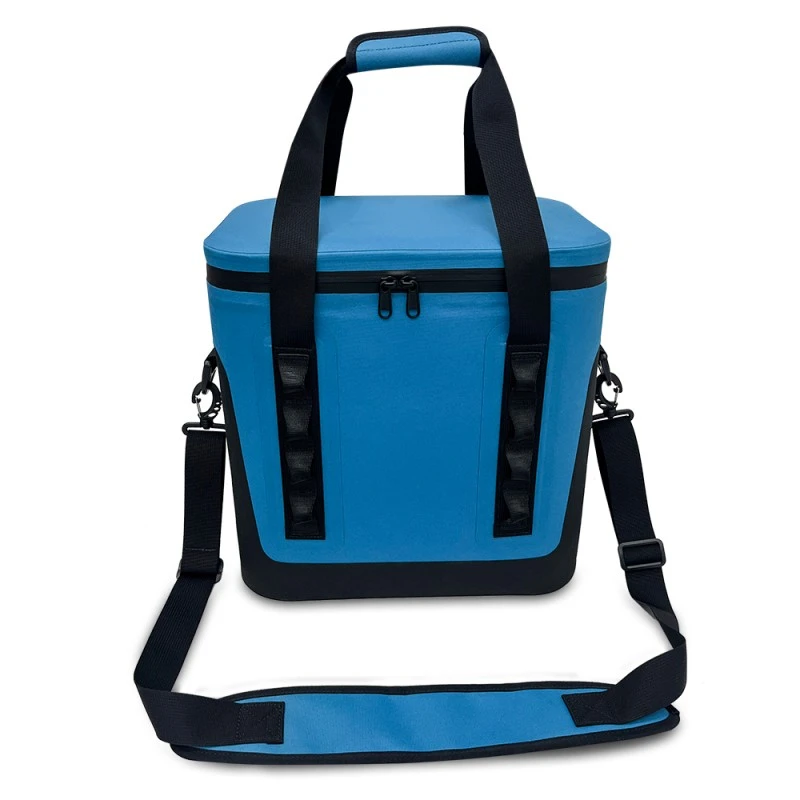
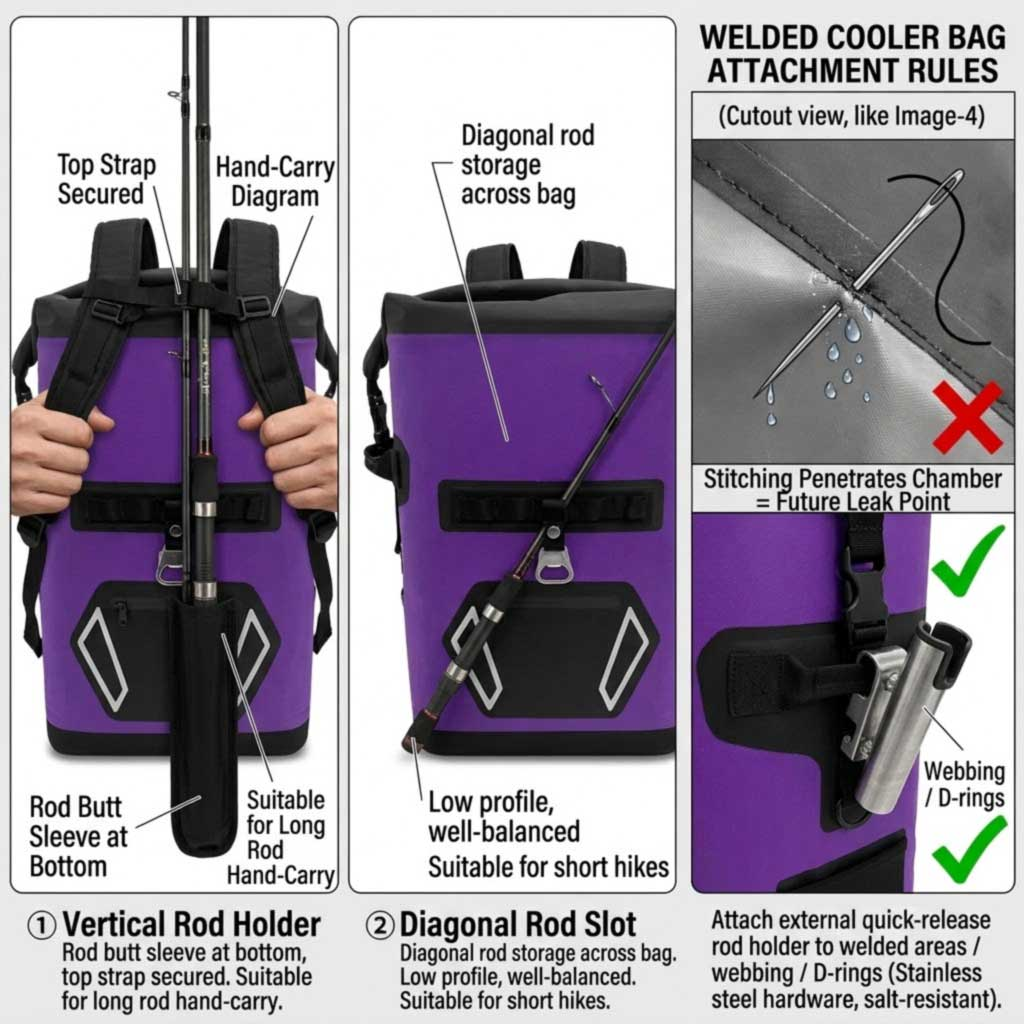
A loose cooler is lost in the first capsize and slides around in every turn. Secure it with straps or bungee cords through the tank well's bungee lines or pad eyes, crossing over the top of the cooler and back down to the opposite side. Look for a cooler with lash points that are part of the structure: side D-rings, webbing loops or MOLLE webbing anchored to the body. On a well-built soft cooler those anchors are welded to the shell or sewn to a reinforcing patch that is welded on, so the strap load spreads over a wide area and the waterproof layer is never pierced. A cooler whose only attachment point is a carry handle sewn through the fabric will eventually tear or leak at that handle. Add a short leash to the kayak for anything that floats.
Kayak Fishing: Cooler, Fish Bag or Both?
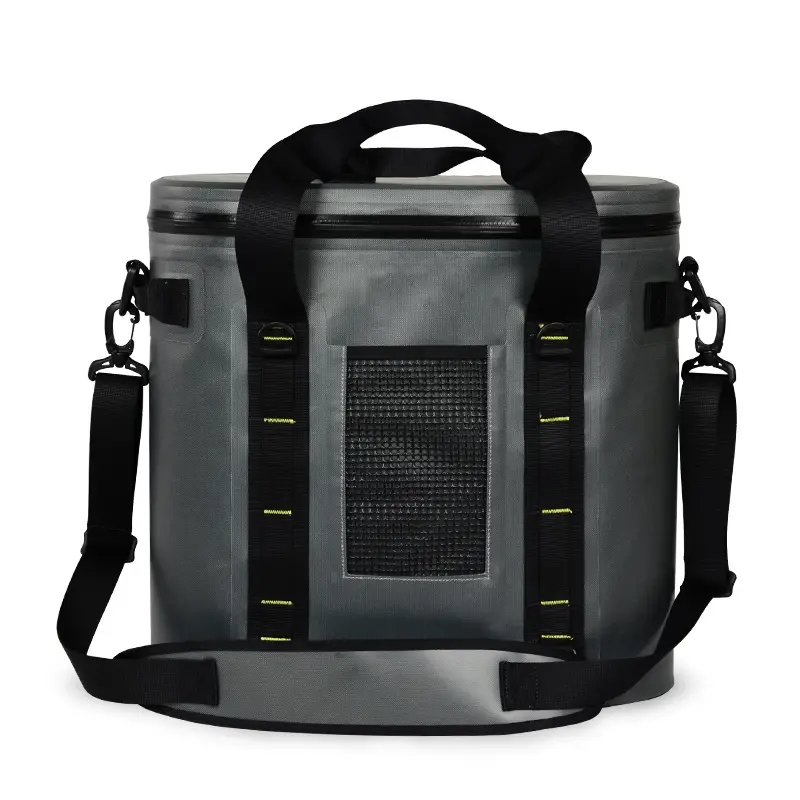
For catch-and-keep fishing, a cooler of 25 quarts or so fills up quickly, and many fish are longer than any cooler that fits in a tank well. That is why many kayak anglers carry a dedicated insulated fish bag in addition to a small cooler for food and drinks. A fish bag is long and flat, so a fish can lie straight on ice. It is light and flexible, so it can lie along the bow, across the tank well or flat in a hatch, and it folds away when empty. Field & Stream's guide notes the trade-off: fish bags are lighter and handle large catches, while hard coolers hold ice longer.
Keep the catch on ice and out of the hull. A fish left in a sit-in kayak or on a hot deck warms quickly and sheds slime that is hard to clean. A fish bag with a wipe-clean liner and a drain makes clean-up at the end of the day straightforward. Our fishing cooler backpack article covers carrying gear and catch to and from the water.
What Size Kayak Cooler?
For a solo half-day paddle with drinks and lunch, a small soft cooler of 12–15 litres is usually enough and fits behind the seat or in a hatch. For a full day of fishing with bait, food and drinks, roughly 20–25 litres in the tank well is the common choice. For overnight kayak camping, choose the largest cooler the tank well allows, and pack it with the two-to-one ice ratio described in our guide on how to pack a cooler. For catch, size the fish bag to the species: the bag should be longer than the fish you expect to keep.
Kayak Coolers and Fish Bags in Our Range
| Image | Model | Specification | Link |
|---|---|---|---|
|
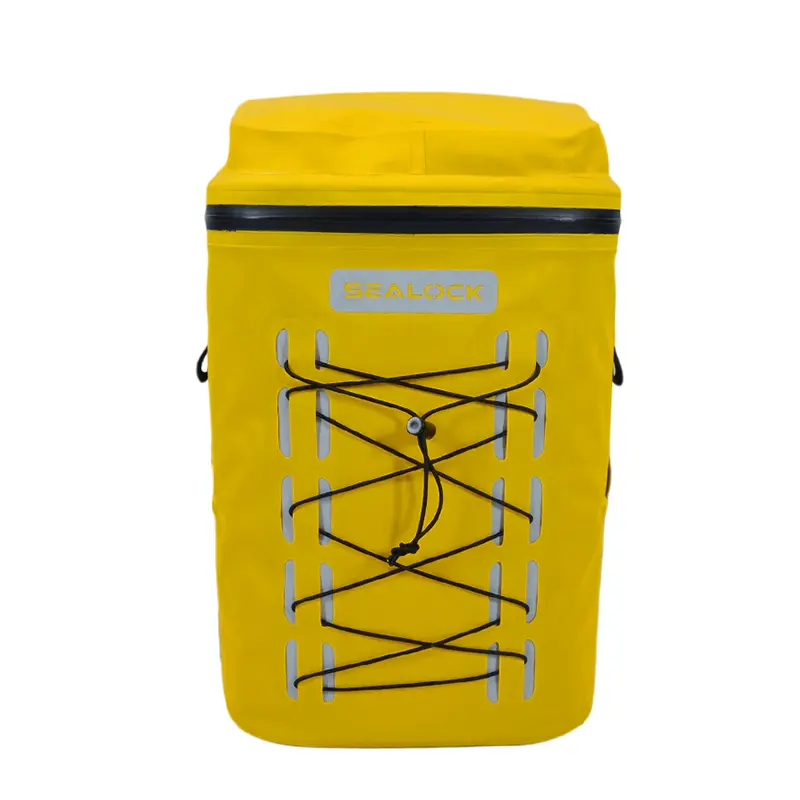
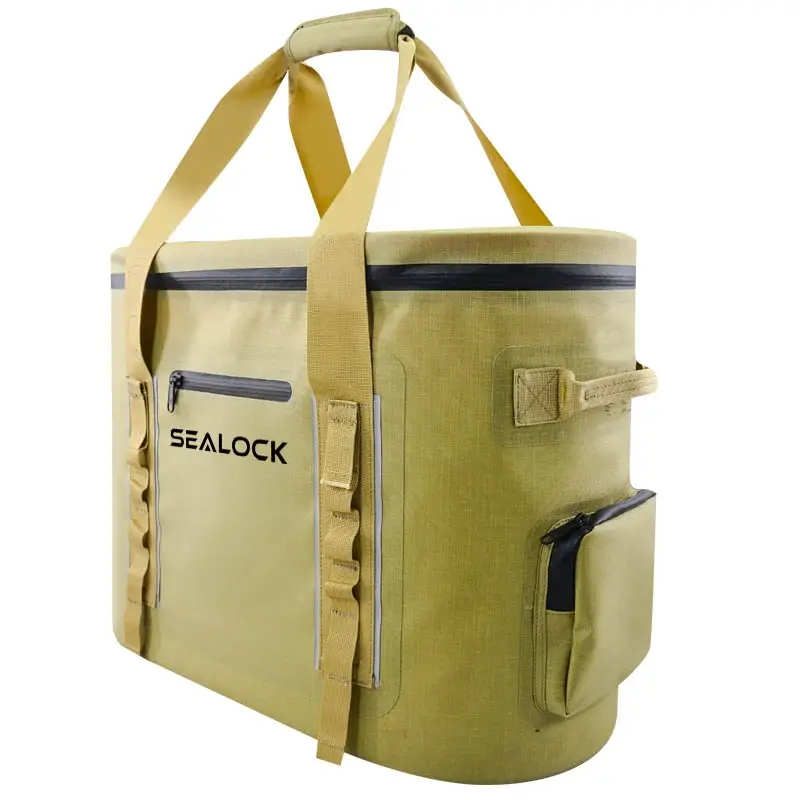
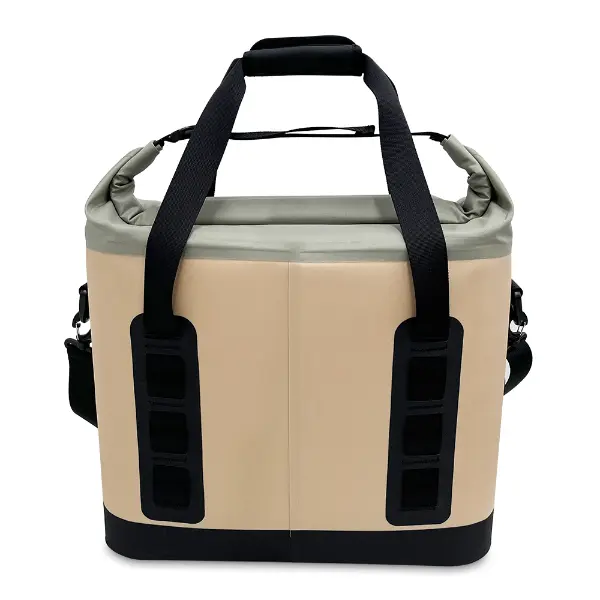
20L Roll-Top Leakproof Cooler (SL-I288) | 46 × 21 × 36 cm closed (about 18 × 8 × 14 in); welded roll-top, 840D TPU, closed-cell EPE, side MOLLE webbing for lashing, waterproof front pocket, up to 48 hr | View |
|
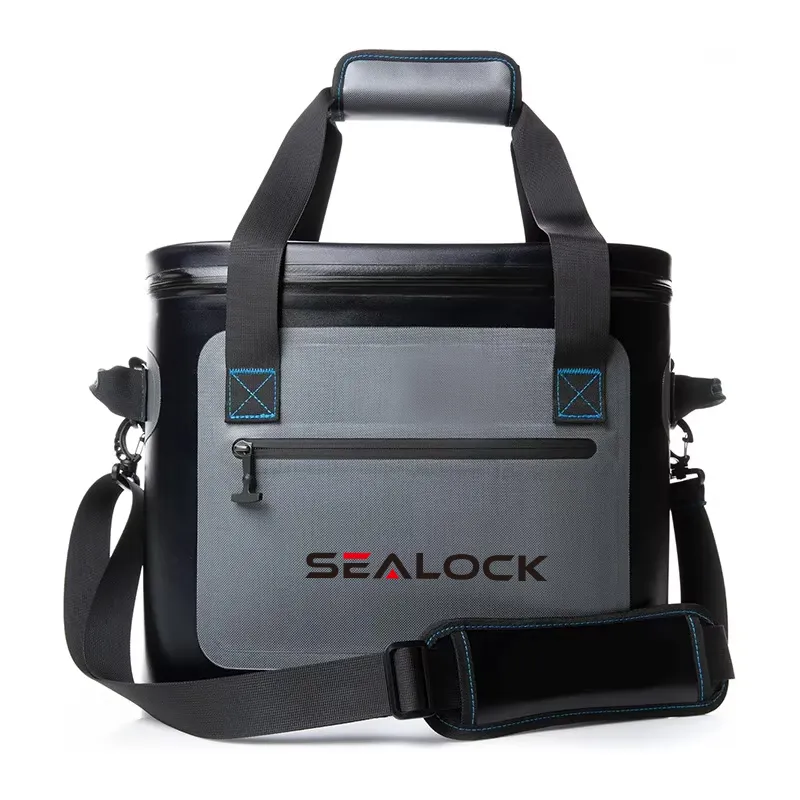
24L Soft Cooler Tote (SL-I230) | About 25 quarts; 840D TPU, 20 mm XPE, airtight zipper, IPX7, high-frequency welded, up to 48 hr | View |
|
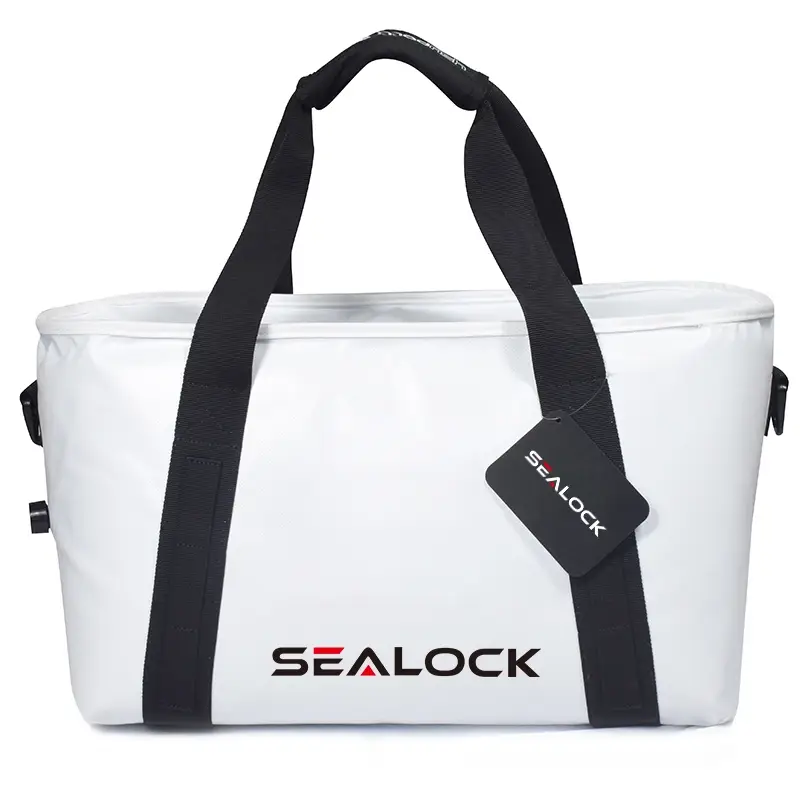
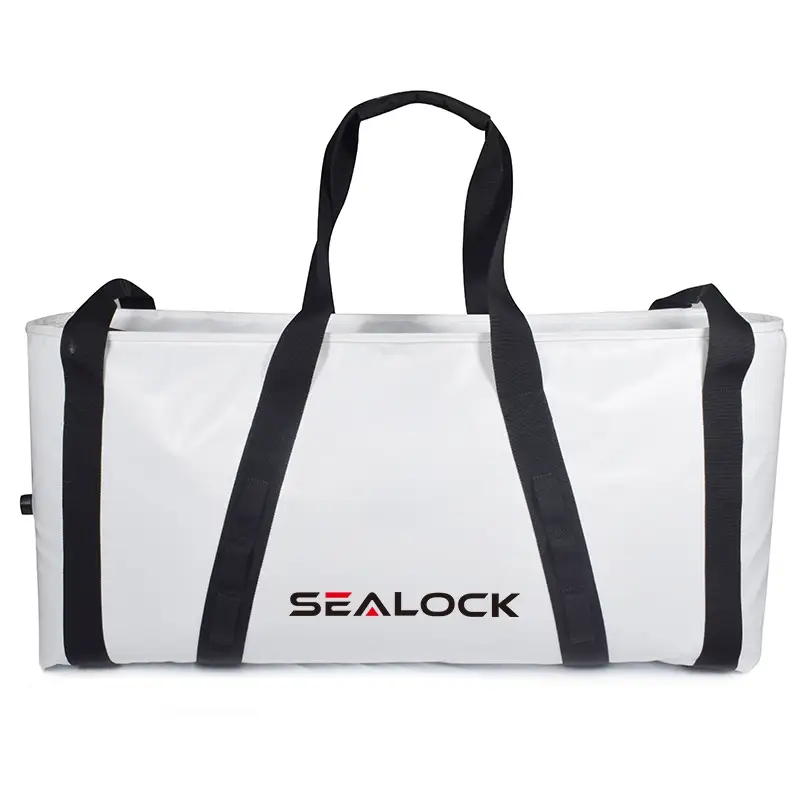
Insulated Fish Kill Bag (SL-C377) | 50 × 30 × 30 cm; PVC mesh fabric, insulated, adjustable strap; tank well or hatch size | View |
|
Kill Fish Cooler Bag (SL-C379) | 85 × 35 × 40 cm; PVC mesh fabric, insulated, adjustable strap; for longer fish on larger kayaks and boats | View |
All models are available for OEM and ODM, including custom lengths and widths for a specific kayak's tank well, additional lash points, drains and colours. MOQ starts at 300 pieces, samples take 7–15 days and bulk production 30–45 days; new shapes take longer to develop.
For Kayak and Fishing Brands
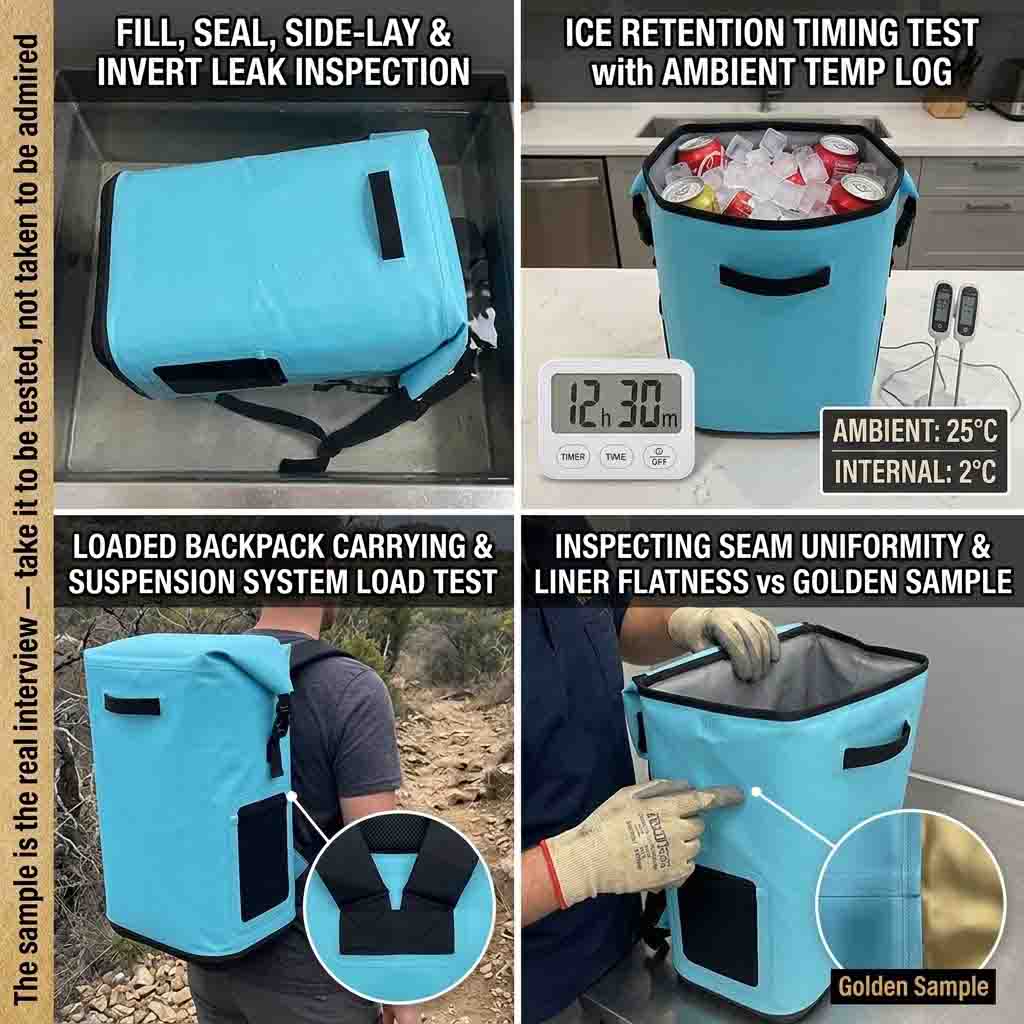
A cooler or fish bag designed for one kayak model or one range of tank wells sells better than a generic cooler, because the customer knows it will fit. We develop kayak coolers and fish bags to a brand's measurements, combining high-frequency welding for the waterproof shell, liner and lash-point patches with in-house sewing for straps, webbing and handles. Each sample goes through leak testing, load testing of handles and lash points to 1,500-plus cycles, zipper fatigue testing to 3,000 cycles, salt spray testing of metal hardware and multi-probe cold-hold logging before bulk production.
FAQ
Q: What size cooler fits on a kayak?
A: Most fishing kayak tank wells take a cooler of around 25 quarts (about 24 litres), but tank wells vary and taper towards the stern. Measure the length, both widths and the side height, and compare them with the cooler's external dimensions.
Q: Is a soft or hard cooler better for a kayak?
A: A soft cooler is lighter, flexes to fit and is easier to carry to the launch; a hard cooler holds ice longer and doubles as a seat. On small kayaks and for carried launches, a waterproof welded soft cooler is usually the better choice.
Q: How do you attach a cooler to a kayak?
A: Strap or bungee it through the tank well bungees or pad eyes, crossing over the top, and add a leash. Use lash points that are welded or reinforced on the cooler, not the carry handle.
Q: Will a soft cooler float if it falls off a kayak?
A: A sealed welded cooler with an airtight zipper or a properly rolled top usually floats because of the air trapped inside. A cooler with a water-resistant zipper may fill and sink. Tie it on regardless.
Q: How do I keep fish cold on a kayak?
A: Put them straight onto ice in an insulated fish bag or cooler, not loose in the hull or on deck. A long, flat fish bag lets the fish lie straight on ice and fits along the bow or tank well.
Q: Can you make a kayak cooler to fit our kayak model?
A: Yes. Send us the tank well dimensions and attachment points and we will develop a cooler or fish bag to fit, from 300 pieces.
Developing a kayak cooler or fish bag? Send us the tank well dimensions, target capacity and fishing use. We will propose a construction and send a sample in 7–15 days.
Email: info@sealock.com.hk · Phone: +86-13632981825 · MOQ 300 pcs
Tank well dimensions vary by kayak model; always measure your own boat. Capacity guidance draws on Field & Stream's kayak cooler buying guide and published kayak specifications. Brand customers are named as manufacturing clients only; no endorsement is implied.