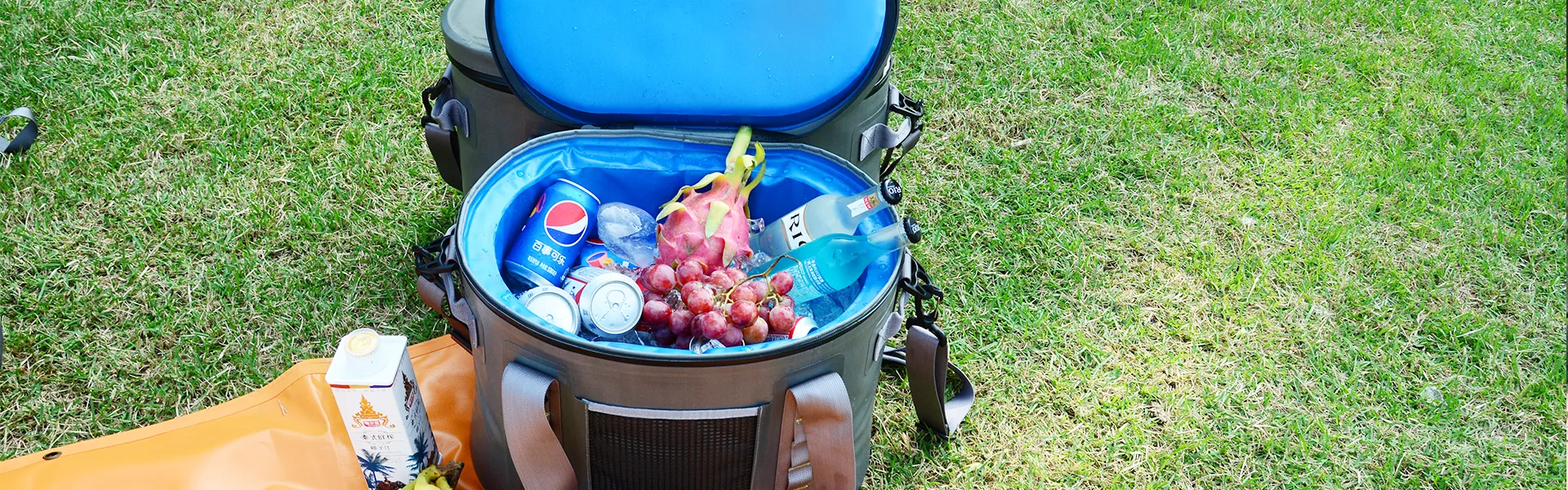
How you pack a cooler decides how long the ice lasts almost as much as which cooler you own. The same bag can keep food cold for two days or turn into lukewarm water by the afternoon, depending on what went in first, how cold it was, how much air was left inside and how often the lid was opened. This guide covers the packing order that works, how to pack drinks, how to keep food safe, and the points specific to soft coolers and cooler backpacks that most packing guides leave out. It is written by Sealock (YiFuLong Outdoor Gear Co., Ltd.), which has manufactured insulated soft coolers and cooler backpacks in China and Vietnam for over 20 years.
Before You Pack: Get Everything Cold First
A cooler does not make things cold; it slows down how fast they warm up. Anything that goes in warm uses up ice just to reach the temperature of the ice around it. That is why the most effective step happens before the cooler is even loaded.
Start by pre-chilling the cooler itself. A soft cooler stored in a hot car boot or garage holds a surprising amount of heat in its shell and foam. Put a bag of ice you are prepared to sacrifice, or a few frozen bottles, inside it for a few hours, then empty it before packing. Next, chill or freeze the contents. Drinks should come out of the refrigerator, not off a shelf. Meat for later in the trip can go in frozen, where it acts as extra ice and thaws gradually. Finally, take food out of bulky store packaging and move it into flat, watertight containers or zip-top bags. Cardboard soaks up meltwater and air-filled packaging wastes space that should be filled with cold.
The Packing Order, Layer by Layer
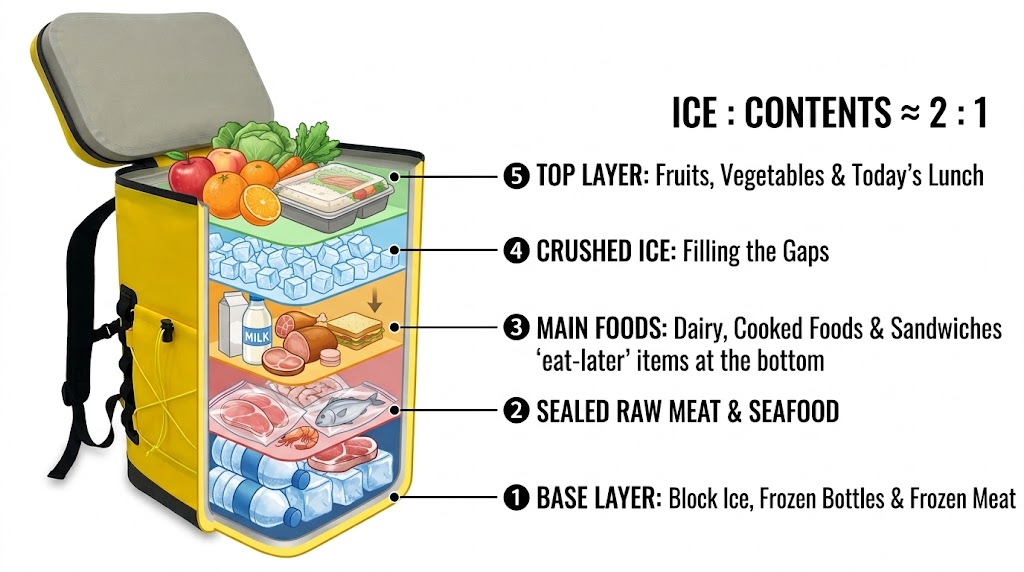
The guiding idea is simple: the coldest, heaviest and longest-lasting items go at the bottom, and the things you will need first go at the top, so you can find them without digging.
| Layer | What goes there | Why |
|---|---|---|
| 1. Base | Block ice or frozen water bottles, plus frozen meat for later meals | Block ice melts more slowly than cubes because it has less surface area, and cold air sinks, so the base stays coldest. |
| 2. Raw meat and seafood | Sealed in containers or bags, directly on the ice | US food-safety guidance places raw meat at the very bottom so any juices cannot drip onto other food. |
| 3. Main food | Dairy, cooked food, sandwiches, in the reverse order you will eat them | The last day's food goes lower, the first day's higher. |
| 4. Gap fill | Cubed ice poured over and between everything | Empty space is warm air. Cubes fill the gaps that block ice cannot. |
| 5. Top | Fragile fruit and vegetables, snacks, today's lunch | Nothing heavy on top to crush them, and quick to reach without opening the cooler for long. |
For the amount of ice, a common rule from cooler makers and outdoor retailers is about two parts ice to one part contents by volume, with frozen food counting toward the contents. That sounds like a lot, and it is: the most common reason a cooler runs warm early is simply that it was packed with too little ice. Reusable freezer packs work well for short trips and produce no meltwater, but loose ice fills space better and lasts longer on a trip of more than a day.
How to Pack a Cooler With Drinks
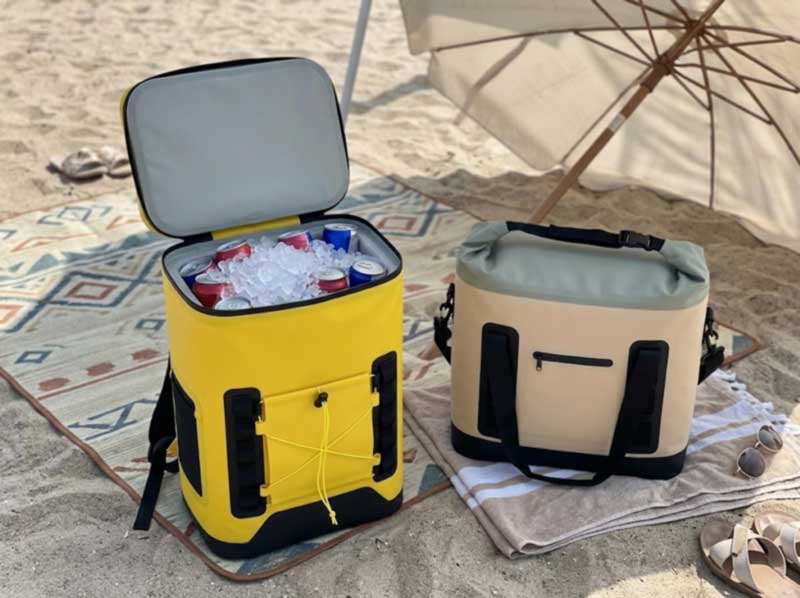
Drinks are the items people reach for most, and every opening lets warm air in. The single best change for a long day or a trip with a group is to carry drinks in a separate cooler from food. Food-safety advice from US extension services suggests exactly this: one cooler for drinks, which will be opened often, and another for food, which stays shut. A cooler backpack for drinks and a tote for food is a practical pairing.
When drinks and food have to share one cooler, put the drinks on top or along one side, so they can be taken out without disturbing the food below. Pack cans upright in rows and pour cubed ice down between them; cans pack more densely than bottles and chill faster because of their thin walls. Pre-chilled drinks matter more than anything else here, because a case of warm cans can melt a large share of a soft cooler's ice in the first few hours. If drinks need to be chilled quickly on arrival, adding a handful of salt to iced water speeds up the chilling, but it also melts the ice faster, so it is a trick for a party, not for a two-day trip.
Packing a Soft Cooler: What Is Different
Most packing advice is written for hard coolers. A soft cooler follows the same principles, with a few points that come from how it is built.
Do not overfill past the closure. On a soft cooler with an airtight or waterproof zipper, the seal only works when the two sides of the zipper meet without strain. Packing the bag so full that the zipper has to be forced closed bends the teeth out of line, makes the zipper hard to run and can let water and air through. On a roll-top cooler, leave enough empty material at the top for at least three full rolls before buckling; a roll-top that can only be folded once does not seal.
Protect the liner from sharp items. The food-grade liner is the cooler's waterproof inner wall. Skewers, fish hooks, the corners of rigid containers and even the ring pulls of cans packed on their sides can scuff or pierce it over time. Wrap sharp items and keep hard containers away from the seams.
Squeeze out the air. A soft cooler can do something a hard cooler cannot: shrink to fit its contents. Pressing out excess air before closing a roll-top, or packing a partly empty bag with a towel on top, reduces the volume of warm air inside.
Keep it off hot surfaces. The base of a soft cooler is in direct contact with whatever it is standing on. Hot sand, a dark boat deck or a car floor above the exhaust all push heat in from below. Stand it on a towel or in shade, and at the beach, US food-safety guidance even suggests partly burying the cooler in sand and covering it.
For more on what makes some soft coolers hold ice far longer than others, see our guide to the best soft cooler for ice retention.
Packing a Cooler Backpack
A cooler backpack adds one more consideration: weight on the body. Put the heaviest items, block ice and dense drinks, low and close to the back panel, and lighter food towards the front and top. A load that sits high and far from the spine pulls on the shoulders and makes the pack sway. If the backpack has a front pocket, keep dry items such as keys, phone and napkins there rather than in the insulated compartment, so you do not open the main compartment just to find them. Our articles on picnic cooler backpacks and beach cooler backpacks go further into choosing a pack for each use.
At the Destination: Keeping It Cold and Safe
Keep the cooler in the shade, closed, and opened as rarely and briefly as possible. Decide what you need before opening it. Leaving the meltwater in place usually helps, because it is as cold as the ice; drain it if it starts to soak food that should stay dry, and drain it when you add fresh ice.
For food safety, the number to remember is 40°F (4°C). US food-safety guidance treats 40–140°F as the range in which bacteria grow quickly, and recommends that perishable food be kept at or below 40°F. An inexpensive appliance thermometer inside the cooler tells you whether that is actually happening. When food is taken out to serve, return it within two hours, or within one hour if the air temperature is 90°F or above; food left out longer than that should be thrown away.
After the Trip
Empty the cooler as soon as you get home, wash the liner with warm water and mild soap, and leave the cooler open to dry completely before storing it. Most "my cooler smells" complaints come from a cooler that was zipped shut while still damp. Store it open or with the closure loosened, out of direct sun, and not crushed under heavy items, so the insulation keeps its thickness.
For Brands: Ship the Packing Guide With the Cooler
Many disappointed reviews of soft coolers come from customers who packed them badly rather than from a faulty product: warm drinks, too little ice, a zipper forced over an overfilled bag. A short packing and care card in the box, or printed on the hang tag, prevents a share of those returns. When we produce soft coolers for brands, we can print packing and care instructions on hang tags, inserts or the inner label alongside the logo, in the customer's language, and advise on capacity statements so the can count on the box matches how the cooler is really used.
Coolers in Our Range
| Image | Model | Build | Link |
|---|---|---|---|
|
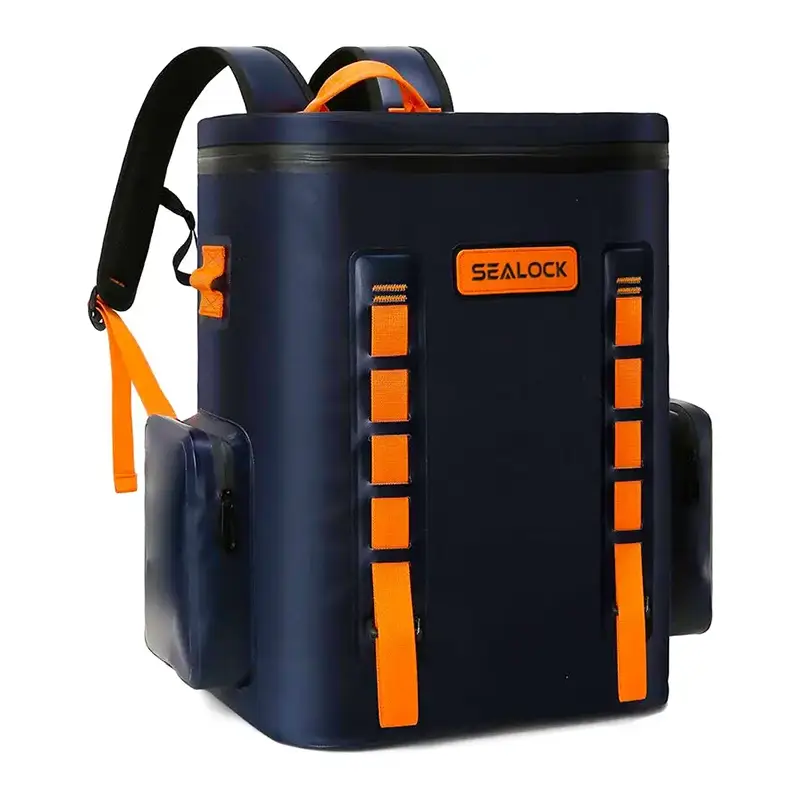
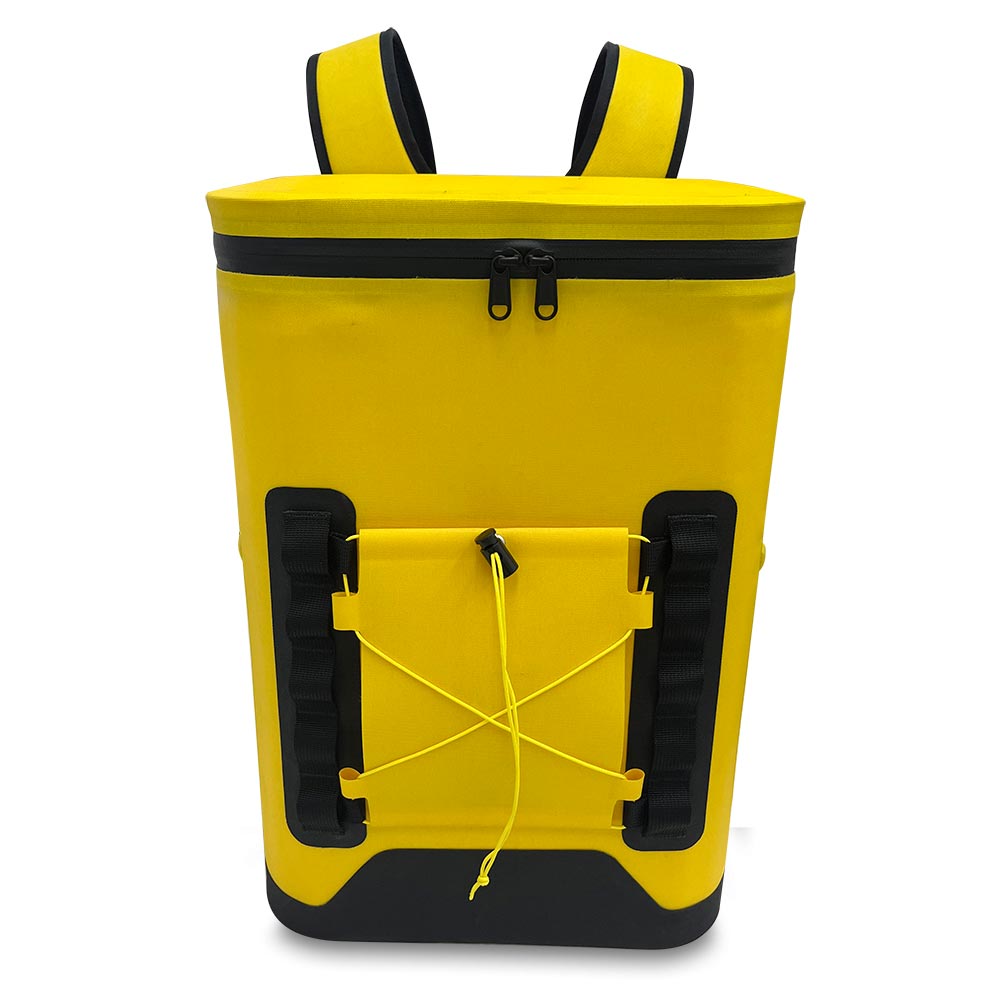
28L Airtight-Zipper Cooler Backpack (SL-I274) | 840D TPU, 3 cm EVA core, food-grade TPU membrane, airtight zipper, front utility pocket, up to 48 hr | View |
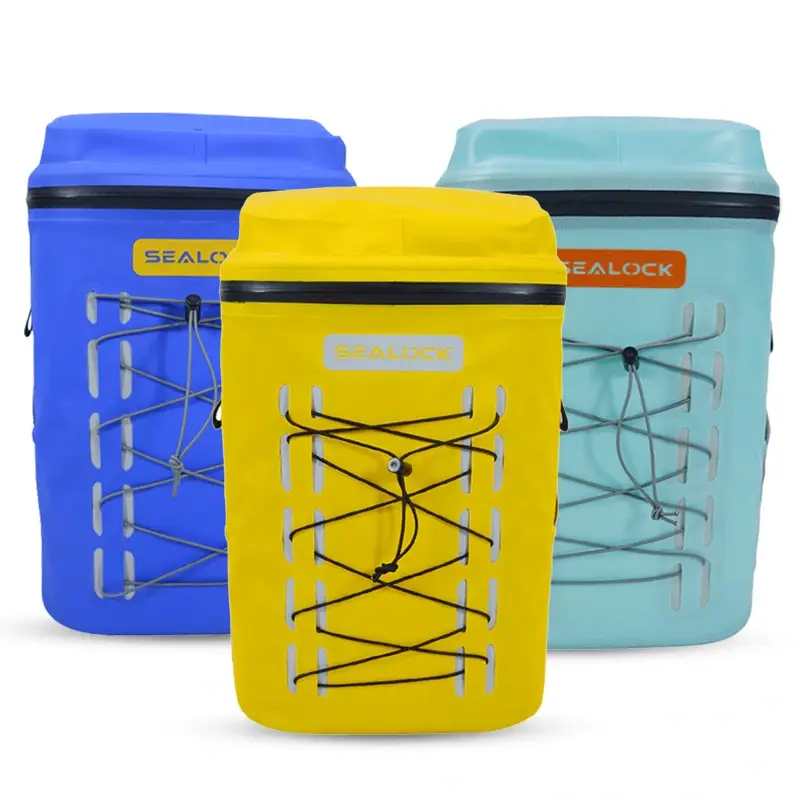
|
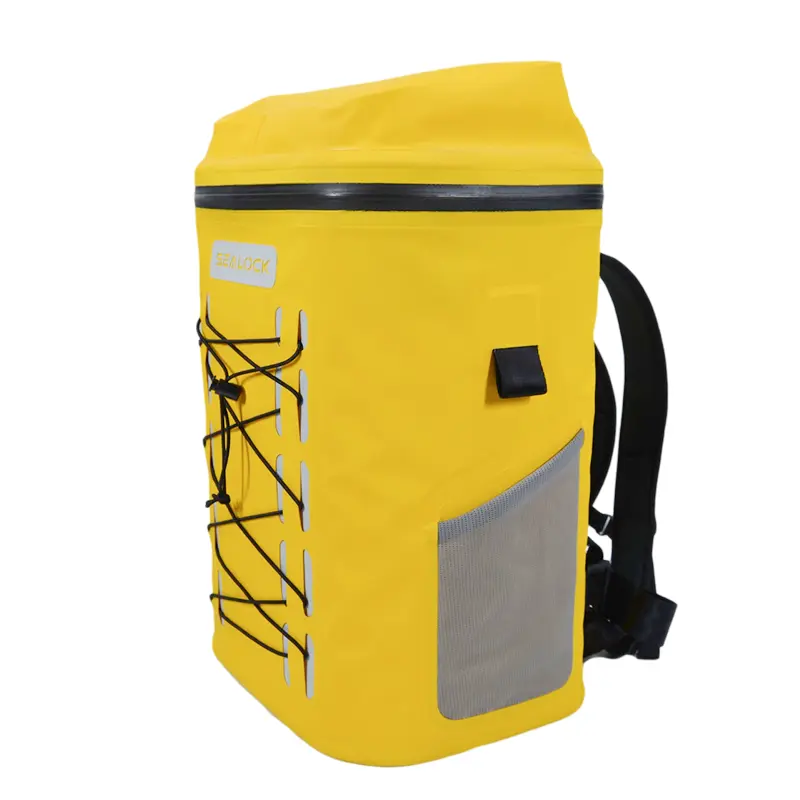
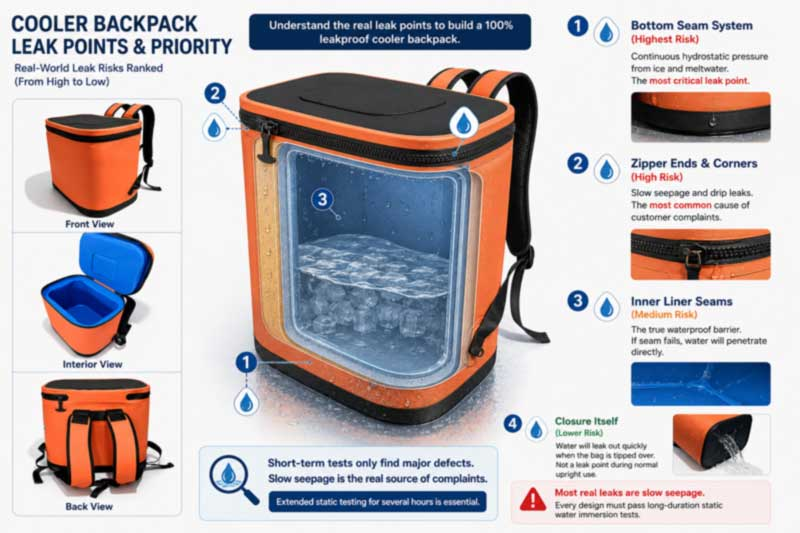
Insulated Cooler Backpack (SL-I075A) | 36 cans, 840D PVC tarpaulin, EPE foam, PEVA liner | View |
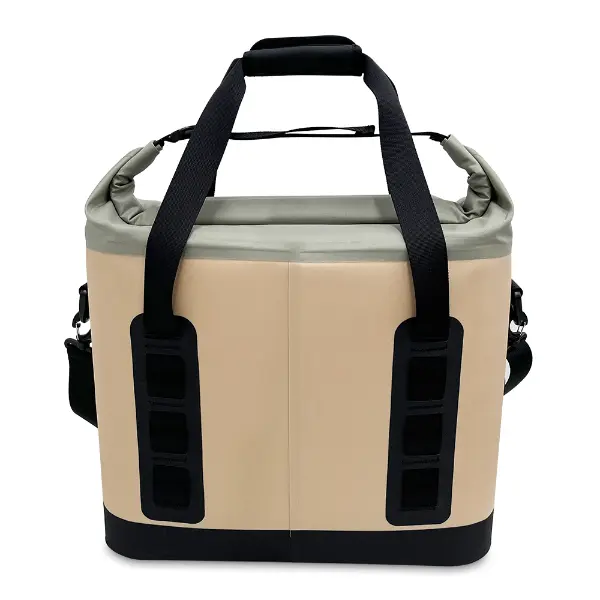
|
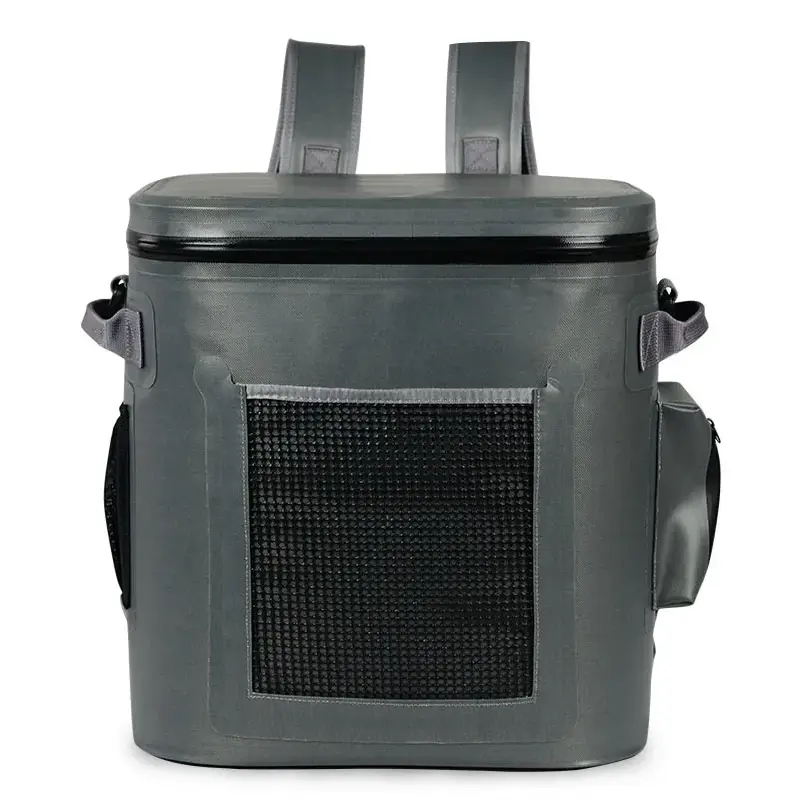
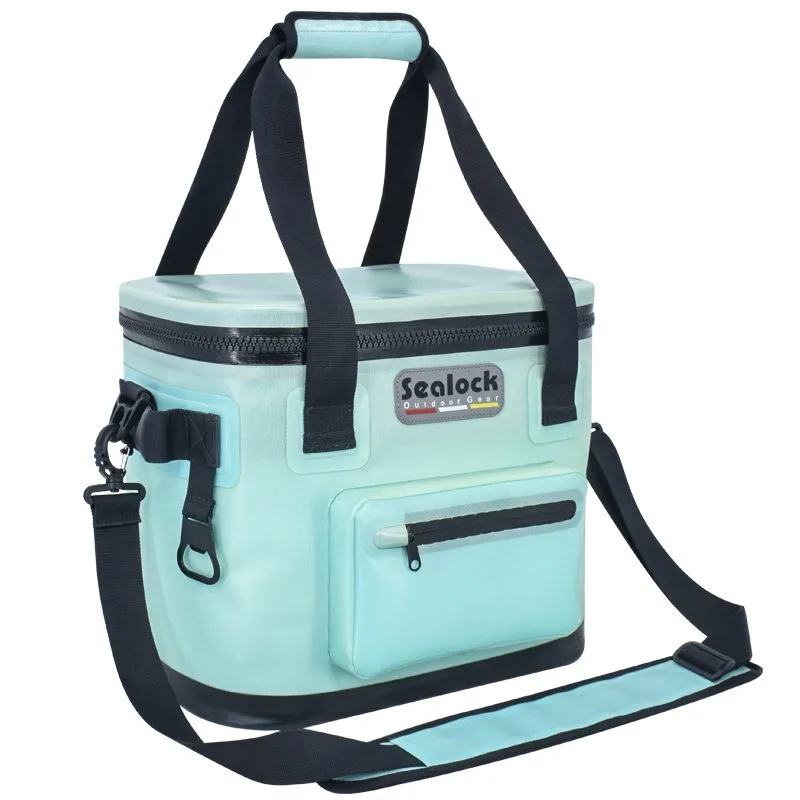
20L Roll-Top Leakproof Cooler (SL-I288) | Welded roll-top, closed-cell EPE, 840D TPU, waterproof front pocket, bottle opener, up to 48 hr | View |
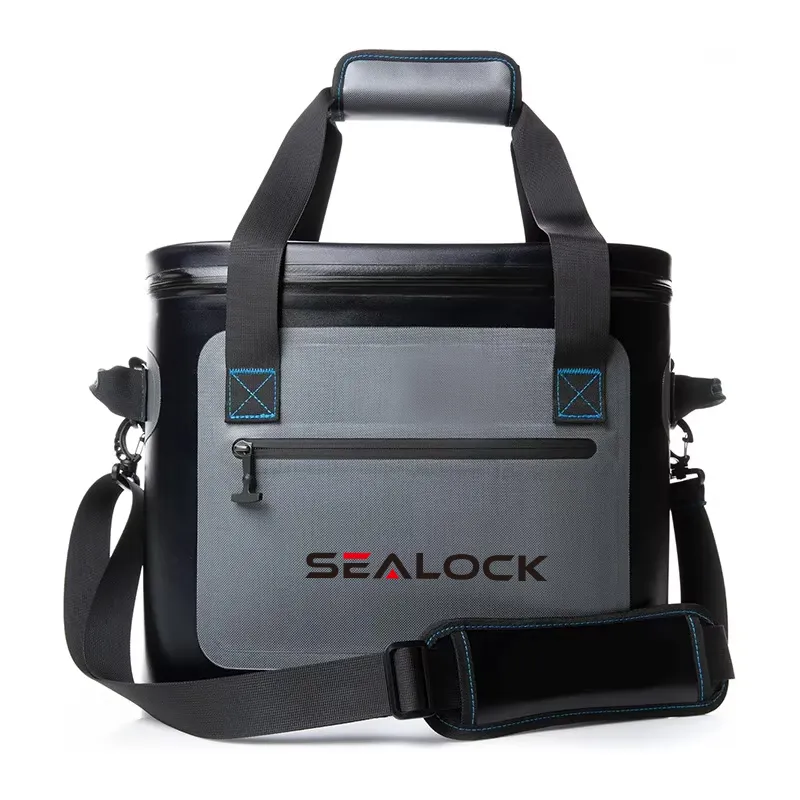
|
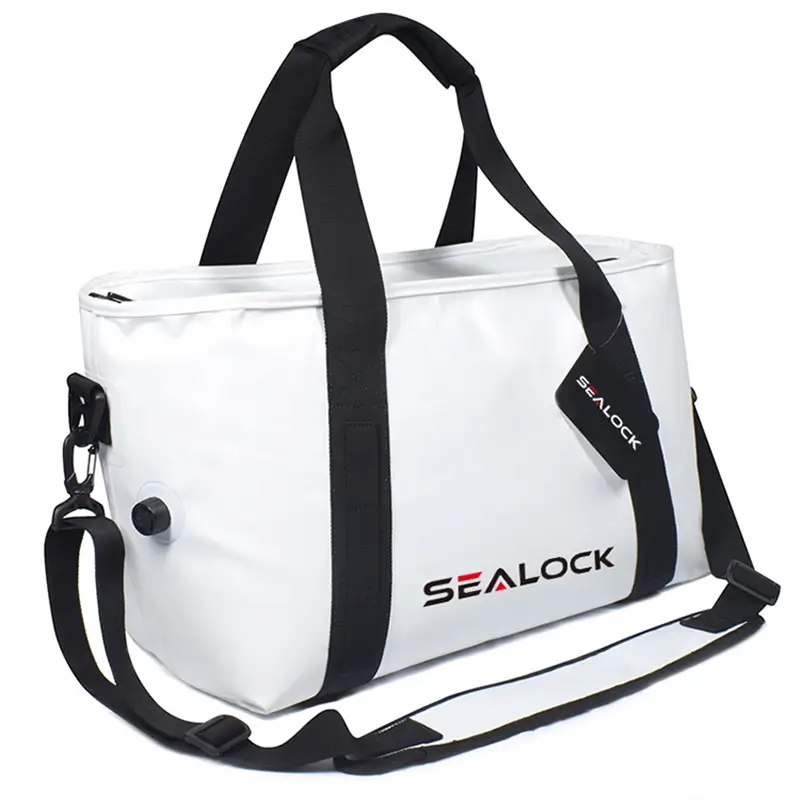
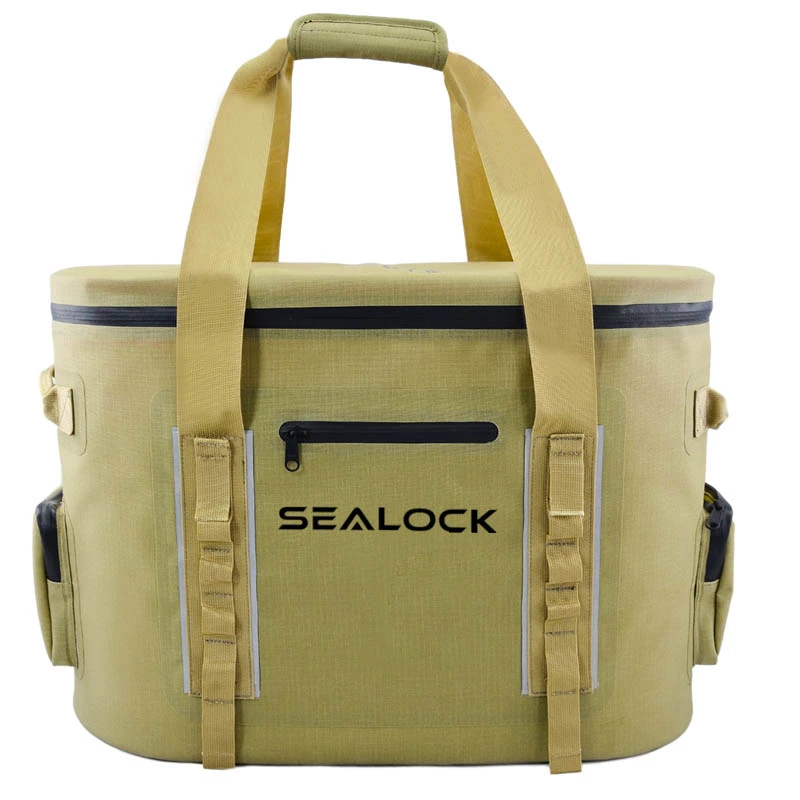
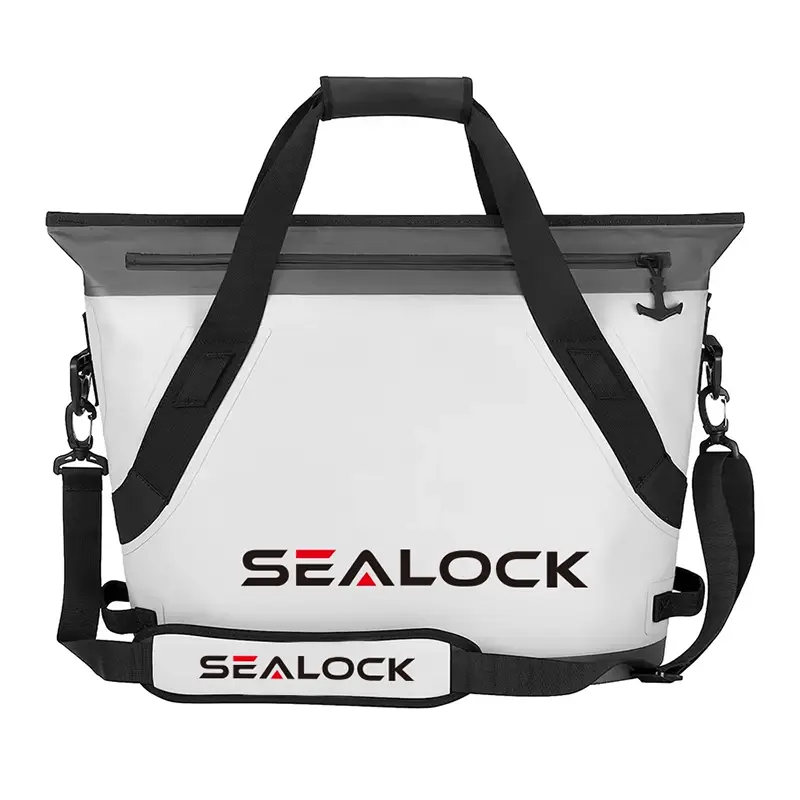
24L Soft Cooler Tote (SL-I230) | 20 mm XPE, 840D TPU, airtight zipper, IPX7, high-frequency welded, up to 48 hr | View |
All models are available for OEM and ODM with your logo, colours and printed care instructions. MOQ starts at 300 pieces, samples take 7–15 days and bulk production 30–45 days.
FAQ
Q: What goes on the bottom of a cooler?
A: Block ice or frozen bottles, with sealed raw meat and frozen food directly on top of it. Cold air sinks, so the bottom is the coldest part of the cooler, and keeping raw meat low stops its juices dripping onto other food.
Q: How much ice should I put in a cooler?
A: About two parts ice to one part contents by volume, counting frozen food as part of the ice. Less ice is the most common reason a cooler warms up early.
Q: Should drinks go in a separate cooler?
A: Ideally, yes. Drinks are opened far more often than food, and every opening lets in warm air. A separate drinks cooler keeps the food cooler shut and colder for longer.
Q: Is block ice or cubed ice better?
A: Use both. Block ice lasts longer because it melts from a smaller surface; cubes chill contents faster and fill the gaps between items.
Q: Should I drain the water from my cooler?
A: Usually not straight away, because cold meltwater helps keep the remaining ice cold. Drain it if it is soaking food that should stay dry, and when adding fresh ice.
Q: Why won't my soft cooler zip closed?
A: It is usually overfilled. An airtight or waterproof zipper needs both sides to meet without strain. Take a few items out rather than forcing the zipper, which can damage the teeth and break the seal.
Q: How long does food stay safe in a cooler?
A: As long as it stays at or below 40°F (4°C). An appliance thermometer inside the cooler is the only reliable way to know. Once the cooler can no longer hold that temperature, perishable food should not be kept in it.
Building a cooler line for your brand? We manufacture soft coolers and cooler backpacks to your specification, with logo, colours and printed packing and care instructions in your customers' language.
Email: info@sealock.com.hk · Phone: +86-13632981825 · MOQ 300 pcs · samples 7–15 days
Food-safety guidance here follows USDA and US extension-service advice; follow local food-safety rules where you are. Ice life depends on ambient temperature, sun exposure, ice quantity and how often a cooler is opened.