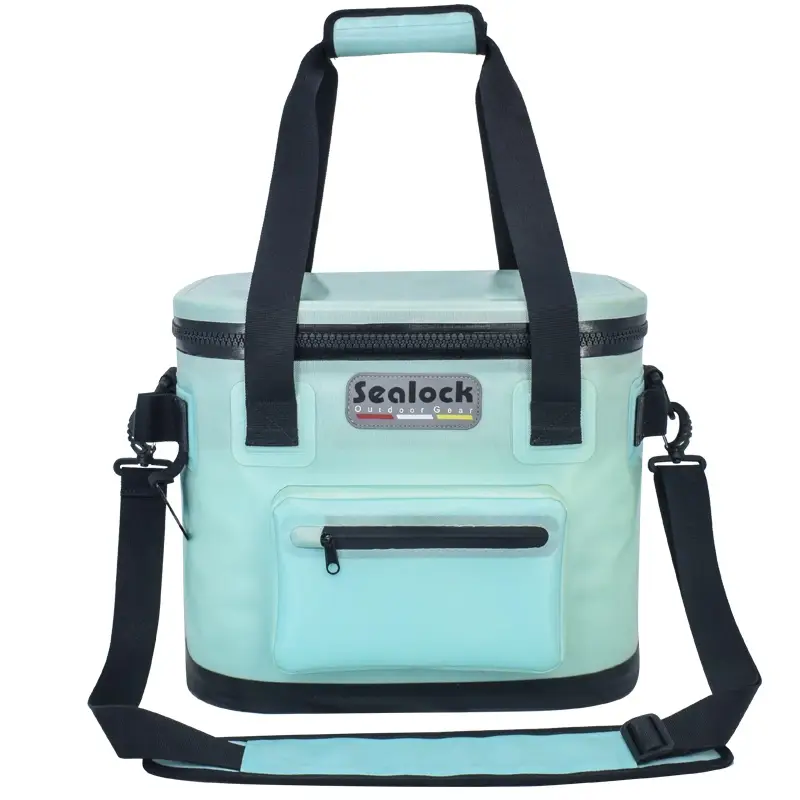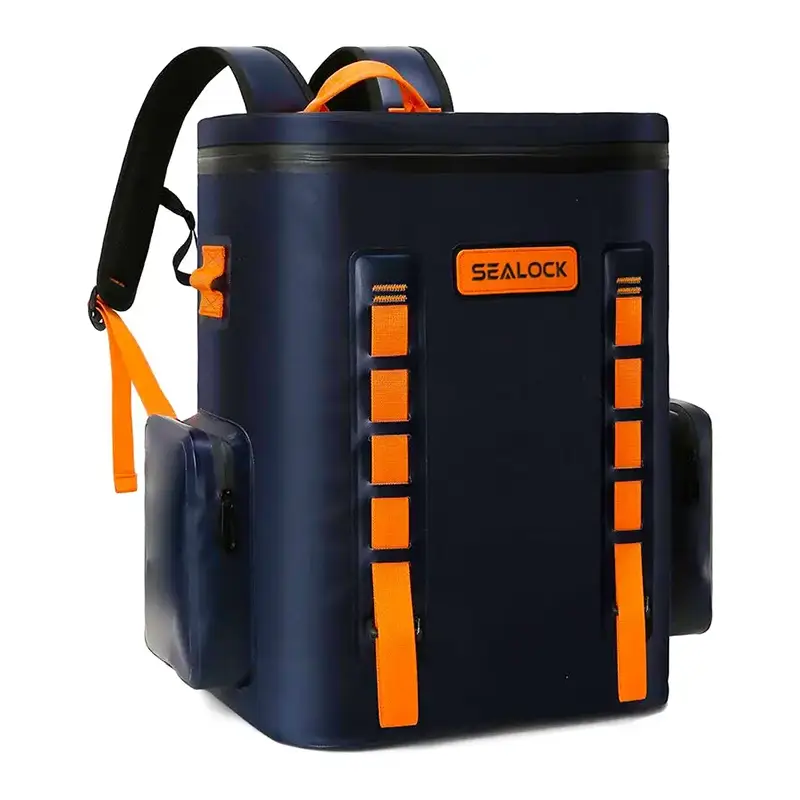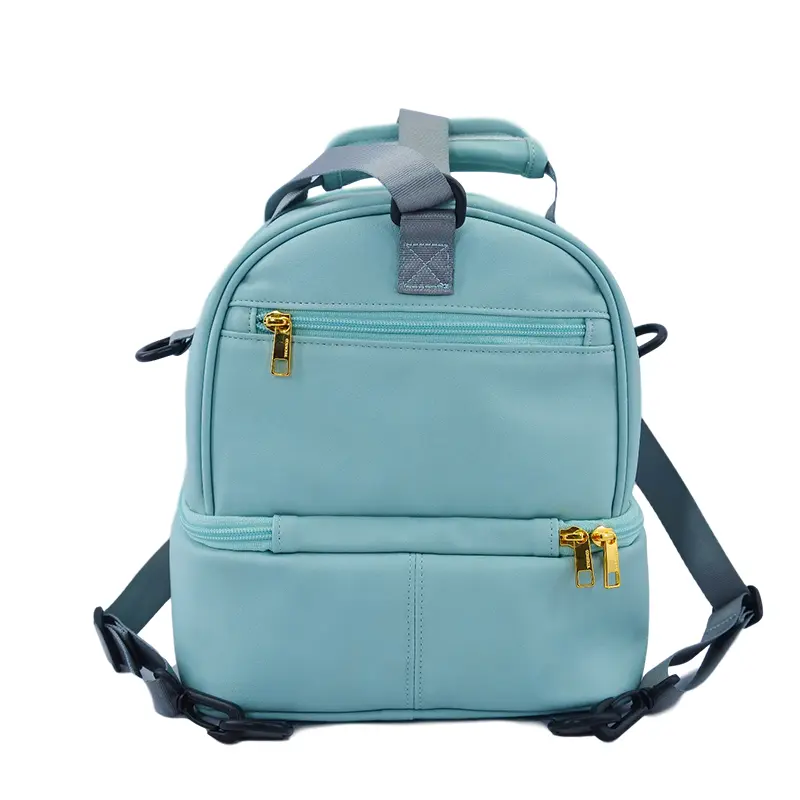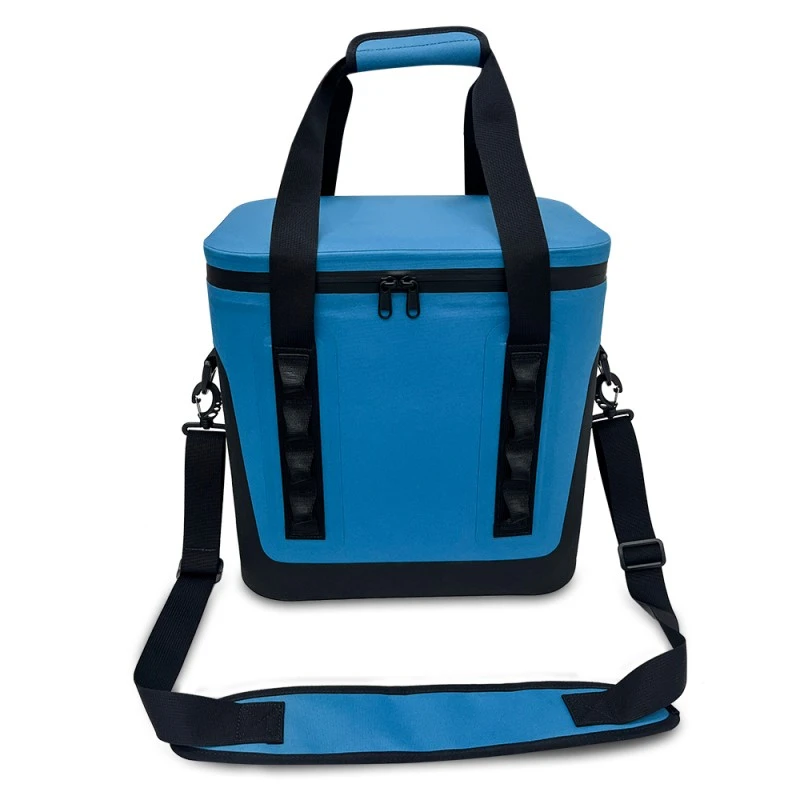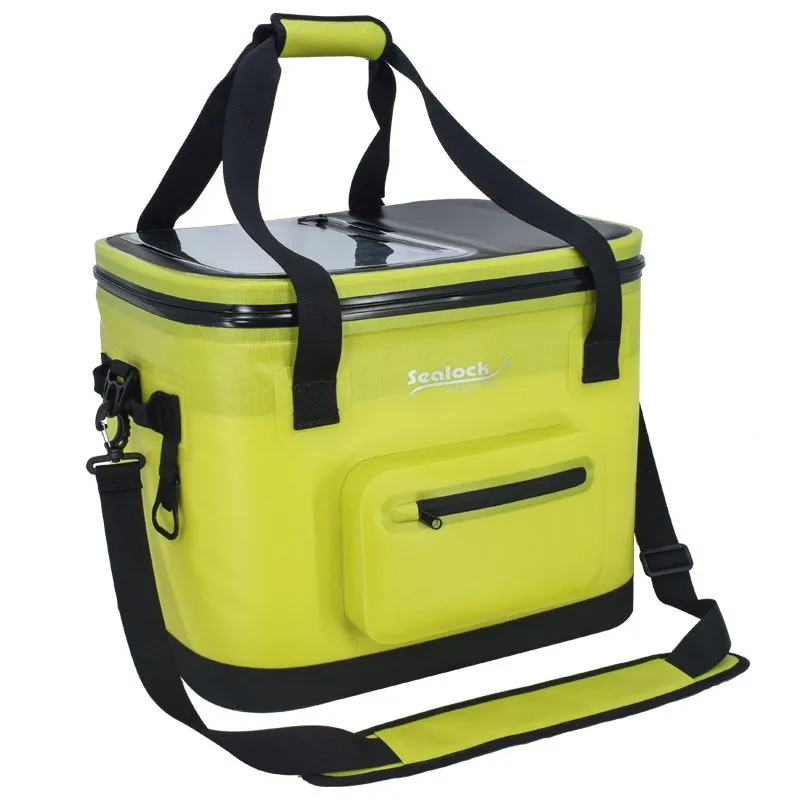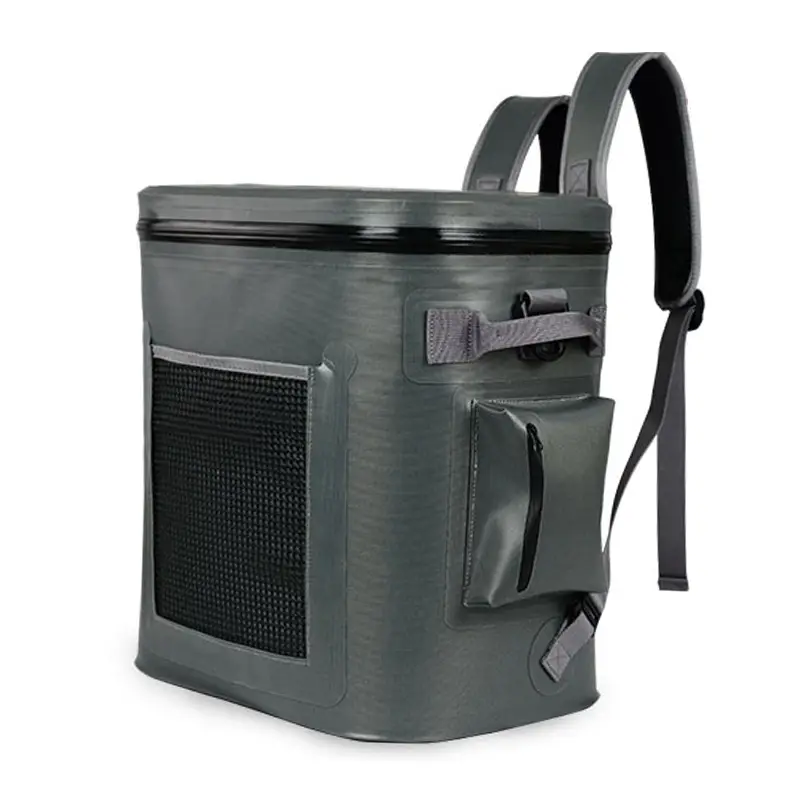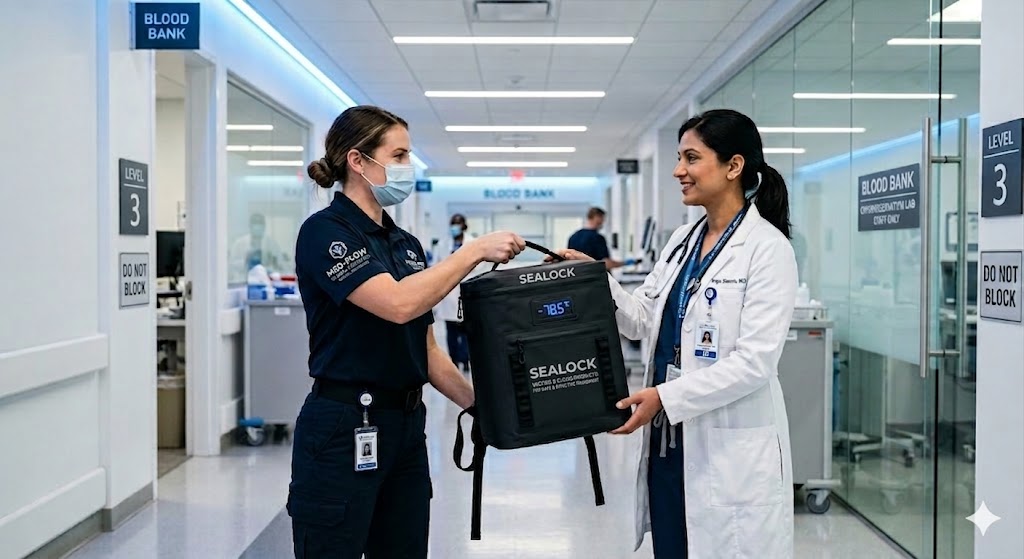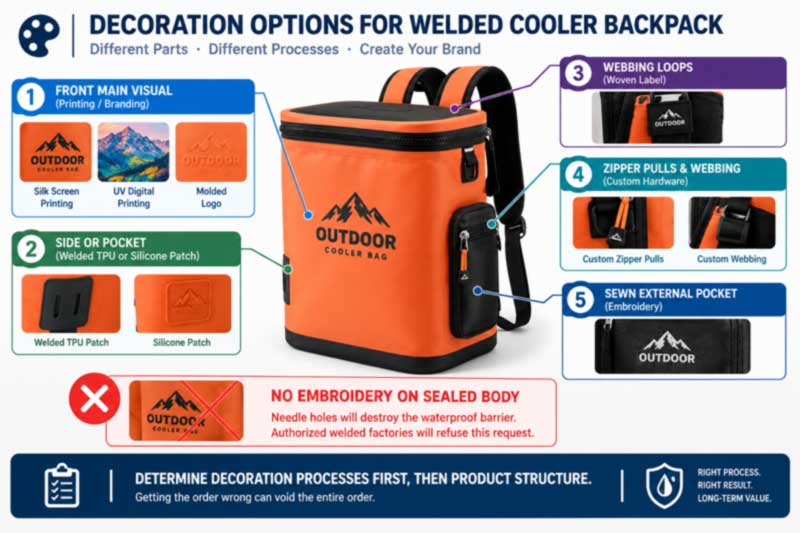
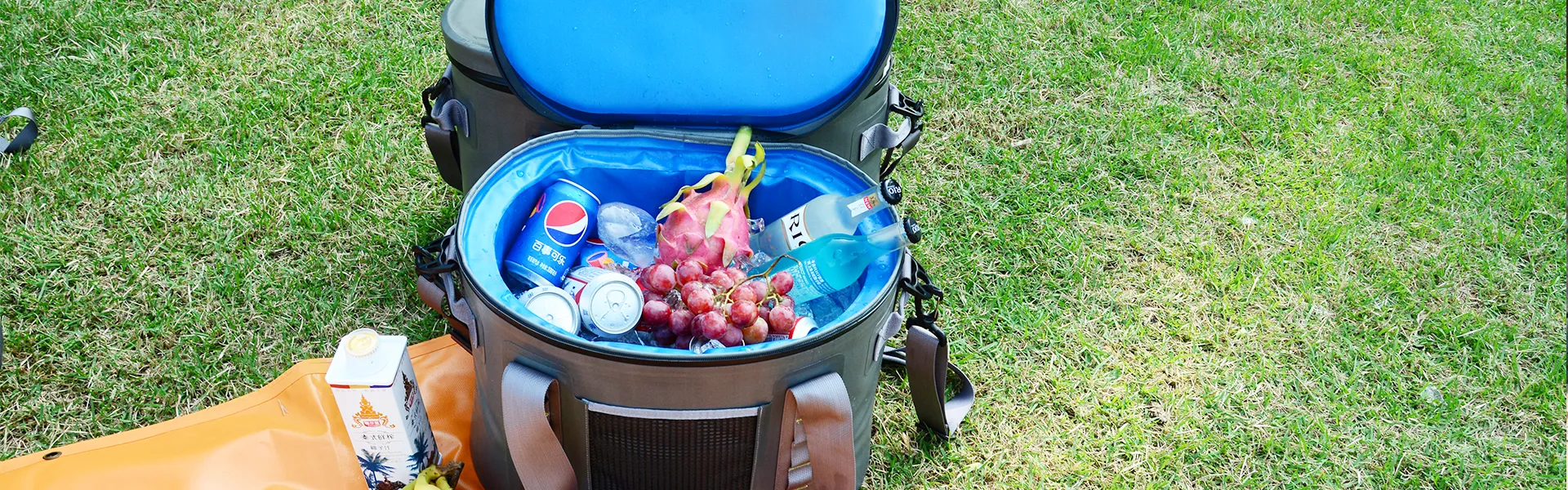
Sealock manufactures the lightweight cooler backpack for cycling that wholesale buyers and cycling brands source for commuter, gravel and touring ranges. A cooler built for a car trunk fails on a bike within a week: it flexes with every pedal stroke, rides against a sweating back for hours, and takes road vibration that a stationary cooler never sees. The pack below is built light enough to disappear on a ride and tough enough to survive being one.
Why a Cycling Cooler Has to Be Lighter, Not Just Smaller
Shaving size off a cooler is easy; shaving weight without losing insulation or durability is the actual engineering problem. A cycling cooler backpack carries its own weight on a rider's back for the whole ride, on top of whatever is inside it, so every gram in the shell and the foam is felt at hour two of a ride, not just at checkout. The build below keeps the wall thin enough to stay light while still holding a genuine cold-hold, which is the balance a repurposed hiking or picnic cooler usually gets wrong.
What Actually Breaks a Cooler Backpack on a Bike
A cooler ridden on a bike fails in ways a walked or driven cooler never does. Below are the specific, real mechanisms — not a simplified list of "three main issues" — because each one calls for a different fix in the build:
- Road vibration fatigue: constant high-frequency shaking from asphalt and gravel works loose stitching and fatigues welded seams over hundreds of rides, well before a single hard impact would.
- Back-sweat saturation: a pack pressed against a rider's back for an hour or more soaks the rear panel in sweat, which degrades untreated foam and breeds odor in a liner that is not built to be rinsed.
- Strap-and-jersey friction: the constant micro-rub of a shoulder strap against a jersey or a rider's shoulder abrades stitching and wears strap webbing thin at the same two points, ride after ride.
- Repeated stop-and-open cycling: a cyclist opens a cooler at every rest stop and light, so the zipper sees far more open-close cycles per week than a cooler used once a day, accelerating slider and tape wear.
- Chain grease and road grime contact: a pack that brushes a rear rack, a chain guard or a wet road spray picks up oil and grit that stains fabric and works into zipper teeth.
- UV exposure on exposed rides: a bag ridden in direct sun for hours, especially strapped high on the back, takes more cumulative UV than one carried indoors or in a car, fading color and embrittling untreated straps over a season.
- Temperature swing between the pack and a hot exterior: a cooler holding ice against 30°C+ ambient heat on a long ride puts sustained thermal stress on welded seams and zipper tape, different from the occasional swing a stationary cooler sees.
- Weight shift on hard cornering and braking: a loaded cooler that swings or bounces under braking and cornering stresses the strap anchor points differently from a bag that just sits still.
- Buckle and clip fatigue from constant micro-movement: sternum straps and adjusters flex thousands of times per ride as the rider pedals, which fatigues cheap plastic hardware faster than occasional use would.
- Rain and road spray intrusion: a wet commute or a rainy group ride sends spray upward off the front wheel and sideways off passing traffic, hitting the pack from angles a normal splash never would.
None of these is solved by simply making a cooler smaller or slapping straps on a tote. Each is a reason the build below is engineered the way it is.
The Maker: Sealock
A cooler backpack that fails on a group ride does it in front of the whole group, so the factory has to build for the vibration, sweat and repetition cycling actually delivers. Sealock is the cooler brand of YiFuLong Outdoor Gear Co., Ltd., welding insulated soft bags since 2003 across three high-frequency welding factories.
| Founded | 2003 (over 20 years in soft coolers) |
|---|---|
| Factories | Dongguan, China + Ho Chi Minh City, Vietnam (second Vietnam line added 2024) |
| Build methods | High-frequency (HF) welded and sewn, across three welding factories |
| Certifications | ISO9001, BSCI, SMETA P4, GRS, HIGG, SCAN |
| OEM clients | F/CE., DESCENTE, CORDOVA, CHUMS, MUJI, Osprey, among others |
| Standard MOQ | 300 pcs per design |
The Build That Answers Those Failure Points
Every material choice below traces back to one of the failure mechanisms above, not to a generic insulated-bag spec sheet.
A Shell Light Enough to Forget, Tough Enough to Ride
The pack runs a TPU/nylon shell chosen for abrasion resistance without adding bulk, keeping the loaded weight low enough to stay comfortable through a long ride. The EPE foam core holds cold for 8+ hours zipper-sealed, and because it is a closed, moisture-resisting foam rather than an absorbent pad, it does not take on weight or lose insulating value from back-sweat saturation the way a cheap open-cell foam would.
Hardware Rated for Repetition, Not Just Load
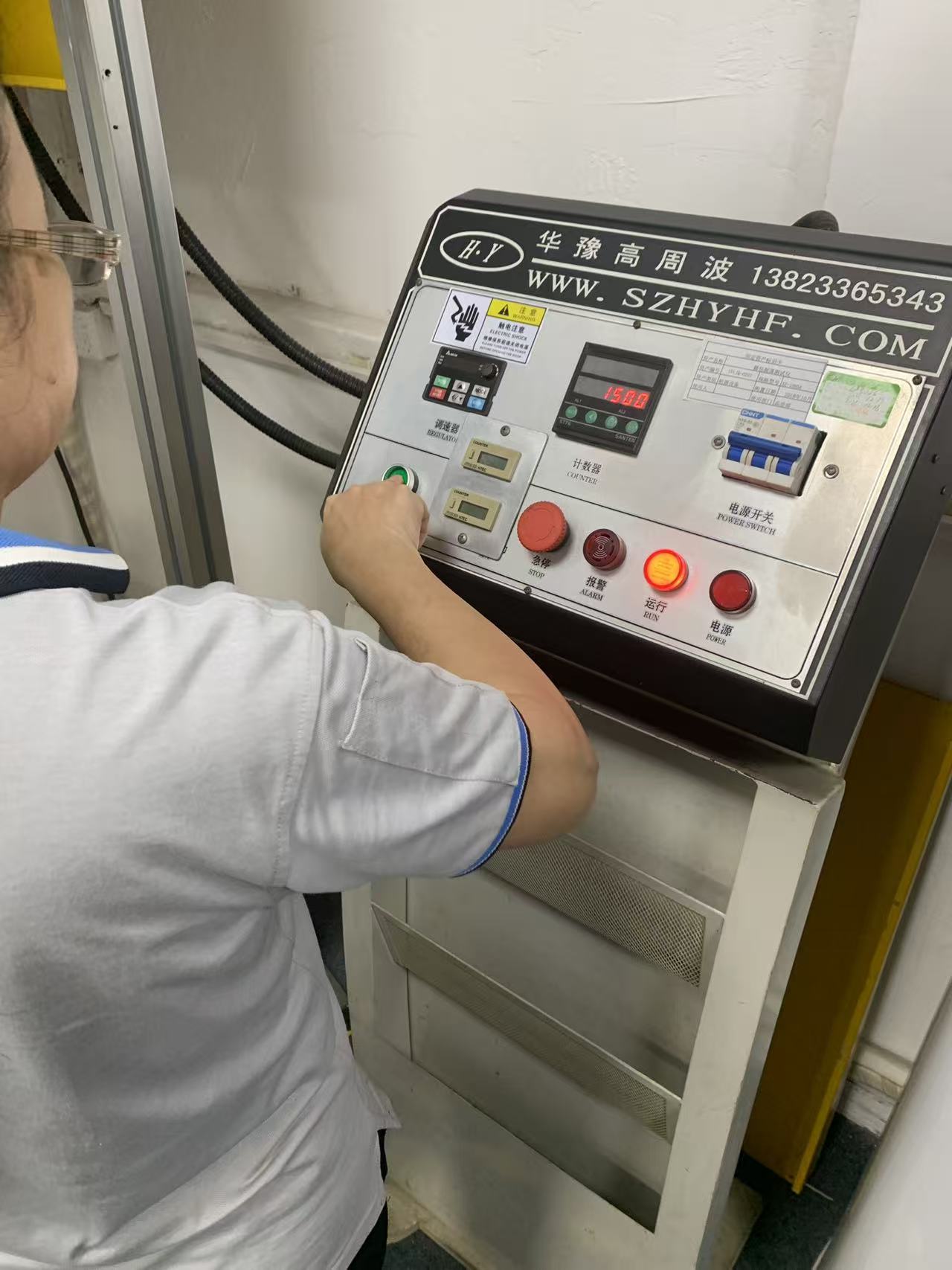
Sealock bench-tests every design against repeated-use failure, not just a single load event: a 1,500-plus-cycle load test on the strap and anchor points and a 3,000-cycle zipper test on the closure, which matters directly for a bag opened at every rest stop rather than once a day. The food-safe liner wipes and rinses clean of sweat residue and road grime rather than absorbing it.
The Lightweight Cooler Backpack: Specifications
Confirmed parameters for the lead model, the Outdoor Cooler Backpack:
| Product | Outdoor Cooler Backpack |
|---|---|
| Outer material | TPU / nylon |
| Insulation | EPE foam (Sealock standard insulated platform) |
| Build character | Lightweight, everyday-durable construction |
| Closure | Zipper |
| Ice retention | 8+ hours (zipper sealed) |
| Custom logo & colors | Accepted |
| Place of origin | Guangdong, China / Vietnam |
| MOQ | 300 pcs |
| Retail packaging | 1 pc / OPP bag + carton |
Exact weight and dimensions are confirmed at sampling; shell weight and volume can be tuned to a brand's target on custom runs.
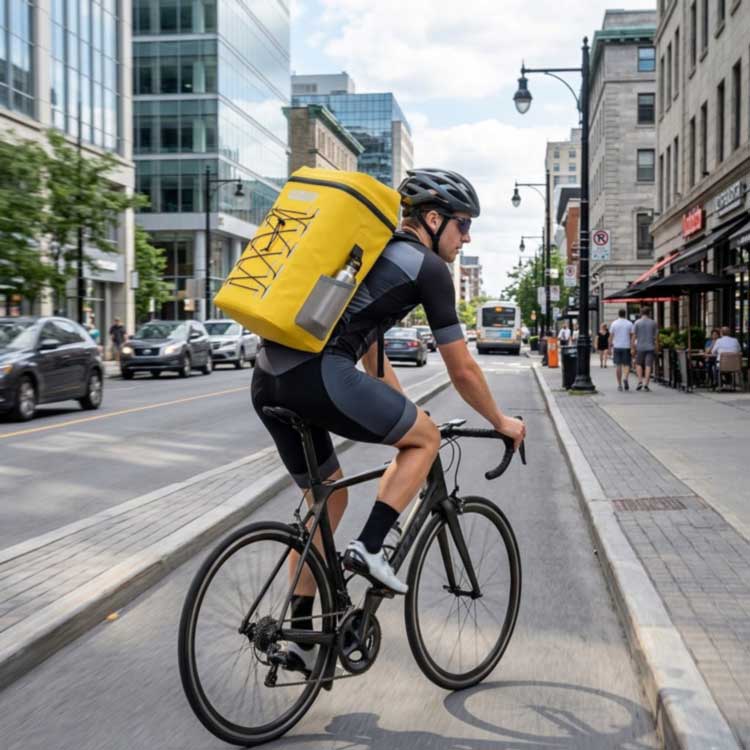
The Cycling Lineup
| Model | Best Ride Fit | Key Spec | Link |
|---|---|---|---|
| Outdoor Cooler Backpack | Commuting, everyday light rides | TPU/nylon, lightweight everyday build | View |
| Outdoor Soft Insulated Cooler Backpack | Wet commutes, rain and road spray | TPU/HF-welded, padded straps + back panel | View |
| Soft Insulated Cooler Backpack | Group rides, spill-safe on rough roads | Fully welded leakproof body, TPU/HF | View |
| Insulated Backpack Cooler | Longer touring days, bigger load | Multi-layer EPE, padded straps + back panel | View |
Matching the Pack to the Ride
The right cooler backpack depends on the route and the weather. Three quick reads settle it.
Read the Distance
For a commute or a short group spin, the low-profile Outdoor Cooler Backpack stays light and out of the way. For a longer touring day carrying more food and drink, the Insulated Backpack Cooler with its back panel handles the extra load more comfortably.
Read the Weather
Dry-road commutes are fine on any of these packs. For rides through rain or wet road spray, the HF-welded Outdoor Soft Insulated Cooler Backpack keeps water out and contents dry.
Read the Group
A solo commute rarely tips a pack, but a group ride on rough roads sees more bounce and jostle; the fully welded Soft Insulated Cooler Backpack keeps a knocked bottle sealed in rather than soaking the rider behind.
Quality Control for a Bike-Rated Build
A cycling cooler is checked against the specific ways riding breaks a bag, not a generic durability pass:
- IQC (incoming): TPU/nylon shell, liner and EPE foam are verified for thickness and abrasion quality before cutting.
- IPQC (in-process): seams and strap anchor points are inspected in-line, since these are exactly where vibration fatigue and cornering stress concentrate.
- Strap load test: a 1,500-plus-cycle load test on the straps and anchors simulates the repeated flex a pedaling rider puts on the harness.
- Zipper cycling: a 3,000-cycle open-close test matches the high-frequency use of a bag opened at every rest stop.
- Color fastness & color difference: shell colors and printed logos are tested for UV and wash consistency, relevant for a bag ridden in direct sun for hours.
- OQC (outgoing): AQL sampling and a gold-sample comparison clear each order before it leaves Dongguan or Ho Chi Minh City.
OEM & ODM for Cycling and Commuter Brands
Cycling brands need a cooler that matches a kit's fit and color and survives the specific abuse of a bike, so customization has to reach past a logo. Sealock runs these as private-label programs and, beyond color and branding, develops a pack from the ground up — a brand brings a sketch, a sample or a target spec, and the China base carries it through sampling to a finished, original build. Ground-up development takes longer than a stock edit, so plan against a season launch.
What a cycling brand controls
- Weight and profile: shell weight, volume and low-profile fit tuned to a target ride category.
- Branding: custom colors and a printed logo, UV and wash color-tested for consistency.
- Hardware upgrades: reinforced strap anchors, reflective trim or upgraded buckles for the specific fatigue points riding creates.
- Origin: produce in China or Vietnam on the same spec to manage tariffs and lead times.
Working terms
- MOQ 300 pcs per design, negotiable on custom.
- Sampling 7–15 days; production 30–45 days, FOB Guangdong.
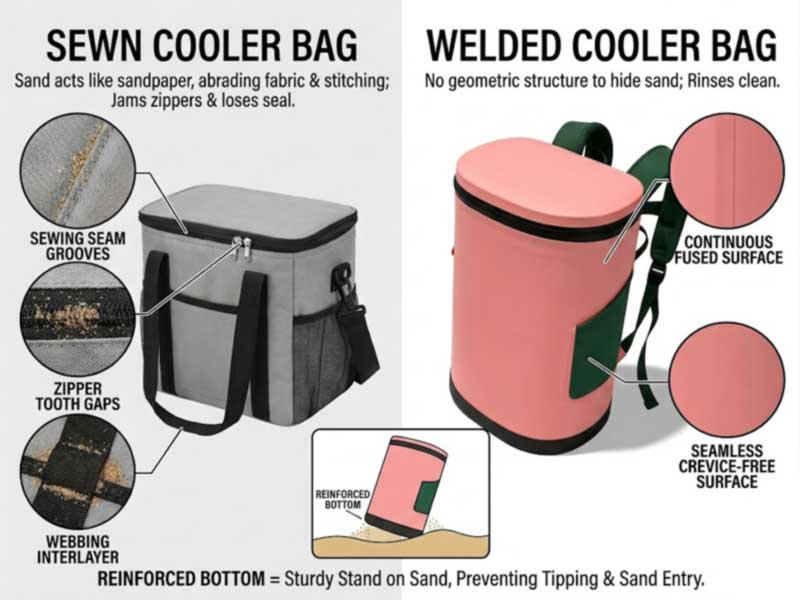
- Welded or sewn across three HF-welding factories.
FAQ: Lightweight Cooler Backpack for Cycling
Q: What makes a cooler backpack actually suitable for cycling, not just a repurposed hiking pack?
A: A cycling-suitable cooler backpack keeps shell and foam weight low enough to stay comfortable through a ride, uses moisture-resisting foam that does not saturate with back-sweat, and rates its straps and zipper for the vibration and repeated opening a ride produces — failure points a hiking or picnic cooler is not built against.
Q: How long does the lightweight cooler backpack keep drinks cold on a ride?
A: The EPE foam wall holds cold for 8+ hours with the zipper sealed, which covers a long commute or a full-day tour. Adding ice packs and keeping the bag closed between stops extends that on a hot ride.
Q: Does road vibration damage a cooler backpack over time?
A: It can, at the seams and strap anchor points specifically, which is why Sealock bench-tests those points with a 1,500-plus-cycle load test rather than only checking a single load event. That repeated-cycle testing is aimed directly at the fatigue riding causes.
Q: Is a cycling cooler backpack rideable in the rain?
A: The HF-welded models are built for rain and road spray, which hits a rider from angles a stationary splash never would. For dry commutes, the standard zippered build is sufficient.
Q: What is the MOQ and lead time for a custom cycling cooler backpack?
A: The standard MOQ is 300 pcs per design, with samples in 7–15 days and production in 30–45 days, FOB Guangdong. Weight, profile, hardware and China-or-Vietnam origin are set during customization, and ground-up designs take longer.
Ready to source? Sealock (YiFuLong Outdoor Gear Co., Ltd.) supplies lightweight cycling cooler backpacks worldwide from its China and Vietnam factories. Send a target weight and spec or your own design, and the team will quote build, hardware and origin for the range.
Email: info@sealock.com.hk | Phone: +86-13632981825 | See the Outdoor Cooler Backpack page