News

Why Empty Space Destroys Soft Cooler Performance (Packing Guide)

2026-06-10 0 Leave me a message

One of the most frustrating experiences during an outdoor trip is opening your soft cooler midway through the day only to find your drinks floating in a lukewarm puddle. When ice melts too fast, most people immediately blame the thickness of the insulation or suspect a manufacturing defect. However, the true culprit is often a hidden packing error: dead air space.

Leaving empty room inside an insulated bag completely alters its internal thermodynamics. Under-packing forces the cooler to fight an uphill battle against ambient temperatures, turning what should be an efficient cooling vault into a trap for rapid ice degradation.

How Air Accelerates Ice Melt

Air has a very low thermal mass, meaning it changes temperature quickly and holds very little cold energy compared to solids or liquids. When you pack a large cooler with only a small amount of food and ice, the remaining volume is instantly occupied by warm ambient room temperature air.

The moment you seal the lid, your ice blocks begin working to cool down that trapped air. This means a significant portion of your ice mass is spent lowering the temperature of empty space before it ever begins chilling your drinks. The larger the pocket of empty air, the faster your ice reserves breakdown.

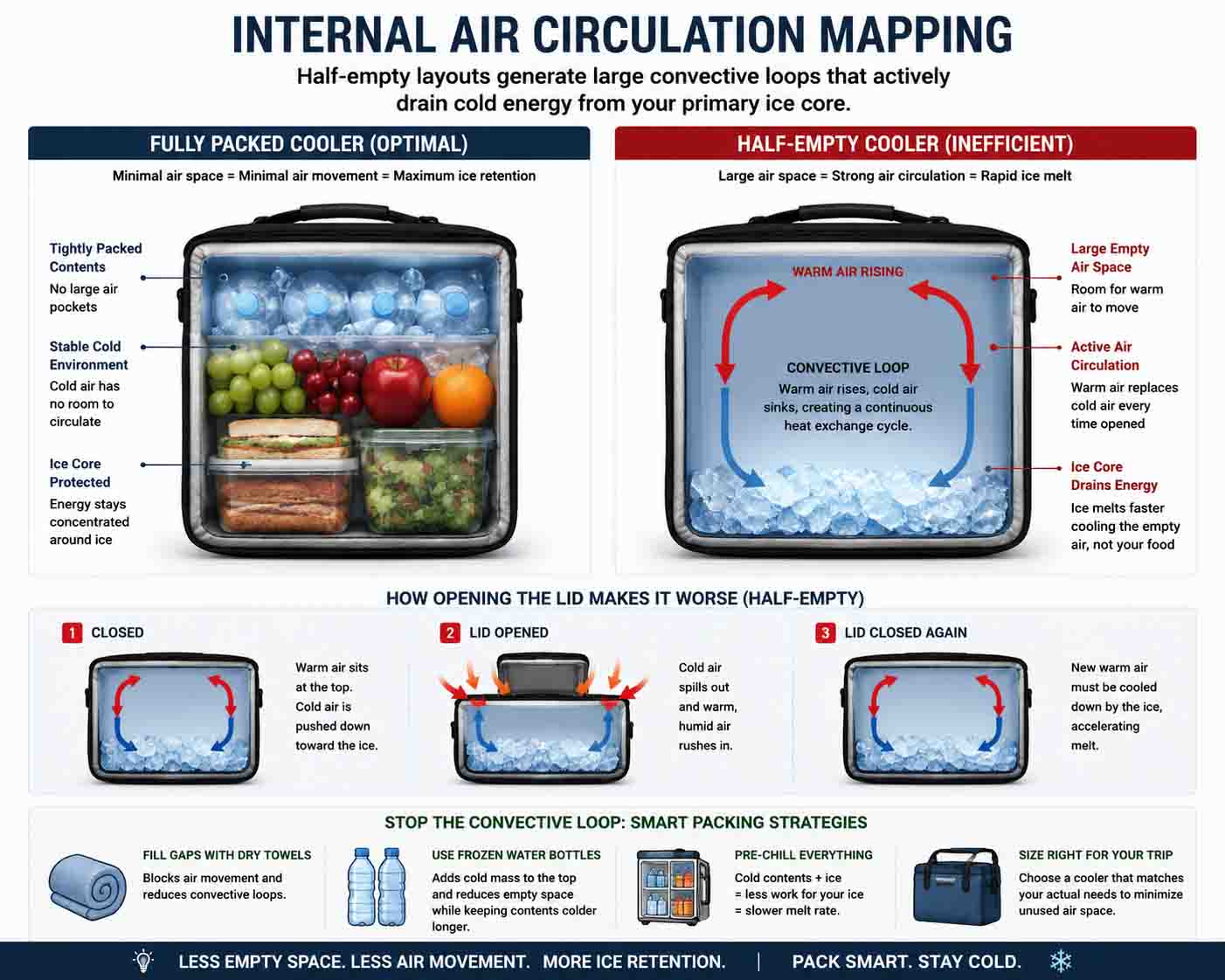
Internal air circulation mapping. Half-empty layouts generate large convective loops that actively drain cold energy from your primary ice core.

Figure 1: Internal air circulation mapping. Half-empty layouts generate large convective loops that actively drain cold energy from your primary ice core.

The Science of Thermal Bridging

This trapped empty space acts as an active thermal bridge through convective heat transfer. Cold air naturally sinks to the bottom of the chamber, while any warm air moves to the top. When a cooler bag is under-packed, a massive convective loop forms inside the sealed walls.

Every single time the main compartment zipper is opened, this heavy cold air falls straight out of the bag due to gravity. It is instantly replaced by a fresh wave of hot, humid outside air. When you close the bag, the remaining ice must melt further to cool down this new batch of warm air. This continuous cycle creates intense soft cooler condensation and rapidly destroys the bag's ice retention capacity.

How Much Empty Space Is Too Much?

Field performance tests show a direct correlation between the internal fill rate of an insulation bag and its overall ice retention efficiency. Operating a high-end cooler with large internal air gaps leads to a severe drop in performance timelines:

Cooler Internal Fill Rate (%) Ice Retention Efficiency (%)
100% (Fully Packed / Zero Air Gaps) 100% Efficiency Baseline
75% Filled (Minor Air Pockets) 88% Efficiency Retention
50% Filled (Half Empty Volume) 70% Efficiency Retention
25% Filled (Severe Under-Packing) 45% Efficiency Retention

Best Packing Methods to Defeat Dead Air

If you do not have enough food or drinks to completely fill the interior volume of your backpack bag, you must use smart packing techniques to insulate the remaining empty space:

  • Fill Gaps with Dry Towels: If you have large air pockets at the top of your cooler chamber, pack clean, rolled-up cotton towels into the space. The fabric fiber structure traps air movement, blocking convective loops and preserving your remaining ice mass.
  • Use Frozen Water Bottles: Instead of relying entirely on loose ice cubes that quickly melt into water, fill empty top spaces with completely frozen reusable water bottles. They act as solid cold blocks and provide fresh drinking water as they slowly thaw later in the day.
  • Pre-Chill All Contents: Packing warm, room-temperature soda cans directly onto your ice creates an immediate heat transfer. Always store your drinks and meal containers inside a household refrigerator overnight before transferring them into your insulation pouch.
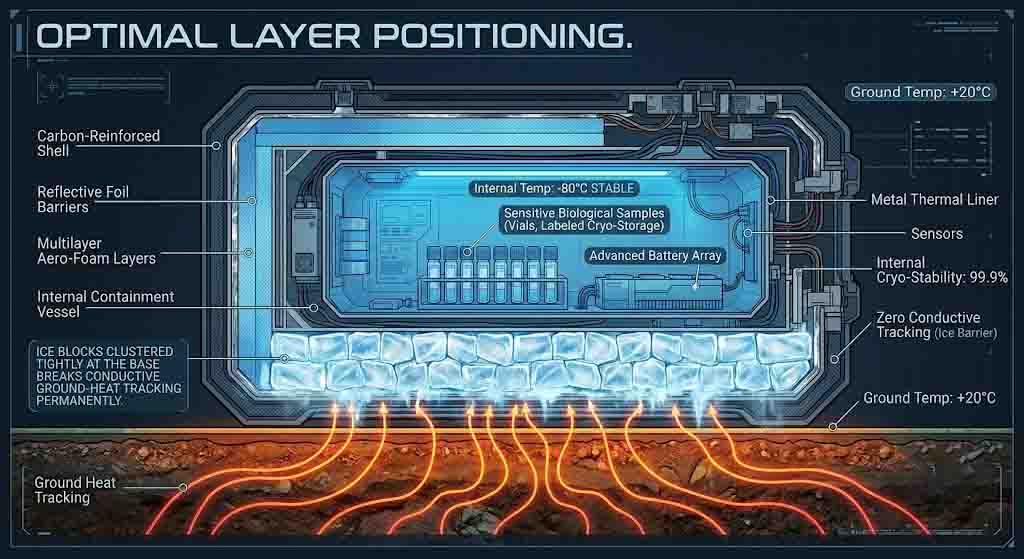
Optimal layer positioning. Keeping ice blocks clustered tightly at the base breaks conductive ground-heat tracking permanently.

Figure 2: Optimal layer positioning. Keeping ice blocks clustered tightly at the base breaks conductive ground-heat tracking permanently.

Choosing the Right Cooler Size For Your Activity

The best way to eliminate dead air space permanently is to size your gear correctly for your specific use cases rather than simply buying the largest option available:

  • 15L Capacity (Small Commuter Pouches): Tailored precisely for solo daily office commutes, personal lunch storage, and quick field shifts. These layouts pack down tightly with zero remaining air pockets. View our targeted compact lunch bags segment to analyze daily thermal sizing.
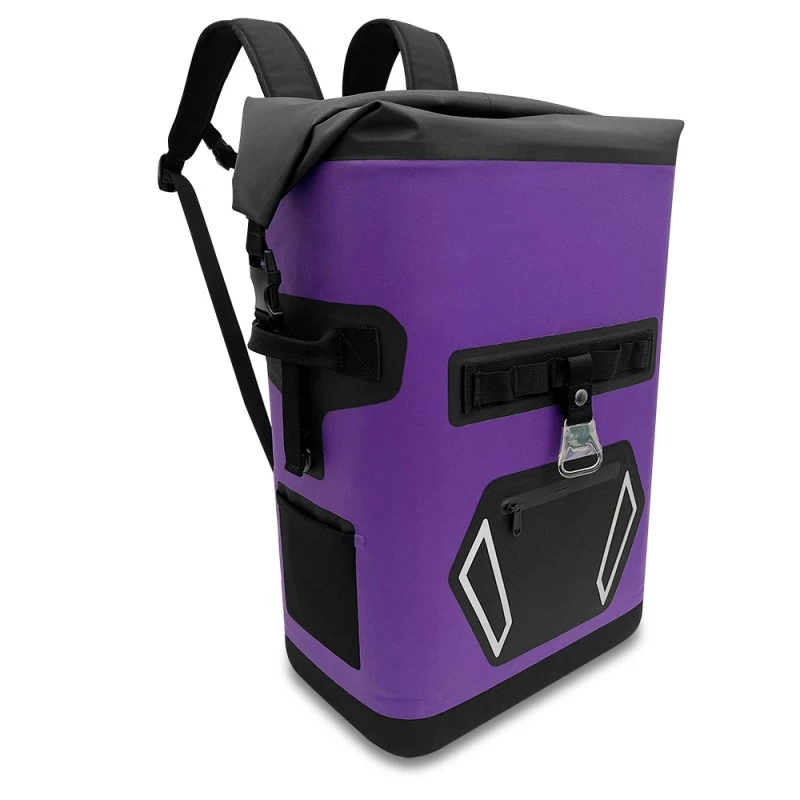
  • 25L Capacity (Mid-Sized Backpacks): The optimal choice for couples heading out for a day at the beach or short weekend day hikes. Holds a standard lunch containers stack alongside frozen bottles comfortably. Explore our versatile hands-free backpack coolers catalog to view mid-tier volume options.
  • 35L to 45L Capacity (Heavy-Duty Carriers): Reserved for large family picnics, multi-day camping base camps, or long-range offshore angling trips. These require significant amounts of ice blocks to establish an efficient cold environment. Explore our maximum-capacity large group insulation bags catalog line to evaluate volume profiles.

Frequently Asked Questions — Cooler Space & Performance

Does filling a cooler with water improve performance?

No, filling a cooler with warm tap water at the start will instantly melt your ice mass. However, once your packed ice naturally begins to melt during outdoor use, leaving that cold water slurry inside the bag improves performance. The ice-cold liquid fills the microscopic gaps around your canned drinks far better than empty air can, acting as a tight thermal barrier that blocks outside convective currents.

Are ice packs better than loose ice?

Ice packs provide localized, long-lasting cold and do not create messy liquid puddles, making them cleaner for stacked containers. However, loose ice cubes are superior for chilling items quickly because they shift to cover 100% of the item's surface area, completely eliminating empty air pockets. A hybrid setup—ice packs at the base and loose ice filled in the surrounding gaps—offers the highest thermal efficiency.

Should empty space be on top or bottom inside an insulation bag?

Any unavoidable empty space must always be left at the absolute top of the chamber. Because cold air naturally sinks and warm air rises, packing your heavy food and ice blocks firmly at the bottom keeps your core contents protected. If you leave empty air space at the bottom, warm air circulation loops will form immediately, rapidly degrading your entire ice base.

How often should a cooler be opened during outdoor use?

A cooler bag should be opened as infrequently as possible. Every time you unzip the compartment, heavy cold air drops straight out of the bag due to gravity and is instantly replaced by warm, humid outside air. This forces the remaining ice mass to spend extra energy re-cooling the interior environment, resulting in accelerated overall melt rates.

Is a larger cooler always better for daily travel?

No, a larger cooler is highly inefficient if it is only partially filled. The excess internal volume creates large pockets of dead air space that accelerate ice decay. It is always thermally superior to use a smaller, properly sized insulation bag packed tightly to 100% capacity than a massive carrier that is half empty.

Related News
Leave me a message
X
We use cookies to offer you a better browsing experience, analyze site traffic and personalize content. By using this site, you agree to our use of cookies.Privacy Policy
RejectAccept