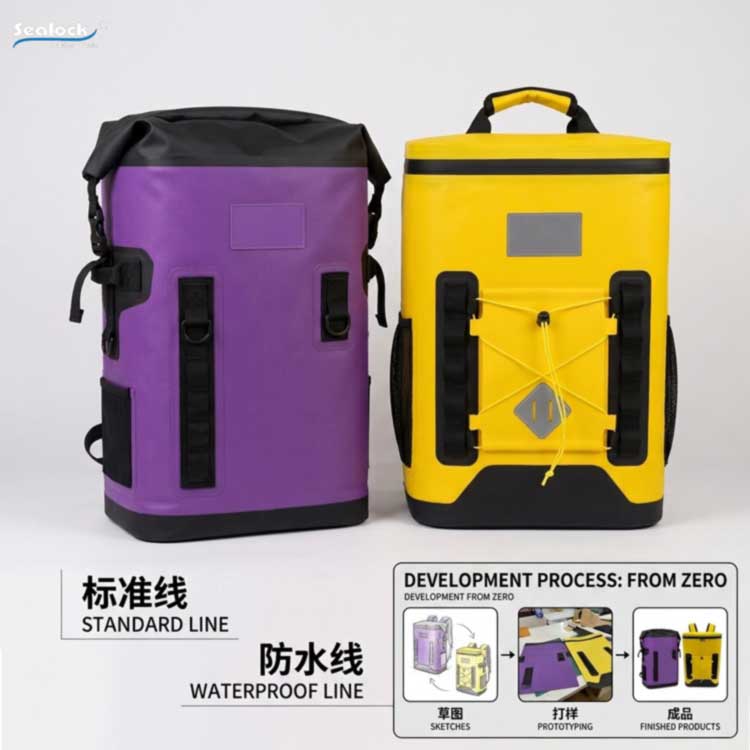
Sealock manufactures both the waterproof cooler backpack and the standard cooler backpack that buyers weigh against each other before placing an order. The two look alike on a product page, but they are built for opposite conditions: one is a welded, watertight shell for the boat, the surf and the rain, the other a zippered, feature-rich pack for the trail, the festival and the commute. Choosing wrong means a wet deck ruins a standard bag's contents, or a buyer overpays for waterproofing a dry-weather customer never uses. This comparison sorts which is right for which end use.
The Core Difference: A Welded Skin vs a Zippered Shell
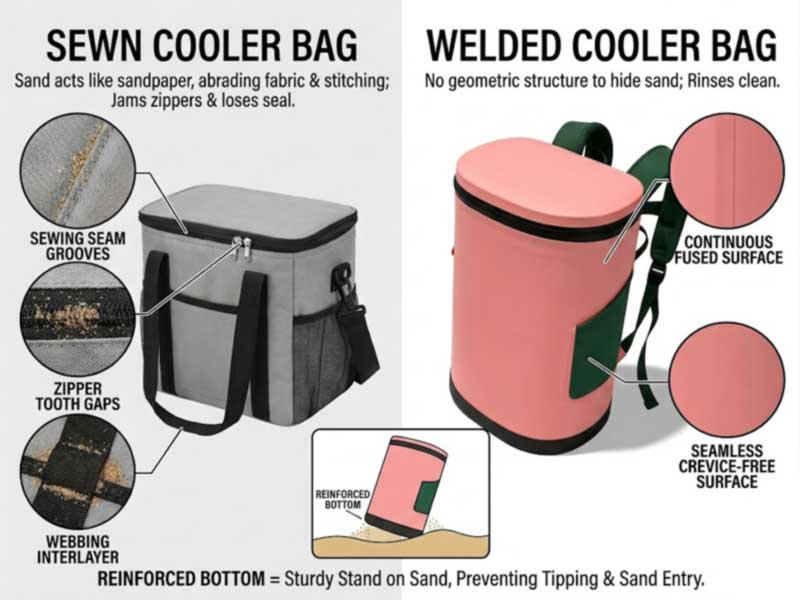
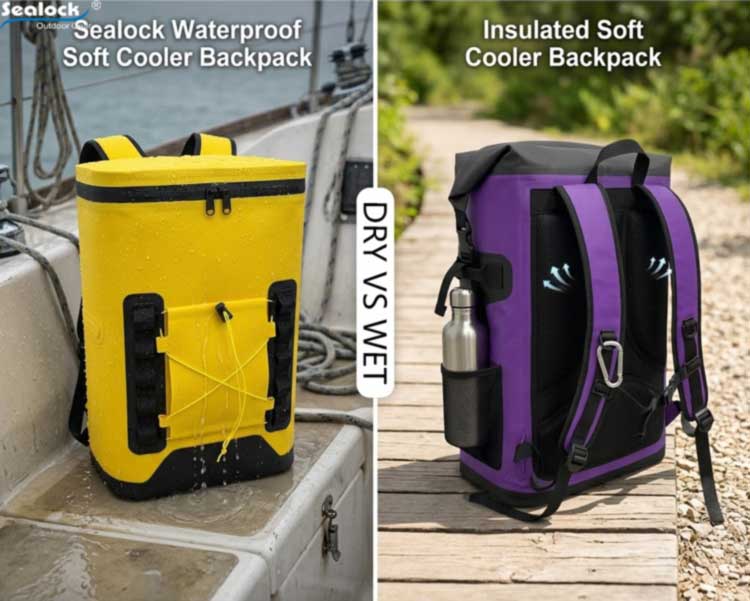
Every other difference flows from one decision: how the body is sealed. A waterproof cooler backpack uses a TPU shell with high-frequency welded seams — a single continuous skin with no thread holes, so water cannot wick in or out. A standard cooler backpack is sewn and zippered, often with a breathable back panel and outer pockets, which trades the watertight seal for comfort, organization and a lower cost. Neither is a compromise version of the other; they are two answers to two different questions.
Where Each One Wins
The honest way to compare them is by where they are used, not by which has the longer spec sheet.
Where the Waterproof Backpack Wins
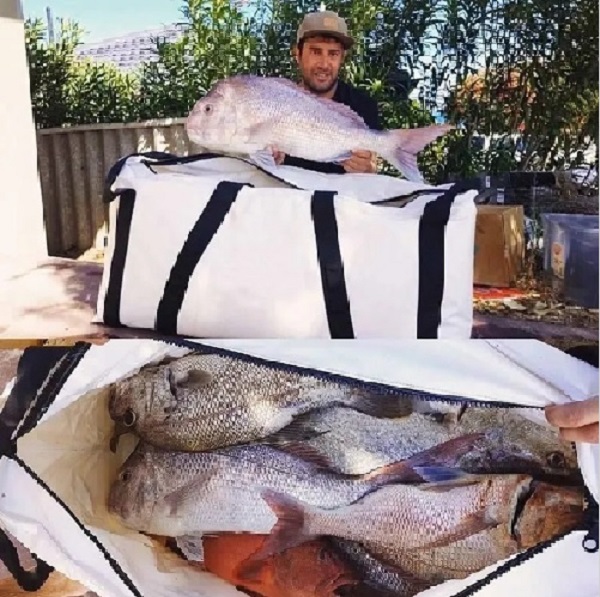
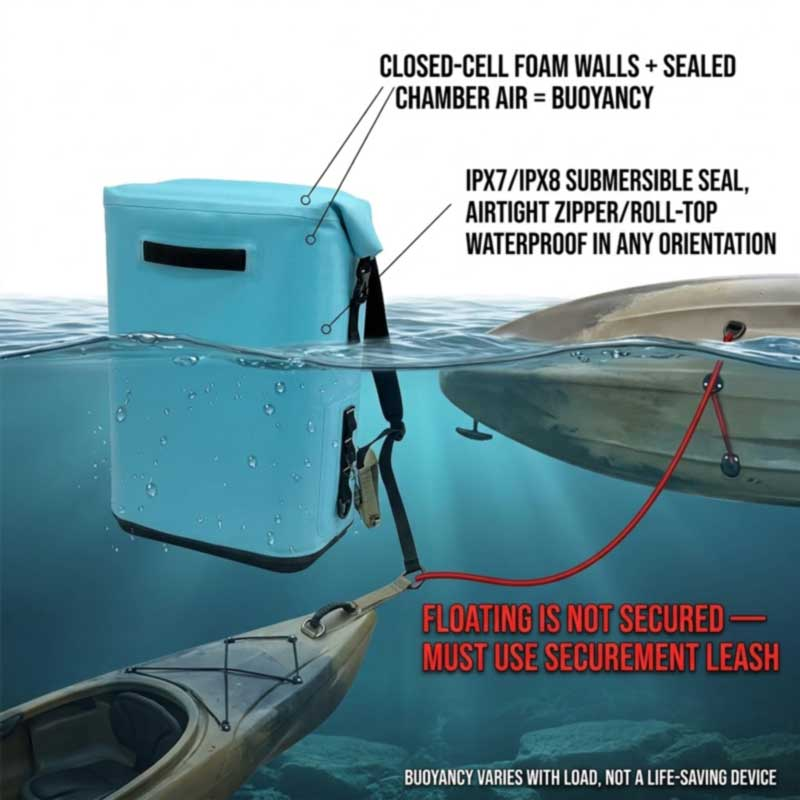
Anywhere water is part of the day, the welded build pulls ahead. On a kayak, a boat deck or a paddleboard, it keeps contents dry through spray and a swamped hull. In rain or at the beach, it shrugs off what soaks a standard pack. And because the seal works both ways, melt-water and a wet catch stay sealed inside rather than leaking onto a back. For fishing, watersports and anything coastal, the waterproof cooler backpack is the only safe pick.
Where the Standard Backpack Wins
On dry land, the standard pack is usually the better tool. A breathable back panel moves air where a sealed bag traps heat and sweat, outer pockets keep small gear reachable, and the lighter, simpler build costs less per unit and carries more comfortably over a long day. For hiking, festivals, sports events and commuting, the standard cooler backpack delivers what those users actually feel — comfort, organization and value.
Side-by-Side
| Factor | Waterproof Cooler Backpack | Standard Cooler Backpack |
|---|---|---|
| Construction | TPU shell, HF-welded watertight seams | Sewn and zippered, often welded panels |
| Water protection | Fully waterproof, immersion-tested | Water-resistant; not for submersion |
| Best environment | Boat, kayak, surf, rain, beach | Trail, festival, stadium, commute |
| Carry & comfort | Padded straps; sealed back | Breathable back panel, ergonomic straps |
| Organization | Minimal, sealed openings | Multiple external pockets |
| Weight & cost | Heavier build, higher unit cost | Lighter, lower unit cost |
| Cold-hold | 8+ hours sealed | 8+ hours sealed |
The Maker: Sealock
Because Sealock builds both types in the same factories, a buyer can compare them on equal footing rather than across two suppliers. Sealock is the cooler brand of YiFuLong Outdoor Gear Co., Ltd., welding insulated soft bags since 2003 across three high-frequency welding factories.
| Founded | 2003 (over 20 years in soft coolers) |
|---|---|
| Factories | Dongguan, China + Ho Chi Minh City, Vietnam (second Vietnam line added 2024) |
| Build methods | High-frequency (HF) welded and sewn, across three welding factories |
| Certifications | ISO9001, BSCI, SMETA P4, GRS, HIGG, SCAN |
| OEM clients | Helly Hansen, West Marine, Osprey, KAILAS, Stanley, Hydro Flask, among others |
| Standard MOQ | 300 pcs per design |
The Two Real Models
Rather than compare abstractions, here are the two Sealock packs that represent each side, with real specs.
The Waterproof Side: Waterproof Soft Cooler Backpack
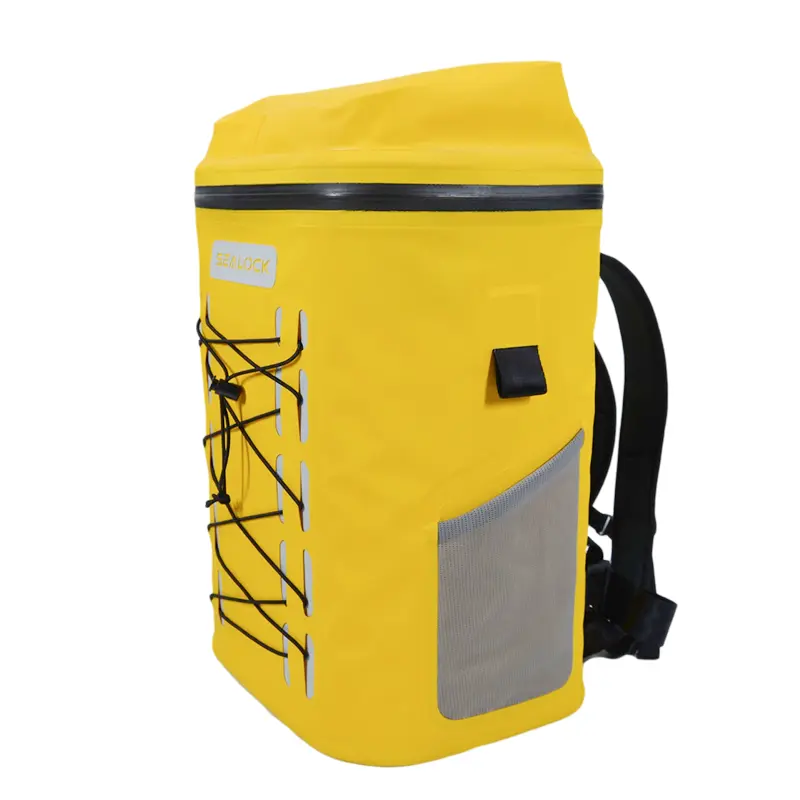
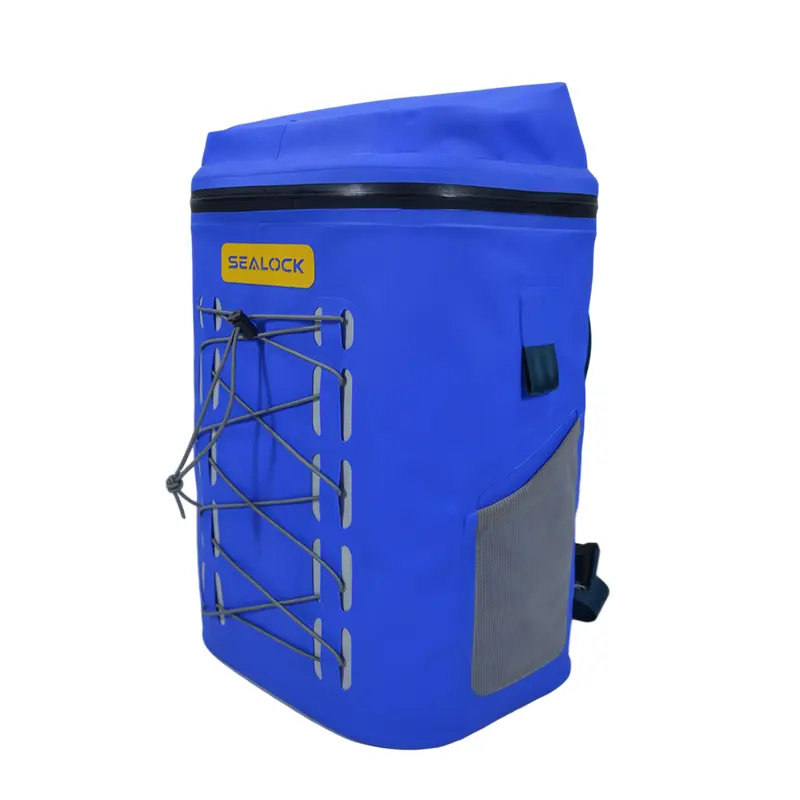
The Waterproof Soft Cooler Backpack is the welded, watertight build for life around water.
| Product | Waterproof Soft Cooler Backpack |
|---|---|
| Outer material | TPU waterproof fabric |
| Waterproofing | Fully waterproof, HF-welded seams |
| Insulation | EPE foam |
| Carry | Padded backpack straps |
| Ice retention | 8+ hours (sealed) |
| MOQ | 300 pcs |
The Standard Side: Insulated Soft Cooler Backpack
The Insulated Soft Cooler Backpack is the comfortable, organized pack for dry-land use.
| Product | Insulated Soft Cooler Backpack |
|---|---|
| Outer material | TPU / nylon |
| Insulation | EPE foam |
| Inner lining | Food-safe PEVA |
| Carry | Padded straps + breathable back panel |
| Organization | Multiple external pockets |
| Ice retention | 8+ hours (zipper sealed) |
| MOQ | 300 pcs |
Exact capacity and dimensions for both are confirmed at sampling and can be sized on custom runs.
The Wider Lineup
| Type | Model | Pick It For | Link |
|---|---|---|---|
| Waterproof | Waterproof Soft Cooler Backpack | Kayak, boat, surf, rain | View |
| Waterproof | Outdoor Soft Insulated Cooler Backpack | Wet trails, stream crossings | View |
| Standard | Insulated Soft Cooler Backpack | Hiking, day use, organization | View |
| Standard | Insulated Cooler Backpack | Festivals, all-day events | View |
How to Choose — or Stock — the Right One
For an end user the choice is the environment; for a buyer or brand it is the market. Three quick reads settle it.
Read the Water
If the customer is on or near water — anglers, paddlers, boaters, beach-goers — the waterproof backpack is the only safe spec. If they stay on dry land, the standard pack serves them better and cheaper.
Read the Feature Need
Customers who want pockets, a breathable back and the lightest comfortable carry are matched to the standard backpack. Those who will trade features for a watertight seal want the welded build.
Read the Price Point
For a value or giveaway program, the standard pack hits a lower unit cost. For a premium outdoor or marine line, the waterproof build commands — and justifies — a higher price. Many buyers stock both, one for each tier.
Quality Control for Both Builds
The two types are checked against the demands each one makes, on the same line:
- IQC (incoming): shells, liners and EPE foam are verified for thickness and food-contact safety before cutting.
- IPQC (in-process): welded seams on the waterproof build and zipper and pocket assembly on the standard build are inspected in-line.
- Full water-immersion test: the waterproof models are submerged to confirm a watertight body, not just splash resistance.
- Strap load & zipper tests: both pass a 1,500-plus-cycle strap load test and a 3,000-cycle zipper test for carry and closure life.
- Color fastness & color difference: printed logos and colors are tested so branding stays consistent across a run.
- OQC (outgoing): AQL sampling and a gold-sample comparison clear each order before it leaves Dongguan or Ho Chi Minh City.
OEM & ODM: Order Either, or Both
Because both builds come from the same factories, a brand can run a waterproof line and a standard line on one program and one set of terms. Sealock handles these as private-label work and, beyond a logo and color swap, develops either type from the ground up — a brand brings a sketch, a sample or a target spec, and the China base carries it through sampling to a finished, original pack. Ground-up builds take longer than a stock edit, so plan against a launch.
What a brand controls
- Build type: spec the waterproof welded body, the standard zippered body, or both as a tiered range.
- Branding: custom colors and a printed logo, color-tested for consistency across the run.
- Features: pockets, breathable panel, harness and capacity tuned to each tier.
- Origin: produce in China or Vietnam on the same spec to manage tariffs and lead times.
Working terms
- MOQ 300 pcs per design, negotiable on custom.
- Sampling 7–15 days; production 30–45 days, FOB Guangdong.
- Welded or sewn across three HF-welding factories.
FAQ: Waterproof vs Standard Cooler Backpack
Q: What is the difference between a waterproof cooler backpack and a standard cooler backpack?
A: A waterproof cooler backpack has a TPU shell with HF-welded watertight seams for use on or near water, while a standard cooler backpack is sewn and zippered with a breathable back panel and pockets for dry-land use. The waterproof build seals out water; the standard build trades that for comfort, organization and a lower cost.
Q: Is a waterproof cooler backpack worth the extra cost over a standard one?
A: It is worth it for anyone on or near water — anglers, paddlers, boaters and beach-goers — where a standard pack would let water in. For dry-land hiking, festivals and commuting, a standard cooler backpack is the better value.
Q: Do both cooler backpacks keep drinks cold the same length of time?
A: Yes, both hold cold for 8+ hours sealed thanks to the same EPE foam insulation. The difference is the seal and the features, not the cold-hold, so cold retention is not the deciding factor between them.
Q: Which cooler backpack is more comfortable to carry?
A: The standard cooler backpack usually carries more comfortably on dry land, since its breathable back panel moves air and it weighs less. The waterproof backpack is built around a sealed body, so it trades some breathability for being watertight.
Q: Can Sealock supply both types for one brand program?
A: Yes. Both builds come from the same factories, so a brand can order a waterproof line and a standard line on one program, with custom colors, logos and ground-up development. MOQ is 300 pcs per design.
Ready to source? Sealock (YiFuLong Outdoor Gear Co., Ltd.) supplies waterproof and standard cooler backpacks worldwide from its China and Vietnam factories. Send a target spec or your market, and the team will recommend the right build, features and origin.
Email: info@sealock.com.hk | Phone: +86-13632981825 | See the Waterproof Soft Cooler Backpack page