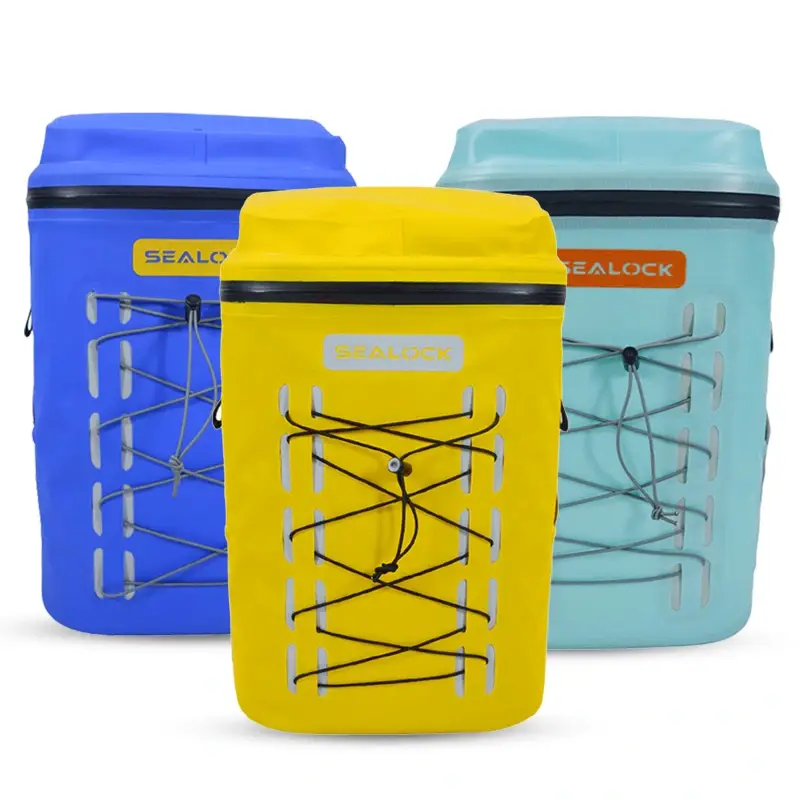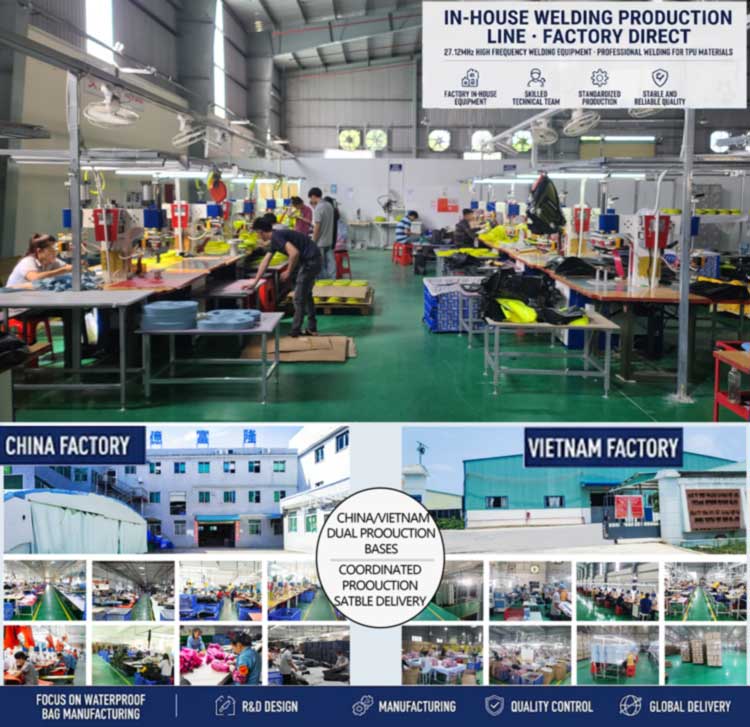

Sealock (YiFuLong Outdoor Gear Co., Ltd.) manufactures insulated and waterproof cooler bags for European brands and retailers — with the documentation your compliance team will ask for, not just the product.
Factory since 2003 · China and Vietnam · amfori BSCI and SMETA P4 · GRS certified · food-grade liners with migration testing · MOQ 300 pcs · samples 7–15 days.
Send your compliance requirements with your spec: info@sealock.com.hk · +86-13632981825
Two EU Rules Changed What You Need From a Supplier — This Year
European sourcing has shifted from "can you make it" to "can you evidence it." Two regulations that took effect in 2026 turn supplier documentation into a condition of market access rather than a nice-to-have.
PPWR — a Declaration of Conformity for every pack
The Packaging and Packaging Waste Regulation (EU) 2025/40 (cite index="12-1">applies from 12 August 2026 and (cite index="12-1">covers all packaging placed on the EU market, regardless of material, use or place of manufacture — including unit packaging, grouped packaging and transport packaging. It (cite index="12-1">applies directly in all EU Member States rather than through national implementations.
The requirement that reaches your supplier: (cite index="14-1">PPWR requires a manufacturer-issued Declaration of Conformity for every packaging type placed on the EU market from 12 August 2026, and importers are responsible for collecting and retaining the DoC from their suppliers. Obligations on the importer are specific — (cite index="13-1">Article 18 requires importers to verify supplier DoCs, hold them for 5 to 10 years, and respond to authority requests within 10 days, and critically for private-label brands, (cite index="13-1">importers who sell under their own brand trigger Article 21, becoming manufacturers with full DoC and conformity obligations of their own.
Procurement practice has already adjusted: (cite index="11-1">PPWR is a go/no-go — no Declaration of Conformity, no market access. DoC readiness is a hard go/no-go in supplier qualification from 12 August 2026. That covers your polybags, hangtag cards, cartons and any retail box.
EmpCo — unsubstantiated green claims banned
The Empowering Consumers Directive (EU) 2024/825 (cite index="11-1">applies from 27 September 2026 and bans unsubstantiated green claims. In practice (cite index="19-1">generic "eco/green" expressions and offset-based "climate-neutral" claims are banned from approximately September 2026; environmental claims must now rest on verifiable data.
For a cooler bag programme this is direct: if your packaging or listing says "made from recycled materials," you need documentation behind it — which in textiles means GRS scope certificates and batch-level Transaction Certificates, not a supplier's assurance. We are GRS certified, and recycled claims are quoted per programme with the documentation that supports them. See GRS, rPET and defensible recycled claims.
Need a supplier who can produce the documentation? Tell us your destination markets and which evidence your compliance team requires — packaging DoC, food-contact migration reports, GRS Transaction Certificates, social audit access — and we will confirm what we can provide before you commit to a sample.
info@sealock.com.hk · +86-13632981825
Food Contact: The Liner Needs Its Own Paperwork
A cooler bag holds food against its liner, which makes that liner a food-contact material under EU law — Framework Regulation (EC) 1935/2004, the GMP Regulation (EC) 2023/2006 governing how it is made, and Regulation (EU) 10/2011 for plastics with its overall and specific migration limits.
What your compliance team will ask for is the Declaration of Compliance for the food-contact material, backed by migration test reports — and it must sit on supporting documentation available to enforcement authorities. Note it is a different document from the CE-marking Declaration of Conformity, and different again from the PPWR packaging DoC above. Three documents, three regimes.
All Sealock insulated bags use food-grade inner liners across the range — TPU membrane, PEVA film or equivalent depending on the model — with migration testing arranged for the destination market. Detail: food-grade manufacturing standards.
Chemical Compliance and Material Choice
REACH governs substances in the product itself, and the obligation is continuous rather than one-off: (cite index="19-1">the SVHC candidate list is updated twice a year, so monitoring is continuous, alongside standing restrictions including (cite index="19-1">CMR substances (Entry 72) and the APEO restriction (Entry 46a). Where OEKO-TEX certification is requested, note that (cite index="19-1">new limit values entered into force on 1 June 2026.
This feeds a material decision worth making deliberately. Traditional flexible PVC relies on plasticisers, and phthalates face tightening restriction in the EU; TPU requires no plasticiser and is generally phthalate-free and recyclable. Compliant PVC formulations exist and PVC remains legitimate for many products — but for EU retail programmes the compliance position is simpler with TPU, and that is a conversation to have at specification stage rather than after a test report. See TPU vs PVC: which shell to spec.

Social Compliance: BSCI Is What European Buyers Ask For
Social audits are geographic in practice. Continental European retailers, discounters and a large share of textile and hardgoods importers run amfori BSCI, while UK and international consumer-goods retailers tend to work through Sedex and SMETA. We hold both — which means you can onboard with either without commissioning a new audit and waiting weeks for a slot.
Two practical points. BSCI is not a certificate you can be emailed: the result is an A–E rating held inside the amfori platform, and retailers typically require A, B or C. Ask us to add you as a linked buyer rather than requesting a PDF. Our SMETA is the four-pillar version, adding environment and business ethics to labour and health and safety — the version most demanding retail programmes specify. Detail: what each certification actually proves.
The Documentation Pack We Can Provide
| Requirement | What we supply |
|---|---|
| Packaging conformity (PPWR) | Packaging specification and material data for the DoC covering polybags, cartons and retail packaging |
| Food contact | Food-grade liner specification and migration test reports for your market |
| Recycled content claims | GRS scope certificate and batch-level Transaction Certificates where a recycled programme is specified |
| Chemical compliance | Material declarations and testing to your specified REACH / SVHC or OEKO-TEX requirements |
| Social compliance | amfori BSCI platform access and SMETA P4 report via Sedex |
| Quality system | ISO9001; IQC / IPQC / OQC records; AQL inspection reports; gold-sample sign-off |
| Performance evidence | Water-immersion test records; cold-hold measured with a multi-channel thermocouple tester |
| Third-party verification | SGS or QIMA inspection on any order; on-site or live video audits welcomed |
What We Build
| Image | Model | Build | Link |
|---|---|---|---|
|
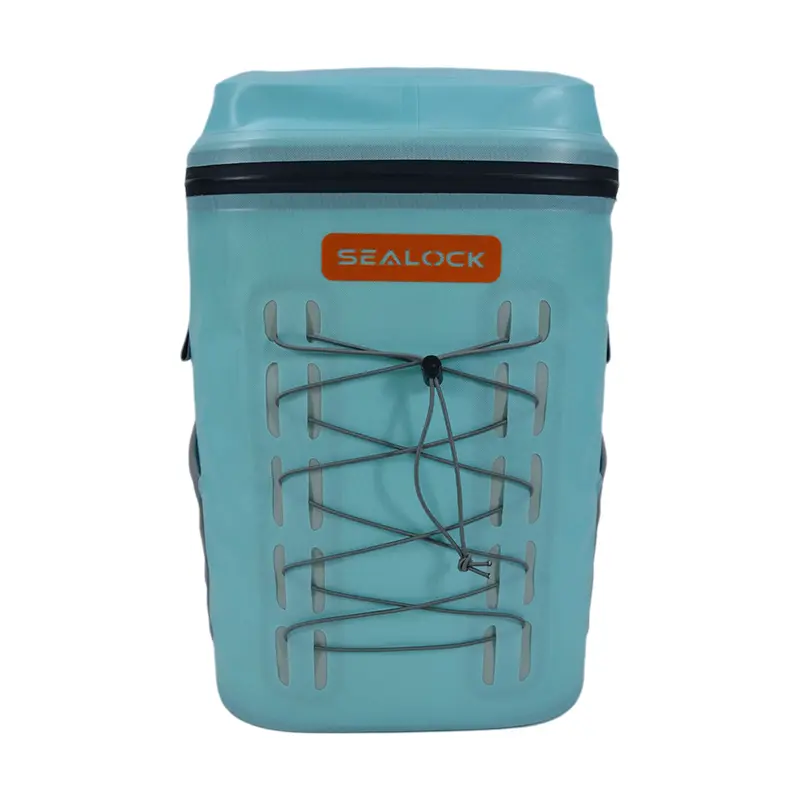
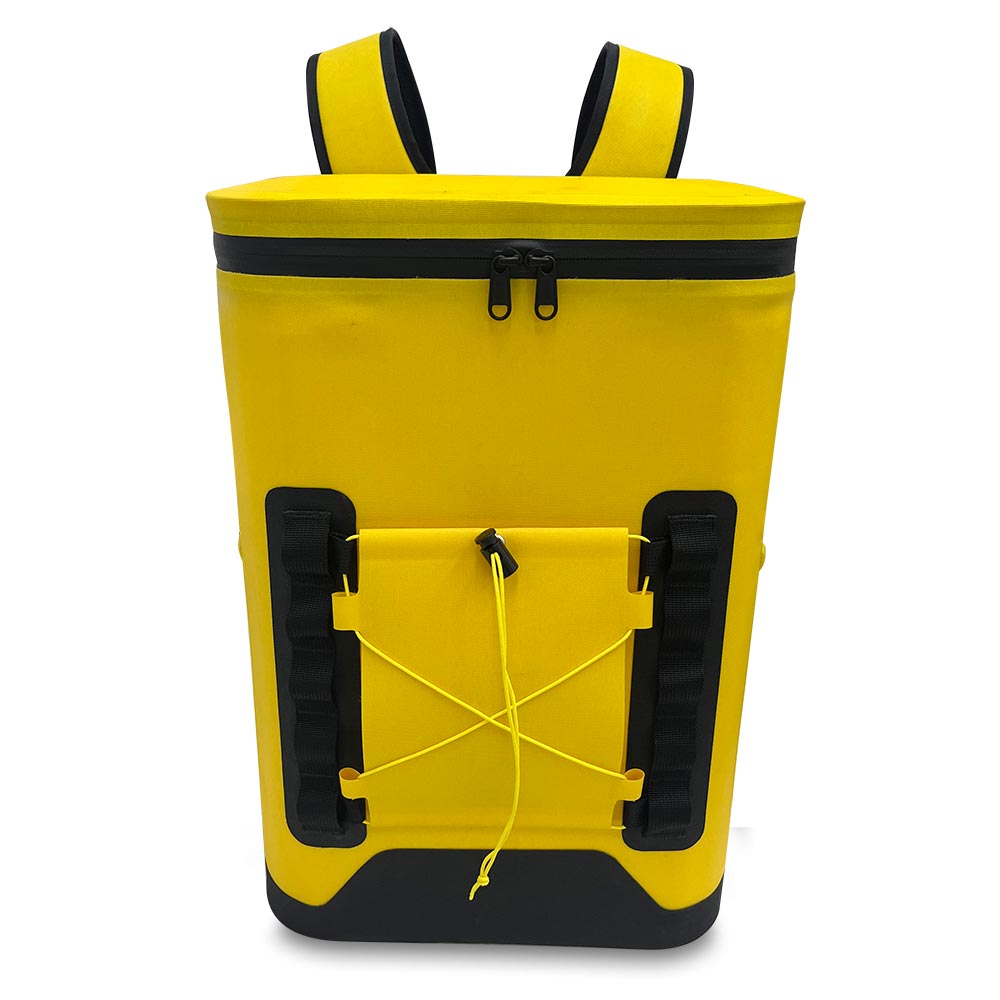
28L Airtight-Zipper Cooler Backpack (SL-I274) | 840D TPU, 3 cm EVA core, food-grade TPU membrane, airtight welded zipper, up to 48 hr | View |
|
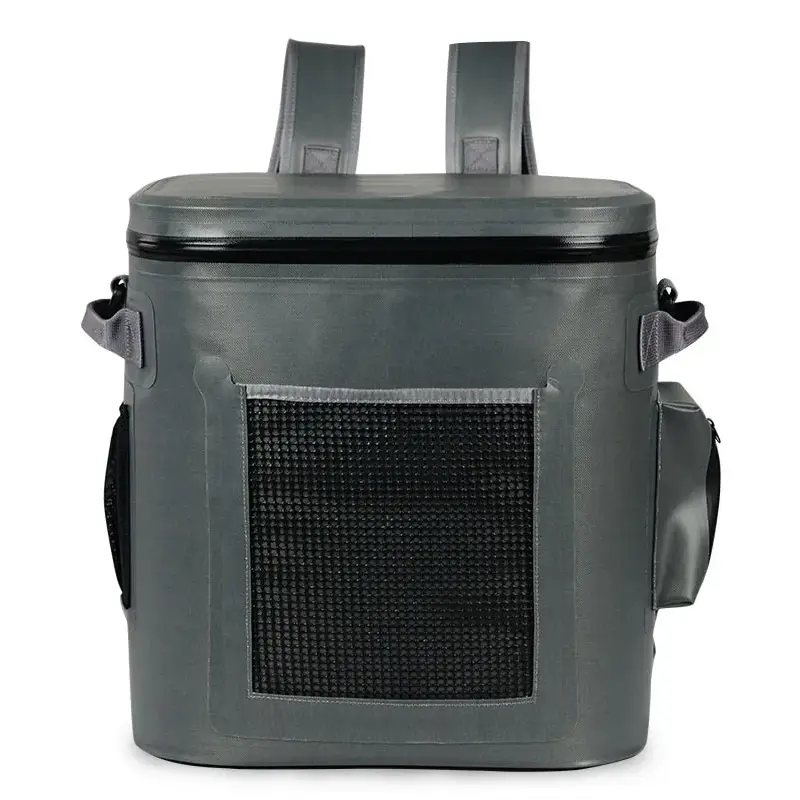
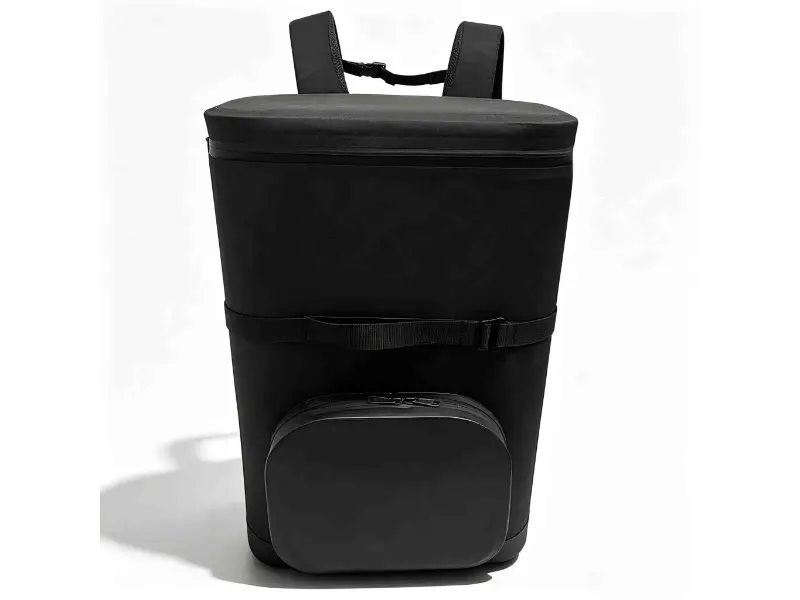
22L IPX7 Cooler Backpack (SL-I280) | Welded seamless, IPX7 immersion-rated, 50 mm high-density XPE, 48 hr+, full harness | View |
|
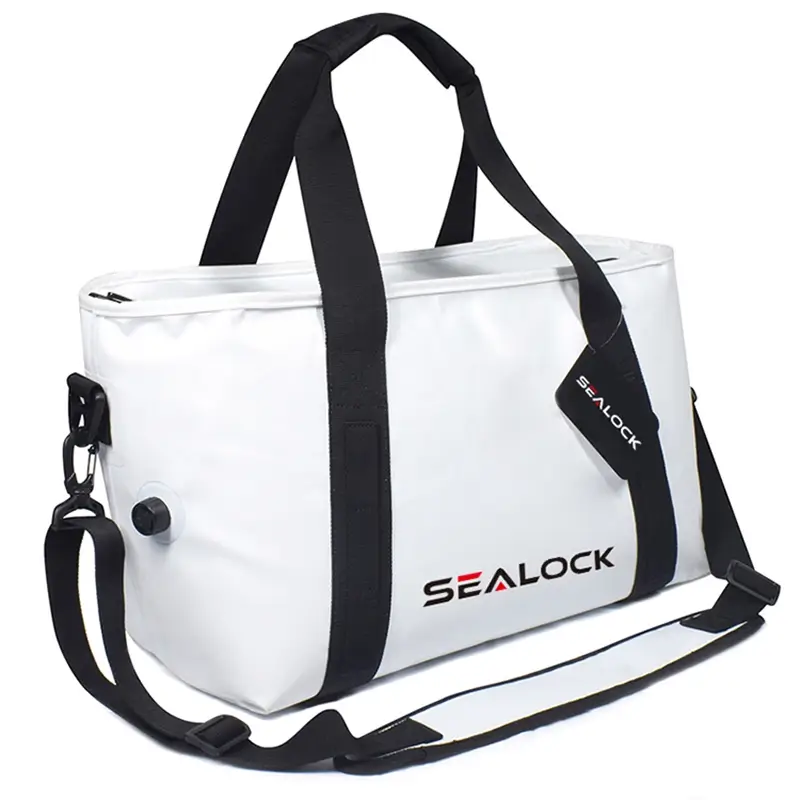
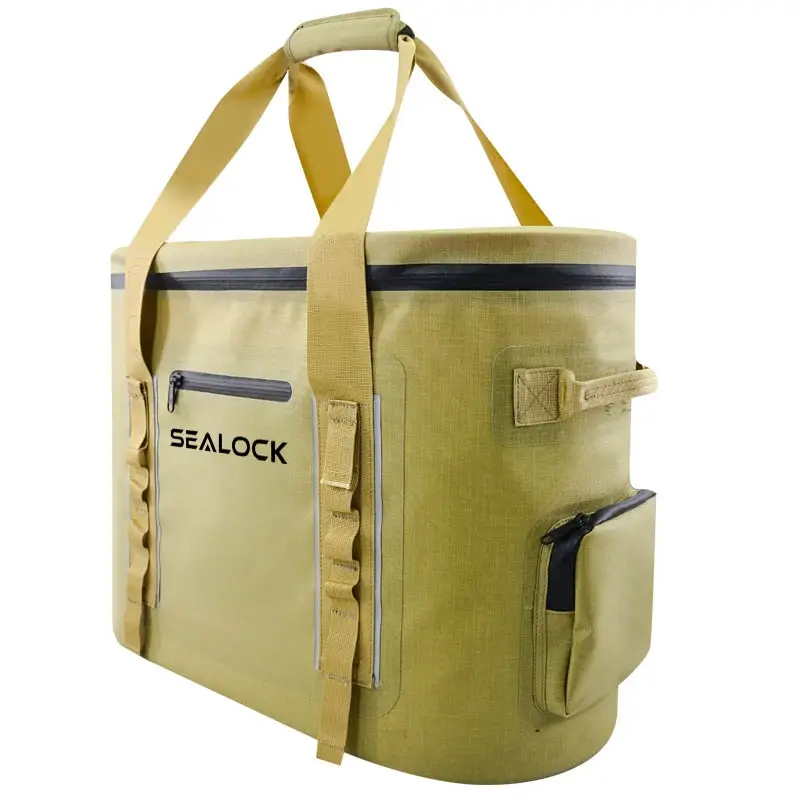
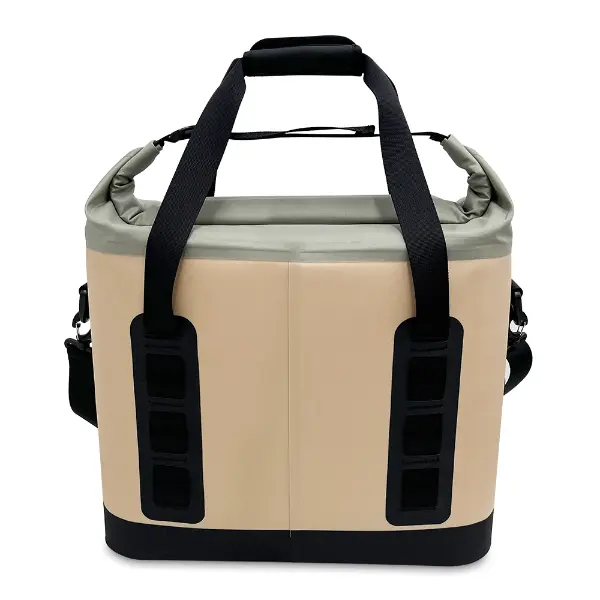
Roll-Top Leakproof Soft Cooler (SL-I288) | 20L tote/shoulder, 840D TPU, welded roll-top, airtight zip pocket, MOLLE, up to 48 hr | View |
|
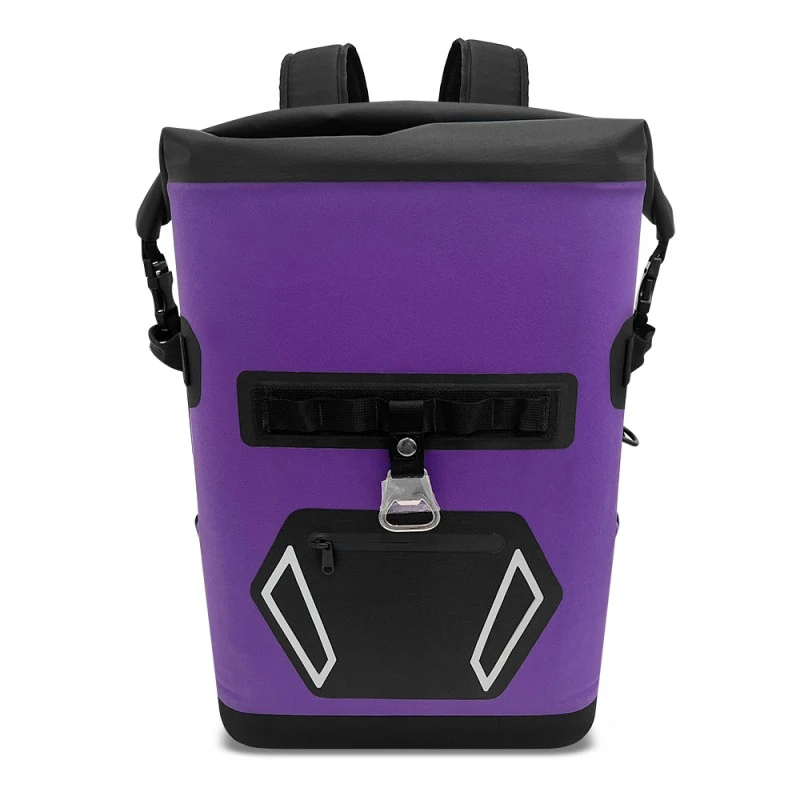
45L Roll-Top Cooler Backpack (SL-I270) | 45L, welded roll-top, 600D TPU, food-grade TPU liner, UTX buckles, up to 36 hr | View |
|
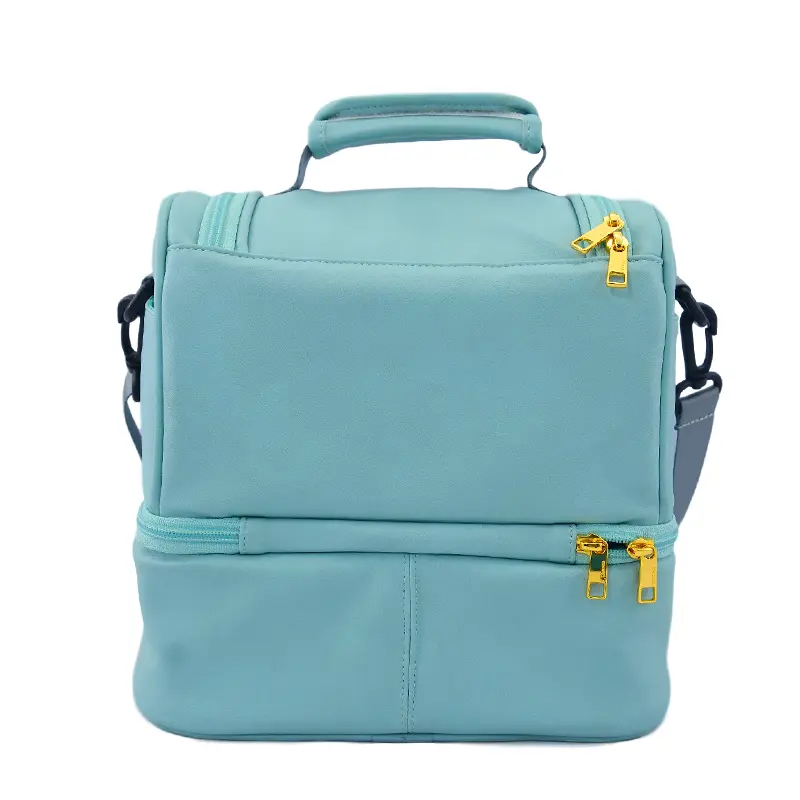
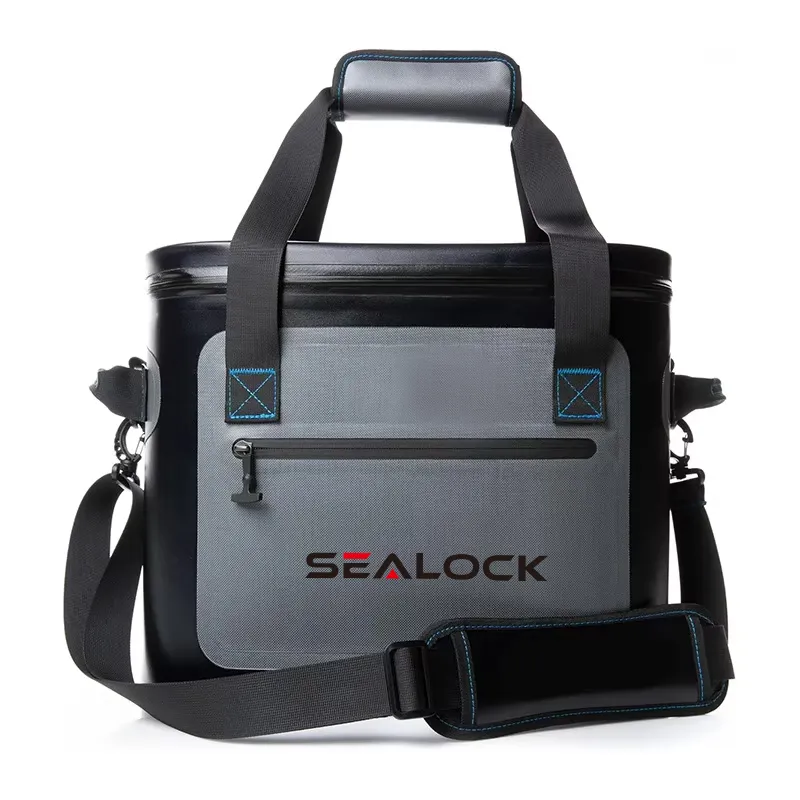
24L Soft Cooler Tote (SL-I230) | Tote — 840D TPU, 20 mm XPE, IPX7, HF welded | View |
Our customers include international brands such as Stanley, YETI, Hydro Flask, Osprey, Musto and Simms — several of them supplying European retail, with the audit and documentation requirements that implies. The same lines and systems run a 300-piece order.
Working Terms
| Company | YiFuLong Outdoor Gear Co., Ltd. — manufacturer since 2003, registry-verifiable |
|---|---|
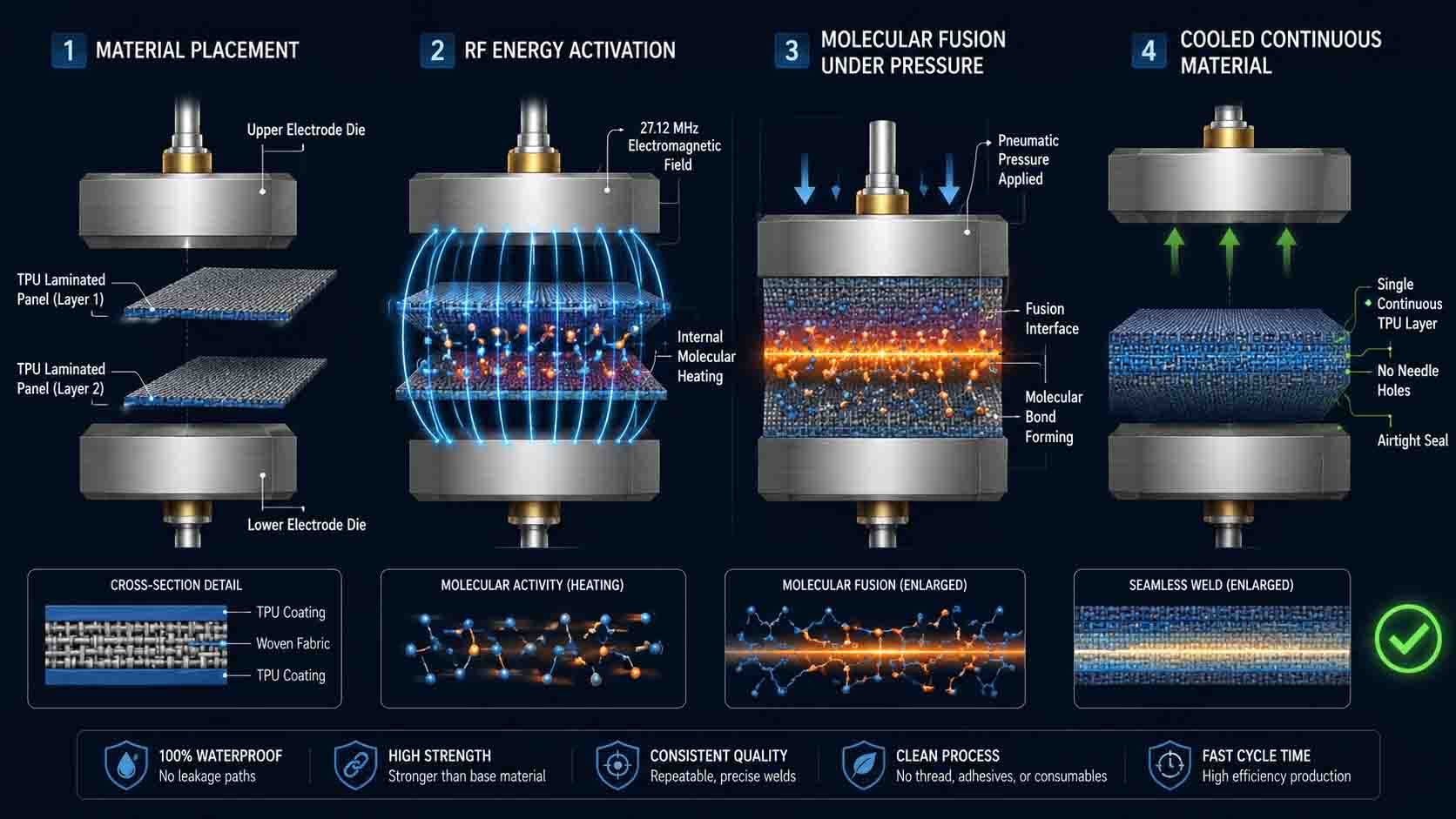
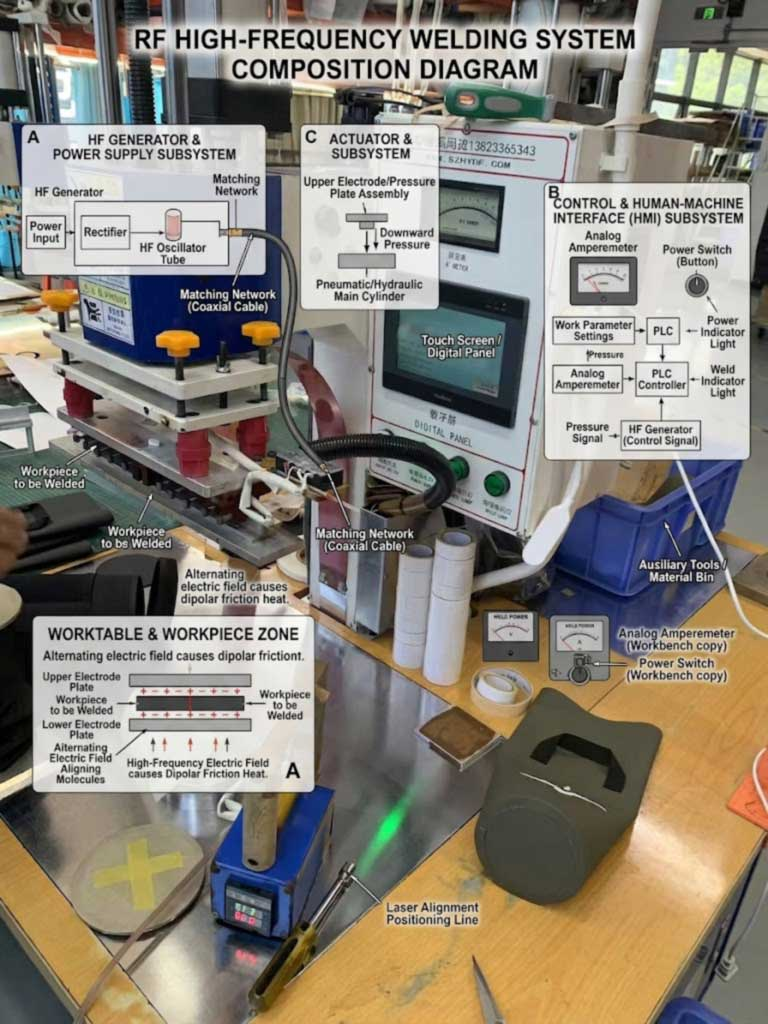
| Factories | Dongguan, Guangdong, China + Ho Chi Minh City, Vietnam; three high-frequency welding factories and in-house sewing lines; 20,000+ m² |
| MOQ | 300 pcs per design (per size and colourway) |
| Lead times | Samples 7–15 days; production 30–45 days; FOB |
| Certifications | ISO9001, amfori BSCI, SMETA P4, GRS, HIGG, SCAN |
| Materials | Food-grade liners across the range; TPU and PVC shells; GRS recycled-content options |
| Testing | Water-immersion batch testing; multi-channel temperature testing; tensile, adhesion, salt spray, abrasion, colour fastness |
| Development | Private label, ODM or full ground-up OEM |
FAQ
Q: Can you provide a packaging Declaration of Conformity for PPWR?
A: We provide the packaging specification and material data needed to support it, covering polybags, cartons and retail packaging. Note the structure: PPWR requires a manufacturer-issued DoC for every packaging type from 12 August 2026, importers must verify and retain it for 5 to 10 years and respond to authorities within 10 days, and if you sell under your own brand you take on manufacturer obligations yourself. Tell us your packaging scope early — it is a go/no-go in supplier qualification now.
Q: What documentation do I need for the liner?
A: A Declaration of Compliance for the food-contact material with migration test reports behind it, under Regulation 1935/2004, the GMP Regulation and, for plastics, Regulation 10/2011. We use food-grade liners across the range and arrange migration testing for your destination market. Be aware this is a different document from both the CE Declaration of Conformity and the PPWR packaging DoC.
Q: Can I say my bags are made from recycled materials?
A: Only with documentation behind it — unsubstantiated green claims are banned in the EU from 27 September 2026, and generic "eco" or offset-based "climate-neutral" claims are specifically targeted. For textiles that means GRS scope certificates and batch-level Transaction Certificates. We are GRS certified and quote recycled programmes with the supporting documentation; the claim wording should then match exactly what the documents cover.
Q: Do you have BSCI?
A: Yes, and SMETA P4 as well. BSCI results are an A–E rating held in the amfori platform rather than a certificate, so ask us to add you as a linked buyer instead of requesting a PDF. Holding both means you can onboard with a continental European or a UK retail programme without waiting for a fresh audit.
Q: Should I specify TPU or PVC for the EU market?
A: Both are usable, but the compliance position is simpler with TPU, which needs no plasticiser and is generally phthalate-free and recyclable. Flexible PVC relies on plasticisers and phthalates face tightening restriction. Compliant PVC formulations exist — if you specify PVC for cost reasons, the test data for your market has to be specified and verified rather than assumed.
Q: Do your certificates make my product compliant?
A: No, and be cautious of any factory that says otherwise. Compliance attaches to the goods you place on the market and the claims you make, and the legal responsibility sits with you as importer or brand owner. What we do is supply accurate, verifiable evidence — test reports, certificates, platform access, material data — on time and covering the right scope.
Sealock — YiFuLong Outdoor Gear Co., Ltd.
Insulated cooler bags for European brands, manufactured in China and Vietnam since 2003. amfori BSCI · SMETA P4 · GRS · ISO9001.
Email: info@sealock.com.hk · Phone: +86-13632981825 · MOQ 300 pcs · samples 7–15 days
Send your specification and your compliance checklist together — we will answer both.
EU regulatory references reflect publicly available sources as of mid-2026. Requirements, scopes and timelines are amended frequently, including through simplification packages, and obligations differ by company size and role in the supply chain. Nothing here is legal or regulatory advice — confirm current requirements with your compliance adviser or an accredited laboratory before placing goods on the EU market.