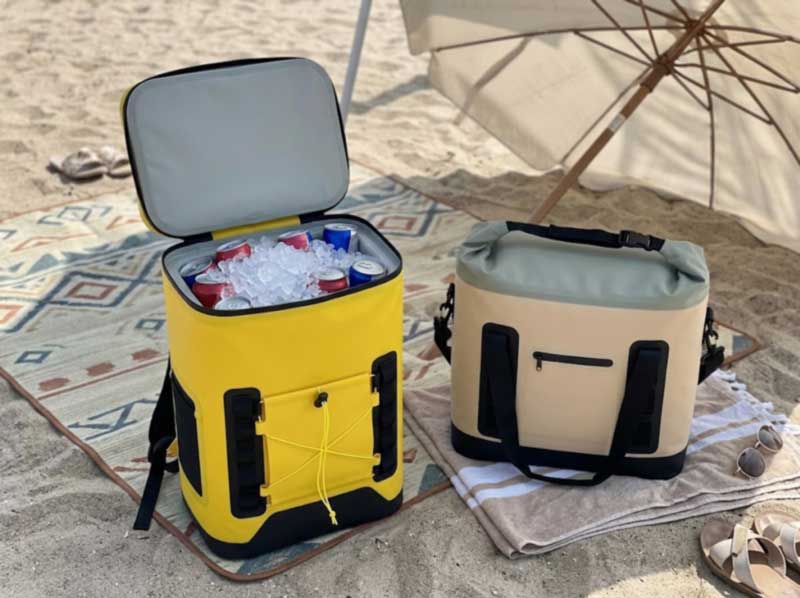
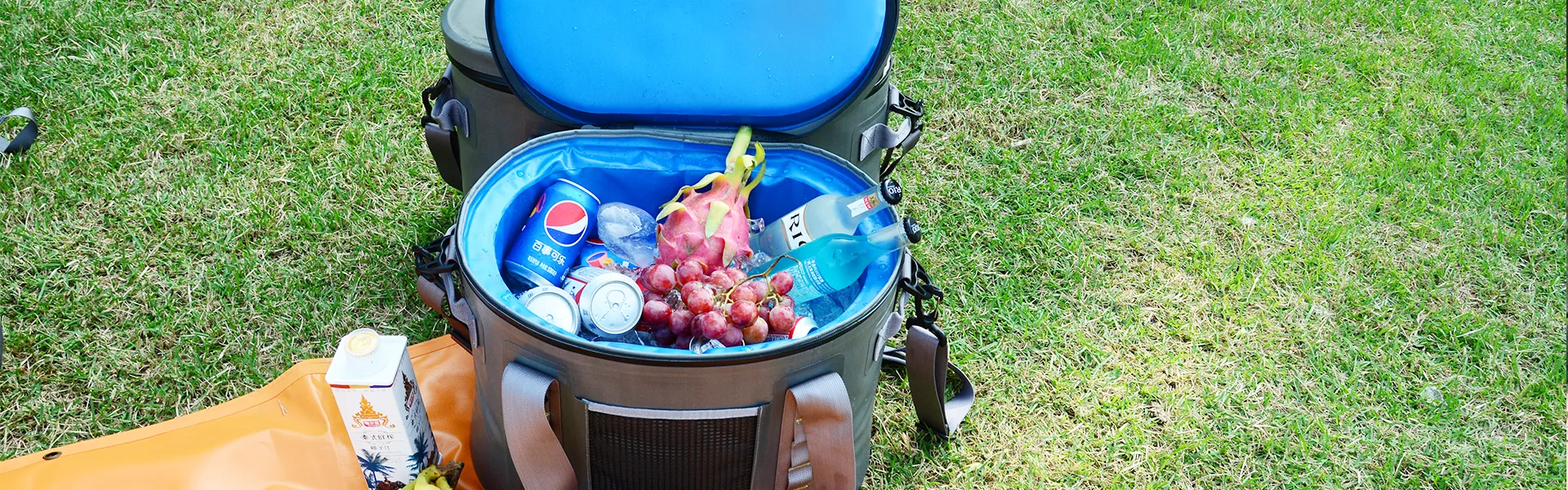
Whether it is a lunch box for men or one of the many lunch bags for guys, most searches are really about three things: room for a proper meal, a case tough enough for a work bag, a truck cab or a job site, and food that is still safely cold when the break comes. Colour and style matter less than whether the box fits the working day. This guide works through those choices: matching the lunch box to the job, hard shell versus soft versus a small cooler, how big it needs to be, the parts that fail first, and how to keep food safe in a hot vehicle. It is written by Sealock (YiFuLong Outdoor Gear Co., Ltd.), which manufactures molded hard-shell lunch boxes, lunch bags and soft coolers in China and Vietnam for brands including Stanley, YETI and Hydro Flask.
Start With the Working Day
| Working day | What the lunch box has to do | Best fit |
|---|---|---|
| Office or commute | Carry one meal for four to six hours, fit inside a backpack or briefcase, look tidy | Molded hard-shell lunch box, about 4–5 litres |
| Site, field or warehouse | Survive being dropped, stacked on or thrown in a truck; keep a full meal cold until a late break | Hard shell or heavy-duty welded lunch cooler, with two cold sources |
| Long shift or hot vehicle | Hold lunch, snacks and drinks for 10–12 hours, often in a cab that heats up fast | Small leakproof soft cooler with thick insulation and frozen packs |
The mistake most people make is buying for capacity alone. A large lunch box that is half empty holds more warm air and keeps food cold for less time than a smaller one packed full. Choose the smallest box that fits a normal day's food, and step up to a lunch cooler only when the day is long or hot.
Hard Shell Lunch Box, Soft Bag or Lunch Cooler?
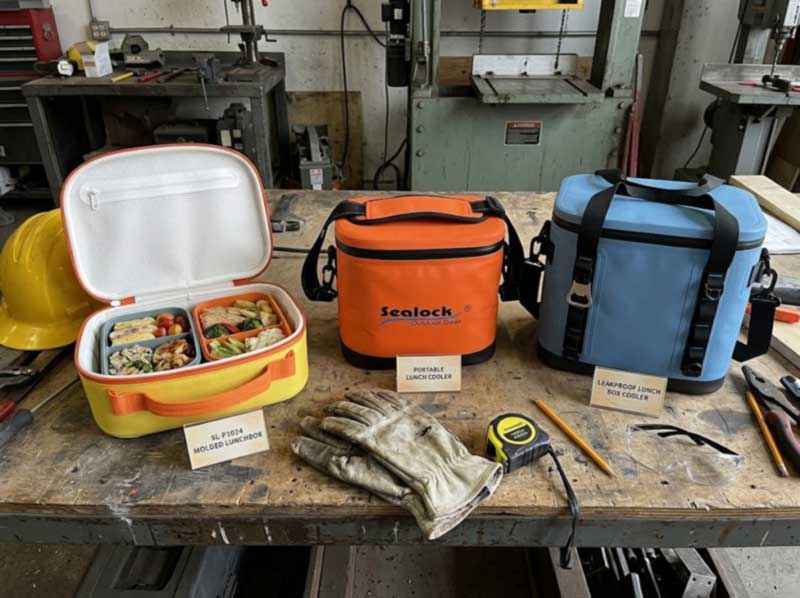
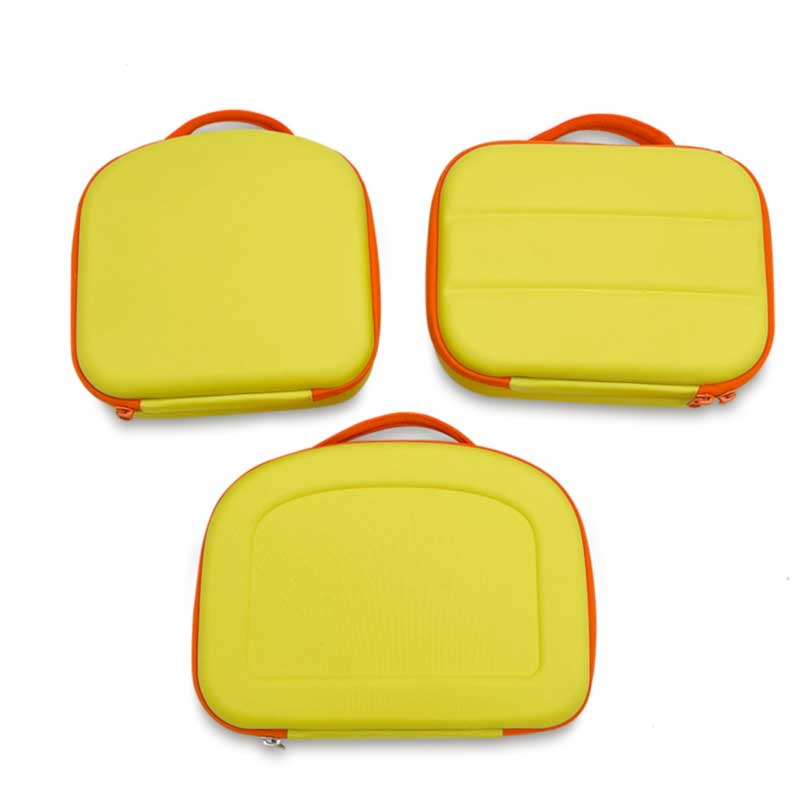
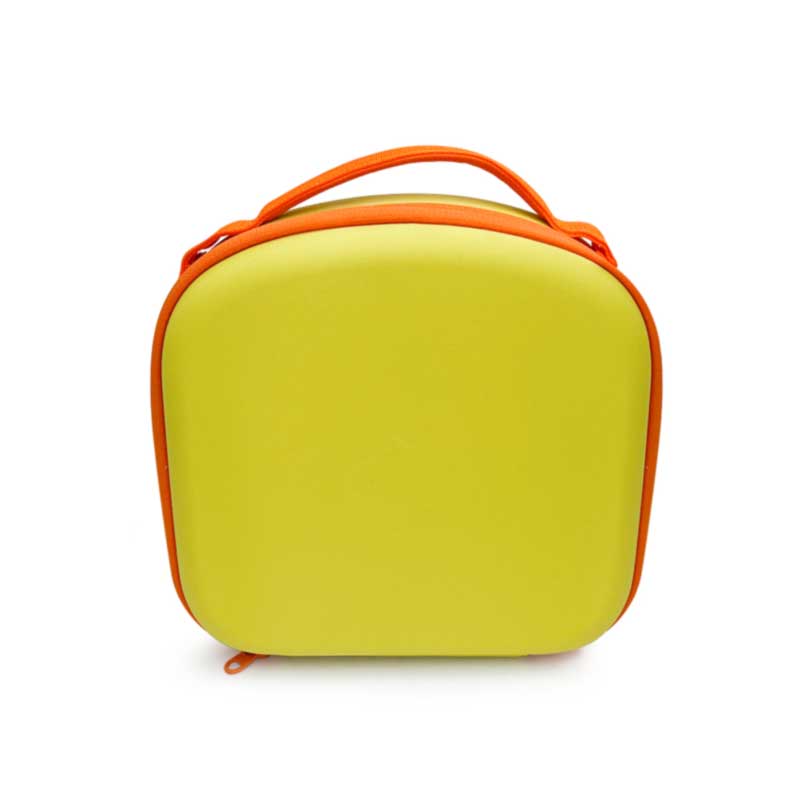
A hard shell lunch box protects food from being crushed in a packed bag or under tools and keeps its shape, so containers do not tip. There are two kinds. Rigid plastic or steel boxes are the toughest but heavy and bulky; some are built to be sat on. Molded EVA hard-shell cases, like ours, are compression-molded from EVA foam sheet bonded to a fabric face: firm enough to protect a sandwich and hold their shape, but light, at around 0.4–0.45 kg, and easy to carry inside another bag. They open flat on a full-perimeter zipper like a case, which makes them easy to pack and clean.
A soft lunch bag is lighter and cheaper and squashes down when empty, but gives food less protection. It suits a lunch that stays in a locker or car rather than going onto the job.
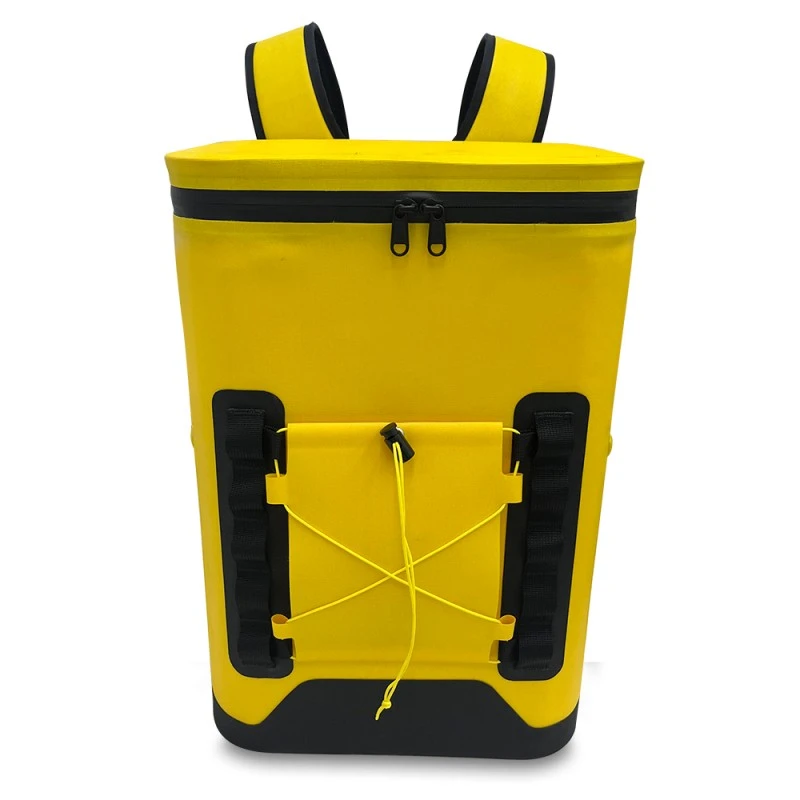
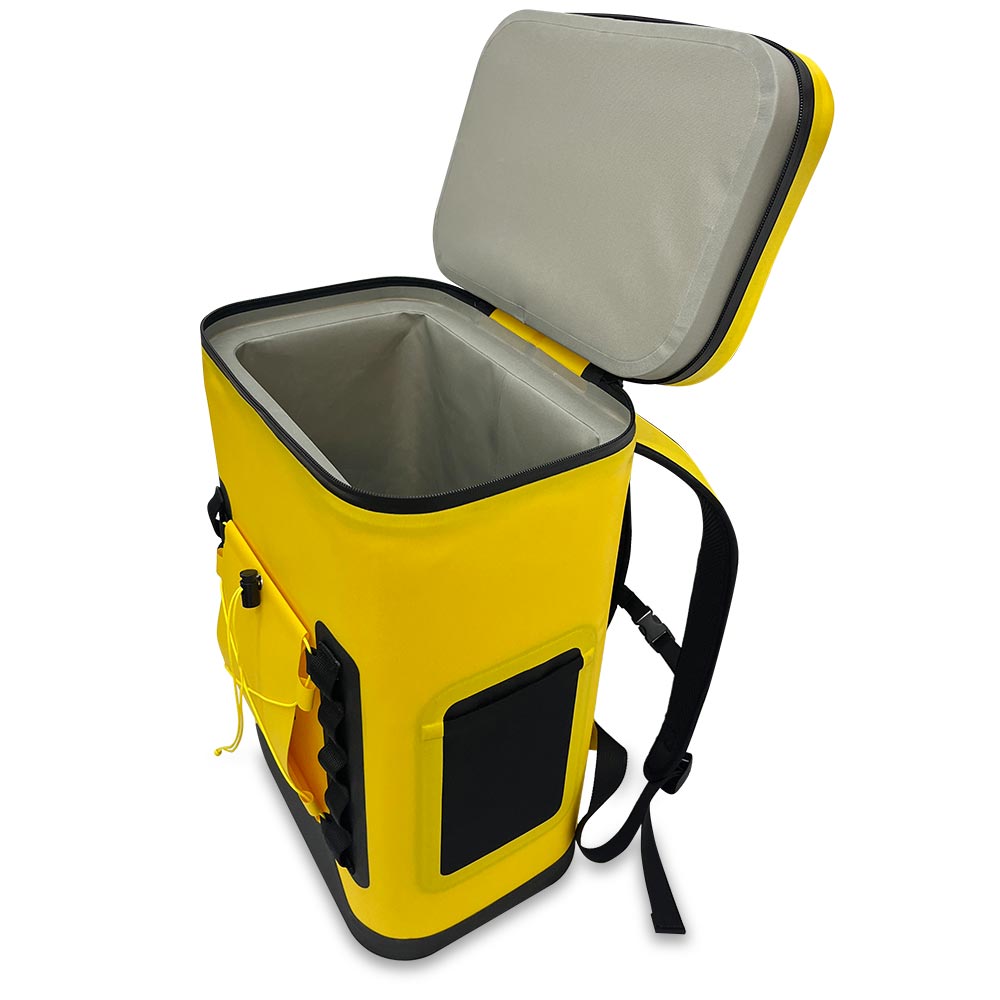
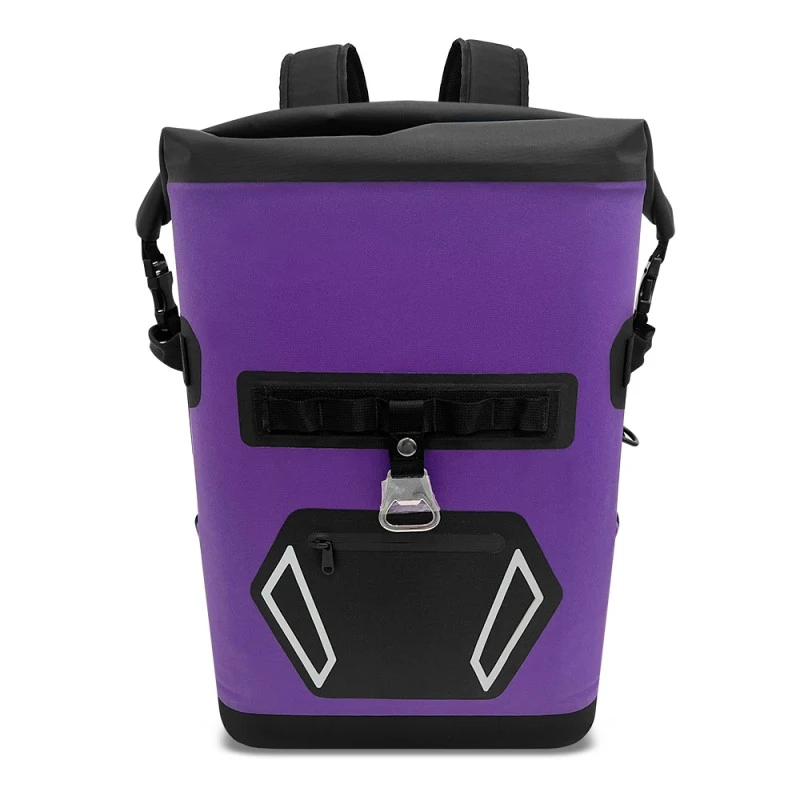
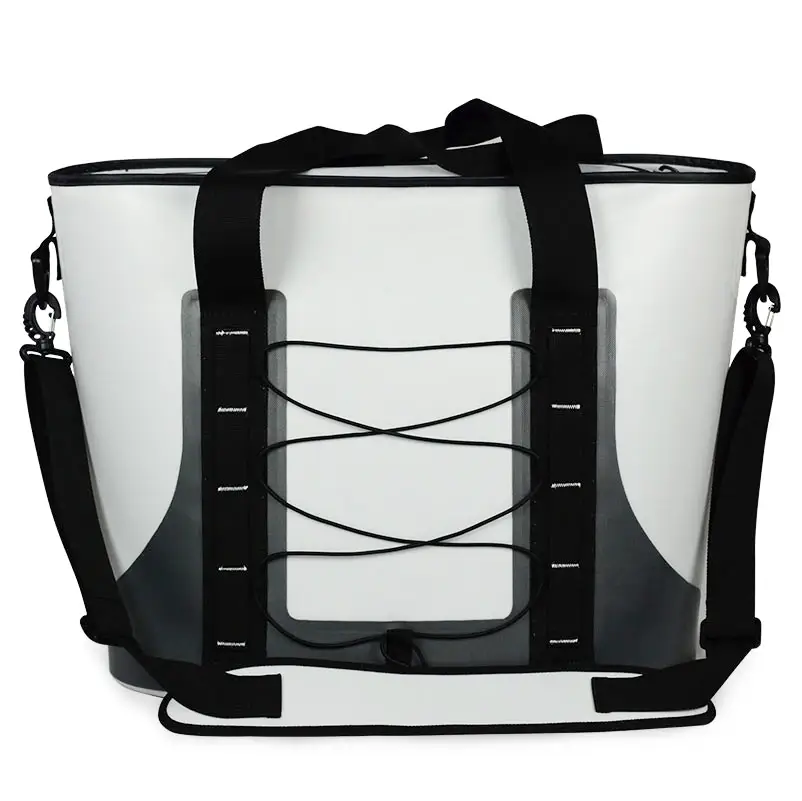
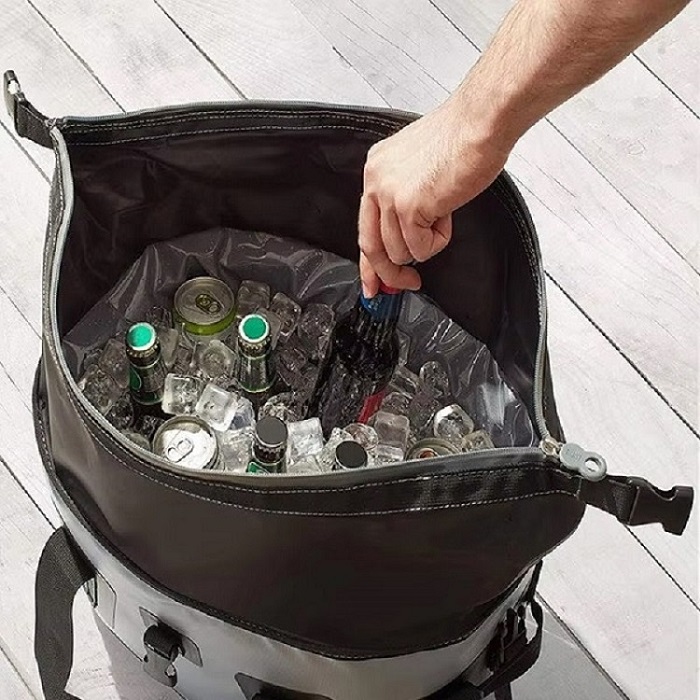
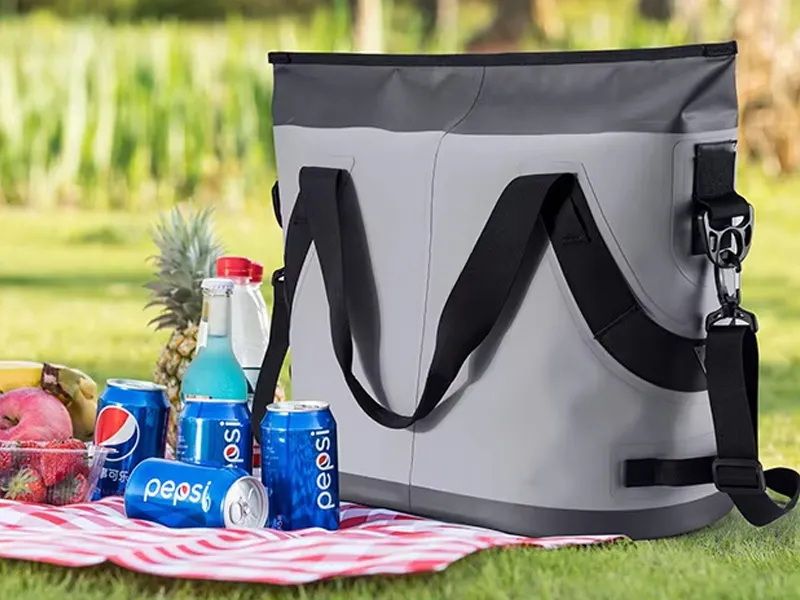
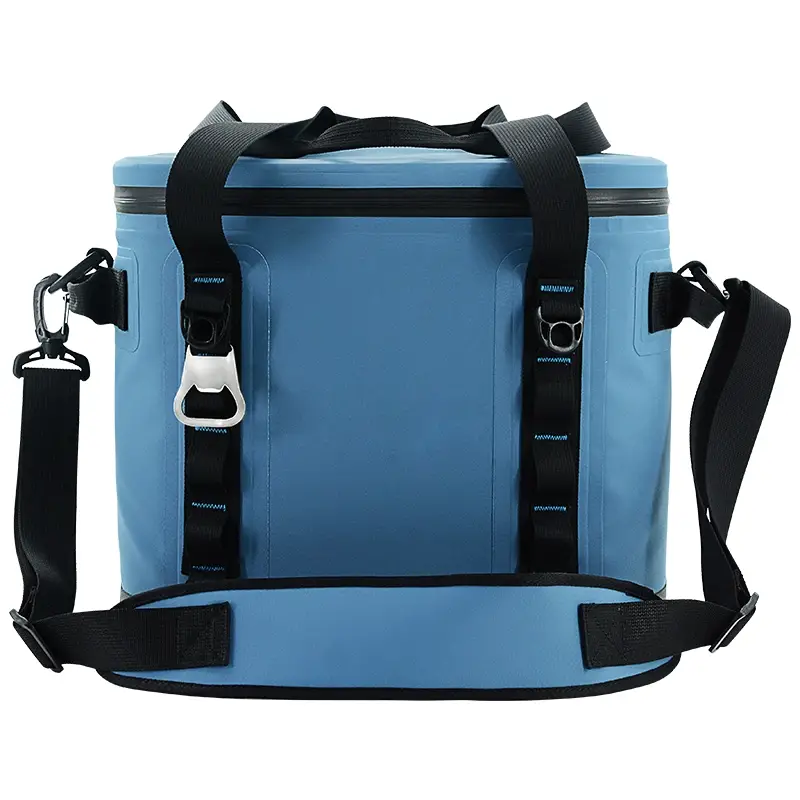
A lunch cooler is a small soft cooler: thicker insulation, a sealed liner and often a waterproof zipper. It is the choice for a long shift, for soups and wet food, or for keeping drinks cold too. A welded lunch cooler with a waterproof zipper is leakproof, which a sewn lunch bag is not.
How Big Should a Lunch Box for Men Be?
Lunch box capacity is quoted in litres, quarts or cans, which makes comparison awkward. A quart is just under a litre, so a 4.5-litre lunch box holds a little under five quarts. As a rough guide, about 4–5 litres takes one substantial meal in two flat containers, plus fruit or a snack: a full lunch for most people. For a whole shift with breakfast, lunch and snacks, look at 8–10 quarts. Above that, you are into lunch-cooler territory, where drinks and food for a long day or for two people go in one bag. Bob Vila's guide to work lunch boxes suggests cutting cardboard to the listed dimensions to check fit, which is a sensible test: measure your containers and your drink bottle before buying, and check whether the bottle needs to stand upright.
The Parts That Fail First
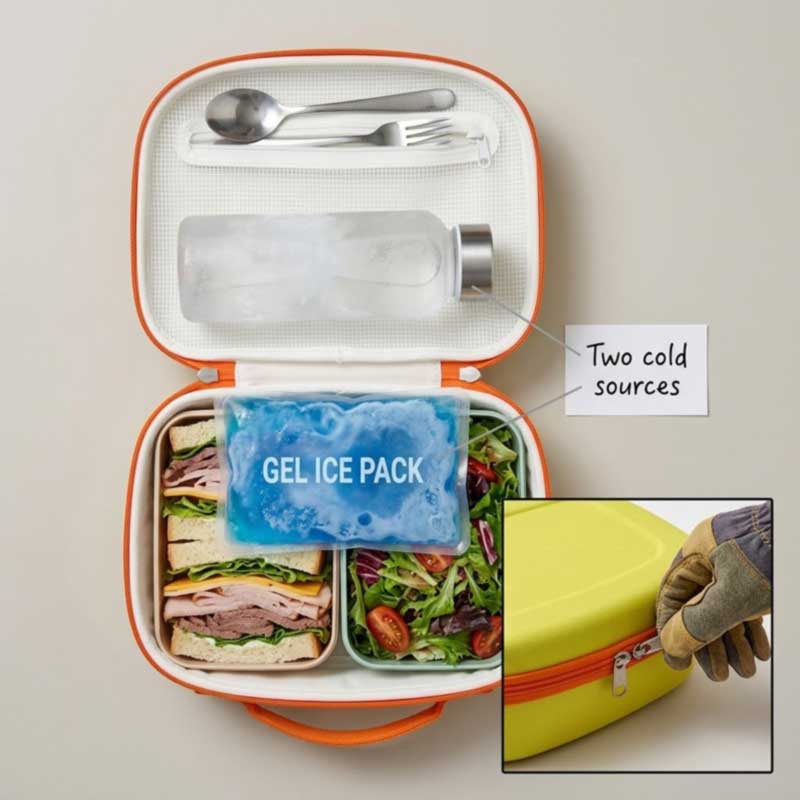
A work lunch box is opened and carried twice a day, five or six days a week, which puts it through more cycles than almost anything else you own. The zipper is the most common failure point. Look for a heavy zipper with large pulls you can grip with gloves, and on a case that opens flat, twin sliders so it closes without forcing the last few centimetres. We fatigue-test lunch box zippers to 3,000 cycles because that is roughly six years of twice-daily use. The handle anchor is next: it should be stitched through a reinforcing panel or bound into the edge, not sewn to a single layer of fabric. On a molded case, bound and stitched edges are what keep the hinge from splitting. Finally, check the liner. It should be food-grade, smooth, wipe-clean and free of deep creases; a PVC-free PEVA or TPU liner does not hold odours the way cheap linings do.
Keeping Food Safe in a Hot Truck
A truck cab or car parked in the sun can be far hotter than the air outside, and US food-safety guidance treats 40°F (4°C) as the limit for perishable food, allowing only two hours above it, or one hour when it is 90°F or hotter. For a work lunch with meat, dairy or salad, use two cold sources, such as two frozen gel packs, or one pack and a frozen water bottle that thaws into a drink by lunchtime. Pack straight from the refrigerator, put the cold packs on top of the food because cold air sinks, and keep the box out of direct sun and off the dashboard. If the break is late in a long, hot shift, a lunch cooler with thicker insulation is a safer choice than a lunch box. Our guide to choosing the best lunch bag covers cold-hold in more detail, and how to pack a cooler applies to lunch coolers too.
For Trades Brands, Employers and Corporate Programmes
Lunch boxes are a staple for tool and workwear brands, safety and trade suppliers, and employers giving kit to crews. A molded hard-shell case makes branding part of the product: our molded lunch boxes carry a recessed logo panel cut into the lid tool, which can take a print, a rubber or woven patch, or a deboss or emboss with no ink at all, where it is protected from scuffing. Colours, sizes and fabric faces can be customised, and new molds can be developed for a brand's own shape. For longer shifts, the same programme can include a welded leakproof lunch cooler. MOQ starts at 300 pieces per size on existing molds, samples take 7–15 days and bulk production 30–45 days. Every batch passes IQC, IPQC and OQC, with load testing to 1,500-plus cycles, zipper fatigue to 3,000 cycles and multi-probe cold-hold logging; SGS or QIMA inspection is available on request.
Lunch Boxes and Lunch Coolers in Our Range
| Image | Model | Specification | Link |
|---|---|---|---|
|
Molded Lunch Box Cooler (SL-P1024 / SL-P1021) | Hard shell, two sizes: 26 × 20.8 × 10 cm, approx. 4.5 L / 26 × 20 × 9 cm, approx. 4 L; compression-molded EVA, food-grade PEVA liner, perimeter zipper with twin pulls, opens flat, recessed logo panel, up to 6 hr with a gel pack | View |
|
EVA Hard-Shell Insulated Lunch Box (SL-P1023) | Hard shell, 23 × 22 × 9 cm, approx. 4 L, 0.4 kg; compression-molded EVA, food-grade PEVA liner, opens flat, zip mesh lid pocket, webbing handle | View |
|
Leakproof Lunch Box Cooler | Lunch cooler for long shifts: TPU shell with high-frequency welded seams, waterproof zipper, food-safe PEVA liner; holds soups and wet food without leaking | View |
|
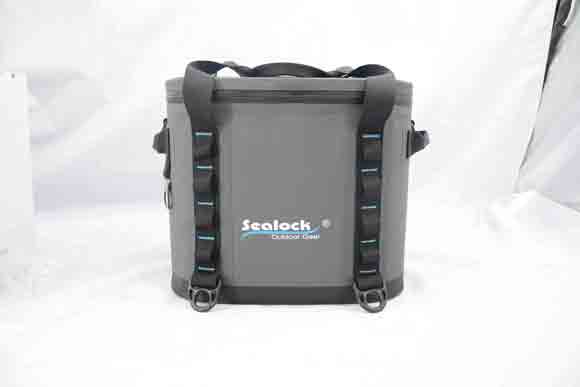
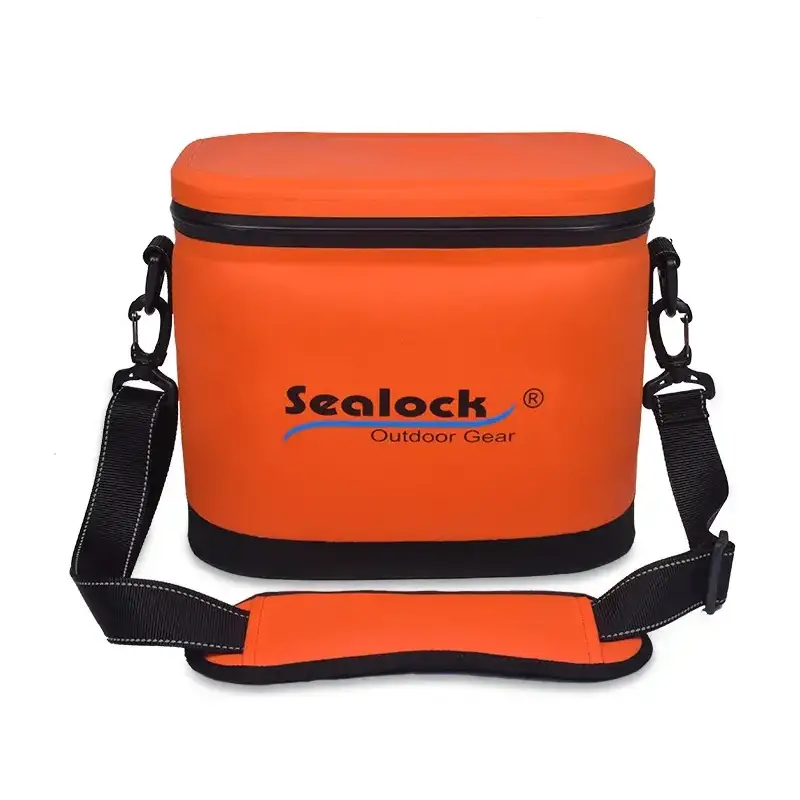
Portable Lunch Cooler | Soft lunch cooler: TPU or polyester outer, food-safe PEVA liner, zipper; for office, commute and day work | View |
FAQ
Q: What is the best lunch box for men who work outside?
A: A hard shell lunch box or a welded leakproof lunch cooler, depending on the day. A hard shell protects food on site; a lunch cooler with thicker insulation is better for a long shift or a hot vehicle. Either way, pack two cold sources.
Q: What size lunch box does a man need?
A: About 4–5 litres holds one full meal in two flat containers plus a snack. For breakfast, lunch and snacks over a whole shift, look at 8–10 quarts or a small lunch cooler.
Q: Is a hard shell lunch box better than a soft one?
A: For protecting food and keeping containers upright, yes. A soft lunch bag is lighter and folds away, and suits a lunch that stays in a locker or car.
Q: What is a molded EVA hard shell lunch box?
A: A case compression-molded from EVA foam sheet bonded to a fabric face, with a food-grade liner and a zipper that opens it flat. It is firm and crush-resistant but much lighter than a plastic or steel lunch box.
Q: How long will a lunch box keep food cold?
A: A lunch box is designed for a few hours; ours are rated up to six hours with a gel pack. For longer days or heat, add a second cold source or use a lunch cooler.
Q: Can you make branded lunch boxes for our company?
A: Yes. Our molded lunch boxes have a recessed logo panel for print, patch, deboss or emboss. MOQ is 300 pieces per size on existing molds, with samples in 7–15 days.
Planning a lunch box for a trades brand or crew? Tell us the quantity, sizes and logo method. We will match the construction to the working day and send samples in 7–15 days.
Email: info@sealock.com.hk · Phone: +86-13632981825 · MOQ 300 pcs per size
Food-safety guidance follows USDA advice. Capacity guidance draws on Bob Vila's work lunch box buying guide. Brand customers are named as manufacturing clients only; no endorsement is implied.