News

Soft Cooler Bag Wholesale 2026: Ice-Retention Specs, MOQ & Pricing

2026-06-09 0 Leave me a message

The quote sheet your supplier sends has a photo, a price, and a unit weight. It almost never lists the foam density or liner grade — the two specifications that actually determine whether the bag holds ice for 12 hours or 48, and whether melt-water soaks through every seam by afternoon. Retail chargebacks for "leaking packaging" and one-star reviews about "ice melted in two hours" both trace back to the same sourcing gap: the buyer ordered on price and got a product built to a foam spec they never knew to ask about.

Ice-retention performance is an engineering output, not a marketing claim. It comes from foam density (kg/m³), foam thickness (mm), liner weldability, and seam integrity — four variables that must be specified in the purchase order, not assumed from a product photo. This guide gives wholesale buyers the actual numbers, what each one means for end-user performance, and how they move the 300-piece MOQ unit price.

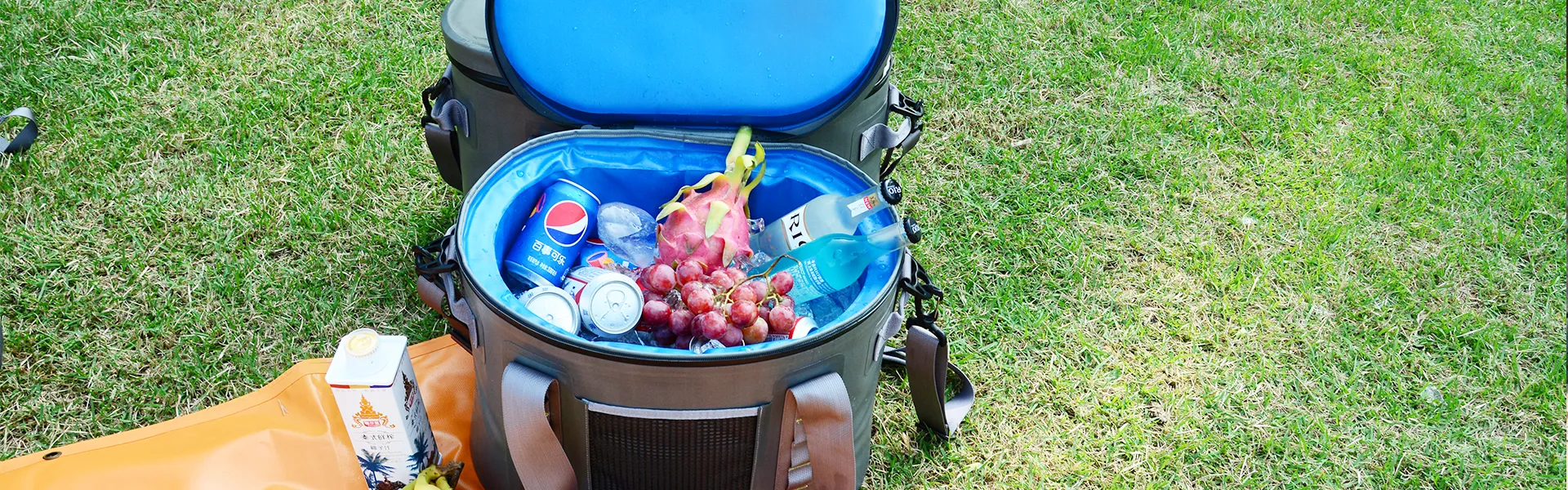
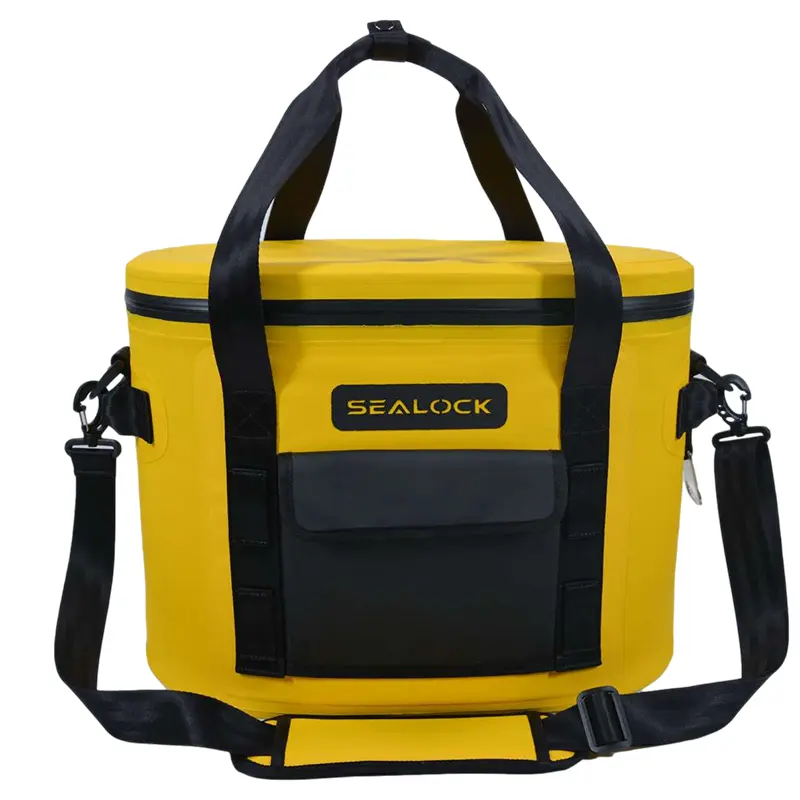
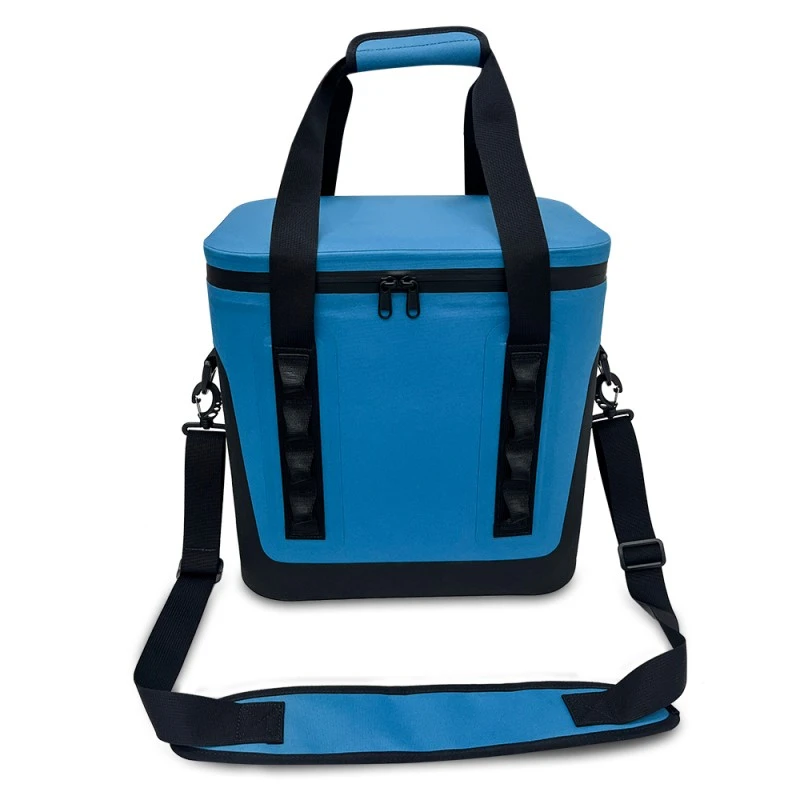
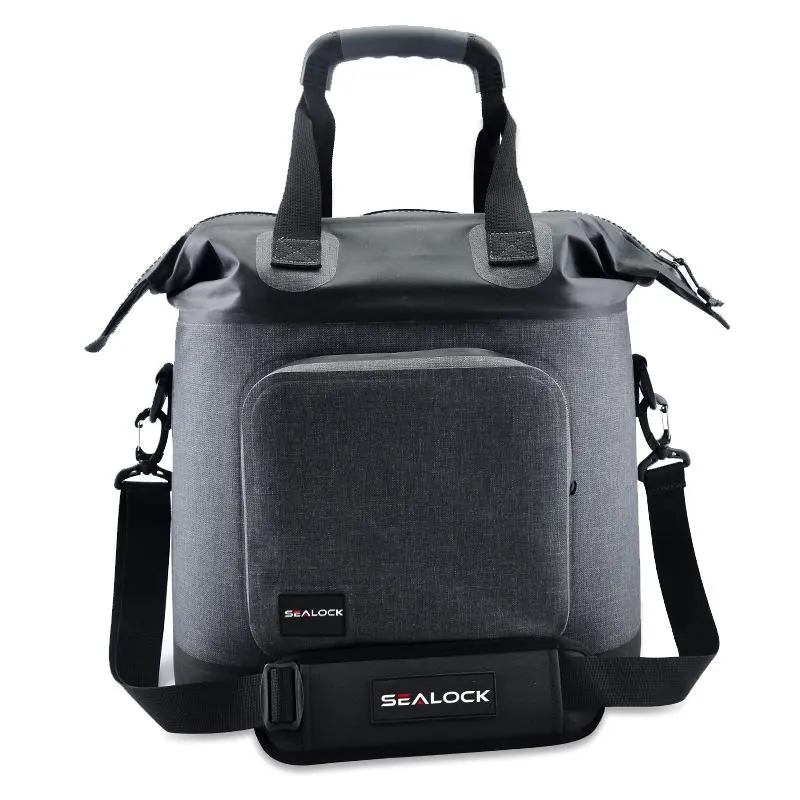
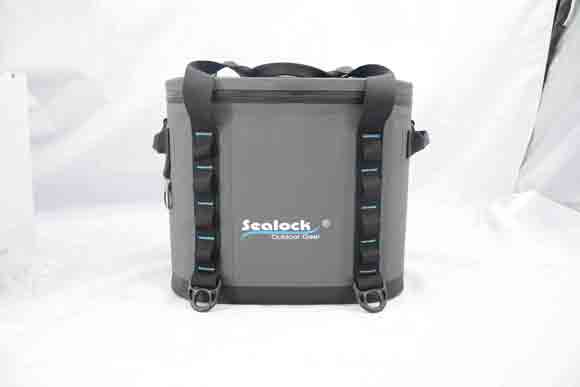
Soft Cooler

2026 Soft Cooler Wholesale Specification Matrix

Before confirming a bulk order, procurement teams should hold the supplier to the following objective baselines. Each spec maps directly to a post-shipment performance or compliance risk.

Spec Vector Industrial Baseline to Demand Risk if Omitted from PO
Foam density Closed-cell PE/EVA foam ≥ 32 kg/m³ (mid-grade) or ≥ 40 kg/m³ (premium) Supplier uses 22–24 kg/m³ commodity foam; ice retention falls 40–60% below claimed hours
Foam thickness Specify in mm: 10 mm (standard), 15 mm (mid), 20 mm (premium) — all panels including base Side panels are thick; base is thin. Melt accelerates from the bottom up, breaking retention claims
Liner construction RF-welded food-grade TPU liner, no stitched seams on the interior chamber Stitched PEVA liner wicks melt-water through needle holes; first liquid load reveals the failure
Food-contact compliance FDA 21 CFR / EU Regulation 10/2011 rated liner; request test certificate Non-compliant liner off-gasses into food; creates regulatory and brand liability in US/EU markets
Seam air-tightness Low-pressure inflation to 0.05 Bar (0.7 PSI), submerged 15 min, zero bubble trail Hidden pinholes in liner seams pass visual inspection but fail under liquid load in the field

The spec wholesale buyers never ask for — and pay for with chargebacks

Closed-cell foam is the insulation layer between the outer shell and the food-grade liner. "Closed-cell" means each air pocket in the foam structure is sealed — the foam cannot absorb water over time the way open-cell alternatives do, so thermal resistance holds across the product's life. The performance variable most buyers ignore is density, measured in kilograms per cubic metre (kg/m³).

Density and thickness work together. A thin slab of dense foam can outperform a thick slab of low-density foam. Most cheap wholesale coolers are built with 22–25 kg/m³ commodity foam at 8 mm thickness — the spec that makes the bag feel acceptable when empty but fails at the first ice load. The table below shows the three tiers.

Tier Foam Density Wall Thickness Typical Ice Retention Suitable For
Standard 25–28 kg/m³ 8–10 mm 12–18 hours Office lunch bags, short commute coolers
Mid-Grade 32–36 kg/m³ 12–15 mm 24–36 hours Outdoor day trips, beach totes, fishing coolers
Premium 40–45 kg/m³ 18–22 mm 48–72 hours Multi-day camping, tournament fishing, food delivery

Two important notes for your purchase order. First, always specify the foam thickness for all panels independently — base, sides, lid — not just "wall thickness." Suppliers frequently use full-thickness foam on the visible side panels and thin base foam to cut cost; ice melts from the bottom first. Second, these retention figures assume a full ice load with the bag closed; real-world use reduces them. If your end-market claims 24 hours, spec for 36-hour capability and test accordingly.

Liner grade: the compliance spec your US and EU retail buyers will ask for

The interior liner of a soft cooler is in direct contact with food and beverages. That makes it a food-contact material under both US (FDA 21 CFR) and EU (Regulation 10/2011 / LFGB) regulations. A non-compliant liner off-gasses plasticizers into food contents — a regulatory and brand liability in any developed market. The three liner materials in common use are not equal in compliance, weldability, or long-term odour resistance.

Liner Material Food-Contact Rating Seam Method Melt-Water Resistance Verdict
PEVA Food-safe at standard grades; no phthalates Stitched or heat-taped; RF welding limited Seam wicks under liquid load Acceptable for dry-load lunch bags; not for loose ice
PE / PEVA laminate Food-safe; mid-range compliance documentation Partially weldable; depends on layer ratio Moderate; seam still a risk point Mid-tier coolers; adequate for ice packs, not loose ice
Food-grade TPU FDA 21 CFR + EU 10/2011 rated; request cert Fully RF-weldable — seamless chamber possible Maximum; no needle holes, no seam leakage Premium spec for loose ice, fish coolers, food delivery

When you specify food-grade TPU and RF-welded construction together, you get a liner chamber with no needle holes — physically immune to melt-water wicking. Always request the food-contact compliance certificate by material lot, not just a blanket factory certificate — liner compliance is per-material, not per-factory.

MOQ, pricing tiers and what actually moves unit cost

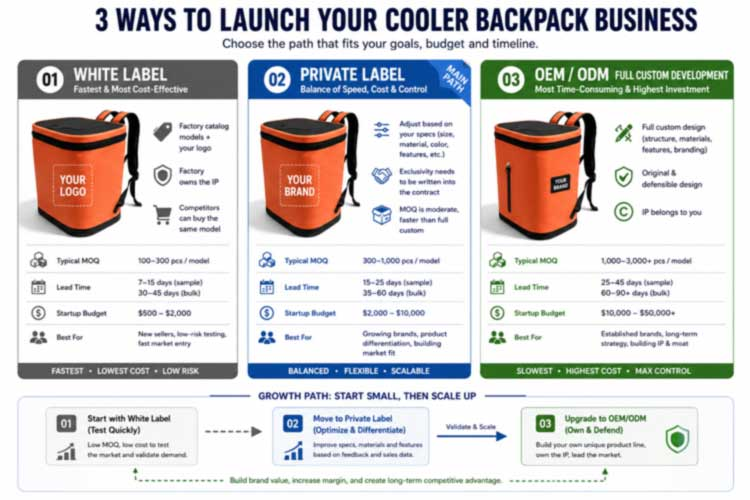
Private-label soft coolers on a proven pattern start at a 300-piece MOQ per style and colorway. At that floor you can specify your shell colour, liner grade, foam package, and one branding method. Full ODM with a new pattern, bespoke hardware, or a custom foam density that requires new tooling runs higher. Repeat orders on a locked spec are faster and sometimes lower in MOQ because tooling and approvals already exist.

On unit cost, three variables move the number more than any other — and they are the same three that determine performance.

Cost Driver Standard Grade Premium Grade Why It Matters
Foam package 25–28 kg/m³, 8–10 mm 40–45 kg/m³, 18–22 mm Higher density = more material cost + added weight; drives the biggest unit price gap
Liner construction Stitched PEVA RF-welded food-grade TPU Welding is a slower, more equipment-intensive process; liner material itself costs more
Shell fabric 600D polyester with PVC coating 840D TPU-composite or recycled-content (GRS) TPU composite resists delamination and UV cracking; GRS certification adds a sourcing premium

When you receive quotes from multiple suppliers, the only valid comparison is one where all three match. A cheaper quote on a different foam density and a stitched liner is not a better price — it is a different product. Specify all three in your RFQ and ask each supplier to confirm them in writing before sampling.

The QC checks that verify ice-retention specs before bulk ships

Foam density and liner grade can be stated in a spec sheet; they need to be verified in production. These are the three in-house checks that confirm what was promised is what was built.

Foam density verification

A sample from each production foam roll is cut to standard dimensions and weighed to confirm density (kg/m³) matches the approved spec. Thickness is measured at each panel position — sides, base, and lid — to catch uneven substitution. This check is run on incoming material before cutting begins, not after the bag is assembled.

Low-pressure air-tightness test on liner seams

Each finished liner is inflated to 0.05 Bar (0.7 PSI) — a non-deforming low positive pressure — and fully submerged in a water tank for 15 minutes. Any hidden pinhole in a weld or seam produces a visible bubble trail. Units that fail are rejected before shell assembly. (Note: this is an internal positive-pressure test; IPX-rated external submersion resistance is a separate, independently tested metric and must not be confused with internal inflation pressure.)

Bonding-force and zipper fatigue check

Bonding-force detectors verify that the RF-welded seam meets the specified adhesion standard — the weld must resist the peel force of a liquid-loaded liner under repeated open-and-close cycles. Zipper fatigue machines cycle the closure through the rated lifespan to confirm the seal holds. Together these two checks protect the ice-retention performance claim across the product's retail life, not just on day one.


If your current supplier cannot provide foam density documentation by panel, a liner compliance certificate by material lot, and a 0.05 Bar air-tightness test report, you are buying on faith rather than specification. You can request sample test reports and a spec-matched wholesale quote through our insulated bag catalog.

Wholesale & OEM Division — Insulated Soft Cooler Bags: This guide is published by the engineering center of SEALOCK COOLER (Dongguan Yifulong Outdoor Products Co., Ltd.). We have specialized in high-frequency RF welding and food-grade insulated bag construction for over 20 years, manufacturing for global outdoor, food-service, and specialty retail supply chains.

Through our Dongguan, China R&D headquarters and our Phase II facility in Ho Chi Minh City, Vietnam, we offer a tariff-hedged dual-track supply chain with full SMETA 4-Pillar, BSCI, ISO 9001, GRS, and HIGG Index compliance (click this view our certified). For wholesale soft cooler bags at our 300-piece baseline MOQ — with foam density, liner grade, and seam method fully specified — connect with our international trade desk: request a Sealock B2B wholesale quote.

Related News
Leave me a message
X
We use cookies to offer you a better browsing experience, analyze site traffic and personalize content. By using this site, you agree to our use of cookies.Privacy Policy
RejectAccept