News

What Is Medical-Grade HF Welding in Soft Coolers? The Engineering Reality

2026-05-19 0 Leave me a message

Buying a 27.12 MHz machine does not make a factory a medical-grade manufacturer. The equipment is just the baseline. In flexible thermal manufacturing, "medical-grade" is defined by process control discipline—specifically, the ability to eliminate microscopic parameter drift across a 50,000-unit production run.

For soft cooler engineering in biopharmaceutical transport and premium food delivery, the seam is the system's single point of failure. A compromised joint doesn't just shorten the product's lifespan. It creates a contamination pathway. It provides a breeding ground for bacterial colonies. Commercial welding accepts a functional seam. Medical-grade High-Frequency (HF) welding demands a monolithic, zero-void molecular bond. The difference lies entirely in factory-floor execution.

The Illusion of Commercial RF Welding

Both commercial and medical-grade HF welding use electromagnetic energy to excite polar molecules in thermoplastic materials. Friction generates internal heat. The layers fuse under pressure. That is the theory.

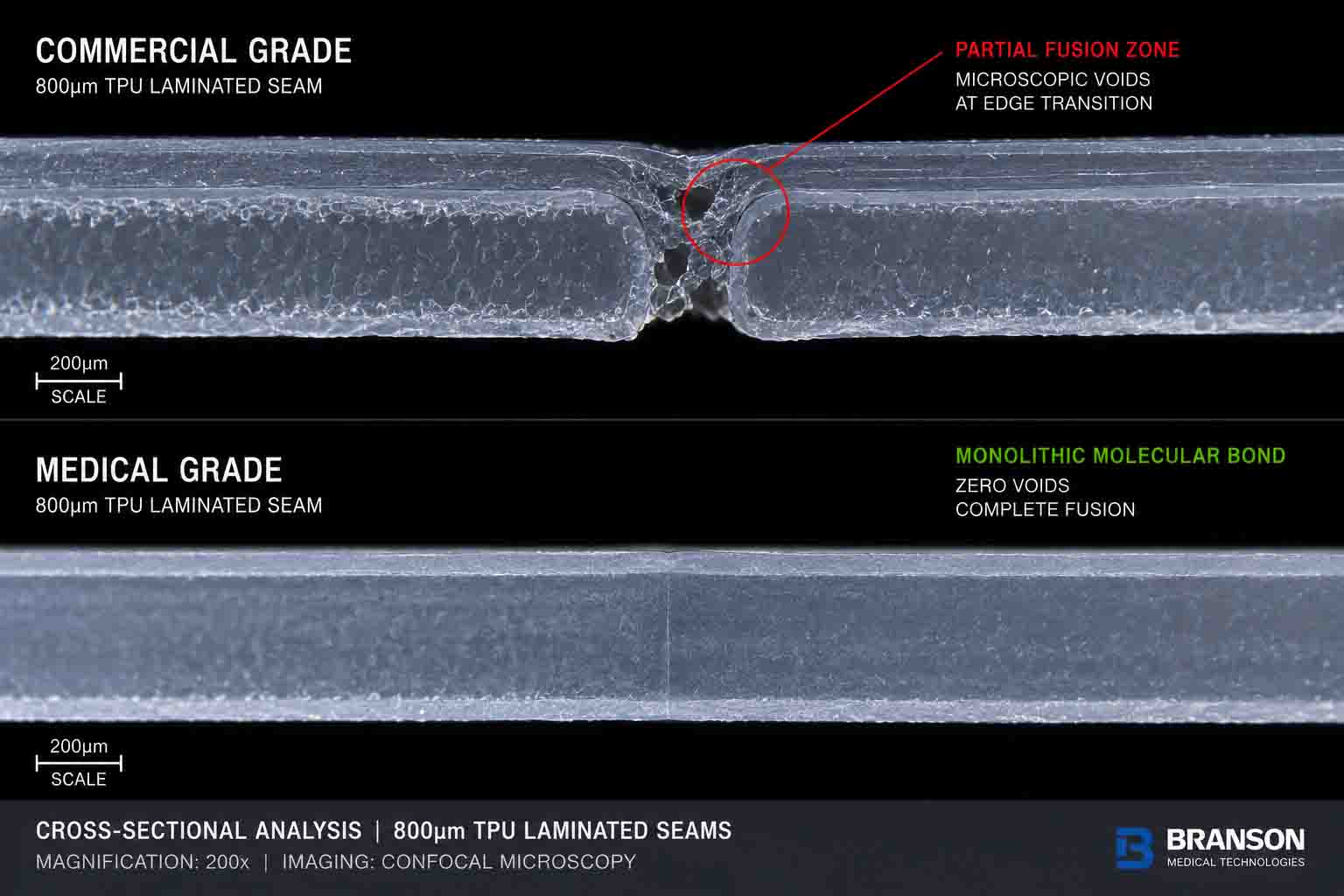
In practice, commercial HF welding operates within a wide tolerance window. Parameters are set to achieve baseline tensile strength and maximize throughput. Minor tooling contamination or slight unevenness in the pneumatic press might create a partial-fusion zone at the edge transition. For a recreational picnic bag, this is acceptable. The seam holds water.

Medical-grade manufacturing operates differently. A 0.5-second dwell time variation on a 27.12 MHz cycle doesn't sound like much. On an 800-micron TPU film, that half-second is the difference between a perfect molecular bond and a hidden internal cavity that will delaminate under cold shock six months later.

27.12 MHz Dielectric Heating at the Molecular Level

The 27.12 MHz frequency sits within the designated ISM (Industrial, Scientific, and Medical) radio band. At this specific frequency, the alternating electromagnetic field forces polar molecules inside the TPU to realign 27 million times per second.

This internal heat generation bypasses the critical flaw of conventional thermal bonding. Hot-bars and heated platens apply energy to the material surface. To fuse a dense, multi-layer TPU laminate, the surface must be exposed to high heat to allow conduction to reach the inner interface. This often degrades the outer polymer structure before the core reaches fusion temperature.

HF welding generates heat exactly where it is needed: at the interface. However, consistent results require non-negotiable process variables:

  • Frequency Stability: Drift outside the 27.12 MHz band produces erratic heating.
  • Tooling Flatness: Localized thermal concentration at a worn die edge degrades the TPU structure before it leaves the factory.
  • Controlled Cooling: Releasing pressure before the polymer chains re-stabilize introduces sheer stress into the weld.

If a factory treats these as fixed machine settings rather than continuously monitored variables, they are not executing medical-grade production.

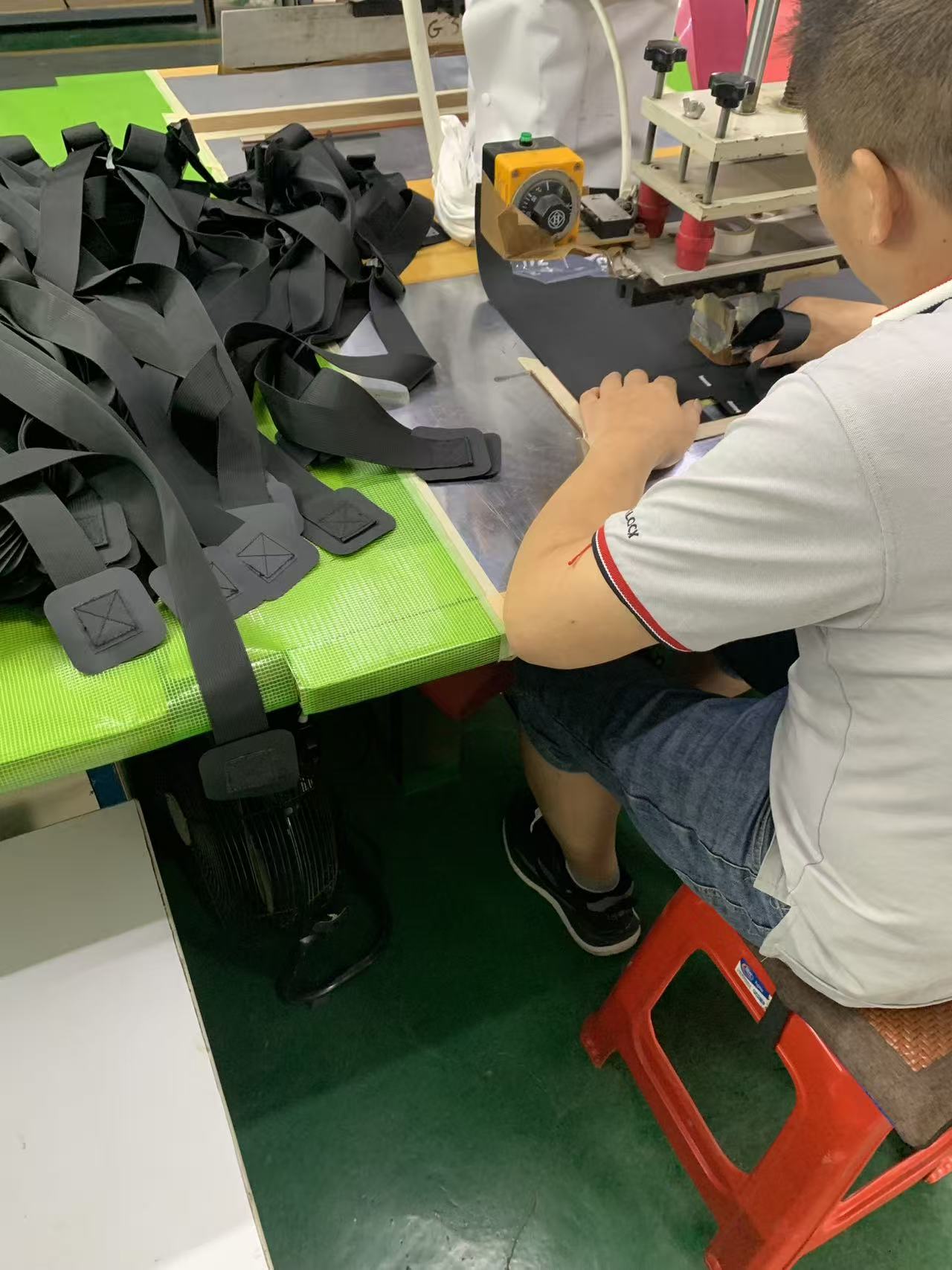
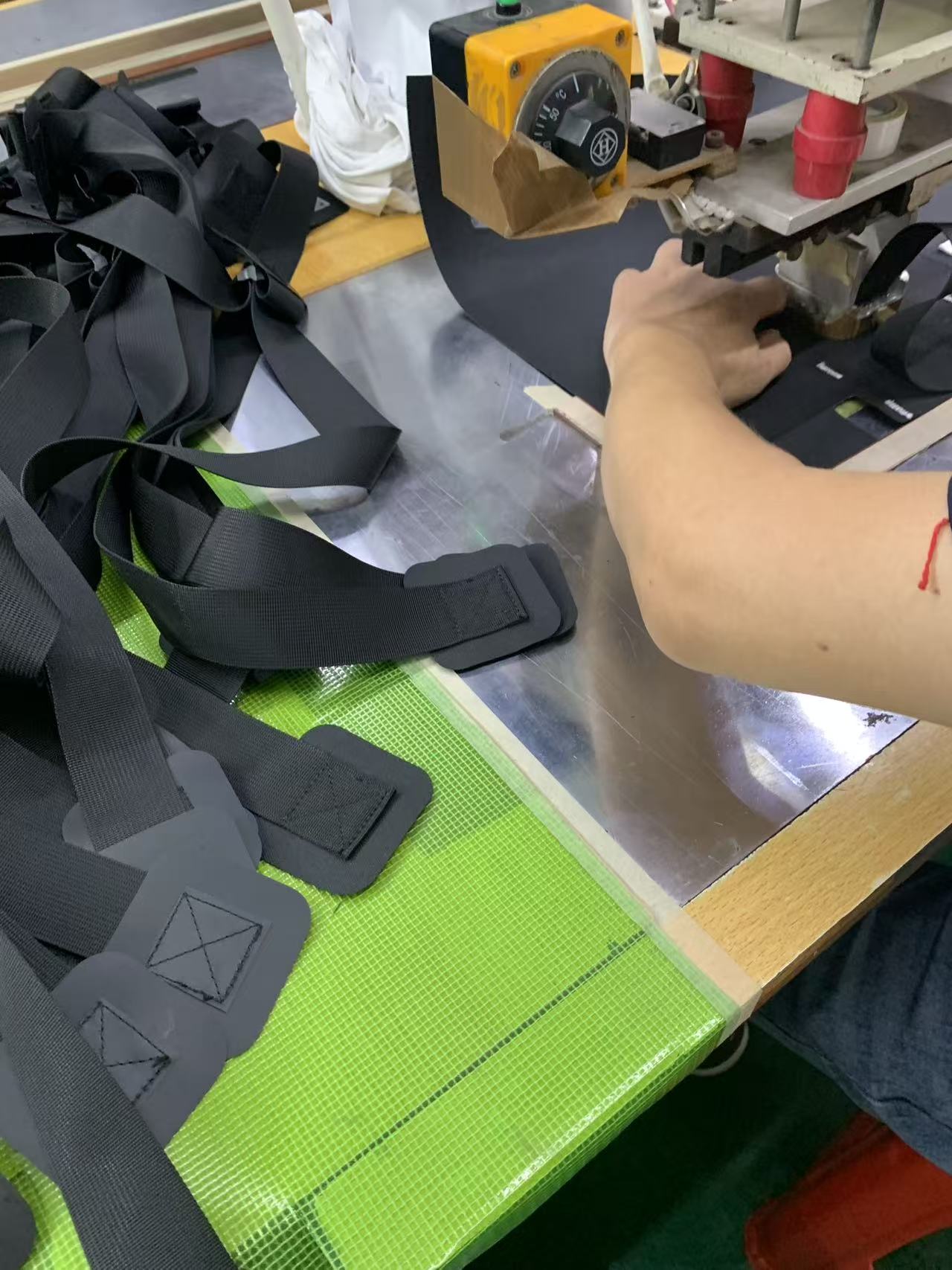
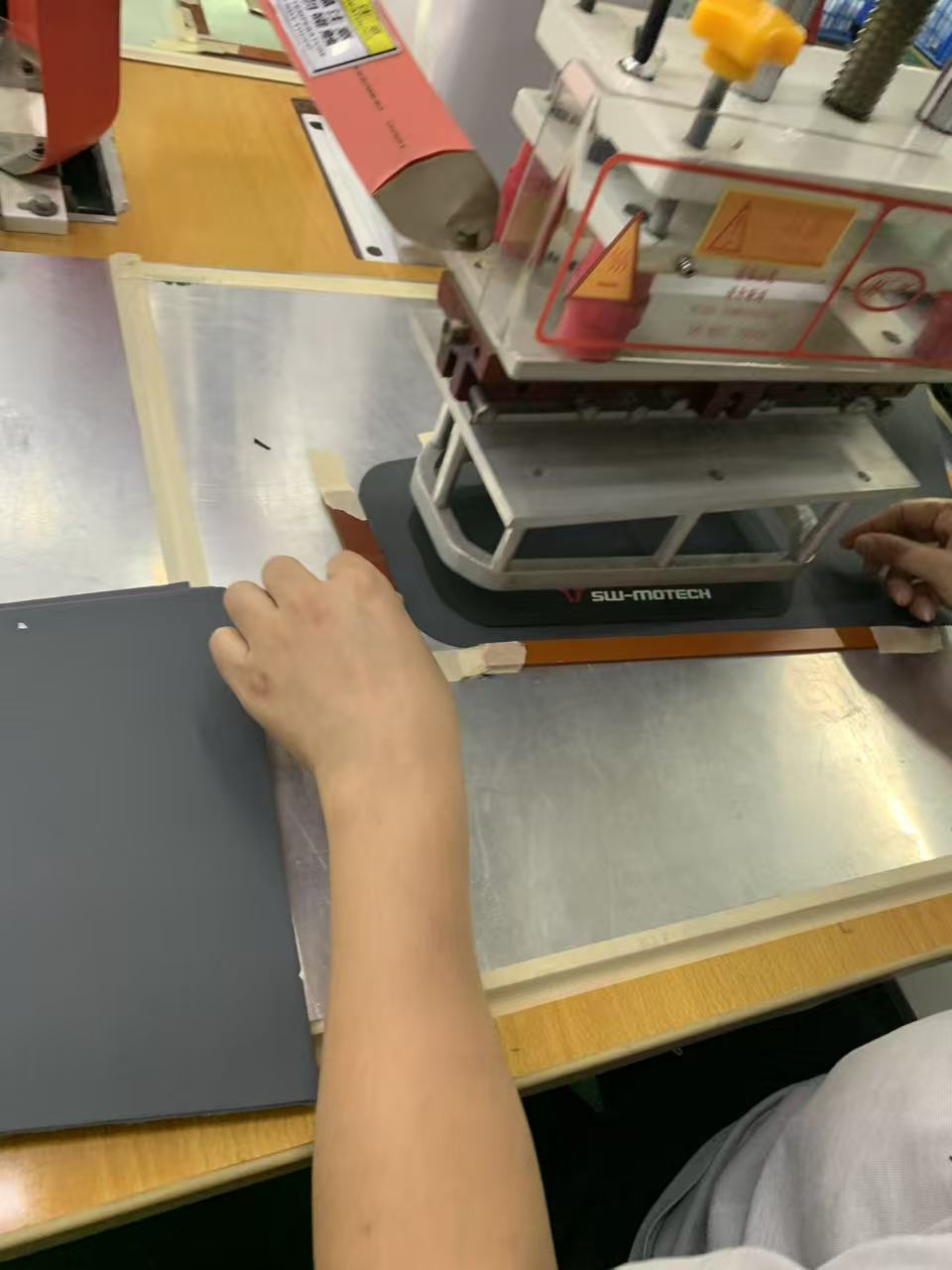
Workers at Dongguan Yifulong Factory are operating high-frequency welding machines.Workers in Sealock Dongguan plant are running HF welding equipment

The Condensation Myth and Seam Instability

Sweating on a cooler's exterior is frequently blamed on thin insulation. In premium cold chain logistics, the root cause is usually seam micro-migration.

In theory, closed-cell NBR foam prevents exterior condensation. In practice, the insulation only performs as designed if the TPU chamber remains completely hermetic over a multi-year life cycle under heavy vibration.

Microscopic instability at edge transitions allows ambient humidity to slowly migrate into the foam cavity. The failure is rarely catastrophic; it’s insidious. Once the insulation absorbs moisture, its R-value plummets. The outer shell temperature drops below the dew point. The cooler begins to sweat. Medical-grade HF welding doesn't just seal the bag; it eliminates the micro-voids where this moisture migration begins, preserving the science of thermal retention.

Leak Testing: Visual QA vs. ASTM F2096

Visual seam inspection is essentially meaningless for cold chain applications. It detects gross manufacturing errors like severe burn marks or massive alignment shifts. It will not reveal a microscopic pinhole hidden within a structural fold.

Rigorous OEM facilities rely on internal pressurization protocols, heavily referencing ASTM F2096. The finished soft cooler is sealed, internally pressurized with air, and fully submerged in a water tank.

A seam with a microscopic cavity—one that easily holds a static water load on a workbench—will emit a steady stream of bubbles under internal pressurization. Only batches achieving a zero-defect rate under these conditions can be certified for strict 72-hour thermal benchmarks.

TPU Formulation Drift and Hydrolysis

Material selection dictates failure timelines. The industry relies heavily on two TPU categories: Polyester and Polyether.

Polyester TPU performs well mechanically, but long-term hydrolysis exposure remains a fatal flaw in wet thermal environments. Over months of interacting with melted ice and ambient humidity, the polymer chains degrade. The material embrittles and the weld interface shears.

Polyether-based TPU is mandatory for reshaping the last-mile cold chain. It resists hydrolysis and microbial attack. However, specifying Polyether is not enough. TPU formulation drift between material batches is one of the most overlooked causes of seam inconsistency in outsourced production. A slight change in the resin supplier's formula alters the material's dielectric behavior, instantly rendering the factory's established HF welding parameters obsolete.

Microscopic cross-section comparison showing partial-fusion voids in commercial welding versus monolithic molecular bonds in medical-grade TPU seams.

The Sourcing Audit Kill-Shot

Standard commercial welding looks cheaper on a spreadsheet until downstream failure risk is calculated. In medical and high-end food logistics, a contamination event or product spoilage liability dwarfs the initial manufacturing premium.

When auditing a potential OEM partner for soft coolers, ignore the showroom. Walk to the factory floor and ask these specific questions:

  • Show me the digital parameter logs for the last three production batches.
  • How exactly do you re-validate dwell time and pressure when a new batch of Polyether TPU arrives?
  • Can you provide the raw hydrolysis resistance data from your material supplier, not just a generic FDA-compliant certificate?

If they cannot map specific dielectric output and tooling pressure to a corresponding material lot, they are guessing, not engineering.


About Sealock Outdoor Group: Soft Cooler Engineering

Sealock Outdoor Group is a B2B OEM manufacturer operating exclusively on the principles of engineering reality. We specialize in advanced thermal-retention and leakproof soft cooler manufacturing for high-stakes cold chain and premium outdoor applications.

We do not guess on parameters. Our dual-base infrastructure combines intensive R&D and process validation at our Dongguan laboratories with high-volume, parameter-locked production capacity in Ho Chi Minh City, Vietnam. We control the process, eliminate parameter drift, and deliver tariff-efficient export strategies for North American and European markets.

For sourcing teams seeking true manufacturing authority, contact our engineering team to schedule a technical audit of our HF welding capabilities.


Frequently Asked Questions for Procurement Engineers

Why is frequency stability at 27.12 MHz critical for soft cooler seams?

27.12 MHz is the optimal ISM frequency for exciting polar molecules in TPU. If the frequency drifts during a weld cycle, the dielectric heating becomes uneven. This creates localized cold spots in the seam, resulting in partial-fusion zones that pass visual inspection but fail under dynamic field stress or prolonged thermal cycling.

Why does NBR foam insulation fail in commercially welded soft coolers?

Commercial HF welding often leaves microscopic voids at the edge transitions of the seam. Over time, vibration and temperature fluctuations force ambient humidity through these voids into the insulation cavity. Once closed-cell NBR foam is surrounded by trapped moisture, its R-value degrades, causing the cooler's exterior to drop below the dew point and sweat.

How does TPU batch drift affect HF welding production?

Different batches of TPU—even from the same supplier—can exhibit minor variations in resin formulation. These variations alter the material's dielectric properties. A factory using fixed welding parameters will experience sudden spikes in defect rates. Medical-grade manufacturing requires re-validating dwell time, pressure, and power output for every new material lot.

Related News
Leave me a message
X
We use cookies to offer you a better browsing experience, analyze site traffic and personalize content. By using this site, you agree to our use of cookies. Privacy Policy
Reject Accept