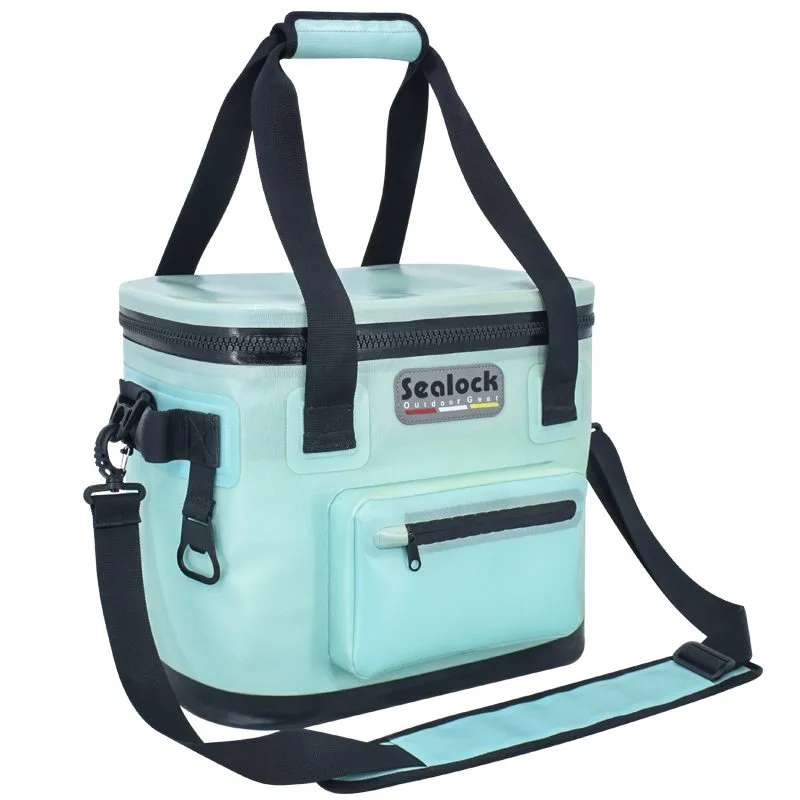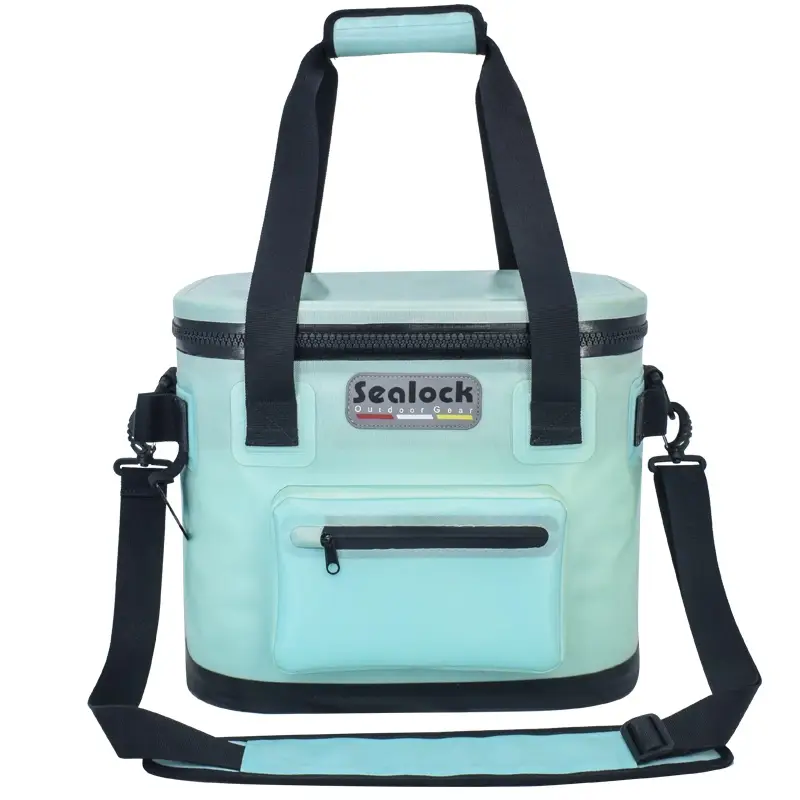
The Problem With "Waterproof" as a Marketing Term
Somewhere along the way, "waterproof" stopped meaning much. Walk through any outdoor retailer and you'll find the word applied to everything from a light hiking daypack that can handle a drizzle to a tactical gear bag rated for full submersion. The same label, completely different engineering behind it.
For most consumer applications, this ambiguity is tolerable. For the brands we work with—those supplying professional kayakers, offshore fishing operations, search and rescue teams, and tactical dive units—it isn't. When a loaded kayak flips in Class IV rapids, or when a dive team's equipment bag is being dragged at depth, the bag either holds or it doesn't. There's no middle outcome worth accepting.
At our Dongguan R&D testing laboratory, we moved away from subjective splash assessments and established 1.0 Bar hydrostatic pressure as the baseline standard for our extreme marine dry bag line. What follows is an explanation of what that standard actually means, how the materials and construction methods behind it work, and why the engineering choices compound rather than operate in isolation.
1. The 1.0 Bar Standard: What the Number Actually Means on the Water
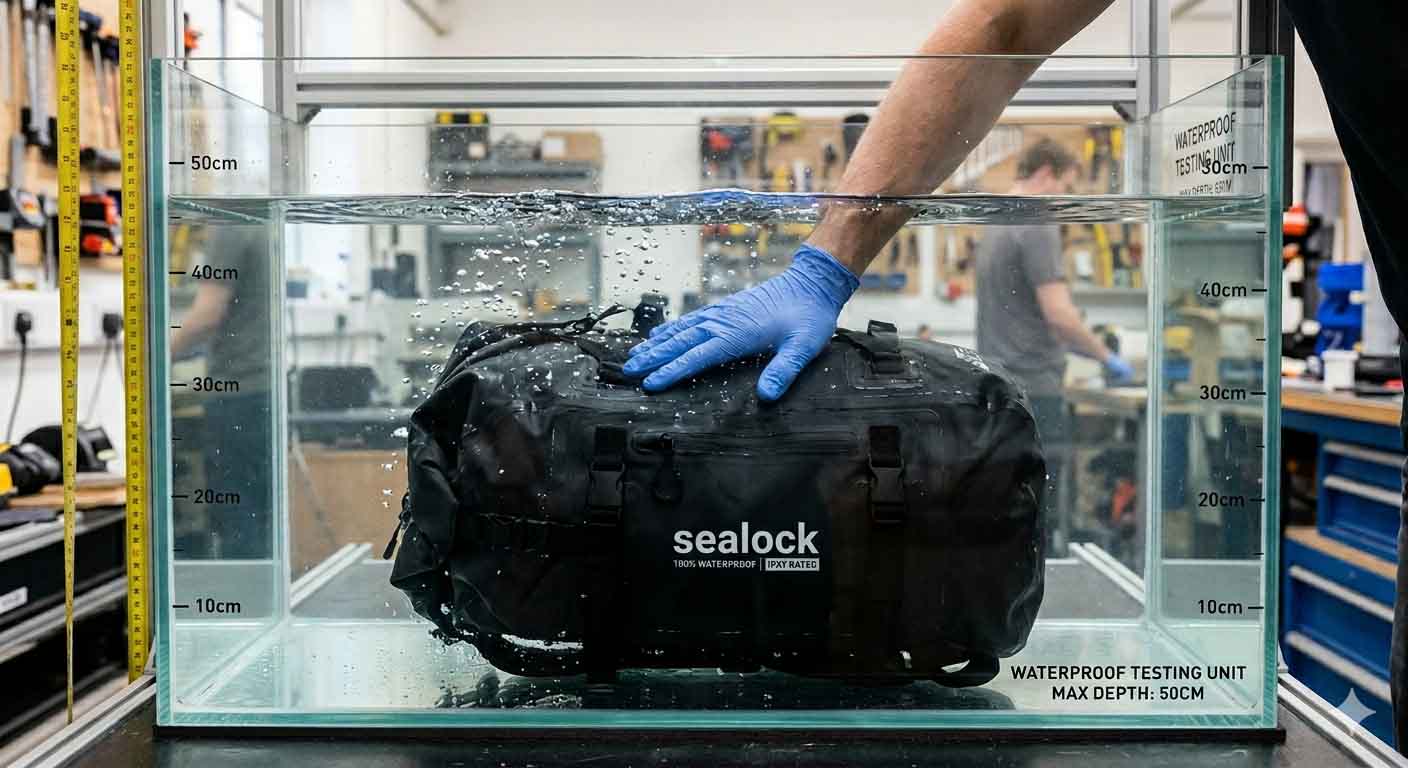
The IP rating system—IPX6, IPX7, IPX8—is a useful framework, but it was developed primarily for electronics and tested under controlled static conditions. IPX7 certifies temporary submersion to one meter for thirty minutes. That's a reasonable spec for a smartphone, but it doesn't capture what happens to a dry bag when a paddler falls sideways onto it in moving water, or when current pins it against a rock face with sustained directional pressure.
One Bar of pressure corresponds to the weight of a 10-meter column of water bearing down on a surface. During our QA process, prototype bags are inflated, sealed, and placed in our pressure chambers. Internal pressure is brought to 1.0 Bar and held there for a sustained period. The pass condition is simple: zero micro-bubbles escaping from any seam, weld joint, or closure point.
Two things are confirmed by surviving this test. First, the bag maintains a hermetic seal under conditions that go well beyond IPX7—true IPX8 performance, not self-certified but chamber-verified. Second, the seam construction is blowout-resistant: if a 90-kilogram user lands directly on a fully inflated bag, the trapped air has nowhere to go except through the material or the joints. In a welded Sealock bag, it stays put. The bag holds its structural form and functions as an emergency flotation aid without seam failure. That's a real-world scenario we test for, not a theoretical edge case.
2. Material Selection: Why 840D TPU Replaced PVC in Our Extreme Series
A bag that holds pressure underwater is pointless if it tears on the first contact with a sharp edge. Heavy-duty marine bags have historically relied on PVC—it's inexpensive and inherently waterproof, which made it the default choice for decades. But PVC carries a set of liabilities that have pushed serious manufacturers away from it.
In cold conditions, PVC stiffens considerably. Below about -10°C, pliability is significantly compromised, and below freezing it starts to crack under flex stress. For anyone operating in alpine river environments or high-latitude marine conditions, that's a meaningful failure mode. UV exposure compounds the problem over time, degrading the plasticizers within the material and causing surface cracking before the structural fabric itself shows wear. And those plasticizers—often phthalate-based—are increasingly incompatible with regulatory requirements like California's Prop 65 and the EU's REACH framework, which creates real compliance risk for brands selling into those markets.
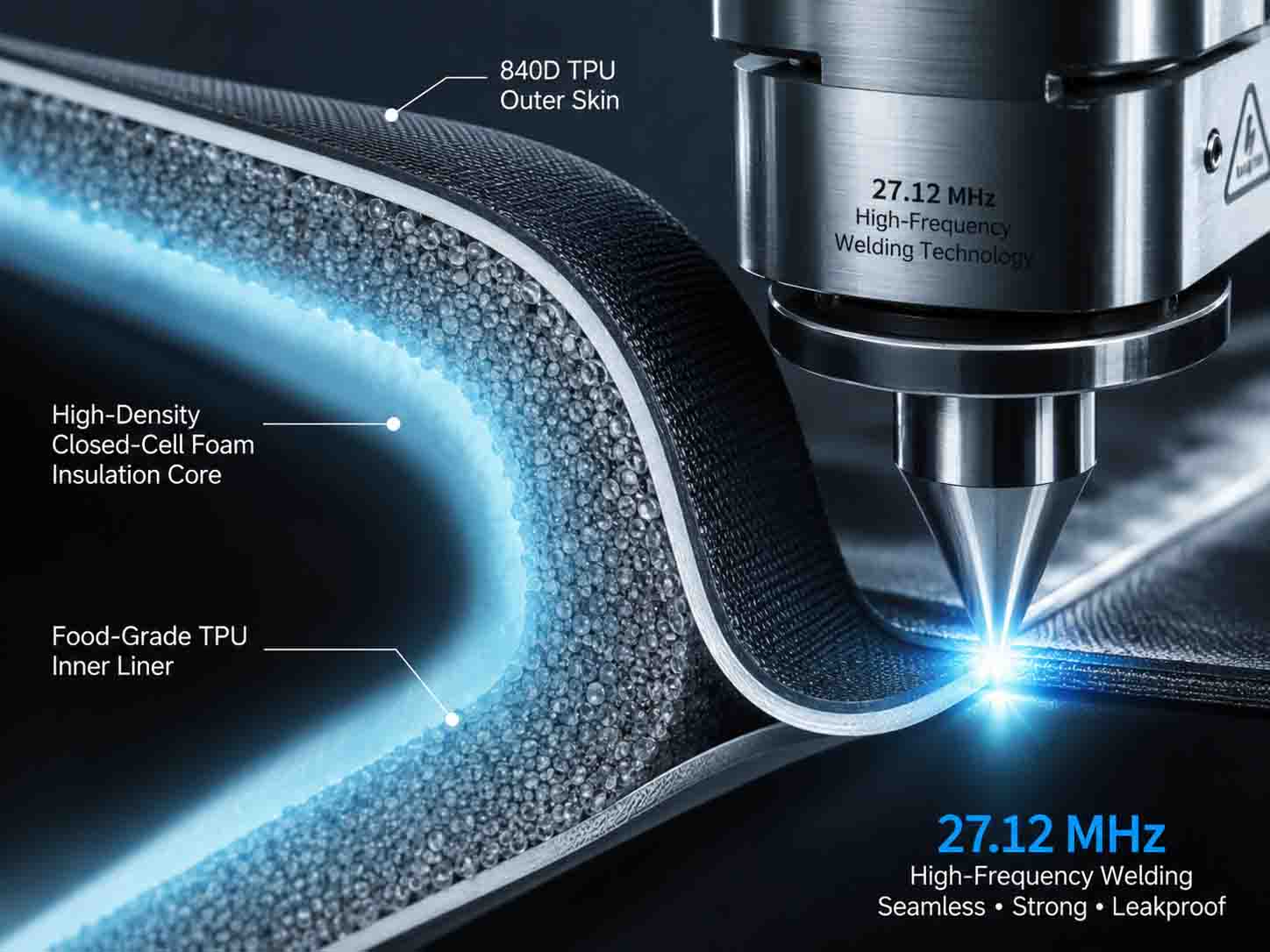
Our extreme submersible series uses 840-Denier TPU-coated nylon throughout. The denier count reflects the weight and density of the base fabric—840D sits at the heavier end of what's practical for a wearable bag, and the ripstop grid woven into the base provides genuine resistance to puncture propagation from sharp coral, fishhooks, and abrasive sandstone.
The TPU coating behaves differently from PVC in cold: it stays flexible and pliable to -30°C (-22°F), which keeps the bag functional in conditions where PVC equivalents would have already become rigid and brittle. Saltwater and UV resistance are built into the material chemistry rather than added via surface treatment, so they don't degrade at the same rate as coatings. And the material is PFAS-free, which matters increasingly to procurement teams working against ESG commitments.
3. Construction Method: Why Stitching Cannot Pass a Hydrostatic Test
Material selection gets a bag most of the way to genuine submersibility. Construction method determines whether it actually gets there.
Every sewing needle pass through fabric creates a hole. Seam tape covers those holes adequately for splash resistance, but under sustained hydrostatic pressure, tape is a temporary solution. The expansion and contraction cycles that come with pressurized air in sun-warmed conditions, combined with the mechanical flex of regular use, cause tape bond lines to delaminate progressively. A bag that passes its initial splash test will often fail its sixth-month equivalent.
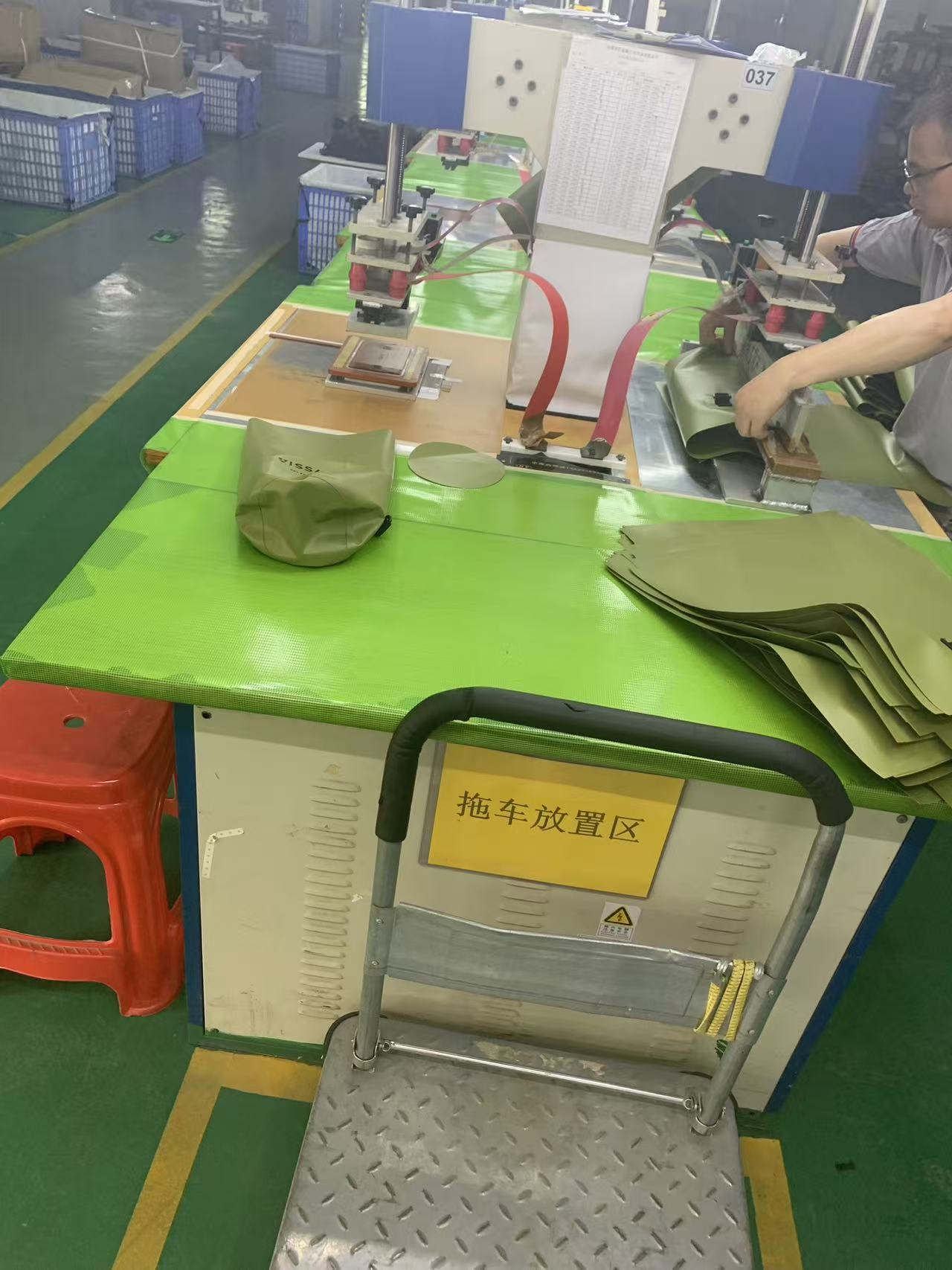
Our extreme dry bag production lines use no stitching on primary waterproof seams. All structural joins are made using 27.12 MHz High-Frequency welding.
The physics behind HF welding are distinct from mechanical fastening. When two panels of 840D TPU are positioned under the welding die, the electromagnetic field agitates the molecular structure of the polyurethane at the contact interface. Under controlled pneumatic pressure, the materials reach a localized melt state and fuse—not bond, fuse—into a single continuous layer of material. The resulting joint has no hole, no tape edge, no mechanical stress concentration. In destructive testing, welded seams consistently fail in the base fabric before the weld line itself gives way. It's the only construction method we've found that reliably survives repeated 1.0 Bar hydrostatic cycling without progressive degradation.
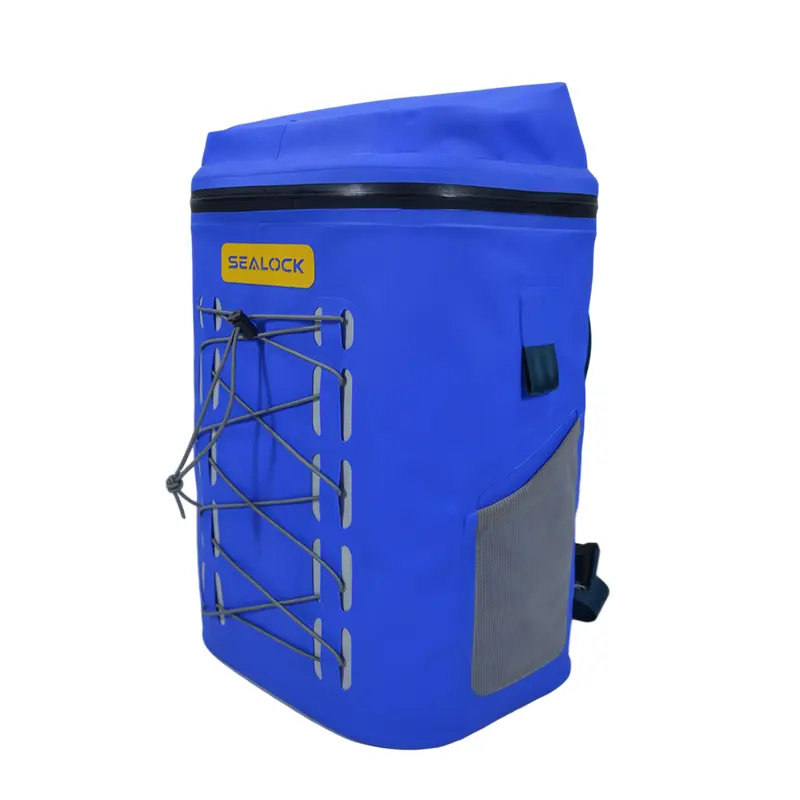
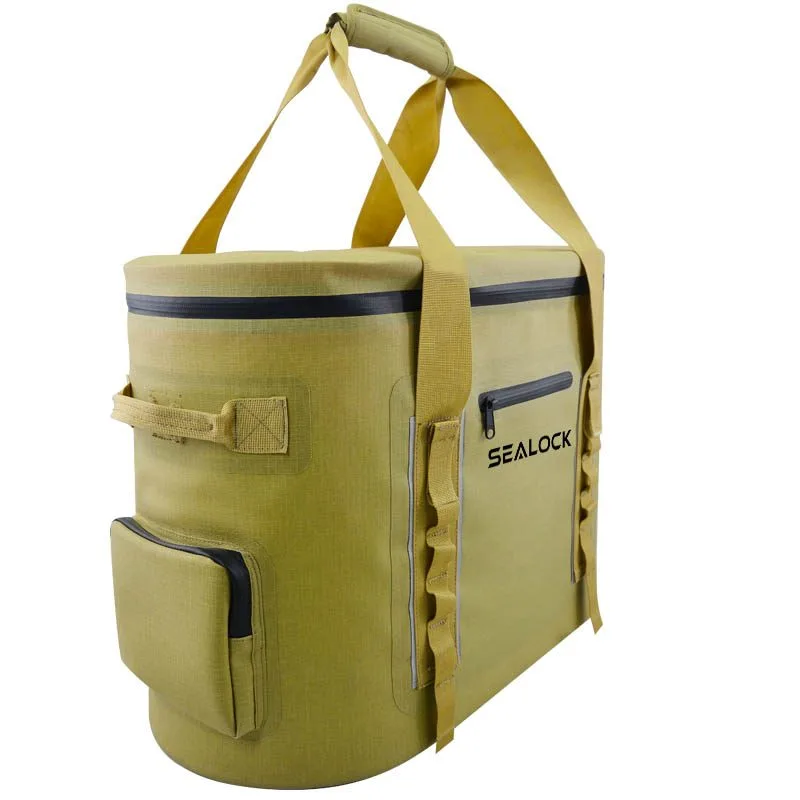
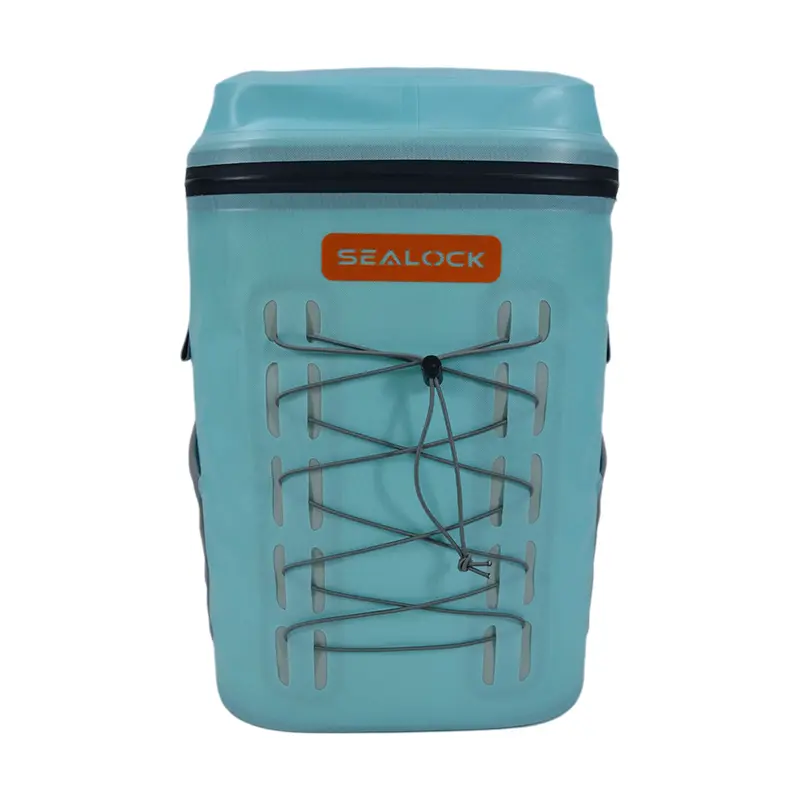
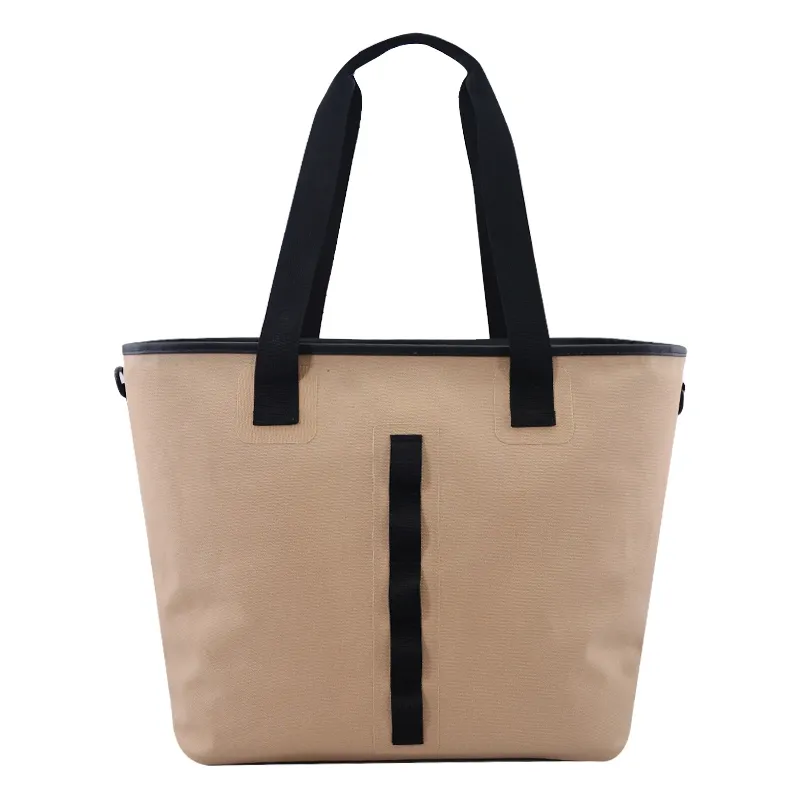
The same principle extends to hardware attachment. D-rings, MOLLE webbing anchor points, and lash attachments are welded onto TPU reinforcement patches on the exterior of the bag rather than sewn through the primary membrane. Load-bearing capacity is maintained without ever piercing the waterproof barrier.
4. Closure Systems: Roll-Top vs. Airtight Zipper for Different Field Conditions
The body of the bag can be engineered to a high standard and still underperform if the closure system doesn't match. We offer two architectures depending on how the end product will be used.
For expedition dry bags, motorcycle tail bags, and applications where access frequency is low but protection requirements are absolute, we use an extended TPU-reinforced roll-top collar. Three precise folds compress the material against itself, and heavy-duty UTX-Duraflex buckles maintain that compression under load. The mechanical water barrier this creates has no moving parts and no seal degradation pathway—it works the same on day one and day five hundred.
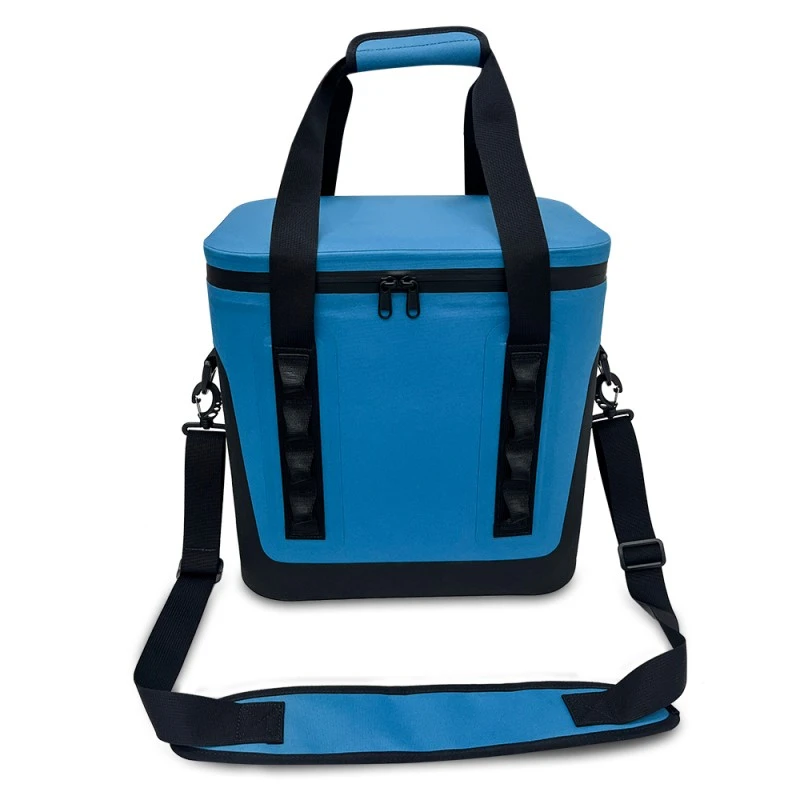
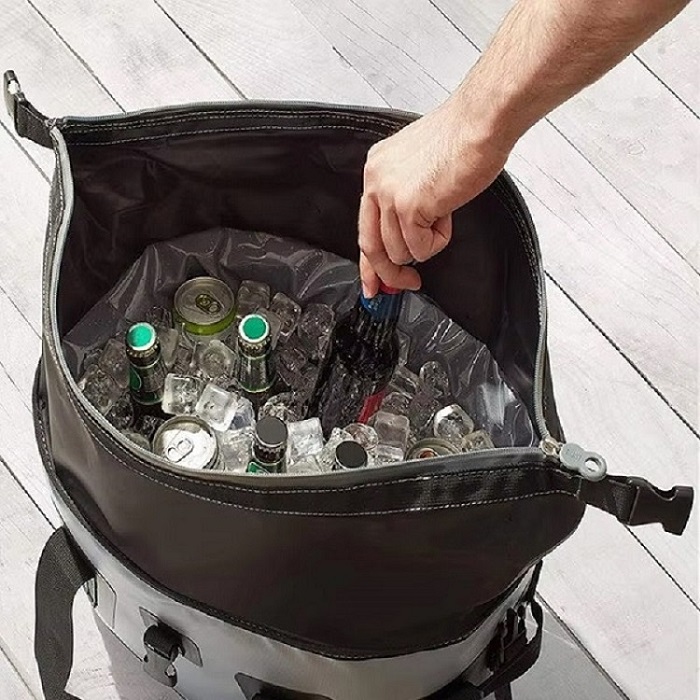
For tactical backpacks, fly-fishing waist packs, and any application where the user needs frequent, rapid access without removing the bag from the water or setting it down, we integrate premium airtight zipper systems. These use extruded polymer closures—toothless or heavy-toothed depending on specification—that interlock tightly enough to prevent pressurized air from escaping. Each zipper unit is individually pressure-tested as part of our incoming QA process before it goes into production. A bag built around a zipper that passes our chamber test can be used as a certified flotation aid without modification.
The choice between these two systems isn't primarily aesthetic—it's a function of access pattern and deployment environment. We work through this with OEM clients during the specification phase so the closure selection is driven by actual field use rather than what's easiest to manufacture.
What This Means for Brands Evaluating Submersible Dry Bag Suppliers
In the professional marine and extreme water sports category, a product failure isn't just a return—it's a safety incident. Procurement teams sourcing for these applications carry real accountability for what ends up in the field, which means the verification process needs to go deeper than a supplier's marketing language.
The 1.0 Bar hydrostatic standard, 840D TPU construction, and HF welded seam architecture aren't independent features—they're a system, and each element depends on the others to perform. Our Dongguan team develops and validates these specifications in-house; our Vietnam production facilities replicate them under resident engineering supervision. The same test protocol that passes a prototype in Dongguan is what clears production units in Ho Chi Minh City.
If you're building a submersible dry bag line and want to understand what the engineering actually involves, we're straightforward to reach.
Frequently Asked Questions
Q1: Can we specify a lighter fabric weight—420D or 600D—for a packable dry bag project?
Yes. 840D is our standard for applications involving abrasion against rock, coral, or rough boat surfaces. For bikepacking, ultralight hiking, or any weight-sensitive project, our R&D team engineers HF welded bags in 420D TPU or ultralight sil-nylon. The construction method remains the same; we validate submersibility against whatever pressure specification the application requires before committing to production parameters.
Q2: How do you test for long-term seam durability under UV and saltwater exposure?
Beyond hydrostatic pressure testing, our Dongguan facility runs accelerated weathering cycles on prototype seams—combined UV radiation, high humidity, and saline saturation exposure designed to simulate multi-year marine use in compressed time. We test for TPU coating adhesion, weld line integrity, and dimensional stability under these conditions before approving a construction specification for production.
Q3: Are the airtight zippers genuinely submersible, or rated for water resistance at the surface only?
The zipper systems we specify for our extreme marine series are individually pressure-tested for full submersibility before they enter our production inventory. They're used in applications where the bag is actively submerged—dragged behind watercraft, used during river crossings—not just exposed to rain or splash. If a zipper doesn't pass pressure testing as an incoming component, it doesn't go into a bag we ship.
Q4: Can mounting hardware be added without compromising the waterproof membrane?
Yes, and this is one of the areas where our construction method differs most from sewn alternatives. All D-rings, lash points, and MOLLE anchor webbing are attached via HF-welded TPU reinforcement patches on the exterior surface of the bag. Nothing pierces the primary membrane. The patches carry substantial load—we test them destructively—without creating any pathway for water ingress into the bag body.